THIS OBJECT WAS SOLD
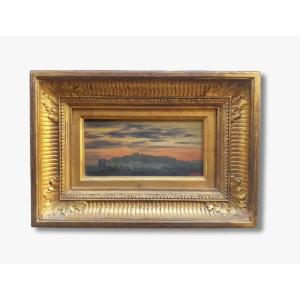
Antoine Claude Ponthus-cinier (1812-1885) - Ruins At The Water's Edge, Effect Of Noon
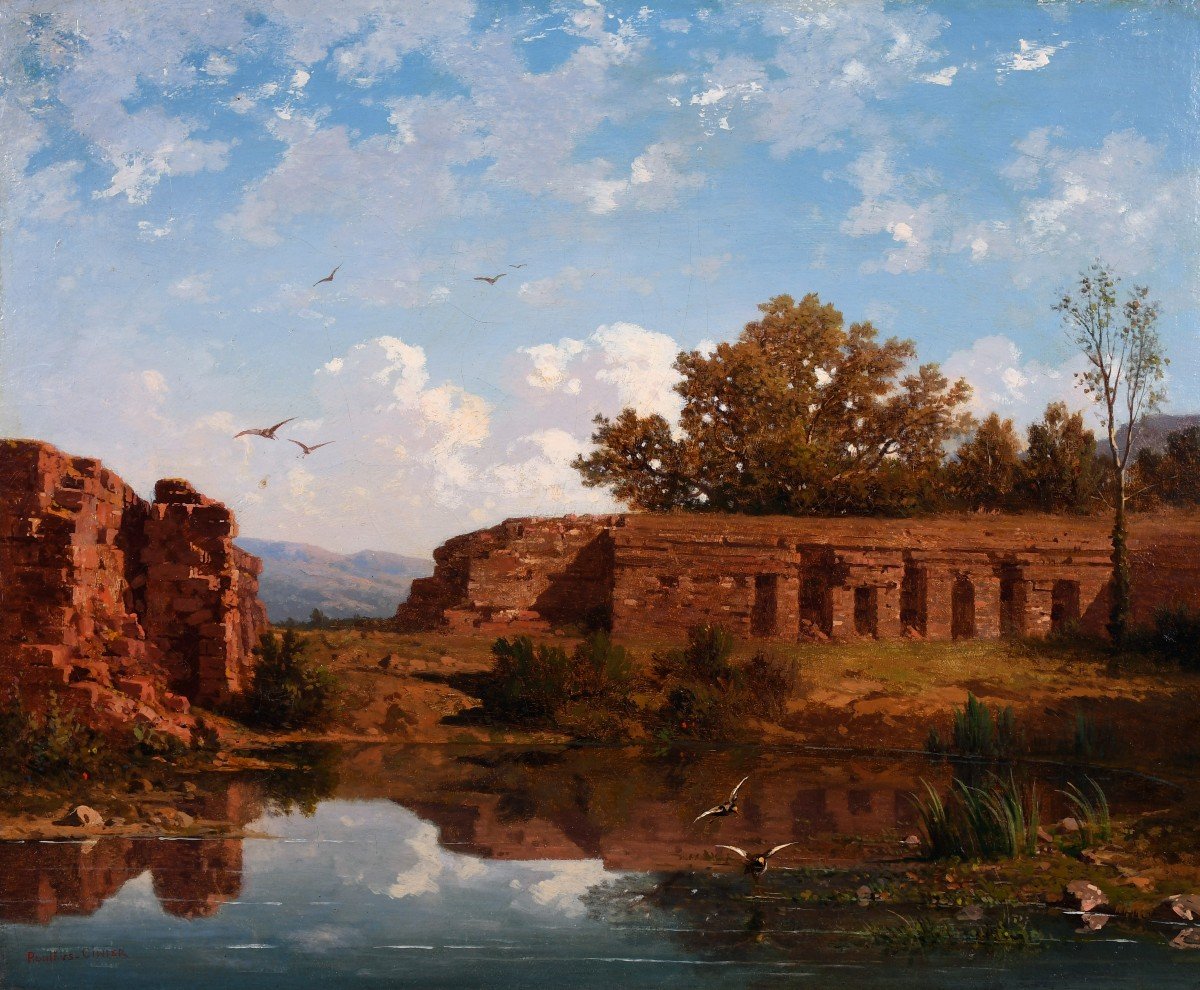
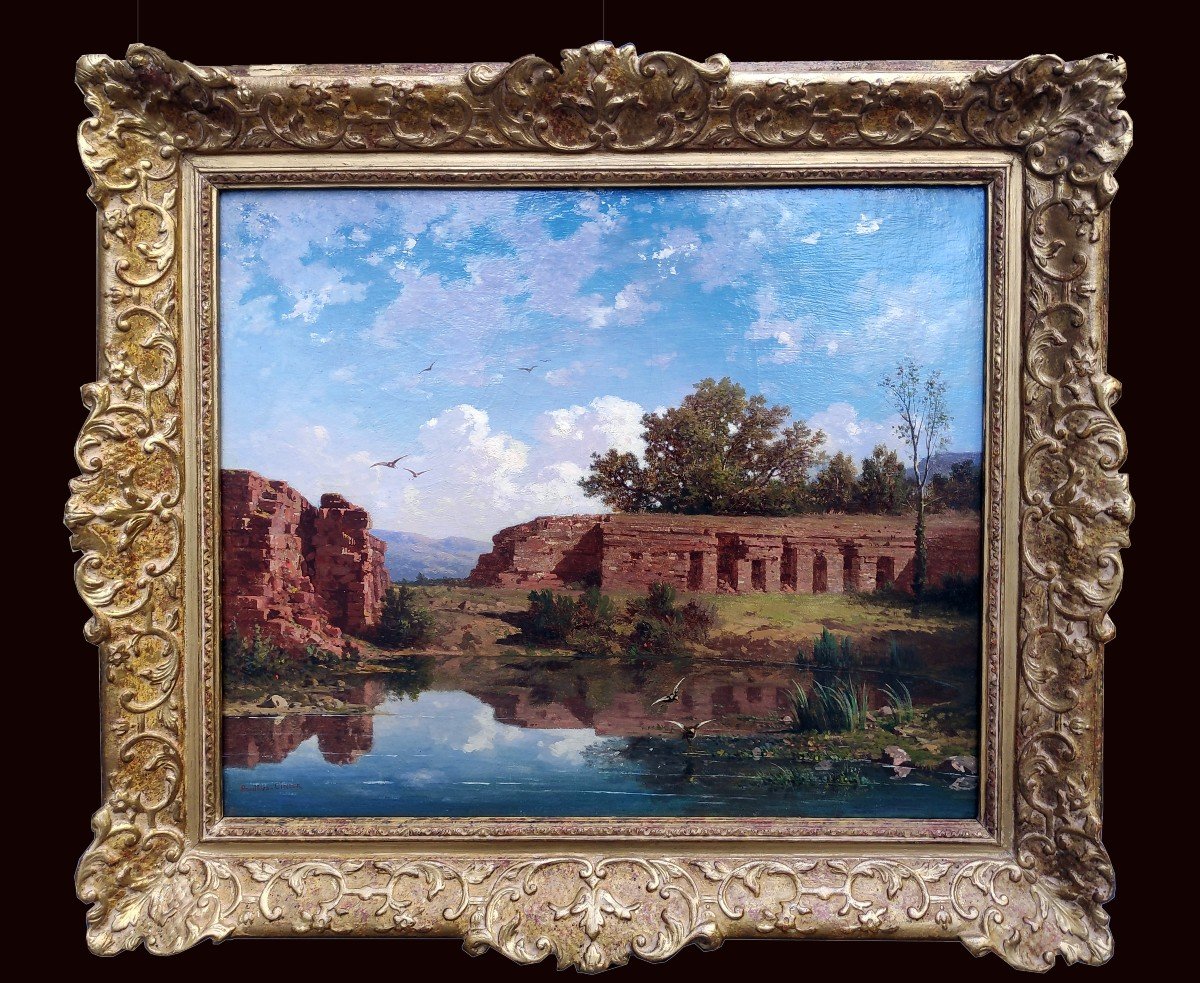




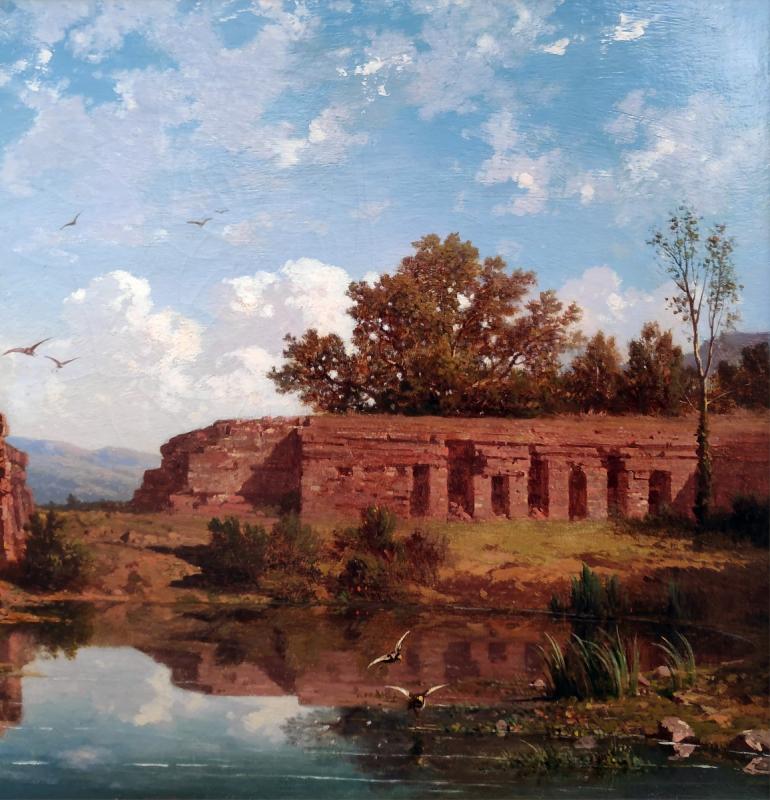
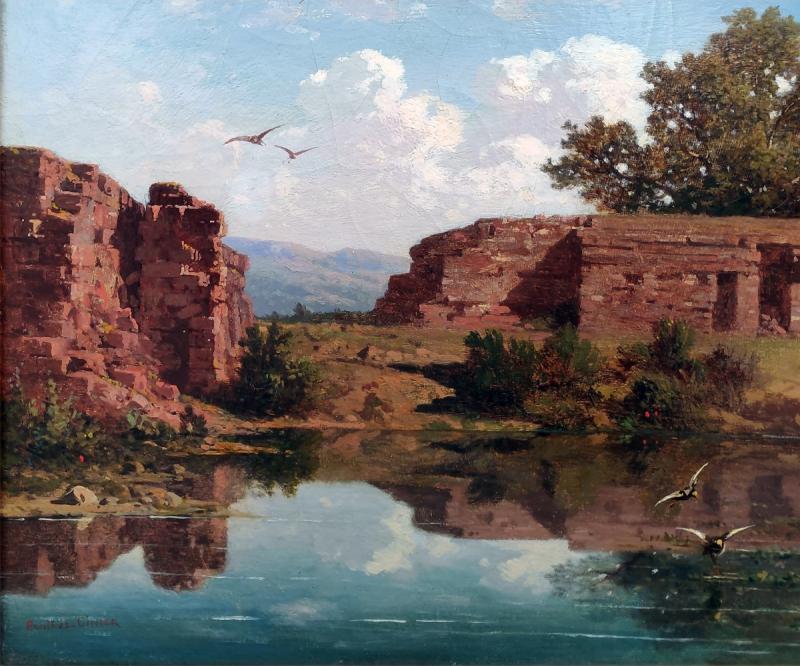
Antoine Claude Ponthus-cinier (1812-1885) Ruins at the water's edge, midday effect Oil on canvas signed lower left and titled on the back on the stretcher Dimension: 38 x 46.5 cm Dimension with frame: 51 x 59 cm Exhibition at the society of friends of the arts of Lyon, Salon 1854-1855. The artist exhibited 9 paintings that year, one of which was entitled "Ruins at the water's edge, effect of noon" Claude-Antoine Ponthus-Cinier was born in 1812 in Lyon within a family of merchants and of silk manufacturers. In 1829, he enrolled in the Beaux-Arts in the city before becoming a pupil of Paul Delaroche in Paris. Winner of the second Grand Prix de Rome in 1841 in the category of historical landscapes with a religious subject (Adam and Eve driven out of Earthly Paradise, Musée des Beaux-Arts de Lyon), he traveled to Italy from 1842 to 1844, passing through through Rome, Florence, Venice, Naples and Genoa. His stay in Italy marked a turning point in his landscape painting. His views of Italy and the Lyon region were very popular with his contemporaries. Ponthus-Cinier is an emblematic painter of the school of Lyon, renowned for his neoclassical landscapes, he will impose himself in the mid-19th century in this specialty. He is part of the last generation of neoclassical landscape painters alongside Achille Benouville, Paul Flandrin and many others. Critics of the arts of his century such as Alexandre Jouve believe that Ponthus-Cinier's main qualities probably lie in "the art of lighting a canvas", and in his sense of perspective. From his trip to Italy, he tries to adapt his inspiration to pure landscapes mixing the romanticism and the Italian illusionist realism of his time. What the painter likes is the alliance of the rocks which structure with the water in tablecloth or in puddle which softens it while the vegetation animates it and the sky lights it. Here, all the characteristics of his art are included in this painting. This canvas is a very beautiful testimony of the artist's work, to the point that the latter presented this painting at the Salon de Lyon 1854-1855. A salon created in 1836 by the Société des Amis des arts de Lyon, with the mission of organizing an annual salon. It will be recognized by the Minister of the Interior in 1843.
Explore similar pieces and discover your ideal find:
Landscapes