THIS OBJECT WAS SOLD
Portrait Of A Young Girl In A Blue Dress, 17th Century Follower Of Joan Carlile (c.1606-1679)


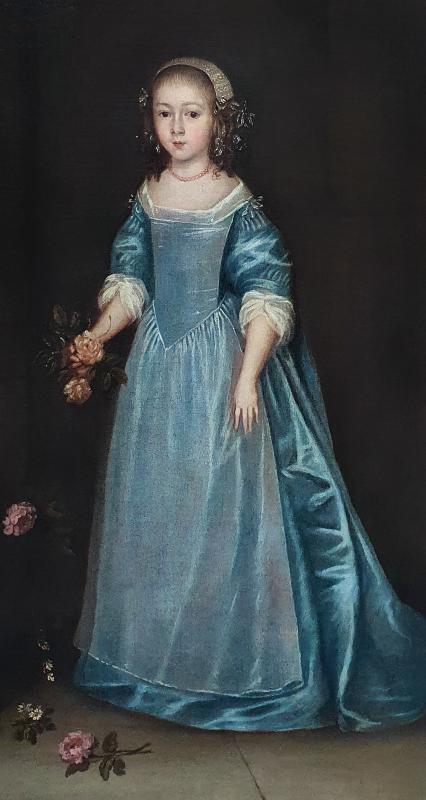
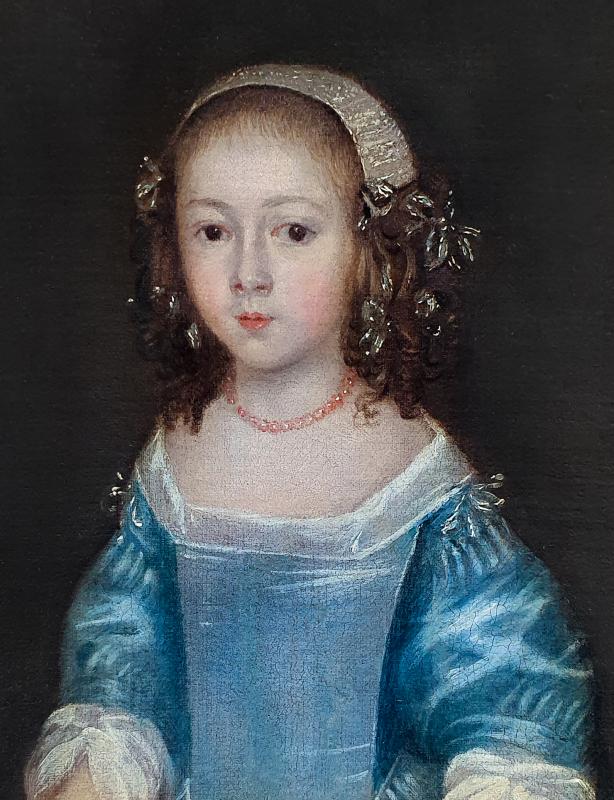
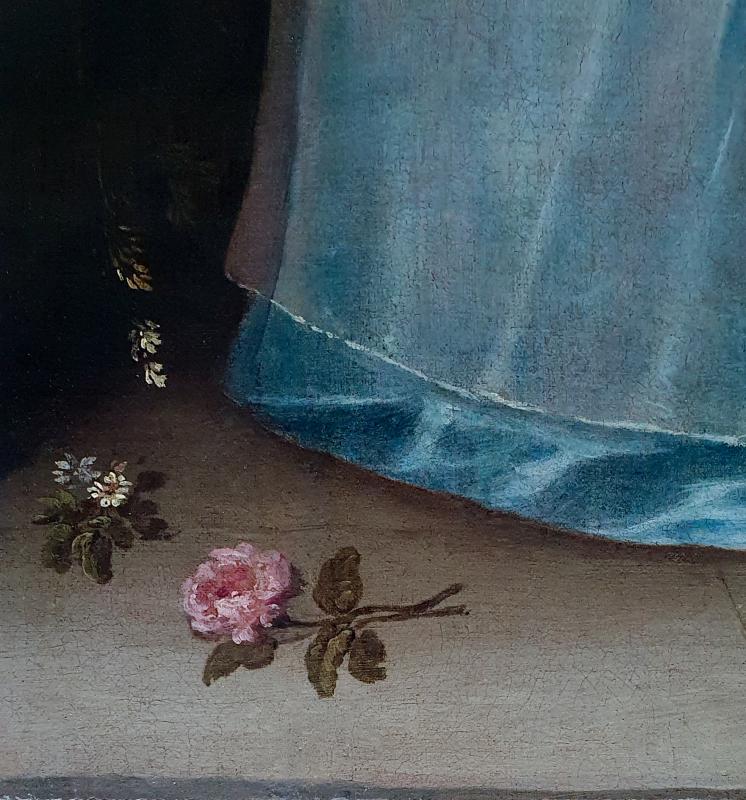

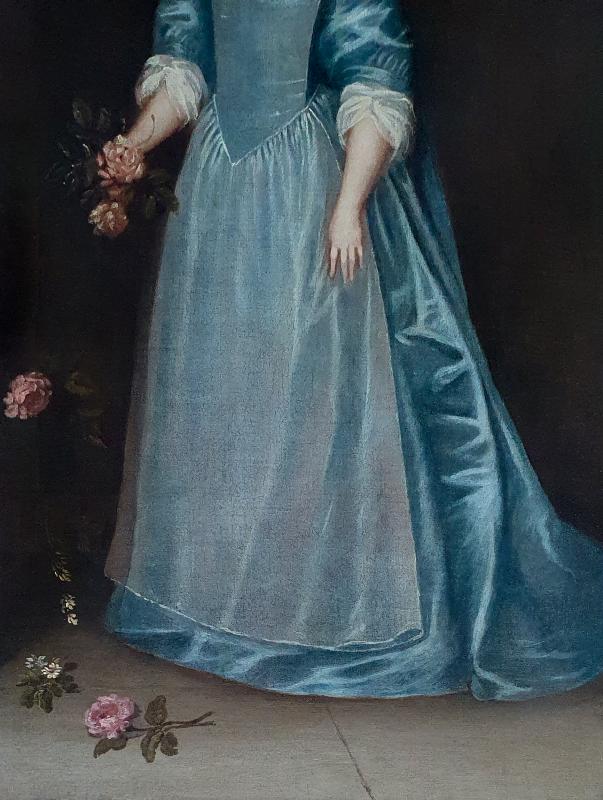
This charming portrait depicting a young girl in a blue satin dress and standing in an interior was painted during the second quarter of the 17th century. It is redolent of the female artist Joan Carlile, one of the earliest British female artists to work professionally in oil. Carlile specialised in female portraiture; the full-length format and the delicately handled face is typical of her work. The roses are an emblem of the girl’s youth, innocence and femininity.
Joan Carlile is sadly unfamiliar today, though she was much admired in her lifetime and for many years after her death. In a text on the art of painting by the royalist historian William Sanderson (published in 1658), he records only four female artists working in oil. Of those, nothing is known of ‘Mrs Weimes’ and only one work by Sarah Broman can be identified. The other two artists were Joan Carlile and Mary Beale (1633–1699). Carlile appears first in the list, suggesting that at that time she was regarded as the best known and most important. While Beale’s work and commercial portrait practice is heavily documented, there is considerably less information about Carlile. Her portraits adopt a style that is charming and immediately recognisable and employ a formula that was popular. Nearly all of her full-length portraits of women show them wearing the exact same dress and the sitters are often placed in an arcadian forest or by a cave or grotto. While some of her named sitters are clearly people drawn from her personal social circle, the use of these patterns suggests a portrait production beyond the status of a private amateur artist.
The daughter of an official of the royal parks of St James’s, she married the courtier, poet and playwright Ludowick Carlell in 1626 - a gentleman of the privy chamber who later became Keeper of Richmond Park. Attracting some fame during her lifetime, she is described to have attracted the patronage of Charles I, and had been gifted some ultramarine by the King, alongside Sir Anthony Van Dyck, to the value of £500.
Lodowick died in 1675 and was buried in the churchyard of Petersham Parish Church (which was then in Surrey and is now in the London Borough of Richmond upon Thames). Joan died in 1679, and was buried beside her husband. They had two children, James and Penelope.
Provenance: Private UK collection
Measurements: Height 95cm, Width 53cm framed (Height 37.5”, Width 20.75” framed
Joan Carlile is sadly unfamiliar today, though she was much admired in her lifetime and for many years after her death. In a text on the art of painting by the royalist historian William Sanderson (published in 1658), he records only four female artists working in oil. Of those, nothing is known of ‘Mrs Weimes’ and only one work by Sarah Broman can be identified. The other two artists were Joan Carlile and Mary Beale (1633–1699). Carlile appears first in the list, suggesting that at that time she was regarded as the best known and most important. While Beale’s work and commercial portrait practice is heavily documented, there is considerably less information about Carlile. Her portraits adopt a style that is charming and immediately recognisable and employ a formula that was popular. Nearly all of her full-length portraits of women show them wearing the exact same dress and the sitters are often placed in an arcadian forest or by a cave or grotto. While some of her named sitters are clearly people drawn from her personal social circle, the use of these patterns suggests a portrait production beyond the status of a private amateur artist.
The daughter of an official of the royal parks of St James’s, she married the courtier, poet and playwright Ludowick Carlell in 1626 - a gentleman of the privy chamber who later became Keeper of Richmond Park. Attracting some fame during her lifetime, she is described to have attracted the patronage of Charles I, and had been gifted some ultramarine by the King, alongside Sir Anthony Van Dyck, to the value of £500.
Lodowick died in 1675 and was buried in the churchyard of Petersham Parish Church (which was then in Surrey and is now in the London Borough of Richmond upon Thames). Joan died in 1679, and was buried beside her husband. They had two children, James and Penelope.
Provenance: Private UK collection
Measurements: Height 95cm, Width 53cm framed (Height 37.5”, Width 20.75” framed
Explore similar pieces and discover your ideal find:
Portraits