

Shaman's Staff Adorned With An Anthropomorphic Figure - Emberá Culture, Chocó
SHAMAN'S STAFF featuring an ANTHROPOMORPHIC FIGURE
Emberá Culture, Chocó, Northwestern Colombia
Circa 1900
Wood
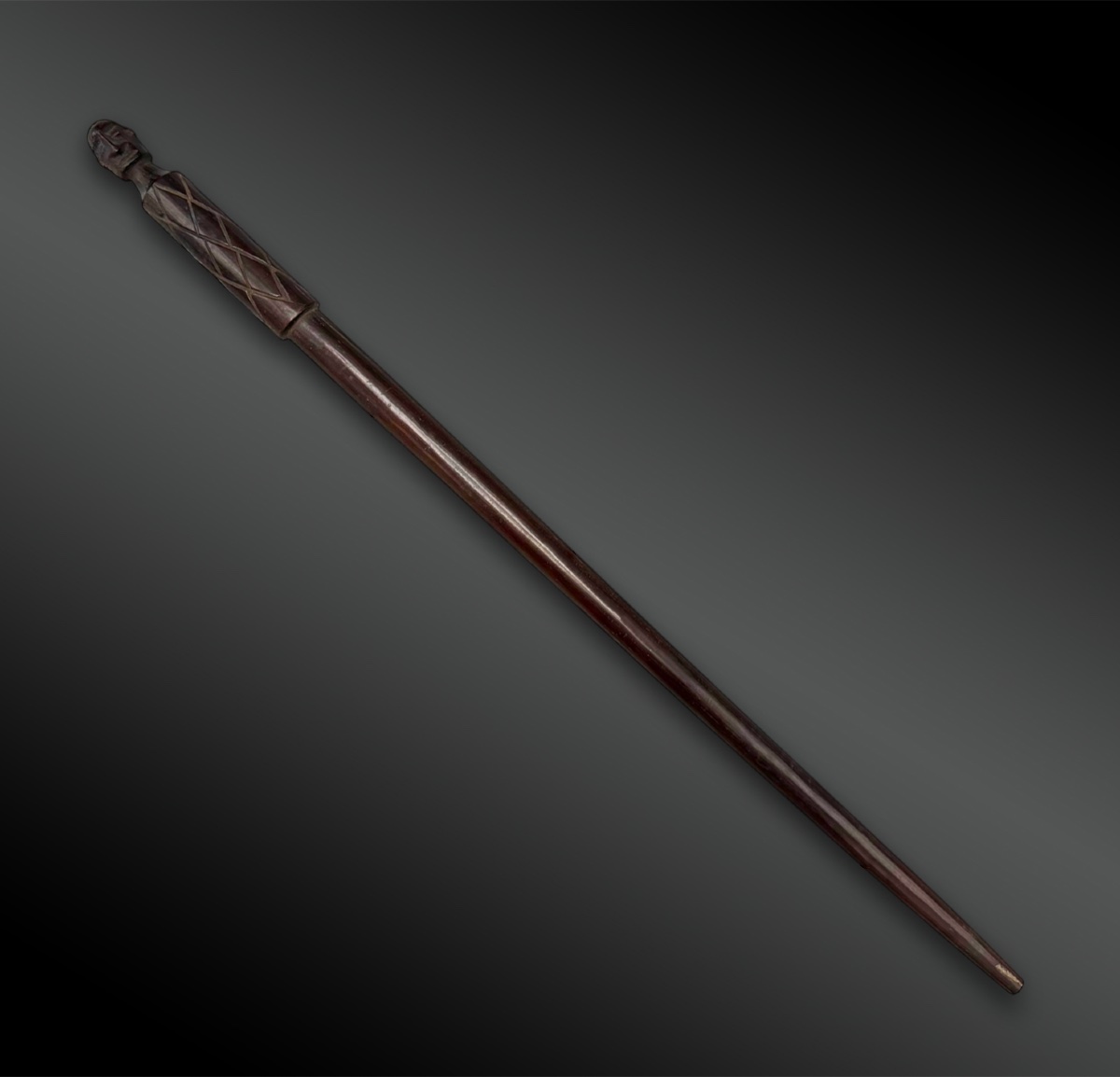
H.: 61; W: 3 cm
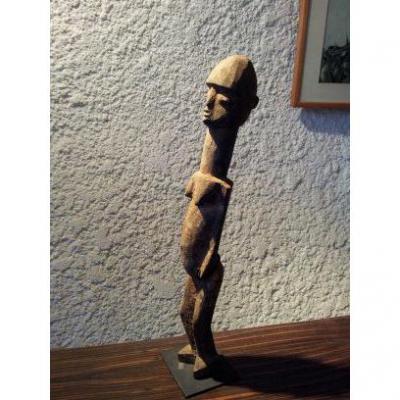
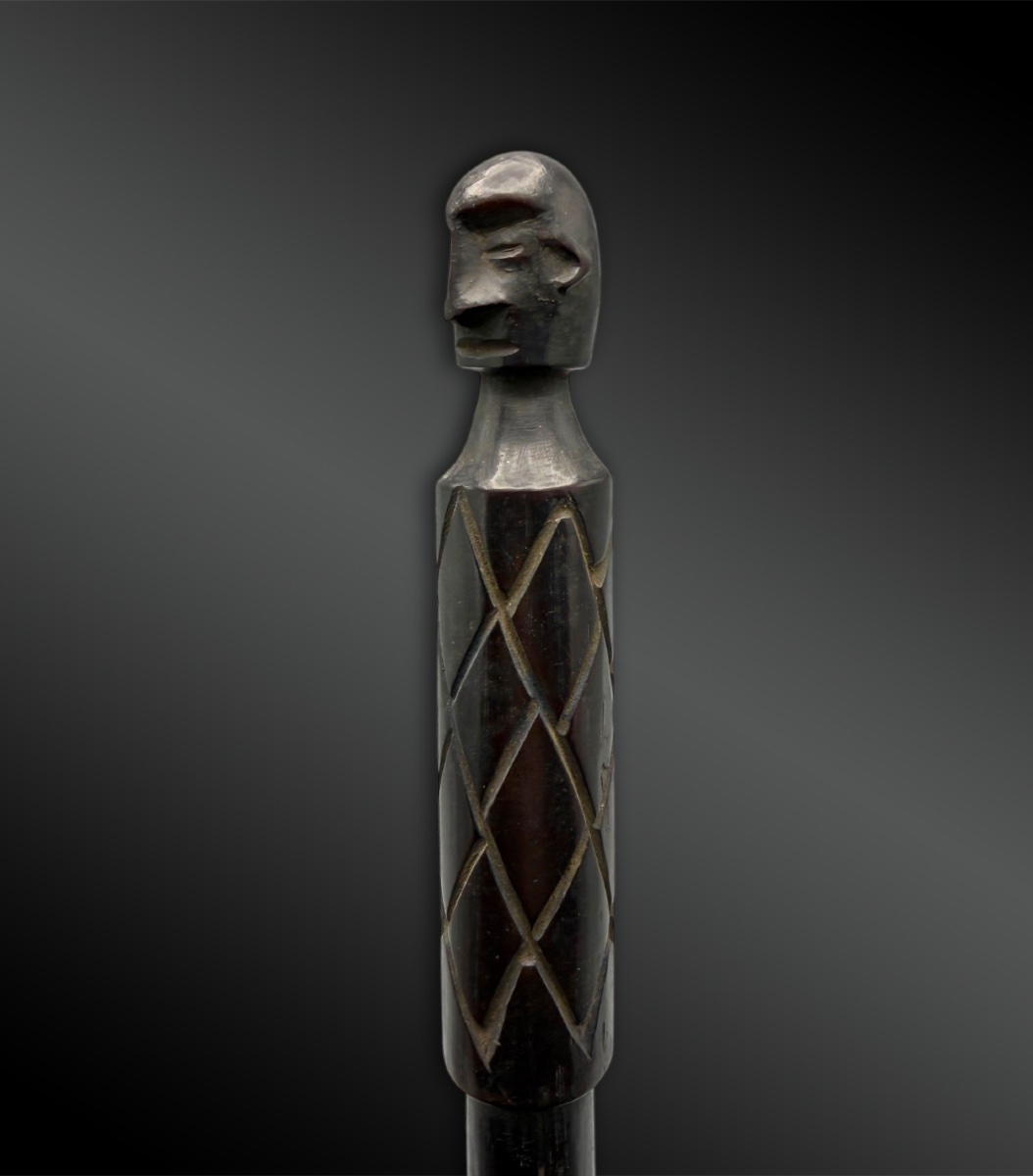
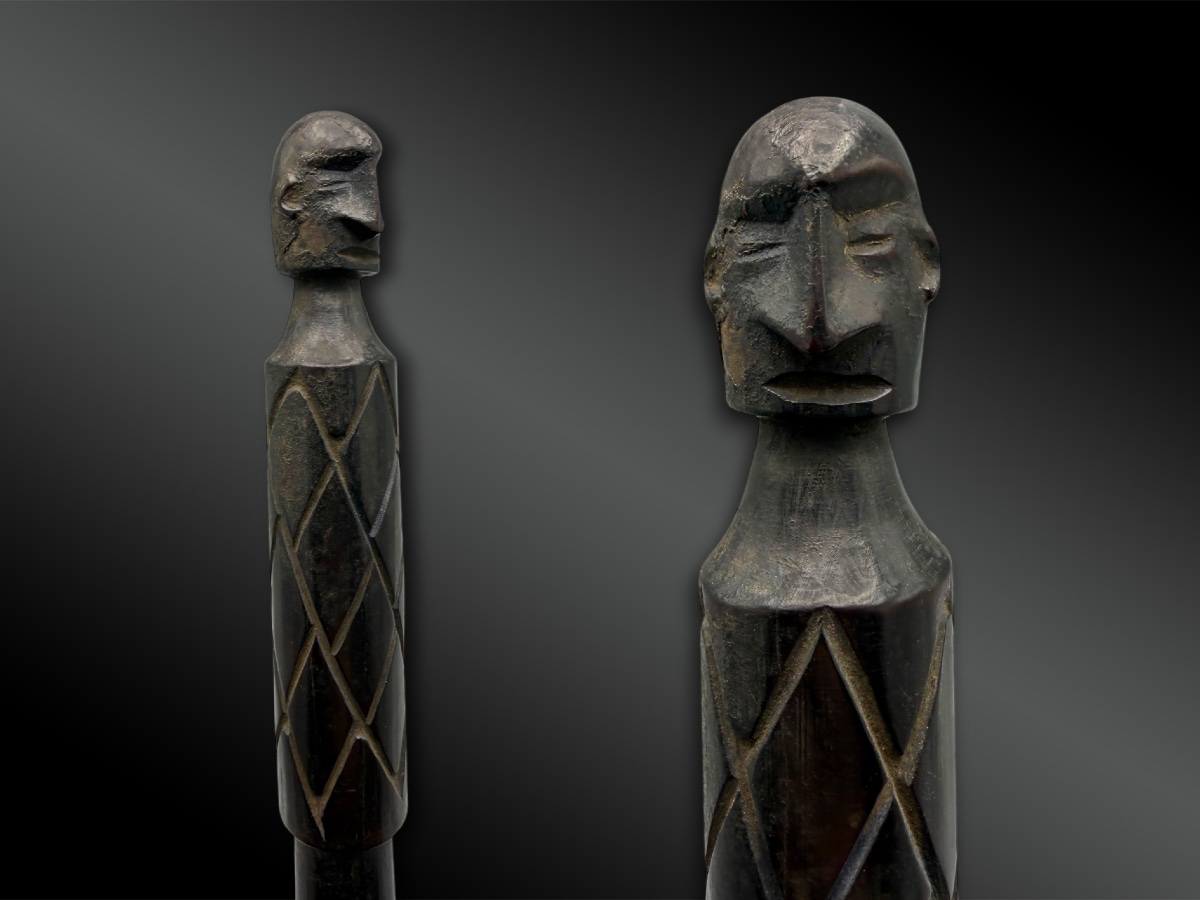
This wooden staff with a brown patina features an anthropomorphic figure, with a stylized body in a broad cylindrical section, adorned with a checkered pattern.
The shaman’s staff of the Emberá culture is an object imbued with special power. Indeed, according to anthropologist Erland Nordenskiöld, these staffs—imbued with benevolent spirits—"help the medicine man drive out demons."
The term “medicine man” refers to the jaïbaná: the shaman among the Emberá people.
This individual—who could be either a man or a woman—played a vital role in society: he or she was both the piache, the healer, and the intermediary, the physical link between humanity and the spiritual realm, between the visible world and the invisible world.
He alone had access to the jaï, the spirits.
Tradition dictated that the aspiring shaman, trained by an elder, carve his first staff himself. Once he had attained the status of jaïbaná, he was presented with a second staff. A shaman could thus accumulate a large number of staffs throughout his life.
Historian Mircea Eliade reports three prerequisite conditions for a man to become a shaman. First, he had to have a calling—an inner inclination. Second, the initiate had to be descended from a parent who had already been a shaman. Finally, he had to be chosen by the clan. Once these three conditions were met, the future jaïbaná had to embark on a journey of initiation where secret languages, mythology, ecstasy, dreams, and dreamlike states were taught to him.
Ref.: 6758
Text and photos © FCP CORIDON
920 €
Period: 19th century
Style: Tribal Art
Condition: Excellent condition
Reference (ID): 1863140
Availability: In stock
Print