THIS OBJECT WAS SOLD
Carved Wooden High Relief, *the Nativity*, Spain, 17th Century






Carved Wooden High Relief (Spain, 17th century)
The Nativity
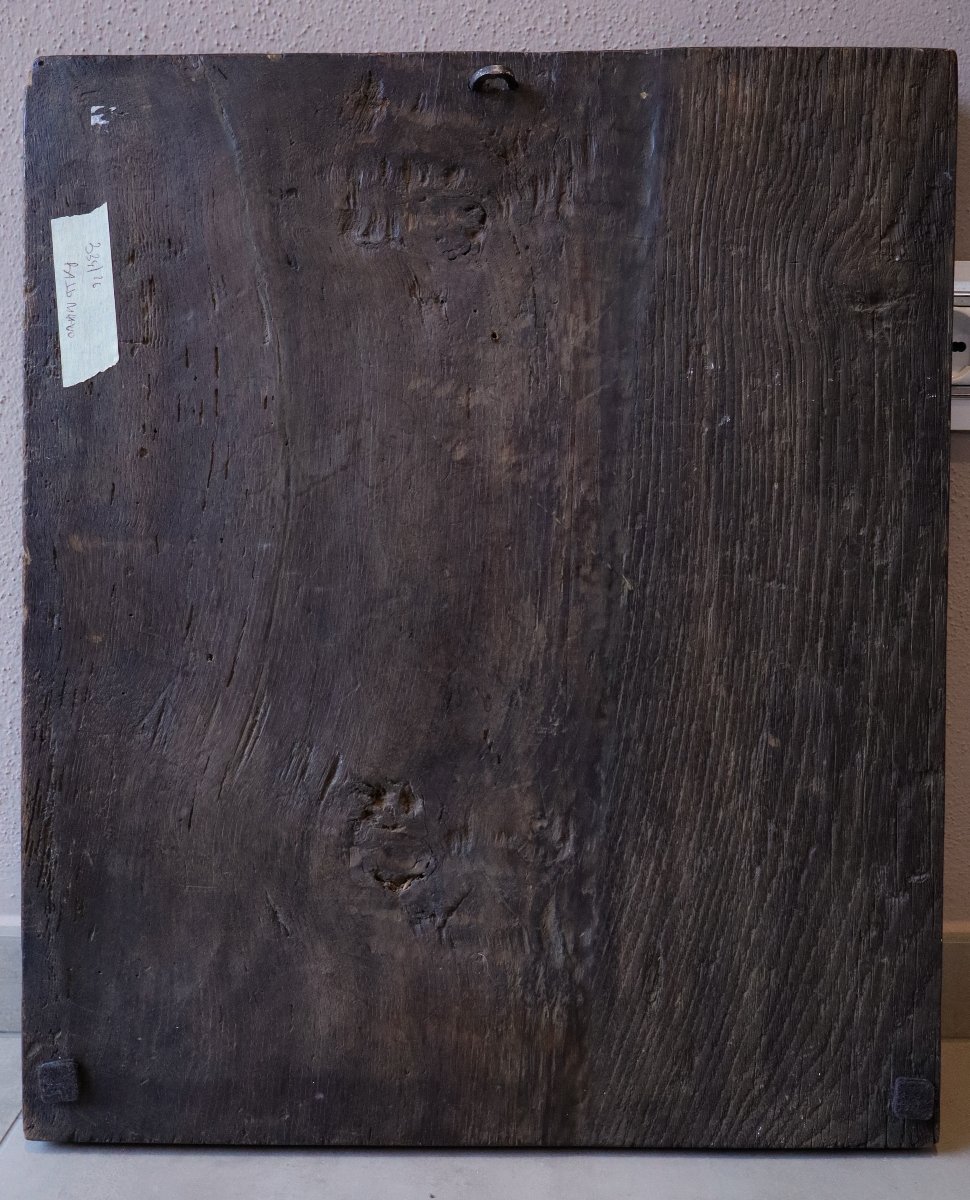
Carved wood (oak), polychrome and gilded
58 x 48 cm.
LINK
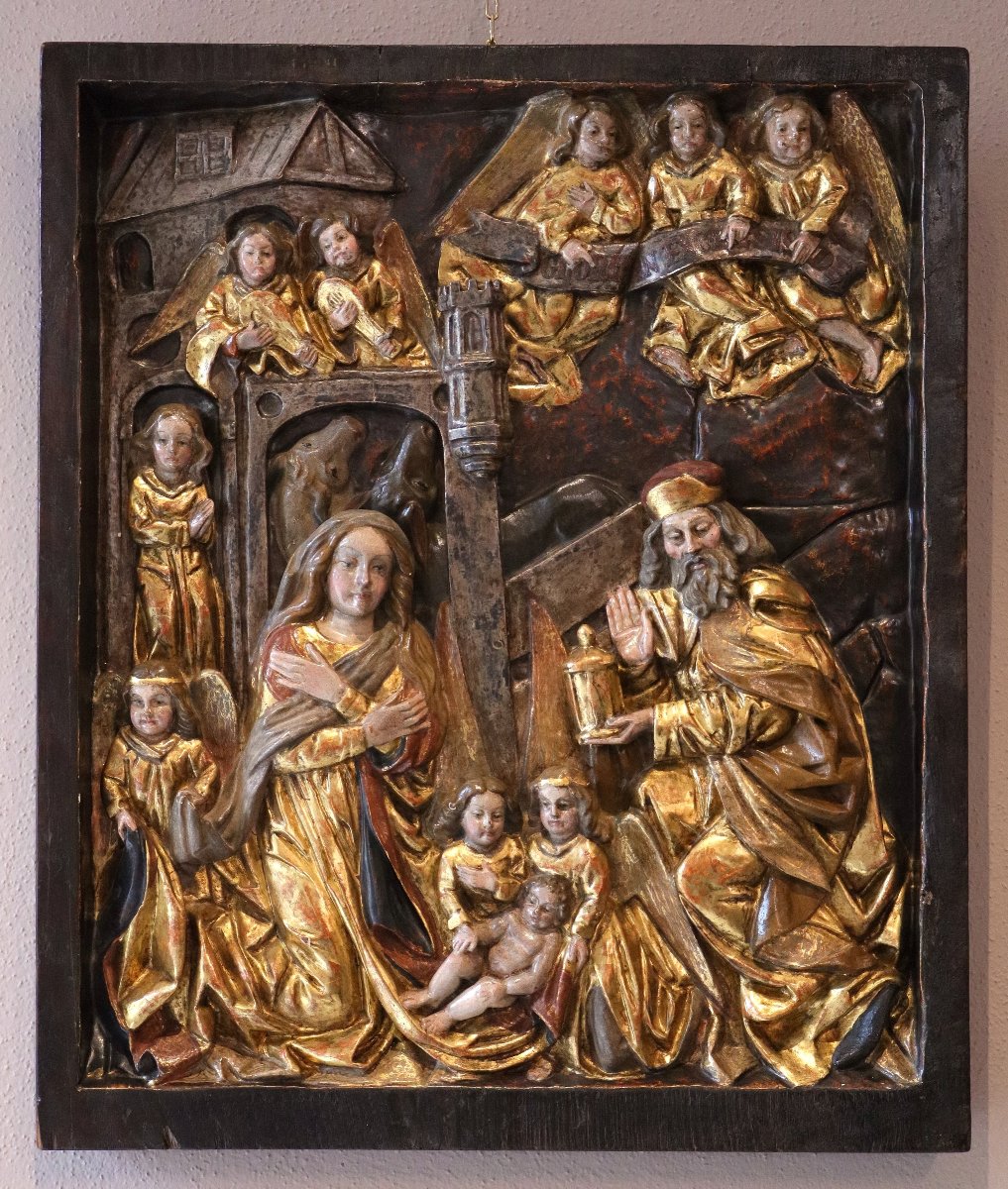
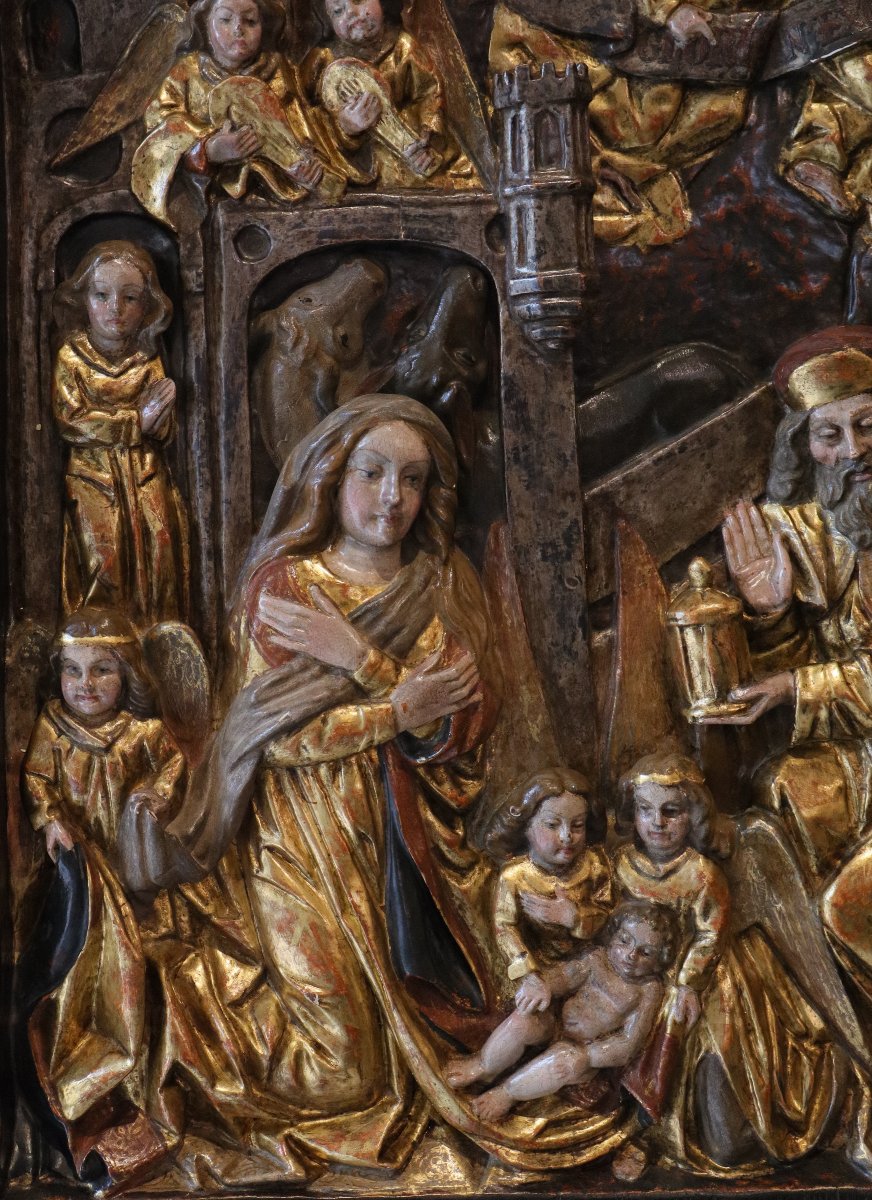
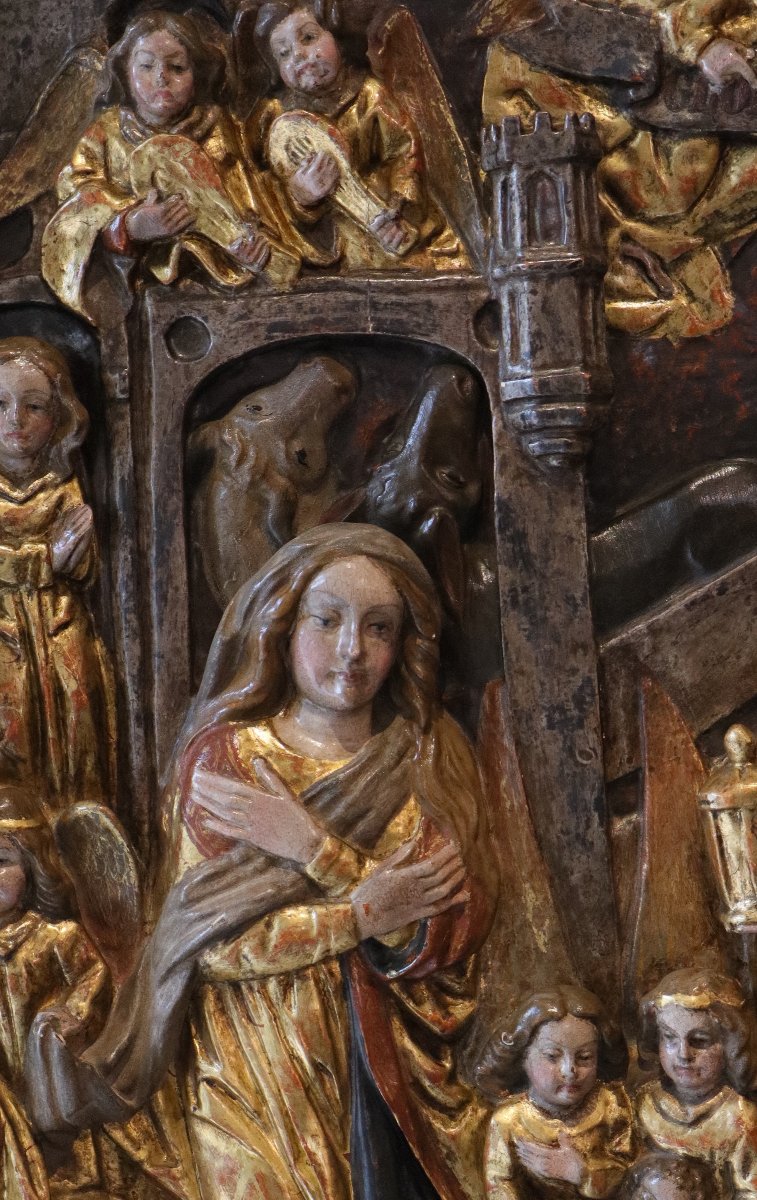
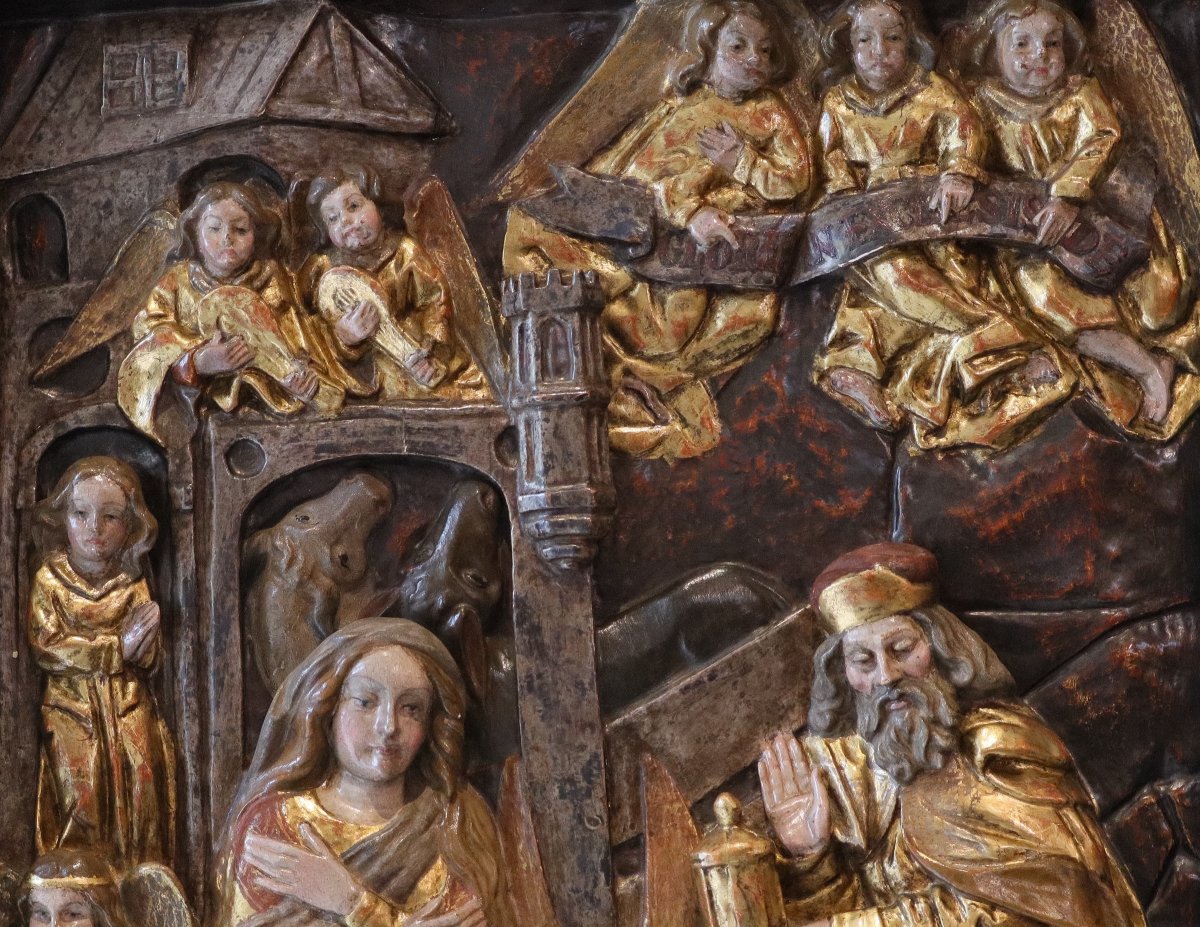
The wooden high relief presented here, executed in polychrome and finely gilded, is a work of Spanish origin created in the Late Gothic style, depicting the Nativity of Christ.
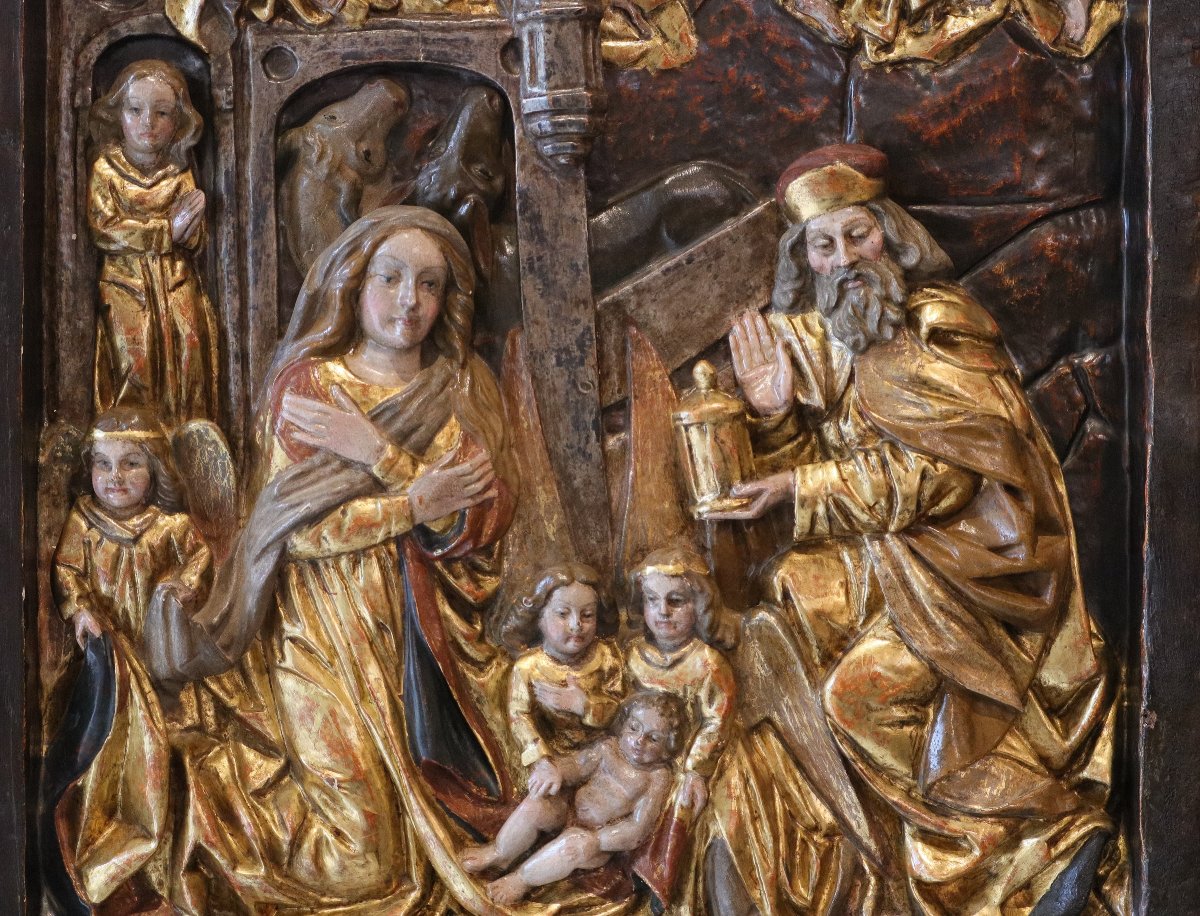
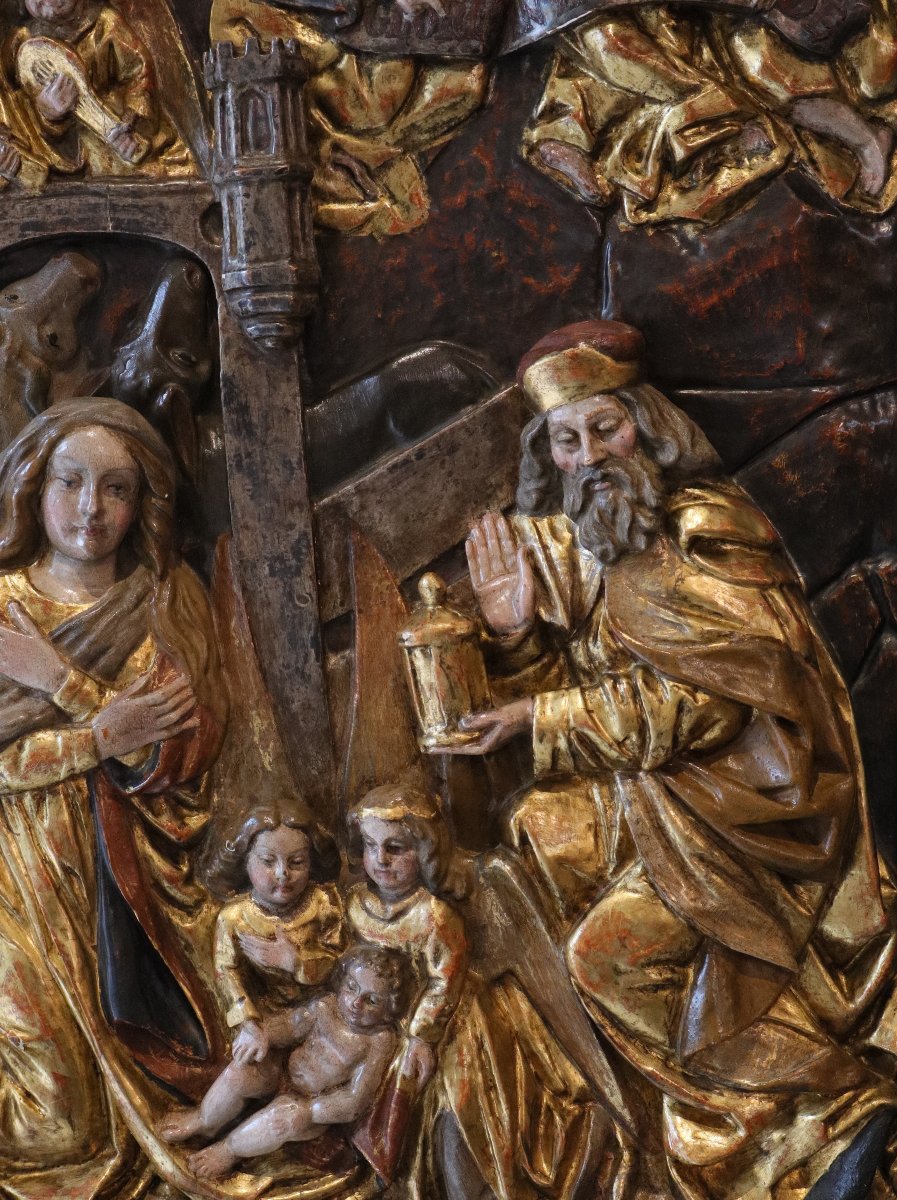
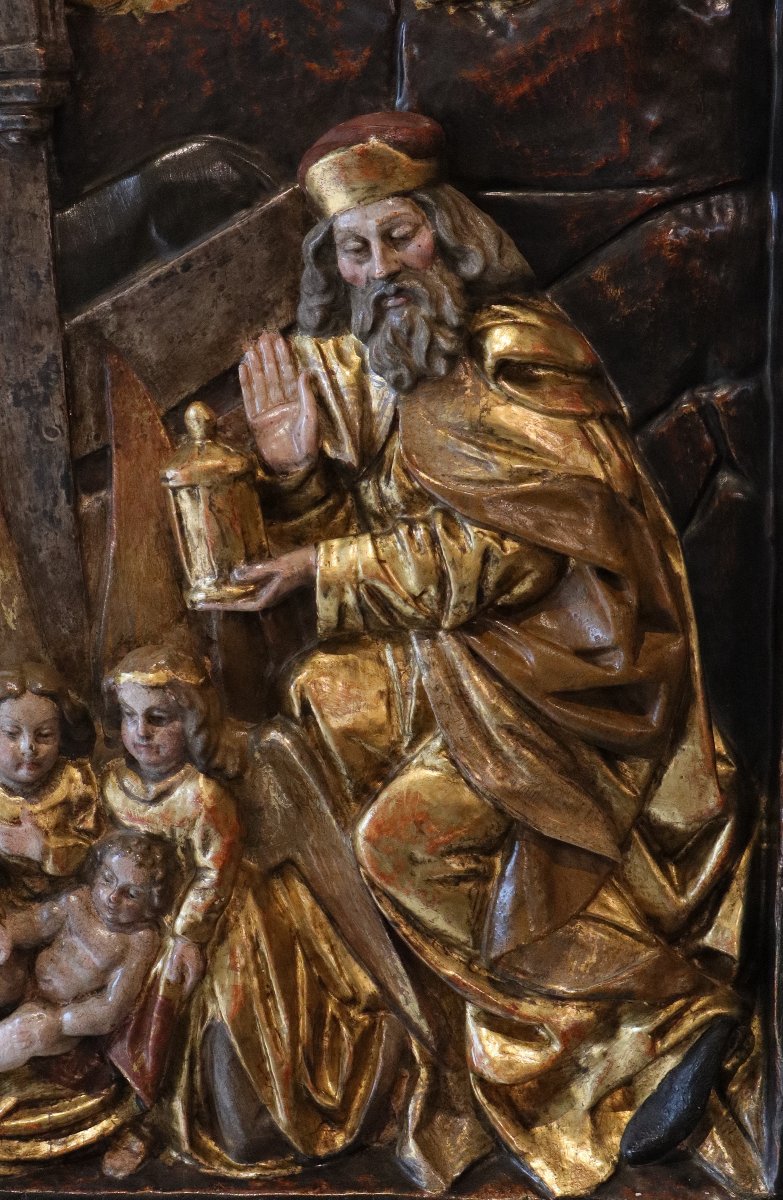
Let us now examine its composition, which features in the foreground the monumental figures of the Virgin Mary, depicted kneeling with her hands clasped, and Saint Joseph, holding a lantern (a classic attribute symbolizing the night on which the miracle took place and the coming of Light into the world), raising his right hand in a gesture of blessing.
Both are depicted in a posture of deep and intimate devotion, kneeling and facing the Infant Jesus, who lies on the ground supported by the hem of Mary’s cloak. Gathered around him are small, adoring angels with feathered wings who care for him, imbuing the scene with great intimacy, while another angel is visible on the left, watching over the scene.
The details forming the background of the bas-relief are also beautiful: in the upper section, a choir of angels witnesses the event from atop the stable, singing the canonical hymn “Gloria in excelsis Deo,” which can be read on the scroll held by three of them.
Although the stylistic details of the carving have been reinterpreted, the sculpture is inspired by the relief of the Nativity of Christ that adorns the Kefermarkt Altar (Kefermarkt Parish Church, Upper Austria), one of the absolute masterpieces of late-Gothic German sculpture, created around 1490 by an artist conventionally known as the Master of the Kefermarkt Altar.
Returning our attention to our splendid version, we are faced with a valuable example of that particular trend found in certain 17th-century workshops (active primarily in Spain, Germany, and the Alps) to adopt the complex iconography and structural models of the great masters of the Northern Late Gothic, while reinterpreting them through the sensibilities and techniques of the 17th century.
While Gothic drapery, as we see in the original panel, tends to be sharp and defined in a “crumpled” style (Knitterstil), the folds visible in this work reveal a softness and fluidity typical of the Baroque. The drapery flows with broader, enveloping, and sinuous lines, imparting a sculptural volume and a sense of bodily movement foreign to medieval angularity. Even in the rendering of the faces, such as that of our Virgin, we find a more mature, classicist tenderness, and the features of the kneeling Saint Joseph also denote an expressive refinement and a physiognomic naturalism characteristic of the seventeenth century.
Finally, of great value is the application of gold leaf, combined with the dark tones of the rocky background and the lacquer effects, which enhance the contrasts of light and shadow—a theatrical play of light that was highly sought after during the 17th century to heighten the emotional engagement of the faithful.
Fig. 1 - Altar in the church of Kefermarkt, Upper Austria. Anonymous master (known as the Master of the Kefermarkt Altarpiece), circa 1497.
Fig. 2 - Detail of the panel depicting the Nativity of Christ
ADDITIONAL INFORMATION:
The work is sold with a certificate of authenticity and a descriptive iconographic sheet.
We arrange and organize the transport of purchased works, both within Italy and internationally, using professional and insured carriers.
It is also possible to view the sculpture at our gallery in Riva del Garda, by appointment, where we will be happy to welcome you and show you the works that interest you.
Please feel free to contact us, with no obligation, for any additional information.
Follow us on:
https://www.instagram.com/galleriacastelbarco/?hl=it
https://www.facebook.com/galleriacastelbarco/
Explore similar pieces and discover your ideal find:
Wood Sculptures