


*ecce Homo* Spanish-flemish School, Oil On Panel, 16th/17th Century
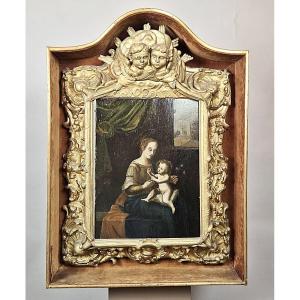
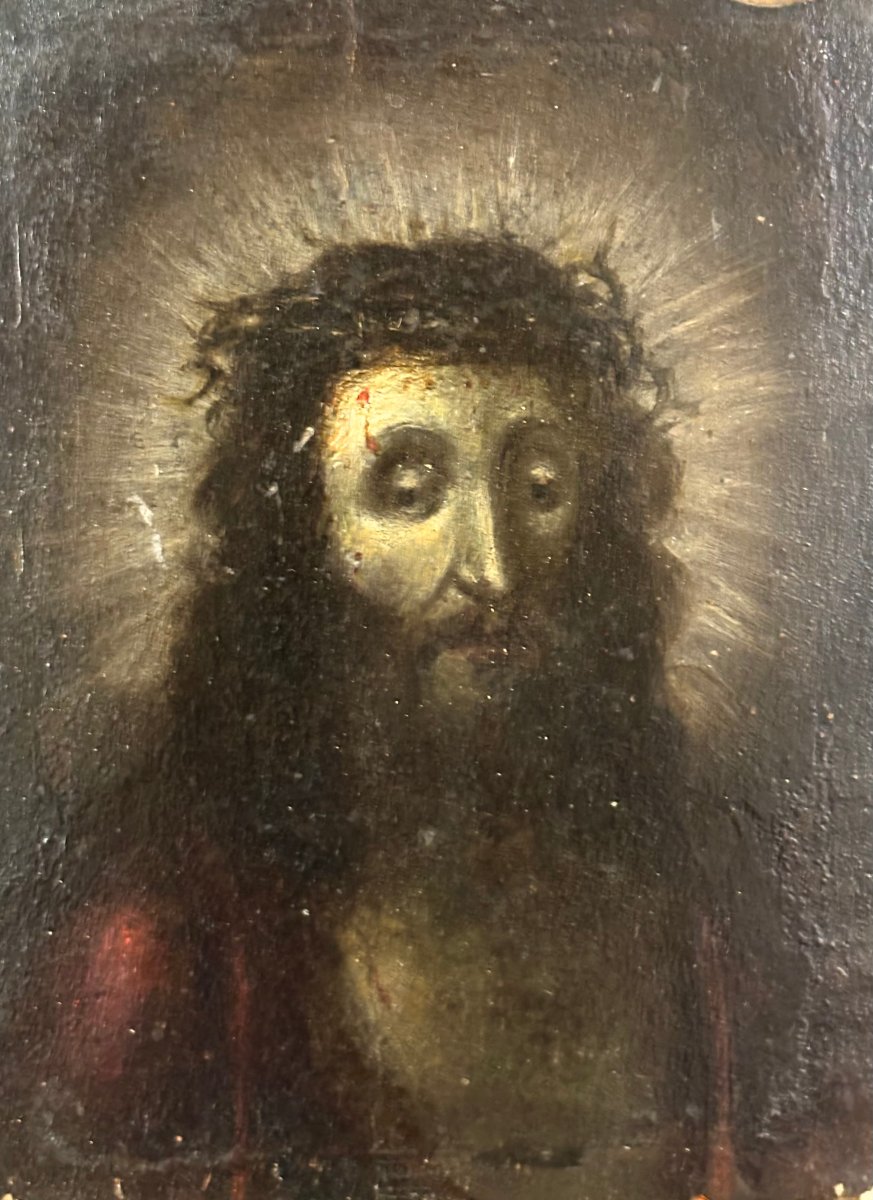
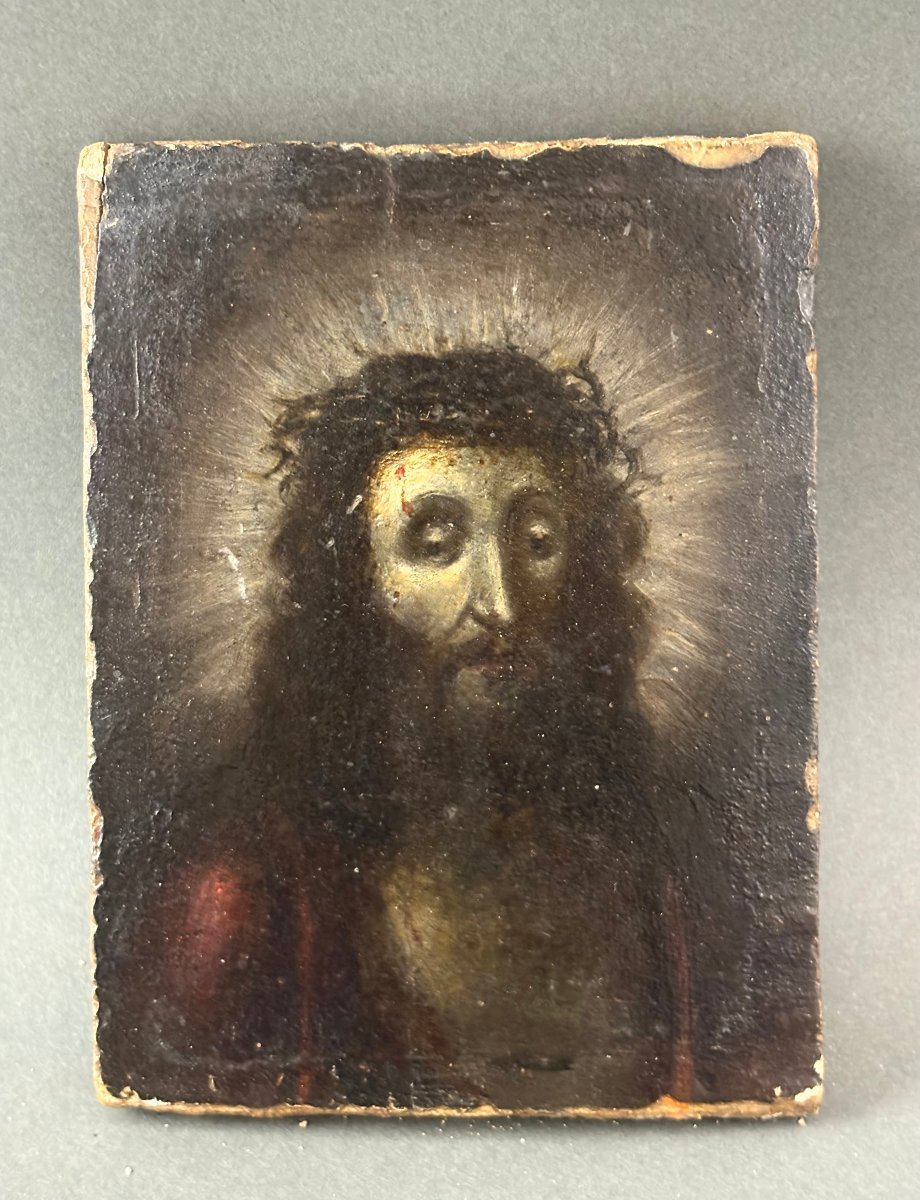
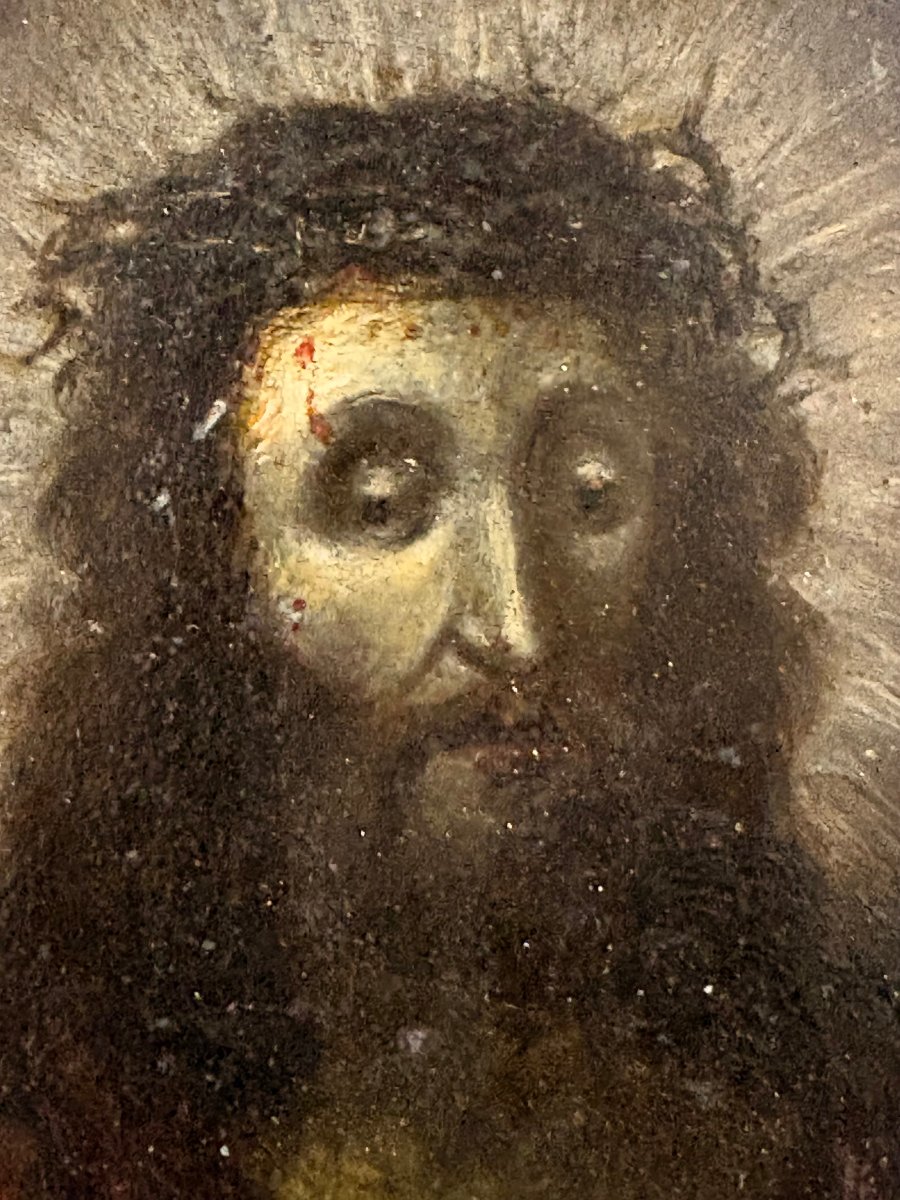
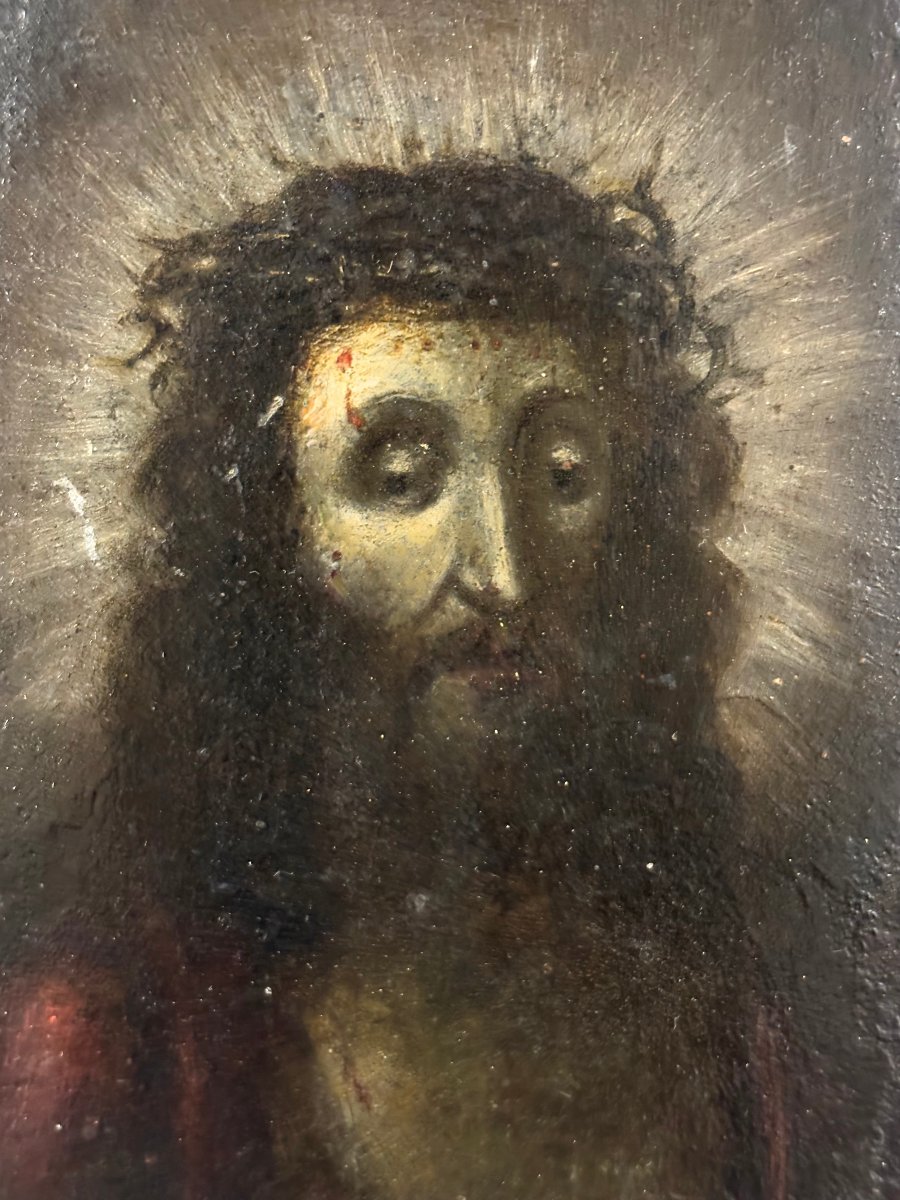
Small devotional painting, oil on panel, Spanish-Flemish school, c. 16th–17th century.
The painting depicts a very common iconographic motif, that of the Ecce Homo—that is, Jesus Christ during the Passion, at the exact moment when he is presented to the crowd by Pontius Pilate before being condemned to crucifixion. Jesus is depicted with a crown of thorns on his head, his body bearing the marks of the scourging, and a red (or purple) cloak draped over his shoulders. The markedly emaciated face, the stern expression, the deep-set eye sockets, and the explicit and dramatic presence of blood on the forehead suggest the Spanish school of the Counter-Reformation (late 16th–17th centuries), while maintaining strong ties to the Flemish tradition. Artists such as Luis de Morales specialized precisely in small devotional paintings of Ecce Homo. The style was characterized by elongated and extremely emaciated faces, livid or grayish complexions that evoked suffering and imminent death, and finely hatched rivulets of blood. This formula aimed to emotionally stir the faithful through intense pathos. The model was derived from the Early Flemish Masters, such as Dieric Bouts or Quentin Metsys, whose influence Spain had deeply absorbed.
Dimensions
H 16 cm
W 12 cm,5
++++++++++++++++++++++++++++++++++++++++DELIVERY AND PAYMENT++++++++++++++++++++++++++++++++
SHIPPING VIA UPS or DHL
Payment methods: Bank transfer - Online credit card (including AMEX) - PayPal (+3.7%) - NO checks
https://internationalantiques.eu/it/consegna-e-assicurazione/
+++++++++++++++++++++++++++++++++++++++++++++++++++++++++++++++++++++++++++++++++++++++++++++++
650 €
Period: 16th century
Style: Renaissance, Louis 13th
Condition: Good condition
Material: Oil painting on wood
Width: 12,5
Height: 16
Reference (ID): 1853191
Availability: In stock
Print