

The Myth Of Glaucus - The Myth Of Arion
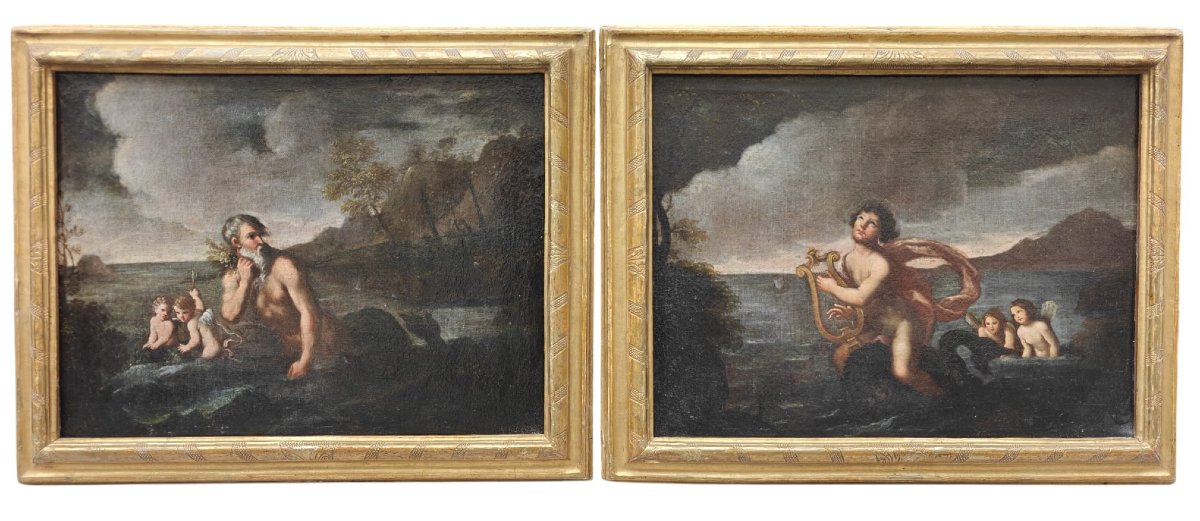
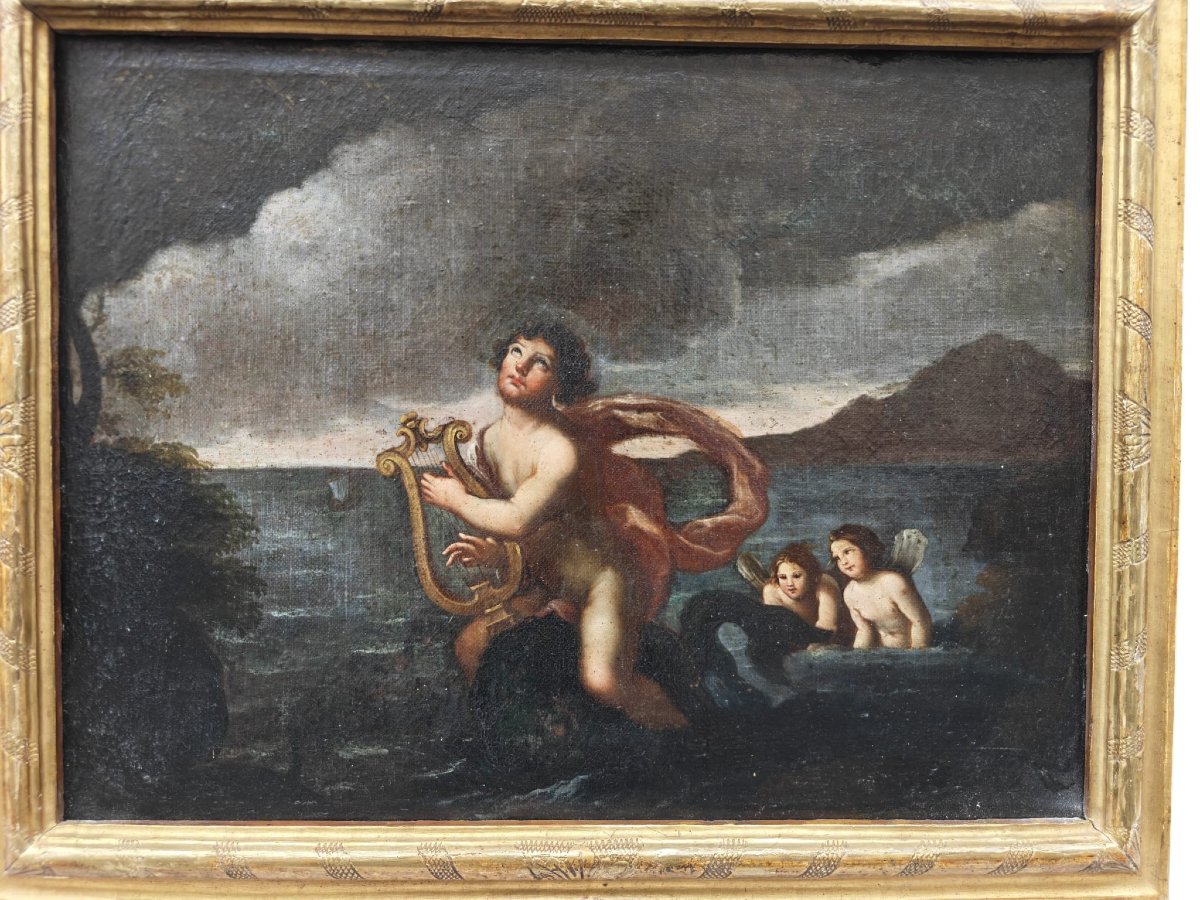
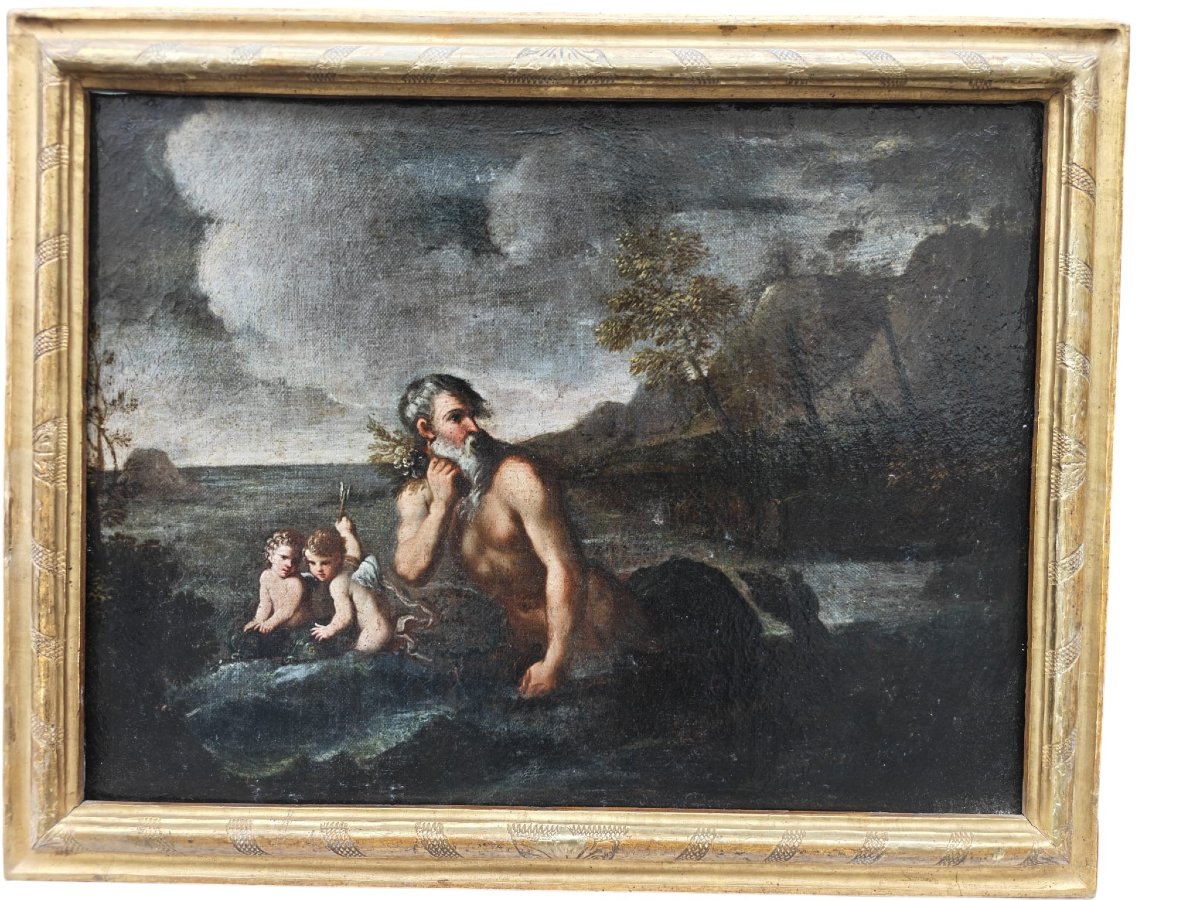
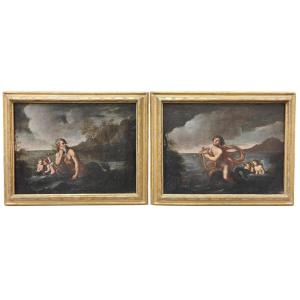
A pair of paintings depicting marine mythological subjects from the Ligurian school, representing two distinct myths that are linked by their marine and salvation themes.
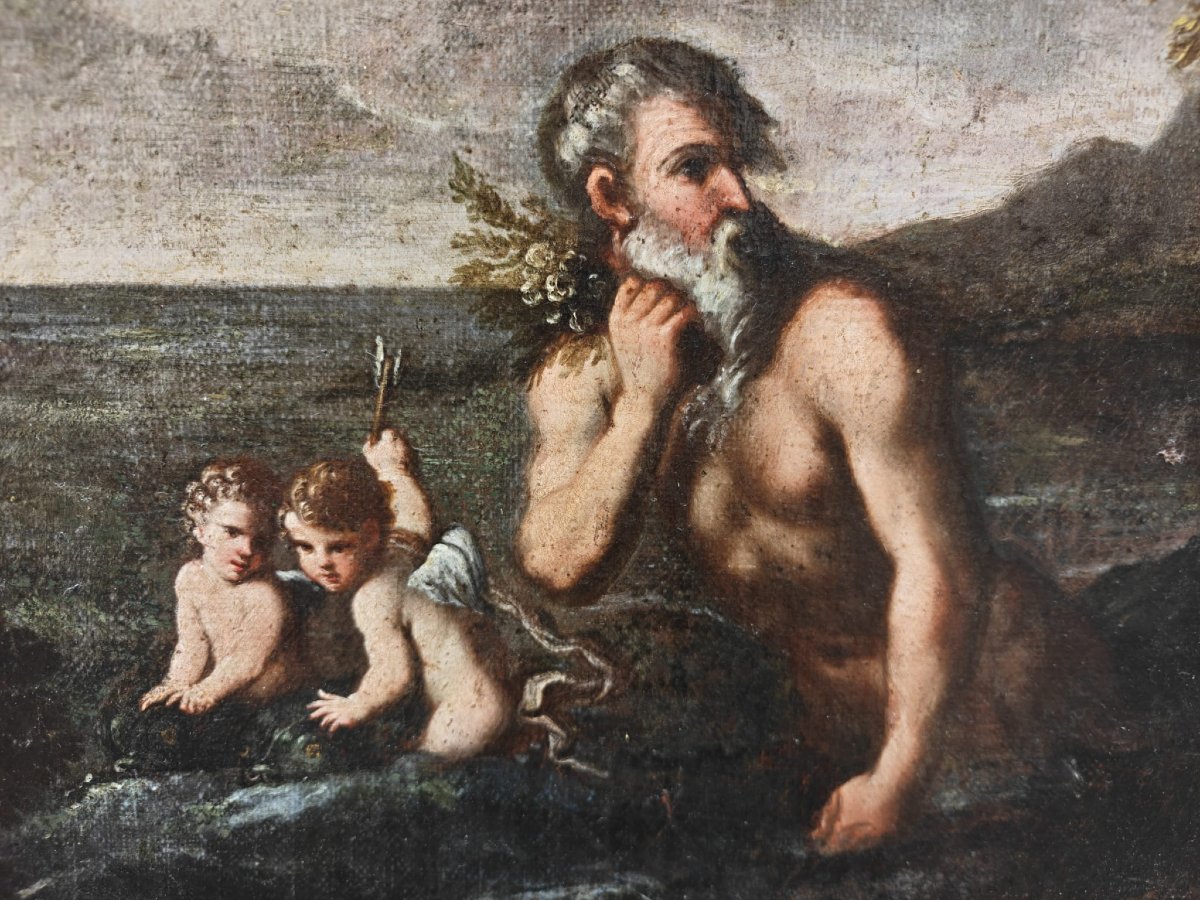
The myth of Glaucus:
According to Ovid’s account (Metamorphoses), Glaucus noticed that the fish he had just caught, once placed on a certain meadow, touched a magical herb and came back to life, diving into the sea. Intrigued and longing for immortality, he ate that herb: seized by a sudden urge, he threw himself into the water, and the sea gods welcomed him among them, transforming him into a triton with a long beard, hair of seaweed, human arms, and a fish tail in place of legs
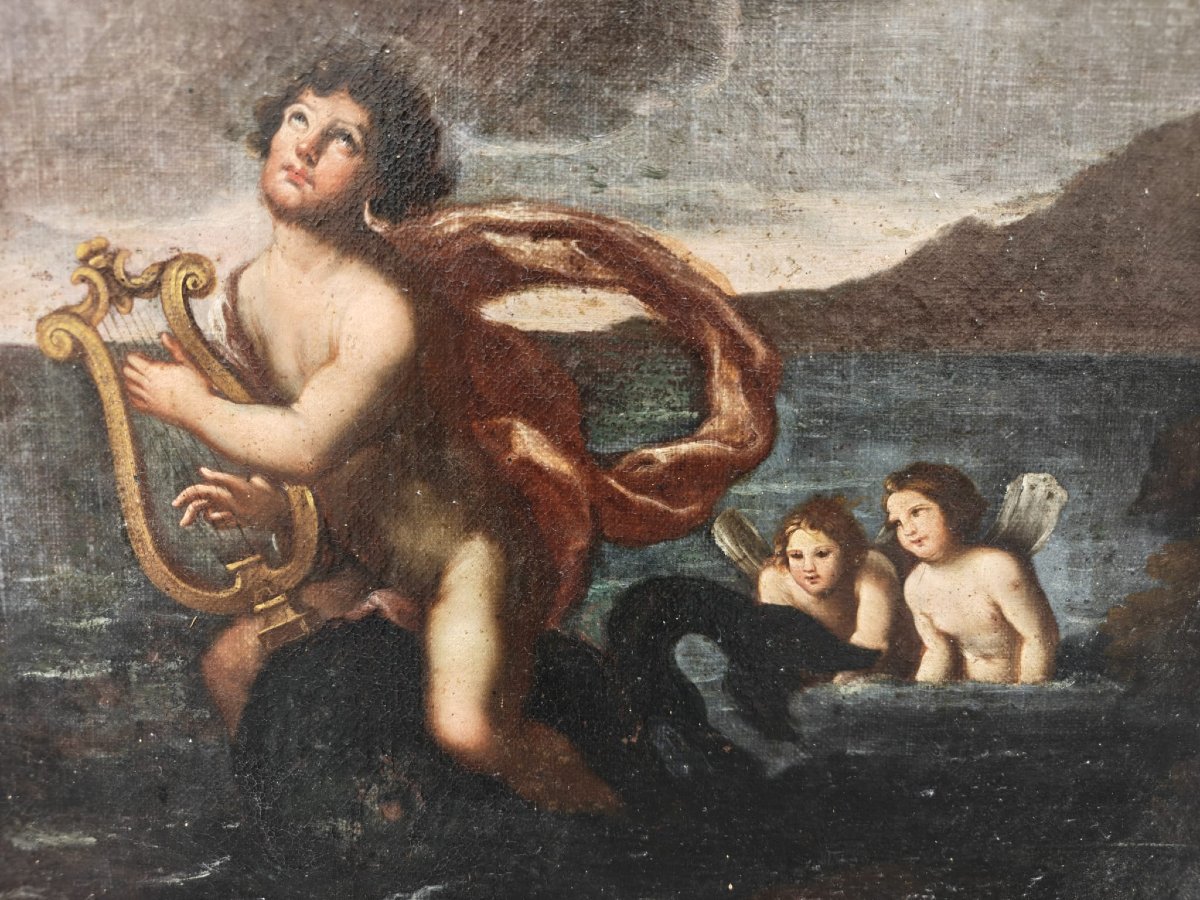
The myth of Arion:
The myth tells that Arion, a divine lyre player, traveled from city to city, growing wealthy through his art; he reached as far as Sicily and from there went to Taranto, but on the return journey to his native Corinth, the sailors decided to kill him to steal the riches he carried with him.
Arion asked to sing before he died, and, accompanying himself on his lyre, he sang a hymn in praise of Apollo. Attracted by his voice, many dolphins surrounded the ship, so that when Arion, having finished his song, threw himself into the sea, they pulled him to safety.
Upon arriving in Corinth on the back of one of the dolphins, he confided his misfortunes to Periander, the city’s tyrant.
Periander captured the sailors and crucified them.
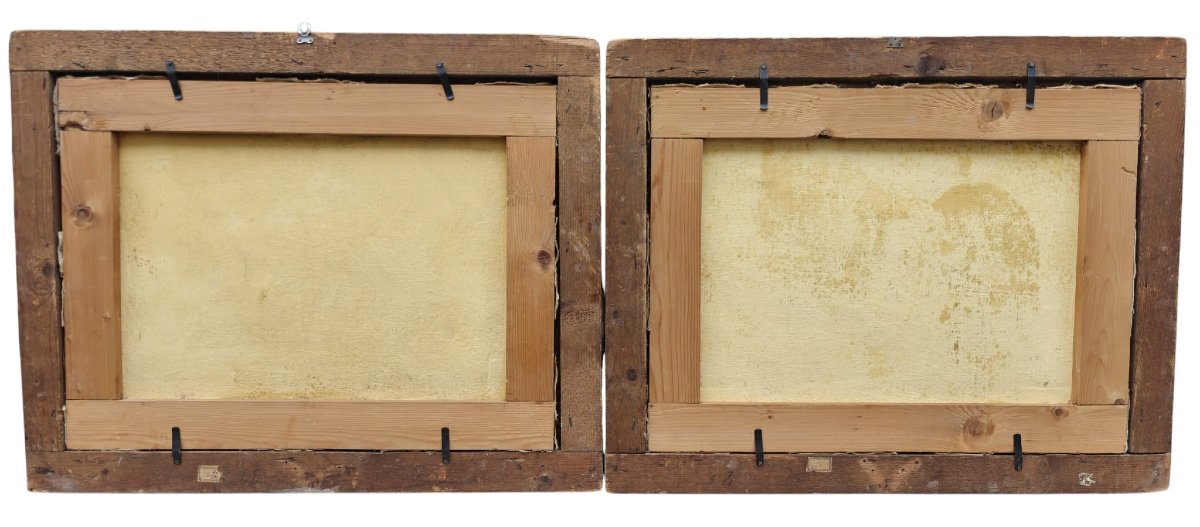
The frames are contemporary and original.
Dimensions with frame: 78 x 62, depth 5
Dimensions without frames: 65.5 x 49
Period: 18th century
Style: Louis 14th, Regency
Condition: Excellent condition
Material: Oil painting
Width: 78
Height: 62
Depth: 5
Reference (ID): 1852691
Availability: In stock