

Ablution Pitcher, Uzbekistan, Central Asia, 19th Century, Collection, Islamic Art
Artist: Art D'ouzbékistan
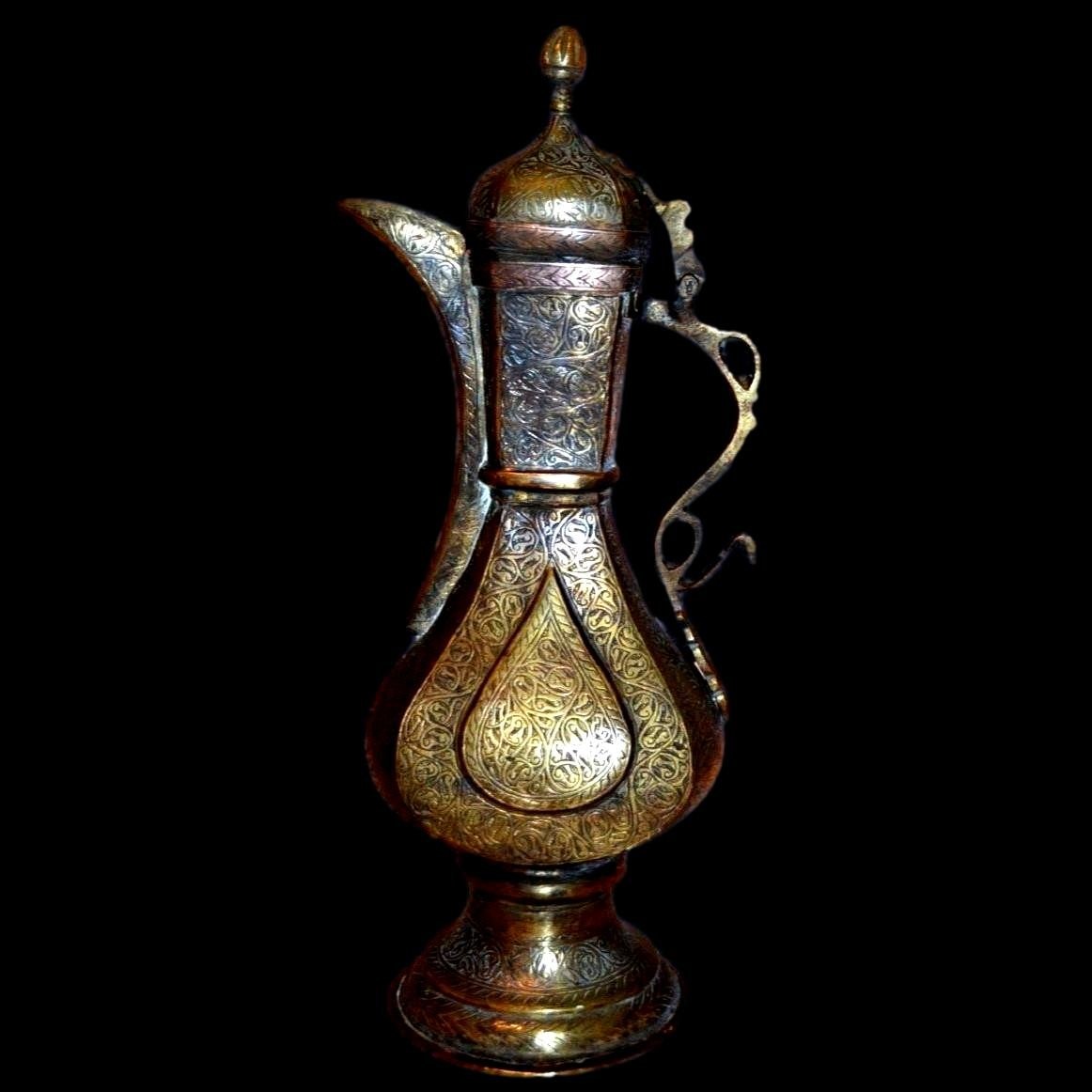
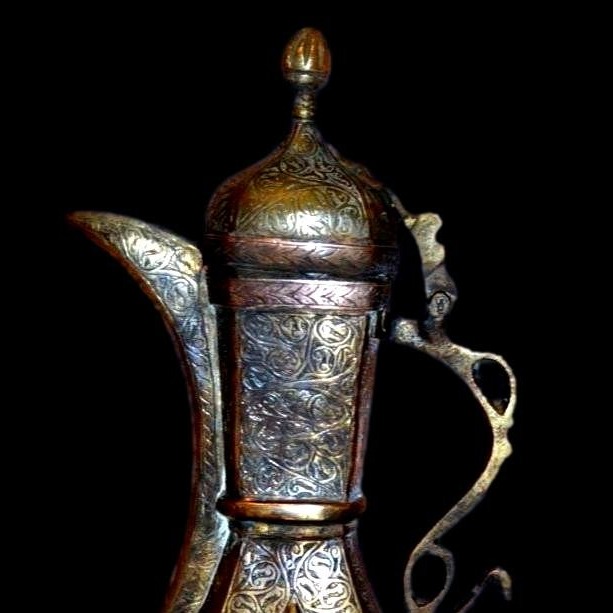
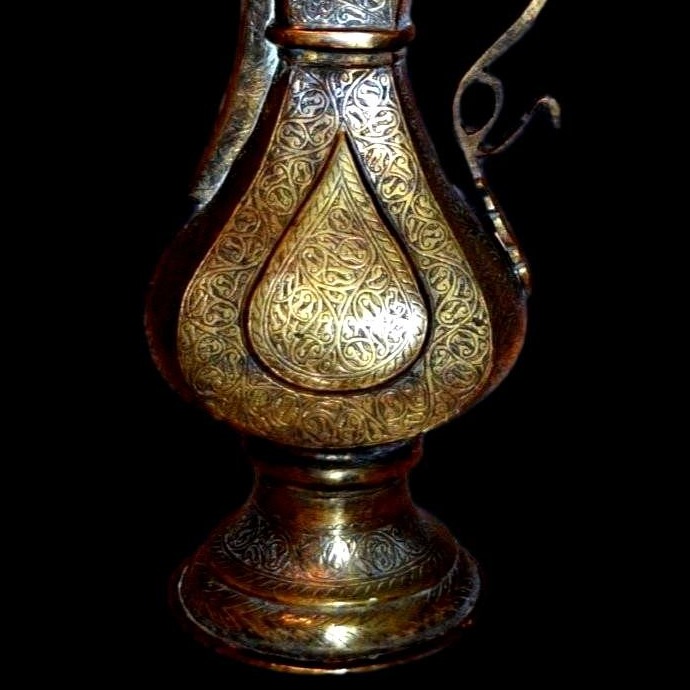
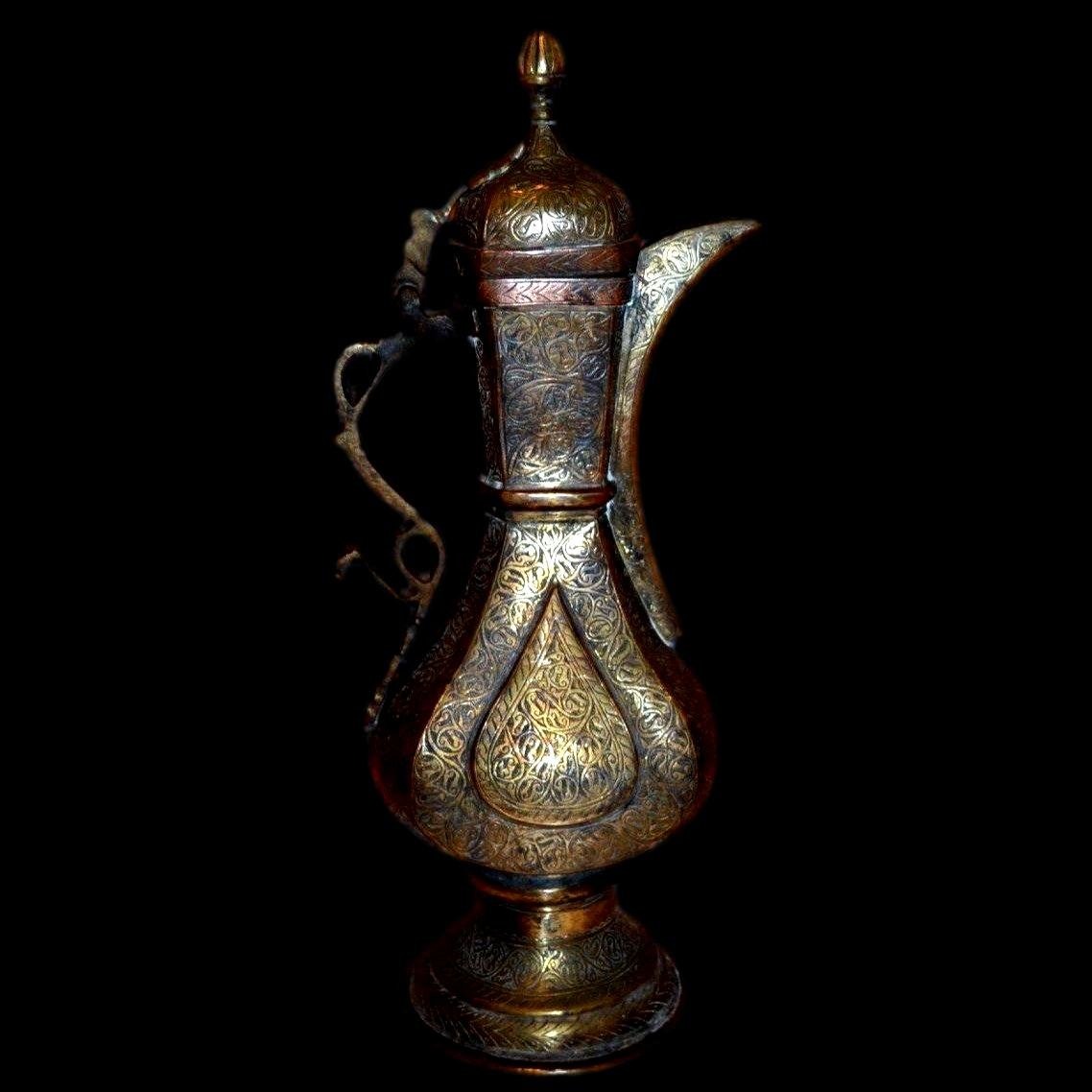
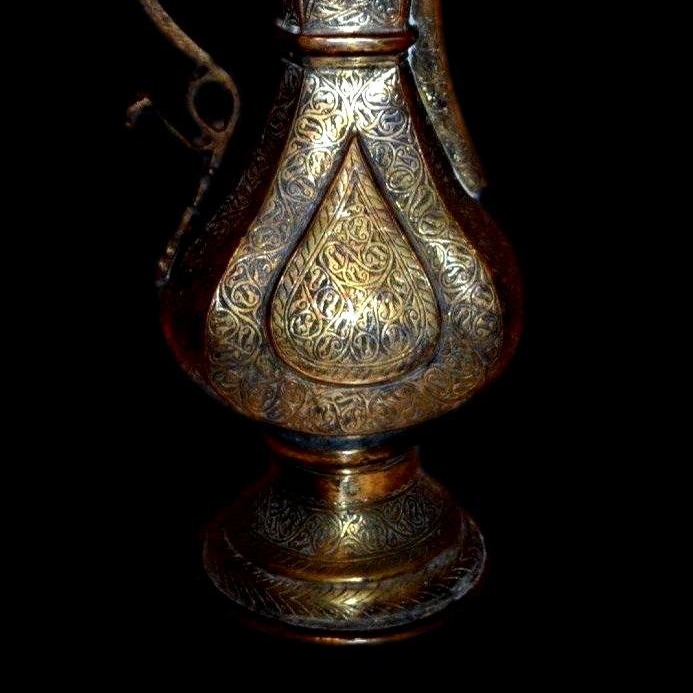
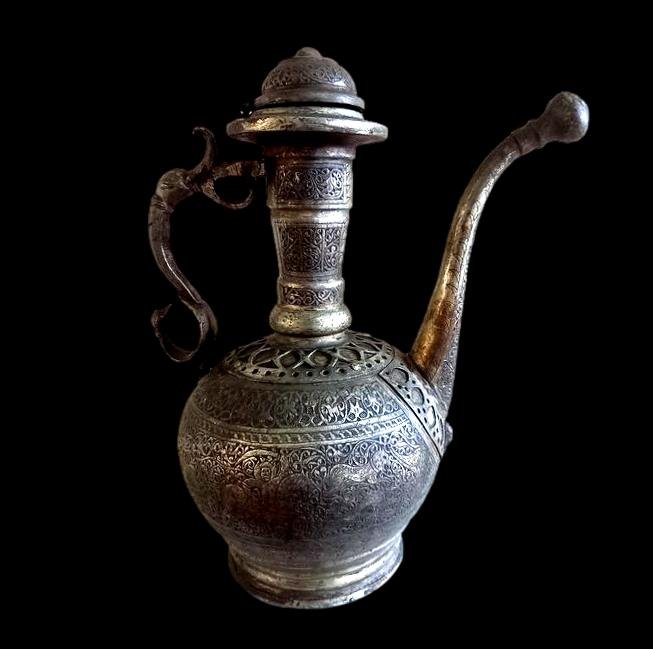
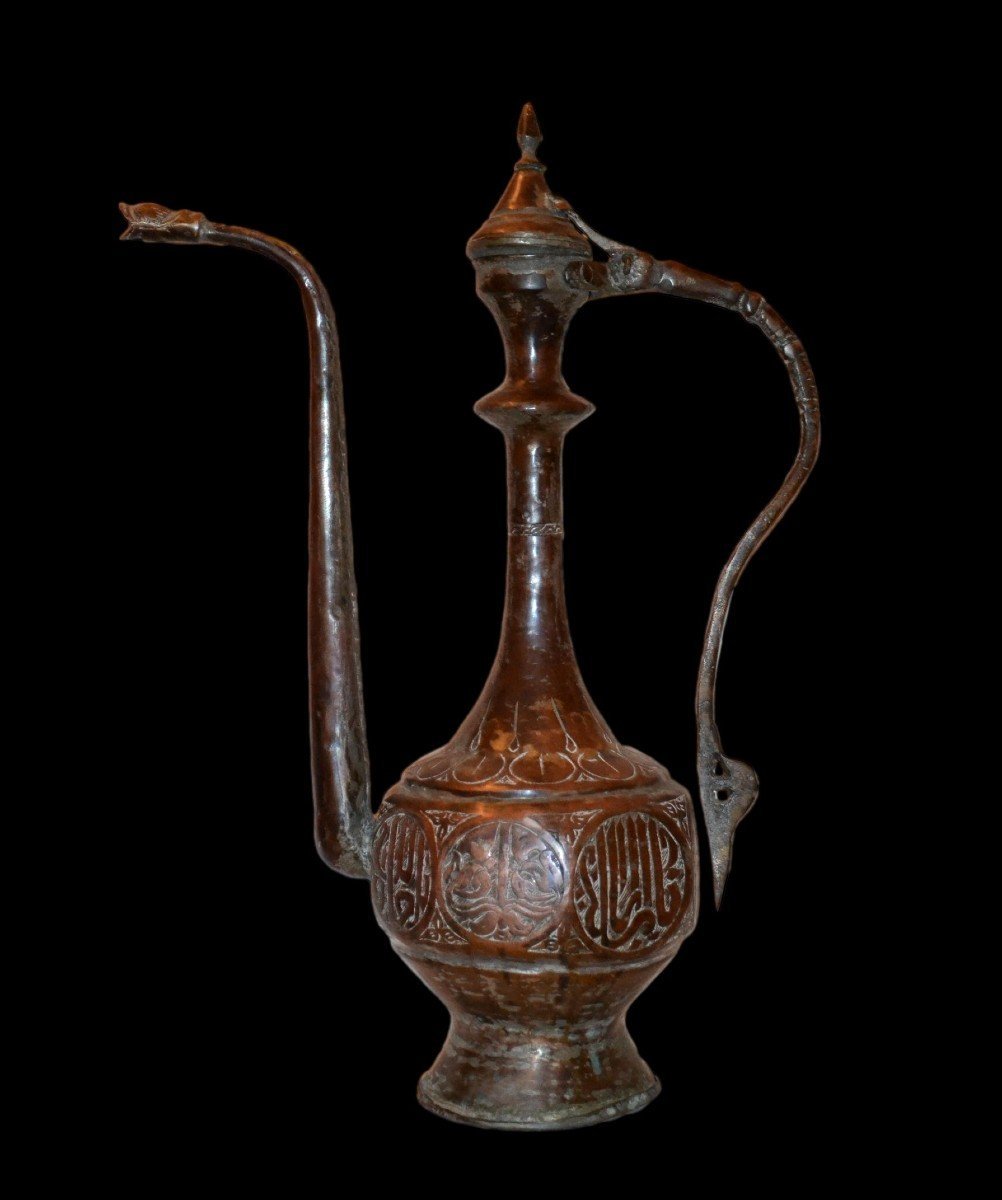
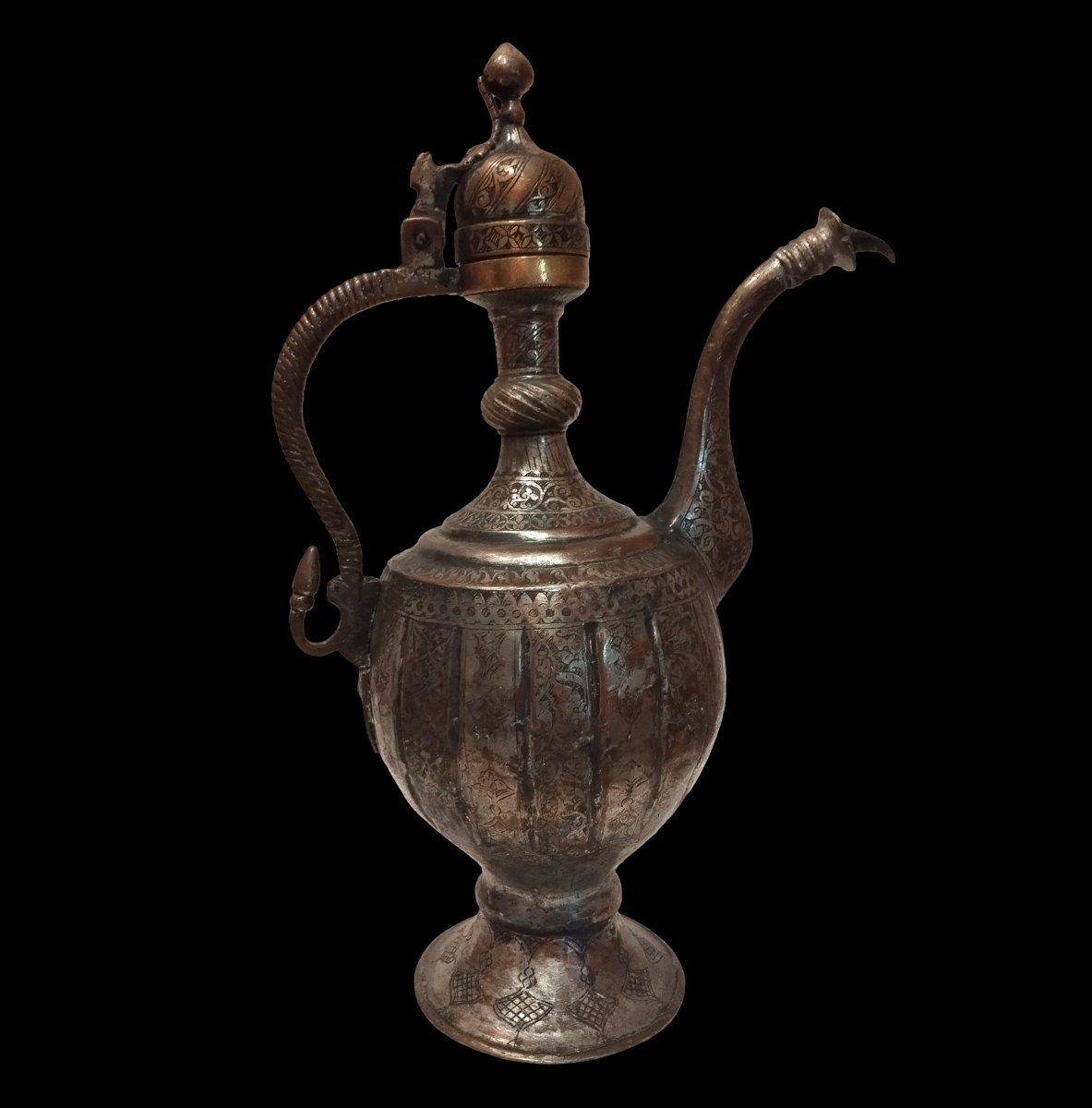
A large lidded ewer with a pear-shaped body, made of brass engraved on all sides with subtle interlacing patterns.
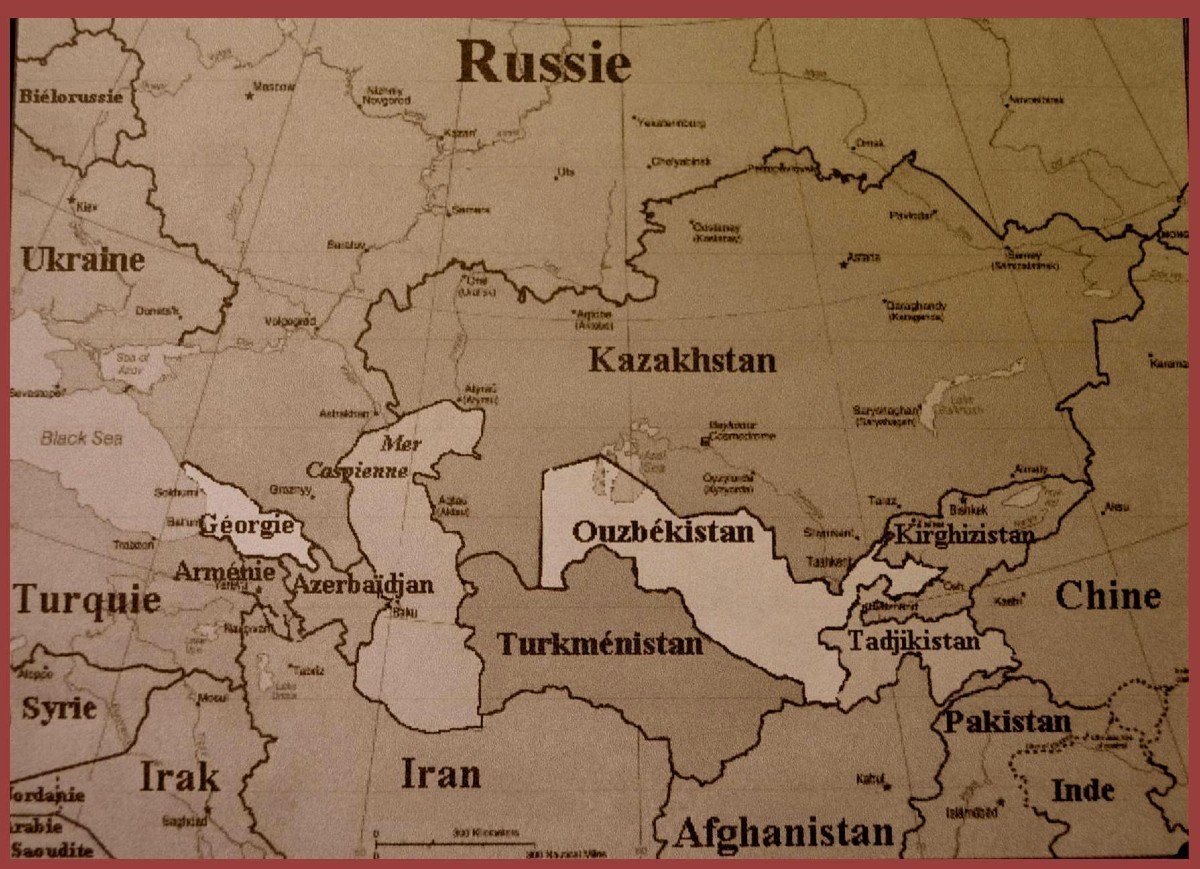
Native to and typical of Uzbekistan in Central Asia in terms of its shape (see map).
Videos or photos available upon request.
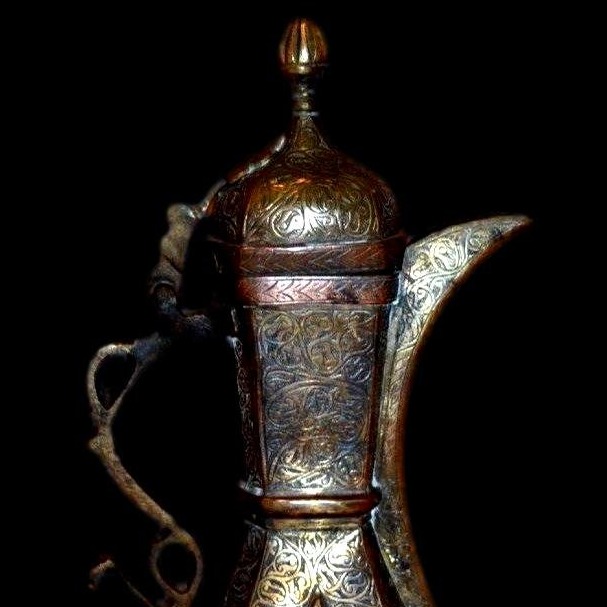
A graceful S-shaped handle made of cast brass and magnificent, delicate engravings covering the entire object make this a water pitcher of great beauty and rare finesse.
The engraved interlaced design within a raised mandorla on the body appears on both sides; the entire object is engraved with very fine interlacing patterns and friezes.
The dome-shaped lid, topped with a fretel, as well as the spout, are finely engraved.
A key stop on the Silk Road for centuries and a former Soviet republic in Central Asia, this country offers treasures to those who know how to appreciate them.
The arts and literature, period clothing, carpets, and silk make this country a delight for collectors of ancient Islamic art, and cities like Samarkand and Bukhara are the magical destinations along this legendary Silk Road.
Ewers were primarily used for ablutions—washing the face and hands—during religious ceremonies.
“The feast of the initiated: standing ready to serve, beauties from all sides hold ewers in their hands;
the lovers wash their hands with all their soul;
while the beauties pour the water, ewer in hand.”
Reading and translation by A.S. Melikian-Chirvani, 1973, p. 119.
Dated from the 19th century and in very fine condition.
These marvelous objects made of copper or brass were, during the Safavid and Qajar dynasties—and in other countries surrounding Persia—a prominent alternative to silver and enjoyed the same status.
Pure copper is the basis for alloys such as bronze and brass.
It has been shaped using the repoussé technique throughout history, but it has often been gilded, enameled, coated, or inlaid with other materials, as seen in our example.
It was widely used in the manufacture of everyday objects.
Metalwork encompasses this type of production, and certain countries—such as those in the Muslim East—became masters of the craft.
These objects were undoubtedly once the centerpieces of homes in Persia and Central Asia.
Dimensions: Height: 39 cm (15") – Width: 16 cm (6") - Weight: 1080 grs
.We have a large collection of Islamic ewers from various regions:
Iran, Persia, Central Asia, Anatolia, India, the Middle East... available on Proantic.
FREE SHIPPING TO FRANCE via Colissimo: 0€ / EUR 25€ / WORLD 50€
## More photos available upon request
For further information, you can reach me at:
06 13 36 09 30 or at winsteinprovence@gmail.com
Texts and photos by WINSTEIN, all rights reserved.
www.winsteinprovence.com
1 360 €
Period: 19th century
Style: Orientalism
Condition: Excellent condition
Material: Brass
Width: 16 cm - 6"
Height: 39 cm - 15"
Reference (ID): 1850965
Availability: In stock
Print