




Polychrome Wooden Sculpture Depicting A Devotional Figure—15th Century
Polychrome wooden sculpture depicting a devotional figure—15th century
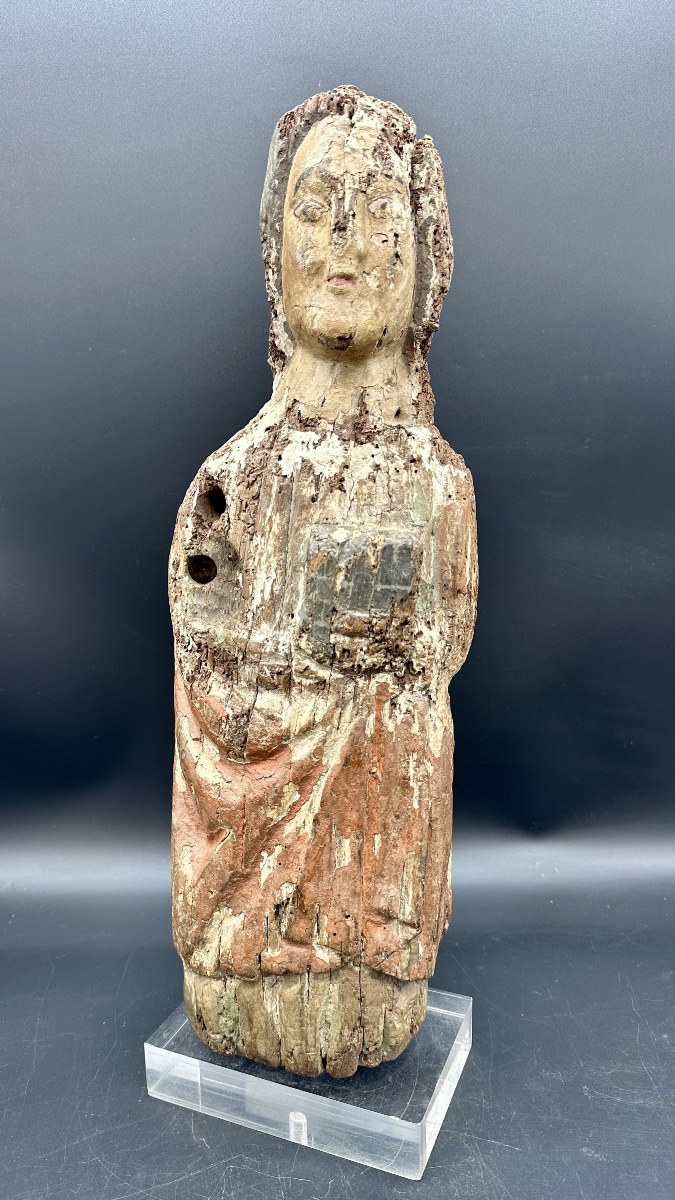
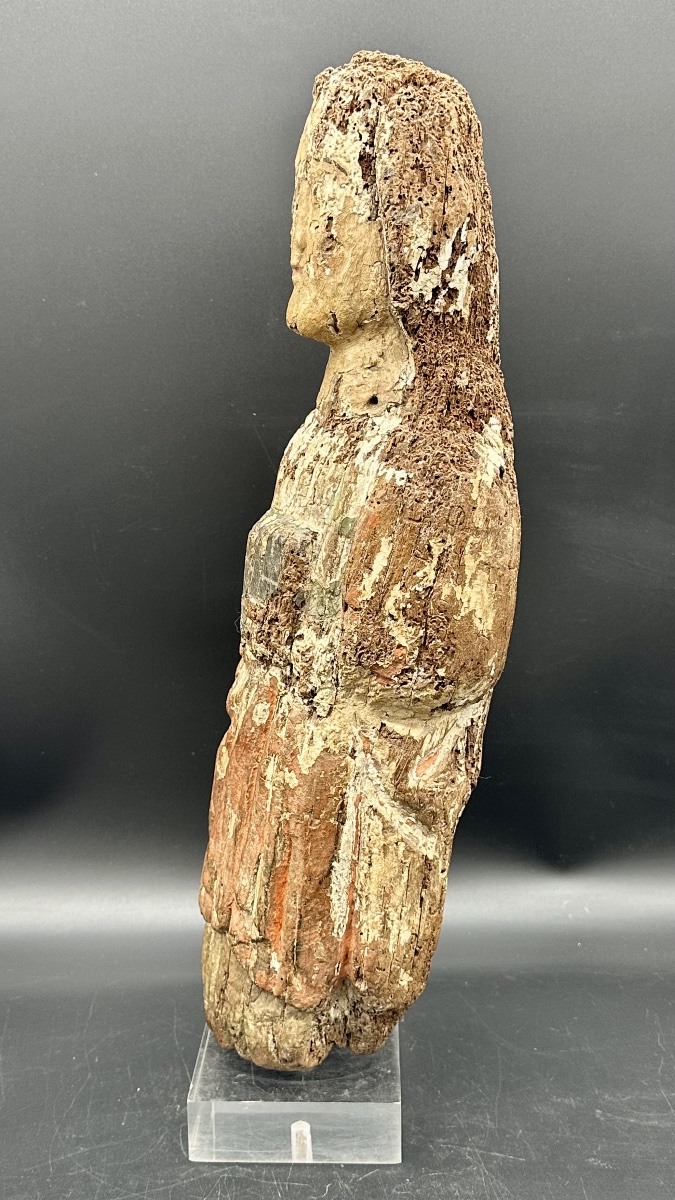
An interesting, museum-quality wooden sculpture in the round, depicting a standing religious figure dressed in a cassock and cloak, in the act of holding an architectural model, characterized by a dark color (perhaps slate or stone) and a structure of square blocks reminiscent of a tower, a fortification, or a building facade, clearly distinct from the surrounding polychrome garments. The figure is presented in a delicate frontal pose, with a face of simple features and a composed expression, typical of devotional sculpture in the folk tradition.
* Iconography: The standing figure holds a model of a house, a fortress, or a church.
In the study of medieval and Renaissance art, this attribute significantly narrows the identification of the sacred figure to a few specific categories:
* A patron saint or protector of a city: Many saints (such as Saint Petronius in Bologna or Saint Geminianus in Modena) are traditionally depicted holding a miniature model of the city or its walls to symbolize their role as guardians and defenders of the community.
* A Founding Saint or Patron: Saints who were popes, bishops, kings, or abbots (such as Saint Benedict or the holy kings) are portrayed holding a model of the abbey, monastery, or church they founded or built on earth, symbolically offering it to God.
* Saint Thomas the Apostle: Traditionally considered the patron saint of architects and builders, in rare instances in medieval art he may be accompanied by an architectural model as well as the classic carpenter’s square.
* Saint Anselm or other Doctors of the Church: Sometimes depicted with a church or sacred building resting on their hand to symbolize the doctrinal defense of the ecclesiastical structure.
* The frontal and solemn composition typical of medieval or Renaissance sculpture (often datable to the 14th through 16th centuries, depending on whether the work originates from central Italy or beyond the Alps).
* A full-relief sculpture carved from wood, retaining traces of its original polychromy on the clothing.
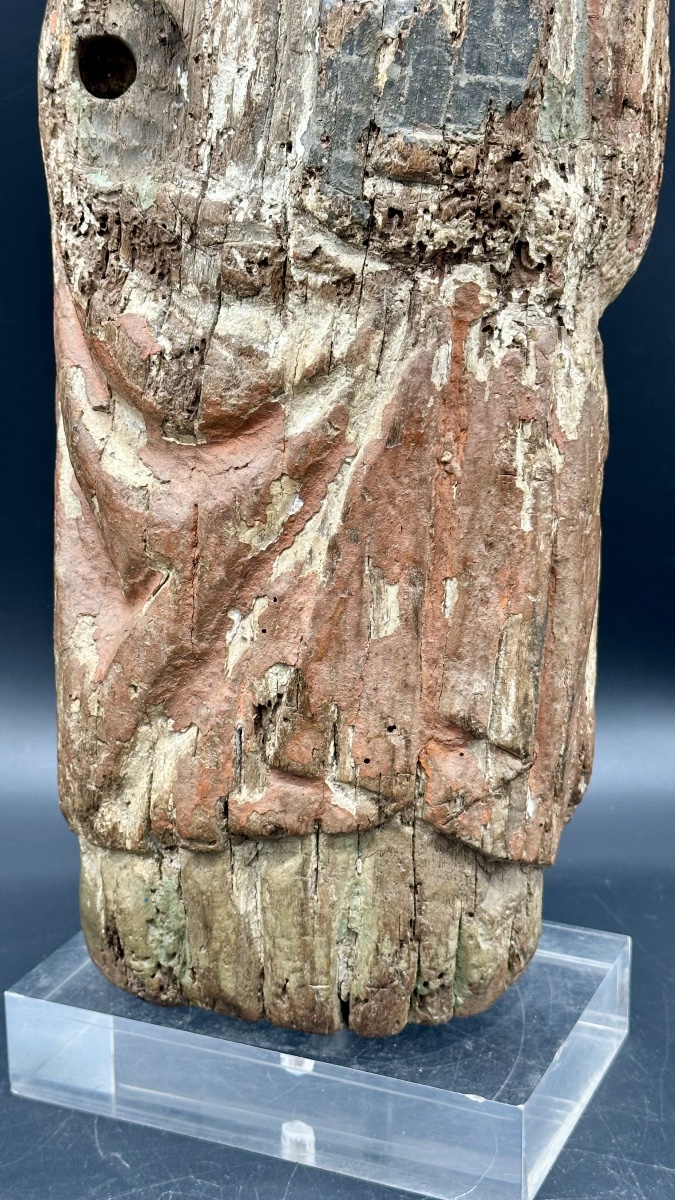
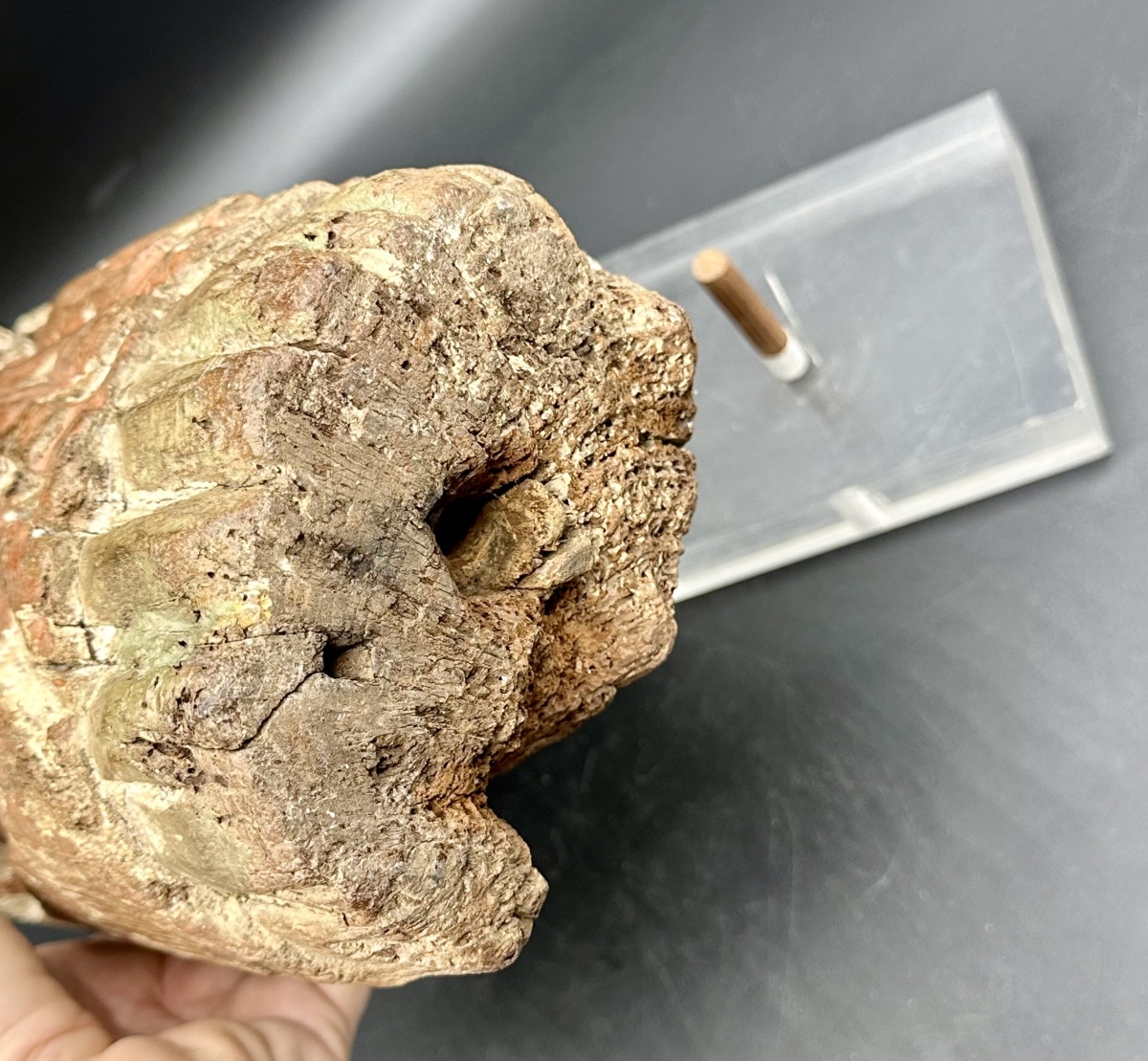
* Condition: Fragmentary (partial loss of the arms, wear on the wooden surface, traces of wood-boring insects or weathering, characteristic of ancient sculptures or those from the “High Middle Ages”).
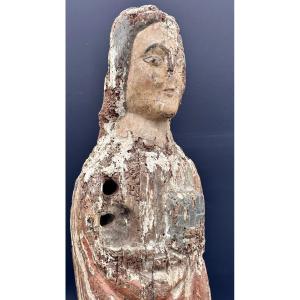
The front of the bust clearly reveals that the object held against the chest is an architectural model; it is distinguished by a dark hue (suggesting slate or stone) and a structure composed of hewn blocks, reminiscent of a tower, a fortification, or a building facade, clearly distinct from the surrounding polychrome garments. The visible holes on the right indicate the points where the arm was originally articulated or attached to the body of the sculpture.
Examination of the face reveals stylistic characteristics that are key to determining its date and geographical origin:
Stylistic and aesthetic details of the face
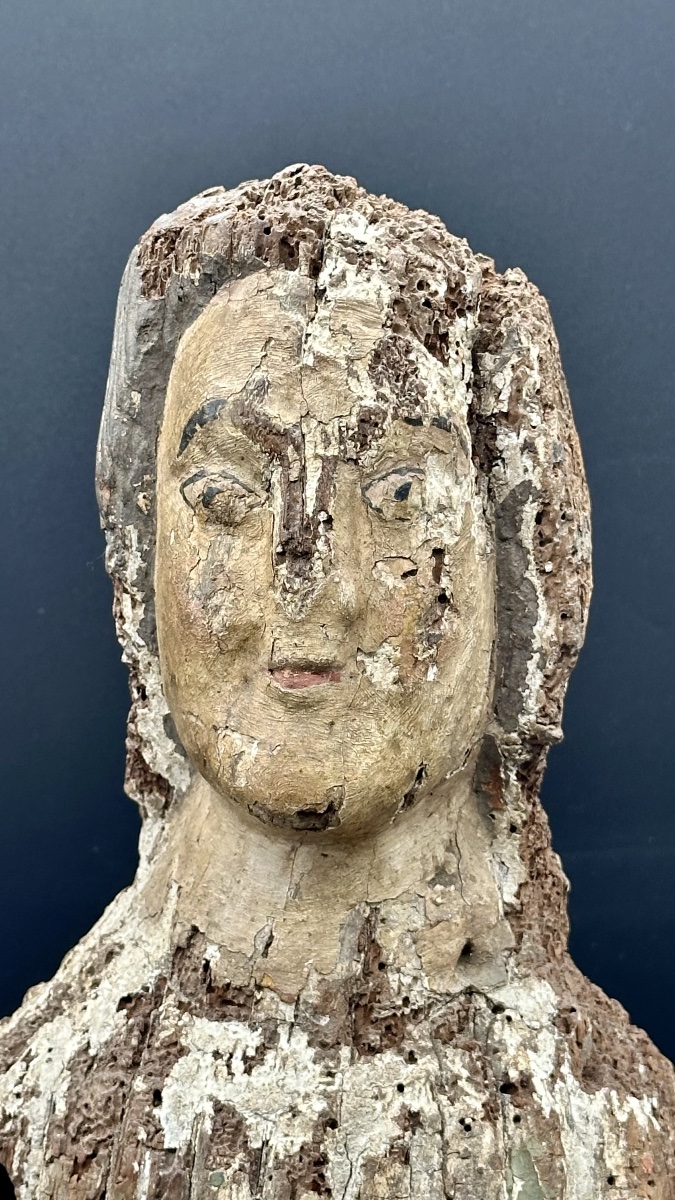
* Almond-shaped eyes with pronounced contours: The pronounced shape of the eyebrows and the geometric outline of the eyes reflect a sensibility characteristic of the Late Gothic or early Renaissance, still strongly influenced by archaic forms.
* Remaining polychromy: The flesh tones of the face have retained a light layer of paint; the lips are outlined in red, while the details of the eyes are rendered in black. The hair forms a voluminous, flowing mass that frames the face.
* Hieratic and severe expression: The gaze fixed straight ahead, combined with the shaping of the nose and the slight curve of the lips, is characteristic of workshops in central Italy (Umbria, Marche, or Abruzzo) active between the 14th and 15th centuries. In this region, woodcarving at that time retained a strongly devotional, geometric, and robust character. The numerous galleries carved by wood-boring insects (woodworms) as well as the gaps in the plaster preparation attest to the object’s great age; it is an antique piece, endowed with remarkable charm and a definite iconographic rarity.
Dimensions: height 47 cm – width 17 cm – depth 13 cm
4 800 €
Period: Before 16th century
Style: Renaissance, Louis 13th
Condition: Condition of use
Material: Painted wood
Width: cm. 17
Height: cm. 47
Depth: cm. 13
Reference (ID): 1848885
Availability: In stock
Print