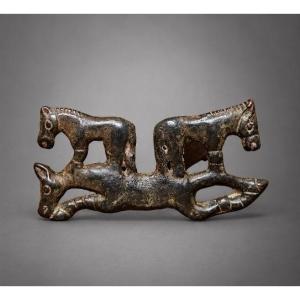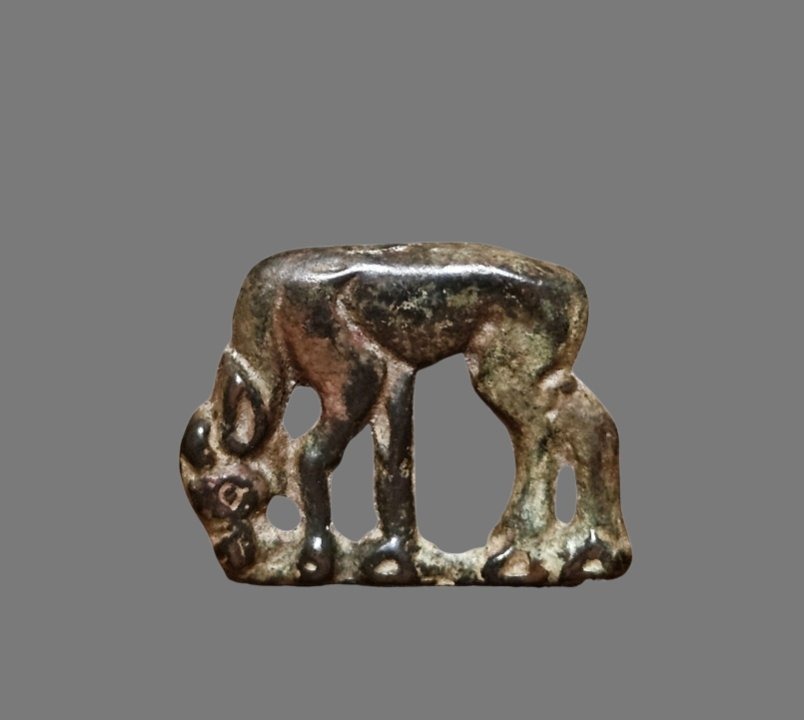


Ornamental Plate, Eastern Steppes, Northern China, Known As The Ordos Tradition.
Ornamental or harness plate depicting a grazing ungulate
Bronze with a brown patina, faint traces of red oxidation, signs of age. In good overall condition.
Eastern steppes, northern China, the so-called Ordos tradition.
Probably 2nd–1st century BCE.
Dimensions: 3.9 × 5 cm
This openwork plaque depicts an ungulate in profile, with its head lowered toward the ground. The shape of the ears and a small protrusion in front of the ear suggest a goat. The supple modeling of the shoulder and thigh, combined with the position of the four legs, reflects a naturalistic and sensitive observation of the animal.
"The work is part of the animal-themed tradition of Eastern steppe art, where animals familiar to pastoral societies play an essential role in the decoration of clothing, belts, and horse tack. In these regions open to trade, artisans developed a visual language that combined clearly recognizable silhouettes with great economy of means.
Such an ornament might have belonged to a horseman or warrior who held a recognized status within his community. Ownership of a horse and the use of metal elements in its adornment or equipment could contribute to the expression of this social status."
Contextual Bibliography:
— Jenny F. So and Emma C. Bunker, Traders and Raiders on China’s Northern Frontier, Arthur M. Sackler Gallery and University of Washington Press, 1995.
Sold with a certificate of authenticity from expert Serge Reynes and an invoice.
* Free shipping within France; shipping to other countries available upon request.
380 €
Period: Before 16th century
Style: Asian art
Condition: Good condition
Material: Bronze
Length: 5 cm
Height: 3,9 cm
Reference (ID): 1845519
Availability: In stock
Print