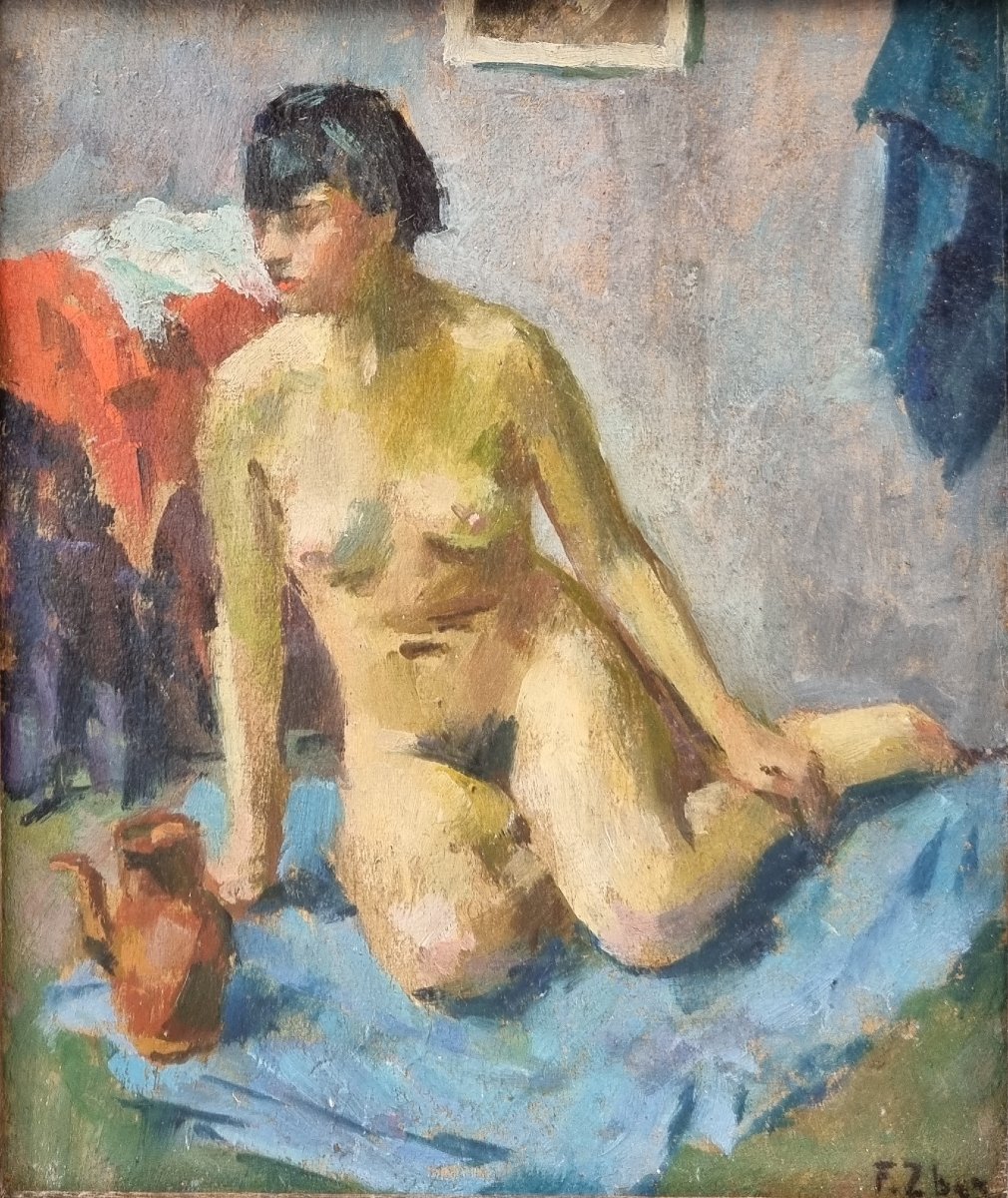
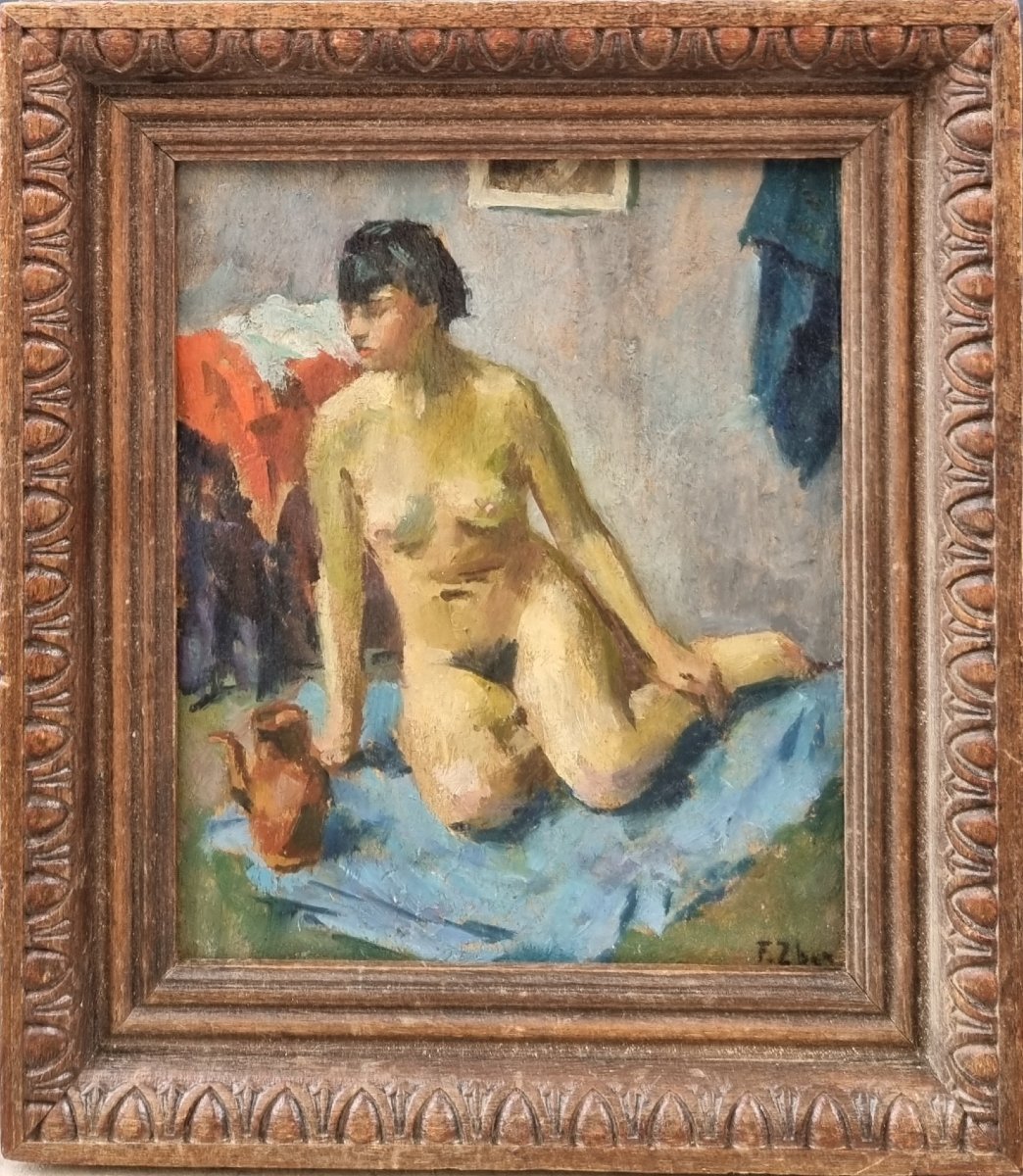
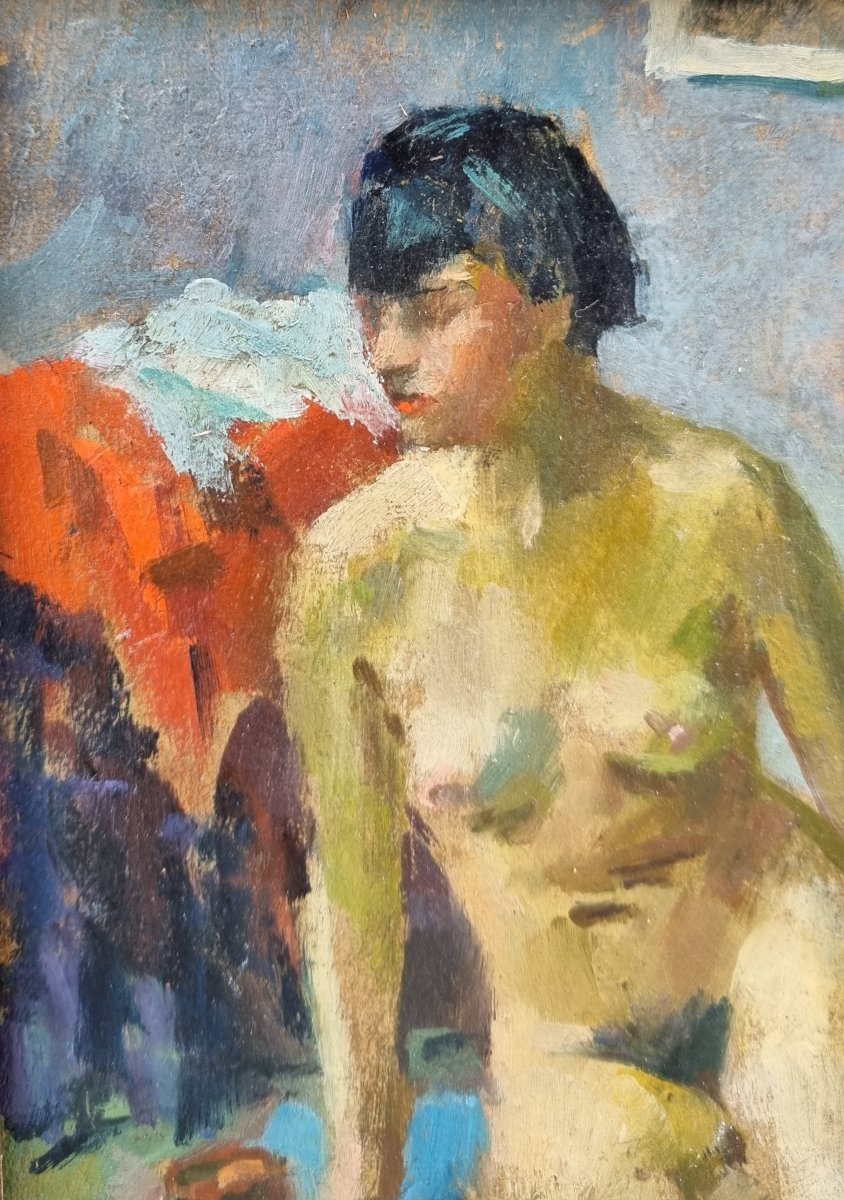

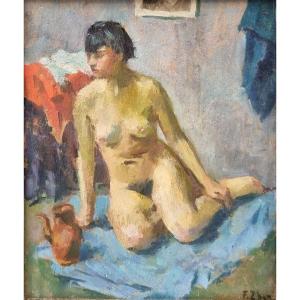


Fiszel Zylberberg, Known As Zber - Portrait Of A Model
Artist: Fiszel Zylberberg Dit Zber
Fiszel ZYLBERBERG, known as ZBER
Plock (Poland), 1909 – Auschwitz, 1942
The Model Posing
Oil on cardboard
19.2 x 15.2 cm (23.5 x 20 cm with frame)
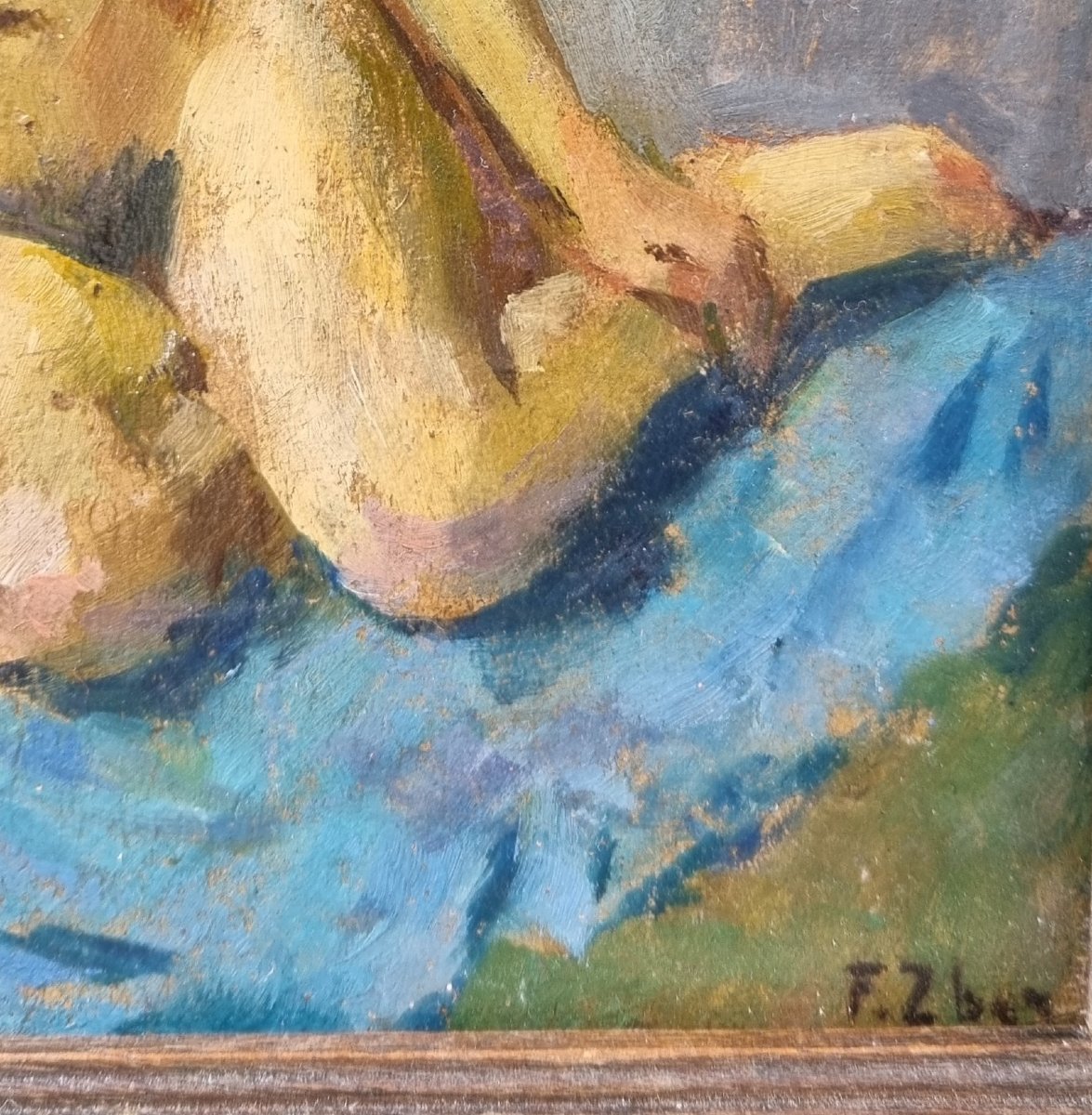
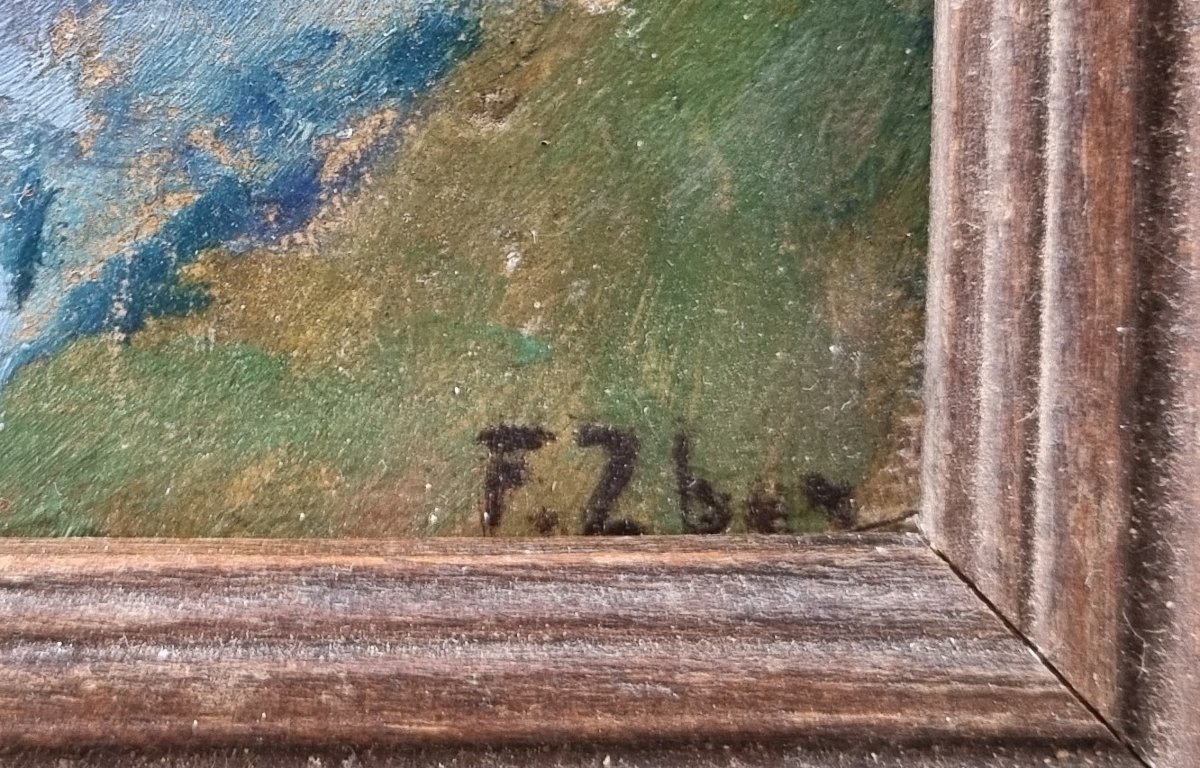
Signed lower right “F. Zber”
Attractive modern carved wooden frame
Fiszel Zylberberg, known as Zber, was born on June 23, 1909, in Plock in Poland. From the age of sixteen, he studied painting and drawing in evening classes and, beginning in 1930, at the Academy of Fine Arts in Warsaw, where he specialized in woodcut. He then joined the graphic arts studio led by Władysław Skoczylas. He then moved to Paris in 1936, where he also developed an interest in painting. He exhibited his woodcuts depicting Jewish figures from his hometown, Płock, at the 1937 Paris World’s Fair. He also regularly exhibited his works at art salons in Paris.
Interned in Beaune-la-Rolande in 1941, he was transferred to Pithiviers on July 4, 1942, and deported to Auschwitz on July 17, 1942, where he died shortly thereafter.
Zber’s works are now housed at the Israel Museum in Jerusalem, the Tel Aviv Museum, the Haifa Museum of Modern Art, the National Library of Paris, and numerous other museums.
Described as “the poet of his generation,” Zber achieved true poetic expression while remaining deeply faithful to reality, particularly in his woodcut portraits, for which he is still celebrated today. An album compiling Zber’s surviving woodcuts was published in 1971.
Zber’s oil paintings are much rarer. However, in 2007, the Museum of Jewish Art and History in Paris exhibited a collection of oil paintings created by Zber during his detention at the French internment camp in Beaune-la-Rolande. Our painting is undoubtedly an important example of his work as a painter in Paris during the 1930s. The figure depicted here may be Stenia, his partner at the time—a young and very beautiful woman, according to witnesses from that era.
2 500 €
Period: 20th century
Style: Art Deco
Condition: Excellent condition
Material: Oil painting on wood
Width: 15,2 cm (20 cm avec le cadre)
Height: 19,2 cm (23,5 cm avec le cadre)
Reference (ID): 1843924
Availability: In stock
Print