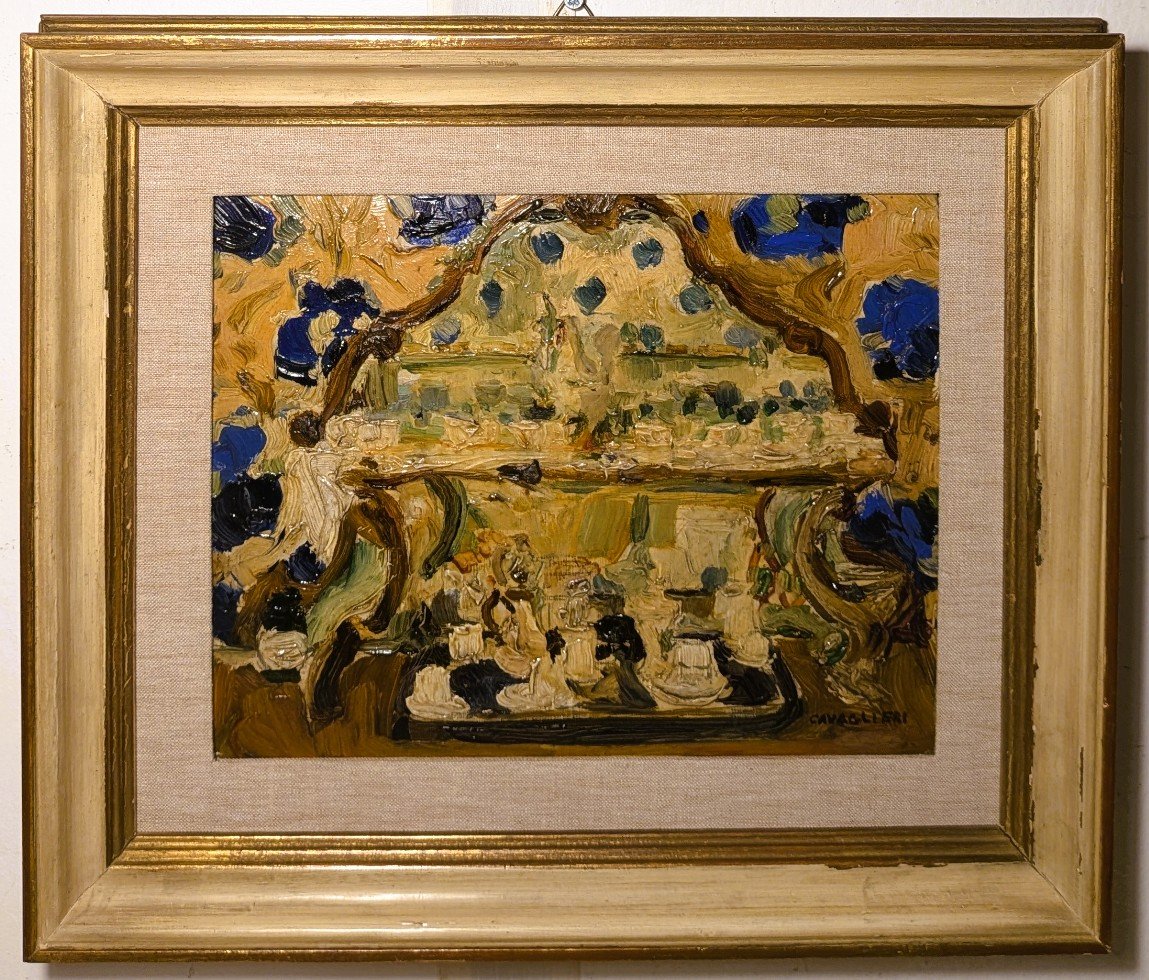
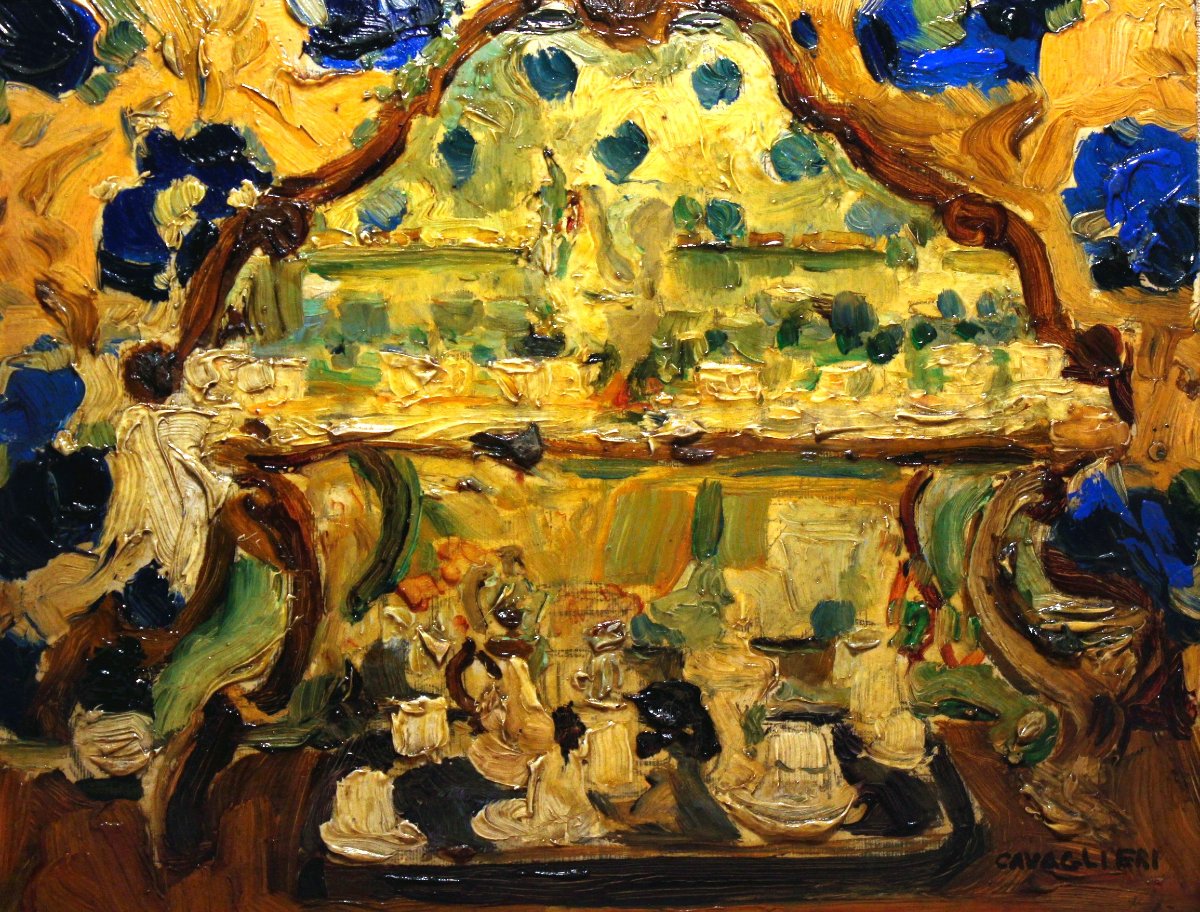


Mario Cavaglieri (rovigo, 1887 – Pavie, 1969) – Interior With Coffee Set, Ca. 1914
Artist: Mario Cavaglieri (rovigo 1887 - Pavie 1969)
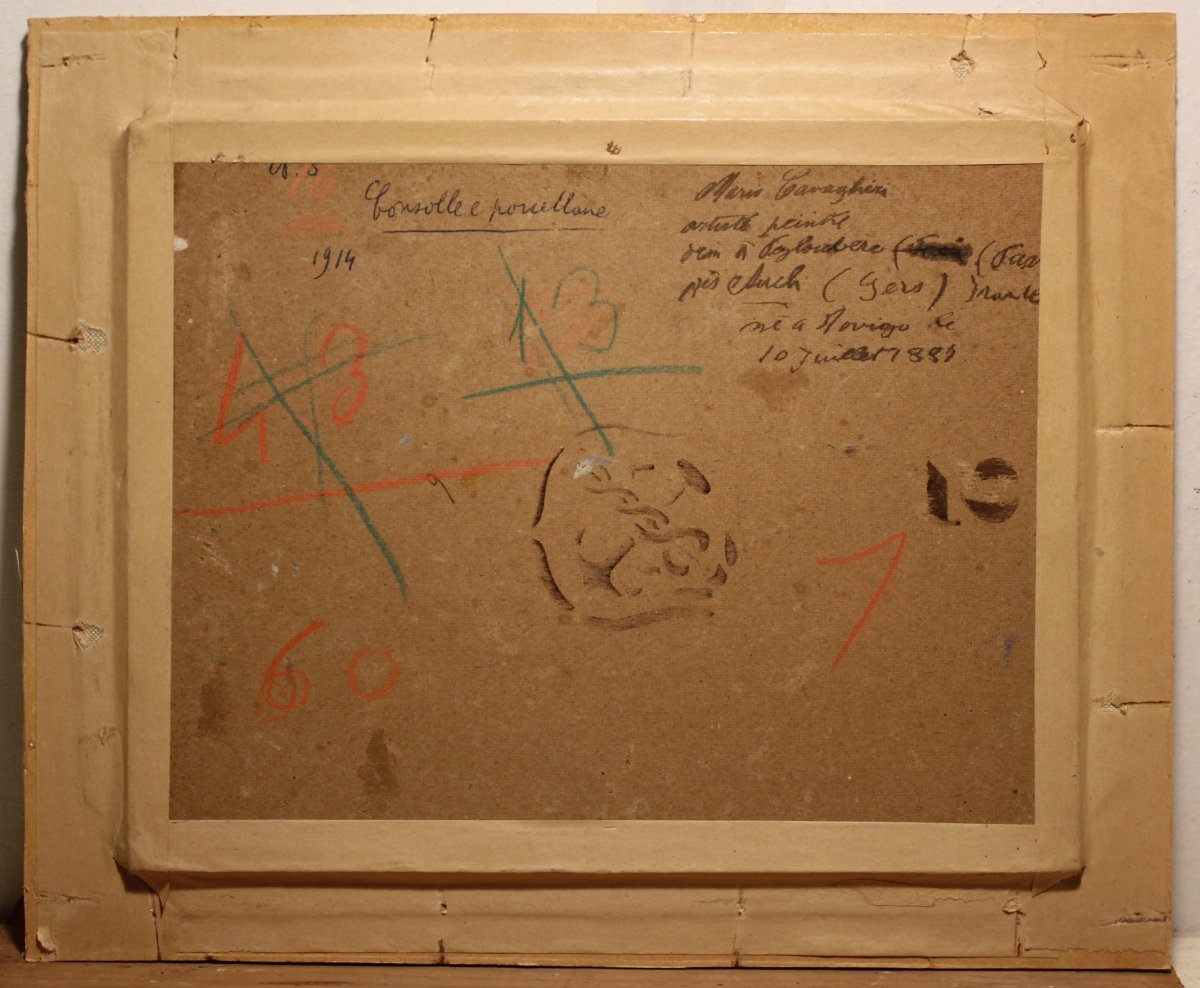
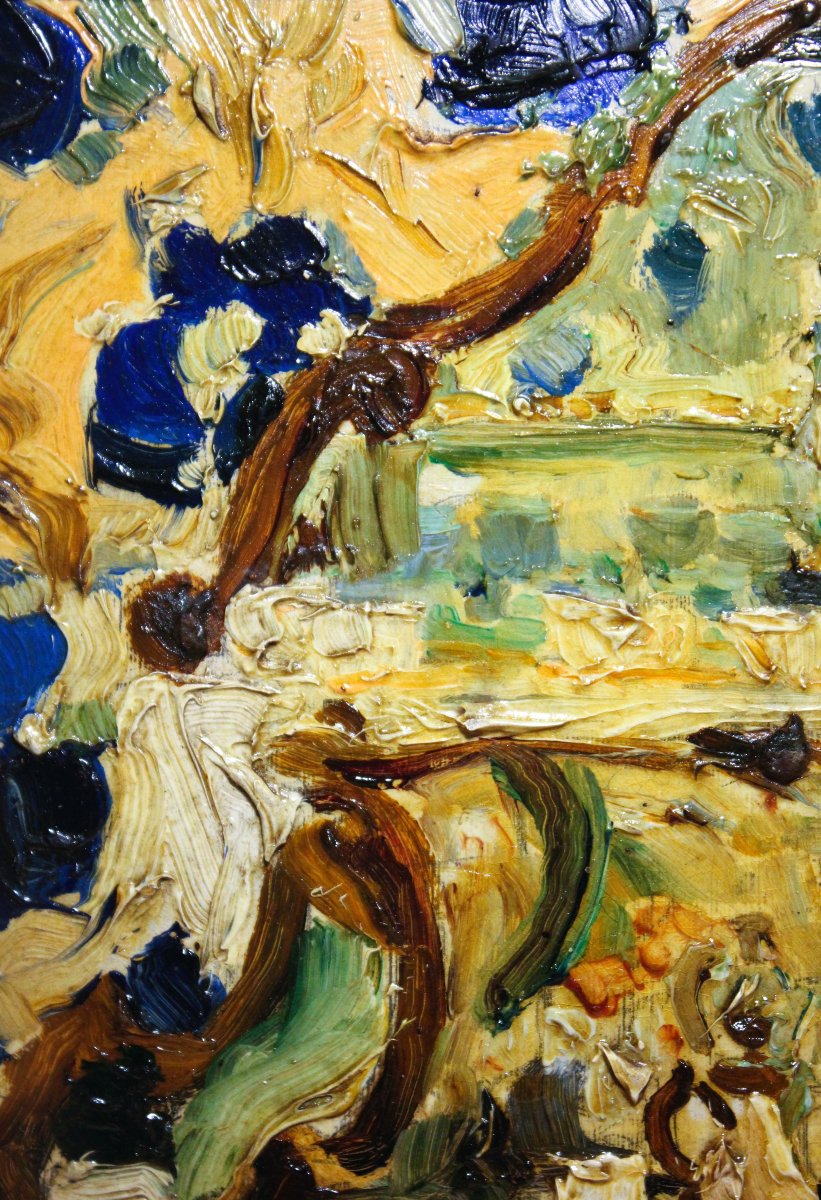
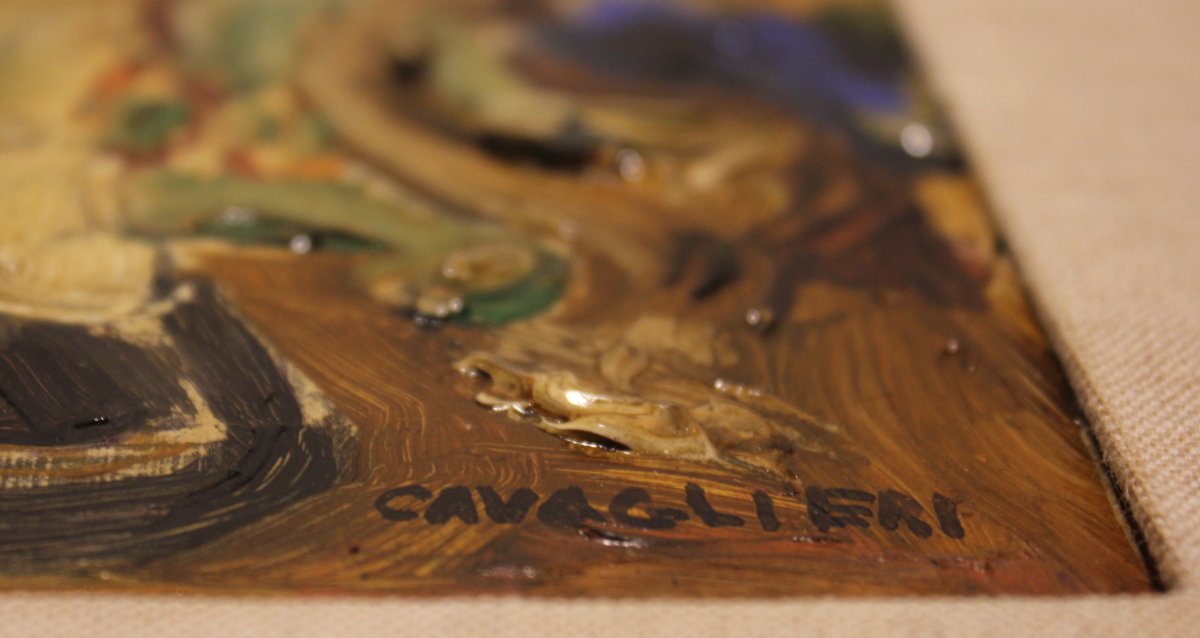
Oil on pressed cardboard, signed "CAVAGLIERI" in the lower right corner. This work by Mario Cavaglieri, dating from around 1914, belongs to his successful early period in the 1910s, a time marked by his involvement with the Roman Secessions. During this phase, the painter favored depicting the refined interiors of the bourgeoisie of the time, rendered with a rich, flowing style and an extraordinary textural richness. The paint is applied thickly, densely, and almost in relief, transforming the surface of the cardboard into a vibrant chromatic inlay that captures the light and enhances the three-dimensionality of the elements. The composition unfolds with a modern, close-up photographic perspective, structured across three distinct levels of depth. The foreground is entirely occupied by a tray holding a complete coffee service, whose forms stand out thanks to dense strokes of white lead. Immediately behind it, defining the middle ground, stands out the undulating, sinuous line of a Louis-Philippe-style console table, a period piece that frequently appears in the artist’s work. The background is framed by a sumptuous wall adorned with wallpaper featuring large floral motifs: the striking blue flowers, with their intense color, create a bold visual contrast with the warm tones of the wood beneath, evoking the sensibility of the French Nabi and the Central European Secessionist aesthetic. The historicity of the work is further confirmed by the reverse side of the support, where the clear stamp of the R. Aleksandrowicz art materials depot in Kraków is imprinted. This important early 20th-century supplier fully validates the proposed dating, which is also corroborated by the contemporary historical inventory notes legible on the cardboard. ARTIST’S BIOGRAPHY Born in Rovigo in 1887 into a well-to-do family, Mario Cavaglieri trained in Padua—where he formed a close friendship with Felice Casorati—and Florence, attending the studio of Giovanni Fattori. A trip to Paris in 1911 marked a decisive turning point: he moved beyond nineteenth-century naturalism by assimilating the lessons of Post-Impressionism, Fauvism, and the intimism of the French artists Vuillard and Bonnard. His breakthrough came in the 1910s. By exhibiting at Ca’ Pesaro and at the Roman Secession exhibitions (1913–1915), he established himself as one of the most original and cultured voices on the Italian art scene. This was the period of his famous “brilliant years,” during which his unmistakable dandyish taste led him to portray the splendor of high society with decorative opulence and thick brushstrokes. In 1920, he held a major solo exhibition at the Galleria Pesaro in Milan, curated by Vittorio Pica, which earned him the praise of Roberto Longhi. In 1925, he retired to France at the Peyloubère estate in Pavie (Gers), where he painted frescoes throughout the rooms (now a historic monument). There he pursued a more intimate and secluded artistic exploration, interrupted only by a temporary return to Italy during World War II. He died in Pavie in 1969. His works are now housed in major museums of modern art and in prestigious public and private collections.
4 800 €
Period: 20th century
Style: Other Style
Condition: Excellent condition
Material: Oil painting on cardboard
Length: 24
Height: 19
Reference (ID): 1843464
Availability: In stock
Print