
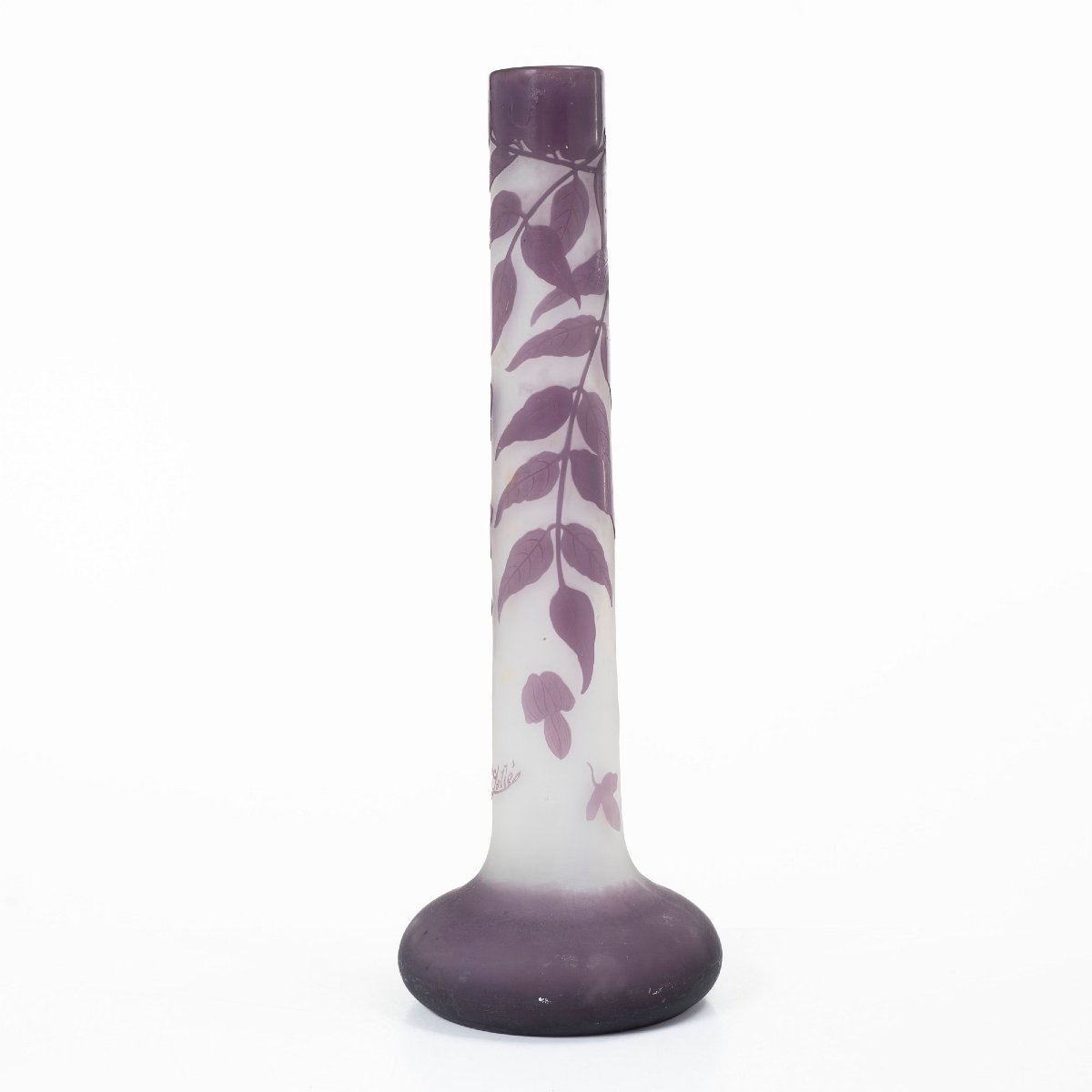


émile Gallé (nancy, 1846 – Nancy, 1904) Vase, Circa 1904–1910
Artist: émile Gallé
Émile GALLÉ (Nancy, 1846 – Nancy, 1904)
VASE, circa 1904–1910
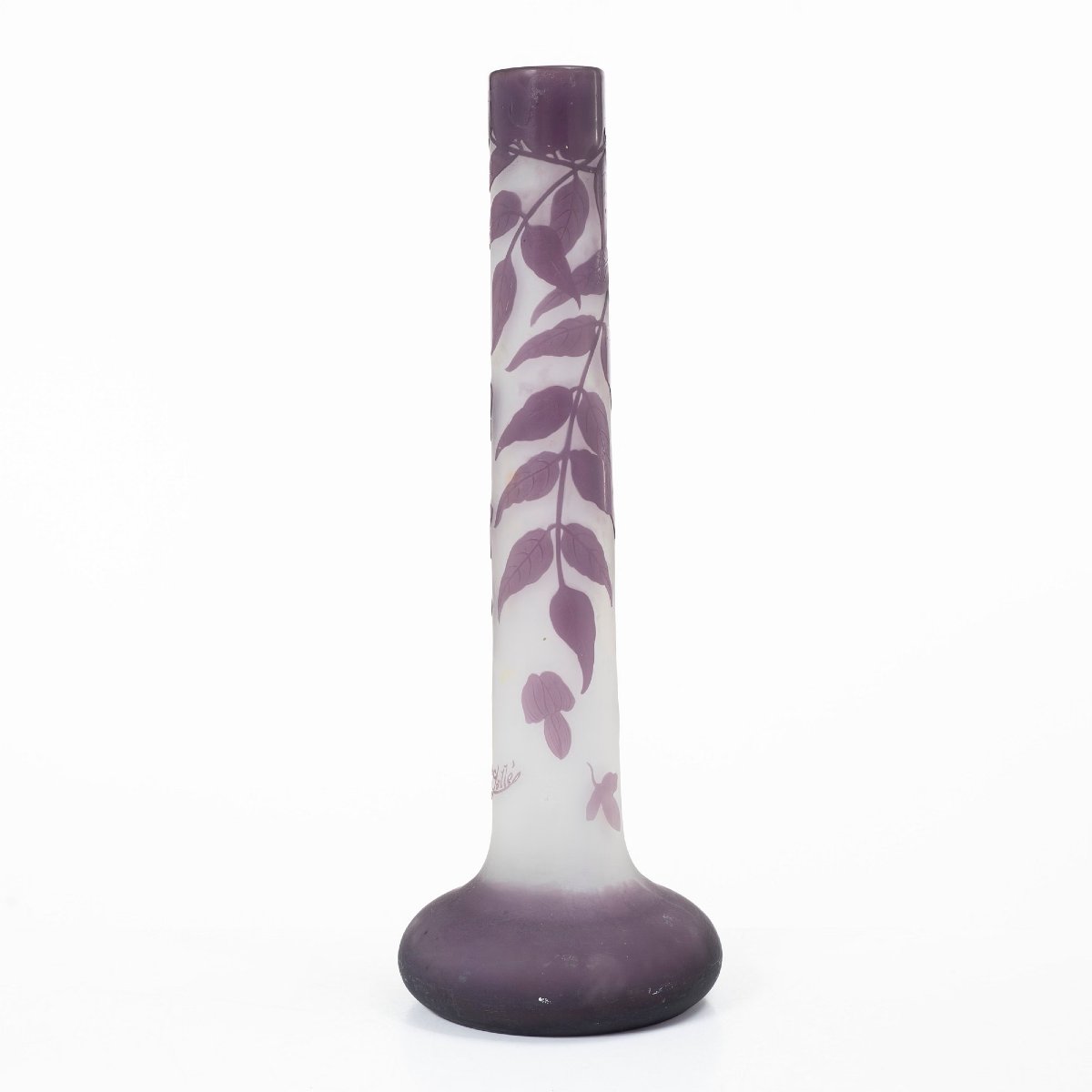
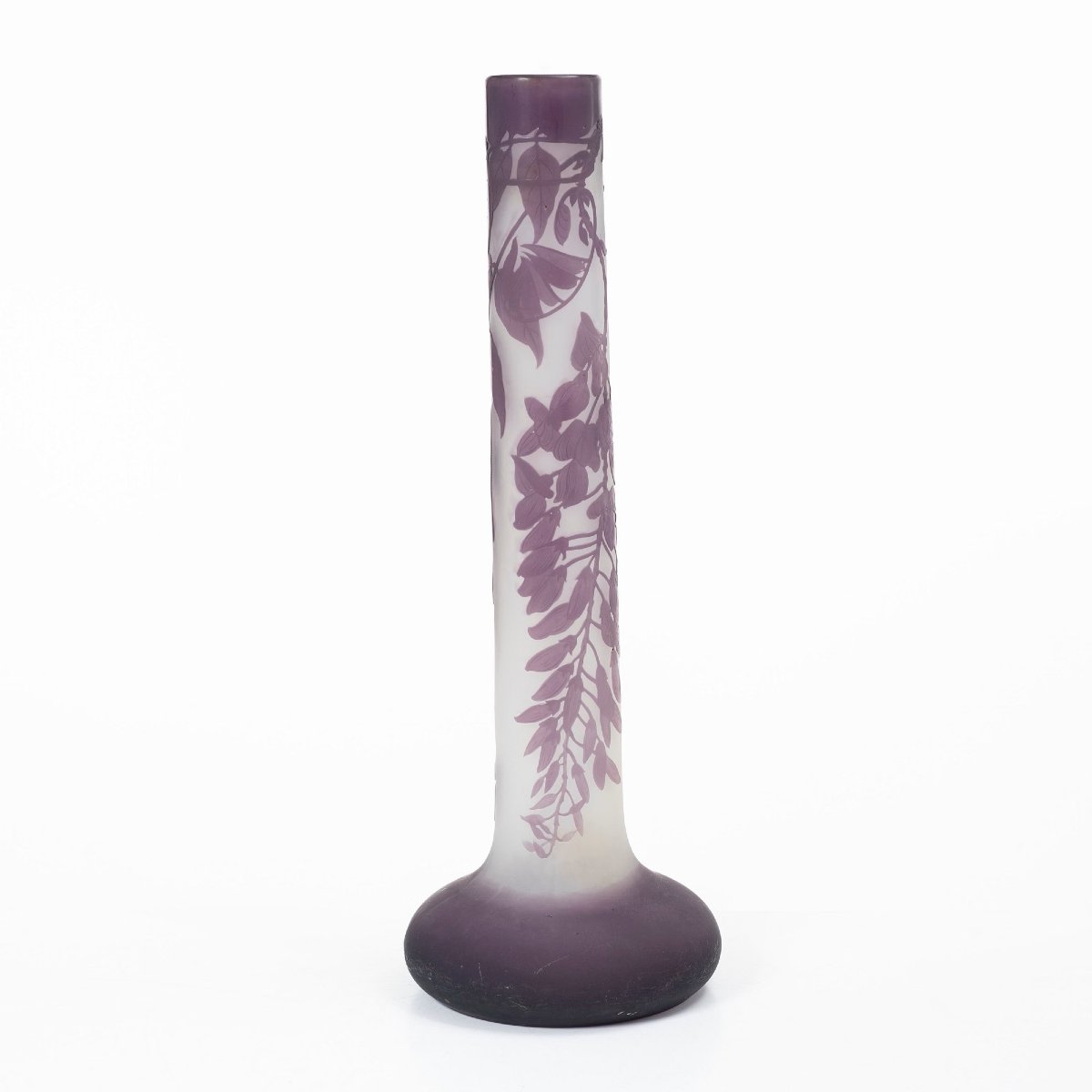
Multilayered glass vase (cameo technique), Nancy, France, Émile GALLÉ (Nancy, 1846 – Nancy, 1904)
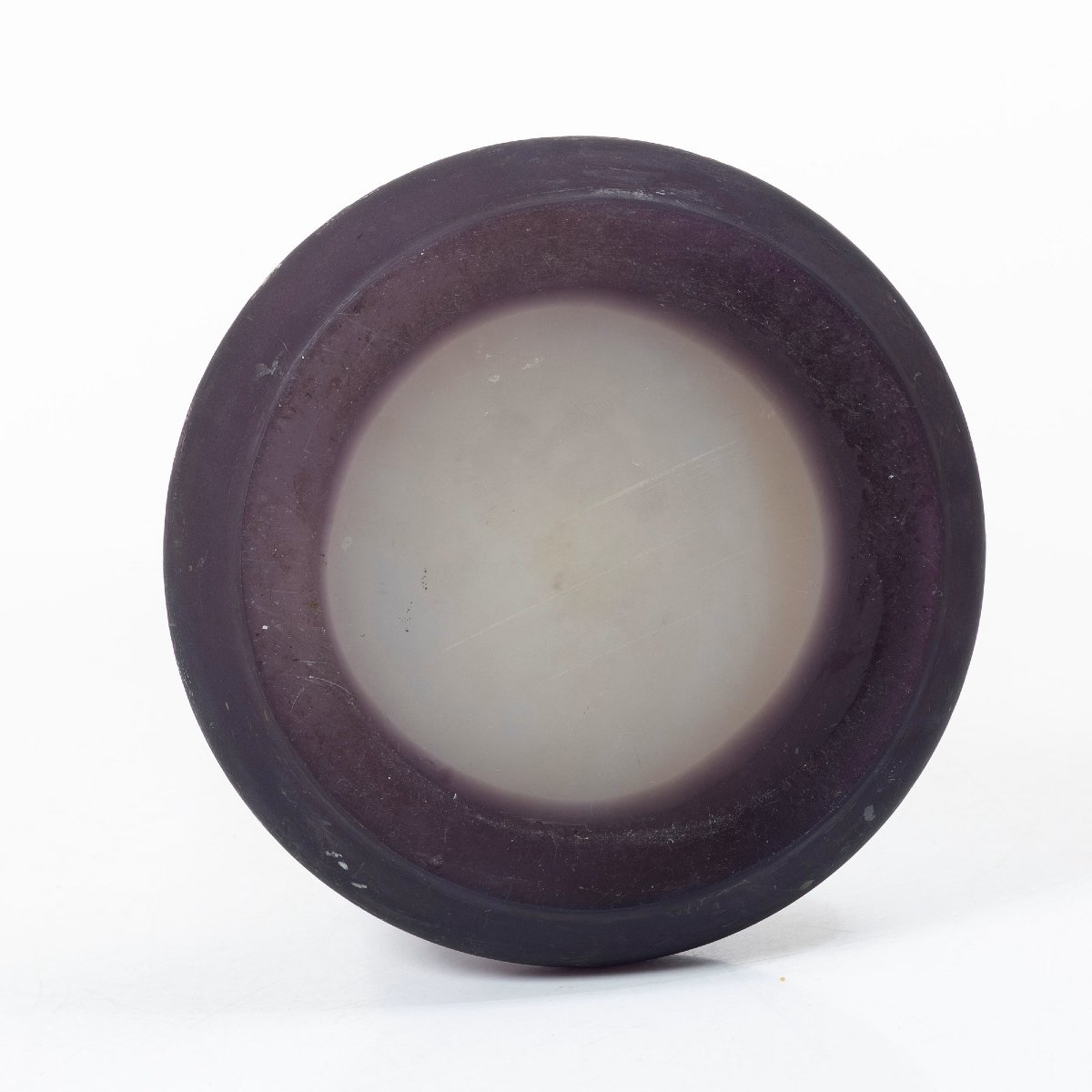
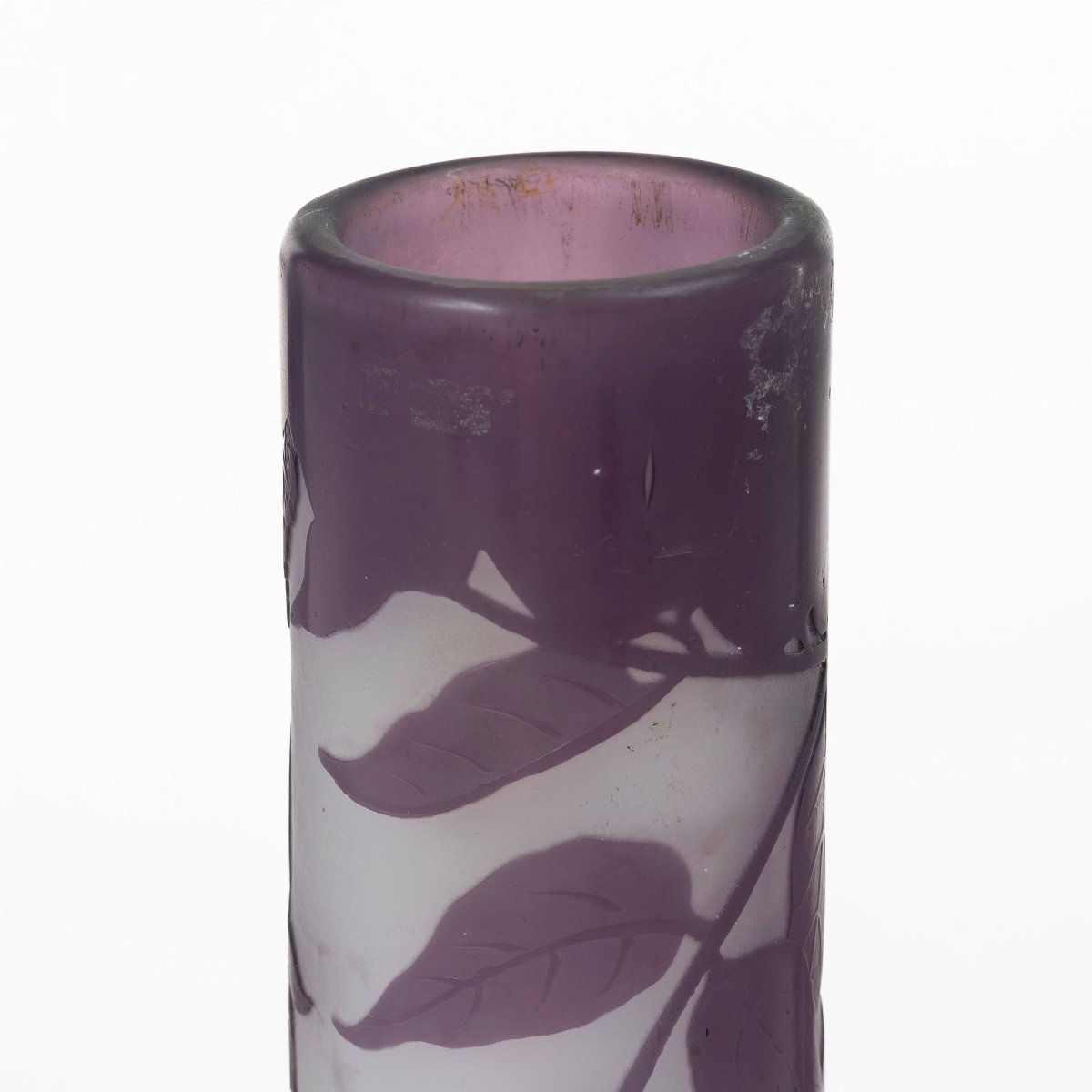
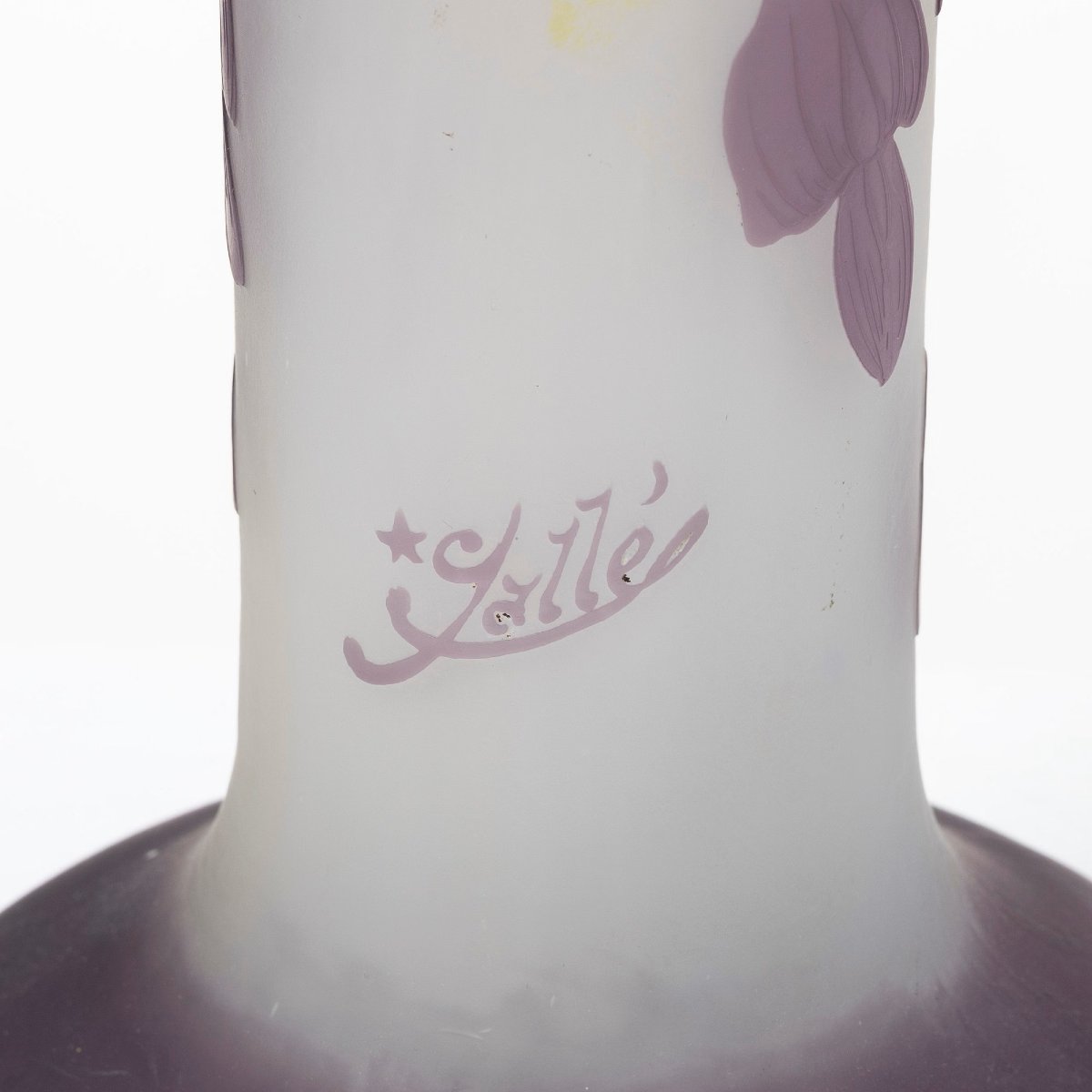
Cylindrical vase resting on a flared base, decorated with a wisteria motif in shades of lilac, created by acid etching on a matte white background; signed “Gallé” in cameo.
Émile Gallé (born May 4, 1846, in Nancy; died September 23, 1904, in the same city) was a French designer, best known for his glassworks (particularly his vases), as well as for his Art Nouveau-style furniture and jewelry. He was the founder and leading figure of the École de Nancy.
Biography
Early in his career, he studied philosophy and botany while designing models for his father’s ceramics company. In 1874, he moved to Nancy and founded a glassworks there; in 1883, he began producing furniture.
His father ran a ceramics and glassworks studio, which allowed Émile to become familiar with these techniques. He had a particular interest in nature—and more specifically in the plant world—which he collected and cultivated, drawing inspiration from it for his creations. Early in his career, he drew inspiration from ancient and medieval glassware, creating transparent or lightly tinted pieces. As his art matured, it was influenced not only by the botanical world but also by the Rococo style, Symbolism, and Japanese art. He developed an original style based on working with colored glass, shaped by grinding or acid etching. The resulting designs were inspired by botanical and animal motifs, often drawing from the world of insects and marine life. He also employed the technique of multilayered glass—which involves stacking layers of glass of different colors and then carving them to reveal the underlying layers—and sometimes incorporated metallic elements or other materials directly into the glass itself. He created new vessel shapes, often reminiscent of a flower’s calyx. Thanks to his own exclusive methods of coloring glass, he achieved a wide range of hues, favoring milky and matte tones[1][2].
Material: Multilayer glass (double-layered glass)
Condition: Very good—even excellent, considering its age
Dimensions: Height 44 cm
Origin: France
Absolutely magnificent!!!
Excellent price
1 880 €
Period: 20th century
Style: Art Nouveau
Condition: Good condition
Material: Glass
Height: 44
Reference (ID): 1841381
Availability: In stock
Print