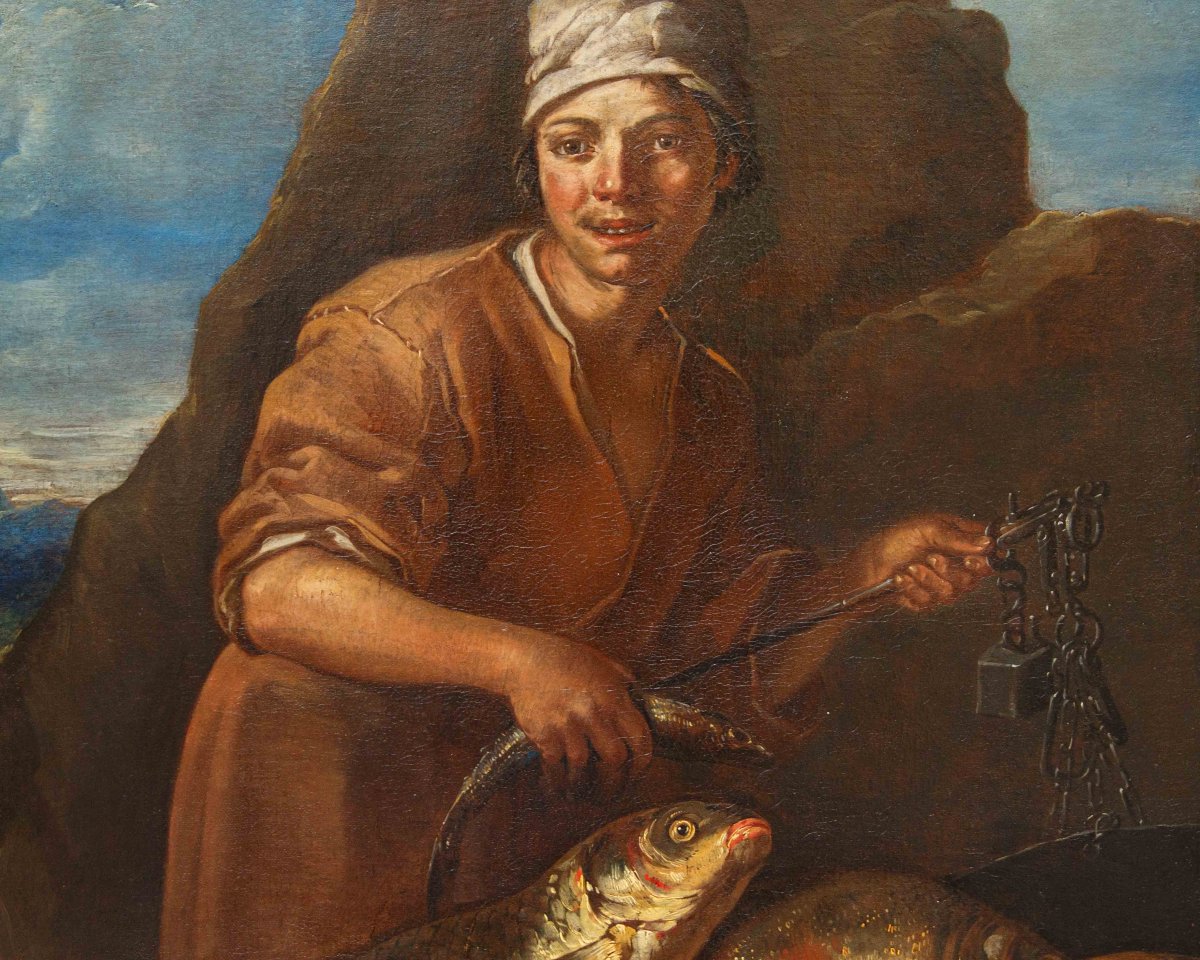
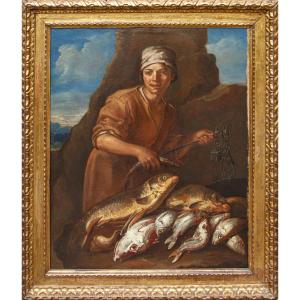


Giacomo Francesco Cipper, Known As "il Todeschini" (1664–1736), Young Fishmonger
Giacomo Francesco Cipper, known as il Todeschini (Feldkirch, 1664 – Milan, 1736)
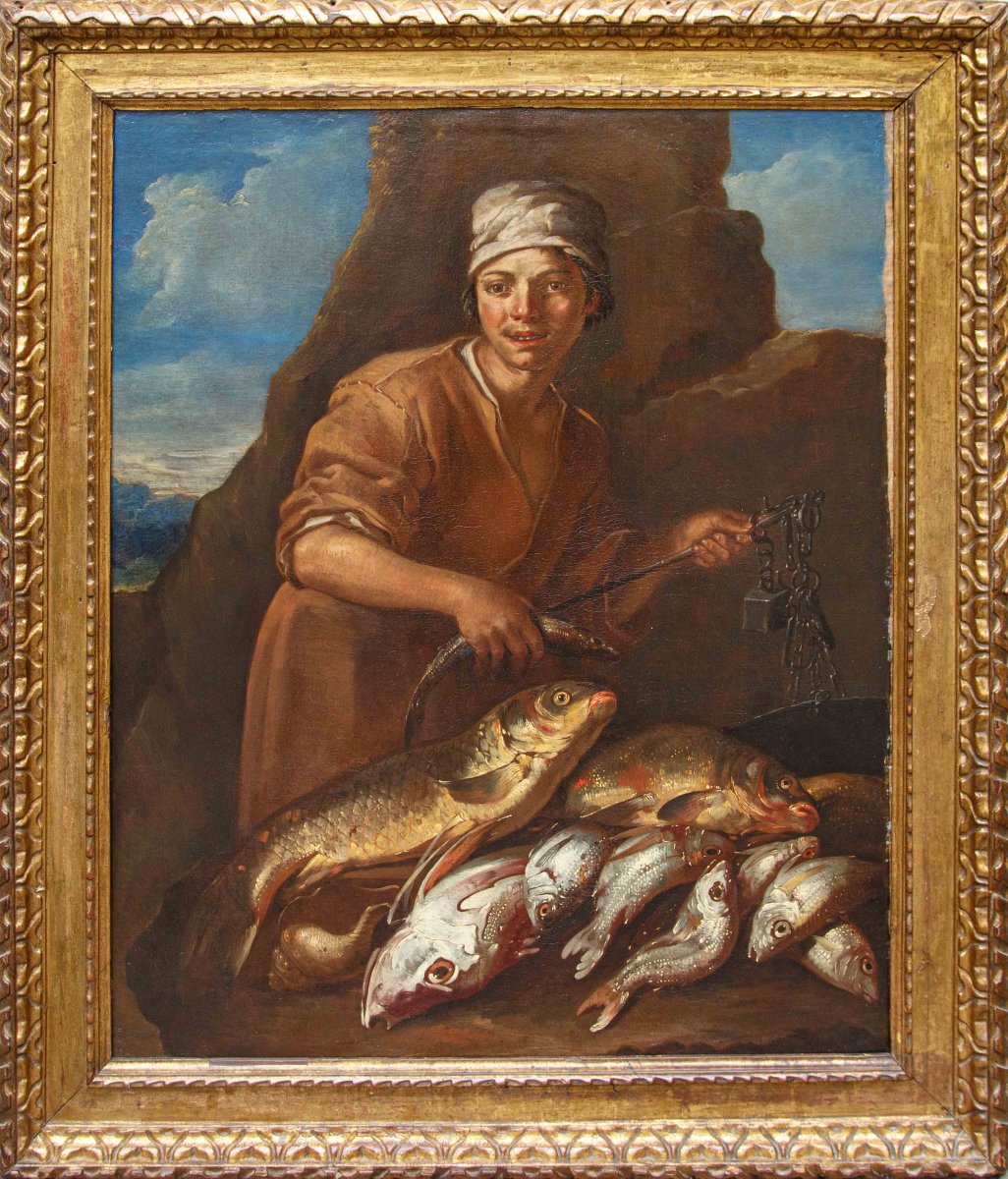
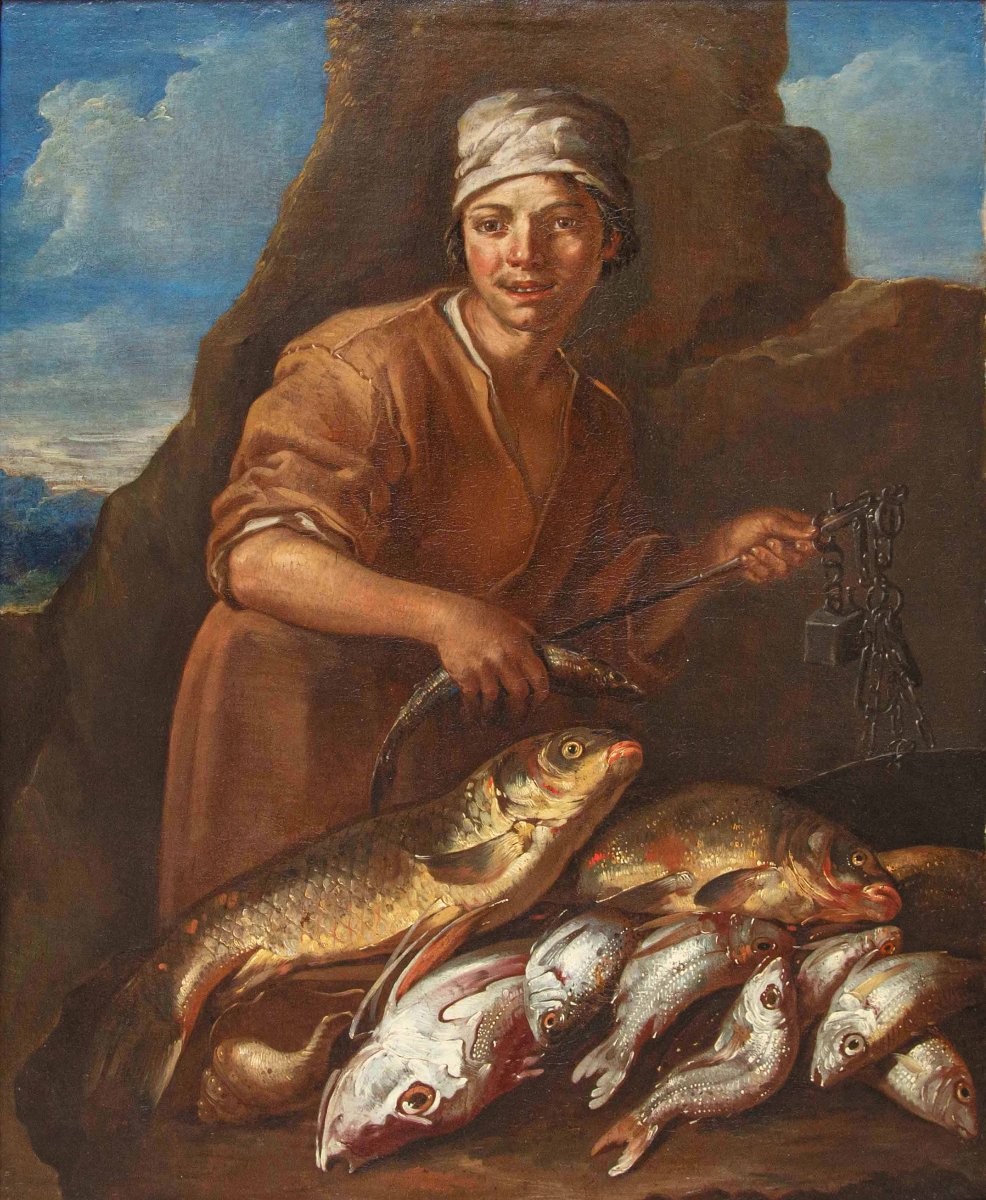
Young Fishmonger
Oil on canvas, 117 x 93 cm
With frame, 142 x 118 cm
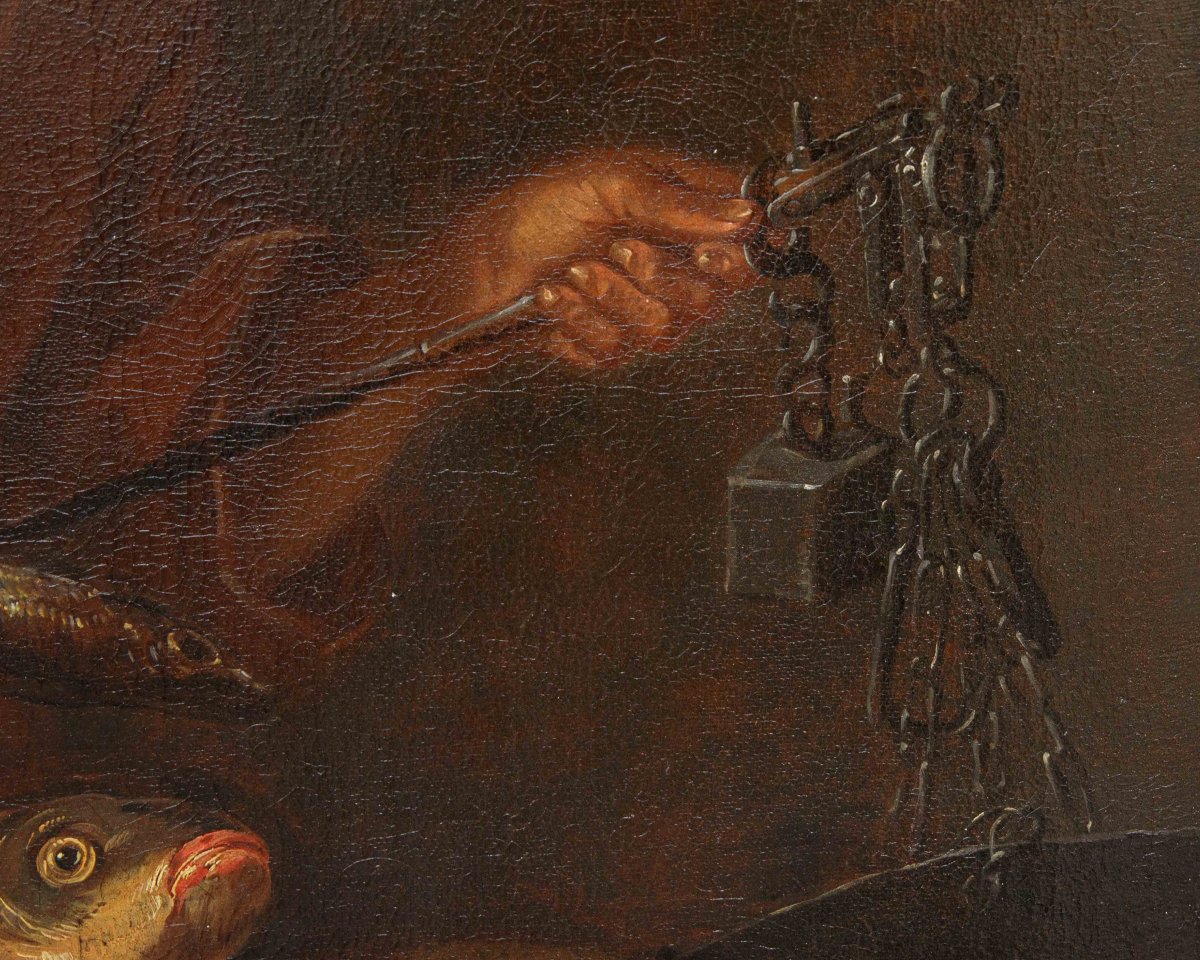
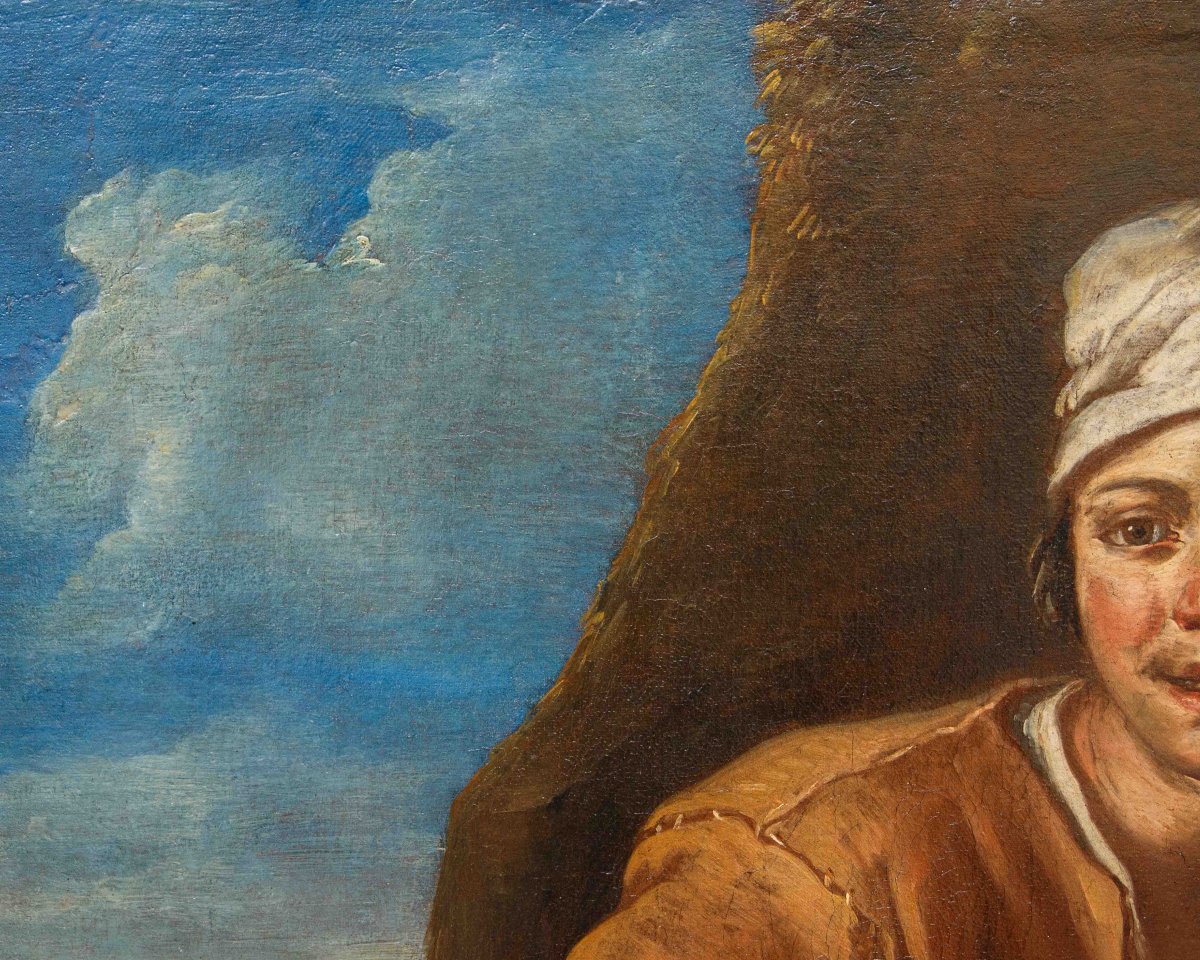
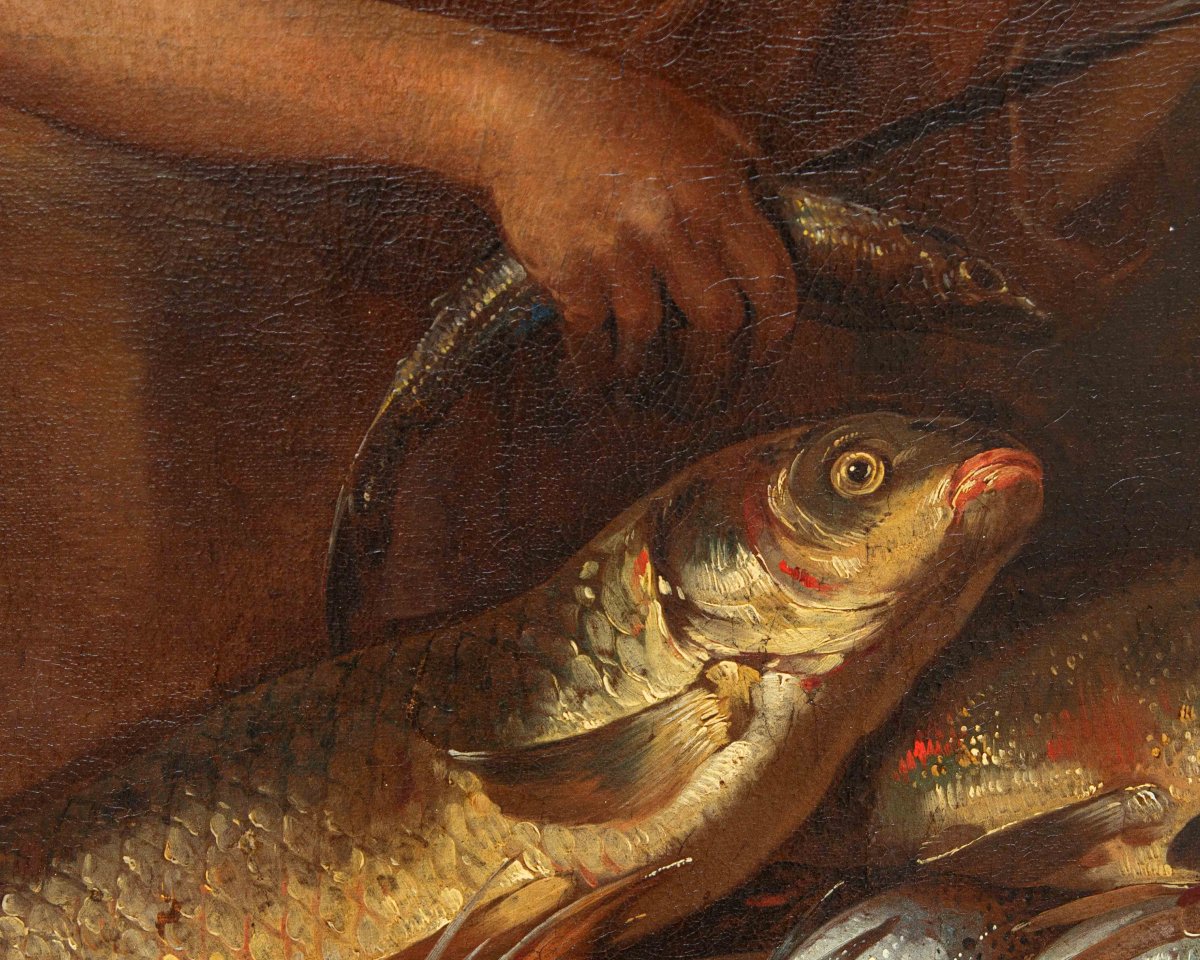
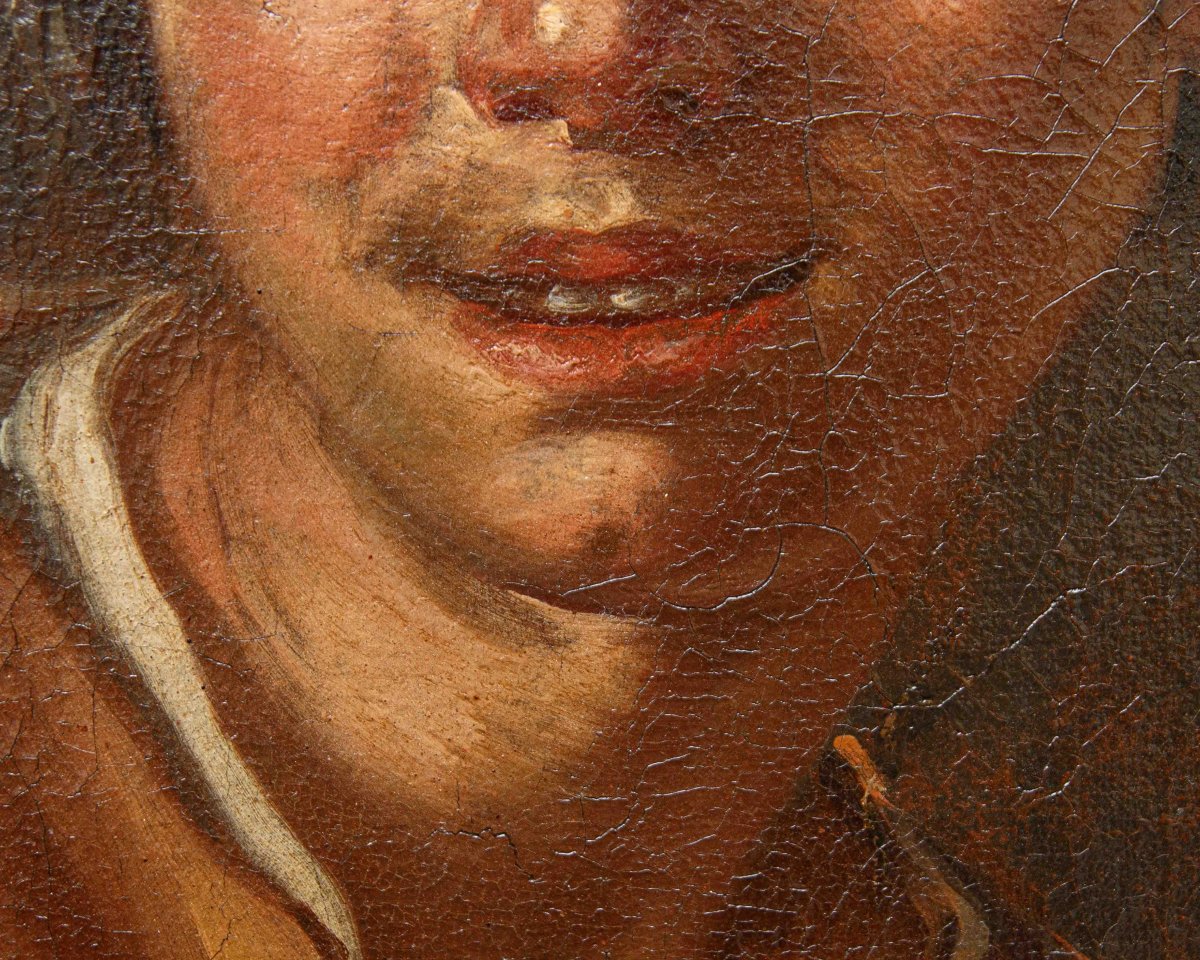
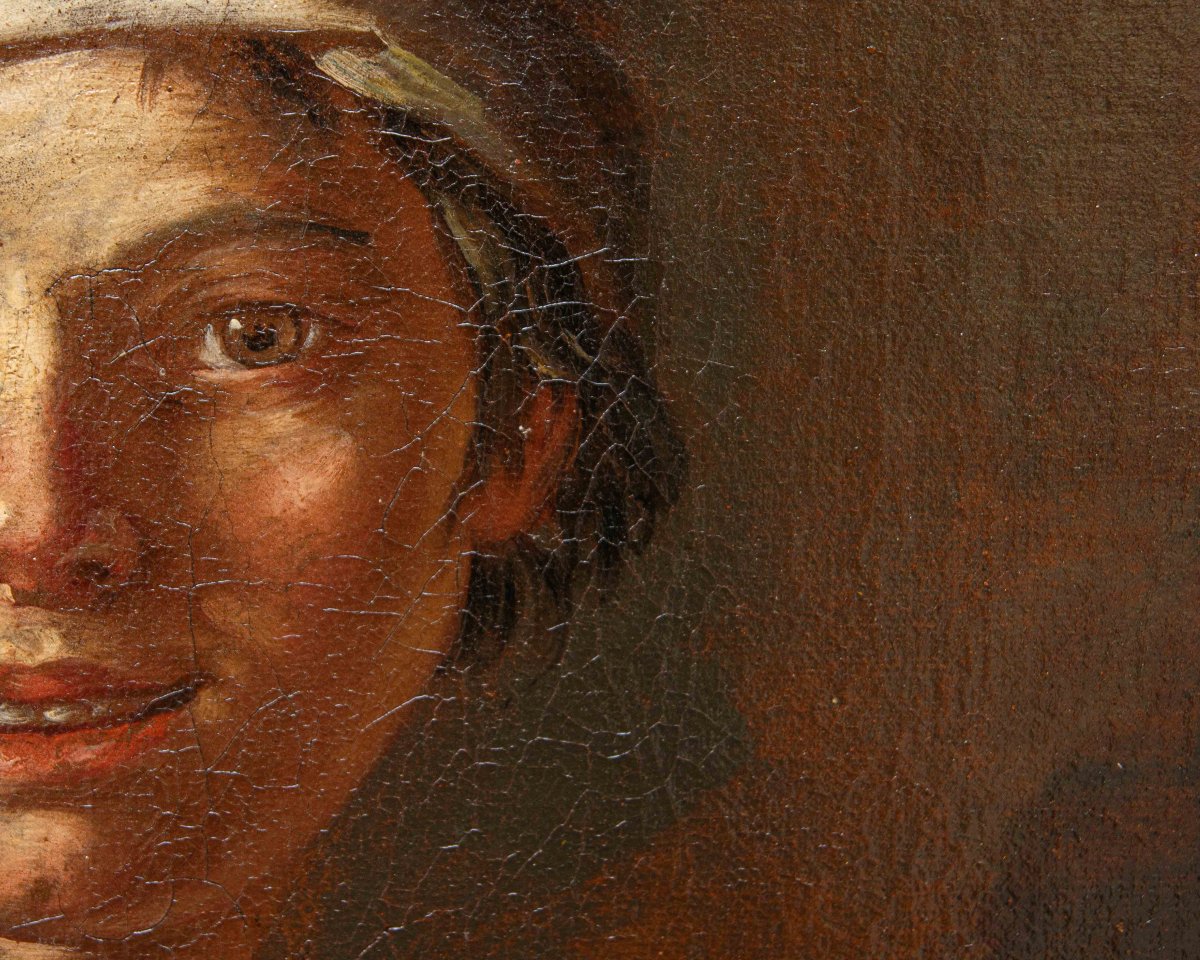
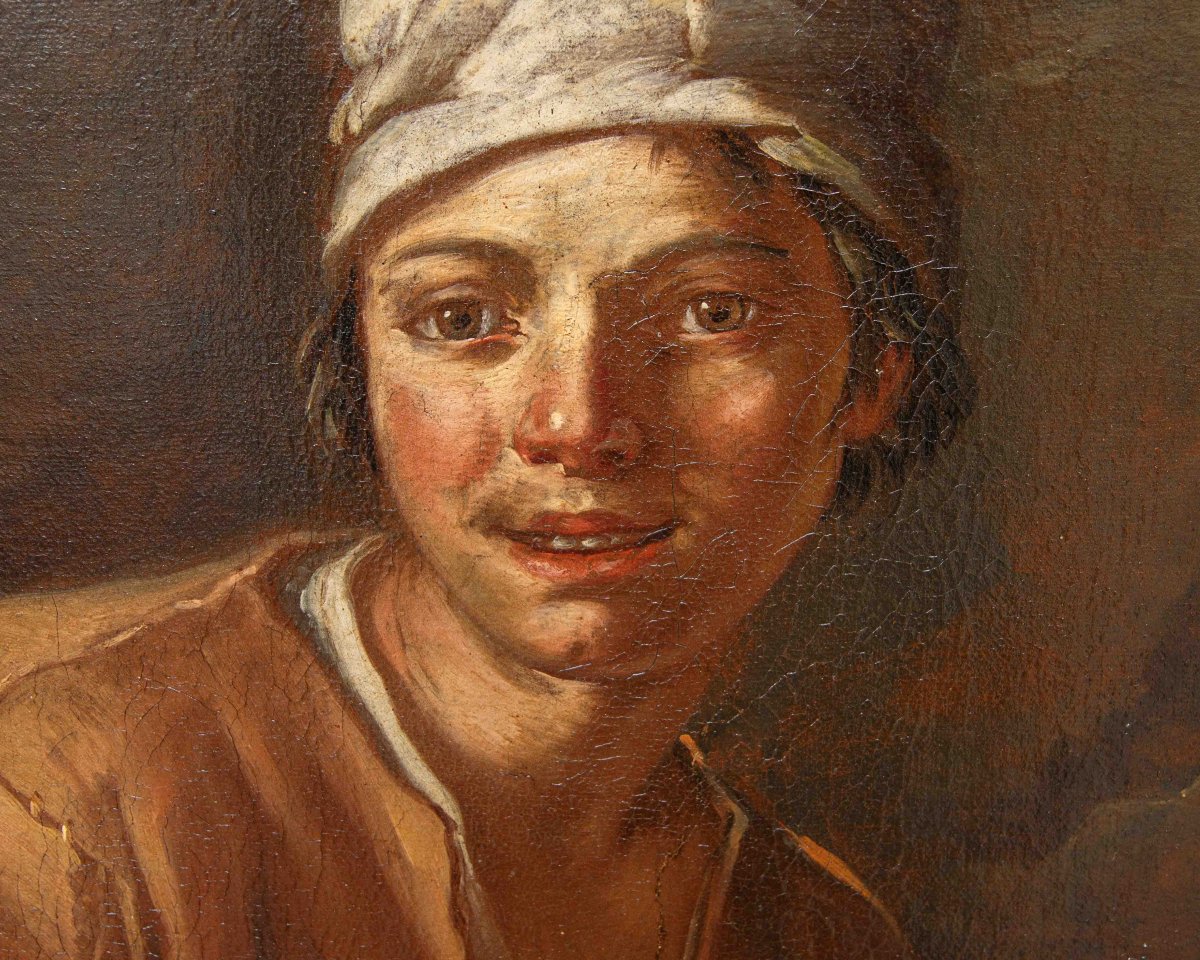
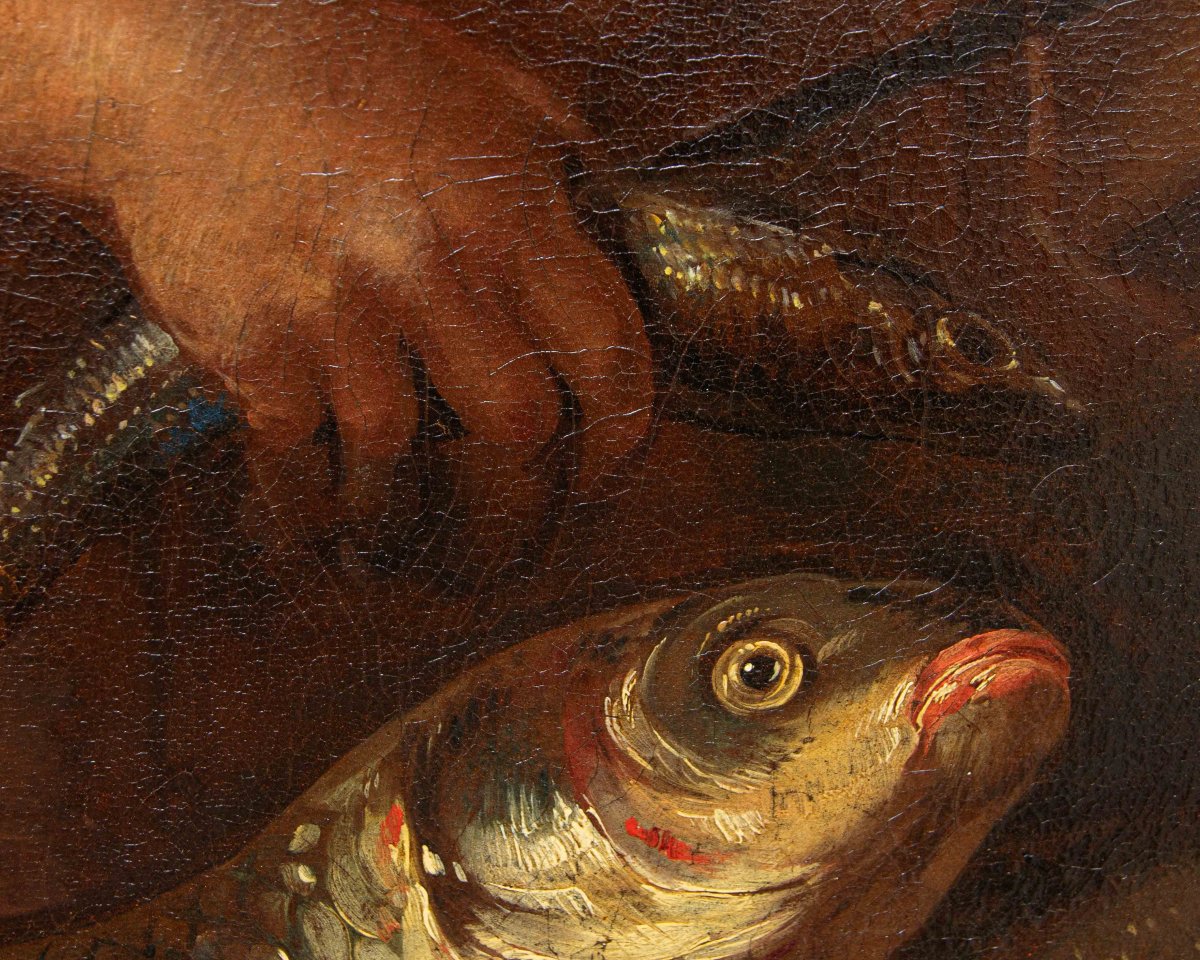
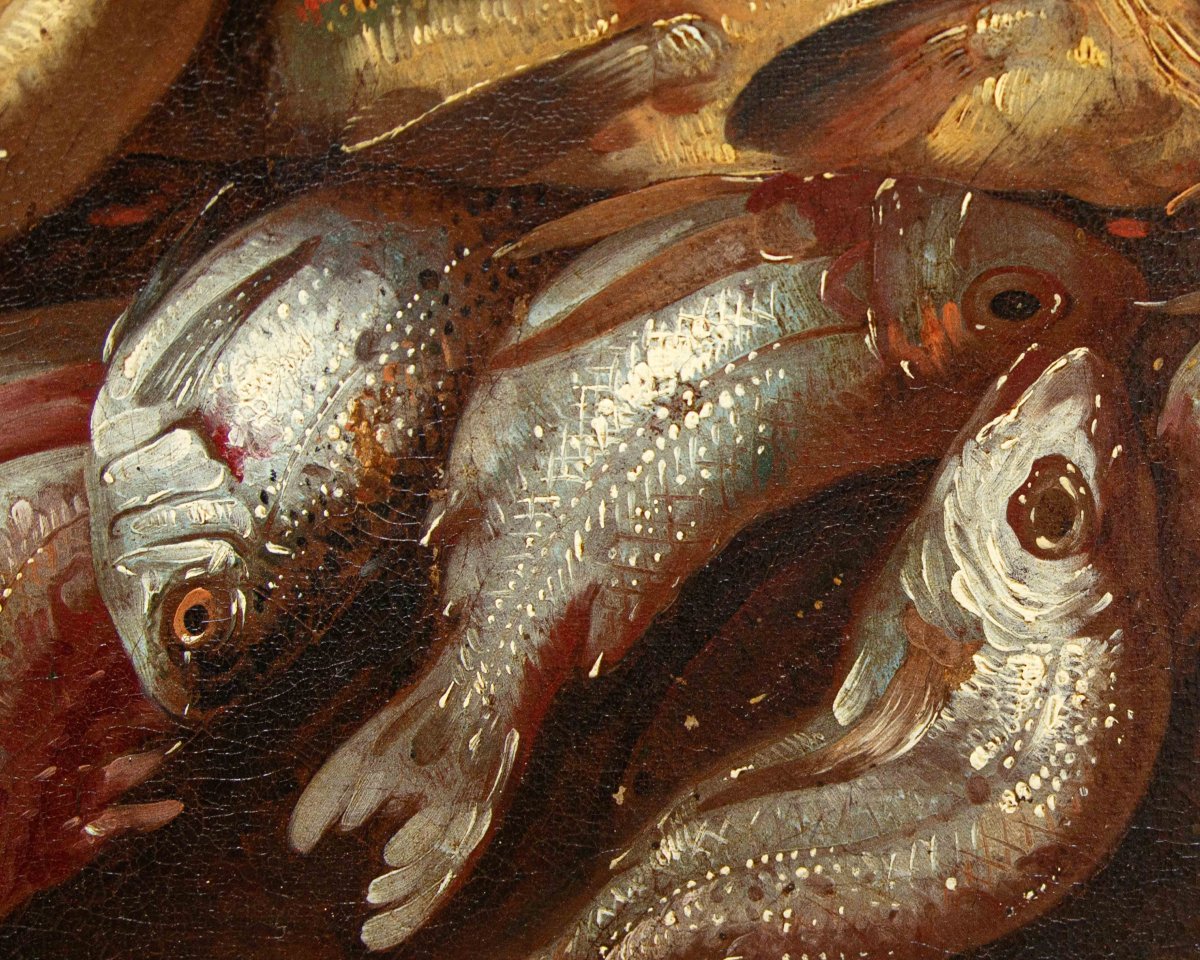
*The Young Fishmonger* stands as one of the most compelling examples of Giacomo Francesco Cipper’s, known as il Todeschini, artistic maturity. This large-scale oil on canvas depicts a young man weighing his catch on a scale, captured in an everyday gesture that serves as a pretext for a broader pictorial reflection on concrete reality and the value of manual labor. The figure emerges powerfully from the foreground, occupying almost the entire space of the composition, while the background is reduced to a minimalist, barely suggested landscape view that serves to create depth without interfering with the narrative focus. The frontal composition and the monumentality of the figure evoke an almost sculptural conception of the figure, typical of Todeschini’s mature work, in which direct observation of life is combined with a solid plastic formalism. The young man’s face, rendered with frankness and free of idealization, establishes a direct connection with the viewer, reinforcing the sense of immediacy and physical presence. The painting is dense and textural, built up through layers of color that convey the tactile quality of the surfaces. The true visual focal point of the work, however, is the still life of fish arranged in the foreground. The jumble of different species, rendered with almost analytical precision, allows the painter to showcase an extraordinary descriptive ability: the iridescent scales, the moist flesh, and the silvery and rosy reflections are rendered with a direct naturalism that eschews any decorative affectation. The color palette, dominated by warm, earthy tones, is enlivened by sudden bursts of light that animate the painted surface and lend vitality to the composition as a whole. In this regard, comparisons with the two *Still Lifes with Fish* already in the Gastaldi Rotelli collection are particularly compelling, as they feature similar compositional solutions and the same attention to the rendering of the fish’s details. Even more significant is the comparison with *The Fishmonger’s Stall and a Greengrocer*, now at the Royal Palace of Caserta: some of the fish depicted in the large Caserta canvas appear to be rendered according to models nearly identical to those in *The Young Fishmonger*, as if the artist had drawn from an established formal repertoire, reusing and varying it within different narrative contexts. The work thus fits fully into the genre favored by Todeschini, populated by peasants, street vendors, beggars, and humble figures, often accompanied by expansive still lifes. In keeping with the seventeenth-century tradition of genre painting, yet updated with a more monumental scope, the everyday scene takes on an almost heroic dignity. A comparison with Eberhard Keilhau, known as Monsù Bernardo, seems inevitable: as in Keilhau’s work, Cipper’s figures are isolated in the foreground, endowed with a powerful physical presence, while the setting remains deliberately undefined.
Period: 17th century
Style: Other Style
Condition: Good condition
Material: Oil painting
Width: 93
Height: 117
Reference (ID): 1841147
Availability: In stock