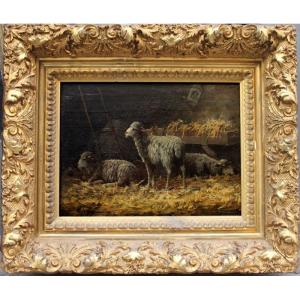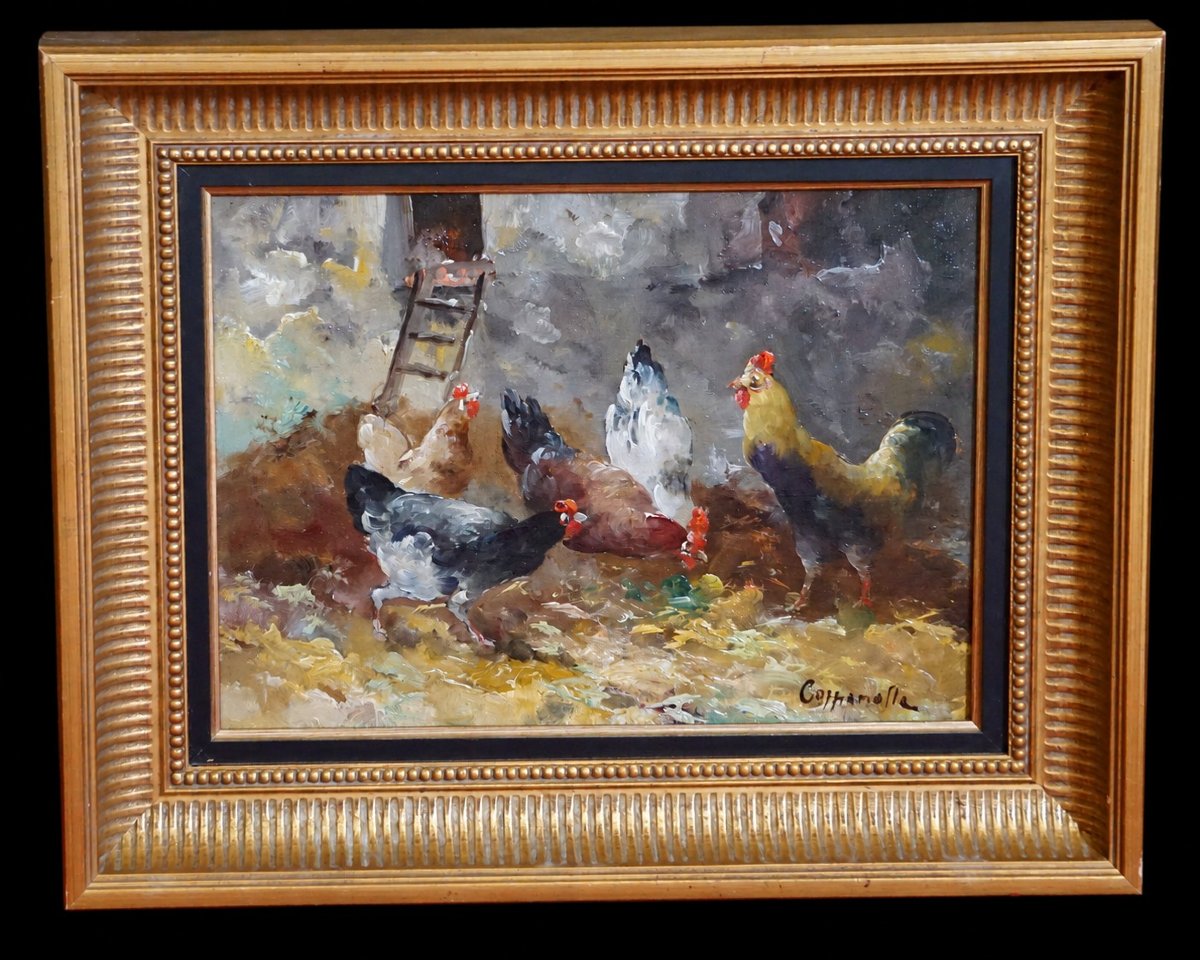

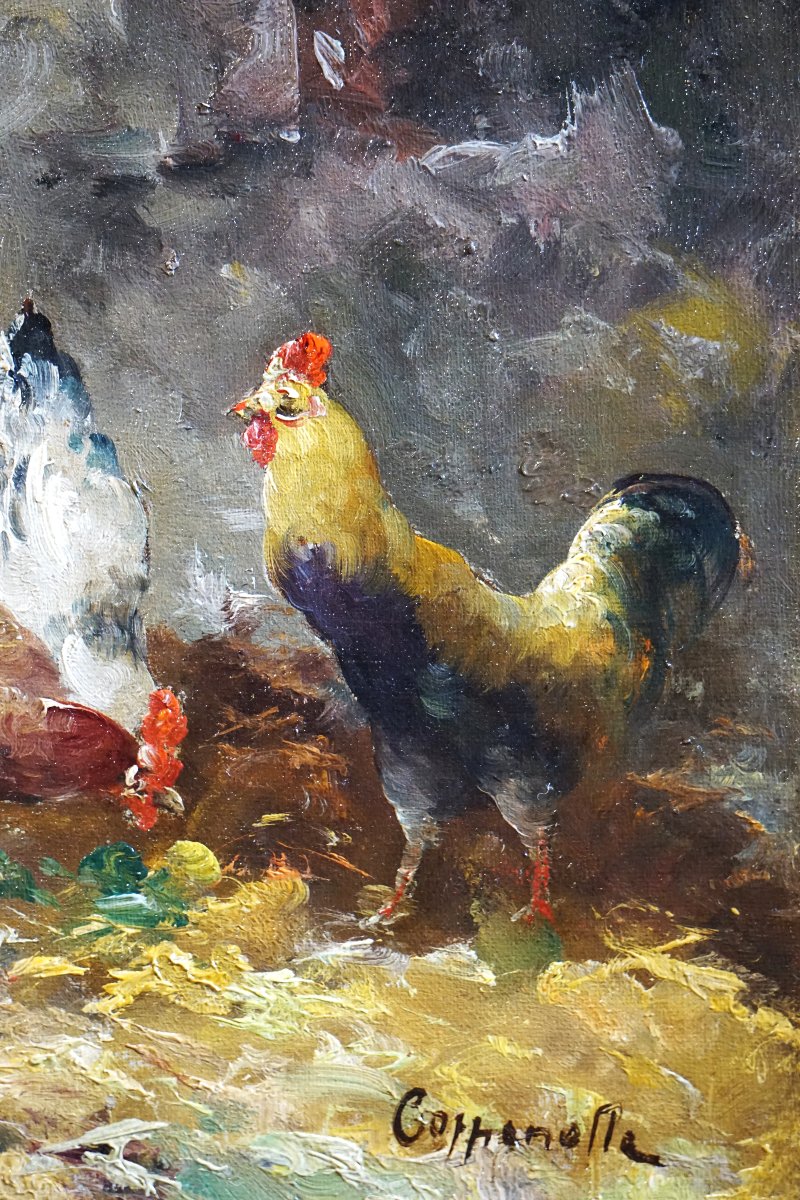

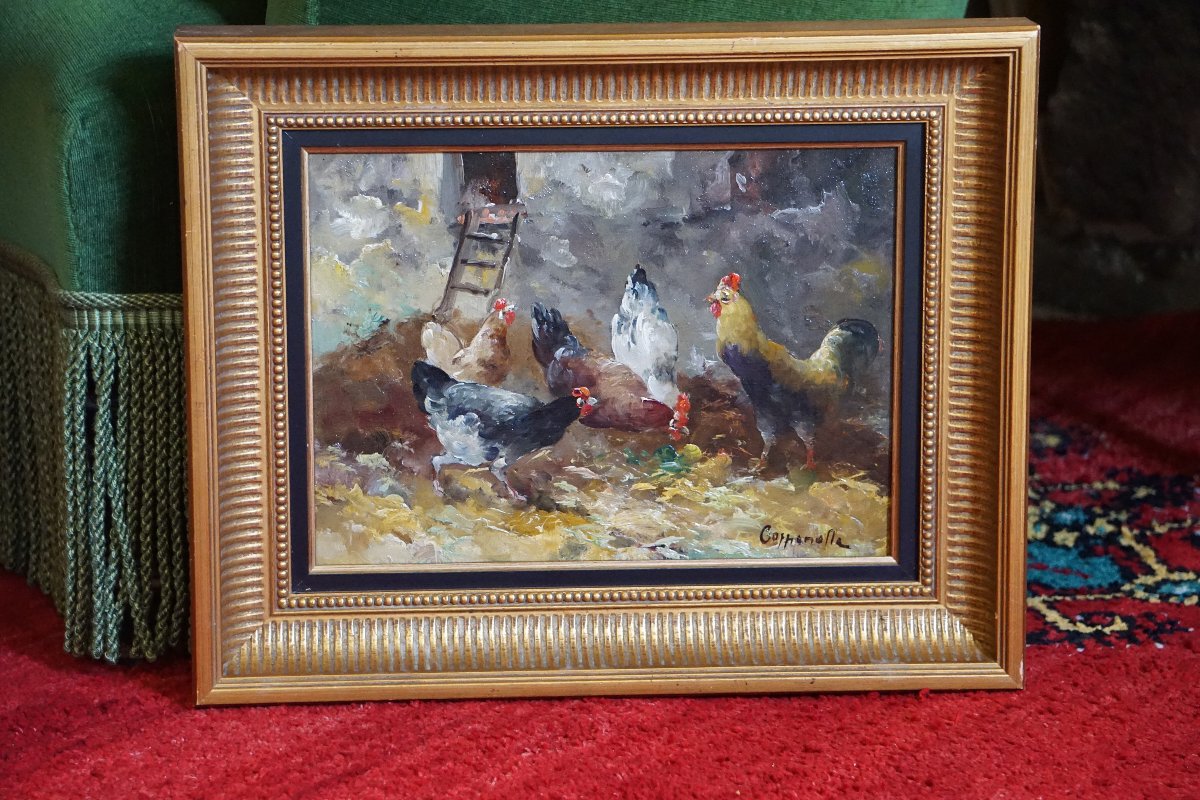
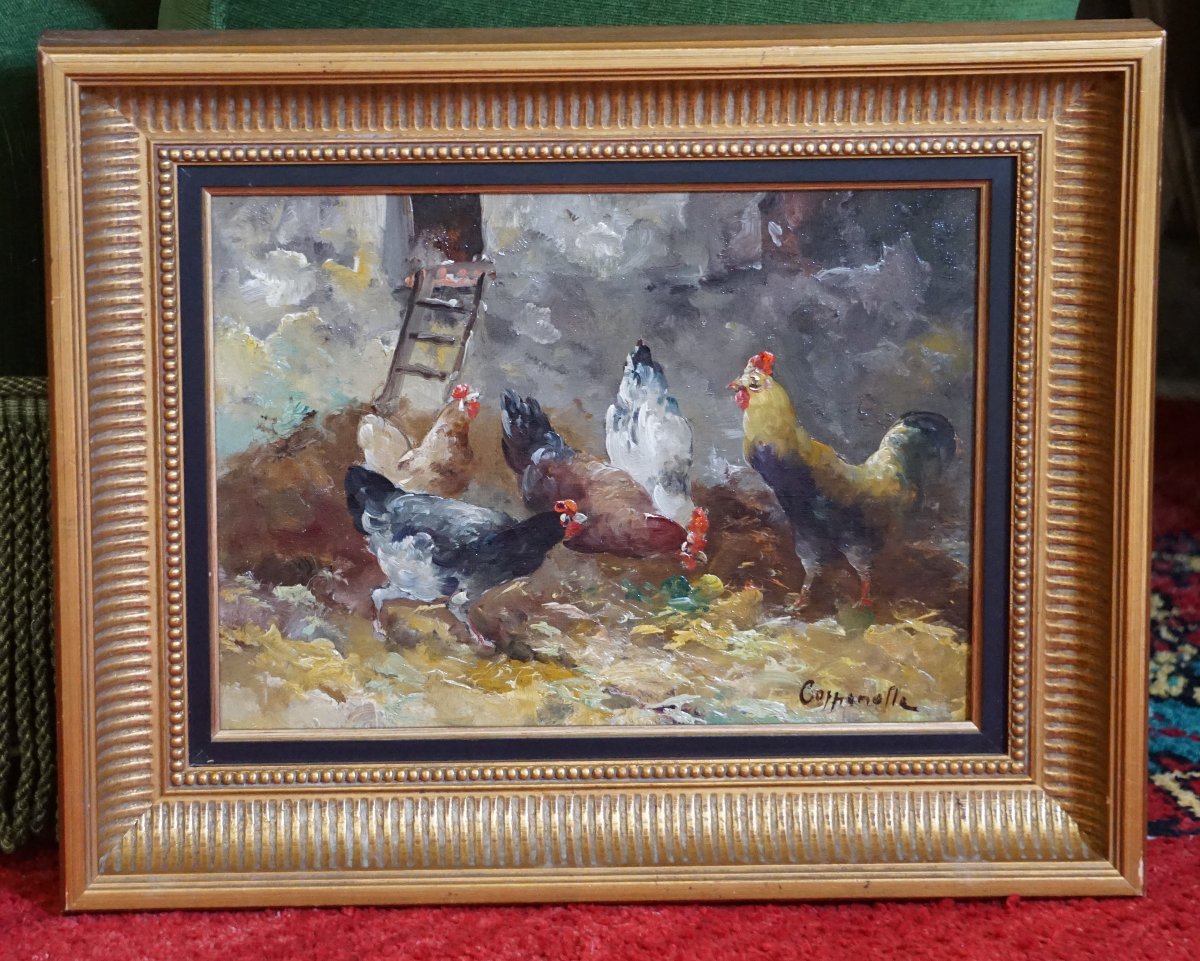


19th-century Belgian School / Hens In A Chicken Coop / Edmond Van Coppenolle (1843/1846–1915) / Hst
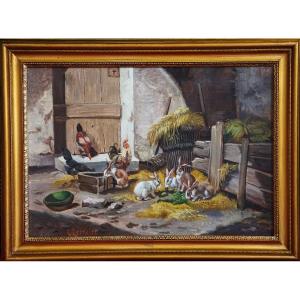
HENS IN A CHICKEN COOP
19TH-CENTURY ANIMAL PAINTING
Signed lower right
24 × 33 cm unframed
36 × 45 cm framed
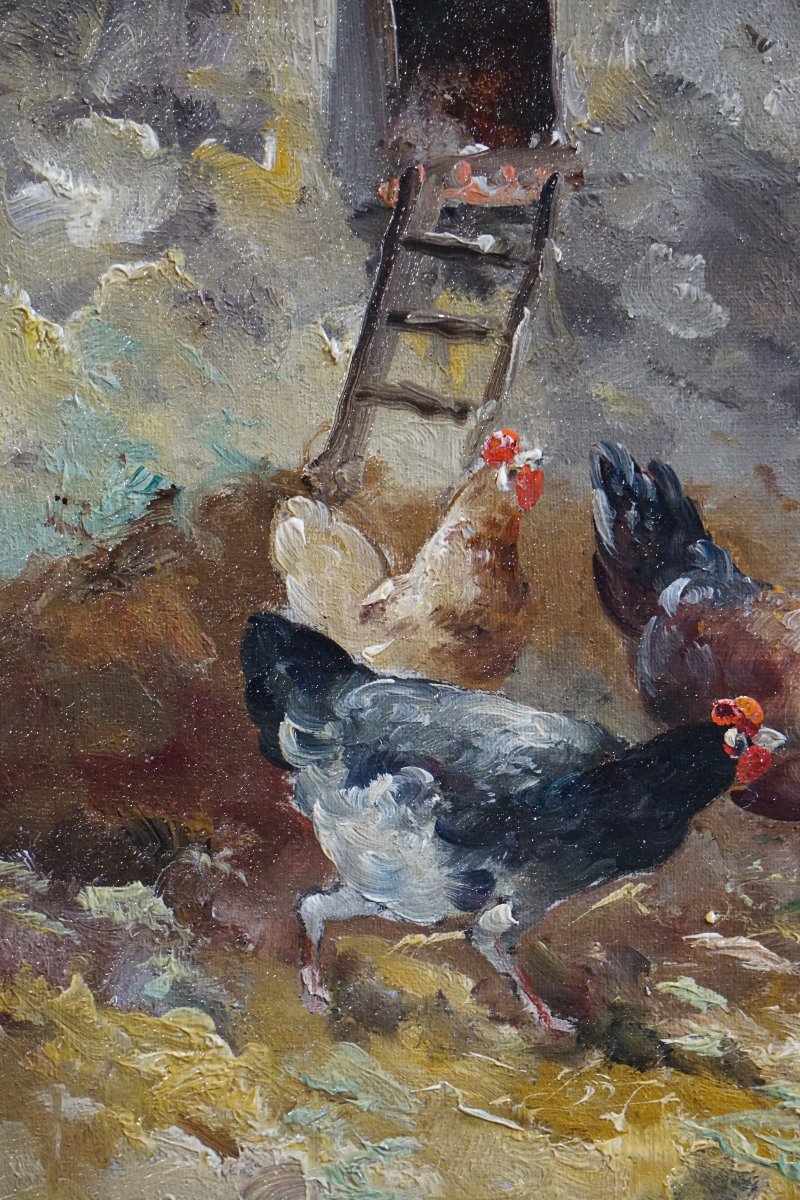
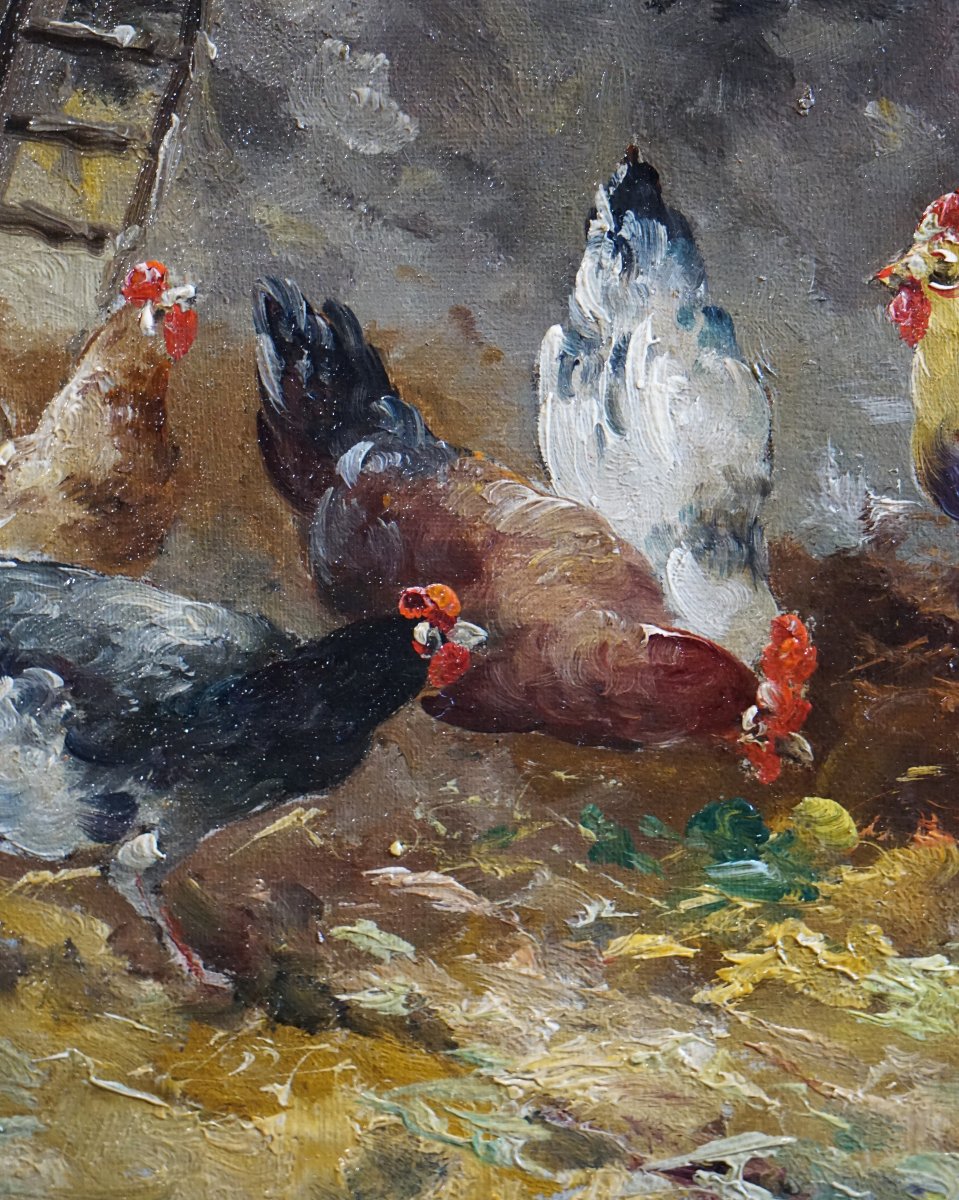
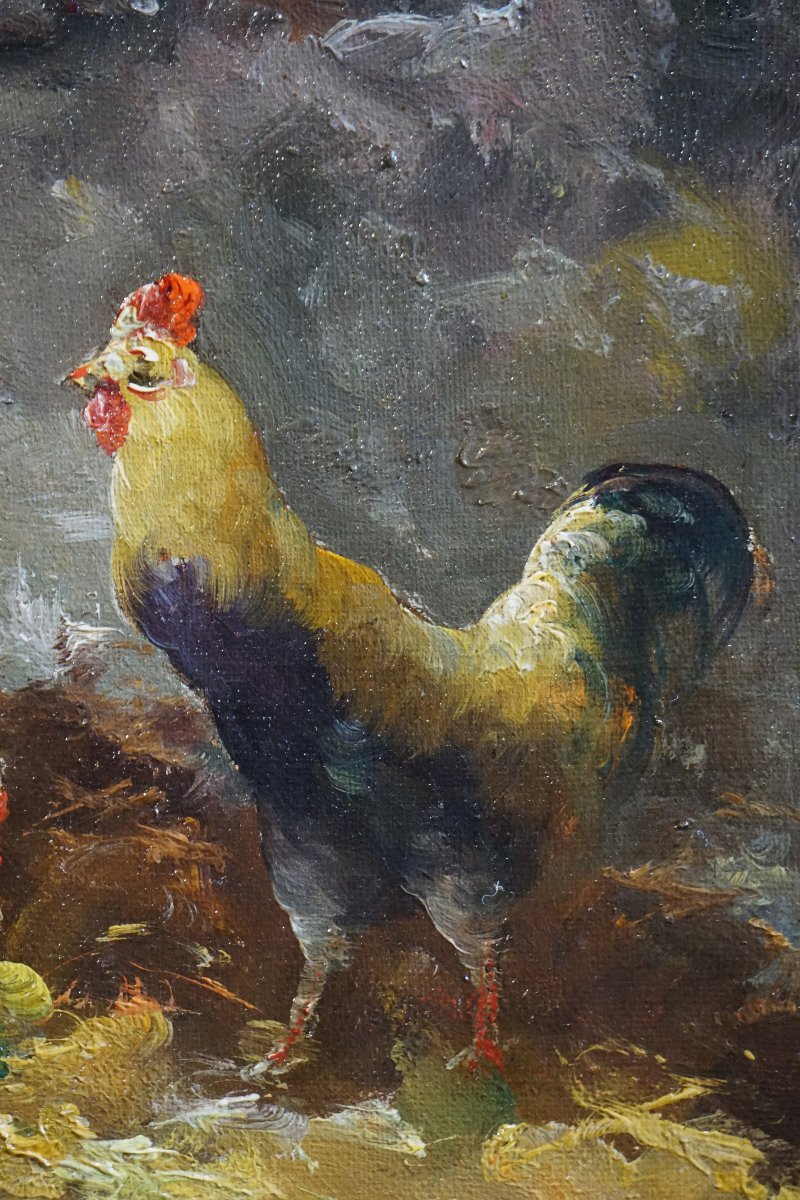
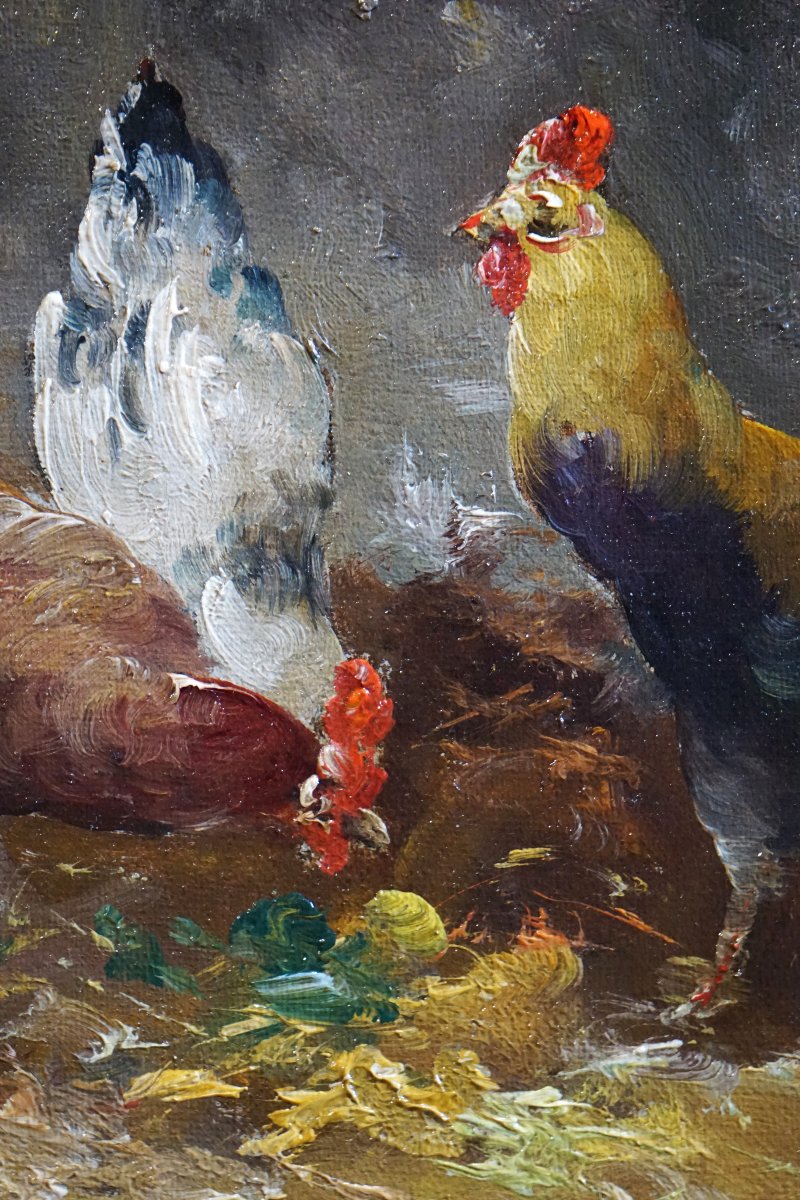
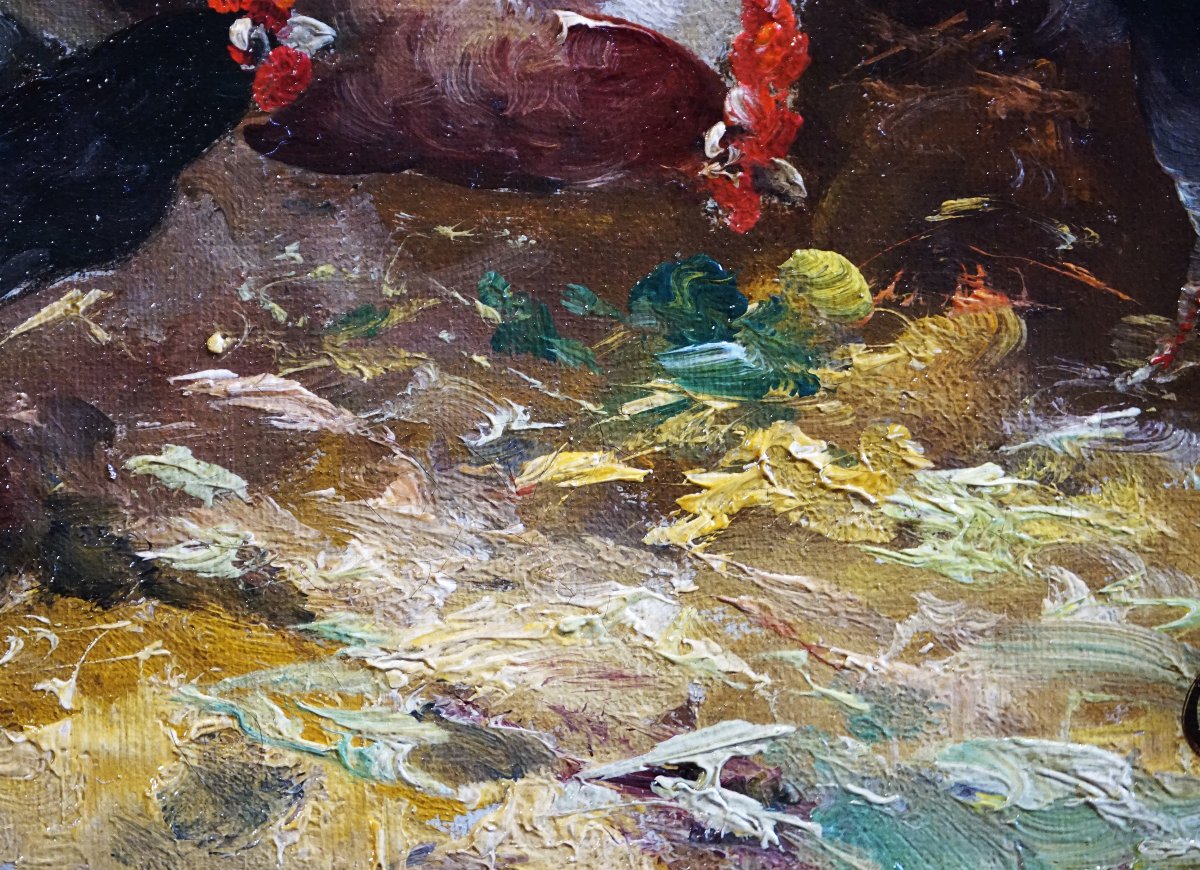
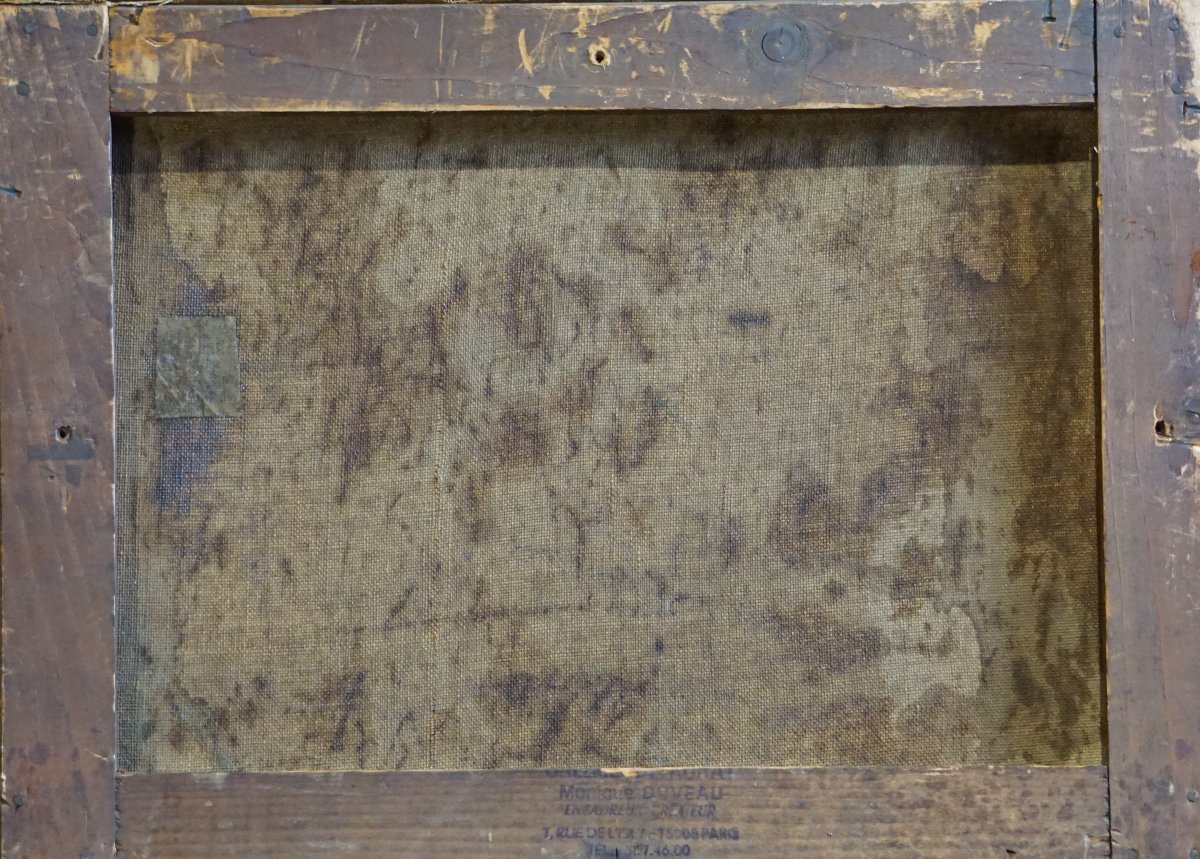
A beautiful and charming 19th-century oil on canvas depicting a farmyard scene, titled Chickens in a Chicken Coop, painted by Edmond Van Coppenolle, a painter of Belgian origin whose depictions of poultry are one of the most characteristic themes of his work.
Through this familiar scene of rural life, the artist immerses us in thepeaceful and picturesque world of farms of yesteryear. The chicken coop, an ordinary part of peasant life, becomes here a true subject of art, treated with that particular sensitivity that 19th-century animal painters knew how to bring to the simplest scenes of daily life.
Van Coppenolle demonstrates a particular interest in the world of poultry, whose postures, movements, and distinctive traits he studies with great care. He strives to capture the lively and spontaneous nature of these animals, while imbuing his compositions with a warm and authentic atmosphere.
The charm of these depictions lies precisely in their simplicity : far from grand academic compositions, the artist prioritizes the observation of nature and domestic life, making the world of the barnyard a subject in its own right.
This painting follows in the tradition of 19th-century European animal painting, particularly prized for its naturalism, its anecdotal quality, and its evocation of a rural world that has since disappeared.
Chickens and scenes from the chicken coop are among the emblematic subjects of Edmond Van Coppenolle, to which he devoted numerous studies and compositions. This work is thus a particularly representative example of this facet of his artistic output.
Edmond Van Coppenolle (c. 1843/1846–1915) was a painter of Belgian origin, born in Ghent, who carried out much of his artistic work in France during the second half of the 19th century and the early 20th century.He belonged to a generation of painters who, while remaining committed to the Flemish and Dutch pictorial traditions, contributed to the development of a more naturalistic style of painting, focused on depicting everyday life, animals, and nature.
After spending his early years in Belgium, he settled in France, in the Moret-sur-Loing region of Seine-et-Marne, where he worked for the Schopin porcelain factory, based in Montigny.This period played an important role in his artistic career. In particular, he produced numerous studies of poultry, executed in India ink, wash, and pencil, intended to serve as models for porcelain decoration.This demanding work, requiring great precision in drawing and careful observation of animal forms, helped develop his knowledge of the various species of poultry and their natural behaviors. Thus, roosters, hens, and farmyard scenes became recurring subjects in his paintings.After his marriage, the artist moved into a spacious studio on Grande-Rue, where he continued his work as a painter. Alongside his animal compositions, Edmond Van Coppenolle also gained a reputation as a painter of flowers and floral still lifes.In this field, his work reveals the influence of the great Flemish and Dutch masters of the 17th century, who were particularly attuned to the richness of colors, the delicacy of petals, and the effects of light. However, Van Coppenolle did not limit himself to merely imitating this ancient tradition. His bouquets also display a freedom of composition and a spontaneity that reflect the evolution of French artistic taste during the second half of the 19th century. His floral paintings are distinguished by their vibrancy and their pursuit of a natural rendering, while his farmyard scenes demonstrate a precise observation of animal behavior.
Period: 19th century
Style: Other Style
Condition: Perfect condition
Material: Oil painting
Reference (ID): 1840448
Availability: In stock