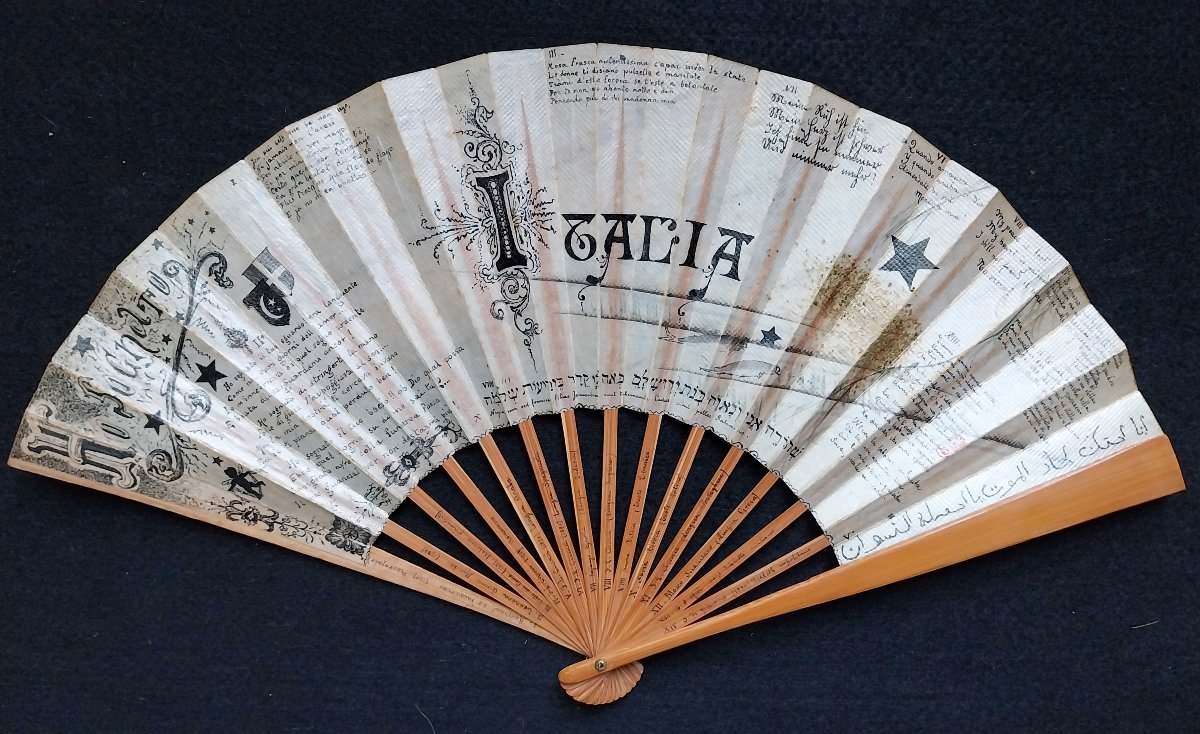
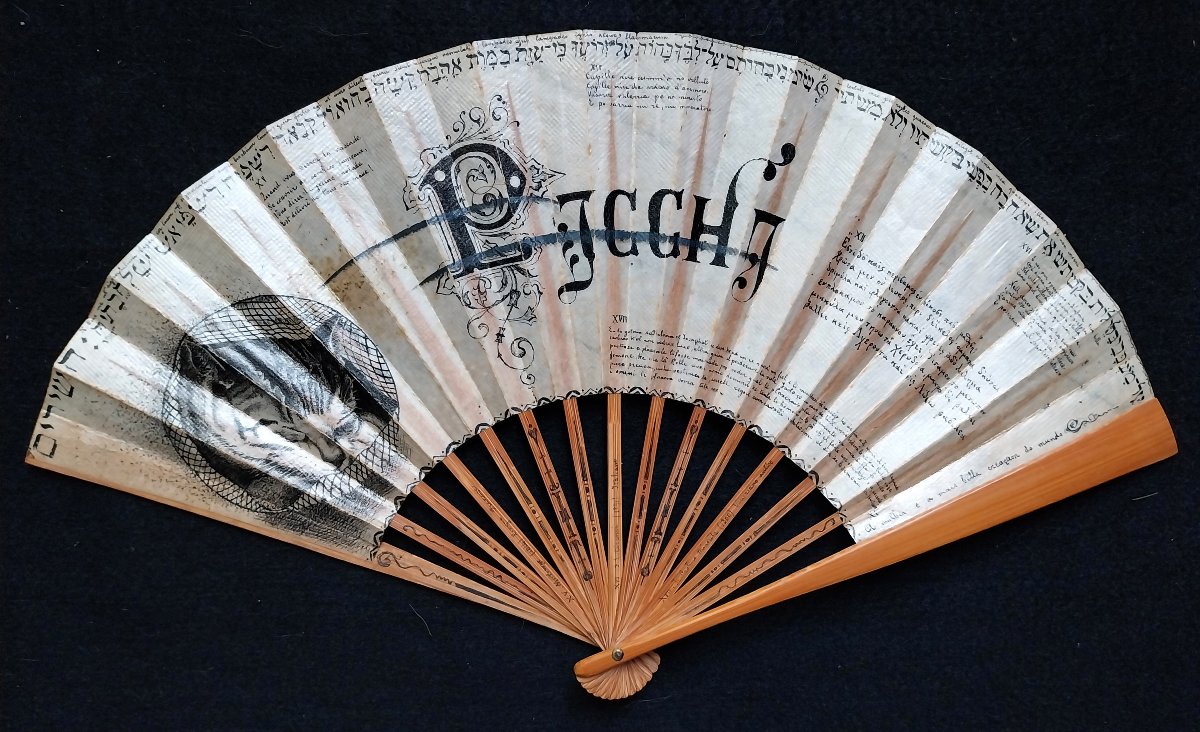
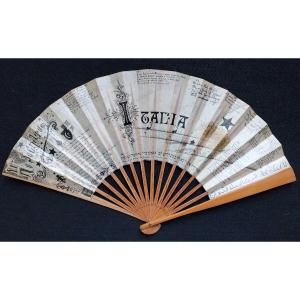


Fan, A Gift From An Italian Philologist, C. 1900
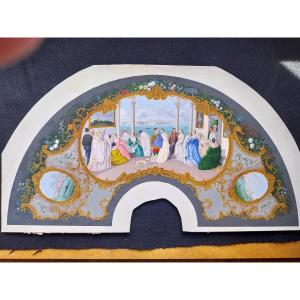
When folded, the double layer of high-quality embossed Japanese paperperfectly captures the black ink and the light washes ofcolor. The frame is imported from Japan and features curved ribs (measuring approximately 20.2 cm in height).This fan is in excellent condition,which is rare for a paper object from thisperiod.A testament to the romantic, academic, andartistic spirit of the turn of the 20th century in Italy.
Note:
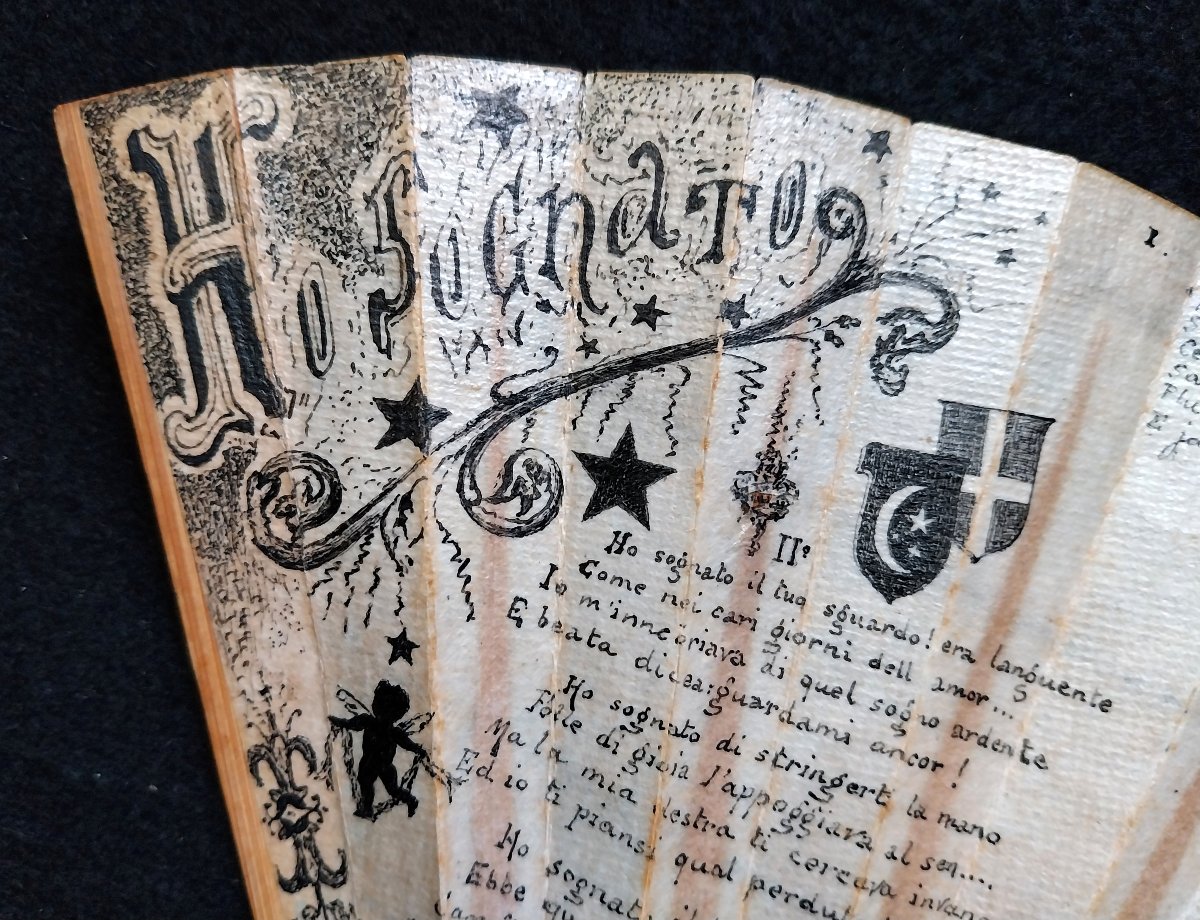
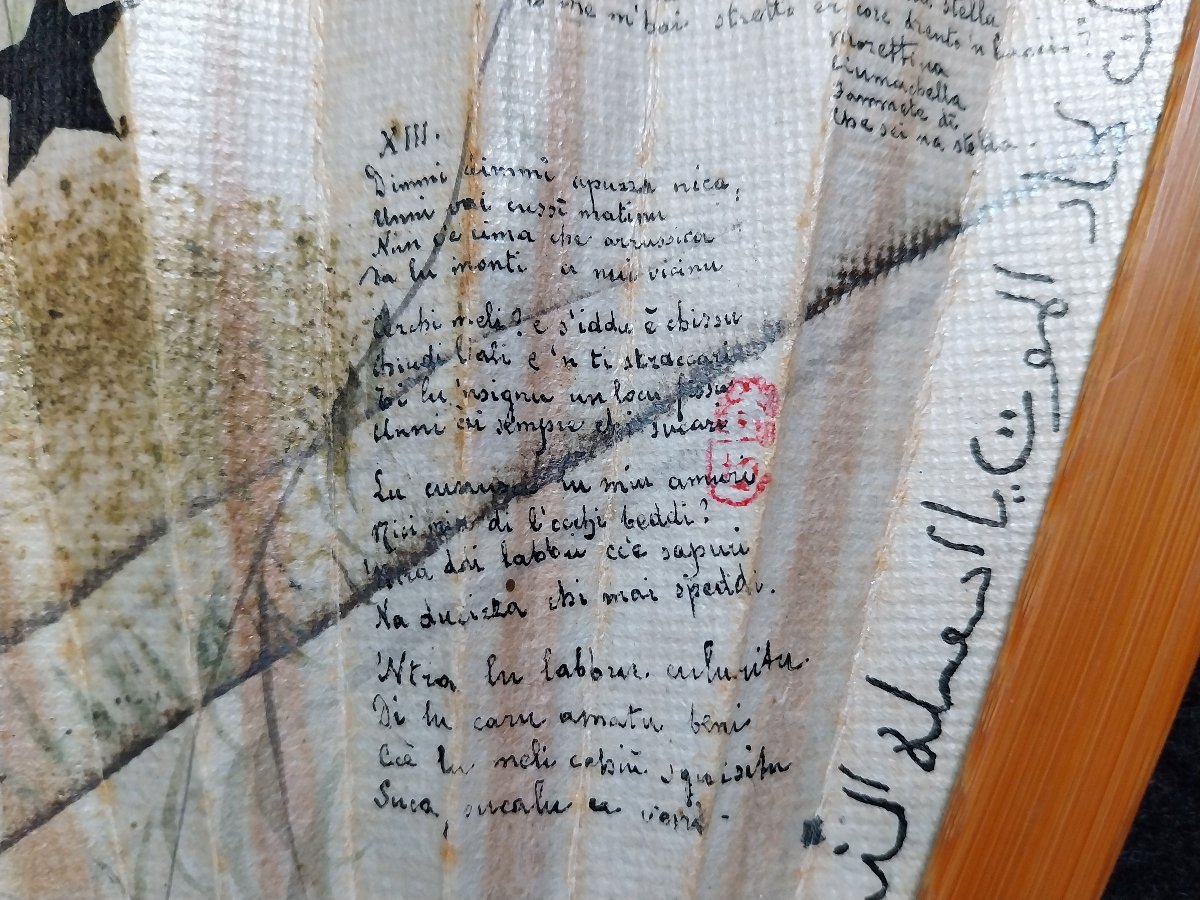
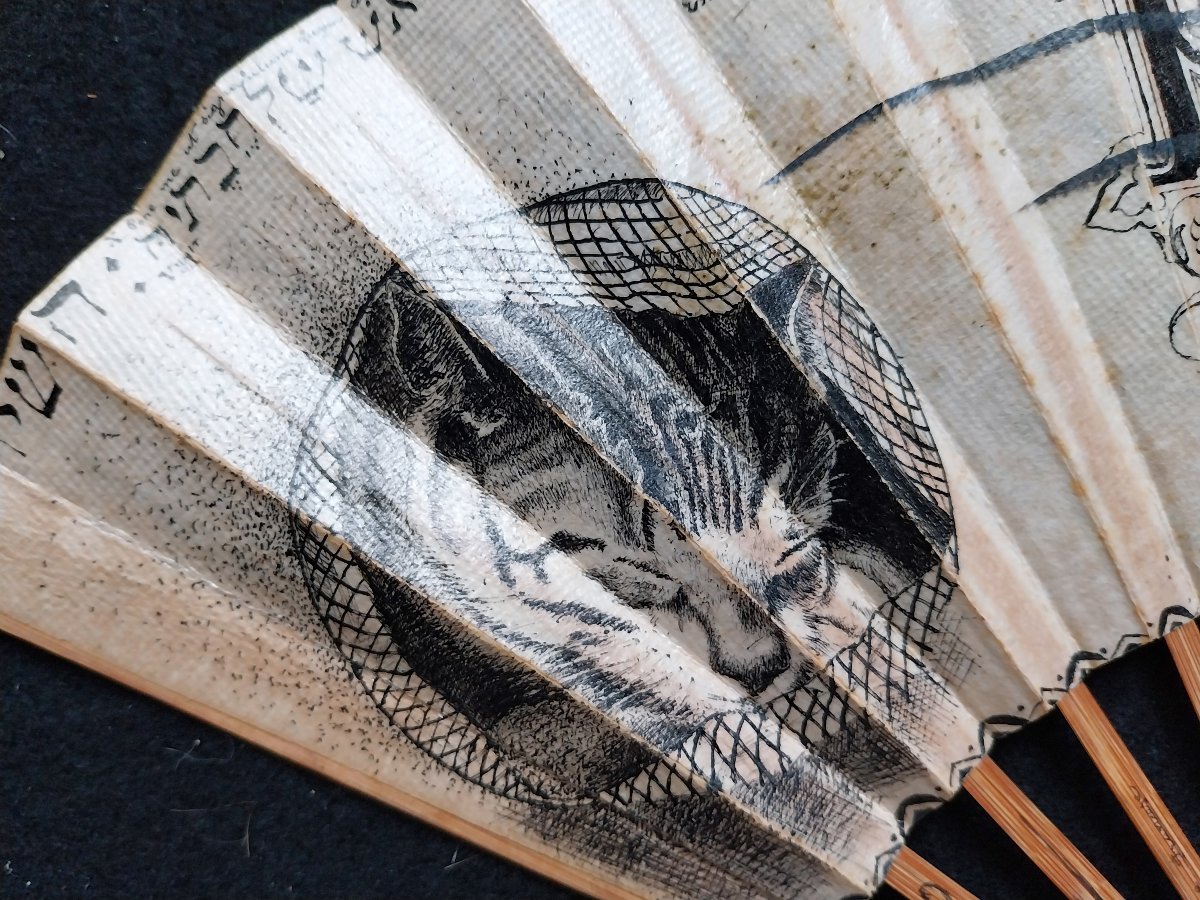
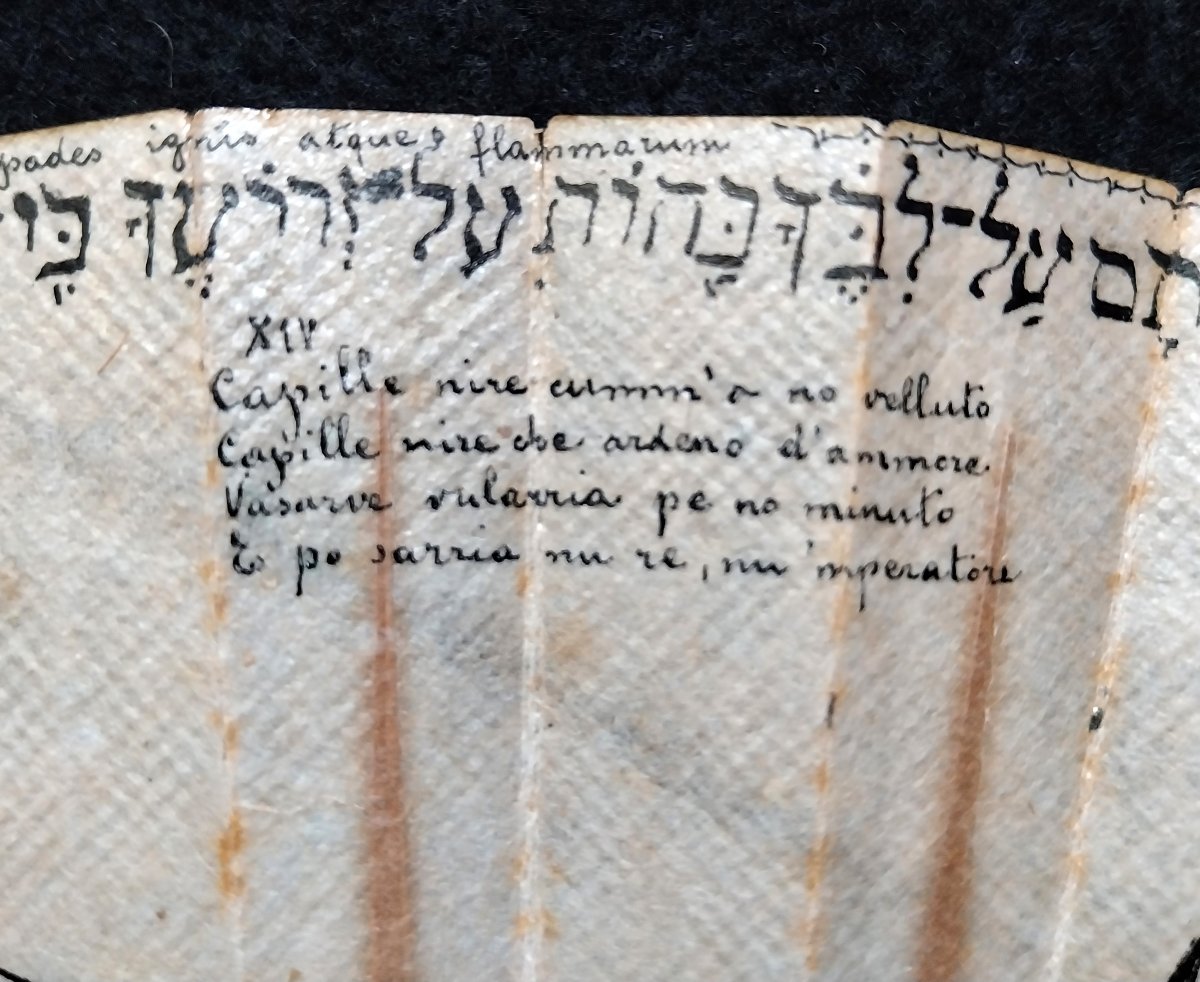
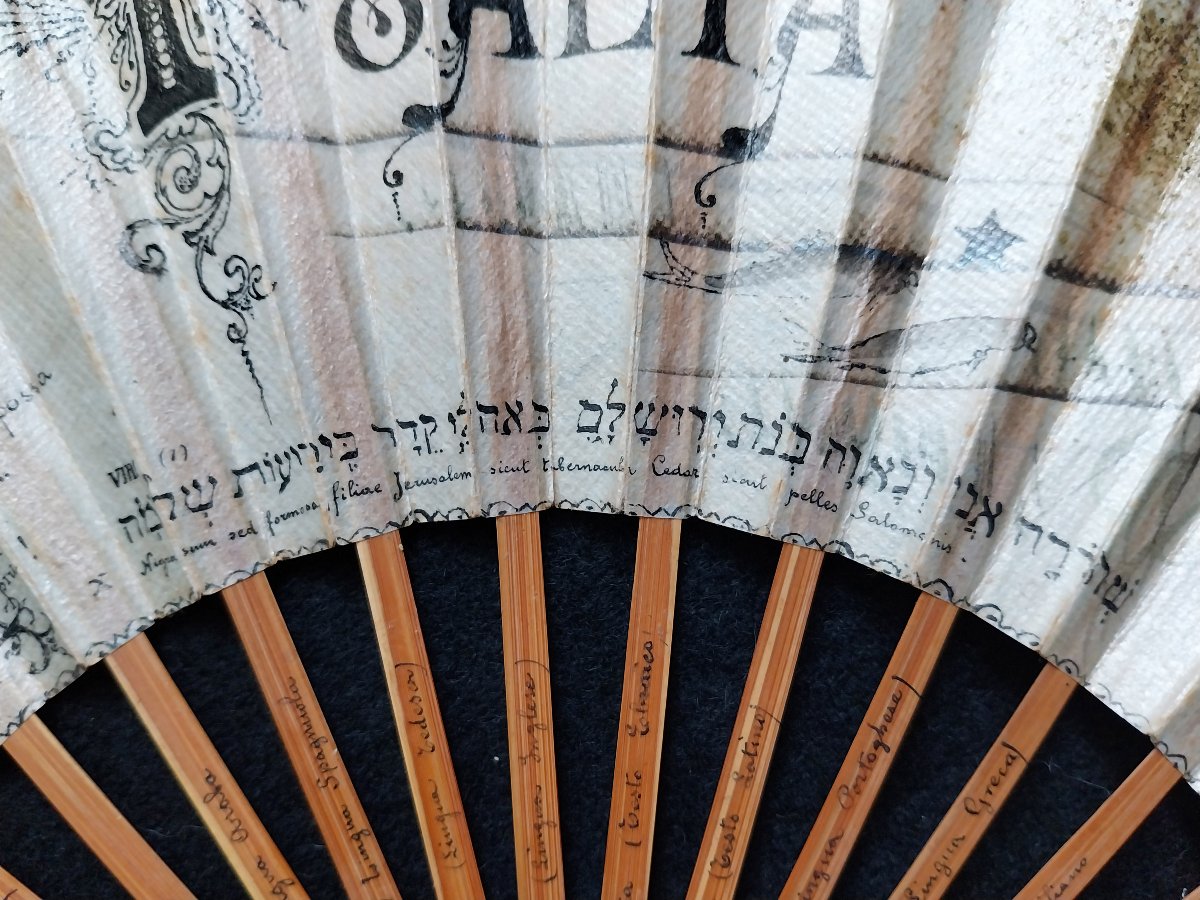
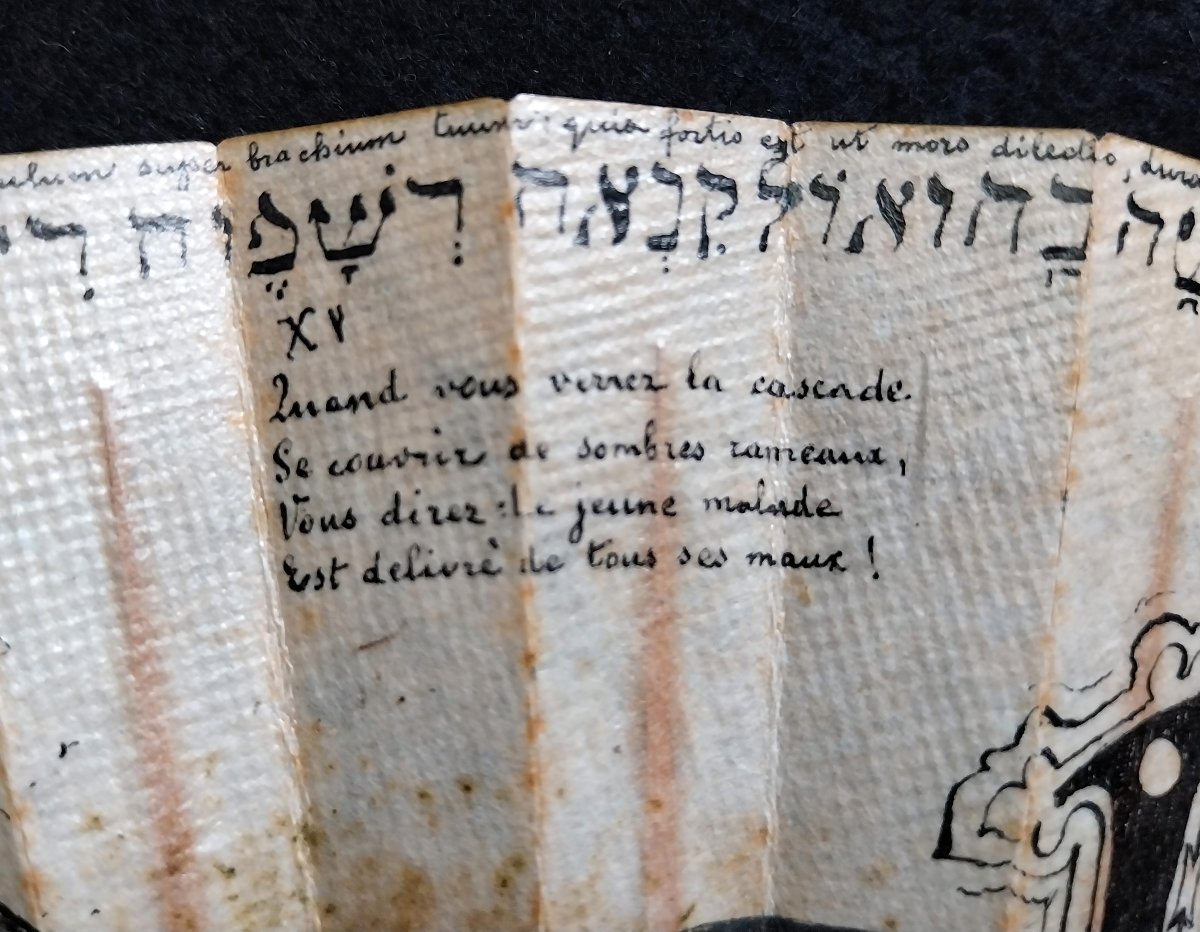
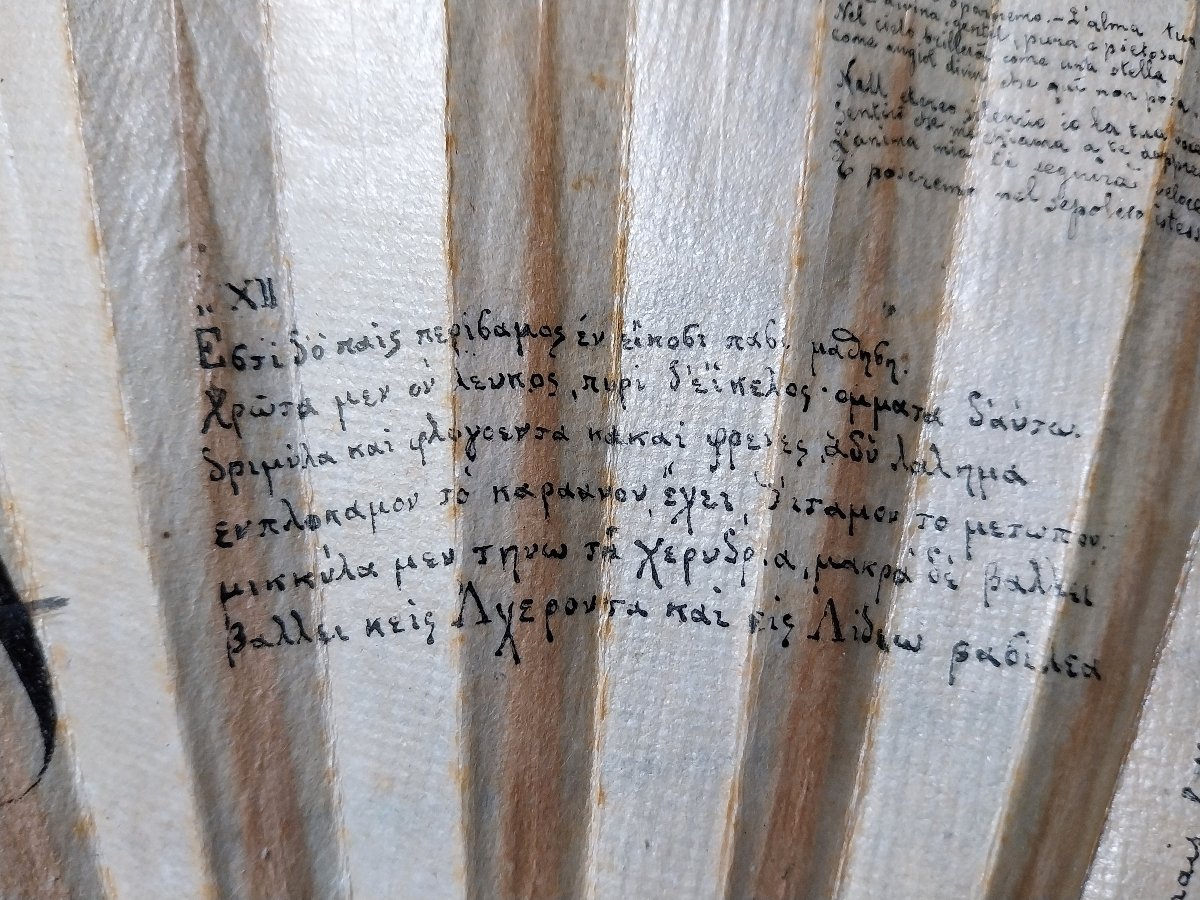
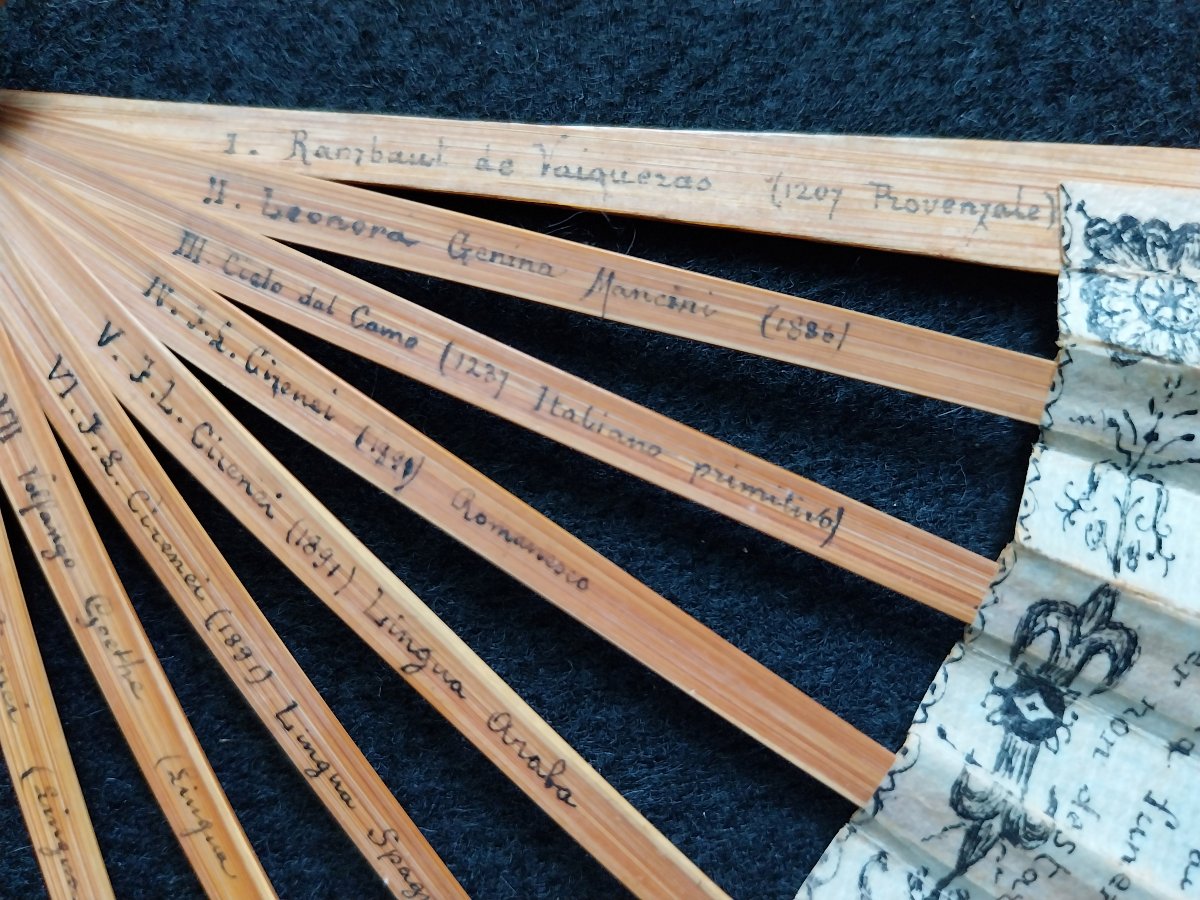
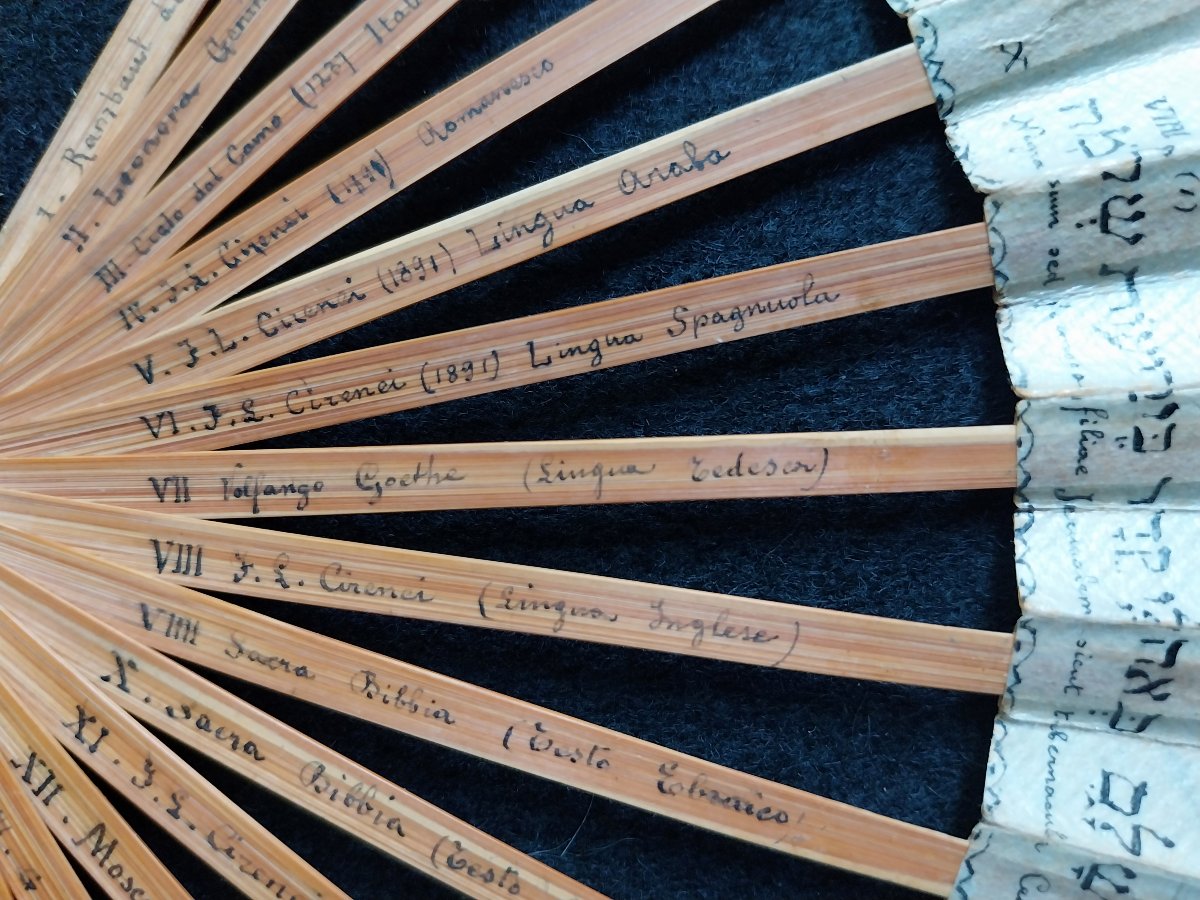
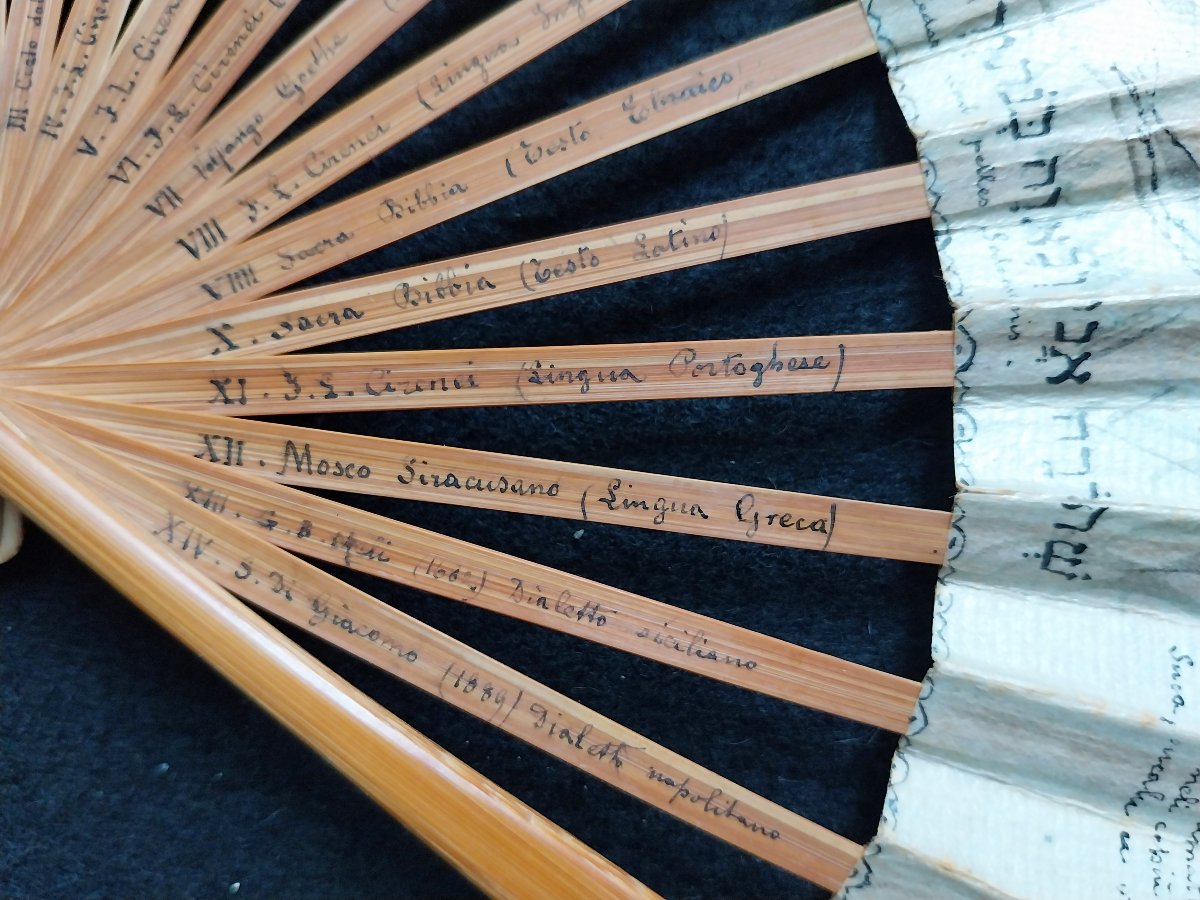
A masterpiece of multilingualism and literature, which makes thisfan so remarkable is its linguistic and textual richness. It is mostlikely a poetic gift addressed to a beloved (echoing a“daughter of Jerusalem”), compilingno fewer than 17handwritten texts and quotations composed in a multitude oflanguages and dialects.The strips on the wooden frame meticulously indicate thelanguages used for each section:Identifiable languages on the frame: Lingua Araba (Arabic), LinguaSpagnuola (Spanish), Lingua Tedesca (German), Lingua Inglese(English), Testo Ebraico (Hebrew), TestoLatino (Latin), Lingua Portoghese (Portuguese), Lingua Greca(Greek), and even Italiano (Italian).Literary references:The fan brings together writings from a wide variety of eras and backgrounds. Itincludes, for example, verses by the Provençal troubadour Raimbaut de Vacqueyras, the lyric poet Leonora Genina Mancini, the ancient poet Loscody Stacusano, and excerpts in Sicilian by Salvatore diGiacomo.Analysis of Visual DetailsObverse (“Italia”):The center proudly displays the word “ITALIA”in stylized calligraphy. Below it, a wide band inscribedin Hebrew is visible, accompanied by its Latin translation from the Song of Songs (“Nigra sum sed formosa, filiaeJerusalem…”). The left side features thetitle “Ho Sognato” (I Dreamed), accompanied by aromantic poem in Italian, a coat of arms (the Cross of Savoy combined with acrescent and a star), and a small cherub.The reverse side of the fan features the Neapolitan word “PECCHÈ?” (Why?). It is illustrated on the left by a magnificentink drawing depicting a tabby cat sleeping in a basket or a net, demonstrating great finessein its execution.
1 500 €
Period: 20th century
Style: Art Nouveau
Condition: Excellent condition
Length: 21,5 cm
Reference (ID): 1837300
Availability: In stock
Print