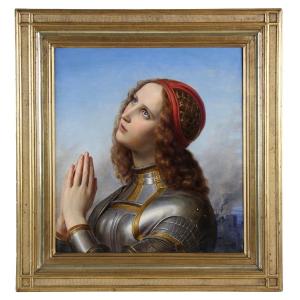


Hermann Anton Stilke, 1831, Joan Of Arc, Antique Oil Portrait, Framed
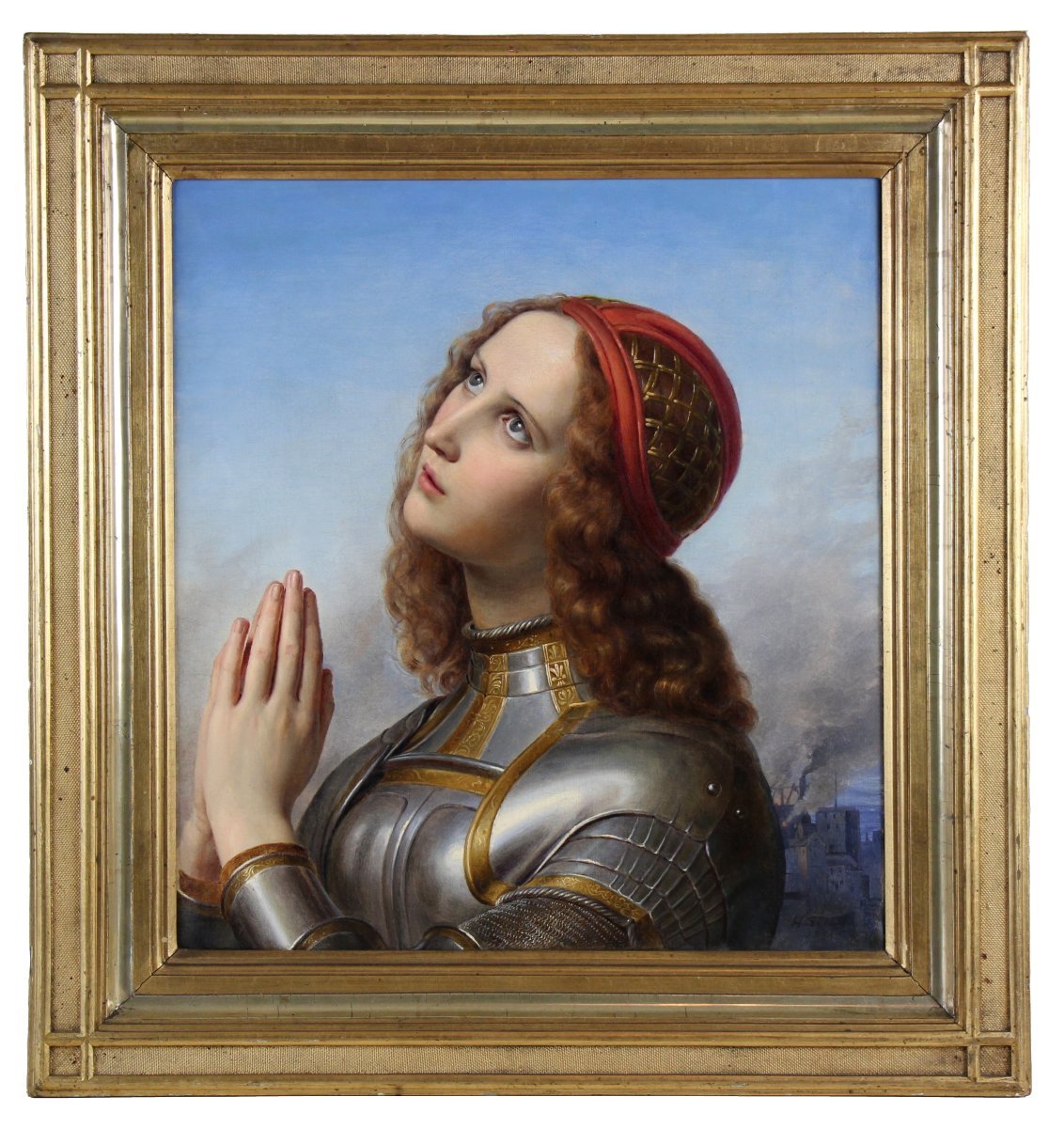
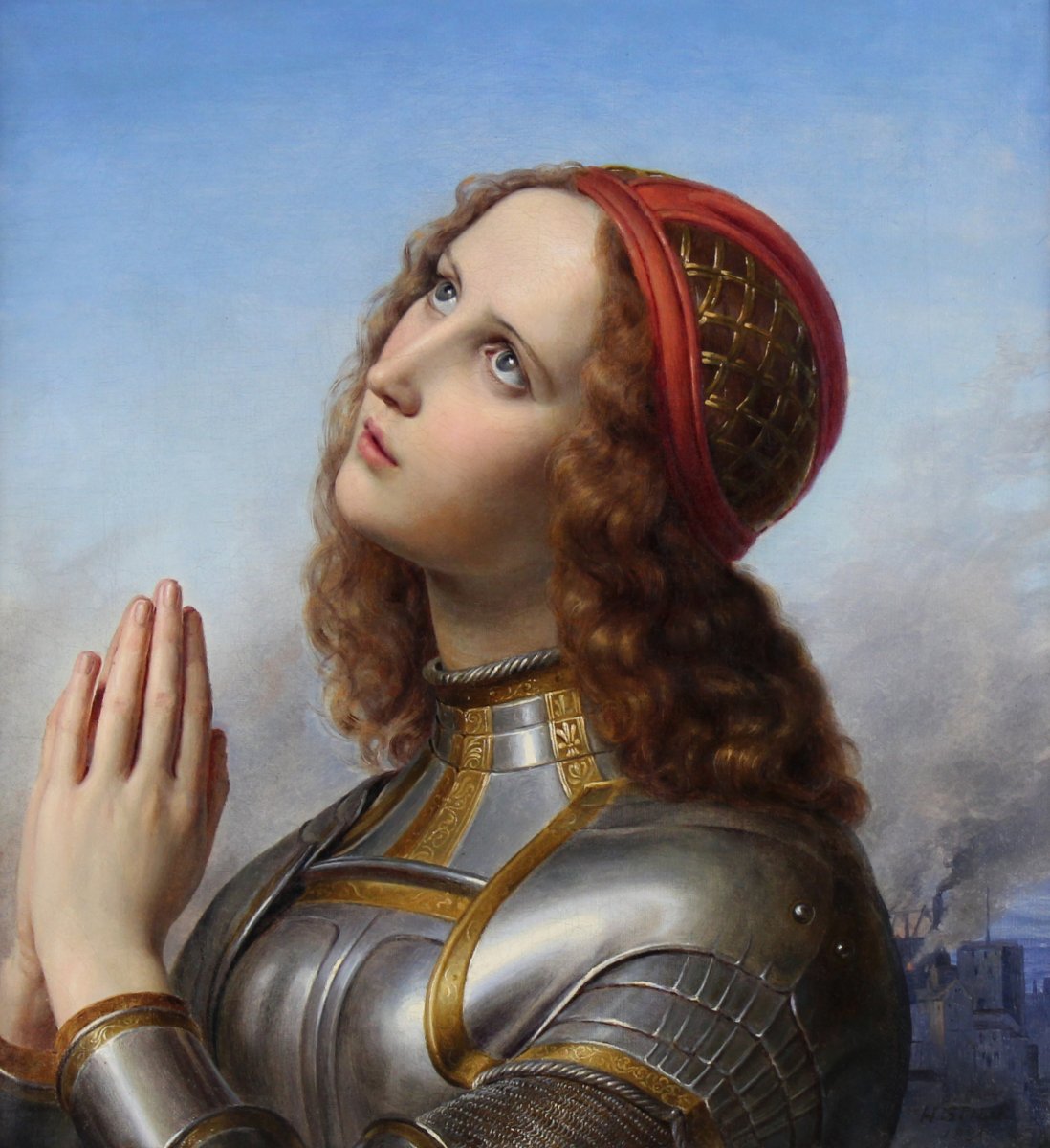
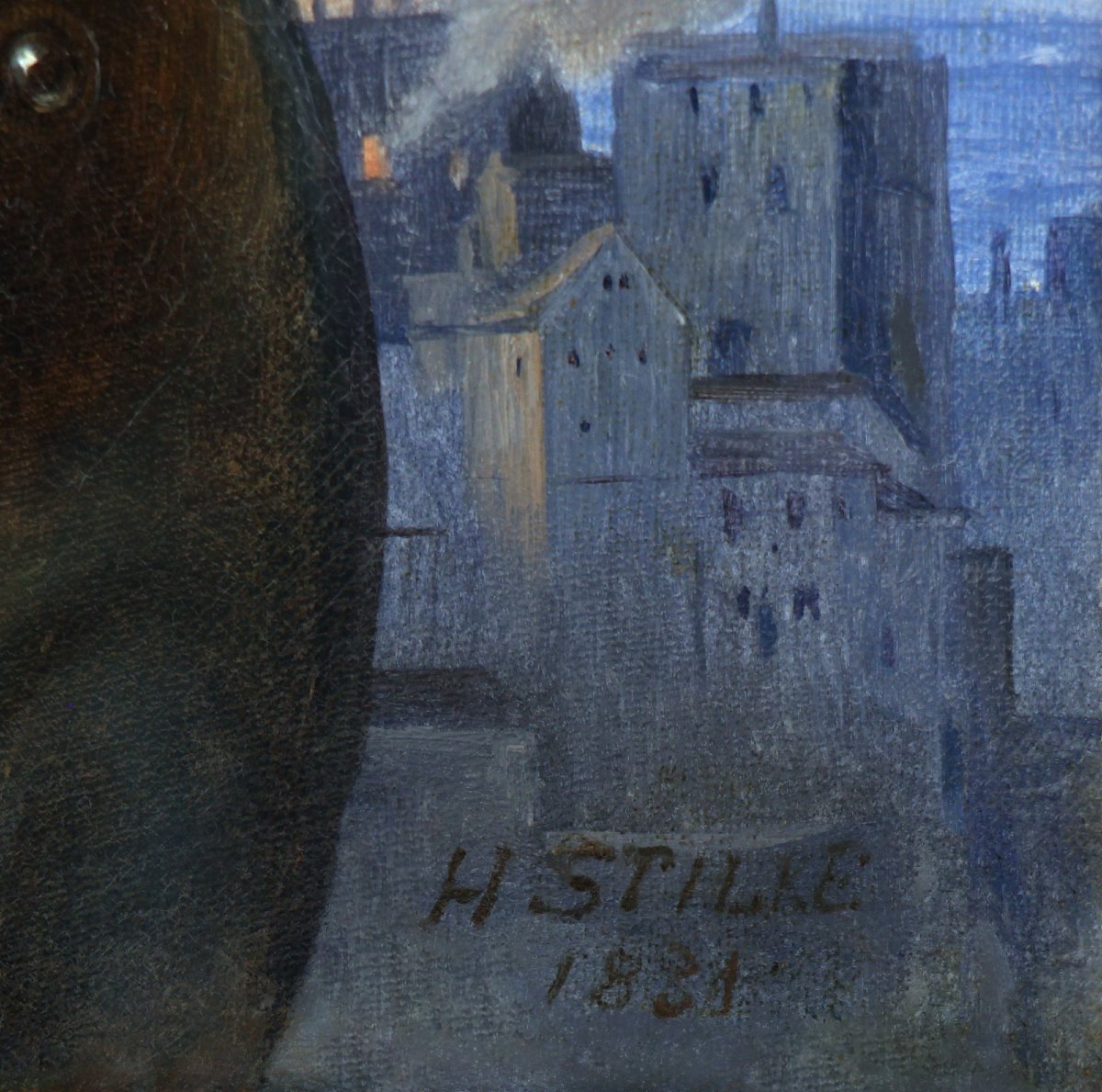
An exceptionally delicate portrait of Joan of Arc in prayer, by Hermann Anton Stilke (1803–1860), oil on canvas, presented in its original gilded frame. Signed and dated 1831 in the lower right corner, this deeply intimate 19th-century German painting combines remarkable craftsmanship, intense devotion, and an added historical interest: a handwritten note attests to a gift from the Count of Solms.
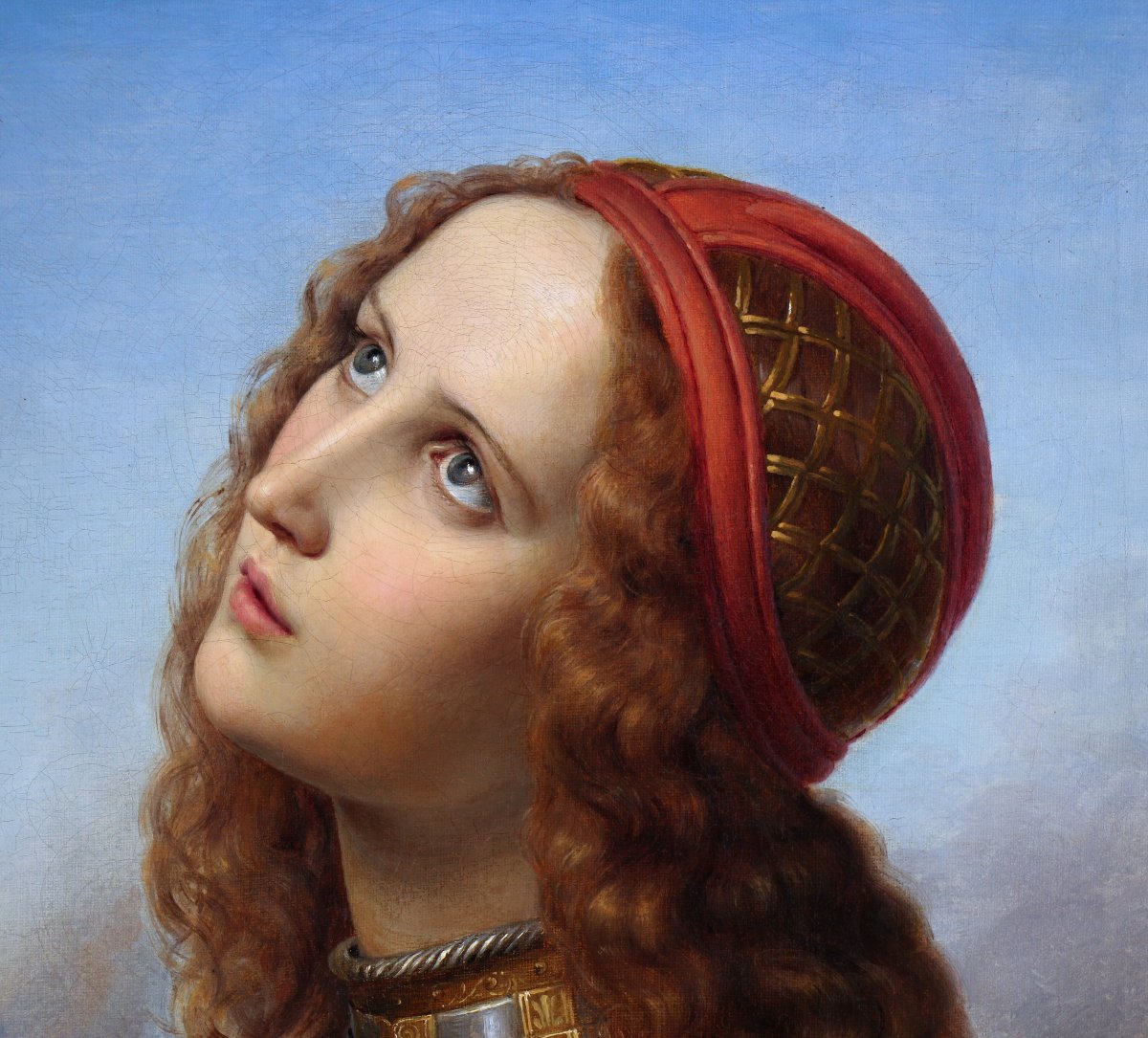
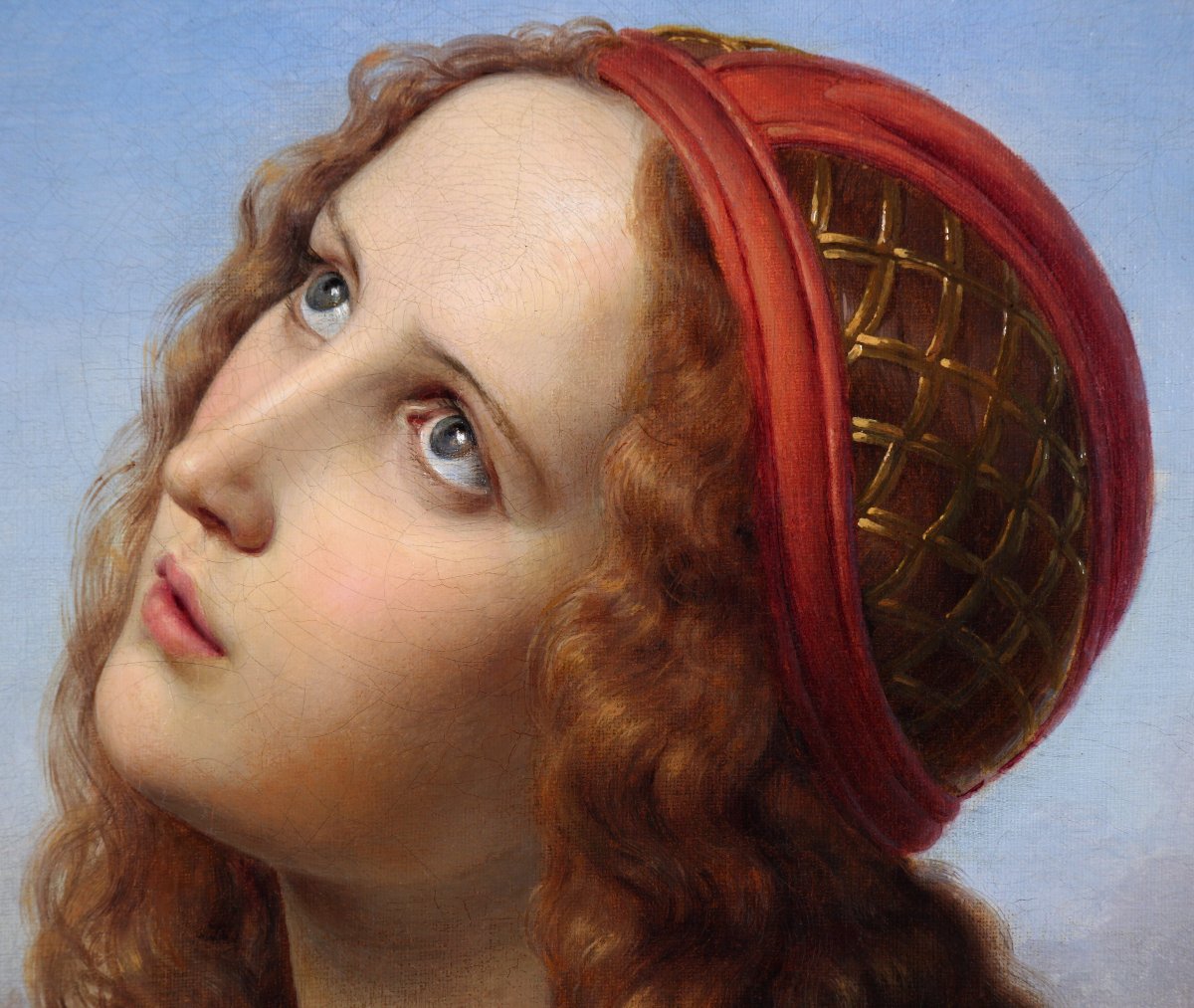
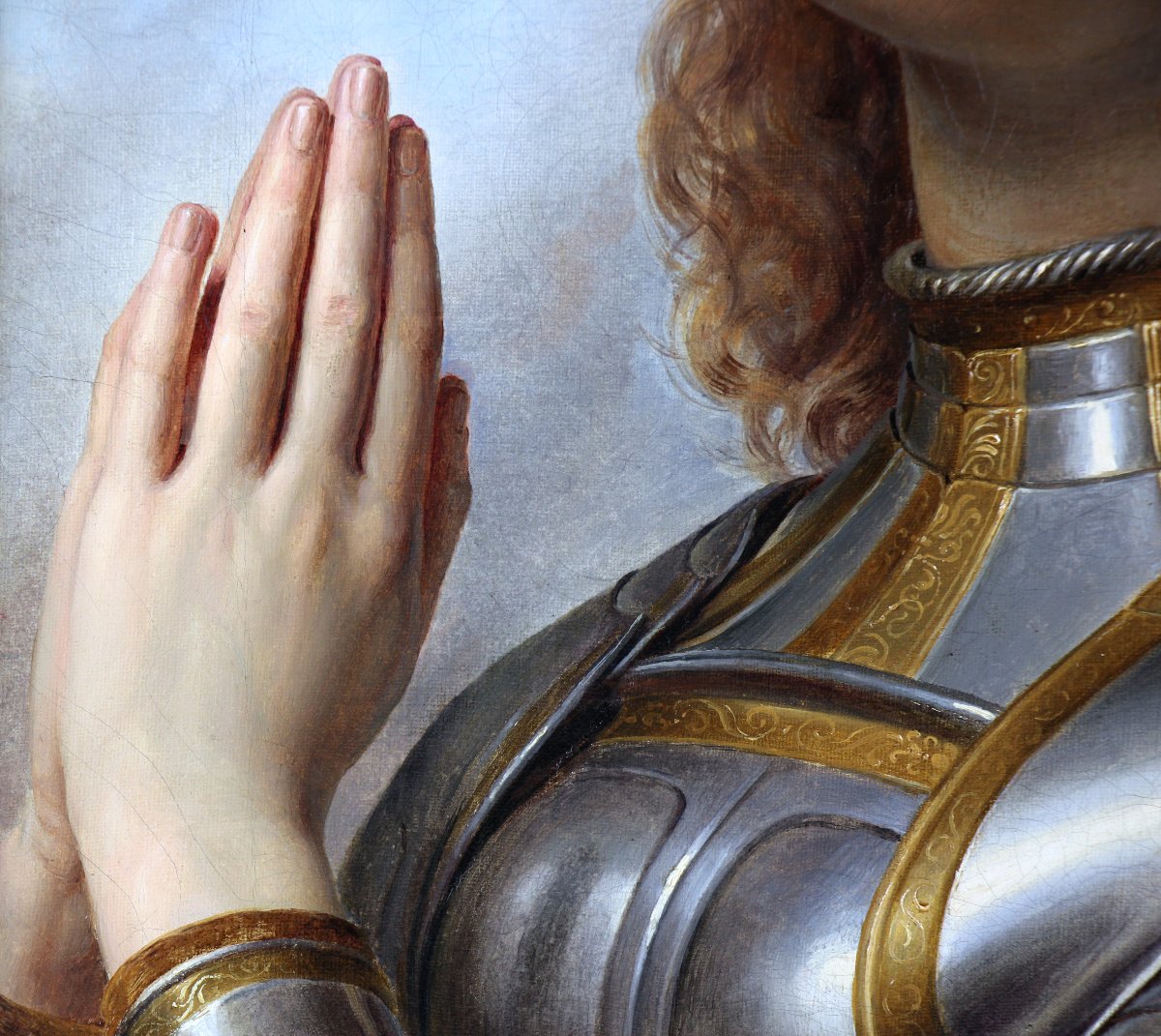
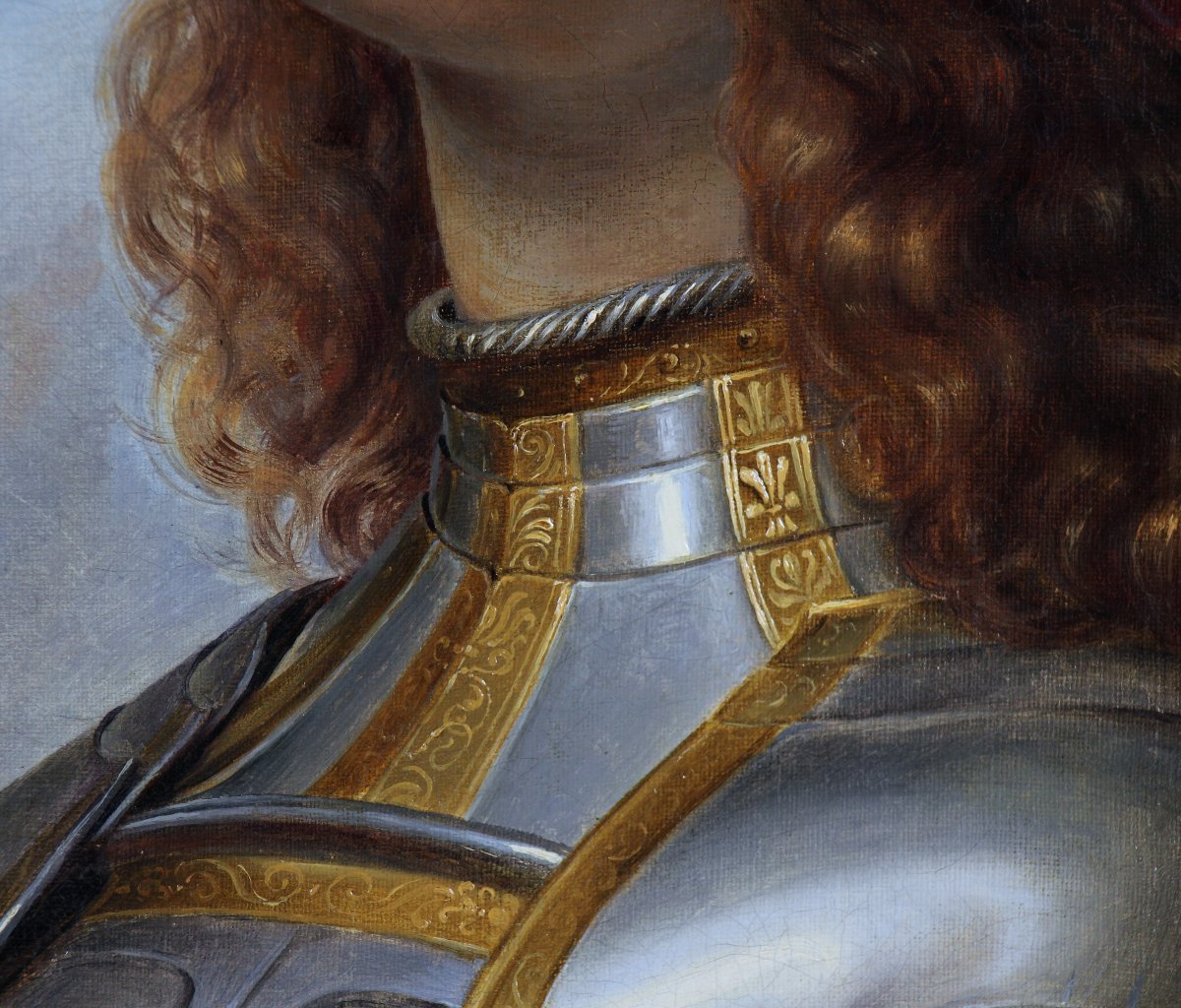
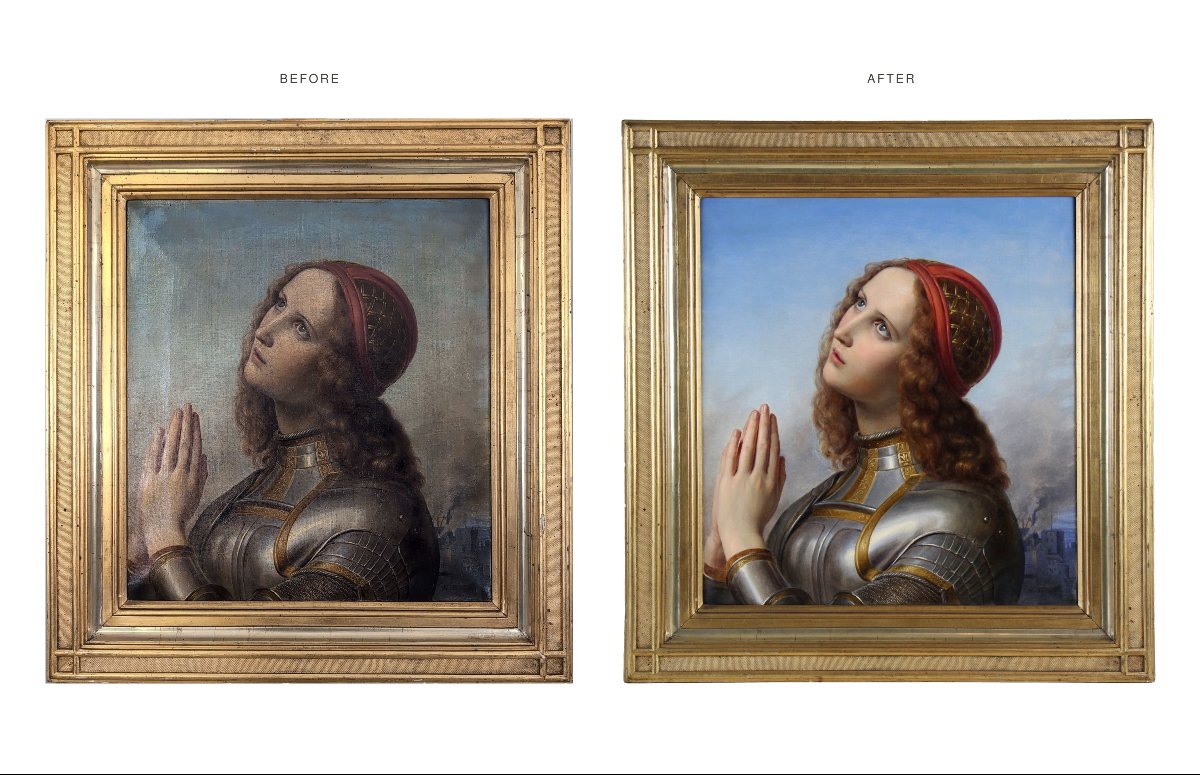
Joan is depicted in finely chiseled armor, her hands clasped in prayer and her gaze raised toward the sky. The delicate modeling of her face contrasts beautifully with the reflective steel, the intricate gilded ornamentation, and the richly hued red headdress. Carefully rendered curls frame her expression, while the architecture in the distance and the rising smoke subtly suggest a conflict unfolding beyond the figure.
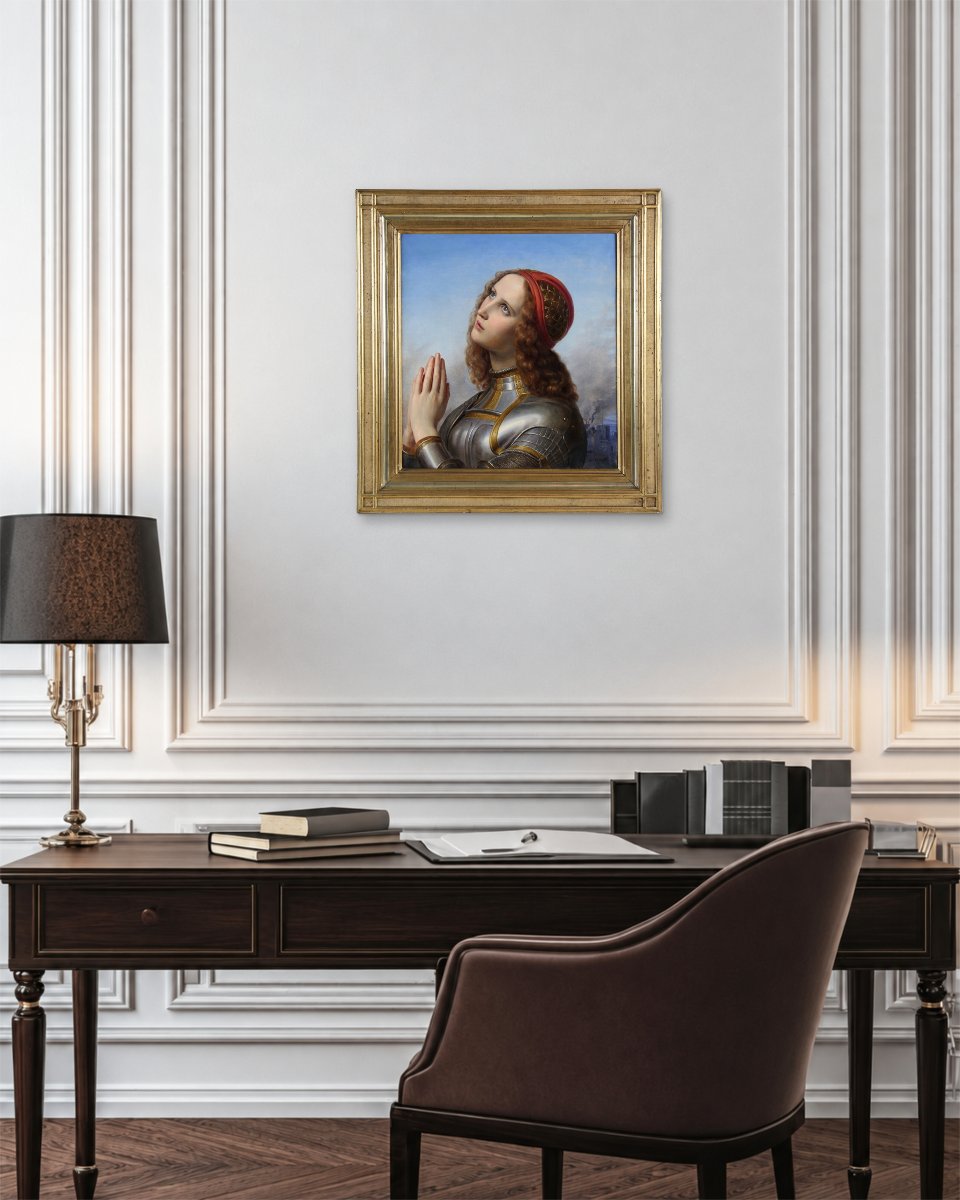
The quality is particularly evident in the transitions of light and shadow on the complexion, the delicacy of the fingers, and the convincing rendering of material contrasts. Cool tones of blue and silvery gray balance the warm tones of the flesh, auburn hair, and golden details. Although modest in size, the painting possesses an imposing presence, ideal for attentive contemplation in a private collection, an office, or a carefully curated interior.
Hermann Anton Stilke was a German history painter associated with the Düsseldorf Romantic tradition. He was trained by Karl Wilhelm Kolbe and Peter von Cornelius, and later studied under Wilhelm von Schadow. His work frequently explores medieval history, chivalry, and religious subjects. His prestige is attested by the commission he received from King Frederick William IV of Prussia in 1842 to decorate the Knights’ Hall at Stolzenfels Castle, which was completed in 1846.
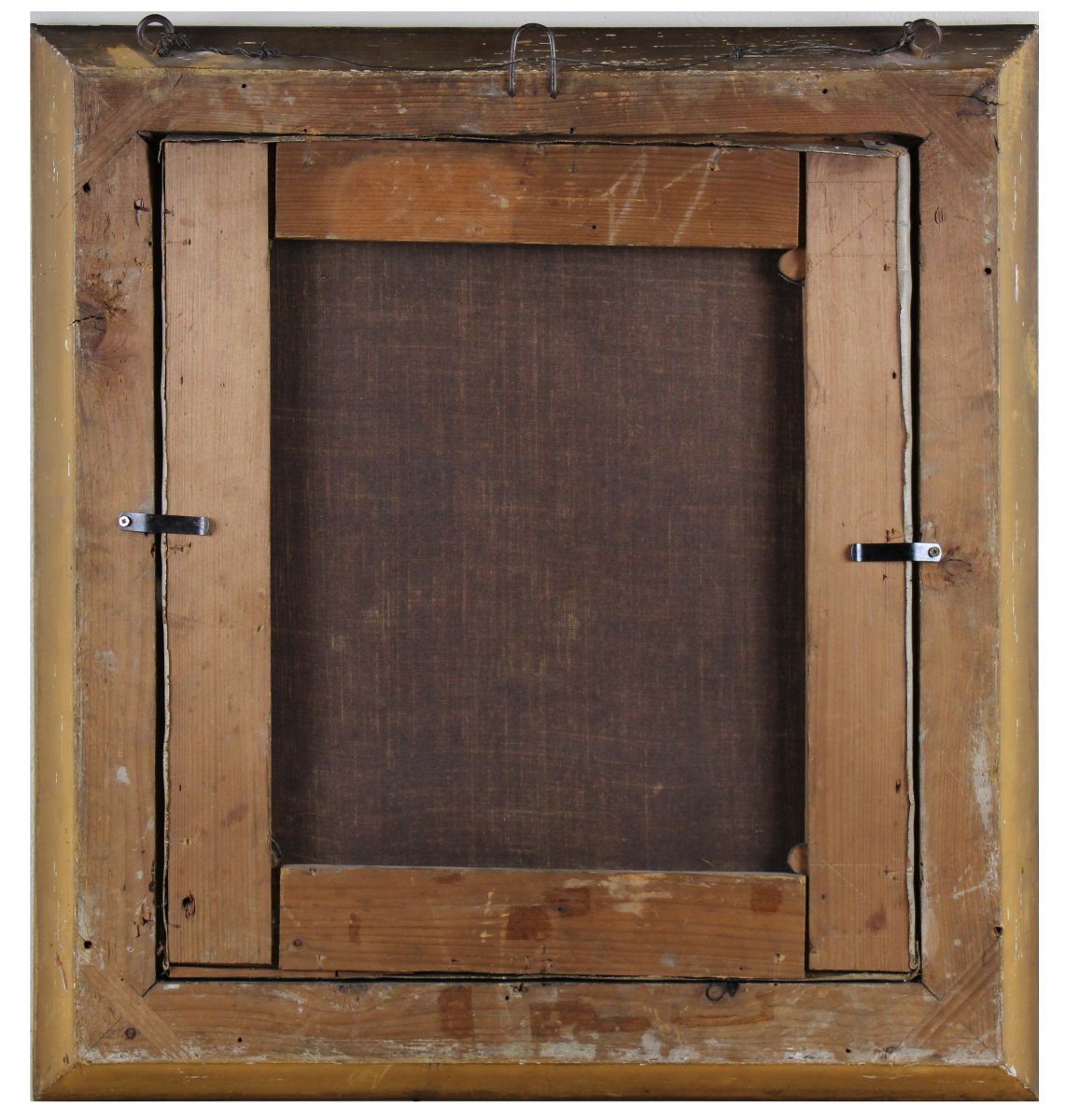
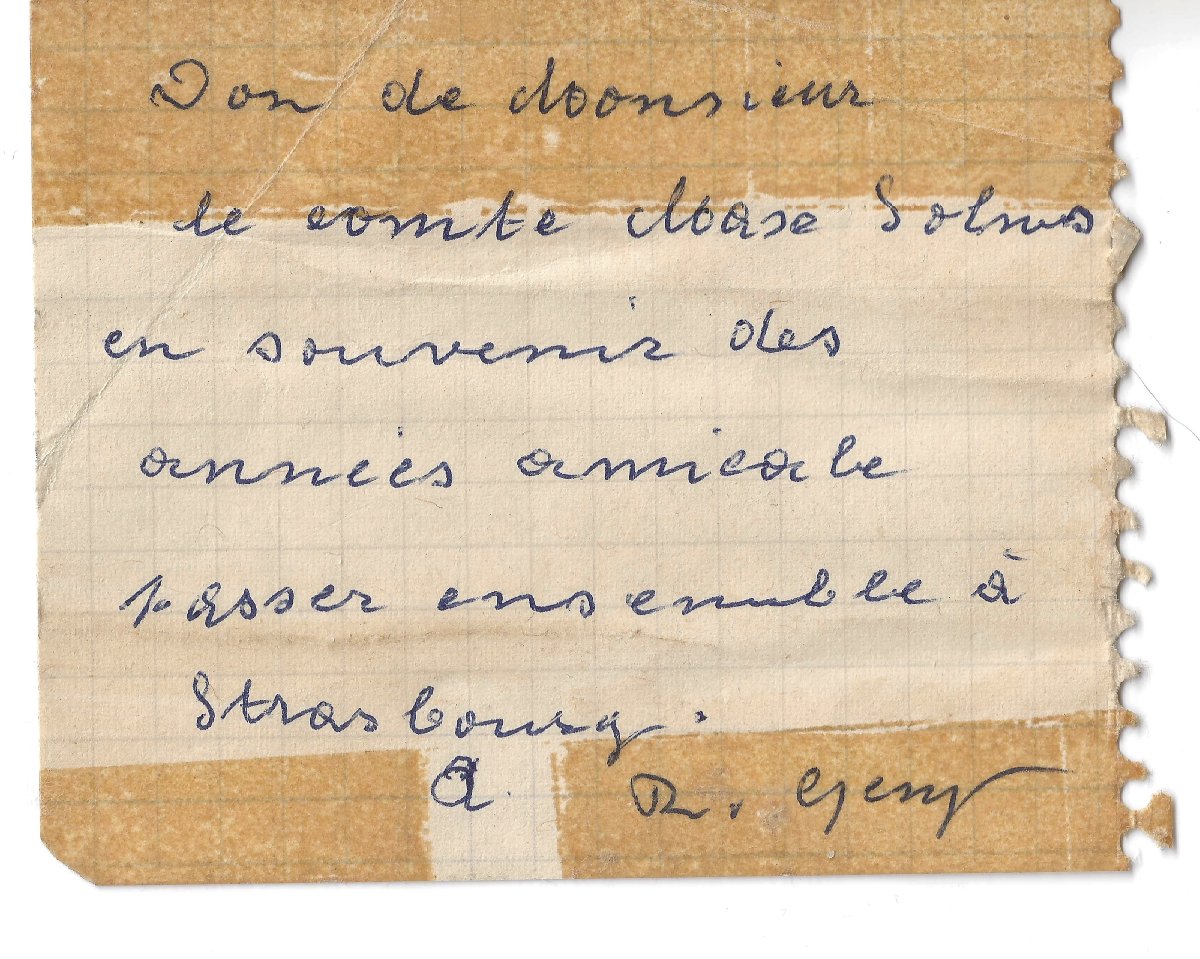
The painting’s provenance is attested by a handwritten note in French, identified by the gallery as having been affixed to the reverse. It states that the work was a gift from “Monsieur le comte… Solms,” in memory of years of friendship spent together in Strasbourg. The count’s first name appears to be “Max.” The signature beneath the inscription could not be formally identified.
In essence, the note translates as follows: “A gift from Count [Max?] Solms, in memory of the years of friendship spent together in Strasbourg.”
This inscription serves as personal evidence of the painting’s transfer as a gift. The date of this gift, the identity of the recipient, and the specific branch of the Solms family remain to be determined.
The House of Solms belongs to the historic German aristocracy, with a documented history dating back to 1129, when Marquard von Solms appeared as a witness at the founding of the Schiffenberg Monastery. The family developed several significant territorial branches, notably those associated with Braunfels, Lich, and Laubach. The Braunfels branch was granted princely status in 1742. Its history includes territorial governance, military service, and ties to other European ruling houses.
The family also played a significant role in European artistic patronage. Amalia of Solms-Braunfels (1602–1675), wife of Frederick Henry of Orange, commissioned the famous painted decoration of the Oranjezaal at Huis ten Bosch in his memory. This illustrates the family’s cultural significance, though it does not establish a connection of ownership between this painting and Amalia or the Dutch royal collection.
The donor may have been Count Max zu Solms-Sonnenwalde-Rösa (1846–1907). The historical archives of Karlsruhe describe him as a Prussian officer and art collector who served in Strasbourg beginning in 1889 before settling in Metz two years later. He and his wife, Countess Marie, subsequently settled in Karlsruhe and acquired Haus Solms in 1902, which they furnished with paintings, decorative art objects, and family portraits. The alignment between his name, his interests as a collector, and his residence in Strasbourg makes him a plausible candidate.
The original gilded frame highlights the finely worked surface of the canvas and its historical character. Its architectural moldings and understated ornamentation provide an elegant setting for the figure.
Oil on canvas.
Signed and dated lower right: H. Stilke, 1831.
Canvas: 45 cm high × 41 cm wide
Original frame: 60 cm high × 56 cm wide
Sold with its original frame.
Carefully shipped via DHL Express, insured for the total purchase price.
Period: 19th century
Style: Other Style
Condition: Excellent condition
Material: Oil painting
Width: 41
Height: 45
Reference (ID): 1836968
Availability: In stock