

Louis XVI-style Mantelpiece (89x73 Cm)
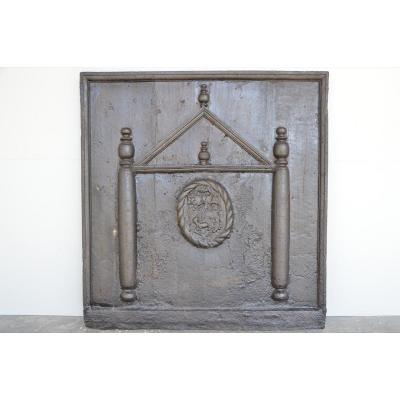
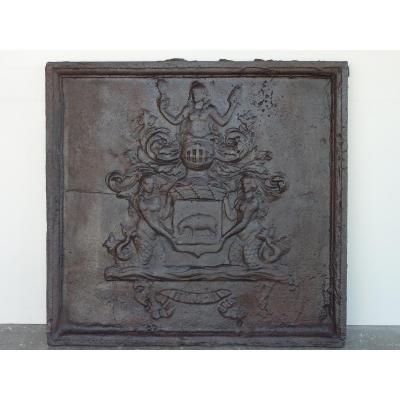
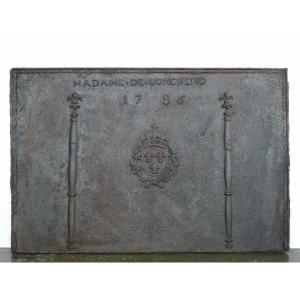
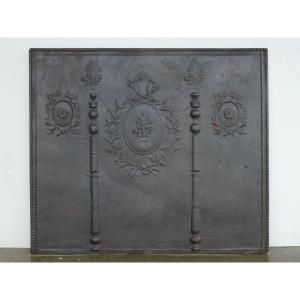
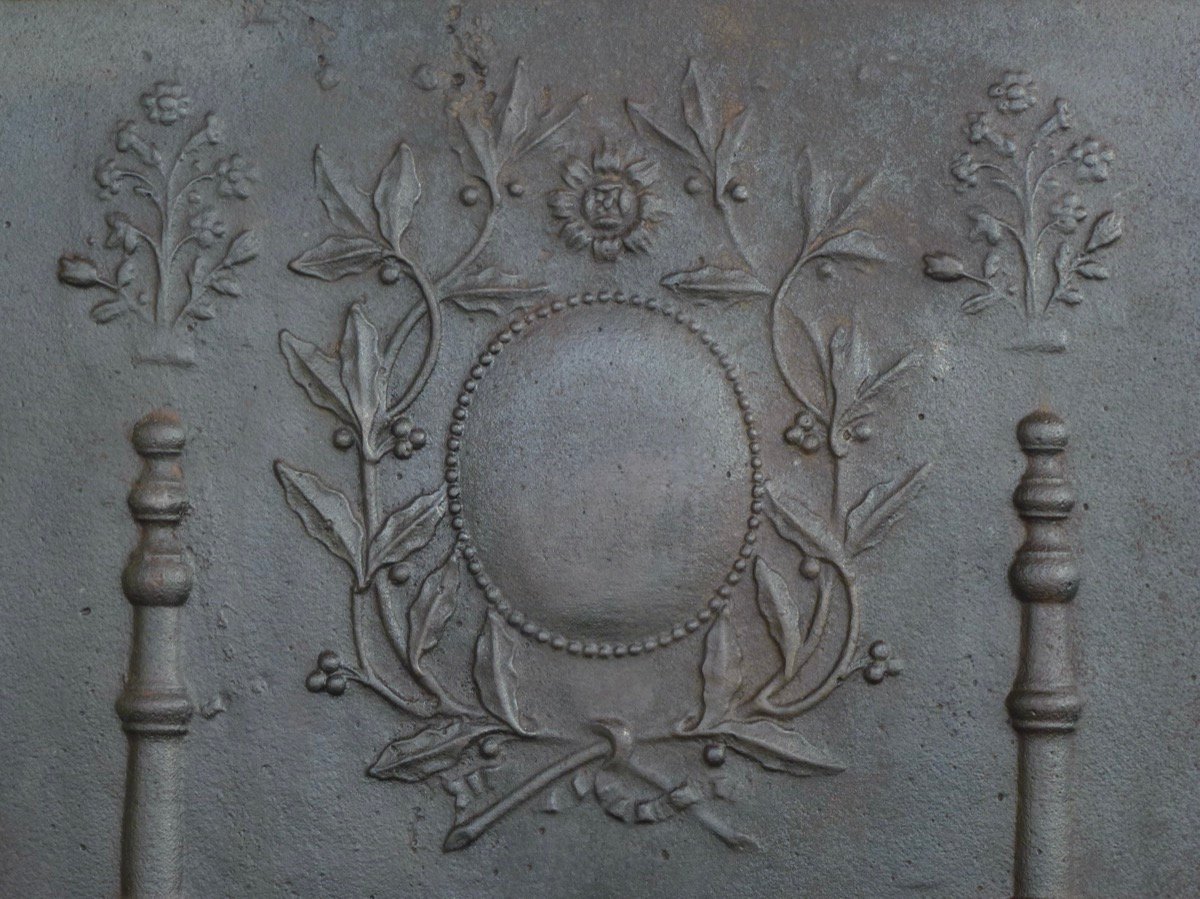
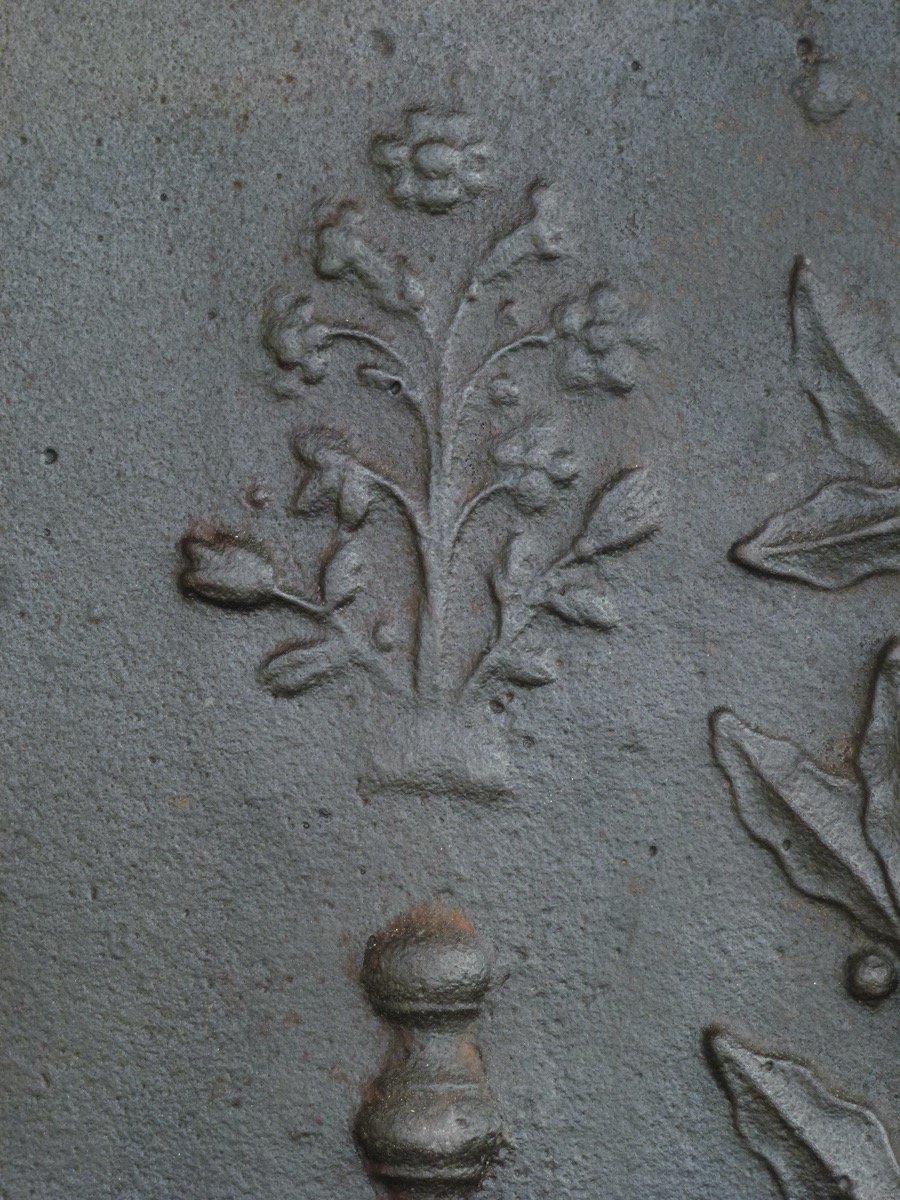
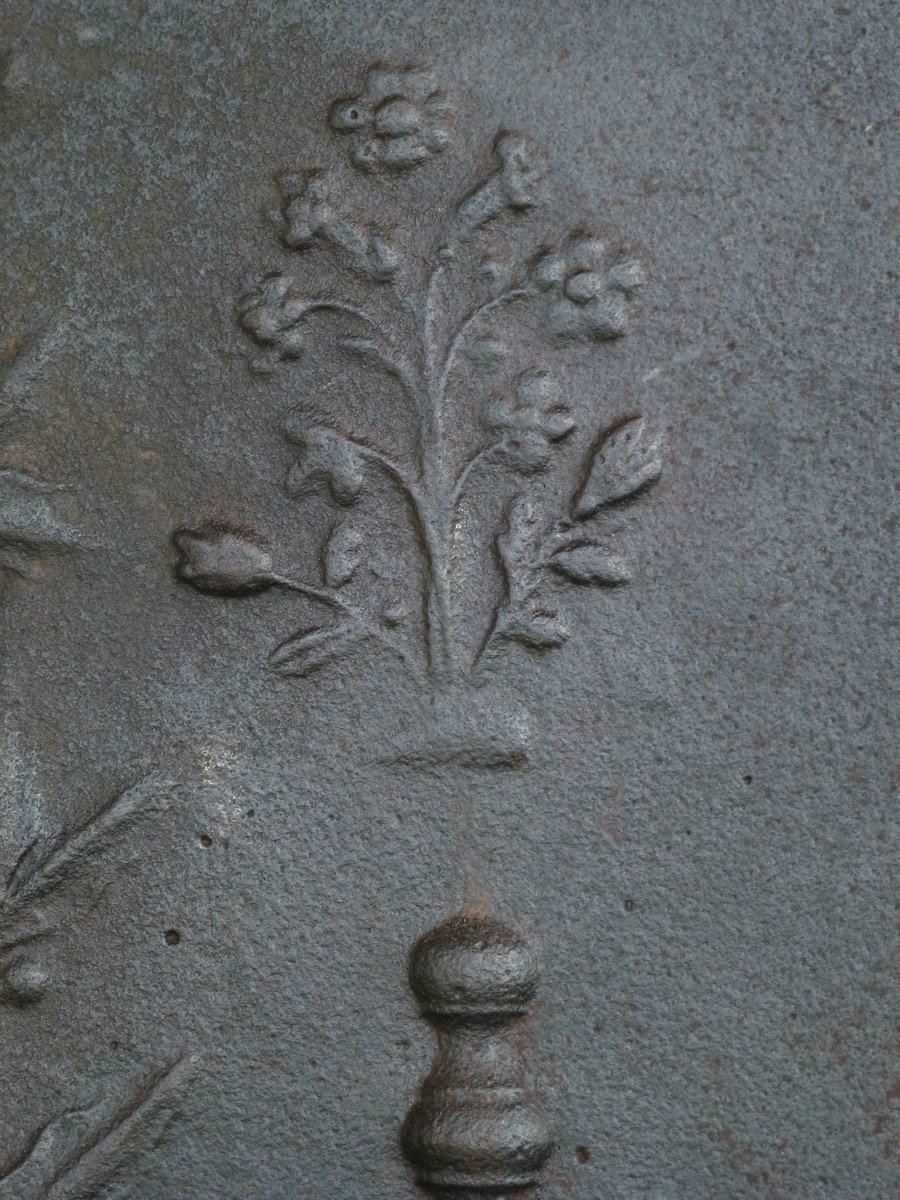
A Louis XVI-style fireplace plaque cast in the 19th century, in perfect condition, from the foundries of Pont-les-Moulins and Larians in Haute-Saône, decorated with a medallion edged with pearls and topped with a sunflower, surrounded by holly branches tied with a ribbon and flanked by turned columns topped with a bouquet of flowers.
Caster’s mark in the lower left: PL.
Plate found in Chevinay in the Rhône department.
It weighs 62 kg.
Loulans and Larians Forges
Cast in Loulans-les-Forges (Loulans-Verchamp) and Larians (Larians and Munans) in Haute-Saône, these plaques are marked PL, LL, LOULANS, or unmarked but of the same design—the oldest dating from the Louis XVI period—are large in size with more refined frames (a frieze of ovals and darts and a string of pearls). These were later reproduced in smaller sizes with simplified frames (a string of pearls or a simple set of moldings and a fillet with a border for the simplest versions), while retaining the original molds. In the mid-19th century, the foundries shifted their focus to the manufacture of stoves, cookers, ovens, and, in particular, heating appliances.
The Loulans forges, in operation since 1562 and owned by the Montmarin family, lords of Loulans, doubled their production in the 18th century under the management of the Rochet family of master ironworkers and ownership of the Boistouset family. In 1737, its furnace was authorized for the joint operation of the rock mines serving the furnaces of Loulans and Larians. From 1791 to 1805, the foundry was operated by master foundryman Nicolas Gauthier; it was then sold around 1820 to Sieur Henry and operated by François Bernard Derosne, a master foundryman in La Grâce-Dieu in the Doubs department. In 1825, it primarily produced cast iron items such as stoves, street fountains, and ornamental castings, among other things. The blast furnace, which employed about a hundred workers before it was shut down in 1870, was dismantled, but operations continued until the factory closed in 1888.
The Larians forges, whose former building bore the date 1656—though it no longer exists—were operated by the Bouchet family during the second half of the 18th century. Owned by Nicolas Damotte in 1811, they were acquired around 1820 by François Bernard Derosne, a master ironworker in La Grâce-Dieu (Doubs), and operated jointly with the neighboring blast furnace in Loulans. The plant changed ownership several times before the blast furnace was shut down in 1862 or 1863. It was operated between 1894 and 1900 by Derosne & Co., then sold in 1959 to Mr. Dartevelle, who was succeeded shortly thereafter by Girardet-Dartevelle. The plant was taken over in 1991 by the Société des Fonderies de Treveray (55), part of the Hachette-Driout group, and remains in operation today, producing cast iron alloys.
For plates marked “PL,” these should be read as Pont-les-Moulins and Larians, as these two forges were linked by the master ironworker François Bernard Derosne, who acquired the La Grâce-Dieu forges in 1802 and then those of Pont-les-Moulins, which he sold in 1836 to set up operations in Larians. He had owned the Larians forges since 1820 (formerly owned by Nicolas Damotte in 1811), operating them jointly with the Loulans forges.
The Pont-les-Moulins ironworks are documented as early as 1401 and were leased along with the mine located near Baume-les-Dames.
Sources:
- Similar plaques at the Musée Comtois in Besançon
- Pop.culture, Architectural Heritage (Mérimée), Raphaël Favereaux, for Loulans and Larians; very comprehensive entries.
- Pierre Gresser, *From Mine to Forge in Franche-Comté: From the Origins to the 19th Century*, 1990, pages 117, 127, 143.
- Journal of the Paris Statistical Society, vol. 65 (1924), p. 111.
- Doubs Departmental Archives: 9J Forges de la Grâce-Dieu in Pont-les-Moulins and Larians.
You can visit our site: www.claudeaugustin.com
Caster’s mark in the lower left: PL.
Plate found in Chevinay in the Rhône department.
It weighs 62 kg.
Loulans and Larians Forges
Cast in Loulans-les-Forges (Loulans-Verchamp) and Larians (Larians and Munans) in Haute-Saône, these plaques are marked PL, LL, LOULANS, or unmarked but of the same design—the oldest dating from the Louis XVI period—are large in size with more refined frames (a frieze of ovals and darts and a string of pearls). These were later reproduced in smaller sizes with simplified frames (a string of pearls or a simple set of moldings and a fillet with a border for the simplest versions), while retaining the original molds. In the mid-19th century, the foundries shifted their focus to the manufacture of stoves, cookers, ovens, and, in particular, heating appliances.
The Loulans forges, in operation since 1562 and owned by the Montmarin family, lords of Loulans, doubled their production in the 18th century under the management of the Rochet family of master ironworkers and ownership of the Boistouset family. In 1737, its furnace was authorized for the joint operation of the rock mines serving the furnaces of Loulans and Larians. From 1791 to 1805, the foundry was operated by master foundryman Nicolas Gauthier; it was then sold around 1820 to Sieur Henry and operated by François Bernard Derosne, a master foundryman in La Grâce-Dieu in the Doubs department. In 1825, it primarily produced cast iron items such as stoves, street fountains, and ornamental castings, among other things. The blast furnace, which employed about a hundred workers before it was shut down in 1870, was dismantled, but operations continued until the factory closed in 1888.
The Larians forges, whose former building bore the date 1656—though it no longer exists—were operated by the Bouchet family during the second half of the 18th century. Owned by Nicolas Damotte in 1811, they were acquired around 1820 by François Bernard Derosne, a master ironworker in La Grâce-Dieu (Doubs), and operated jointly with the neighboring blast furnace in Loulans. The plant changed ownership several times before the blast furnace was shut down in 1862 or 1863. It was operated between 1894 and 1900 by Derosne & Co., then sold in 1959 to Mr. Dartevelle, who was succeeded shortly thereafter by Girardet-Dartevelle. The plant was taken over in 1991 by the Société des Fonderies de Treveray (55), part of the Hachette-Driout group, and remains in operation today, producing cast iron alloys.
For plates marked “PL,” these should be read as Pont-les-Moulins and Larians, as these two forges were linked by the master ironworker François Bernard Derosne, who acquired the La Grâce-Dieu forges in 1802 and then those of Pont-les-Moulins, which he sold in 1836 to set up operations in Larians. He had owned the Larians forges since 1820 (formerly owned by Nicolas Damotte in 1811), operating them jointly with the Loulans forges.
The Pont-les-Moulins ironworks are documented as early as 1401 and were leased along with the mine located near Baume-les-Dames.
Sources:
- Similar plaques at the Musée Comtois in Besançon
- Pop.culture, Architectural Heritage (Mérimée), Raphaël Favereaux, for Loulans and Larians; very comprehensive entries.
- Pierre Gresser, *From Mine to Forge in Franche-Comté: From the Origins to the 19th Century*, 1990, pages 117, 127, 143.
- Journal of the Paris Statistical Society, vol. 65 (1924), p. 111.
- Doubs Departmental Archives: 9J Forges de la Grâce-Dieu in Pont-les-Moulins and Larians.
You can visit our site: www.claudeaugustin.com
700 €
Period: 19th century
Style: Louis 16th, Directory
Condition: Perfect condition
Material: Cast iron
Width: 89 cm
Height: 73 cm
Depth: 2 cm
Reference (ID): 1833506
Availability: In stock
Print