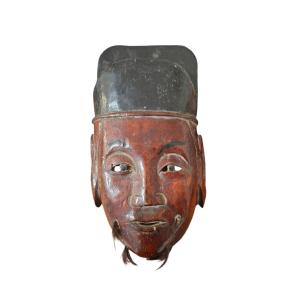


Nuo Mask, Tujia People, XIangxi, Hunan, South-central China - Early 20th Century
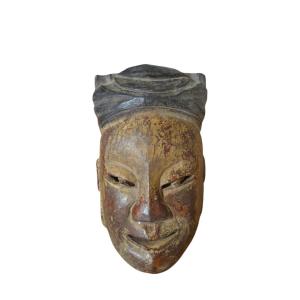
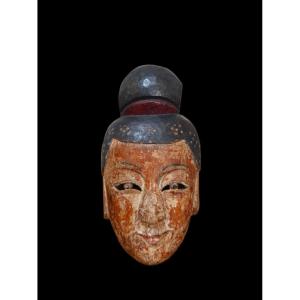
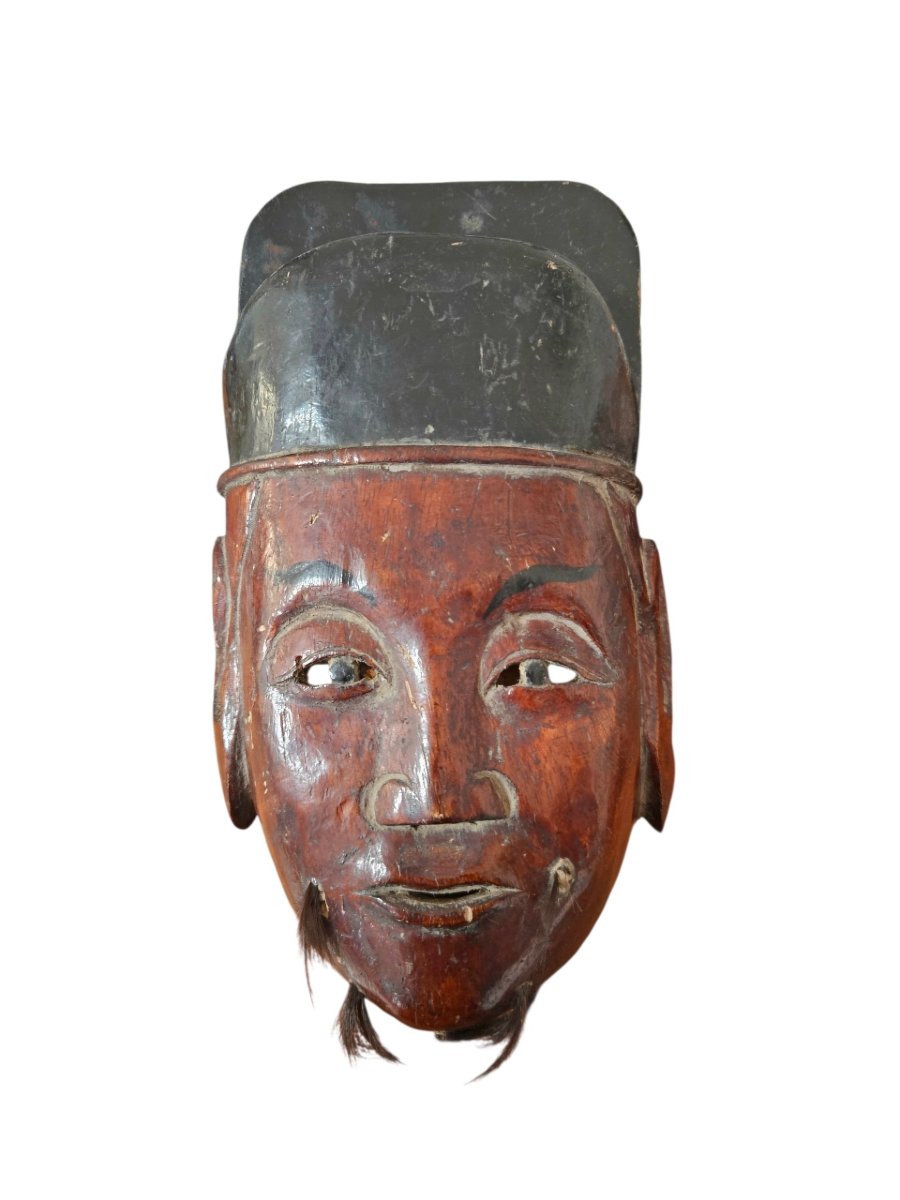
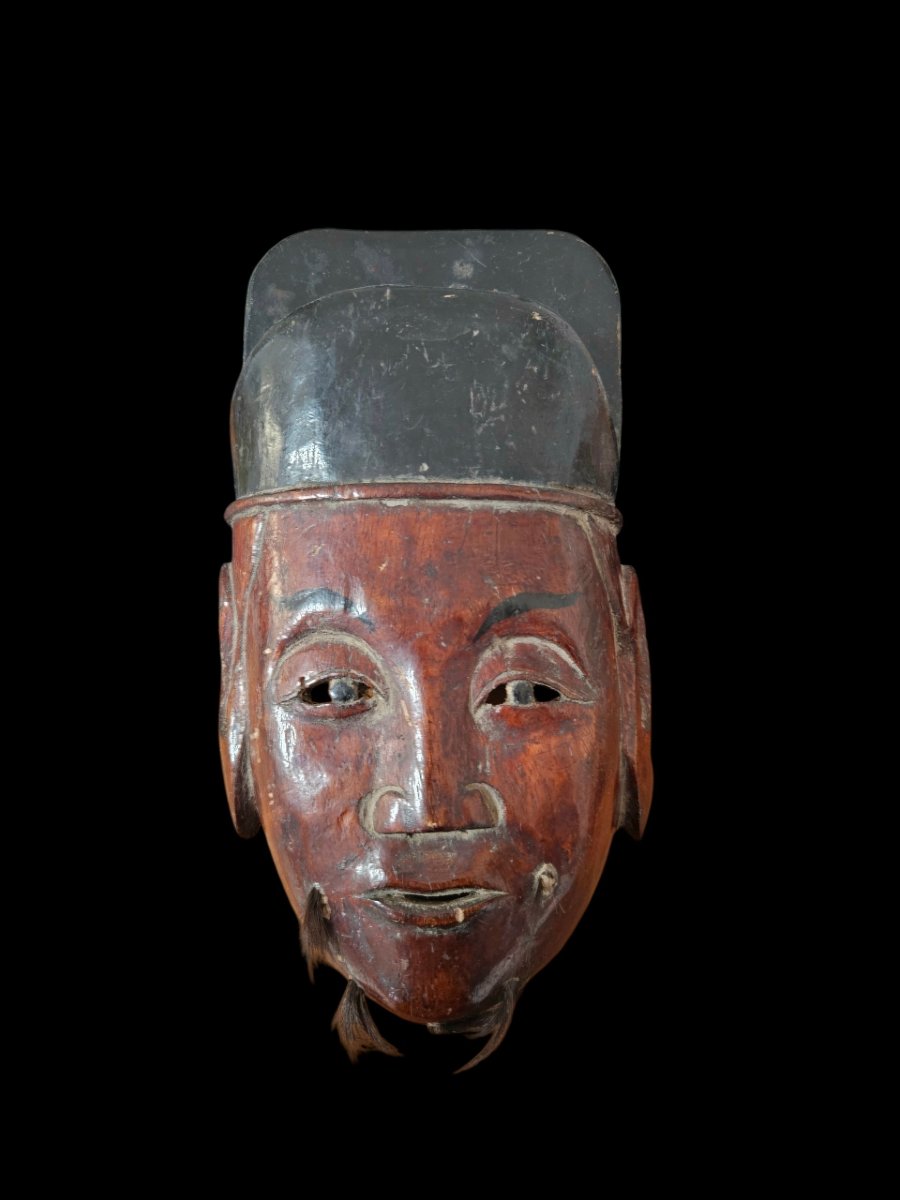
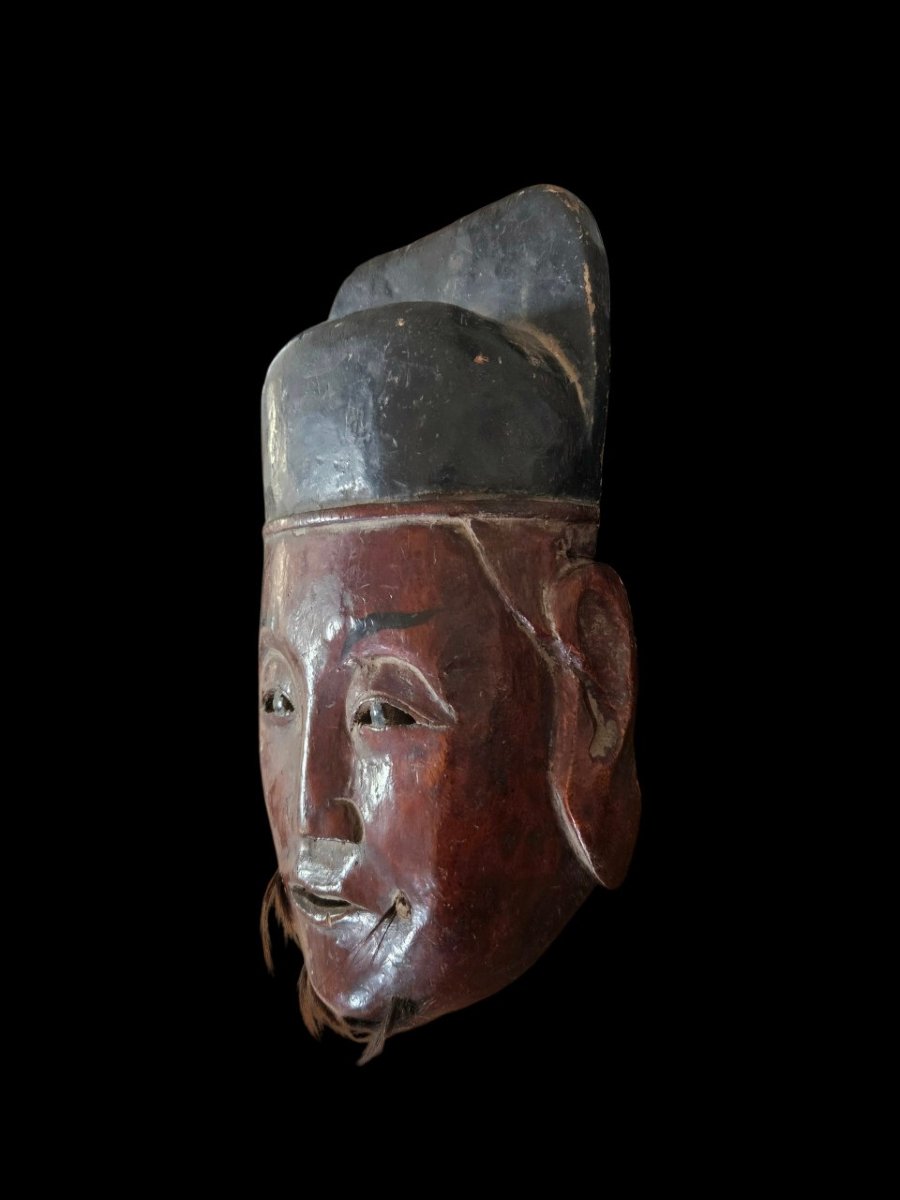
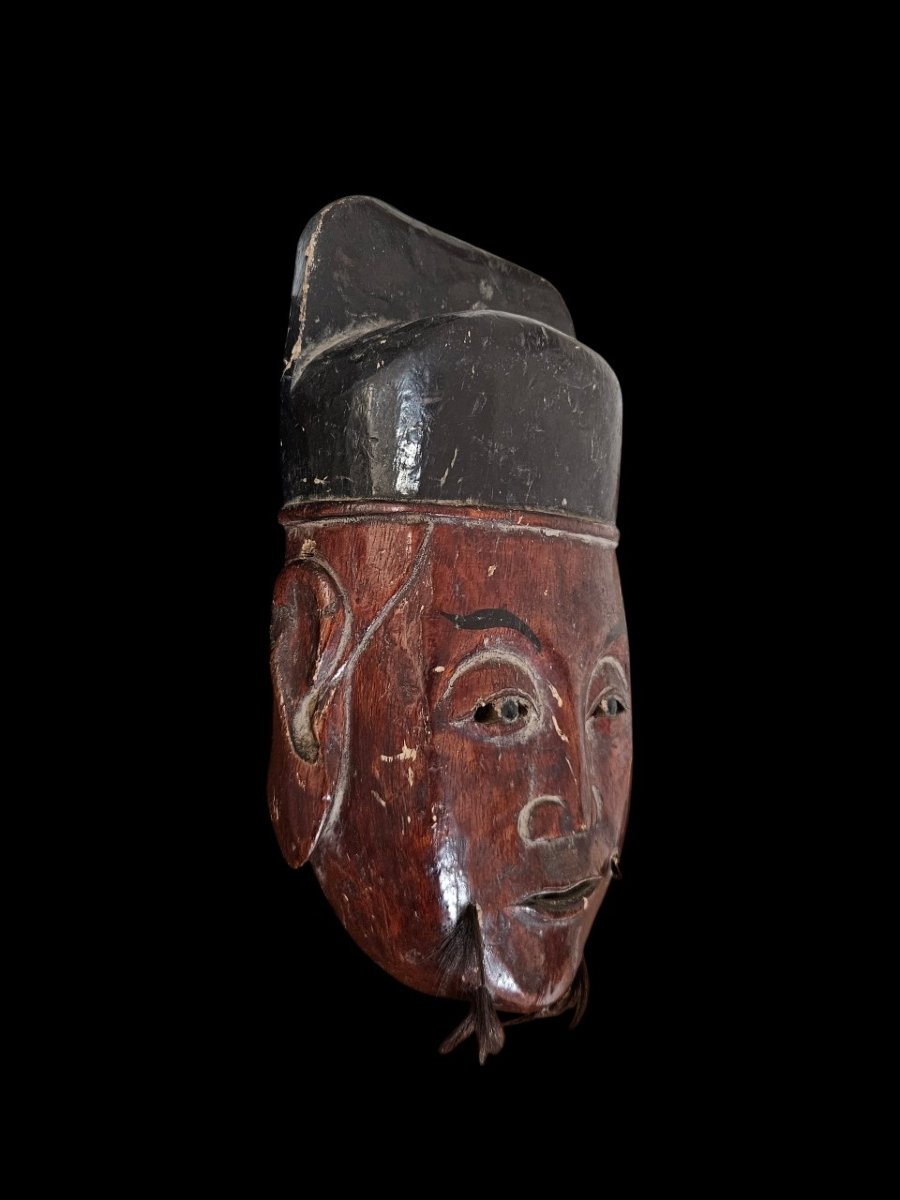
This mask depicts Balang (八郎), the “eighth young lord,” a character from the Nuo (傩) ritual theater of the Tujia people of Xiangxi, in western Hunan. He belongs to the category of young civilian figures, associated with knowledge, distinction, and the hopes for success held by the family and the community. His tall black headdress, extended by a wide panel at the back, signifies the character’s rank and dignity.
The elongated face, sharply defined eyebrows, thin mustache, and small horsehair goatee depict a man who is still young but has already entered the age of responsibility. The sculpture stands out for its balance and the gentleness of its expression. The open eyes, the slightly smiling mouth, and the regular features combine to create a calm presence, far removed from the wrathful figures of the Nuo (傩).
Here, Balang embodies a power devoid of violence: that of intelligence, moderation, and the path that gradually leads man toward fulfillment.
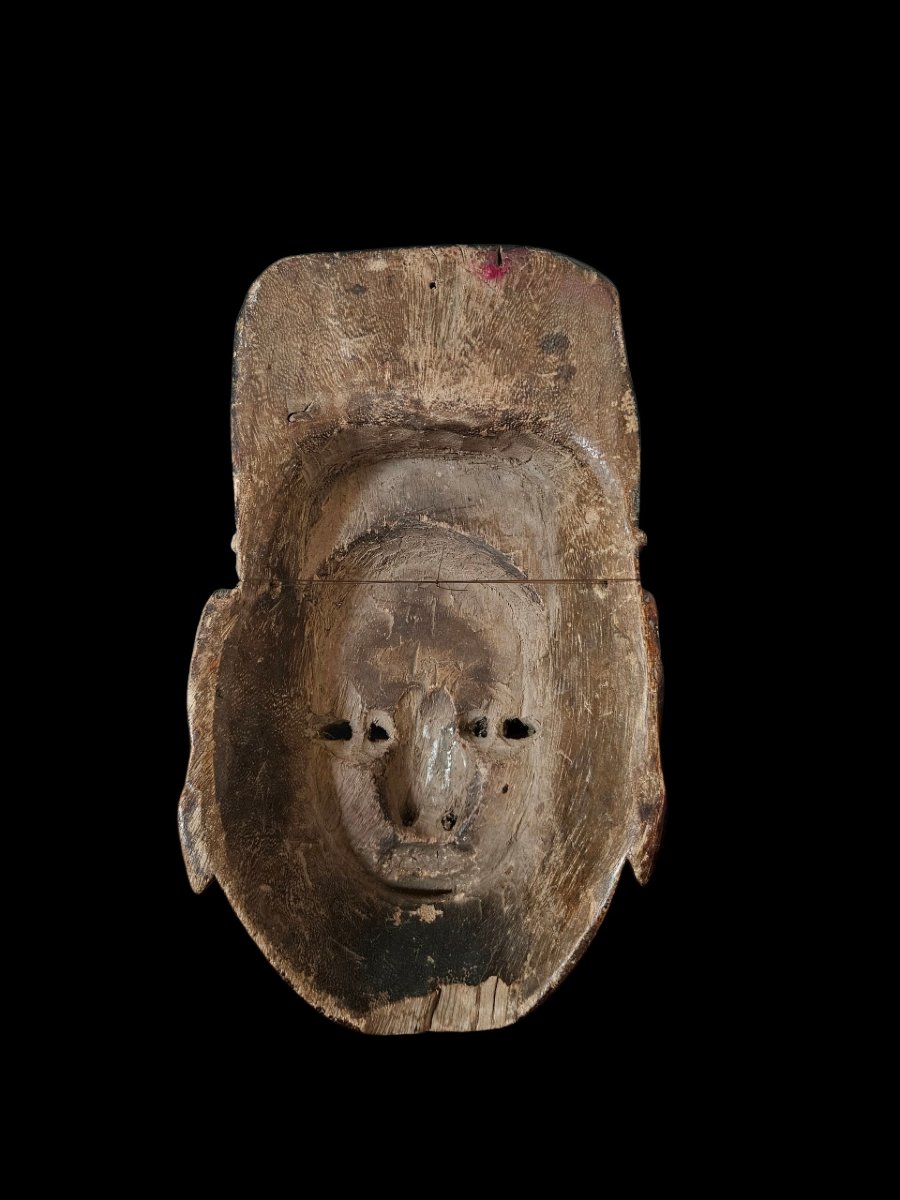
Stuccoed and painted wood, horsehair, antique patina, and signs of internal wear.Tujia people, Xiangxi, Hunan, south-central ChinaEarly 20th century - Dimensions: 32 × 18 cm
Provenance: Former Collection of Paul-Louis Couailhac (1945–2025) A French expert in Asian studies, a graduate of INALCO, and a renowned bibliophile known for having assembled one of the most significant private collections of Chinese ritual masks from Nuo theater in Europe. An exhibition showcasing his collection of Nuo masks was dedicated to him in 2026 in Issigeac by the Ocarina Gallery.
Sold with a certificate of authenticity from expert S. Reynes and an invoice from Galerie Ocarina.
* Shipping costs upon request.
The elongated face, sharply defined eyebrows, thin mustache, and small horsehair goatee depict a man who is still young but has already entered the age of responsibility. The sculpture stands out for its balance and the gentleness of its expression. The open eyes, the slightly smiling mouth, and the regular features combine to create a calm presence, far removed from the wrathful figures of the Nuo (傩).
Here, Balang embodies a power devoid of violence: that of intelligence, moderation, and the path that gradually leads man toward fulfillment.
Stuccoed and painted wood, horsehair, antique patina, and signs of internal wear.Tujia people, Xiangxi, Hunan, south-central ChinaEarly 20th century - Dimensions: 32 × 18 cm
Provenance: Former Collection of Paul-Louis Couailhac (1945–2025) A French expert in Asian studies, a graduate of INALCO, and a renowned bibliophile known for having assembled one of the most significant private collections of Chinese ritual masks from Nuo theater in Europe. An exhibition showcasing his collection of Nuo masks was dedicated to him in 2026 in Issigeac by the Ocarina Gallery.
Sold with a certificate of authenticity from expert S. Reynes and an invoice from Galerie Ocarina.
* Shipping costs upon request.
750 €
Period: 20th century
Style: Asian art
Condition: Condition of use
Material: Painted wood
Width: 18 cm
Height: 32 cm
Reference (ID): 1831431
Availability: In stock
Print