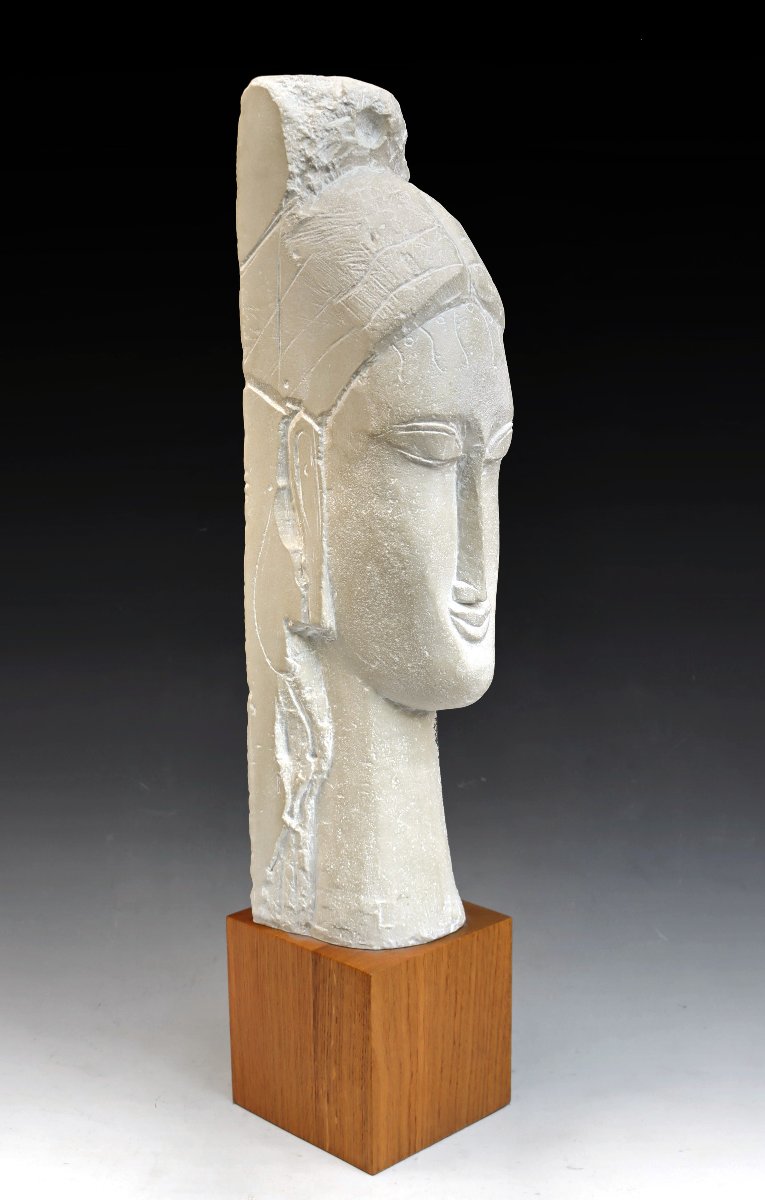
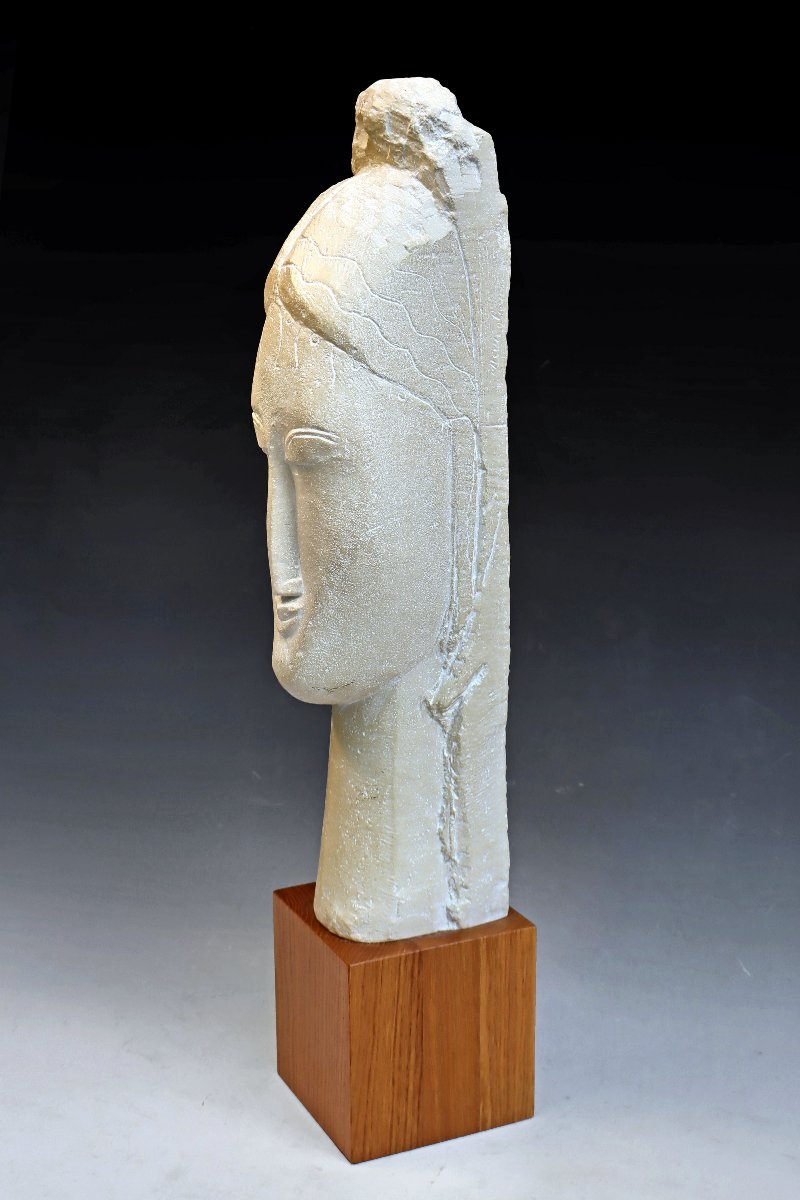
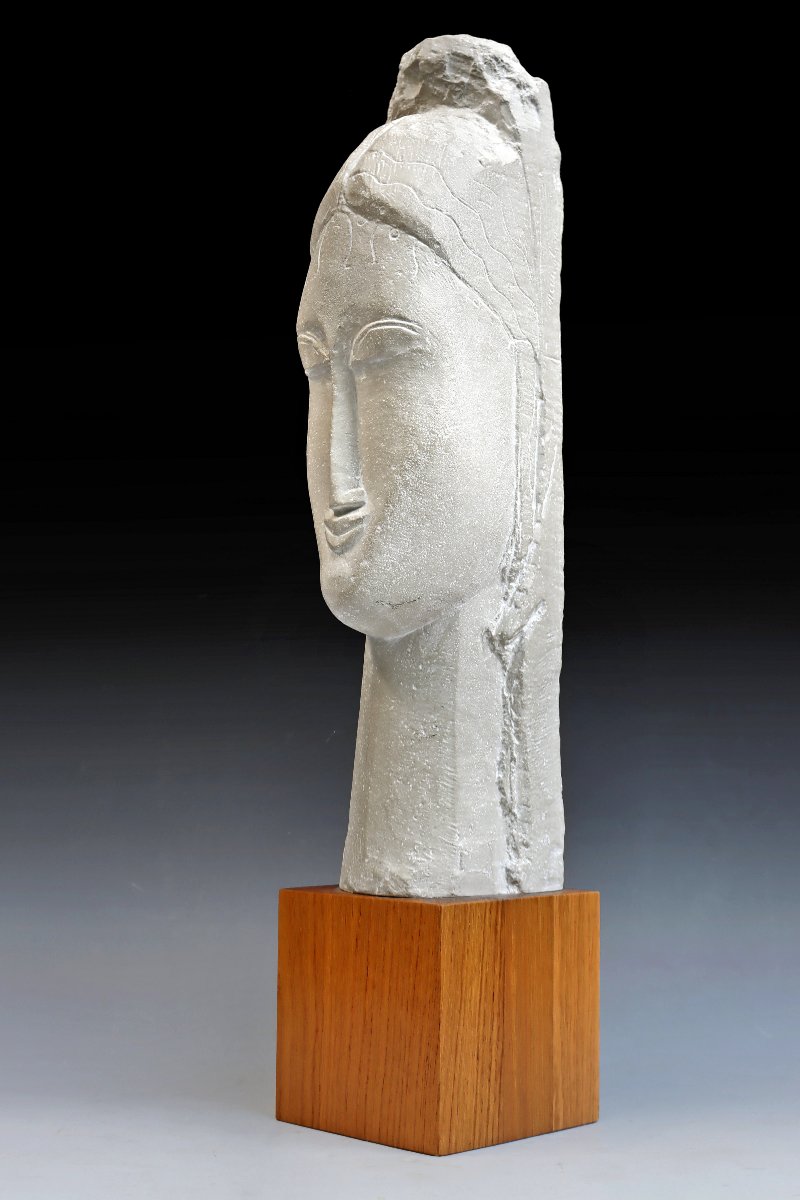
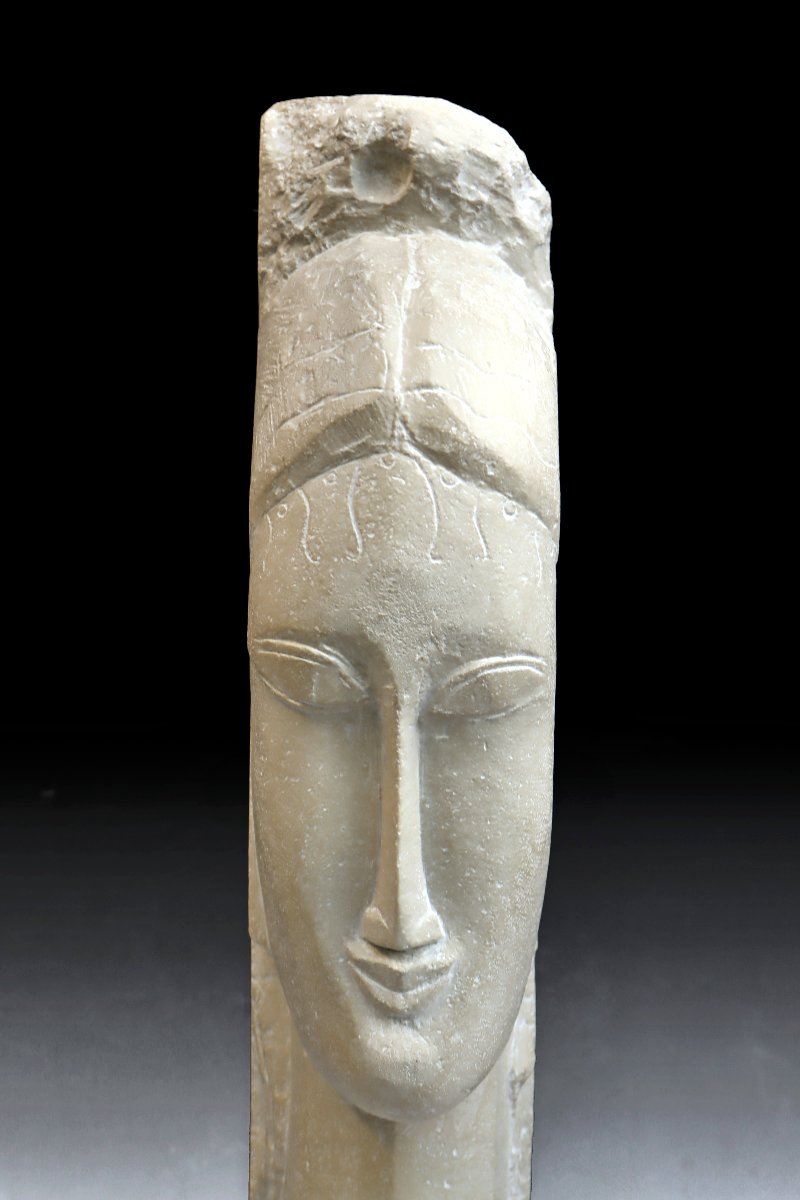

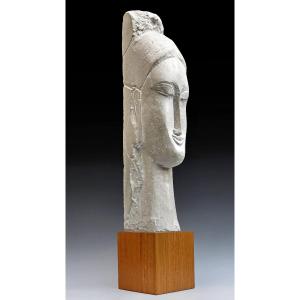


Amédéo Modigliani (1884–1920) Sculpture “head Of A Woman,” Louvre Edition
Artist: Amédéo Modigliani (1884-1920) Atelier Du Louvre
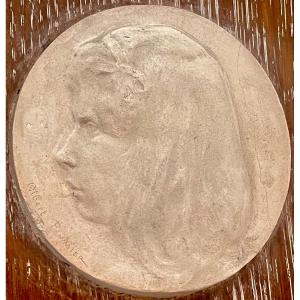
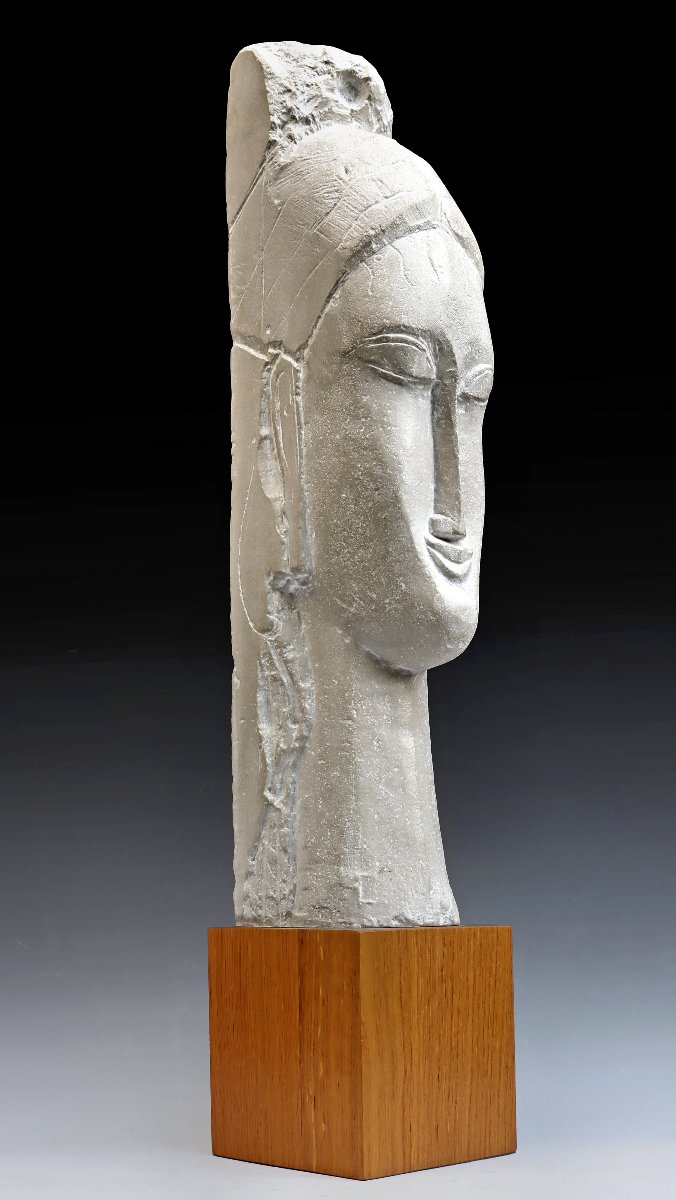
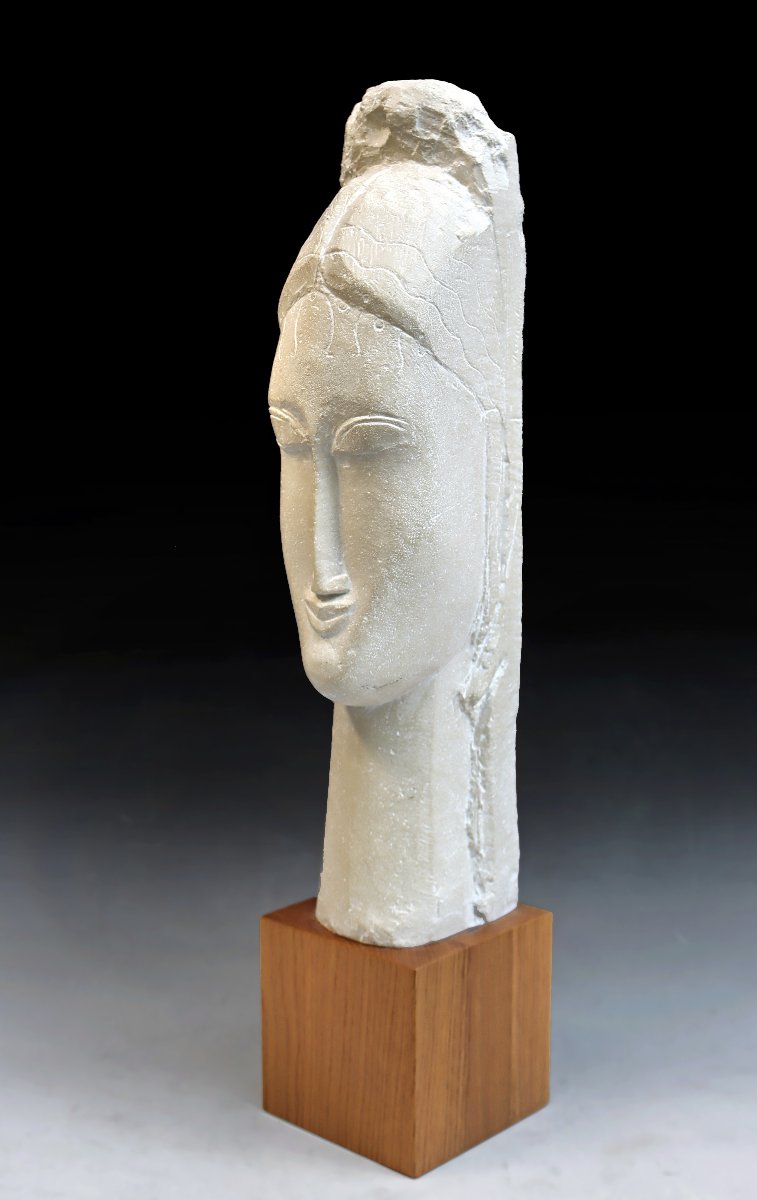
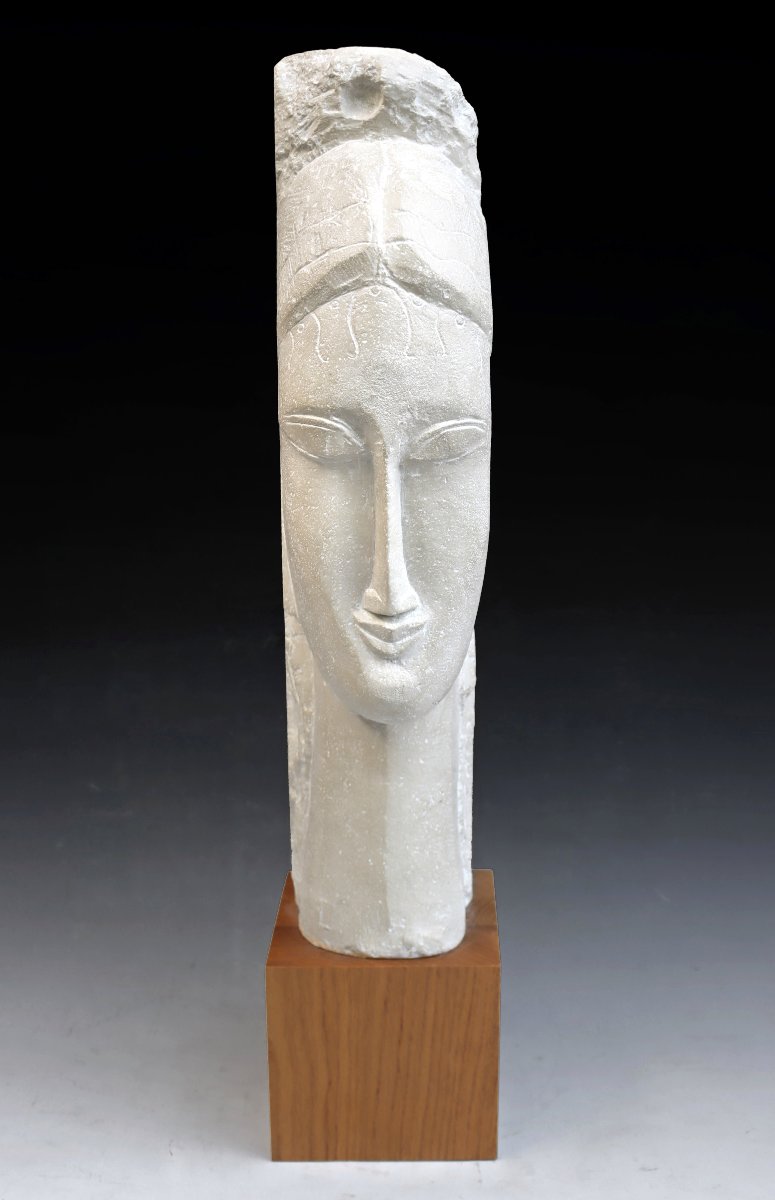
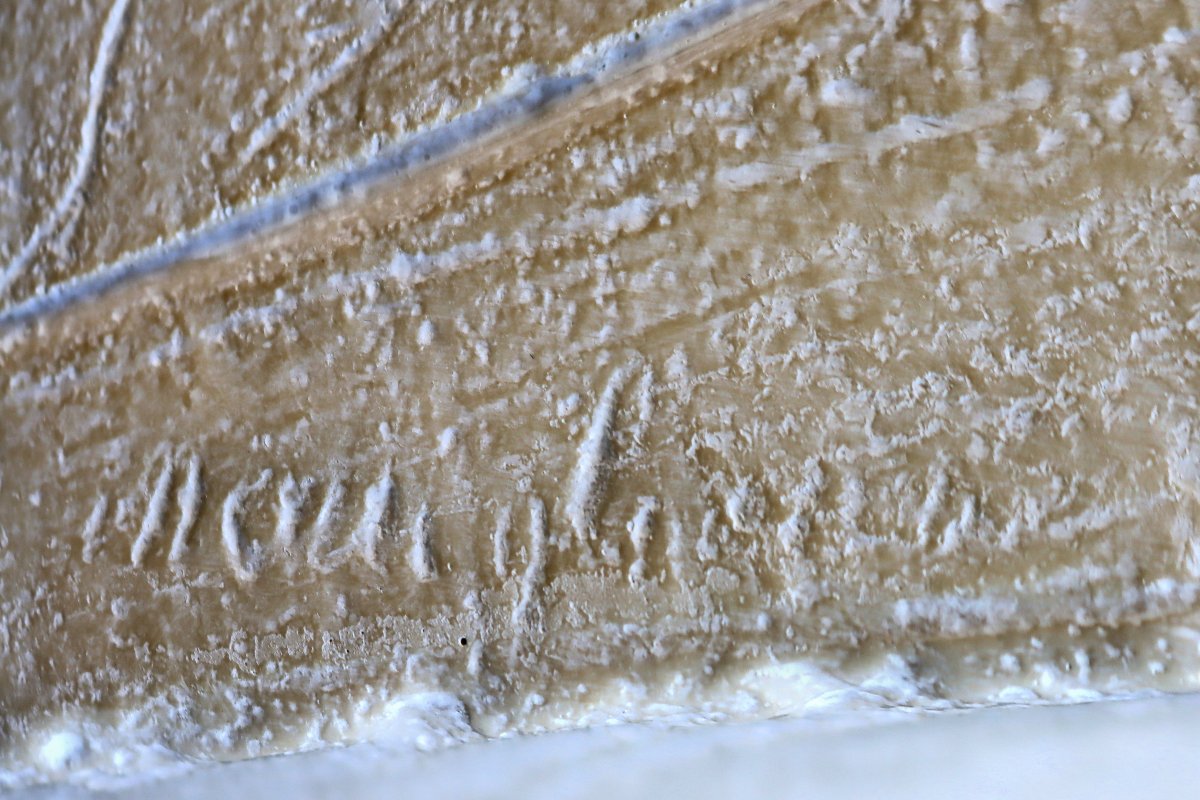
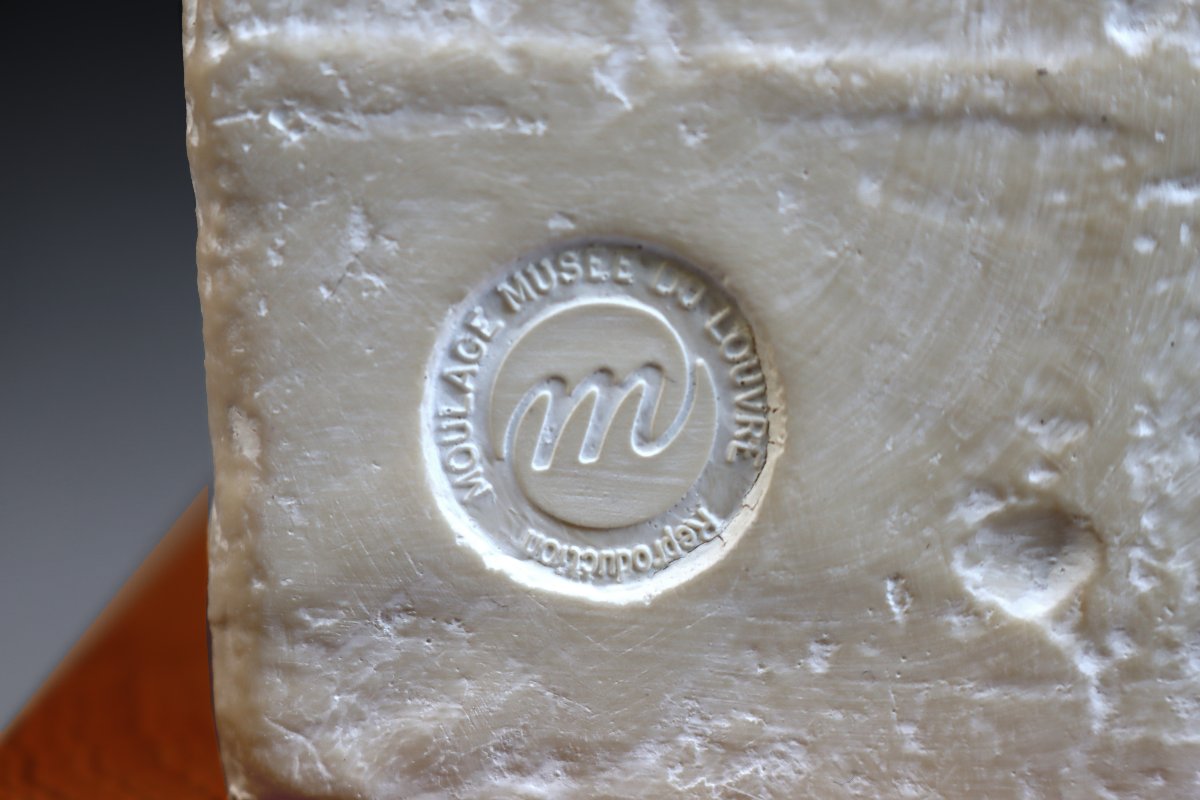
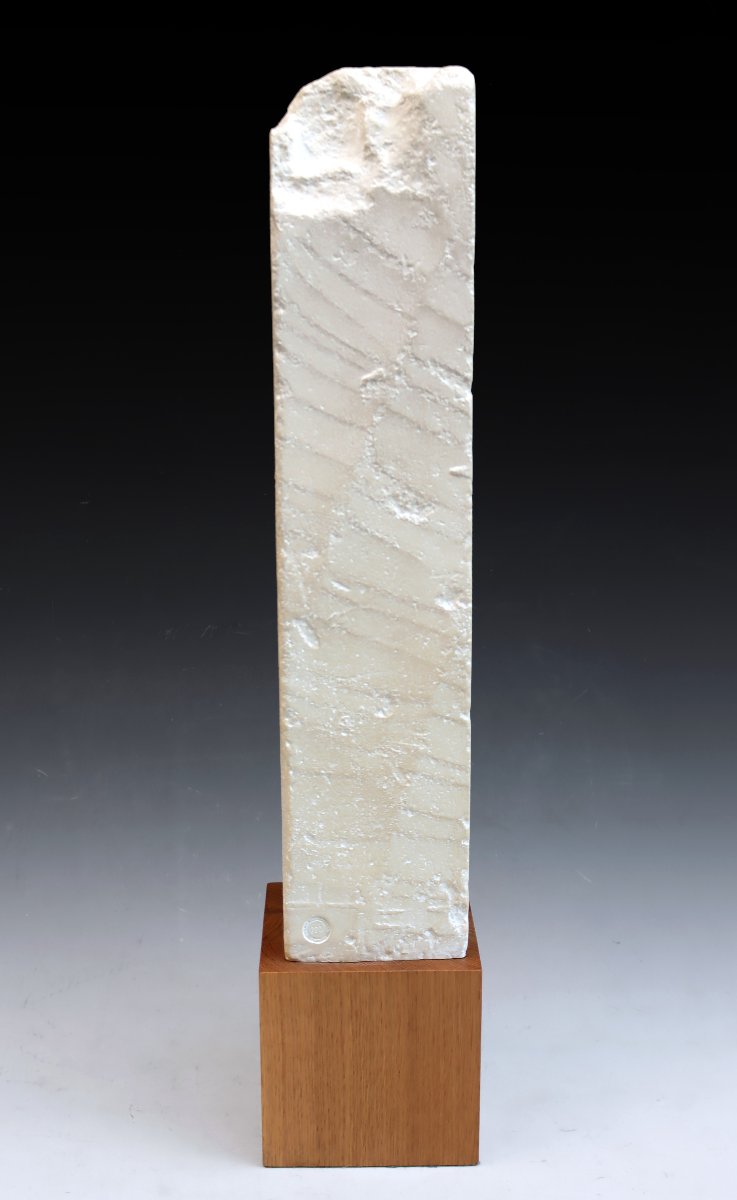
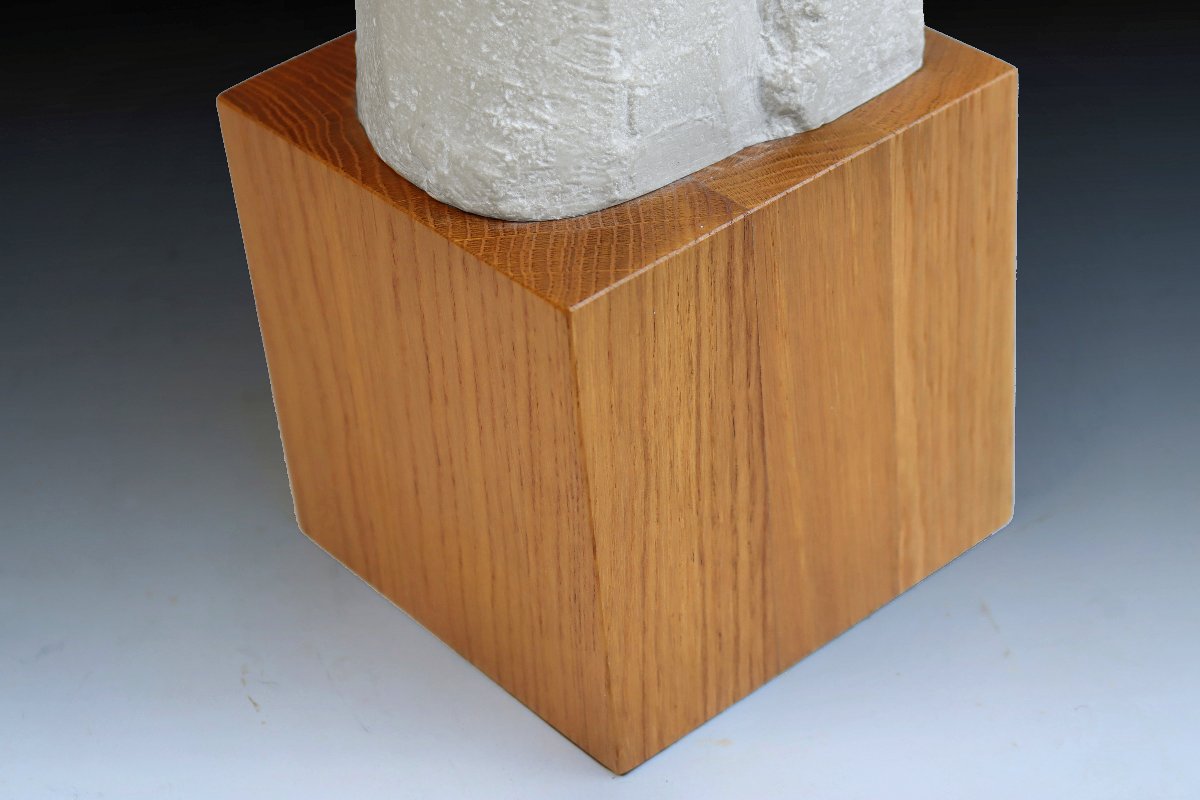
Important Art Deco sculpture based on a work by Amédéo MODIGLIANI (1884–1920), depicting a totem-style bust of a classical female figure in composite resin enriched with marble powder, crafted by the Louvre workshops, as evidenced by a stamp on the base and the signature “MODIGLIANI” at the top. It rests on an elegant quadrangular base made of varnished solid wood. In very good overall condition; height 72 cm.
Between 1910 and 1914, Modigliani developed a passion for depicting caryatids and sculptural, geometric heads in his drawings. These are linked to the artist’s growing interest in sculpture beginning in 1909, influenced in particular by Constantin Brancusi. He drew many of these caryatids and sculptural heads, which served as preliminary sketches before moving on to direct carving. The influence of Khmer sculptures—whose masterpieces, now housed at the Guimet Museum, were then on display at the Palais du Trocadéro—was strong on the artist, who was impressed by the schematic and geometric purity of the faces, despite their smiling expressions. Similarly, African art—whose masks were an inexhaustible source of inspiration for the artistic avant-garde of the time—left its mark through the strength of its primitivism and its evocative power. But what Modigliani sought was not the religious or mystical aspect of these works, but rather their plastic qualities—the refined expression of line and the effective, immediately comprehensible proportions. His works are also part of a neoclassical revival that, through their hieratic quality and repertoire of simple geometric forms, foreshadowed the rediscovery of the 1920s and 1930s. The vocabulary of the face becomes standardized: the triangle of the nose marks the axis of symmetry, the trapezoid of the neck serves as a base, the oval of the face as the canvas for expressions, and the empty oval of the eyes as the mirror of the soul, while the beaded necklace and the waves of the hair evoke the decorative friezes of Greek architecture. The very theme of the caryatids is a tribute to Greco-Roman antiquity, which saw in this architectural figure of a woman replacing a column a tribute to the noblewomen of Carya, a city in the Peloponnese. Her compositions do not depict real women but rather a stylization of femininity through the pursuit of the perfect line and the balance between monumentality and sensuality.
Between 1910 and 1914, Modigliani developed a passion for depicting caryatids and sculptural, geometric heads in his drawings. These are linked to the artist’s growing interest in sculpture beginning in 1909, influenced in particular by Constantin Brancusi. He drew many of these caryatids and sculptural heads, which served as preliminary sketches before moving on to direct carving. The influence of Khmer sculptures—whose masterpieces, now housed at the Guimet Museum, were then on display at the Palais du Trocadéro—was strong on the artist, who was impressed by the schematic and geometric purity of the faces, despite their smiling expressions. Similarly, African art—whose masks were an inexhaustible source of inspiration for the artistic avant-garde of the time—left its mark through the strength of its primitivism and its evocative power. But what Modigliani sought was not the religious or mystical aspect of these works, but rather their plastic qualities—the refined expression of line and the effective, immediately comprehensible proportions. His works are also part of a neoclassical revival that, through their hieratic quality and repertoire of simple geometric forms, foreshadowed the rediscovery of the 1920s and 1930s. The vocabulary of the face becomes standardized: the triangle of the nose marks the axis of symmetry, the trapezoid of the neck serves as a base, the oval of the face as the canvas for expressions, and the empty oval of the eyes as the mirror of the soul, while the beaded necklace and the waves of the hair evoke the decorative friezes of Greek architecture. The very theme of the caryatids is a tribute to Greco-Roman antiquity, which saw in this architectural figure of a woman replacing a column a tribute to the noblewomen of Carya, a city in the Peloponnese. Her compositions do not depict real women but rather a stylization of femininity through the pursuit of the perfect line and the balance between monumentality and sensuality.
750 €
Period: 20th century
Style: Art Deco
Condition: Excellent condition
Material: Stone
Reference (ID): 1829782
Availability: In stock
Print