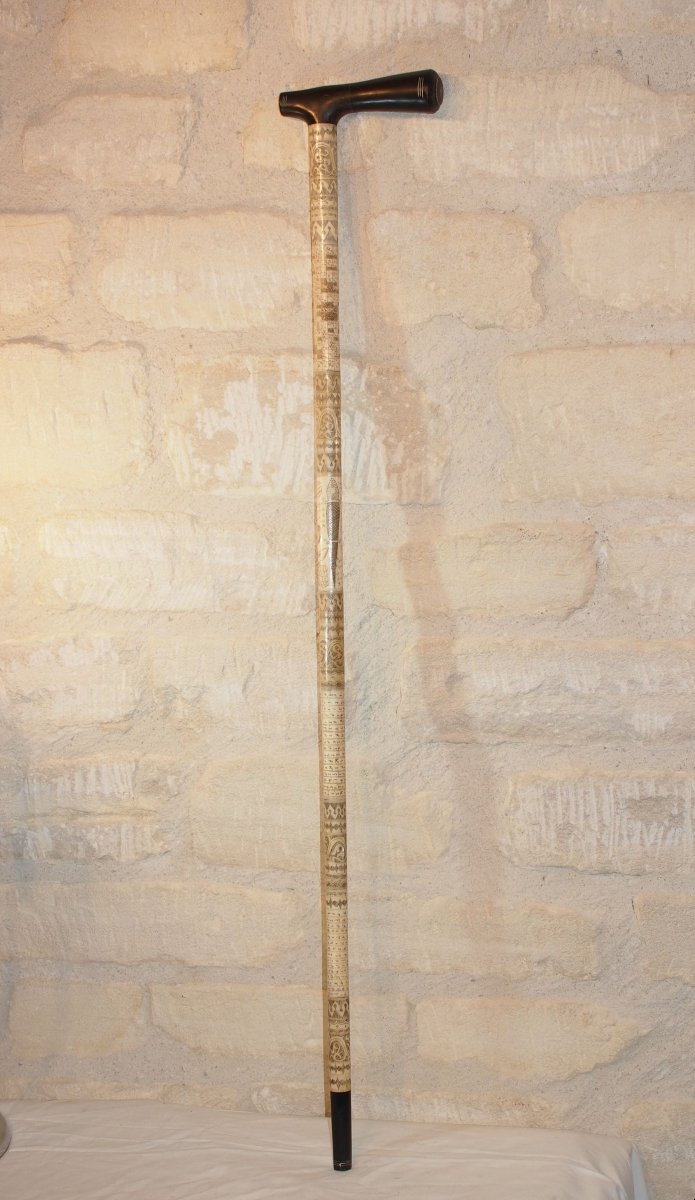
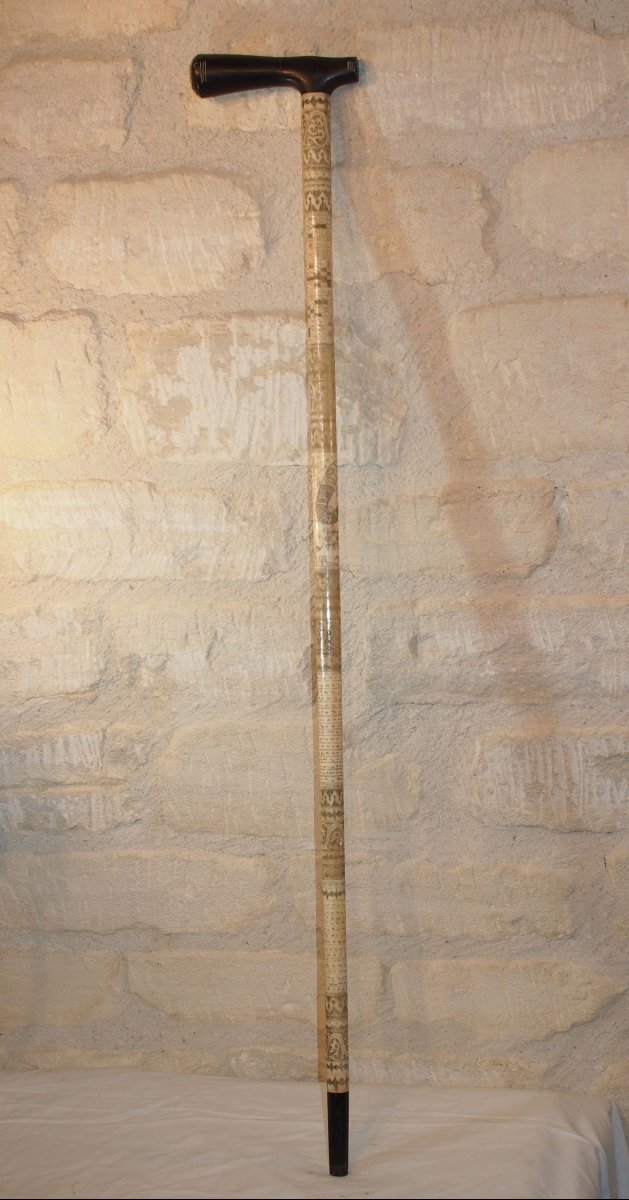
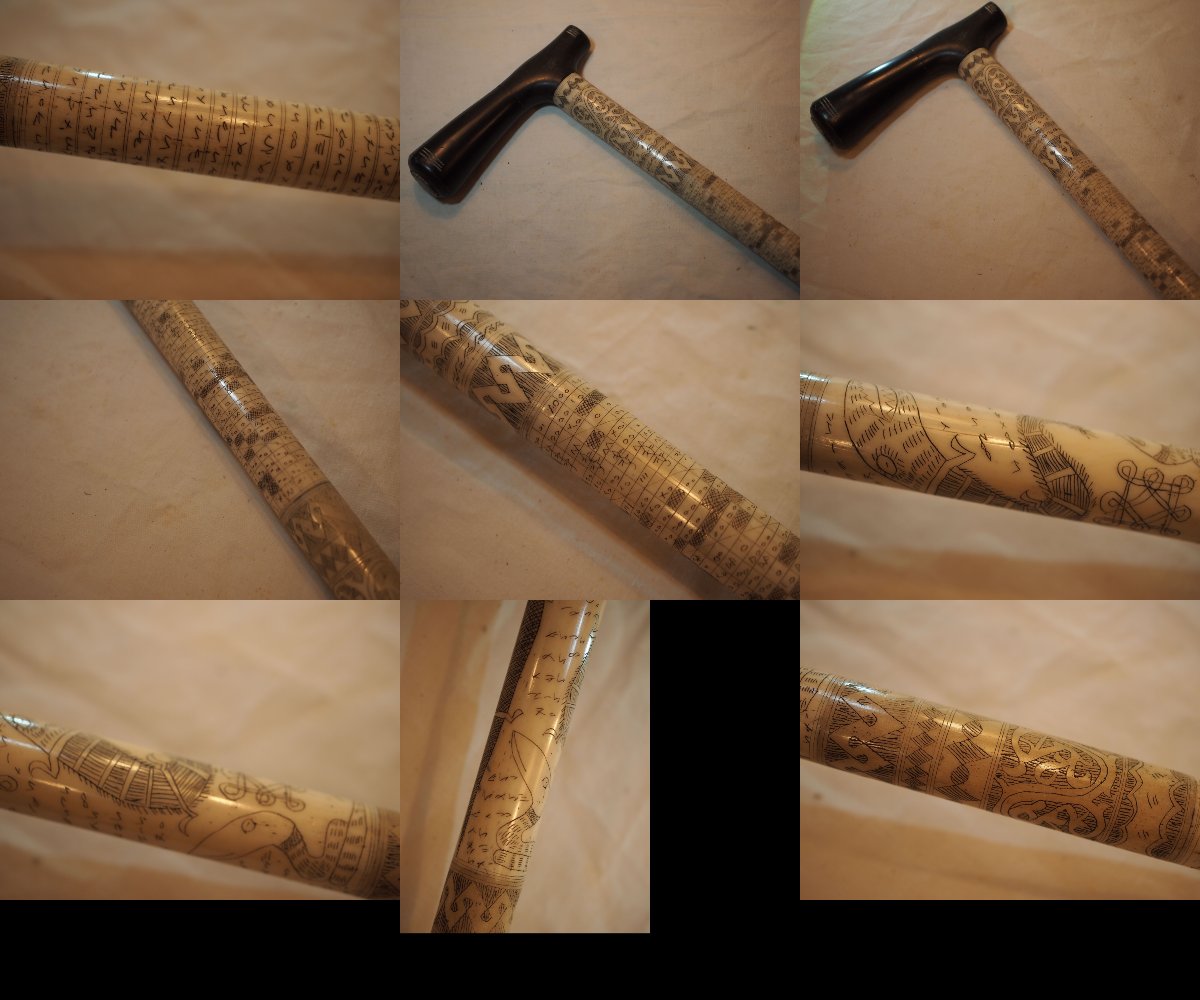
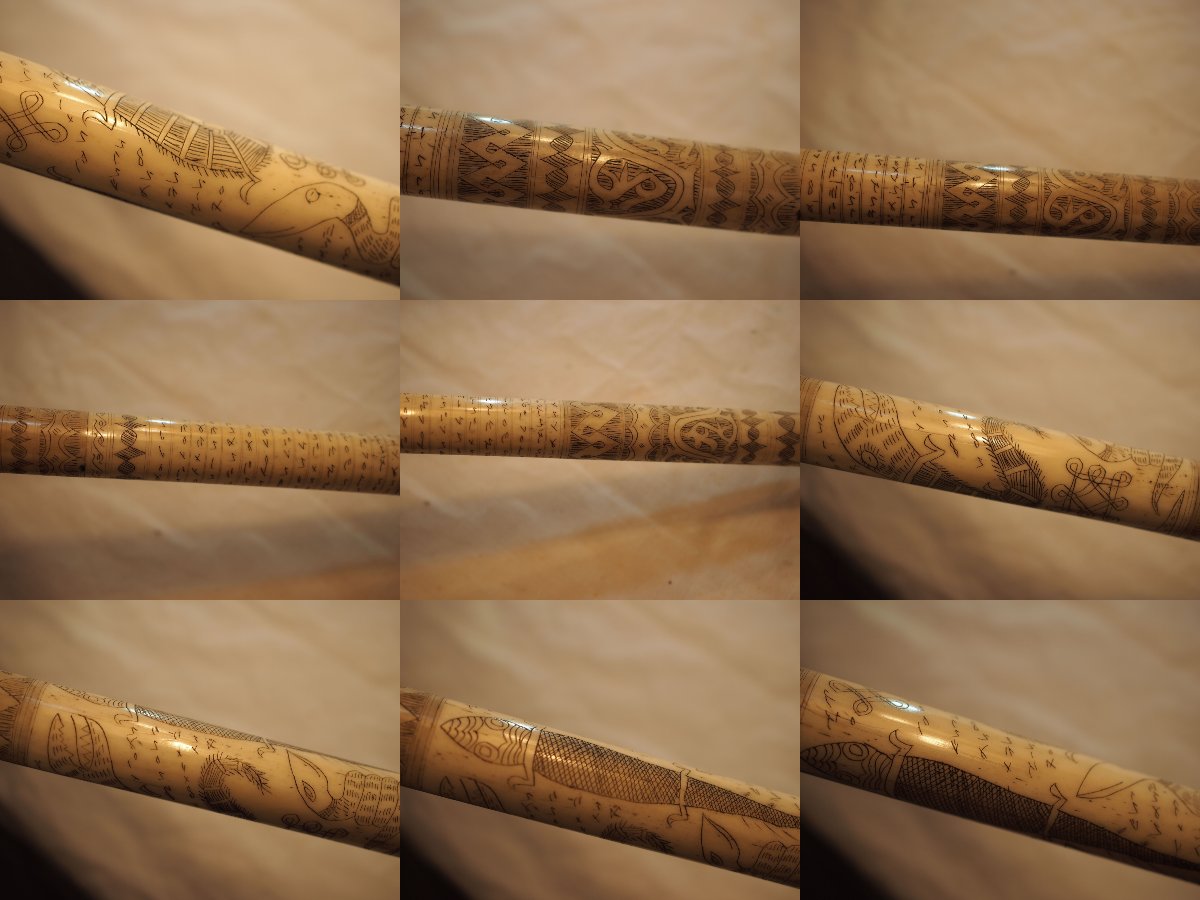
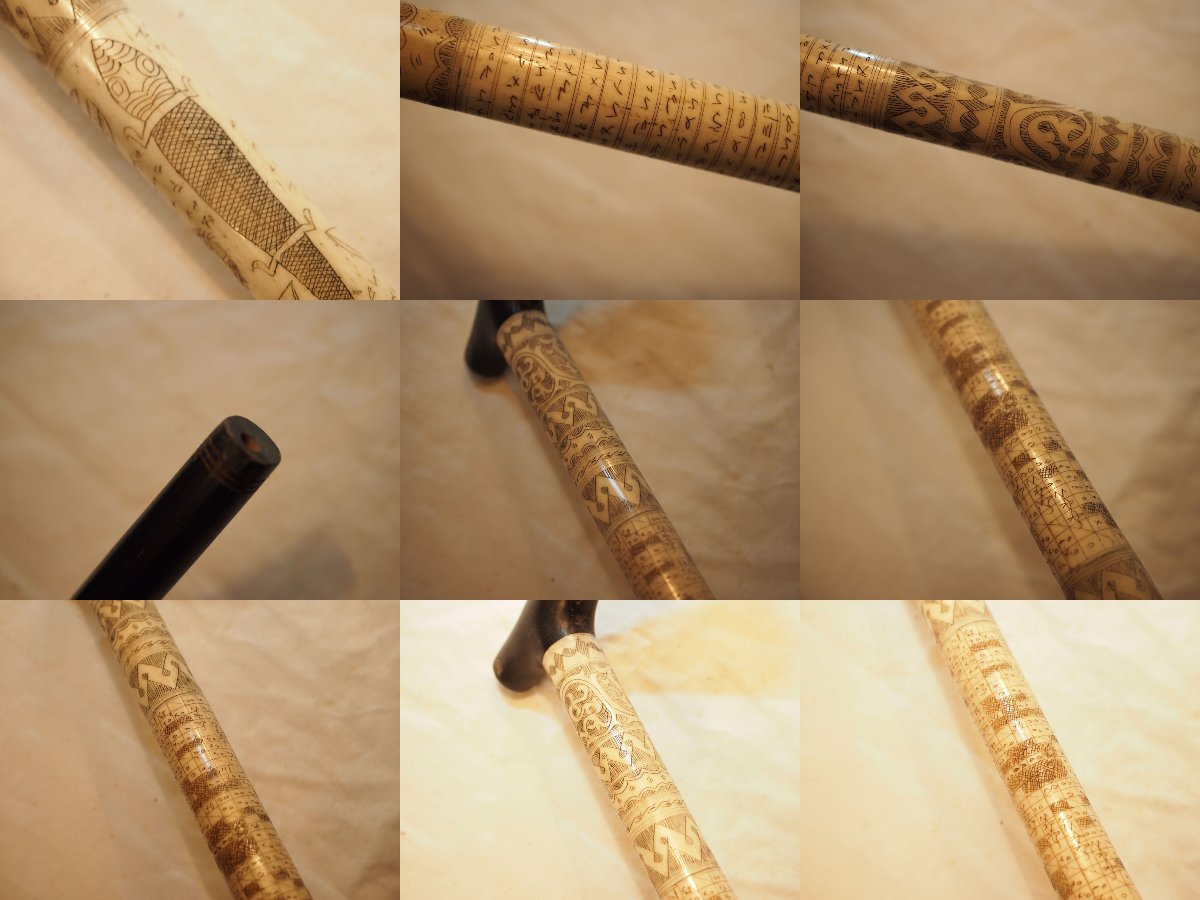
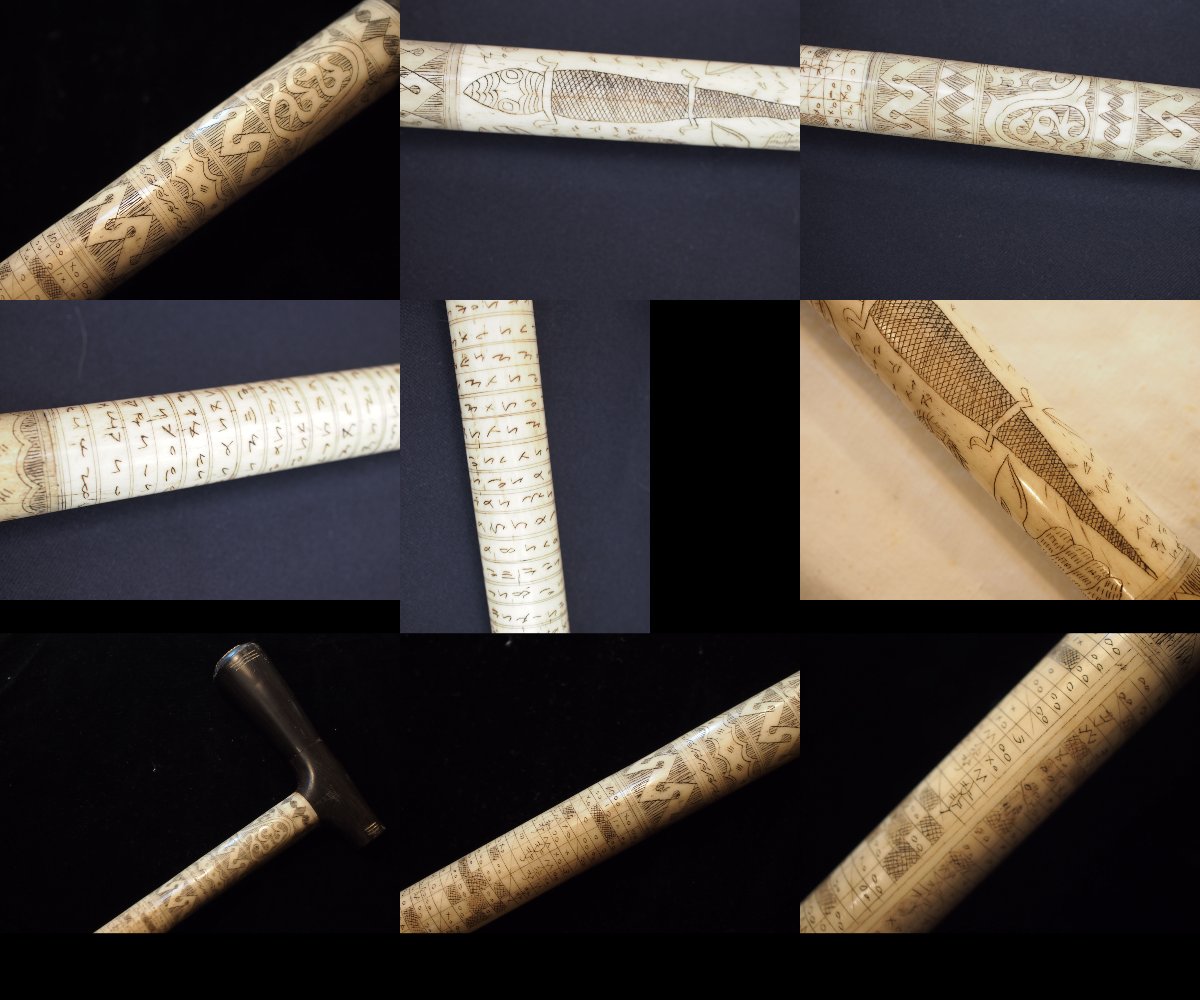
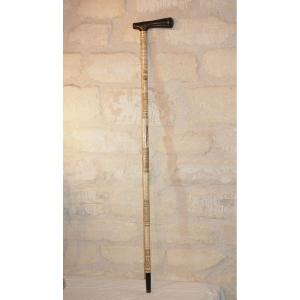


Divinatory Lunisolar Calendar Staff Of Datu Porhalaan, Batak Toba, Sumatra, Indonesia, 19th Century
Exceptional Batak divination calendar staff, Porhalaan, North Sumatra, Indonesia.
Rare ethnographic collectible / Primitive art from Indonesia.
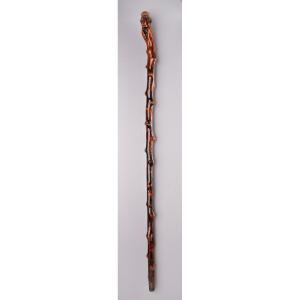
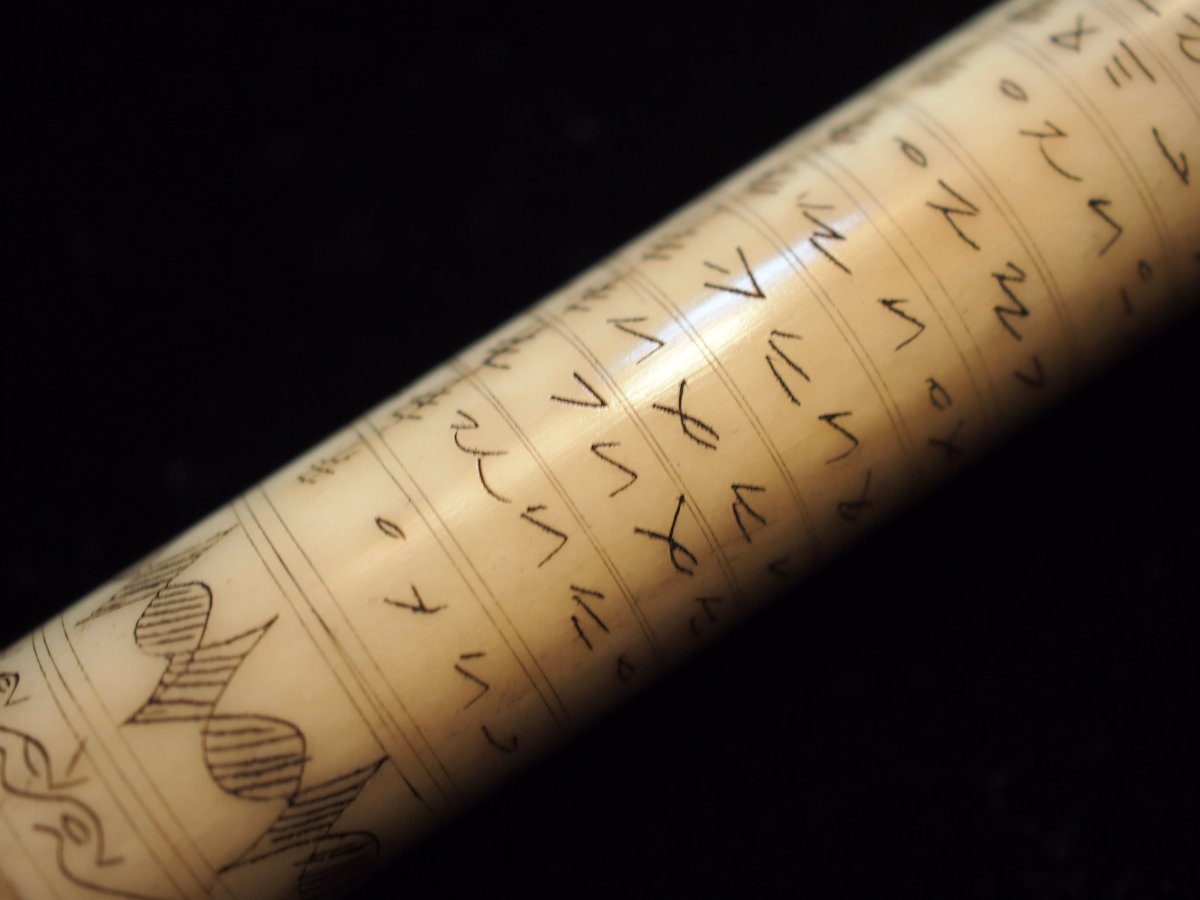
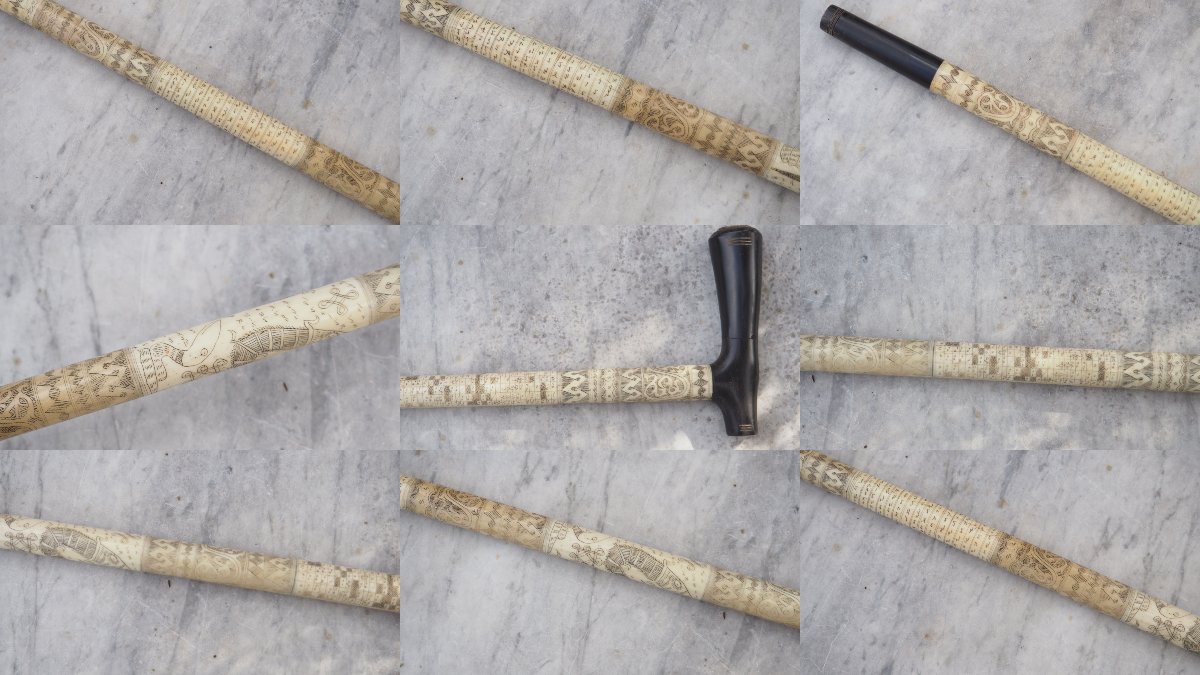
A beautiful and rare ethnographic piece consisting of a long shaft made of ancient animal bone, likely from a bovine or water buffalo, entirely engraved and incised with calendar, geometric, and figurative motifs.
Provenance: likely via the former Dutch East Indies. This Batak calendar staff may have been brought from Sumatra to the Netherlands by a Dutch civil servant, military officer, missionary, sailor, or traveler during the late 19th century.
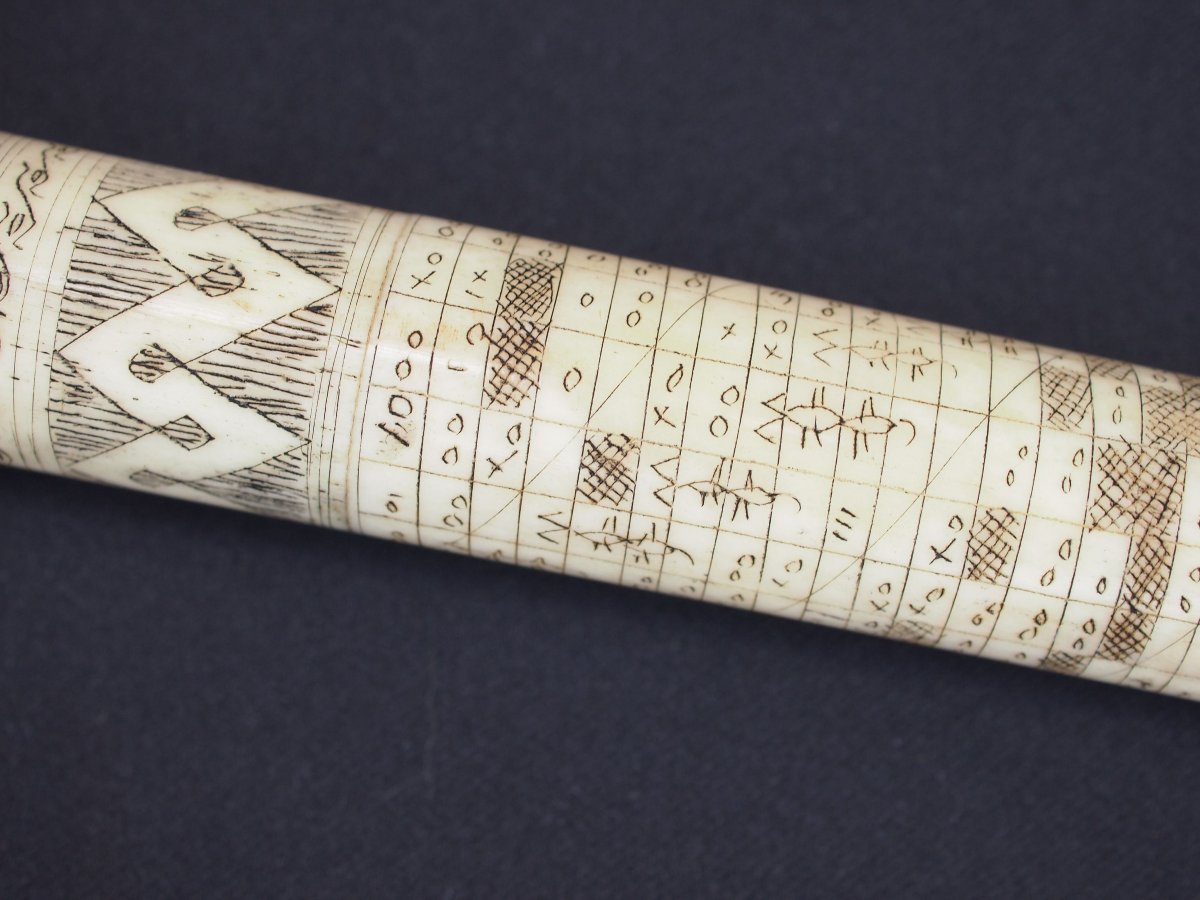
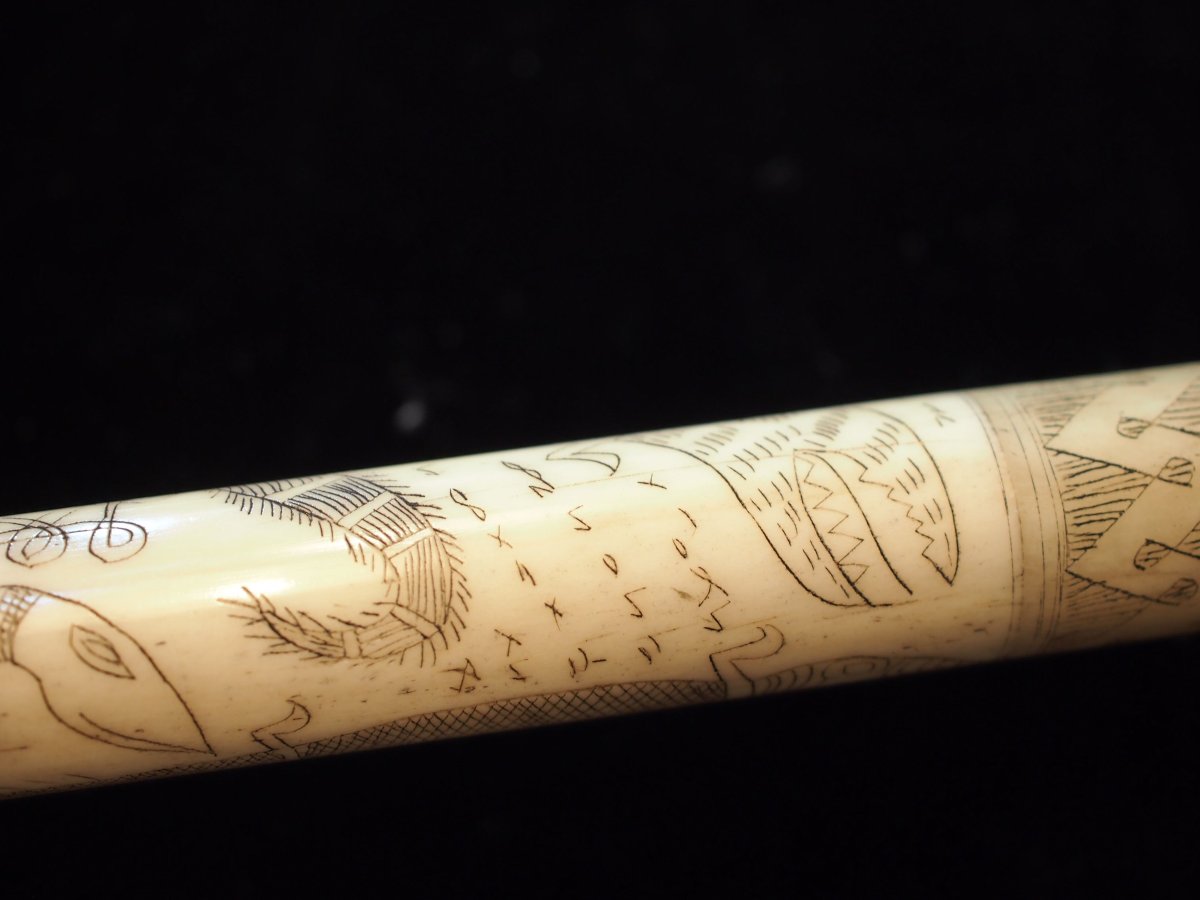
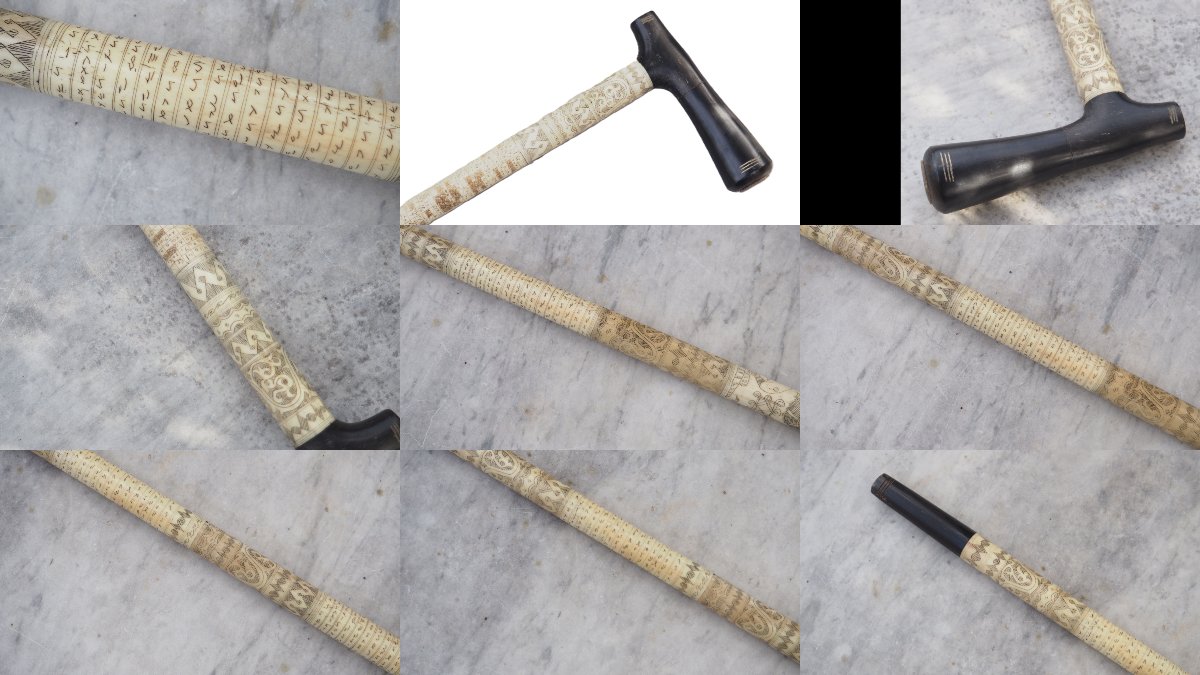
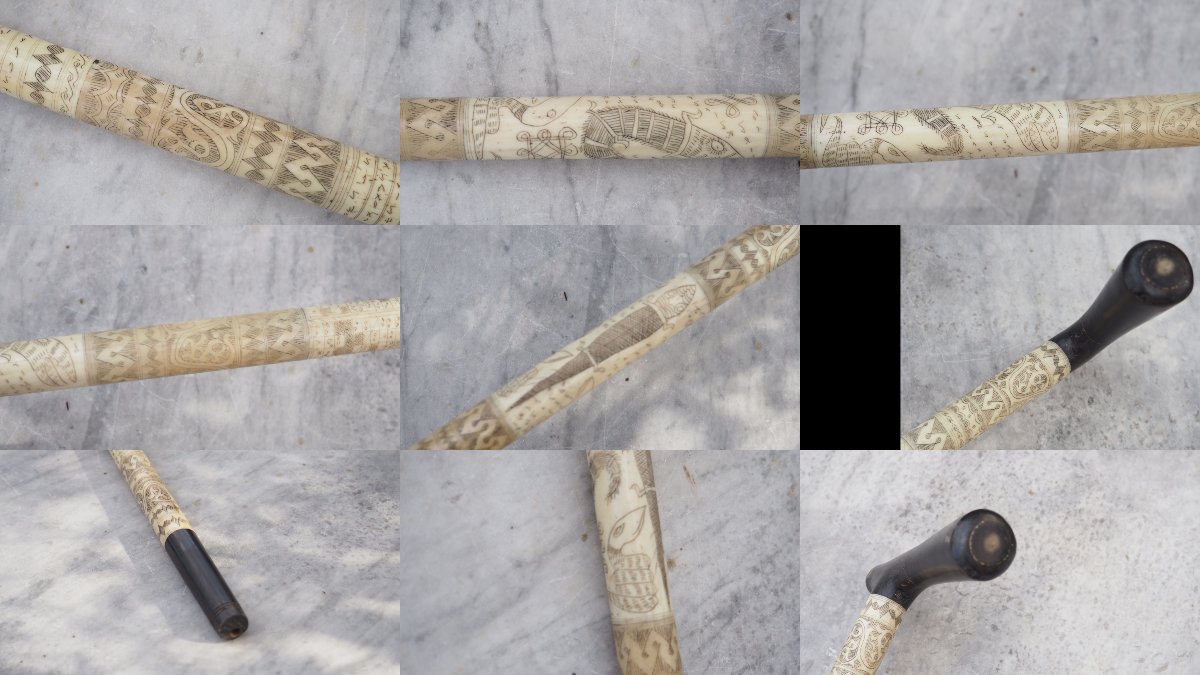
The shaft features a succession of finely engraved registers, combining symbols from the traditional Batak calendar, geometric motifs, snakes, dragons, lizards, and other stylized animals, in a particularly rich design covering the entire surface of the bone. The hand-carved engraving demonstrates remarkable craftsmanship in traditional scrimshaw and features a beautiful, warm patina ranging from ivory to honey brown.
The L-shaped cross-handle is made of very dark wood, likely ebony, with a patina from use. The lower end is also protected by an ebony piece.
Length: 88 cm.
The piece is in excellent condition, perfectly straight, shiny, smooth, and very pleasant to the touch, with the fine engravings beautifully preserved.
The Batak and the PorhalaanThe Batak comprise several ethnic groups in northern Sumatra, notably the Toba, Karo, Simalungun, Pakpak, Angkola, and Mandailing. The Toba Batak traditionally live in the mountainous region surrounding Lake Toba, considered the historical heart of their culture. Their traditions have produced a significant body of ritual literature, notably the pustaha, manuscripts devoted to medicine, divination, and religious knowledge. The datu, a ritual specialist and keeper of traditional knowledge, played an essential role in interpreting these systems.
The term Porhalaan refers to the traditional Batak calendar. It is not a calendar in the modern sense, used simply to determine the date; rather, it was primarily a divinatory tool used to determine auspicious or inauspicious days for undertaking important actions. The datu could thus consult it before a ceremony, a wedding, agricultural work, a journey, the construction of a house, or certain therapeutic practices.
The system is based on the observation of the Moon, the Sun, and the stars. Traditionally, the calendar consists of 12 months of 30 days each, with mechanisms to account for the difference between the lunar year and the solar year. Calendars can be presented as grids of 12 or 13 sets of days.
On engraved copies, the days are organized into tables and accompanied by symbols that allow specialists to interpret whether they are auspicious or inauspicious. Animals and mythical creatures are therefore not mere ornaments: they belong to the rich Batak cosmological and symbolic universe. The cosmic serpent Pane Na Bolon, in particular, occupies an important place in certain calendrical and cosmological representations.
This walking stick is therefore particularly interesting because it combines a utilitarian object, the art of bone engraving, and a traditional system of timekeeping and divination.
Period: late 19th century
Origin: North Sumatra, Indonesia—the Batak people, likely the Toba Batak.
Materials: carved and incised animal bone; ebony wood for the pommel and ferrule.
Length: 88 cm.
Condition: excellent condition
Period: 19th century
Style: Other Style
Condition: Excellent condition
Material: Bone
Length: 88 cm
Reference (ID): 1828950
Availability: In stock