

Officer's Cane, Imperial Russia, Zlatoust Manufactory, 1898, Cossack, 19th Century, Ber26can001
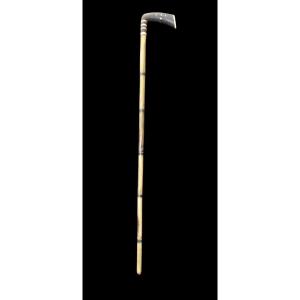
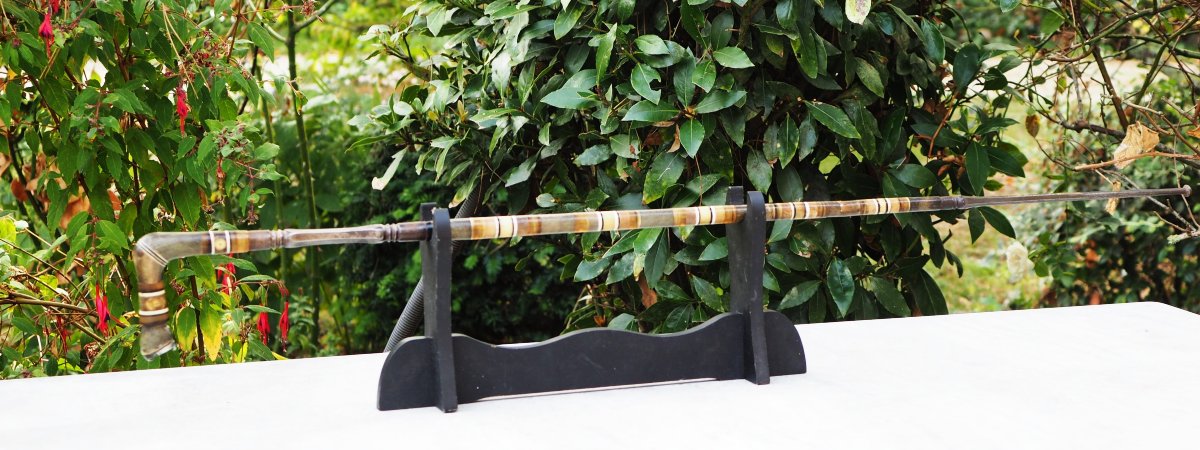
Officer's ceremonial cane, Imperial Russia, horn and engraved steel, Zlatooust workshop, dated 1898 BER26CAN001
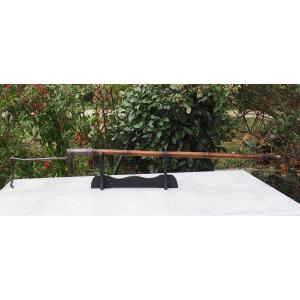
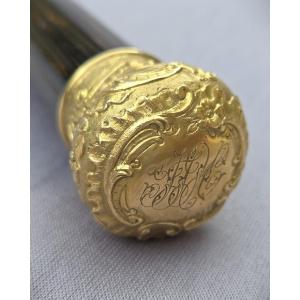
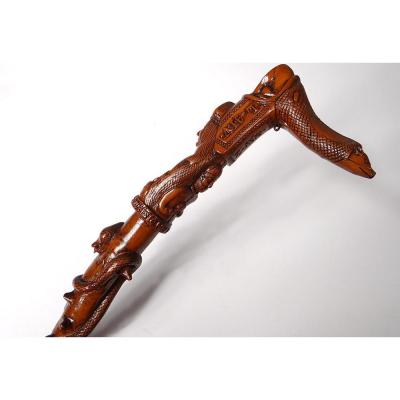
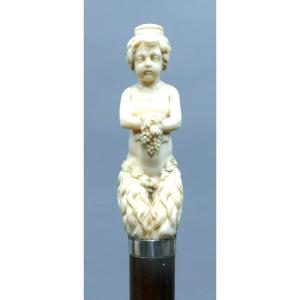
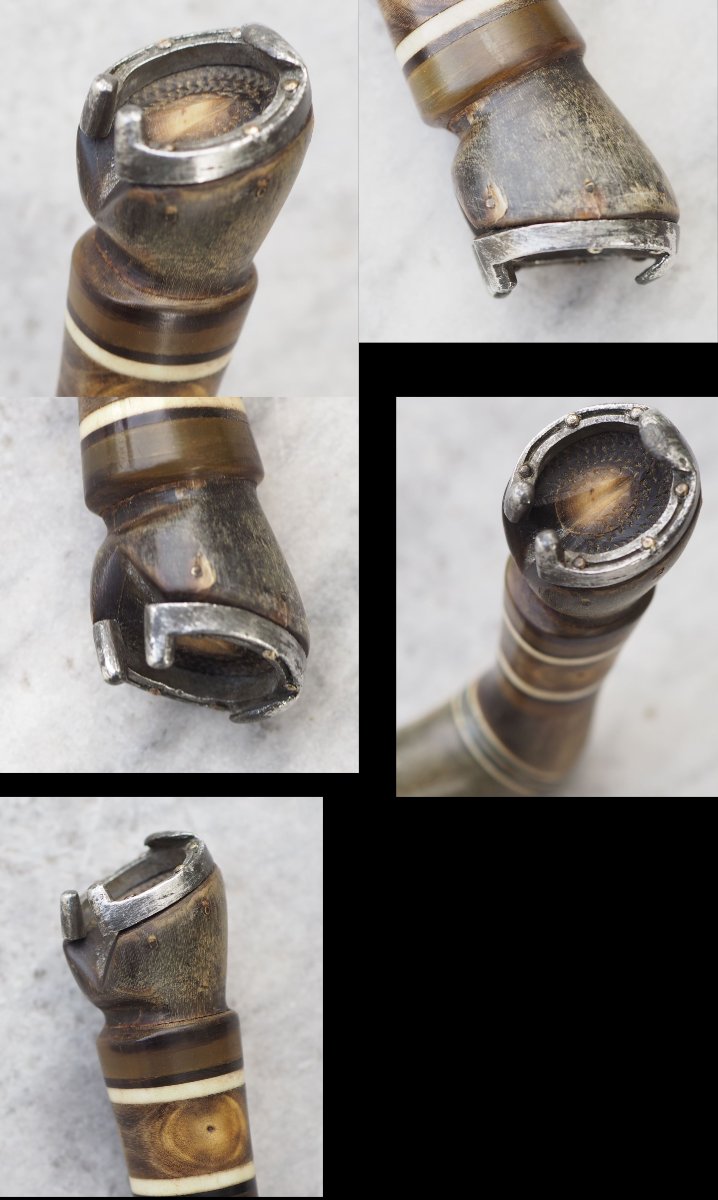
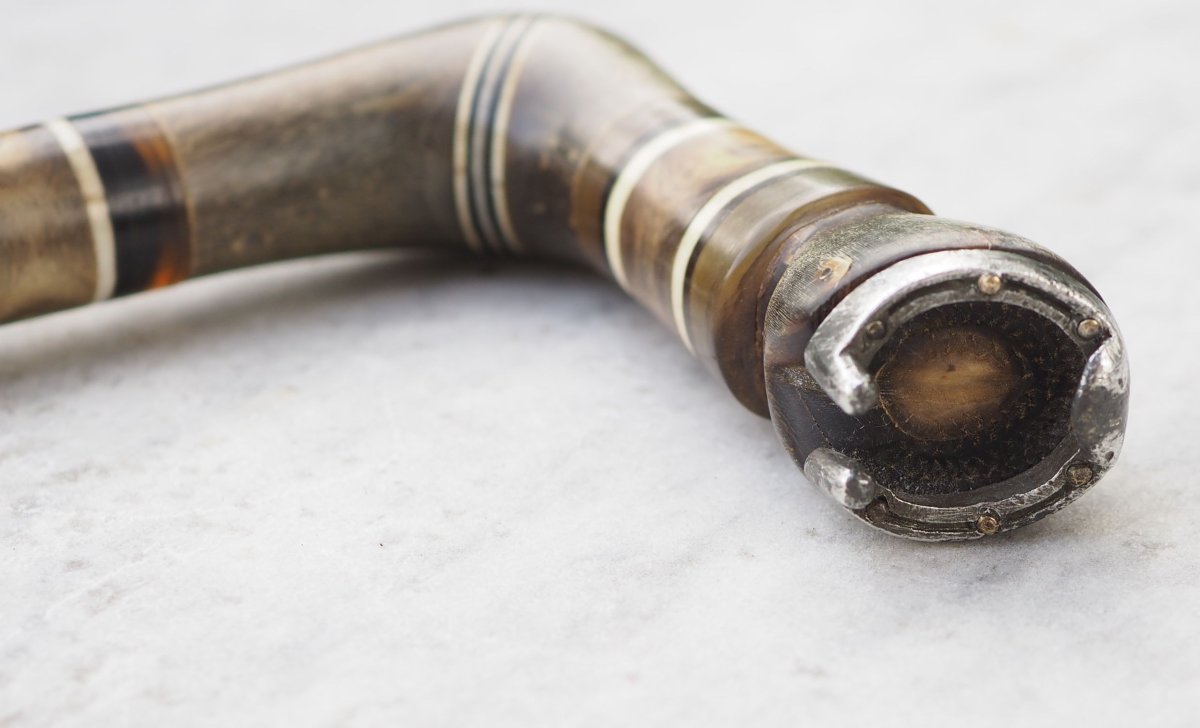
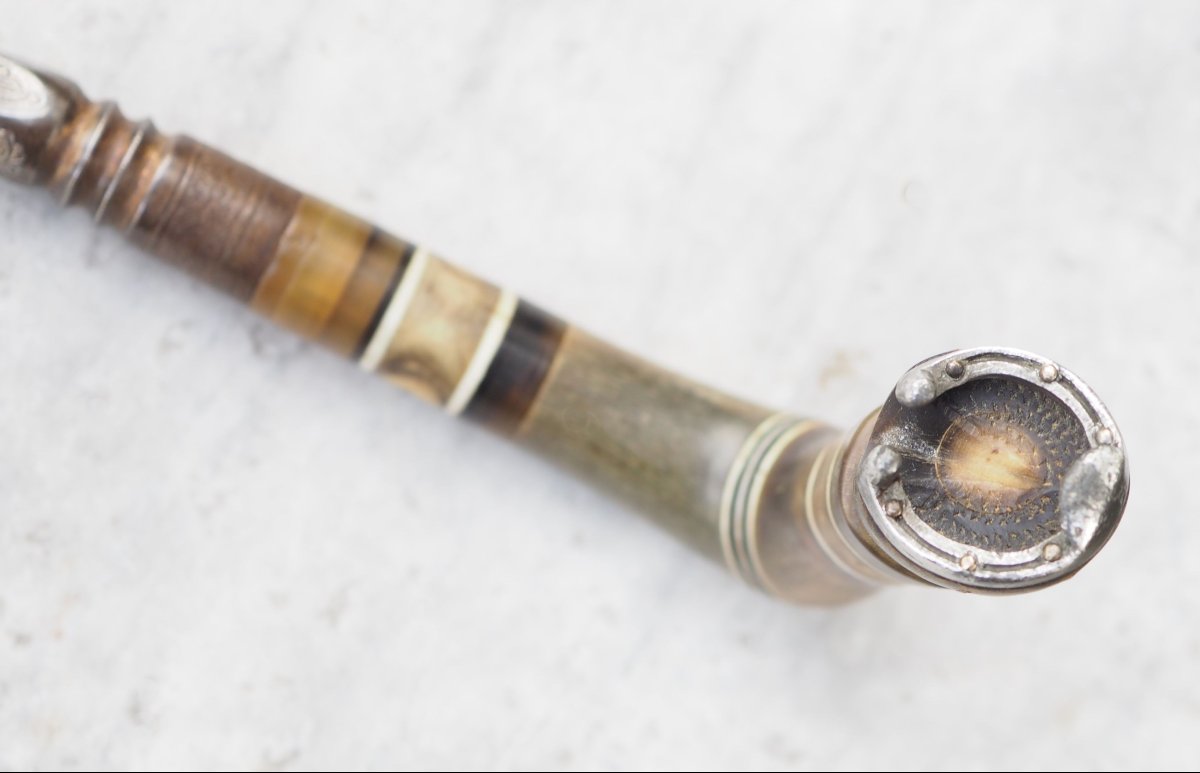
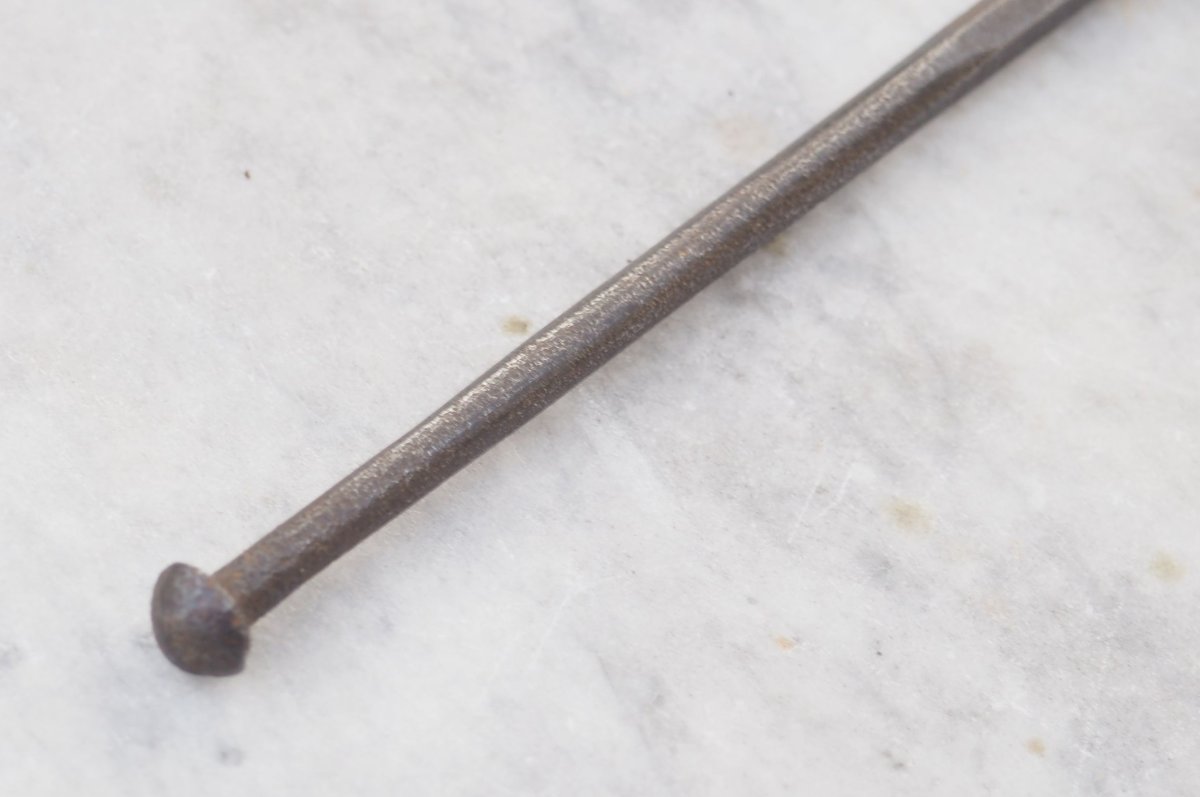
Rare and sumptuous ceremonial cane, a prestigious piece belonging to an Imperial Russian officer, bearing engraved inscriptions; its pommel is topped by a small, exquisitely crafted horse shoe, fitted with a real horseshoe nail—each nail hammered into the top of the shoe just as a real farrier would do.
Note the perfect anatomical detail of the interior of the hoof, visible at the level of the horseshoe, attesting to the sculptor’s remarkable attention to accuracy.
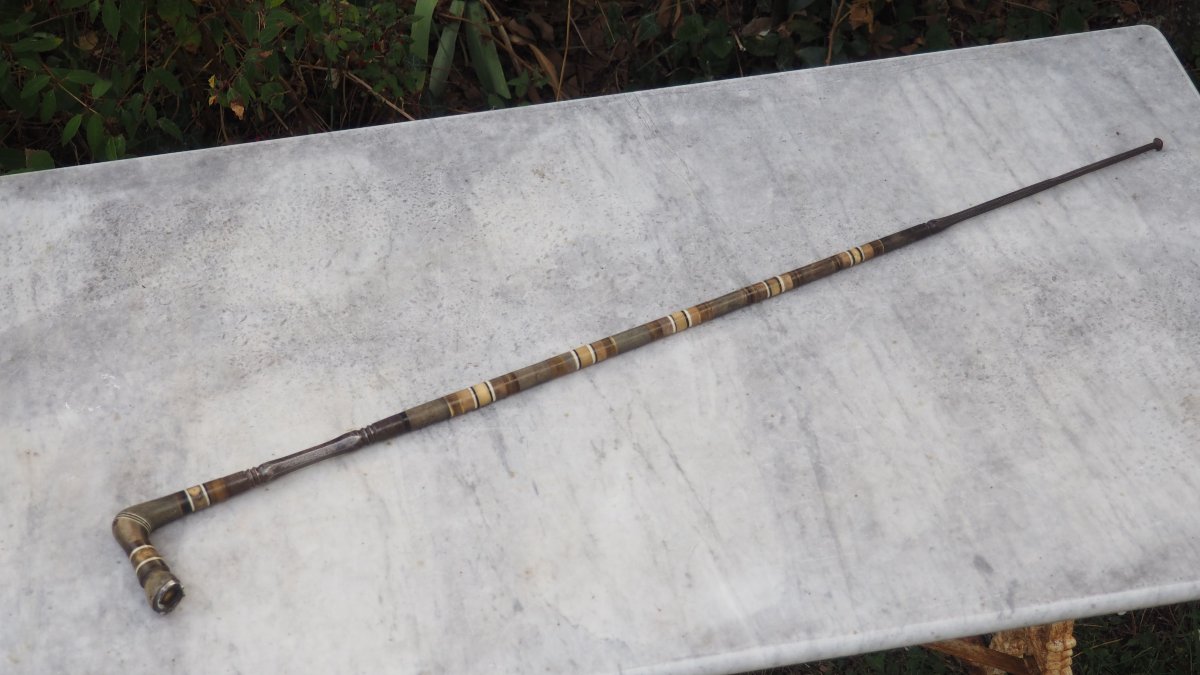
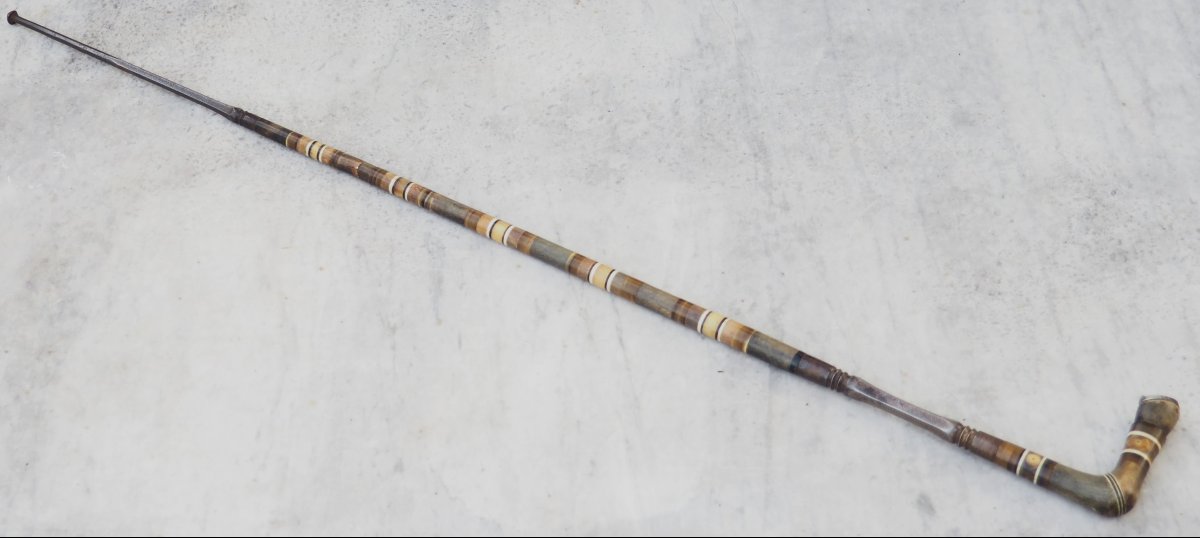
Total length: 89 cm
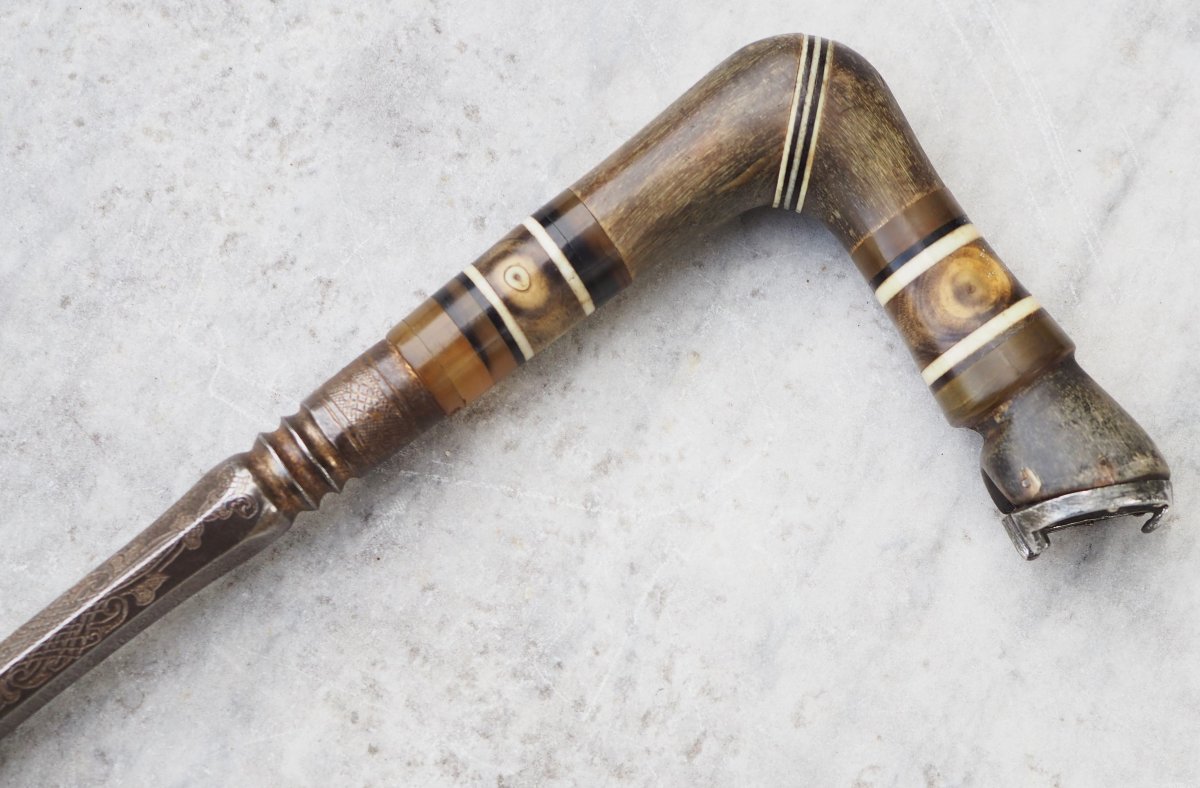
Angled handle: 10 cm
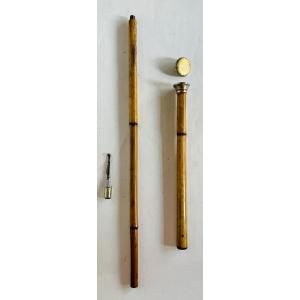
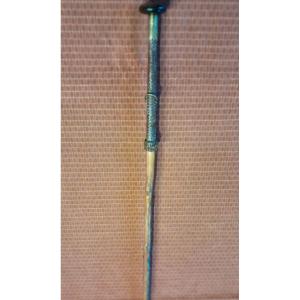
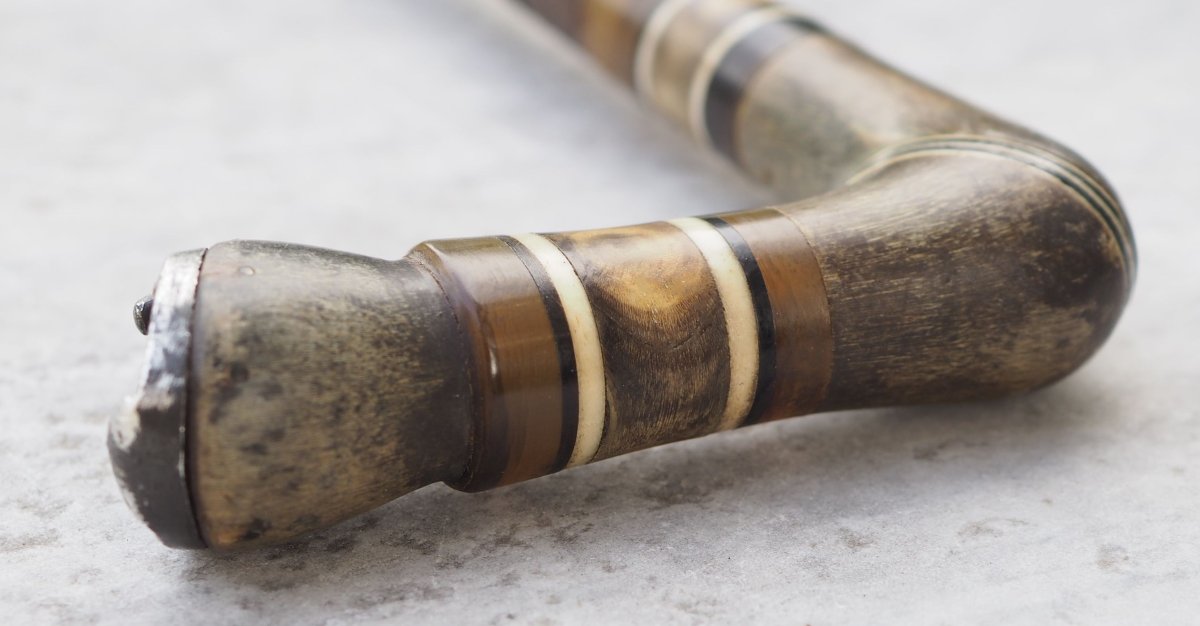
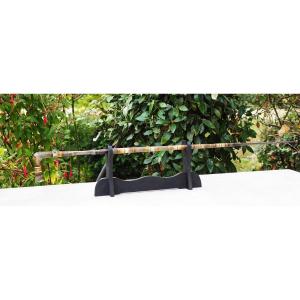
The shaft, of remarkable craftsmanship, consists of a central metal core covered along its entire length by a stack of horn discs of various types, origins, and hues, carefully assembled disc by disc.
The tones range from deep brown to light blond, including more grayish and flaked shades, with some discs exhibiting translucency and allowing light to filter through.
This alternation of matte and translucent surfaces creates a subtle chromatic gradient along the entire length of the barrel, punctuated by thin strips of light-colored bone serving as dividers.
This marquetry work is demanding and meticulous, giving the cane great flexibility while maintaining remarkable strength.
The central metal core ensures perfect structural strength, while the layered horn provides the elastic give characteristic of well-crafted canes.
Comfortable to hold and durable, it remains perfectly functional!
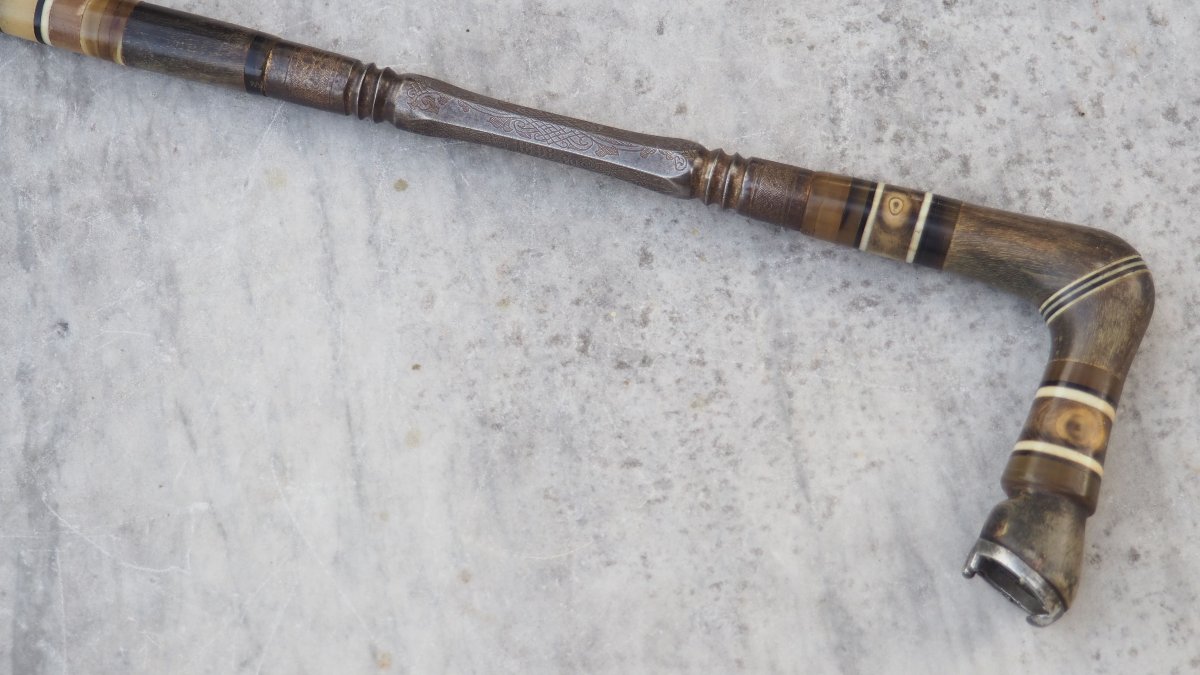
The angled pommel is topped with an ornament in the shape of a stylized horseshoe.
The horseshoe is fitted with a small forged iron insert, nailed and folded down using authentic shoeing techniques—an equestrian motif that immediately evokes the world of the Russian Imperial Cavalry.
This type of symbol, cherished by mounted officers and cavalry regiments (hussars, dragoons, cuirassiers, and even the Cossack cavalry from the Empire’s far reaches), paid homage to the rider’s mount, an inseparable companion to his rank and military life.
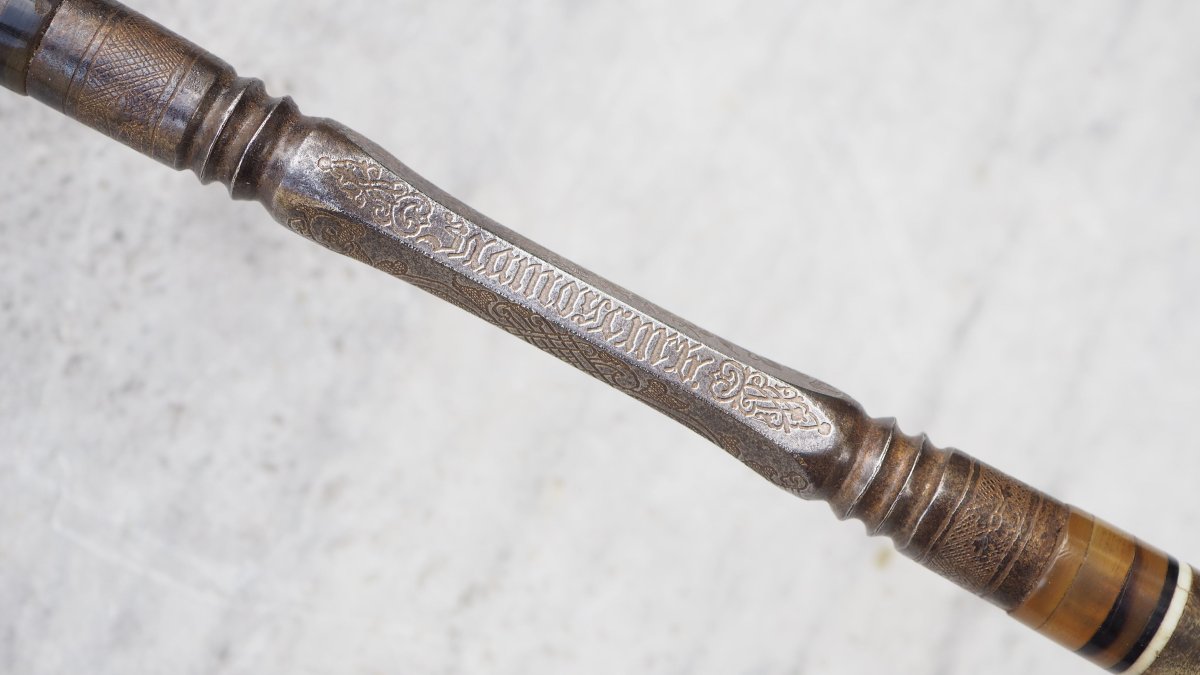
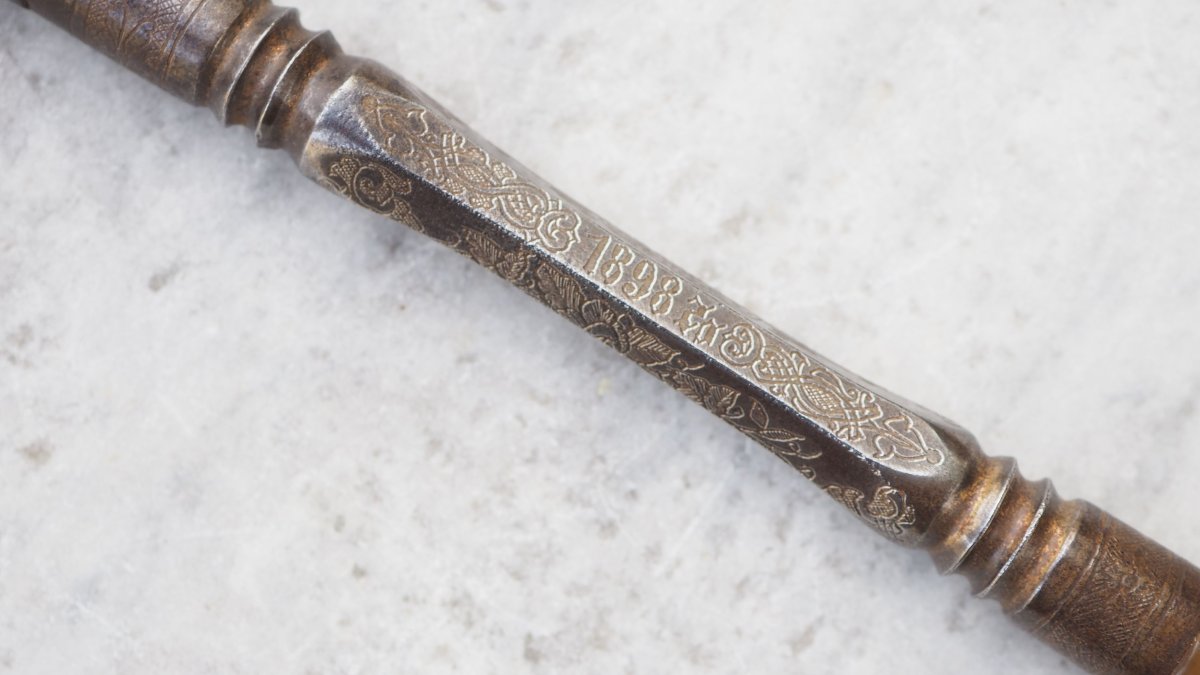
The central metal core of the cane is exposed in places, revealing the bare steel, which is finely engraved with decorative motifs: on the first bulge, the name Златоустъ or ЗлаMоусMъ (Zlatooust), in ornamental Cyrillic script in the vyaz style (вязь), referring to the famous Ural arms and steel engraving workshop, a supplier of prestigious items to the Tsarist army, the court, and the aristocracy of Imperial Russia; on the other side is the date “1898 г.,” finely chiseled and framed by scrollwork and floral or foliage motifs.
The ferrule, which is part of the cane’s central shaft, is in good, well-worn condition; it is complete, long, elegant, and slender (with no chips).
Beautiful patina from use, clear and legible engravings, stable horn with no chips; one very minor blemish noted, but with no chips and limited to a single disc—nothing serious—and the assembly is very solid.
An exceptional piece for collectors of Imperial Russian antiques and the “White Russia” era—an object of military distinction or an honorary gift, much more than a simple walking accessory.
Origin: Imperial Russia, Urals (Zlatoust), 1898.
Probable context of use: cavalry officer (the Cossack hypothesis is plausible given the equestrian symbol).
One-of-a-kind piece ...
Please be sure to view all the photos to appreciate all the details and the condition of this piece.
Rare and sumptuous ceremonial cane, a prestigious piece belonging to an Imperial Russian officer, bearing engraved inscriptions; its pommel is topped by a small, exquisitely crafted horse shoe, fitted with a real horseshoe nail—each nail hammered into the top of the shoe just as a real farrier would do.
Note the perfect anatomical detail of the interior of the hoof, visible at the level of the horseshoe, attesting to the sculptor’s remarkable attention to accuracy.
Total length: 89 cm
Angled handle: 10 cm
The shaft, of remarkable craftsmanship, consists of a central metal core covered along its entire length by a stack of horn discs of various types, origins, and hues, carefully assembled disc by disc.
The tones range from deep brown to light blond, including more grayish and flaked shades, with some discs exhibiting translucency and allowing light to filter through.
This alternation of matte and translucent surfaces creates a subtle chromatic gradient along the entire length of the barrel, punctuated by thin strips of light-colored bone serving as dividers.
This marquetry work is demanding and meticulous, giving the cane great flexibility while maintaining remarkable strength.
The central metal core ensures perfect structural strength, while the layered horn provides the elastic give characteristic of well-crafted canes.
Comfortable to hold and durable, it remains perfectly functional!
The angled pommel is topped with an ornament in the shape of a stylized horseshoe.
The horseshoe is fitted with a small forged iron insert, nailed and folded down using authentic shoeing techniques—an equestrian motif that immediately evokes the world of the Russian Imperial Cavalry.
This type of symbol, cherished by mounted officers and cavalry regiments (hussars, dragoons, cuirassiers, and even the Cossack cavalry from the Empire’s far reaches), paid homage to the rider’s mount, an inseparable companion to his rank and military life.
The central metal core of the cane is exposed in places, revealing the bare steel, which is finely engraved with decorative motifs: on the first bulge, the name Златоустъ or ЗлаMоусMъ (Zlatooust), in ornamental Cyrillic script in the vyaz style (вязь), referring to the famous Ural arms and steel engraving workshop, a supplier of prestigious items to the Tsarist army, the court, and the aristocracy of Imperial Russia; on the other side is the date “1898 г.,” finely chiseled and framed by scrollwork and floral or foliage motifs.
The ferrule, which is part of the cane’s central shaft, is in good, well-worn condition; it is complete, long, elegant, and slender (with no chips).
Beautiful patina from use, clear and legible engravings, stable horn with no chips; one very minor blemish noted, but with no chips and limited to a single disc—nothing serious—and the assembly is very solid.
An exceptional piece for collectors of Imperial Russian antiques and the “White Russia” era—an object of military distinction or an honorary gift, much more than a simple walking accessory.
Origin: Imperial Russia, Urals (Zlatoust), 1898.
Probable context of use: cavalry officer (the Cossack hypothesis is plausible given the equestrian symbol).
One-of-a-kind piece ...
Please be sure to view all the photos to appreciate all the details and the condition of this piece.
3 200 €
Period: 19th century
Style: Other Style
Condition: Excellent condition
Material: Horn
Length: 89 cm
Reference (ID): 1824599
Availability: In stock
Print