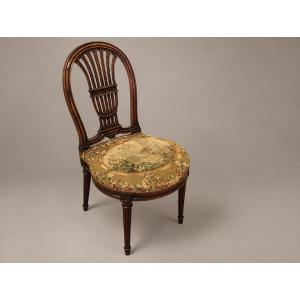


Louis XVI 16–xviii-style Spiked-back Chair, 18th Century, Stamped “boulard”
Artist: Jean-baptiste Boulard
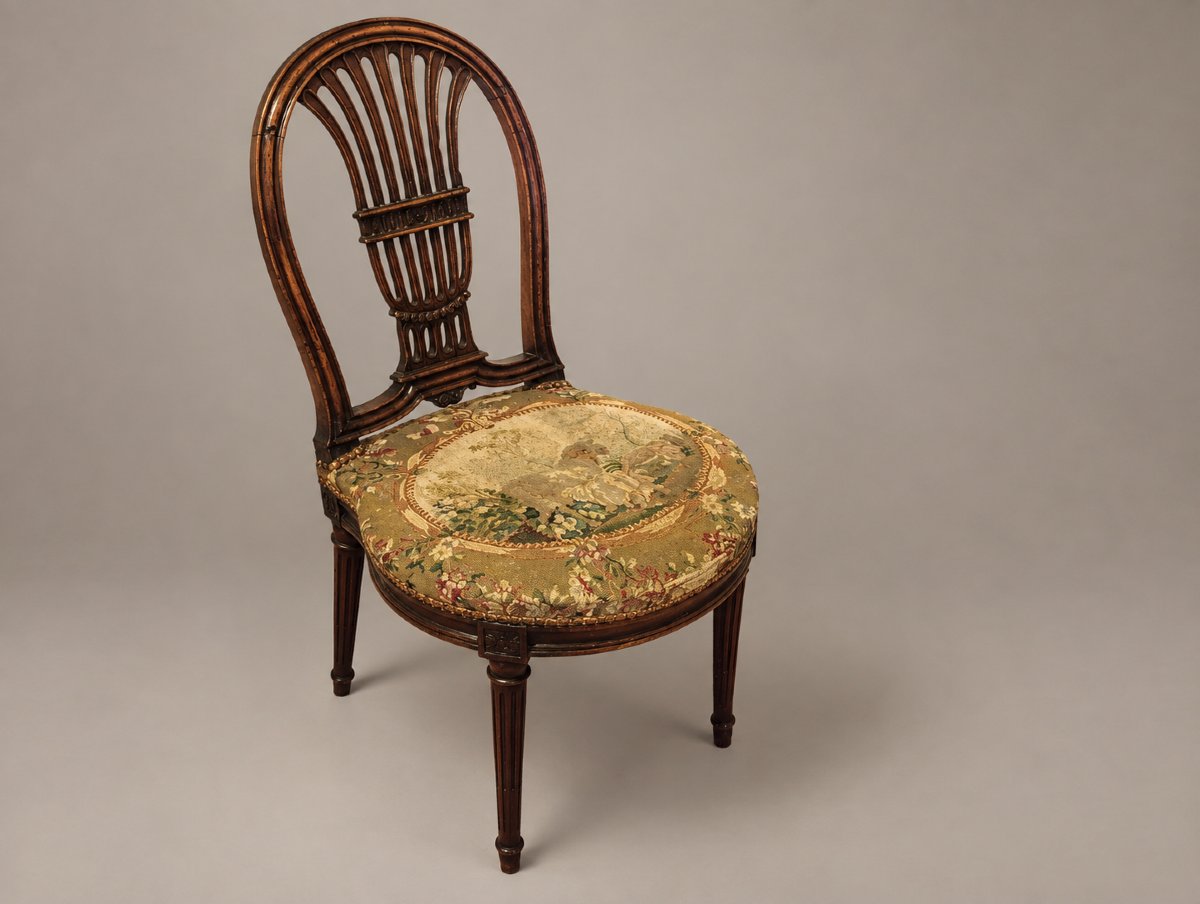
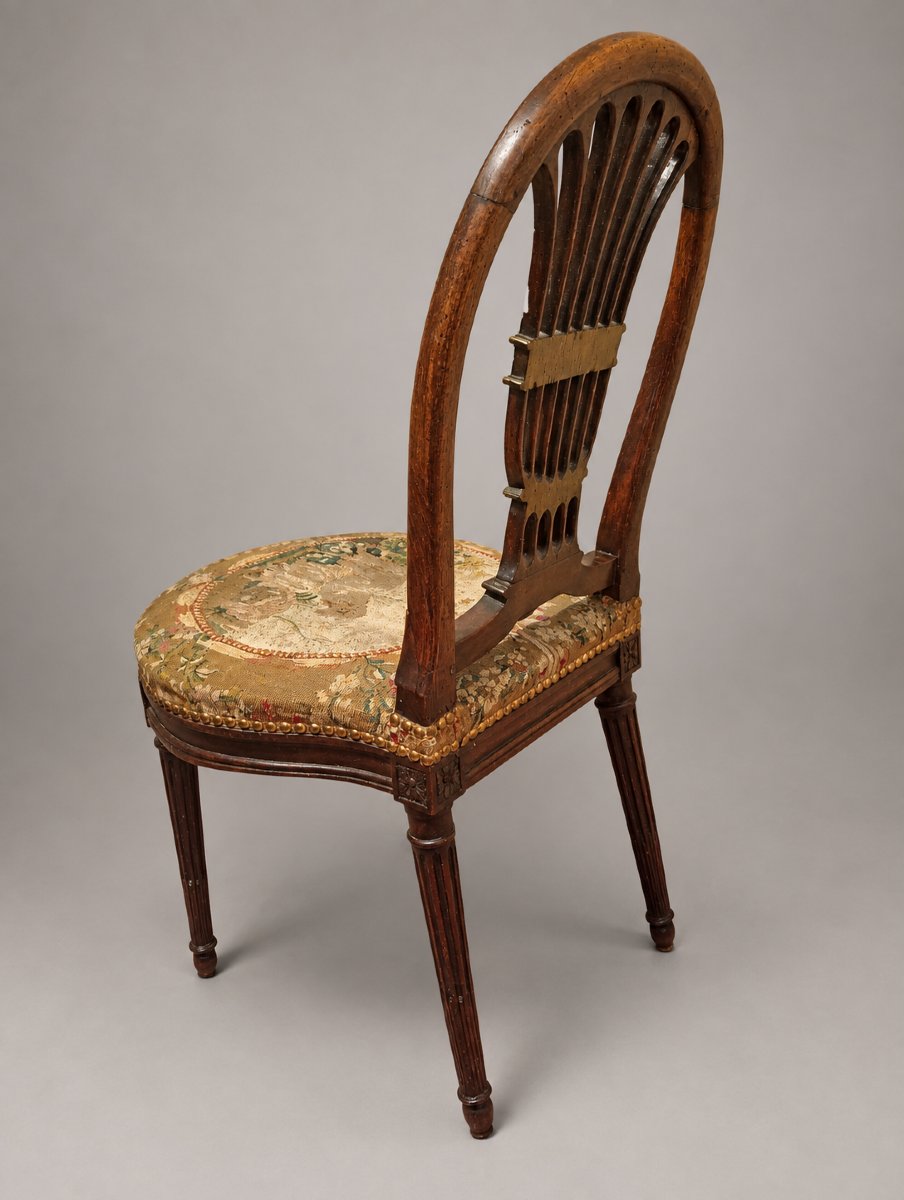
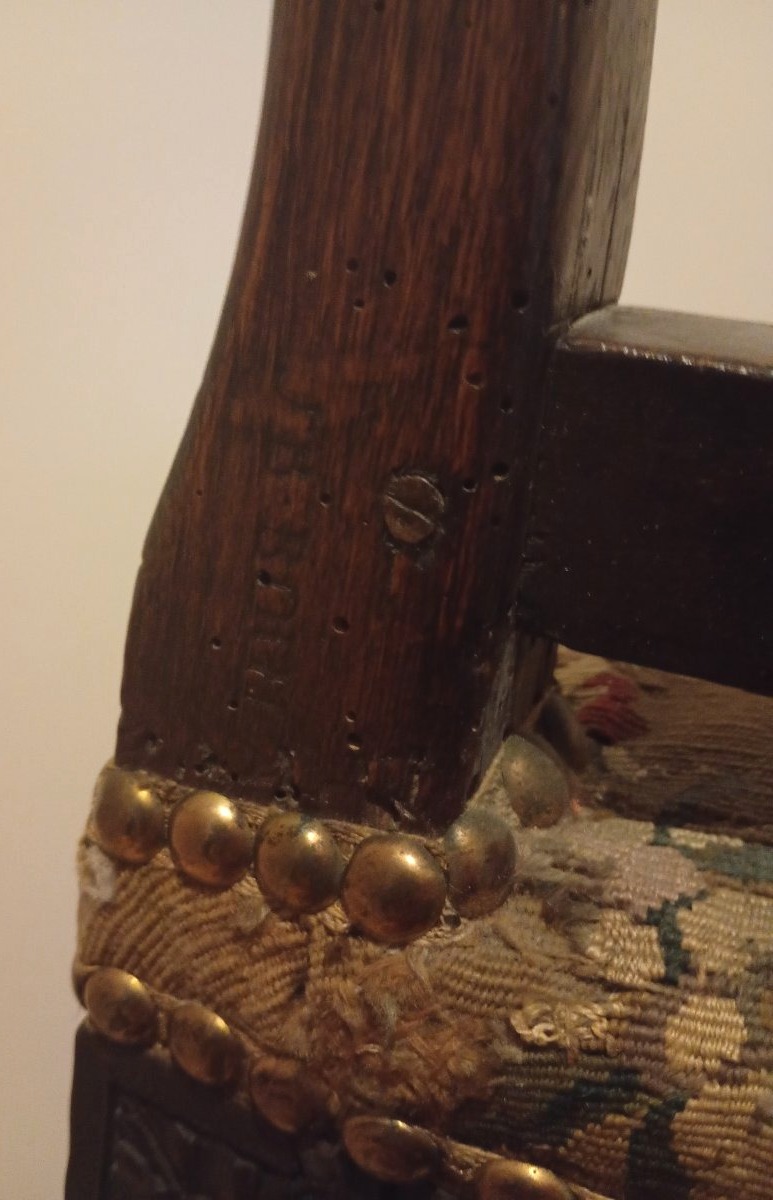
A Louis XVI-era chair made of stained beech wood with a “sheaf of ears” backrest, stamped by Jean-Baptiste Boulard
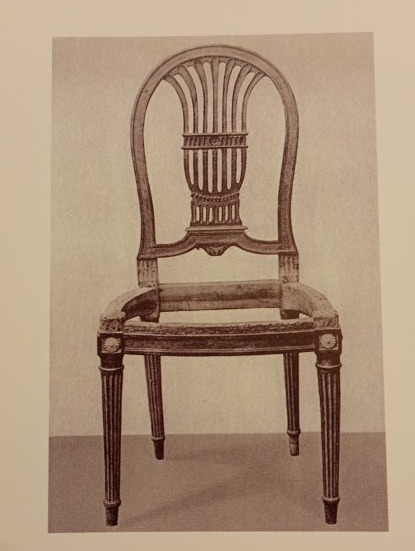
Base with serrated fluting, rosette-adorned connecting blocks, and a molded “sheaf of ears” backrest; the lower crossbar of the backrest is carved with acanthus scrolls; the “sheaf of ears” design features three separate registers divided by friezes of heart-shaped rays and channels, with a central rosette.
The openwork “sheaf of ears” backrest supplanted the traditional lyre-shaped backrest in the years 1785–1790. It was produced by master Parisian cabinetmakers such as Henri Jacob, Georges Jacob, and Jean-Baptiste Boulard.
The horseshoe-shaped seat is upholstered with Beauvais tapestry depicting a nursing ewe.
Through the shape of its backrest and the choice of tapestry, this chair reflects, in the 1780s, a new taste for a pastoral ideal and country life. The Queen’s Hamlet, built beginning in 1783 at Trianon, represents the most emblematic culmination of this new trend.
Parisian work, circa 1780–90
Jean-Baptiste Boulard was granted master status in 1754 on Rue de Cléry in Paris and appointed the king’s cabinetmaker in 1777.
A chair with a similar backrest is illustrated in the works of Laurent Condamy and Guillaume Janneau.
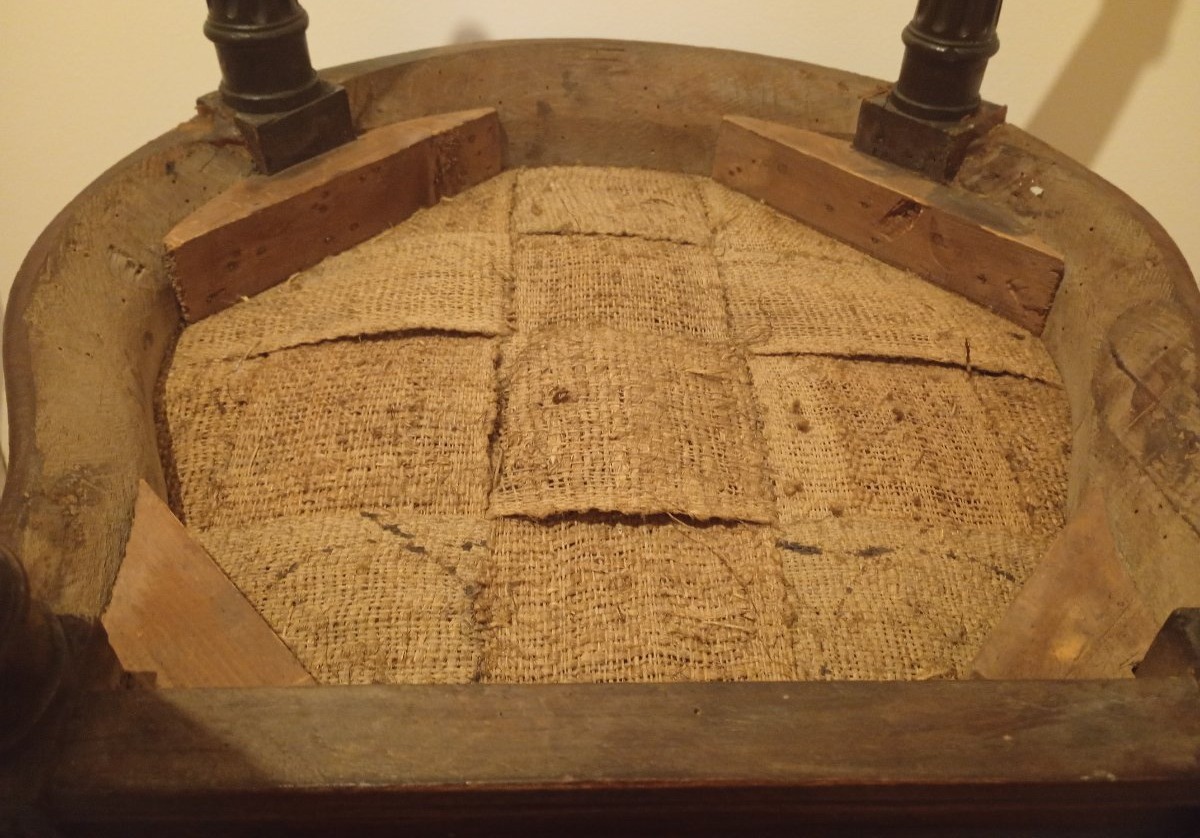
Condition and construction: wear on the front of the upholstery; rear reinforcement brackets; elegie molding
Bibliography:-Laurent Condamy, Jean-Baptiste Boulard, menuisier du roi, Éditions Faton, 2008, pp. 60–61-Guillaume Janneau, le Mobilier francais : les sièges, 1967, pp. 160-162
Base with serrated fluting, rosette-adorned connecting blocks, and a molded “sheaf of ears” backrest; the lower crossbar of the backrest is carved with acanthus scrolls; the “sheaf of ears” design features three separate registers divided by friezes of heart-shaped rays and channels, with a central rosette.
The openwork “sheaf of ears” backrest supplanted the traditional lyre-shaped backrest in the years 1785–1790. It was produced by master Parisian cabinetmakers such as Henri Jacob, Georges Jacob, and Jean-Baptiste Boulard.
The horseshoe-shaped seat is upholstered with Beauvais tapestry depicting a nursing ewe.
Through the shape of its backrest and the choice of tapestry, this chair reflects, in the 1780s, a new taste for a pastoral ideal and country life. The Queen’s Hamlet, built beginning in 1783 at Trianon, represents the most emblematic culmination of this new trend.
Parisian work, circa 1780–90
Jean-Baptiste Boulard was granted master status in 1754 on Rue de Cléry in Paris and appointed the king’s cabinetmaker in 1777.
A chair with a similar backrest is illustrated in the works of Laurent Condamy and Guillaume Janneau.
Condition and construction: wear on the front of the upholstery; rear reinforcement brackets; elegie molding
Bibliography:-Laurent Condamy, Jean-Baptiste Boulard, menuisier du roi, Éditions Faton, 2008, pp. 60–61-Guillaume Janneau, le Mobilier francais : les sièges, 1967, pp. 160-162
1 300 €
Period: 18th century
Style: Louis 16th, Directory
Condition: Good condition
Material: Solid wood
Length: 47
Height: 91
Depth: 47
Reference (ID): 1826668
Availability: In stock
Print