




Franz Xaver Bergmann's Bedouin Tent, Early 20th Century
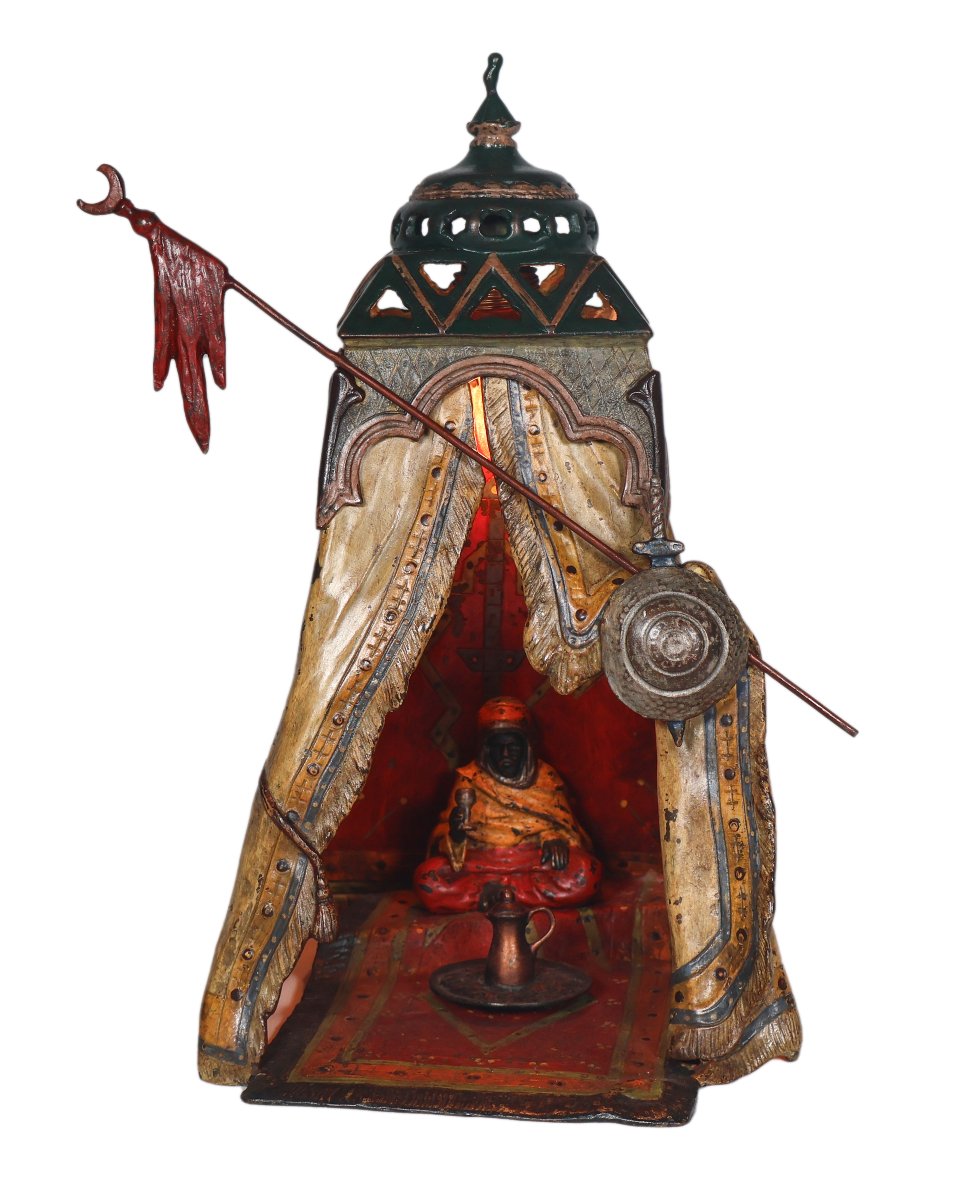
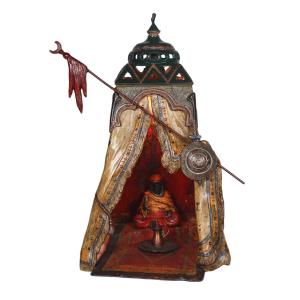
Table lampshaped like a Bedouin tent, made of Viennese bronze with a polychrome patina,created in Vienna around 1900 by Franz Xaver Bergmann (1861–1936).
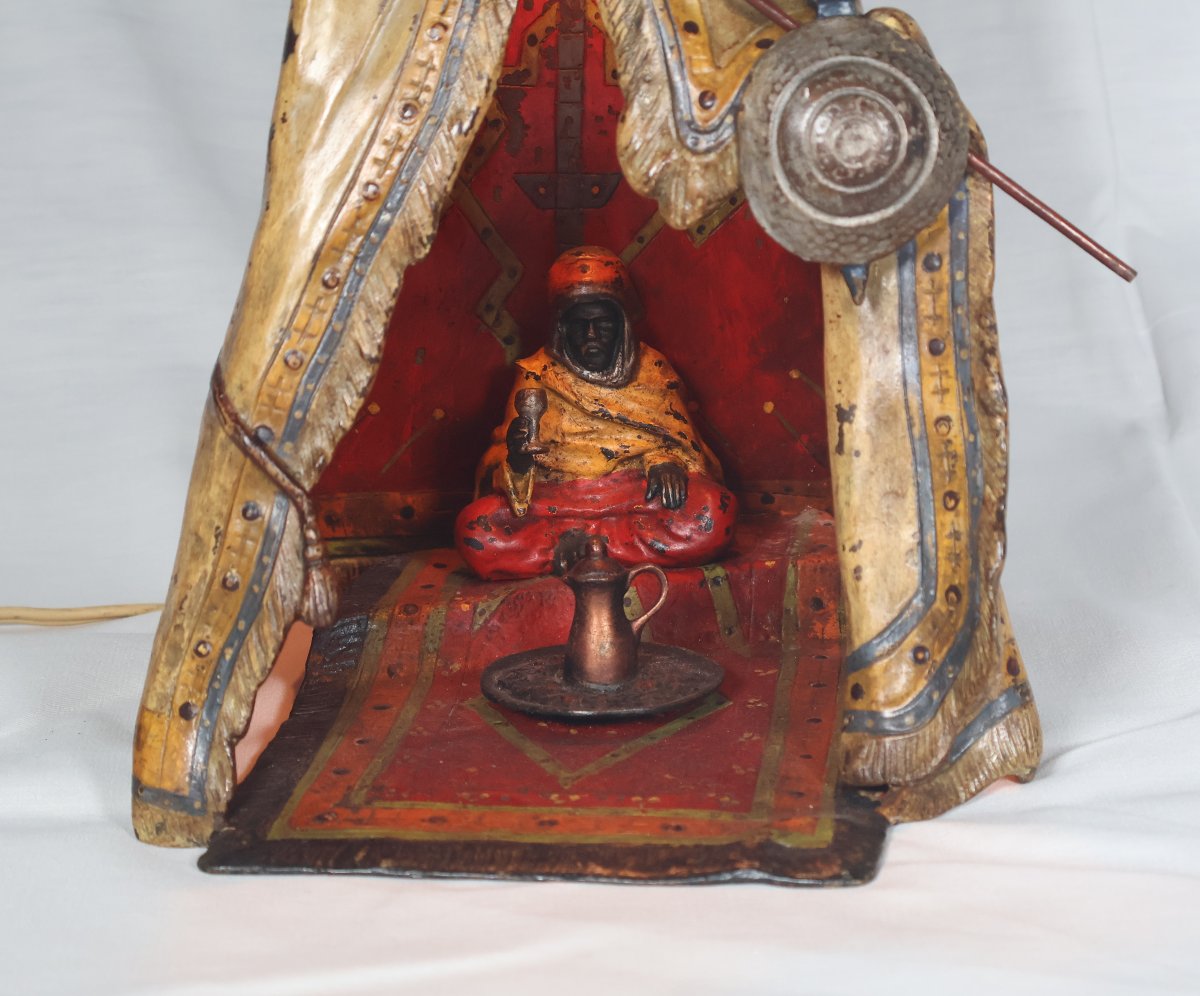
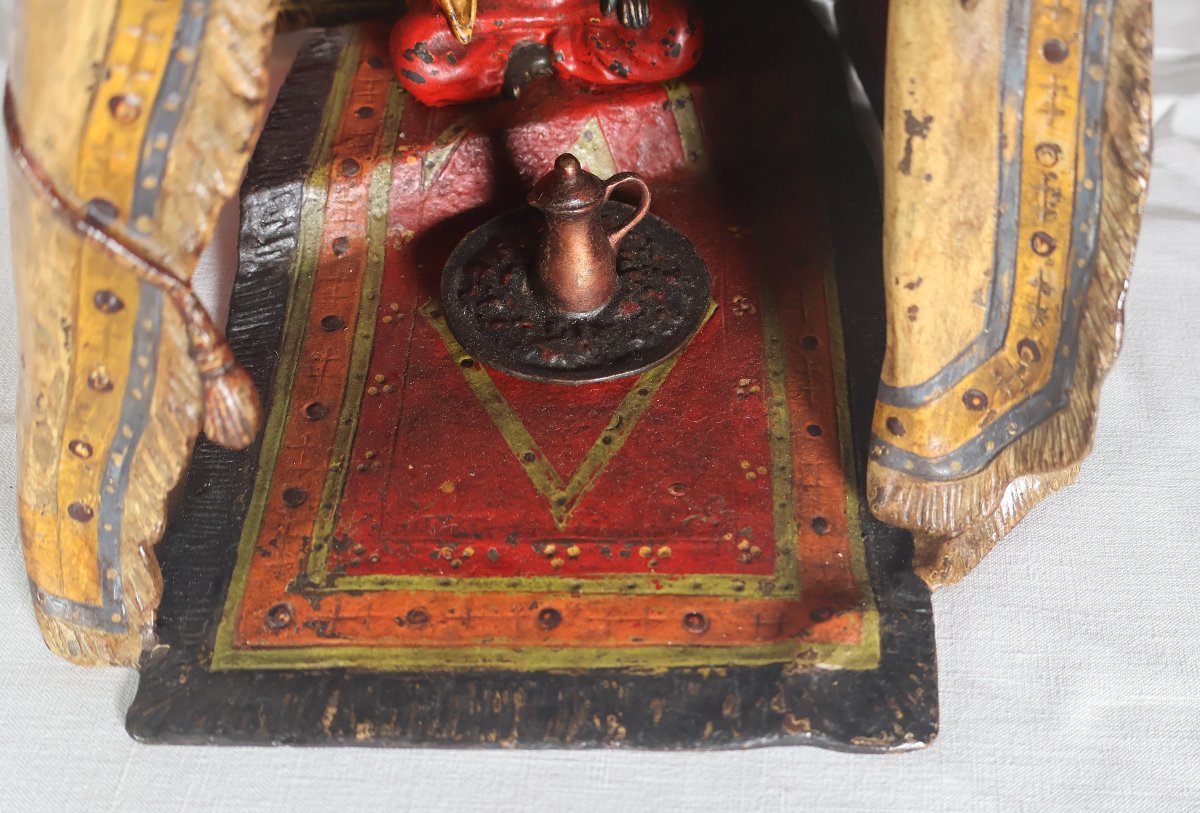
The richly decorated tent features a central opening revealing a Bedouinsitting cross-legged on a rug and preparing tea.
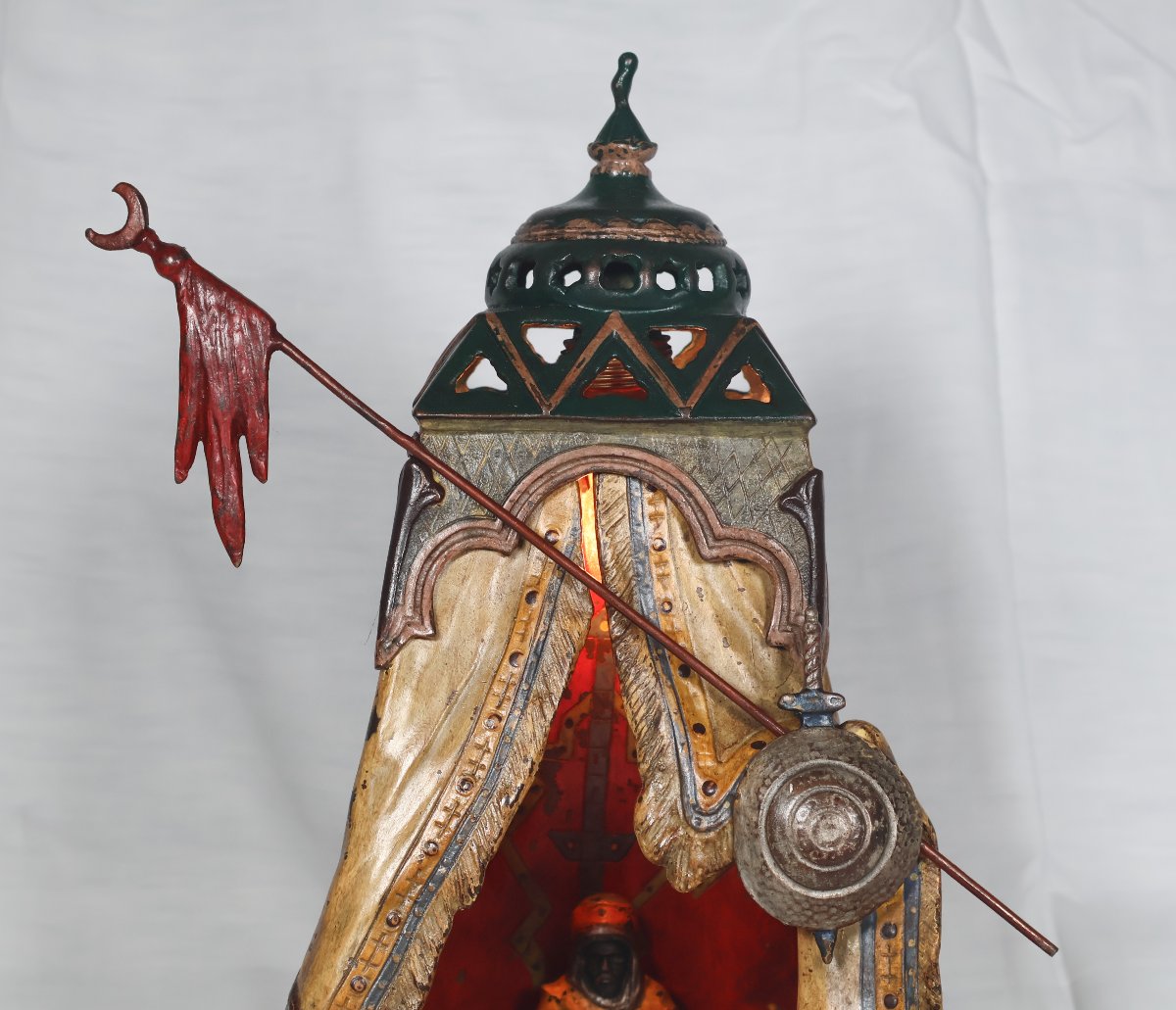
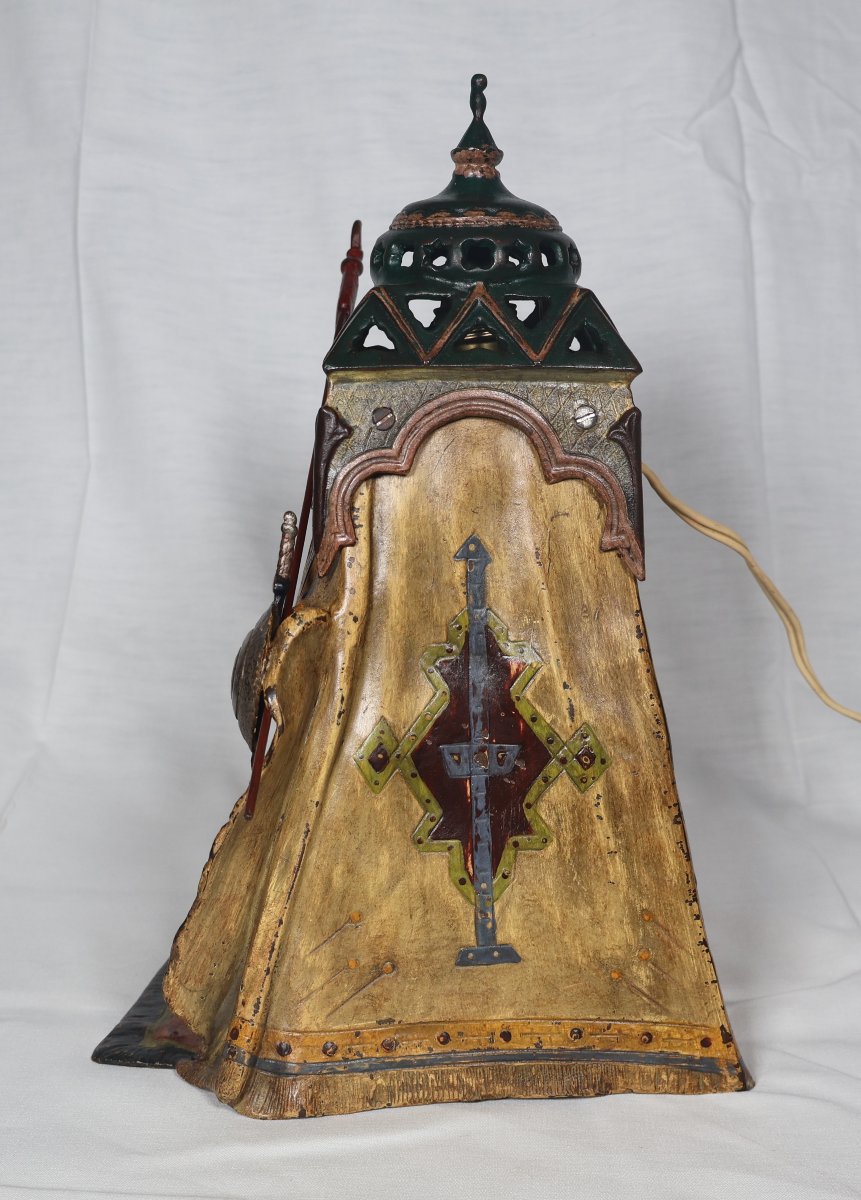
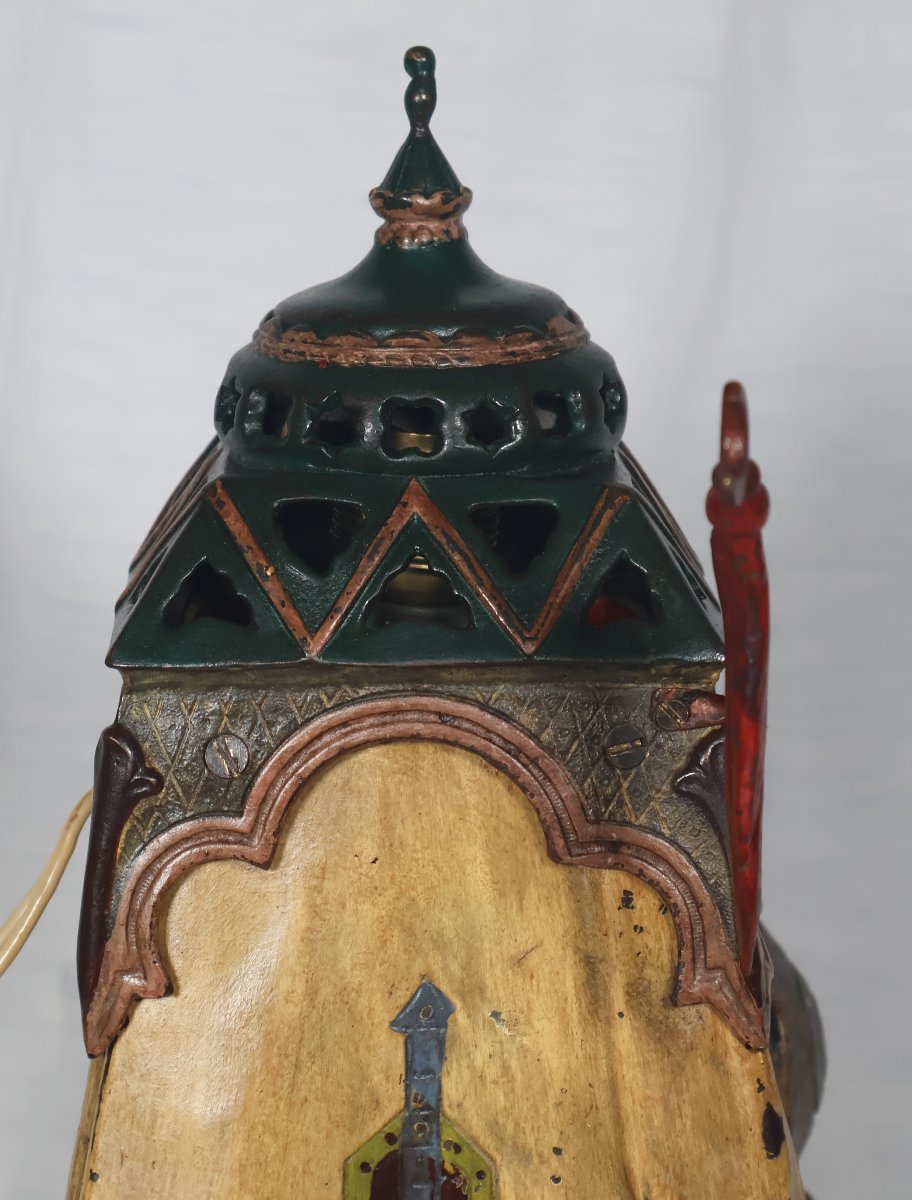
The piece isadorned with numerous details: drapery, geometric patterns, weapons,a shield, a banner, and openwork decorative elements.
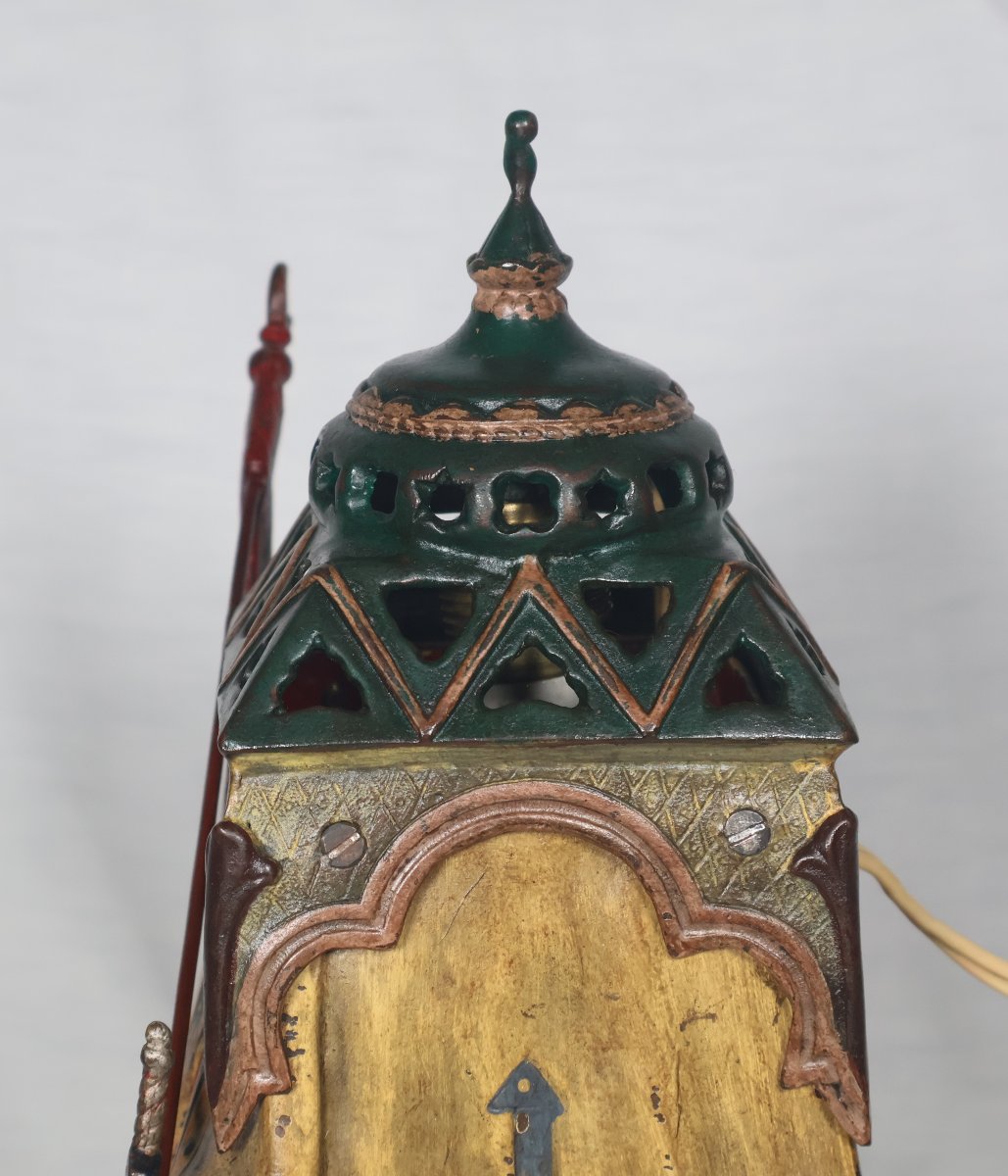
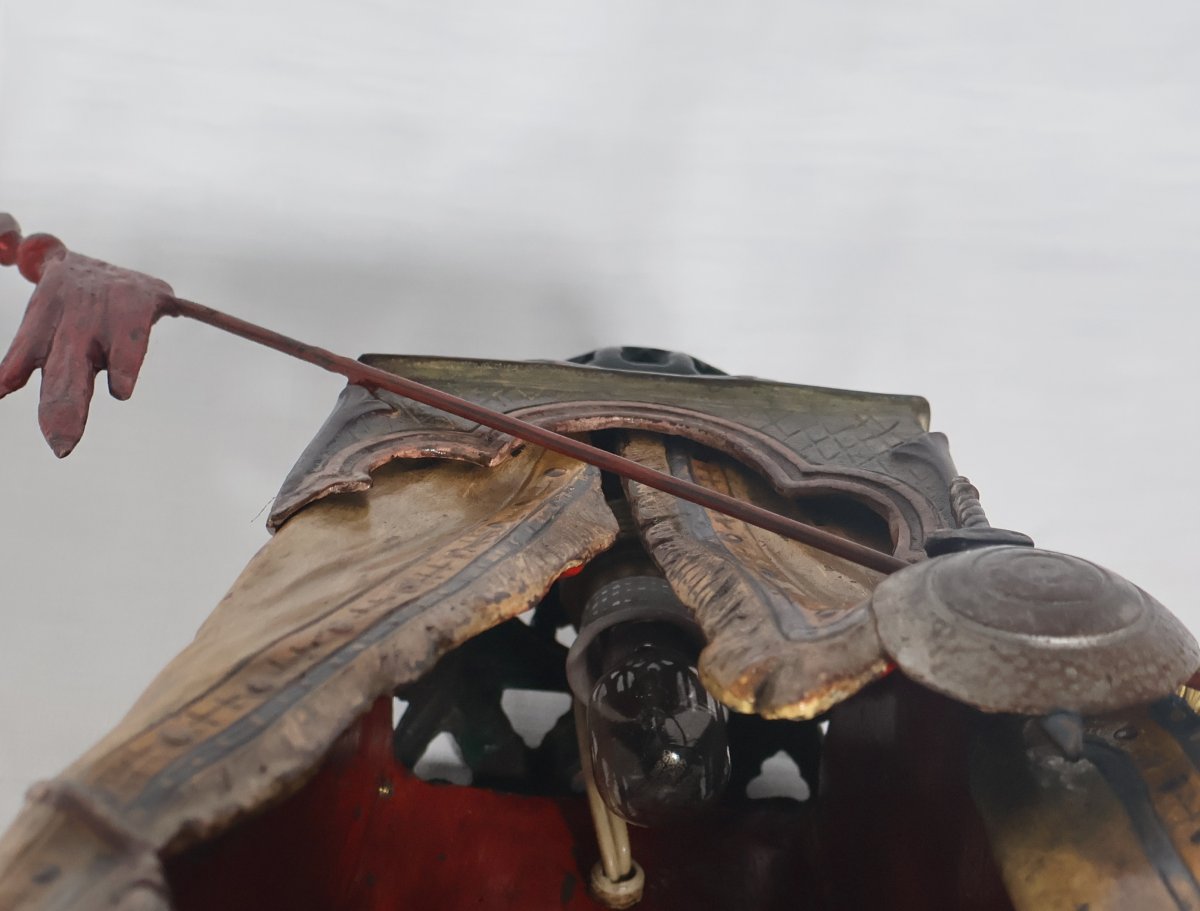
The upper, dome-shaped section is openwork, allowinglight to filter through. The piece is designed as a lamp, with the interior allowinglight to diffuse through the openings.
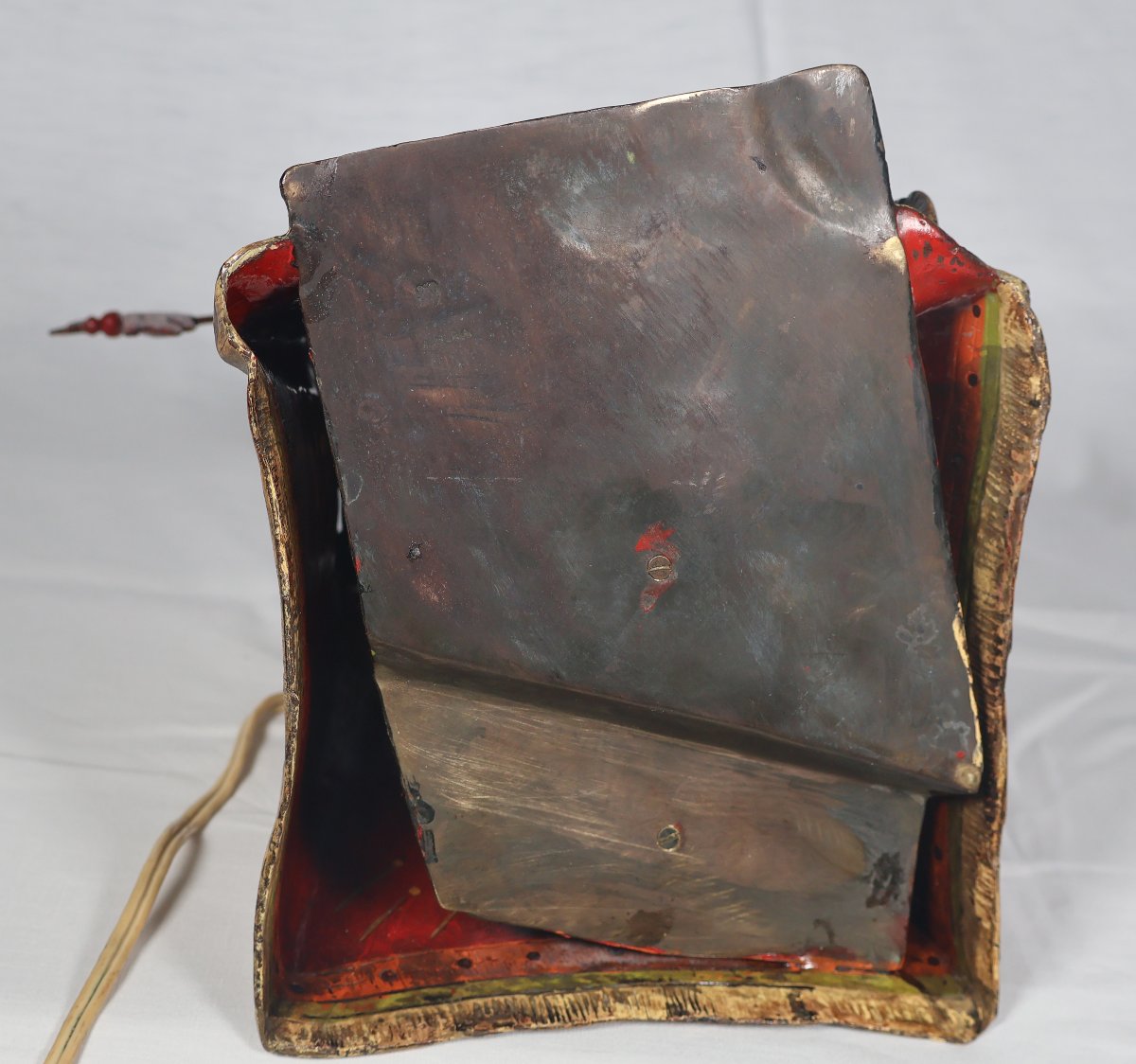
It bears the foundry’s mark—a pitcher and the letter B—as well as theinscription “Austria”
Electricity works
In very good condition
*FranzXaver Bergman (or Franz Xaver Bergmann) (1861–1936) was the owner of aViennese foundry that produced various oriental, erotic, andanimal figures.At the turn of the 19th century, there were about fifty workshops producingViennese bronzes. The Bergmann foundry closed in 1930 due to theGreat Depression. It was reopened a few years later by RobertBergmann, Franz’s son, and operated until his death in 1954, when theremaining stock and molds were sold to Karl Fuhrmann & Co. Healso signed his works with a pseudonym, “NamGreb,” an anagramof Bergman (spelled backward).
The richly decorated tent features a central opening revealing a Bedouinsitting cross-legged on a rug and preparing tea.
The piece isadorned with numerous details: drapery, geometric patterns, weapons,a shield, a banner, and openwork decorative elements.
The upper, dome-shaped section is openwork, allowinglight to filter through. The piece is designed as a lamp, with the interior allowinglight to diffuse through the openings.
It bears the foundry’s mark—a pitcher and the letter B—as well as theinscription “Austria”
Electricity works
In very good condition
*FranzXaver Bergman (or Franz Xaver Bergmann) (1861–1936) was the owner of aViennese foundry that produced various oriental, erotic, andanimal figures.At the turn of the 19th century, there were about fifty workshops producingViennese bronzes. The Bergmann foundry closed in 1930 due to theGreat Depression. It was reopened a few years later by RobertBergmann, Franz’s son, and operated until his death in 1954, when theremaining stock and molds were sold to Karl Fuhrmann & Co. Healso signed his works with a pseudonym, “NamGreb,” an anagramof Bergman (spelled backward).
2 850 €
Period: 20th century
Style: Orientalism
Condition: Excellent condition
Material: Bronze
Width: 18
Height: 32
Depth: 21
Reference (ID): 1825710
Availability: In stock
Print