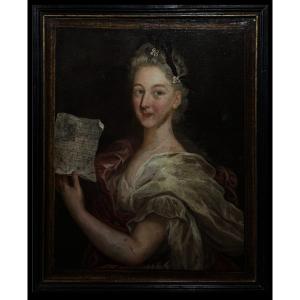


Nicolas Dupuy (1650–1711), Attributed To — Allegory Of The Fine Arts, Dedicated To Leopold, Duke Of Lorraine
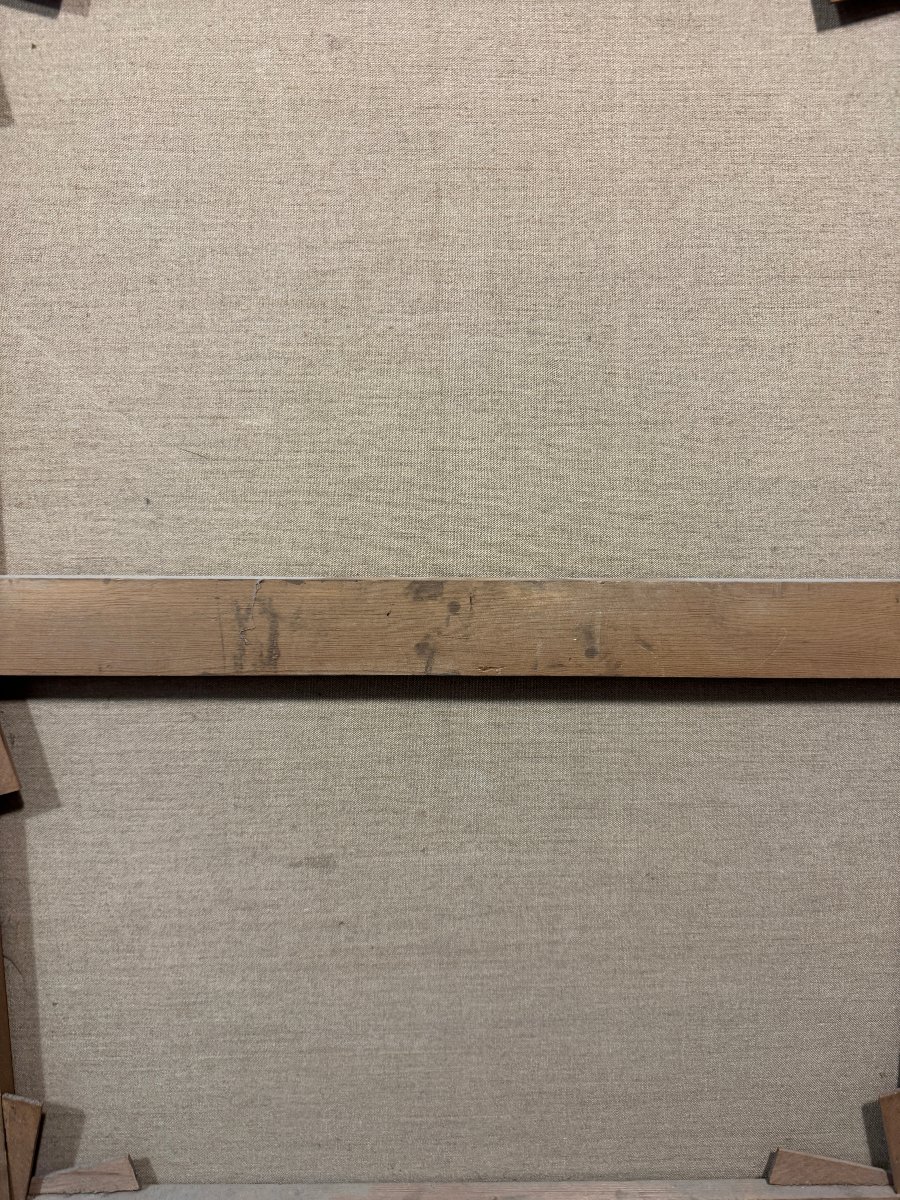
Oil on canvas. Re-stretched canvas. Trompe-l'œil with simulated frame.
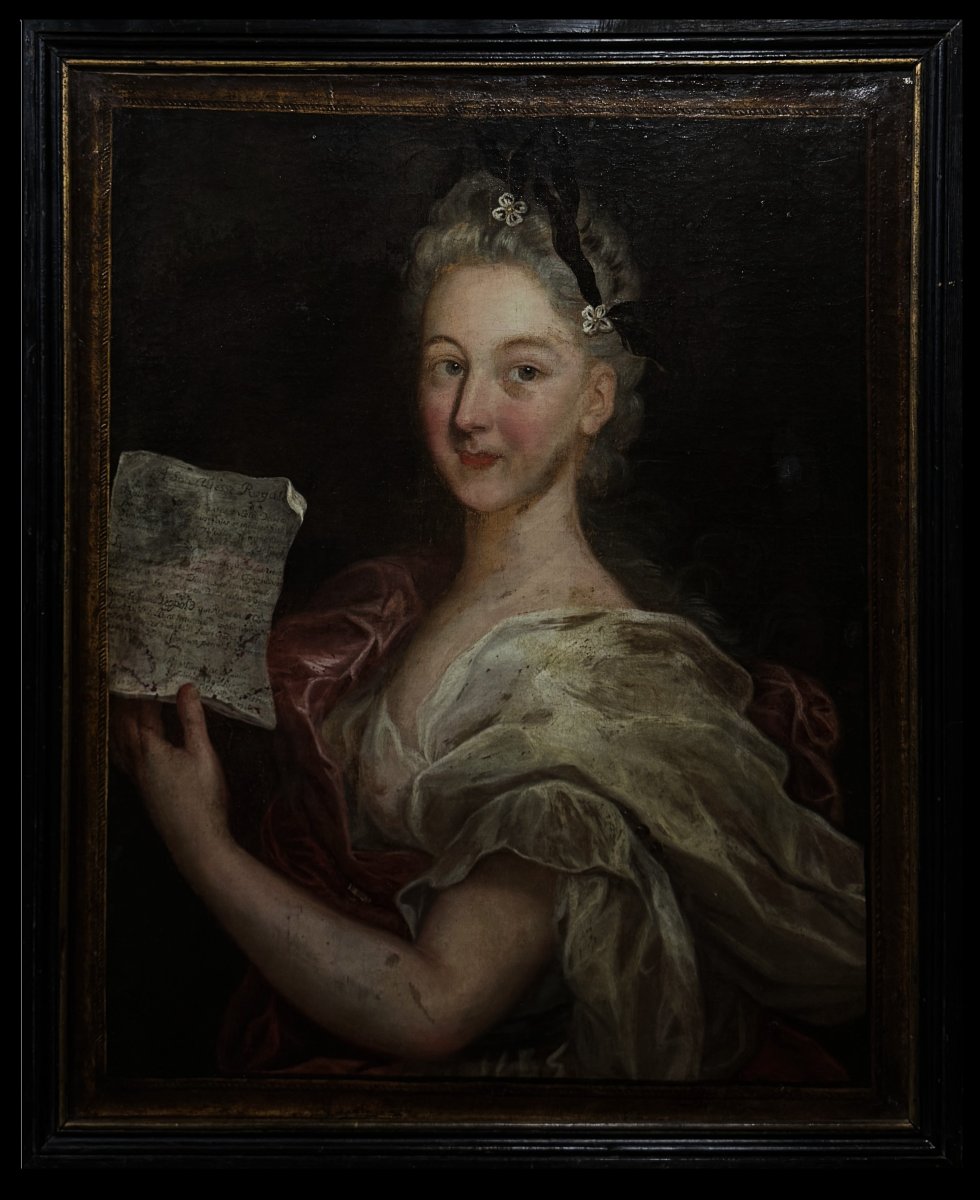
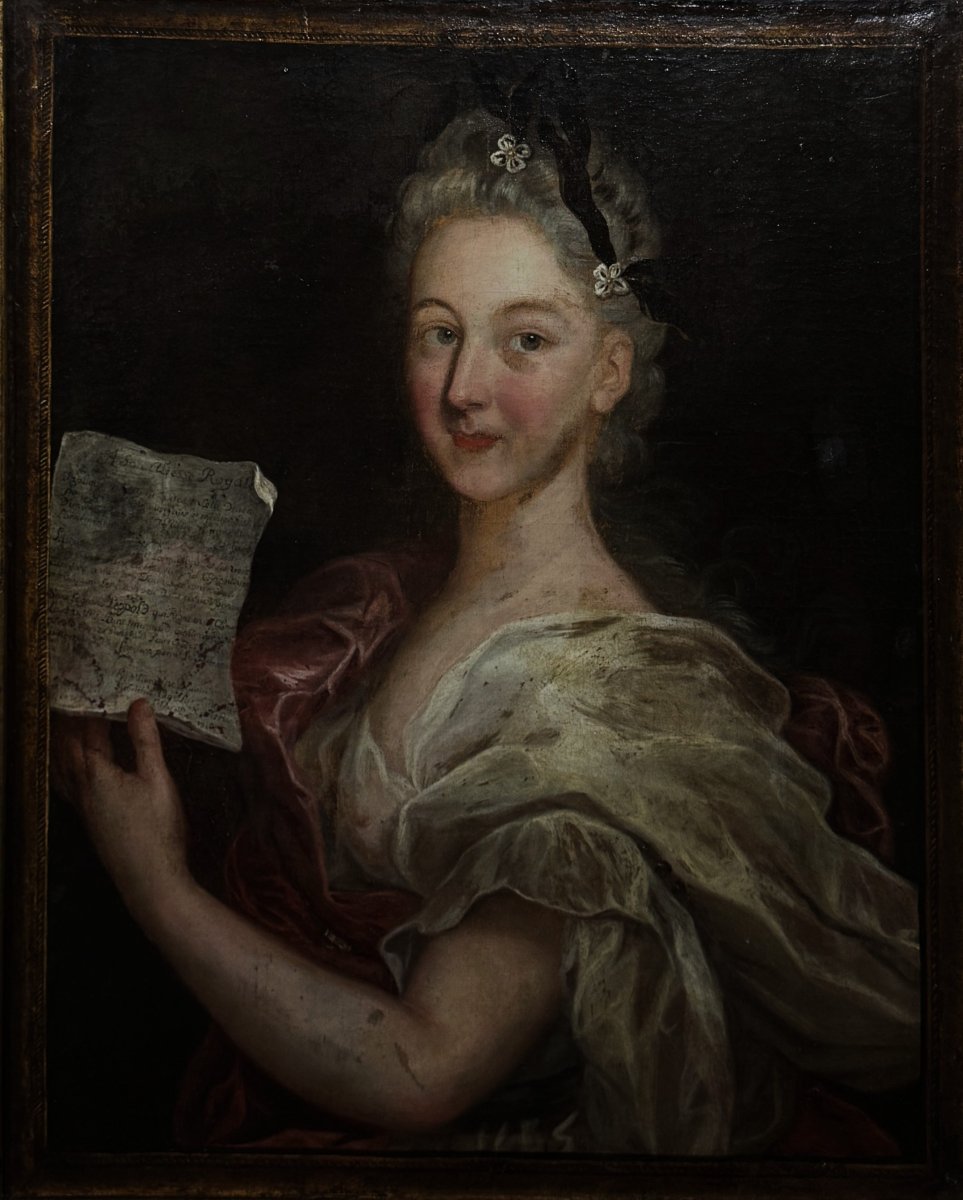
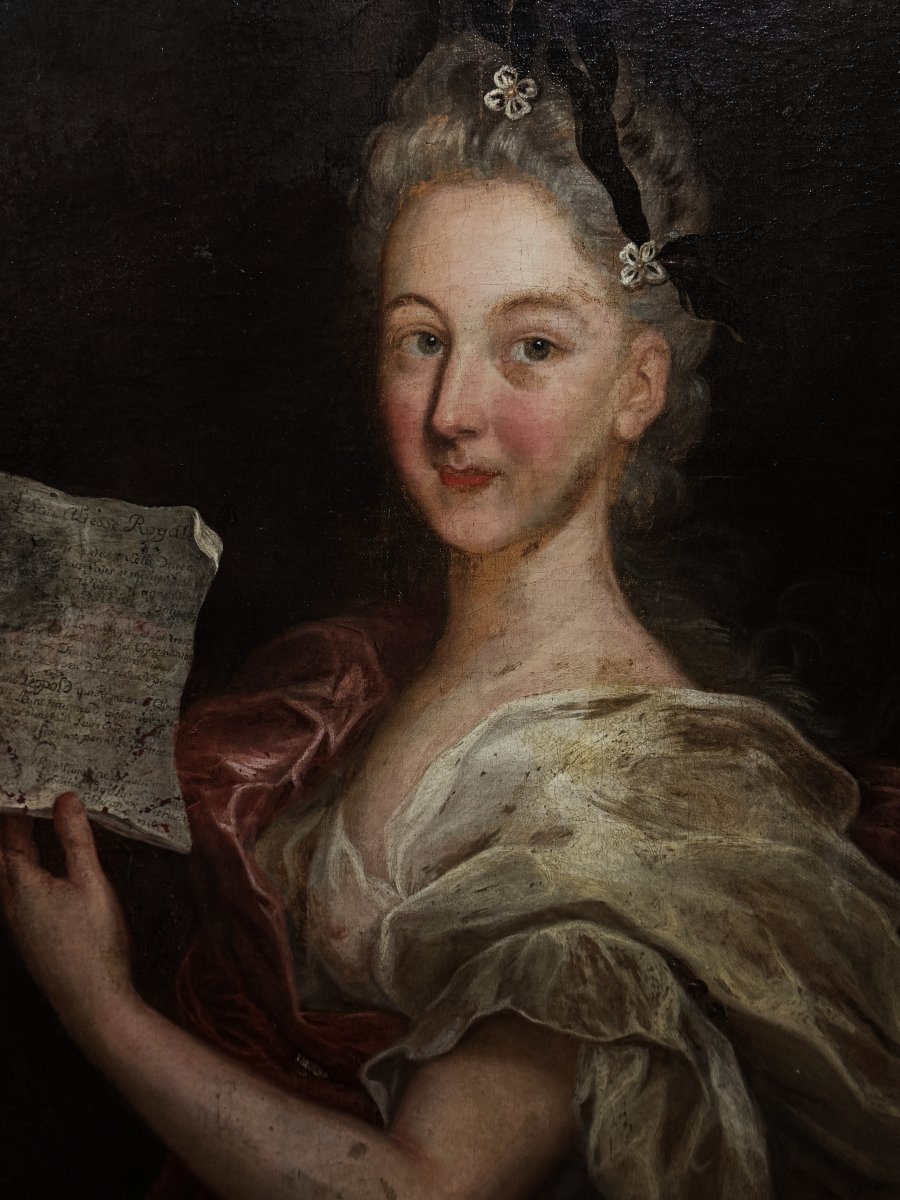
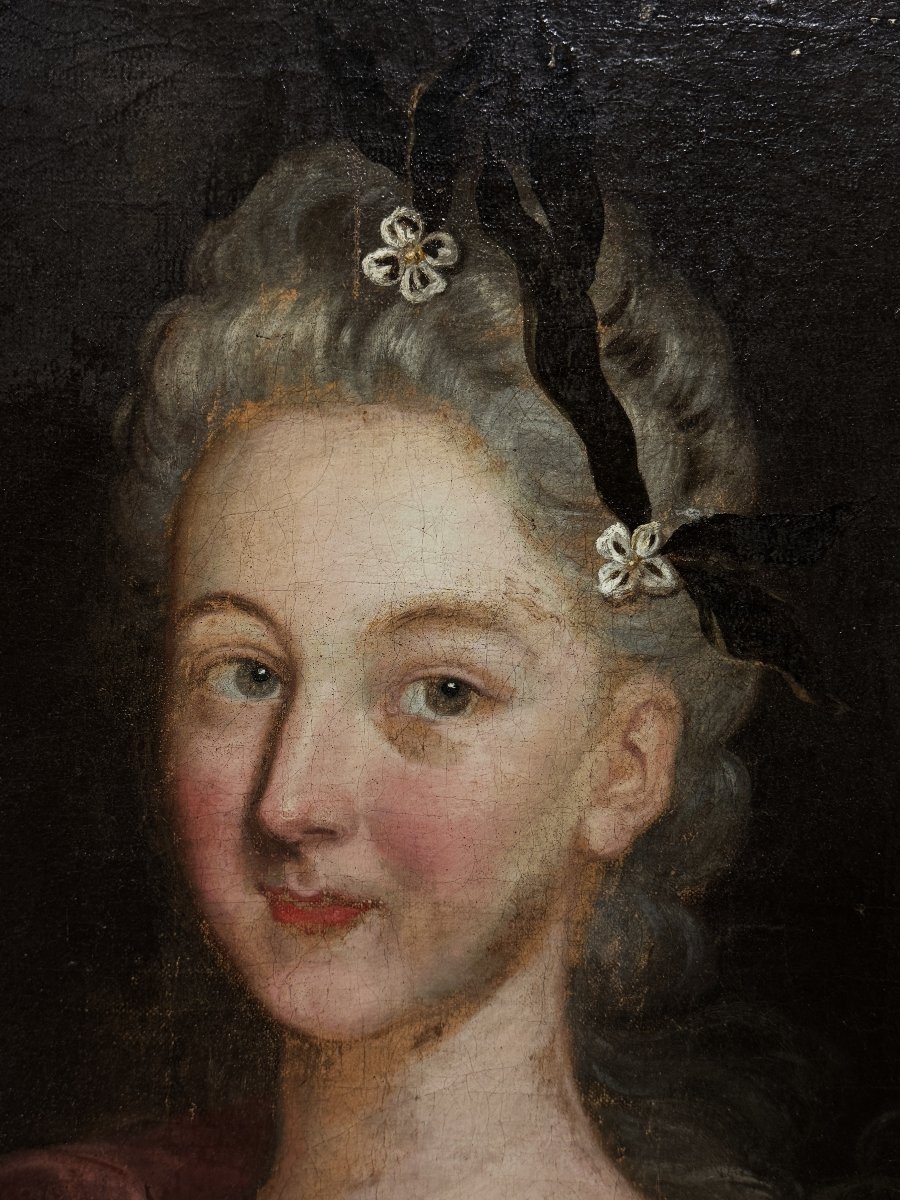
This allegorical portrait is central to the cultural and intellectual renaissance of the Duchy of Lorraine during the reign of Leopold I (1690–1729). Portrayed as the personification of the Fine Arts, the young woman embodies this fruitful alliance between music, poetry, and courtly eloquence. The painting, imbued with the refinement of the late Baroque, is characterized by a supple impasto and subtle nuances: the delicate rendering of the carnations contrasts with the undulating texture of the white drapery and the crimson velvet cloak, while the face, adorned with earrings and discreet jewelry, gazes at the viewer with a serenity imbued with intellectual authority.
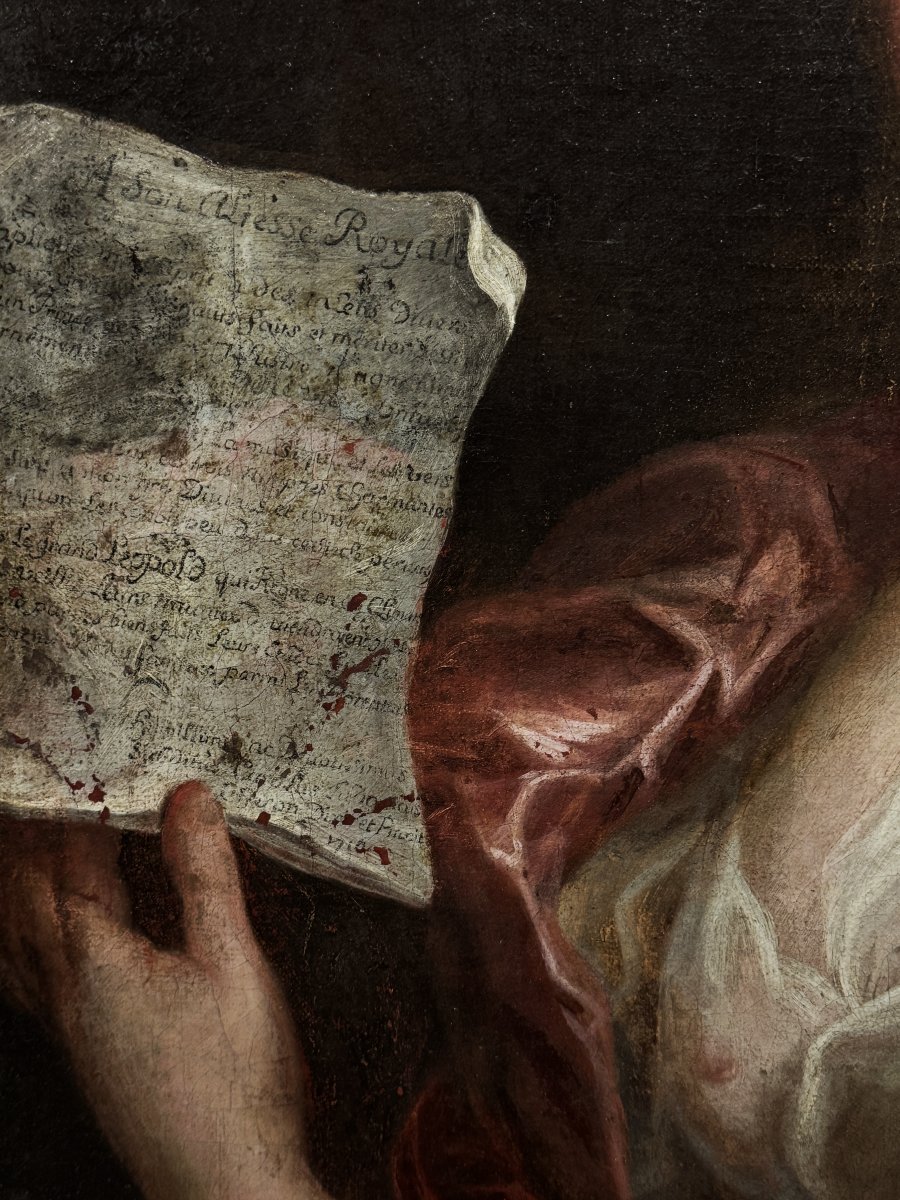
The key element of the composition lies in the handwritten document held aloft by the figure, a true manifesto of patronage and political loyalty. The poetic text, addressed explicitly to “Your Royal Highness,” pays homage to Duke Leopold I—“The Great Leopold who reigns in this day and age”—celebrated as an enlightened patron of the arts. In a Lorraine still marked by the ravages of the 17th-century occupations, the sovereign strove to restore the splendor of his court in Nancy and Lunéville by attracting artists, musicians, and writers, thereby creating a climate of intellectual emulation. The text does more than simply glorify the prince’s moral virtues; it explicitly asserts that, without his direct patronage and benevolence, the fine arts could not have flourished among the potentates of Europe.
Through this subtle interplay of visual and literary parallels, the work transcends the simple formal portrait to become an aesthetic manifesto and an exceptional historical document. The female figure is not merely a poetic vehicle; she also bears witness to the institutionalization of princely culture, where painting, poetry, and music converge to legitimize ducal power. The inclusion of the closing expressions of devotion (“Devoted Servant,” “Most faithful subject”) definitively places the painting within the tradition of court panegyrics, making it a fundamental milestone for understanding the flourishing of the arts and academic thought within the orbit of the Lorraine court in the early 18th century.
- Transcription:
A son of His Royal Highness
Applying my mind to various subjects
for [...] great deeds and merits [...]
Of a [Prince] [...] the illustrious and pleasant [...]
The ornament [...] of the earth and united [...]
In [...]
[...] Music and verse
[...] three are three charms
these are my senses, divine and constant [...]
But what do you know of the realm of the percussive arts [...]
Without the great Leopold who reigns in [this climate]
The fine arts and their works would flourish there
through their own blessings; their hearts [find strength there]
and [bloom in] a way not found among potentates.
Your most devoted servant and [...]
most faithful, with all due respect [...]
most obedient [...] and client
- Image dimensions without frame: 63 x 79.5 cm / 71 x 87 cm with an exclusive custom frame.
This allegorical portrait is central to the cultural and intellectual renaissance of the Duchy of Lorraine during the reign of Leopold I (1690–1729). Portrayed as the personification of the Fine Arts, the young woman embodies this fruitful alliance between music, poetry, and courtly eloquence. The painting, imbued with the refinement of the late Baroque, is characterized by a supple impasto and subtle nuances: the delicate rendering of the carnations contrasts with the undulating texture of the white drapery and the crimson velvet cloak, while the face, adorned with earrings and discreet jewelry, gazes at the viewer with a serenity imbued with intellectual authority.
The key element of the composition lies in the handwritten document held aloft by the figure, a true manifesto of patronage and political loyalty. The poetic text, addressed explicitly to “Your Royal Highness,” pays homage to Duke Leopold I—“The Great Leopold who reigns in this day and age”—celebrated as an enlightened patron of the arts. In a Lorraine still marked by the ravages of the 17th-century occupations, the sovereign strove to restore the splendor of his court in Nancy and Lunéville by attracting artists, musicians, and writers, thereby creating a climate of intellectual emulation. The text does more than simply glorify the prince’s moral virtues; it explicitly asserts that, without his direct patronage and benevolence, the fine arts could not have flourished among the potentates of Europe.
Through this subtle interplay of visual and literary parallels, the work transcends the simple formal portrait to become an aesthetic manifesto and an exceptional historical document. The female figure is not merely a poetic vehicle; she also bears witness to the institutionalization of princely culture, where painting, poetry, and music converge to legitimize ducal power. The inclusion of the closing expressions of devotion (“Devoted Servant,” “Most faithful subject”) definitively places the painting within the tradition of court panegyrics, making it a fundamental milestone for understanding the flourishing of the arts and academic thought within the orbit of the Lorraine court in the early 18th century.
- Transcription:
A son of His Royal Highness
Applying my mind to various subjects
for [...] great deeds and merits [...]
Of a [Prince] [...] the illustrious and pleasant [...]
The ornament [...] of the earth and united [...]
In [...]
[...] Music and verse
[...] three are three charms
these are my senses, divine and constant [...]
But what do you know of the realm of the percussive arts [...]
Without the great Leopold who reigns in [this climate]
The fine arts and their works would flourish there
through their own blessings; their hearts [find strength there]
and [bloom in] a way not found among potentates.
Your most devoted servant and [...]
most faithful, with all due respect [...]
most obedient [...] and client
- Image dimensions without frame: 63 x 79.5 cm / 71 x 87 cm with an exclusive custom frame.
7 400 €
Period: 18th century
Style: Other Style
Condition: Excellent condition
Material: Oil painting
Reference (ID): 1825690
Availability: In stock
Print