

Jules, Jacques Veyrassat (1828–1893) The Towing Horses
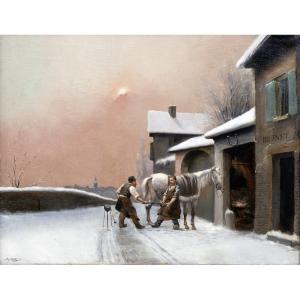
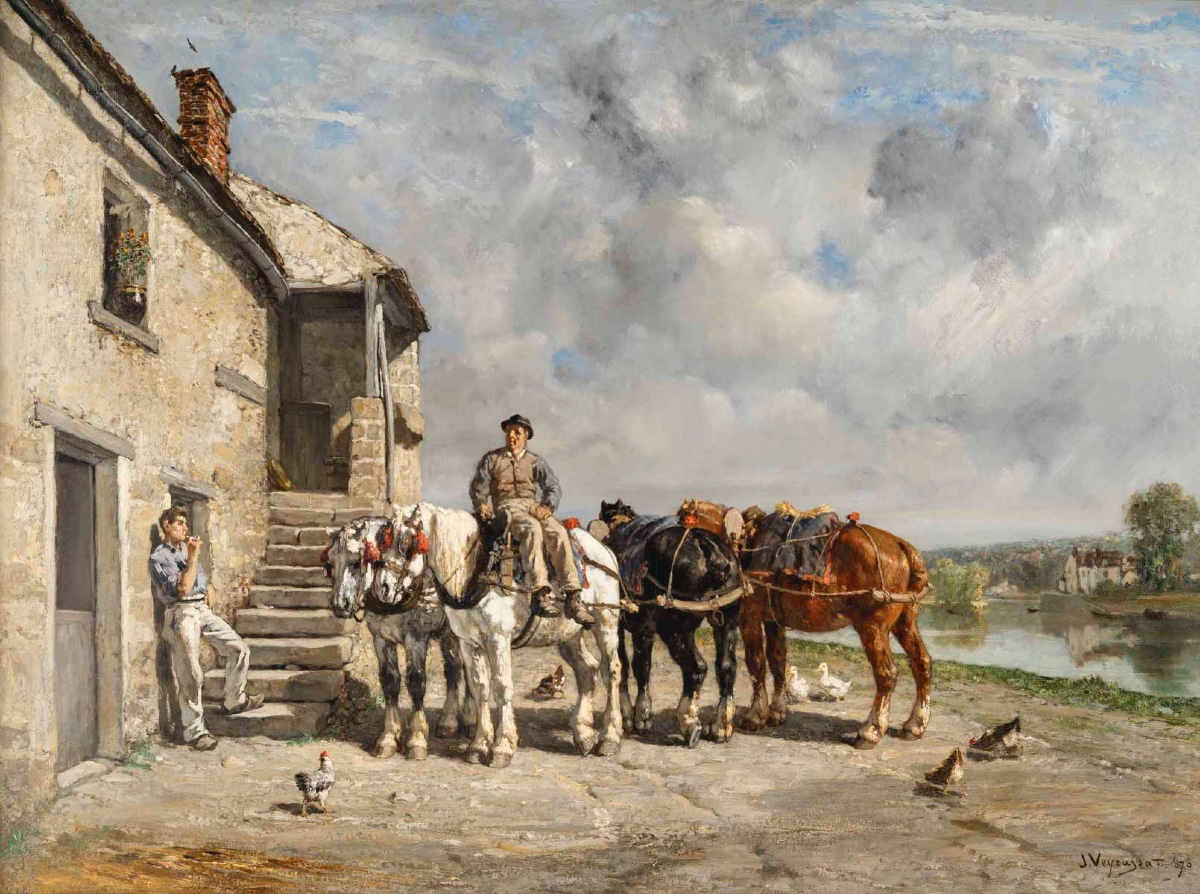
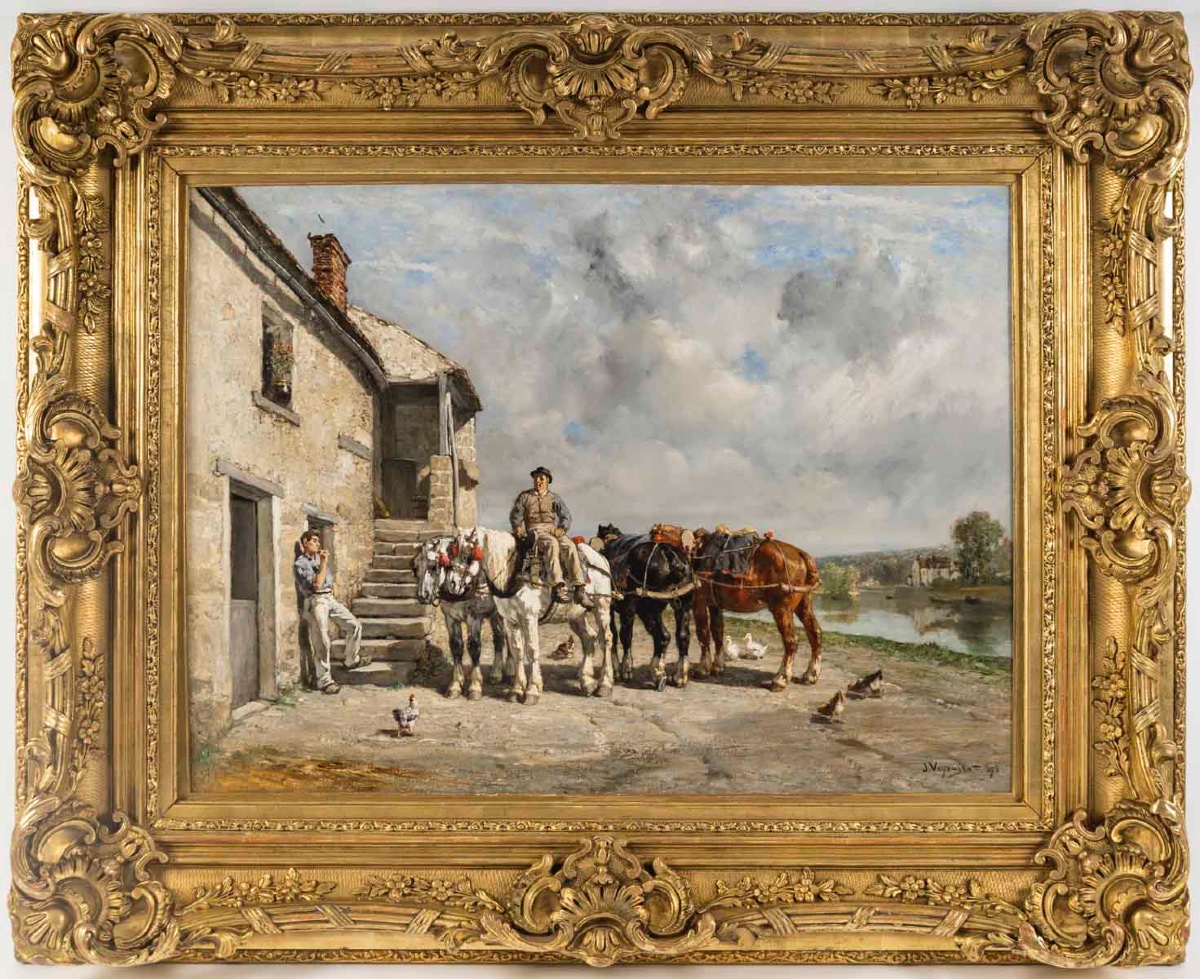
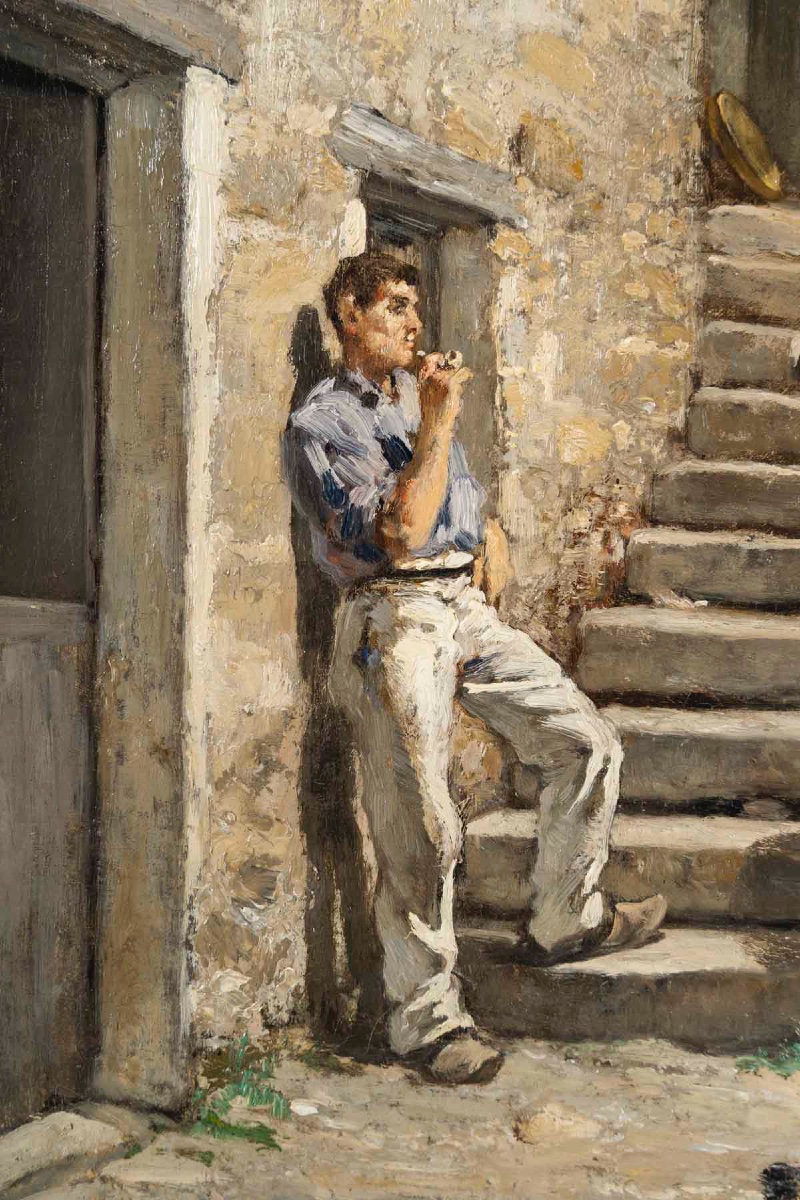
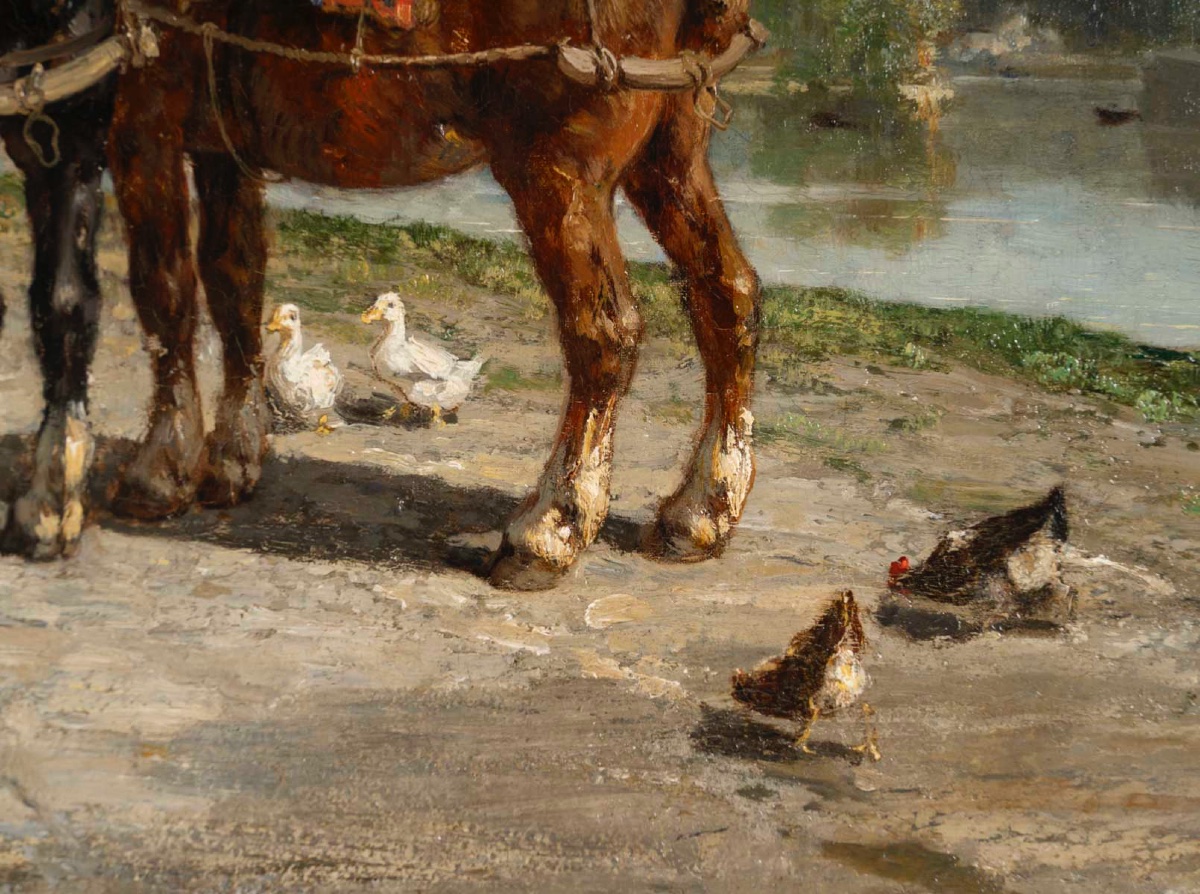
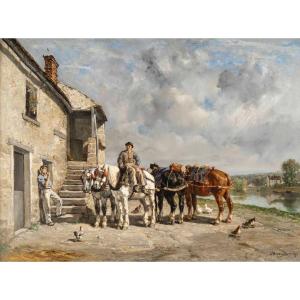
An important painting by Jules Jacques Veyrassat, a painter specializing in horses, exhibited at the 1876 Salon. A work of exceptional pictorial quality.
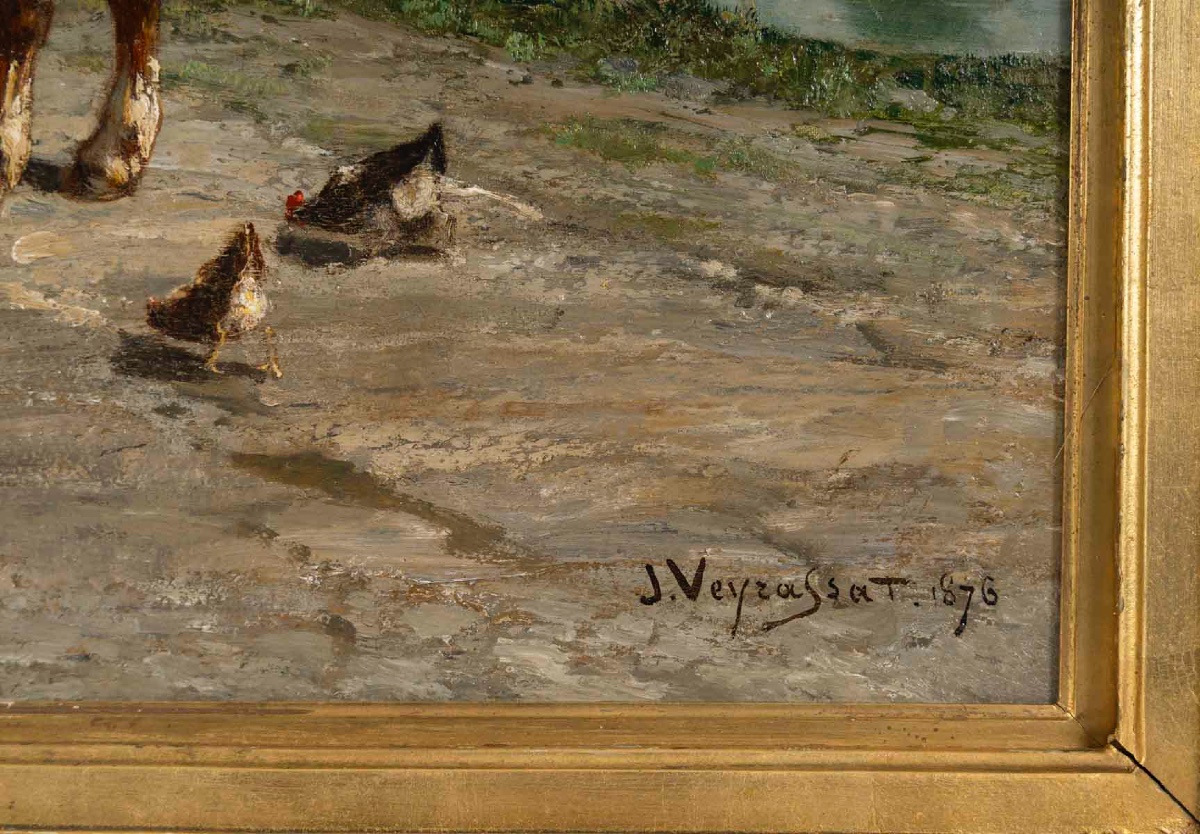
Oil on canvas, signed and dated 1876 in the lower right corner.
Dimensions: 60 x 81 cm
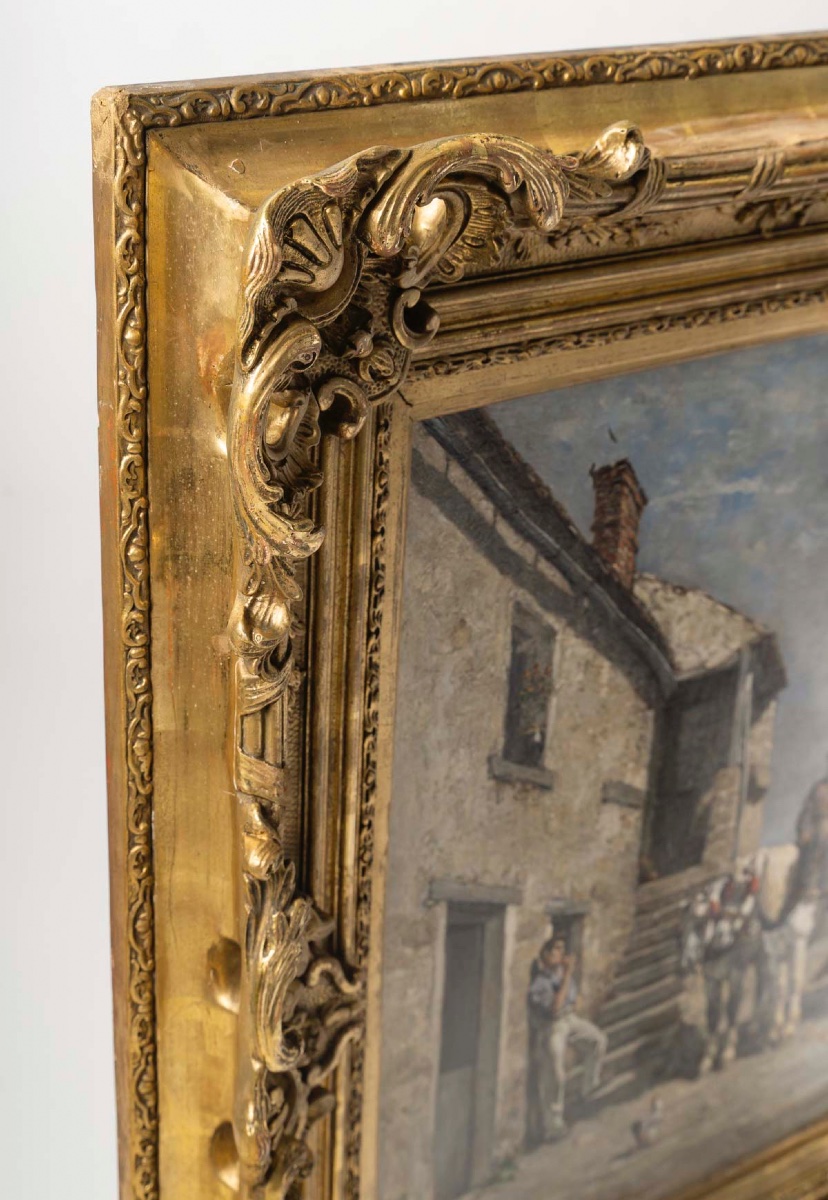
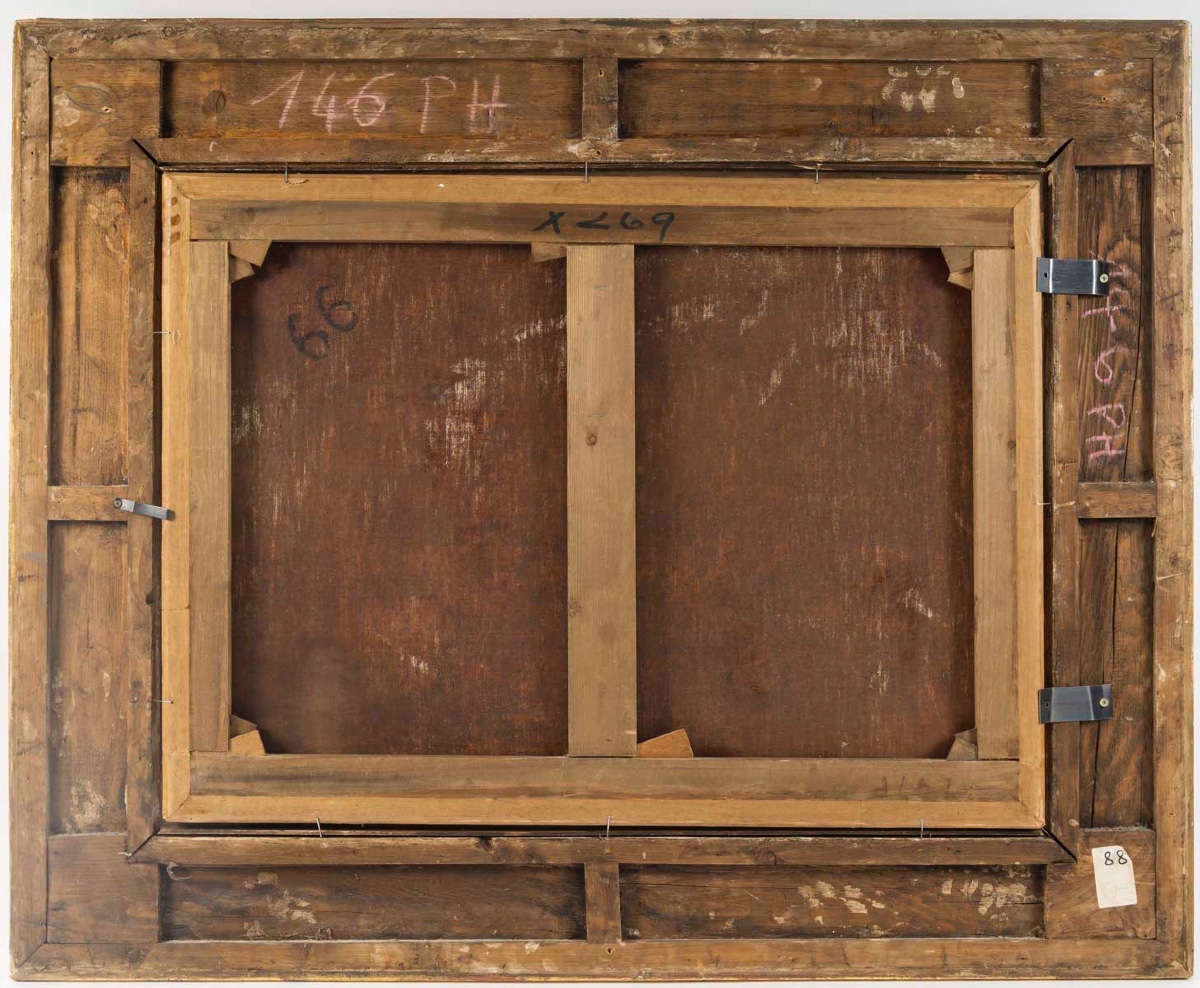
With frame: 89 x 108 cm
Exhibited at the 1876 Paris Salon under number 2016 and titled “Relais de chevaux de Halage”
Jules, Jacques Veyrassat, known for his realistic depictions of workhorses and rural scenes.
Following in the footsteps of Troyon and Millet, this charming minor master, Jules Veyrassat, faithfully captures the rural life of the countryside and portrays the horse as the farmer’s companion: he depicts it at the watering trough, plowing, hauling cartloads along towpaths, resting in the shade of trees, and at the farrier’s.
“Tow Horse Relay Station,” a work of great quality with highly precise drawing.
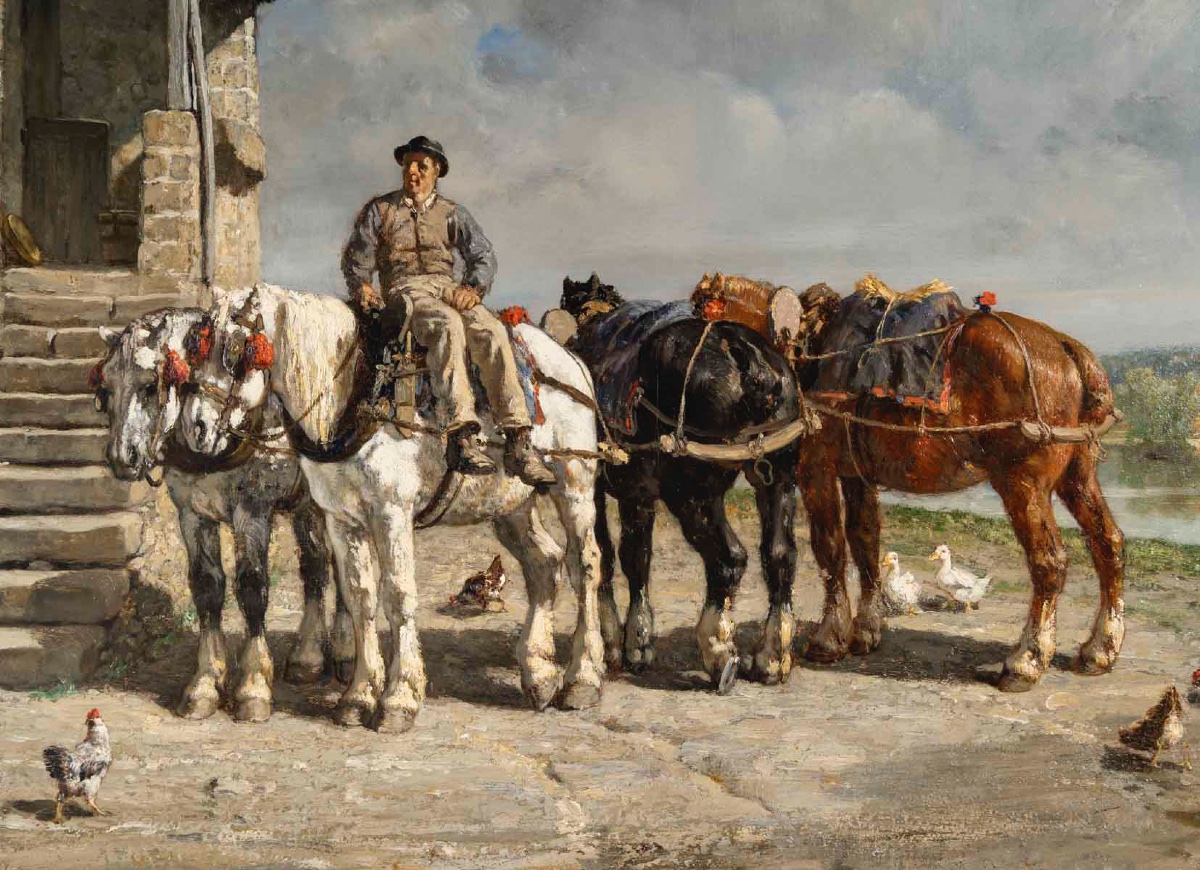
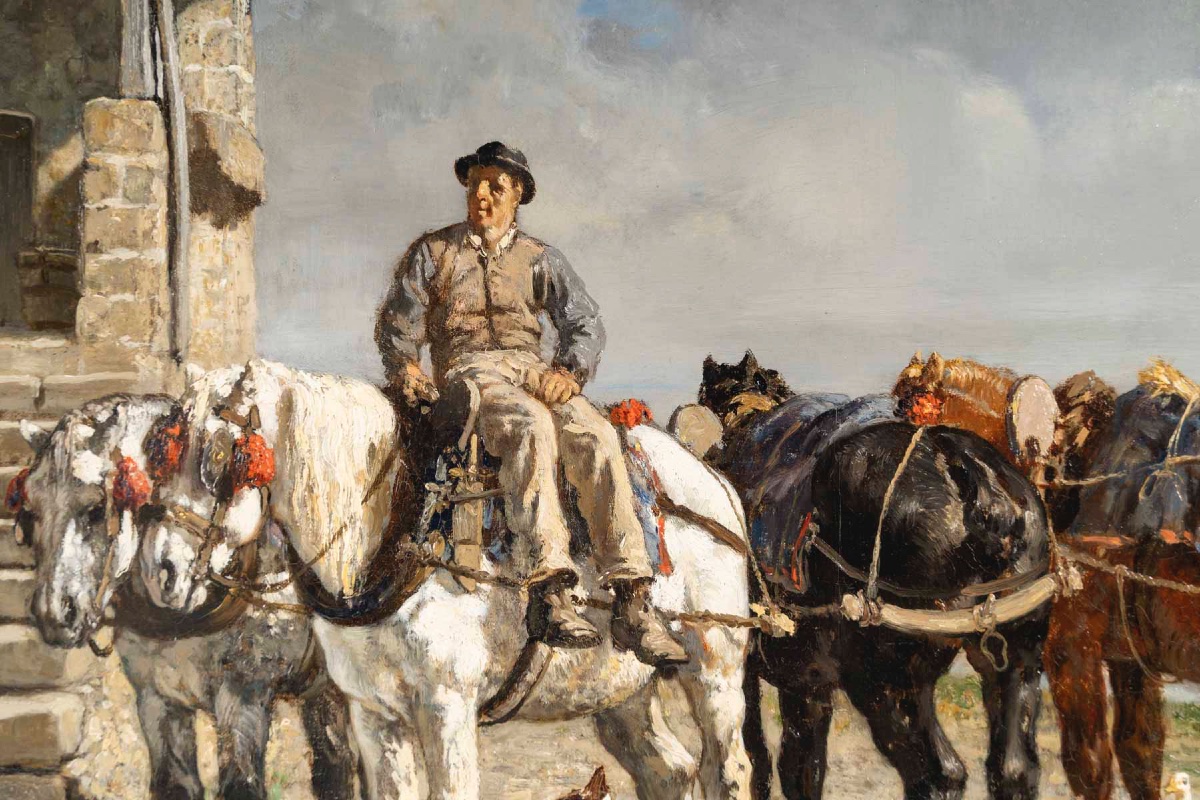
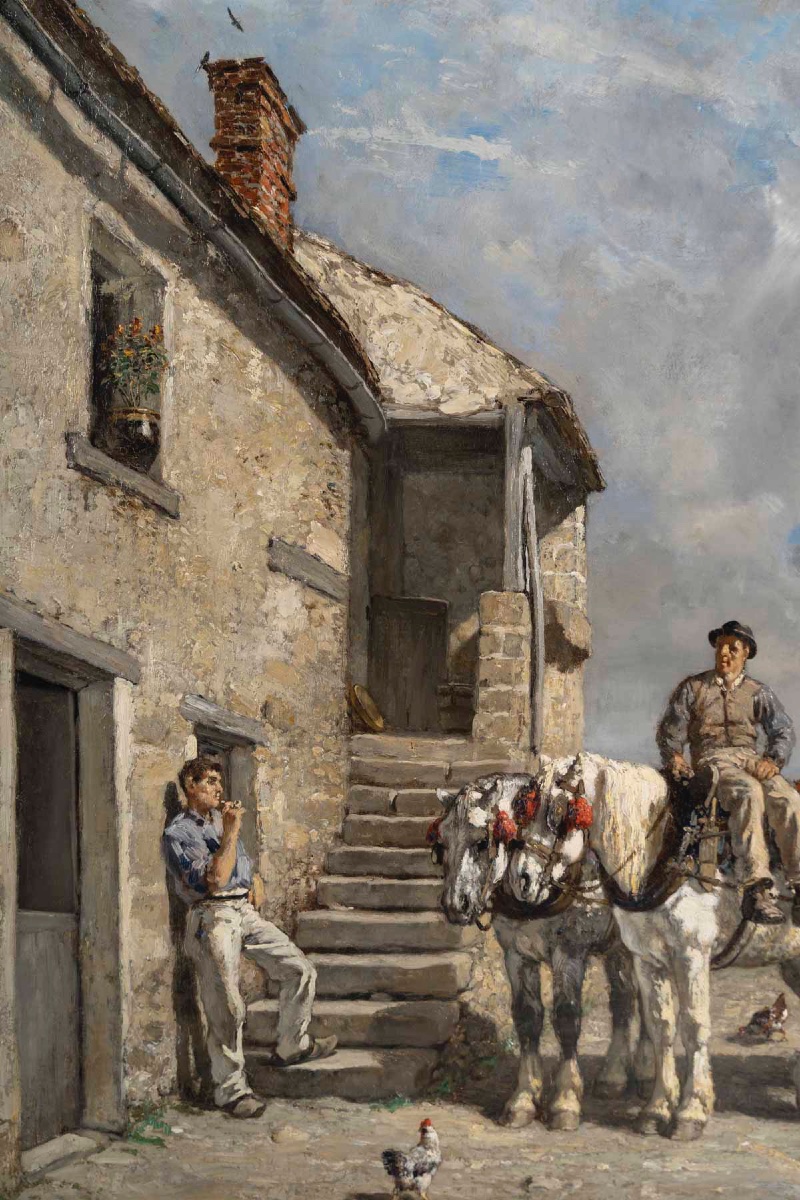
Tow horses, still harnessed and accompanied by their cart drivers, are resting in front of a rest stop near a river.
Thanks to his keen observation, his drawing is highly precise. In his paintings, as seen here, he enjoys working with his medium, which sometimes has a grainy appearance but is always executed with perfect precision.
Biography:
A French painter and engraver of the Barbizon School, Jules Jacques Veyrassat studied in Paris in Henri Lehmann’s studio and exhibited his first works at the Salon in 1848.
He distinguished himself widely in France through his paintings and engravings,
He is one of the most highly awarded painters and engravers for his works depicting nature. He was named a Knight of the Legion of Honor in 1878.
Associated with the Écouen School—in the town where he had a room—he took classes with Pierre-Édouard Frère, who became his friend.
He is also associated with the Barbizon School. His work is similar to that of Charles Jacque and Jean-François Millet, whom he knew well.
Working in a realistic style, he based his work on observations of rural life in the French countryside of that era. His subjects explore the themes of horse breeding and the role of horses in agricultural life.
He never left his homeland, but his fame spread throughout Europe.
Jules Jacques Veyrassat died on July 2, 1893, in the 9th arrondissement of Paris and was buried at Père-Lachaise Cemetery.
Bibliography
• Bénézit Dictionary.
• “Dictionary of 19th-Century French Landscape Painters” by Lydia Harembourg
• Philip Gilbert Hamerton, *Chapters on Animals*, London: Seeley, Jackson and Halliday, 1874.
• Philip Gilbert Hamerton, *P.G. Hamerton’s Etching and Etchers*, Macmillan & Co., 1880.
• Daniel Baduel, Aude Bertrand, Christian Dauchel, The École d’Écouen: A Colony of Painters in the 19th Century, Domont,
Museums
France
• Paris:
Louvre Museum; Musée d’Orsay; Musée du Quai Branly – Jacques-Chirac.
• Béziers, Museum of Fine Arts
• Chartres, Museum of Fine Arts
• Dijon, Museum of Fine Arts
• Grenoble, Grenoble Museum
• La Roche-sur-Yon, Municipal Museum
• Pau, Museum of Fine Arts: Tow Horses on the Seine.
• Péronne, Alfred-Danicourt Museum: Horses Plowing.
• Reims, Museum of Fine Arts:
• Rennes, Museum of Fine Arts: Loading the Cart.
• Rouen, Museum of Fine Arts: Algerian Study,
• Soissons, Soissons Museum: Farmyard.
• Toulouse, Musée des Augustins.
United Kingdom
• Manchester, Manchester Art Gallery.
United States
• Baltimore, Walters Art Museum
• San Francisco:
• De Young Museum;
• Williamstown, Clark Art Institute.
Period: 19th century
Style: Other Style
Condition: Excellent condition
Material: Oil painting
Width: 81 cm
Height: 60 cm
Reference (ID): 1824900
Availability: In stock