



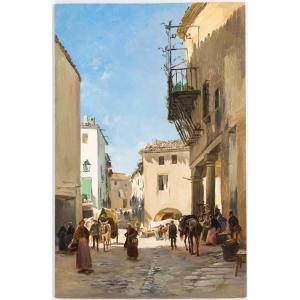


Jaume Morera Y Galicia (1854 - 1927) - View Of Santa Coloma De Queralt, Catalonia, 1877
Artist: Jaume Morera Y Galicia (1854 - 1927)
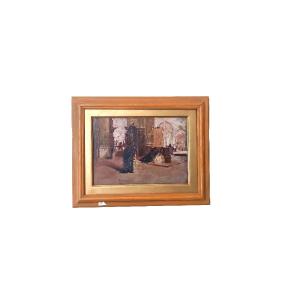
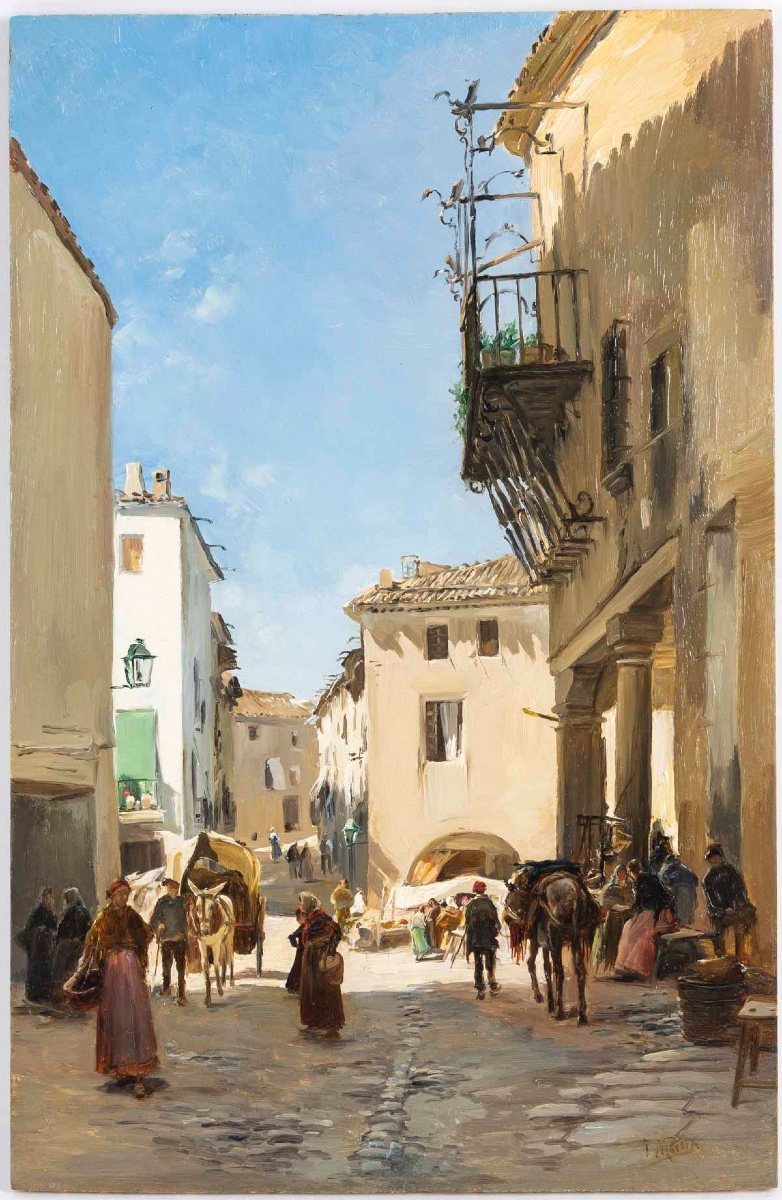
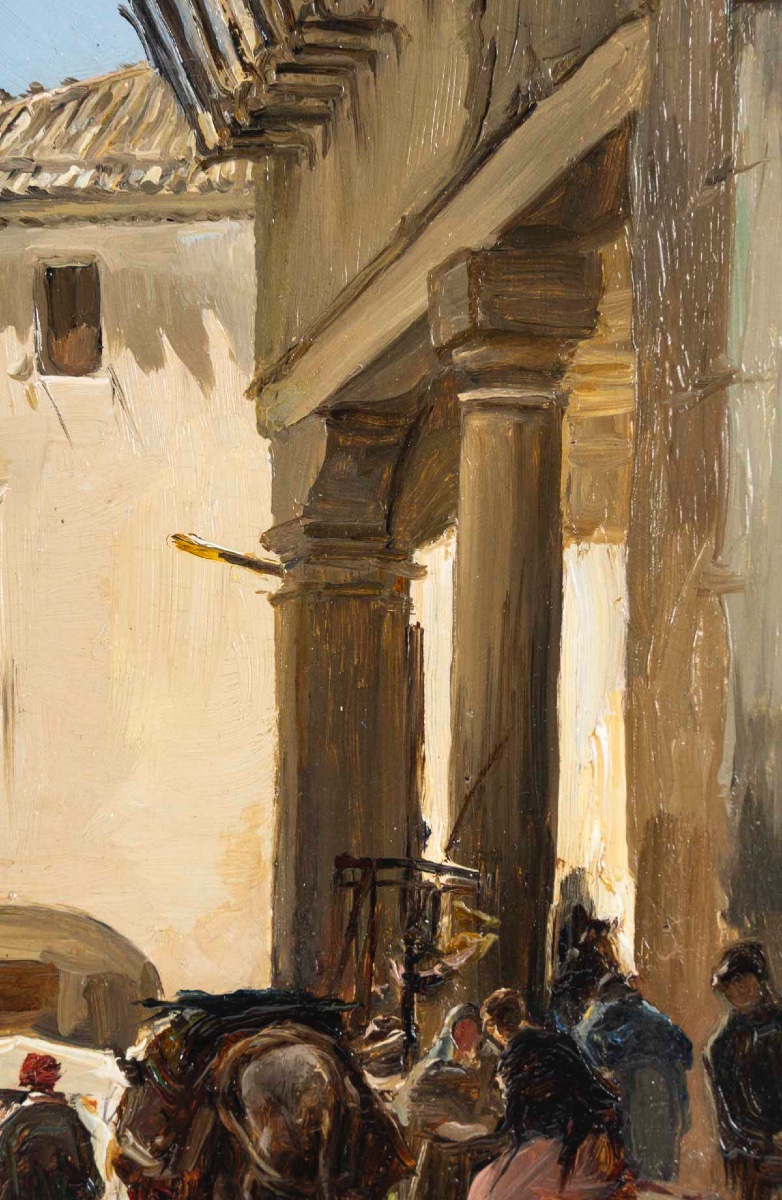
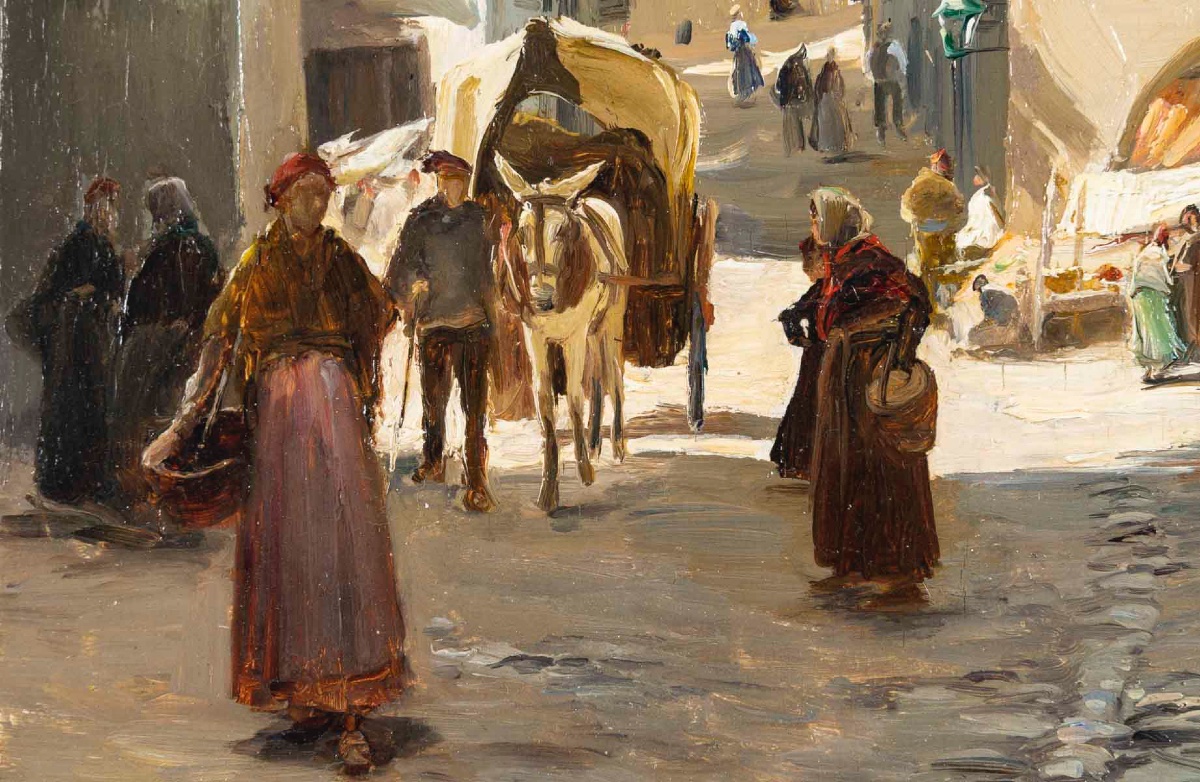
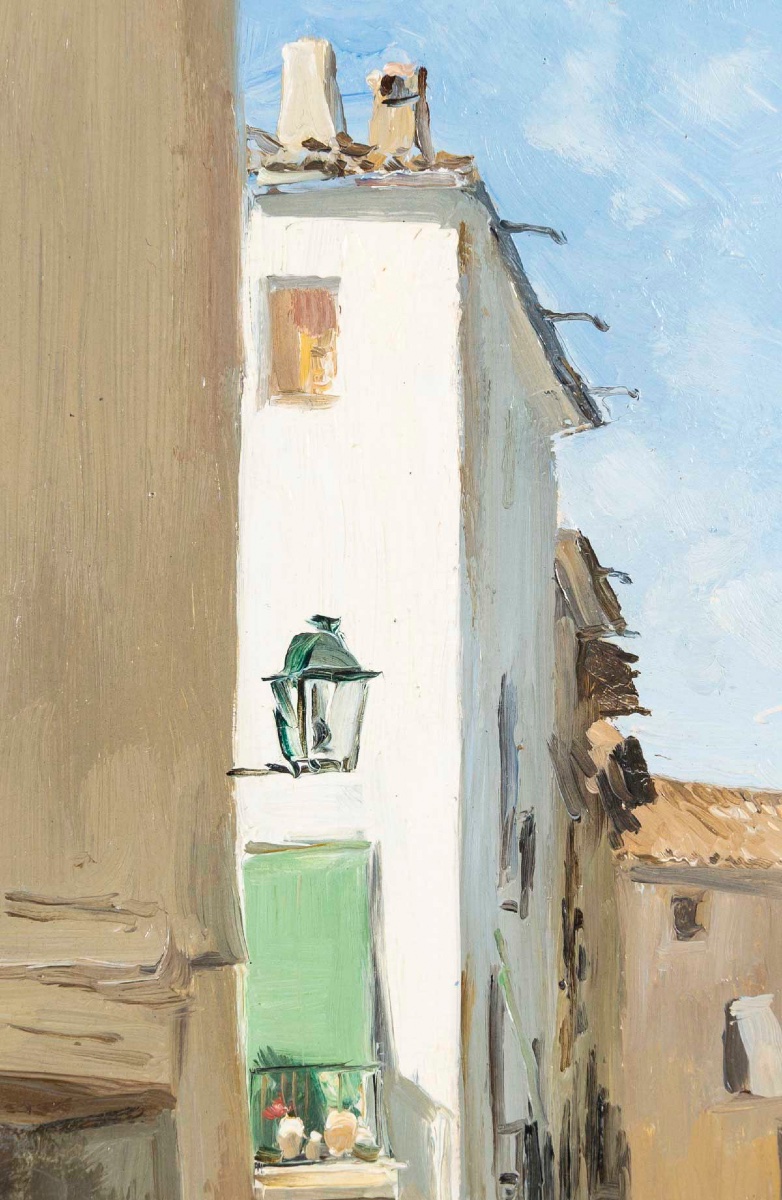
A view of Santa Coloma de Queralt painted in 1877 by the Spanish painter Jaime Morera y Galicia. The work is vibrant and luminous, two of the characteristics of the Catalan artist.
Oil on panel.
Signed lower right.
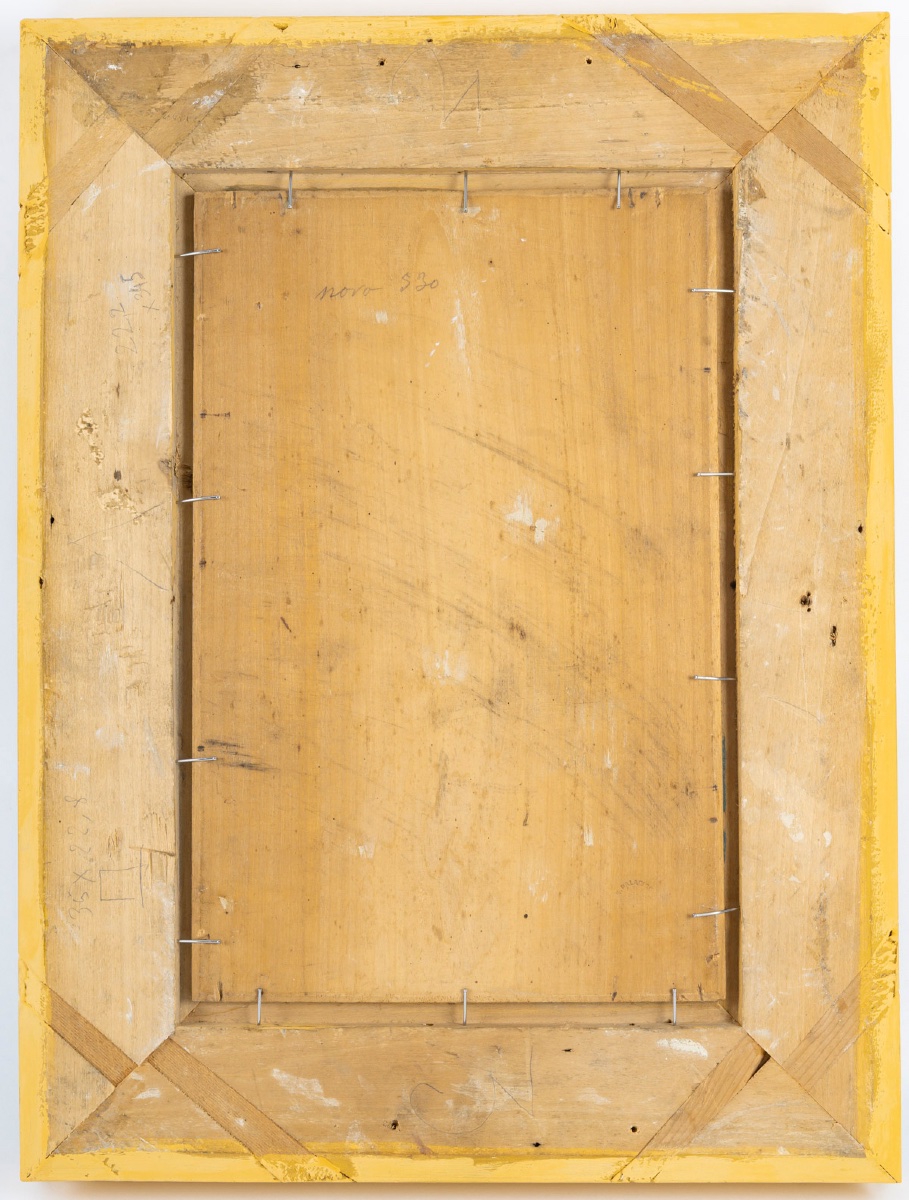
Dimensions: 35 x 23 cm.
Framed: 51 x 38 cm.
Jaime Morera y Galicia stayed in Santa Coloma de Queralt, province of Tarragona, in 1877.
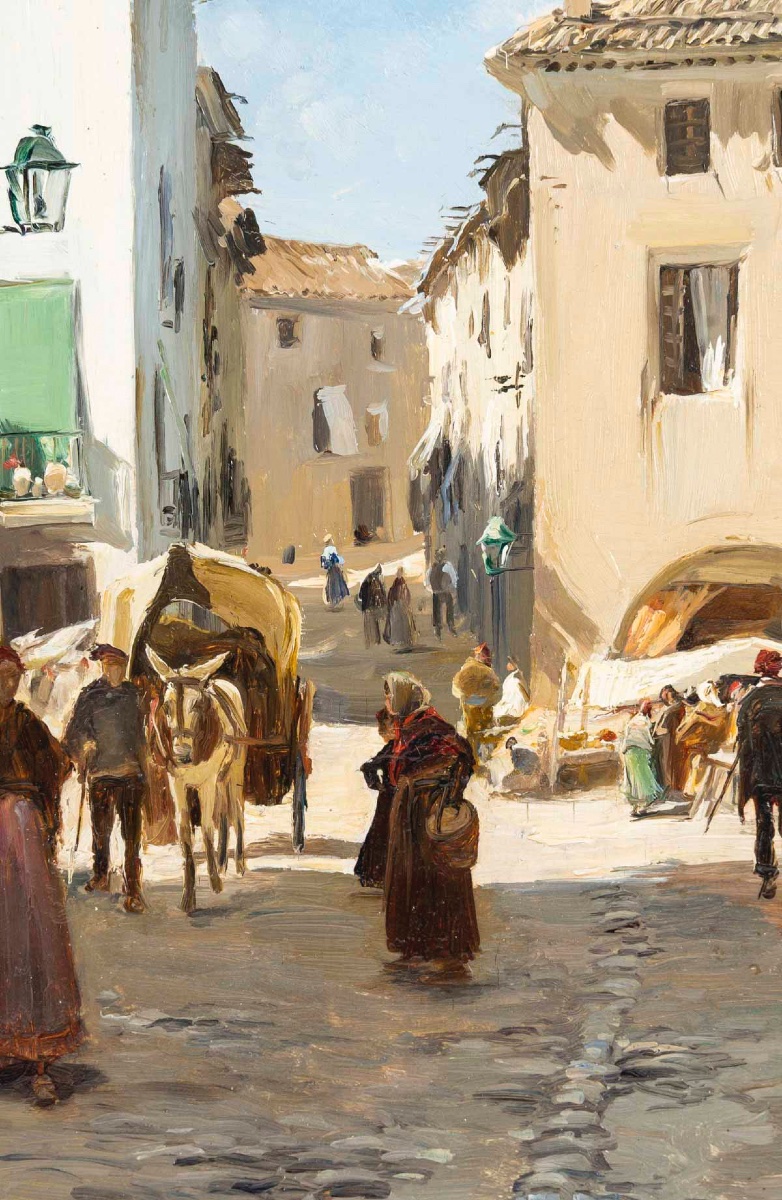
The painter immerses us in the heart of a lively street in the town of Santa Coloma de Queralt, in the province of Tarragona, Catalonia, where he stayed in 1877. The work was most likely painted during this stay.
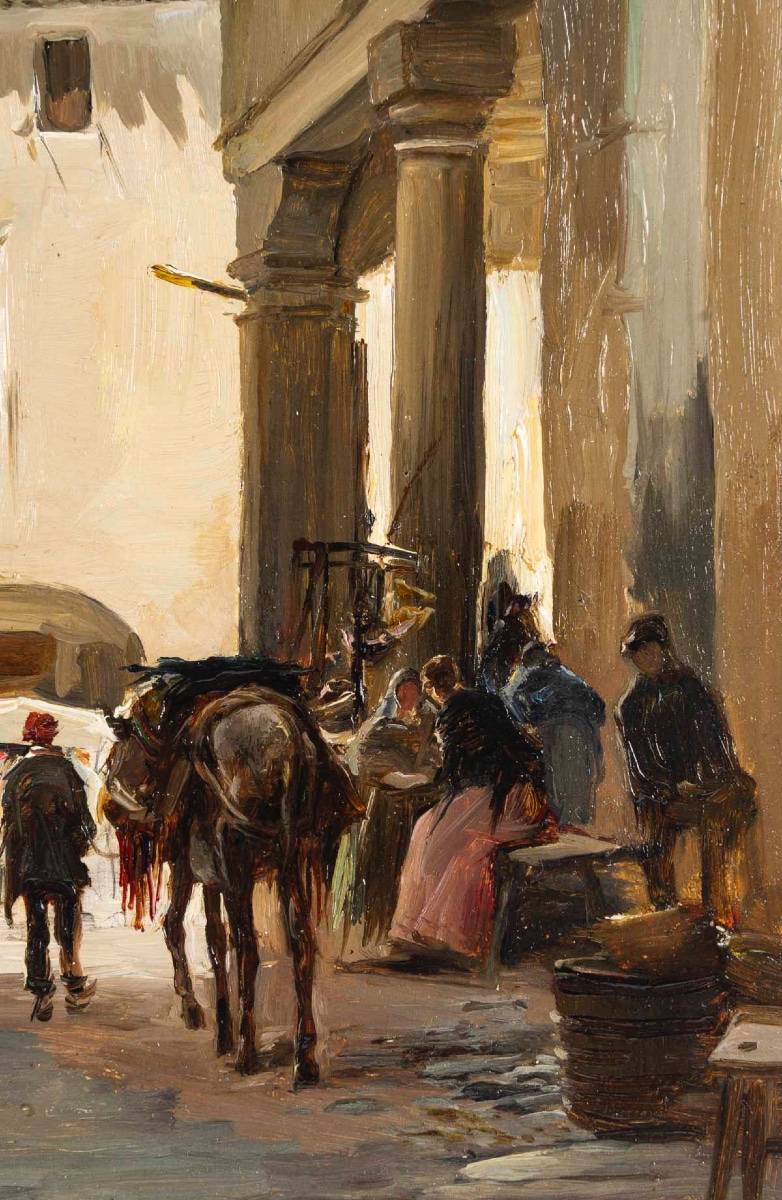
On the right, you can see some columns of the city's central square where the market is held.
Jaume Morera i Galicia is known for his vibrant landscapes and mastery of light.
Here, he captures the effervescence of the bustling city street with a bird's-eye view and a vibrant, dynamic touch that blends Impressionism and Realism. The Catalan sun illuminates the scene.
Biography:
Jaume Morera i Galicia, born in Lleida and died in Madrid, was a Catalan Spanish landscape painter of the late 19th and early 20th centuries. He was one of Carlos de Haes's disciples and traveled extensively. His work depicts landscapes realistically and is based on direct observation of nature. He trained in Madrid at the San Fernando Academy under Carlos de Haes, where he began to develop a more personal style. Between April 1874 and 1877, he attended the first boarding school organized by the Spanish Academy of Fine Arts in Rome. As part of the training program, in 1875, he visited Paris, Belgium, and Brittany. The second trip of the boarding school, in 1876, took him to Egypt and Greece. In 1878, he settled permanently in Madrid, from where he traveled to Holland, Belgium, and France as a student of Carlos de Haes. He exhibited at the National Exhibition of Fine Arts in 1878 and at the Universal Exhibition in Paris. He painted Nordic landscapes and landscapes of the Spanish Basque Country, where he also spent long periods in his villa Jardingane d'Algorta (Biscay). In 1884 and 1886, he traveled to Normandy, Brittany and Holland in the company of Haes. He presented the works from this trip at several exhibitions and won a first-class medal at the National Exhibition of Fine Arts (Madrid) in 1892. Starting in 1890, Morera began a tour through the Sierra de Guadarrama which resulted in the artist's most personal work, for which he would become known. The result of this activity was a series of twenty-three paintings representing his most mature work, which at the time enjoyed wide circulation mainly due to their presentation at the Spanish national exhibitions of 1897, 1901, and 1904, and at other European exhibitions. He became the leading disseminator of the high mountain theme while simultaneously establishing himself as one of the key figures of the new Spanish realist landscape. Following the Exposició d'Artistes Lleidatans (ca) in Lleida in 1912, a reconnection with his native land—which he had always visited regularly—began, culminating in the creation of a museum inaugurated in 1917, the Museu d'Art Jaume Morera. This museum houses an important collection of 20th-century Irish art, as well as works by Jaume Morera, his colleagues from the Escuela de Madrid, and other early 20th-century Irish artists. He died on April 23, 1927, at his home in Madrid, from where his remains were transferred to Getxo for burial with the highest honors from his friends and the authorities.
Museums
Spain • Lleida, Museu d'Art Jaume Morera • Madrid, Prado Museum • Barcelona, Museu Nacional d'Art de Catalunya• Museum of Las Bellas Artes de La Corona, GaliciaFrance•
Paris, Musée d'Orsay
Oil on panel.
Signed lower right.
Dimensions: 35 x 23 cm.
Framed: 51 x 38 cm.
Jaime Morera y Galicia stayed in Santa Coloma de Queralt, province of Tarragona, in 1877.
The painter immerses us in the heart of a lively street in the town of Santa Coloma de Queralt, in the province of Tarragona, Catalonia, where he stayed in 1877. The work was most likely painted during this stay.
On the right, you can see some columns of the city's central square where the market is held.
Jaume Morera i Galicia is known for his vibrant landscapes and mastery of light.
Here, he captures the effervescence of the bustling city street with a bird's-eye view and a vibrant, dynamic touch that blends Impressionism and Realism. The Catalan sun illuminates the scene.
Biography:
Jaume Morera i Galicia, born in Lleida and died in Madrid, was a Catalan Spanish landscape painter of the late 19th and early 20th centuries. He was one of Carlos de Haes's disciples and traveled extensively. His work depicts landscapes realistically and is based on direct observation of nature. He trained in Madrid at the San Fernando Academy under Carlos de Haes, where he began to develop a more personal style. Between April 1874 and 1877, he attended the first boarding school organized by the Spanish Academy of Fine Arts in Rome. As part of the training program, in 1875, he visited Paris, Belgium, and Brittany. The second trip of the boarding school, in 1876, took him to Egypt and Greece. In 1878, he settled permanently in Madrid, from where he traveled to Holland, Belgium, and France as a student of Carlos de Haes. He exhibited at the National Exhibition of Fine Arts in 1878 and at the Universal Exhibition in Paris. He painted Nordic landscapes and landscapes of the Spanish Basque Country, where he also spent long periods in his villa Jardingane d'Algorta (Biscay). In 1884 and 1886, he traveled to Normandy, Brittany and Holland in the company of Haes. He presented the works from this trip at several exhibitions and won a first-class medal at the National Exhibition of Fine Arts (Madrid) in 1892. Starting in 1890, Morera began a tour through the Sierra de Guadarrama which resulted in the artist's most personal work, for which he would become known. The result of this activity was a series of twenty-three paintings representing his most mature work, which at the time enjoyed wide circulation mainly due to their presentation at the Spanish national exhibitions of 1897, 1901, and 1904, and at other European exhibitions. He became the leading disseminator of the high mountain theme while simultaneously establishing himself as one of the key figures of the new Spanish realist landscape. Following the Exposició d'Artistes Lleidatans (ca) in Lleida in 1912, a reconnection with his native land—which he had always visited regularly—began, culminating in the creation of a museum inaugurated in 1917, the Museu d'Art Jaume Morera. This museum houses an important collection of 20th-century Irish art, as well as works by Jaume Morera, his colleagues from the Escuela de Madrid, and other early 20th-century Irish artists. He died on April 23, 1927, at his home in Madrid, from where his remains were transferred to Getxo for burial with the highest honors from his friends and the authorities.
Museums
Spain • Lleida, Museu d'Art Jaume Morera • Madrid, Prado Museum • Barcelona, Museu Nacional d'Art de Catalunya• Museum of Las Bellas Artes de La Corona, GaliciaFrance•
Paris, Musée d'Orsay
4 800 €
Period: 19th century
Style: Other Style
Condition: Excellent condition
Material: Oil painting on wood
Width: 23 cm
Height: 35 cm
Reference (ID): 1645148
Availability: In stock
Print