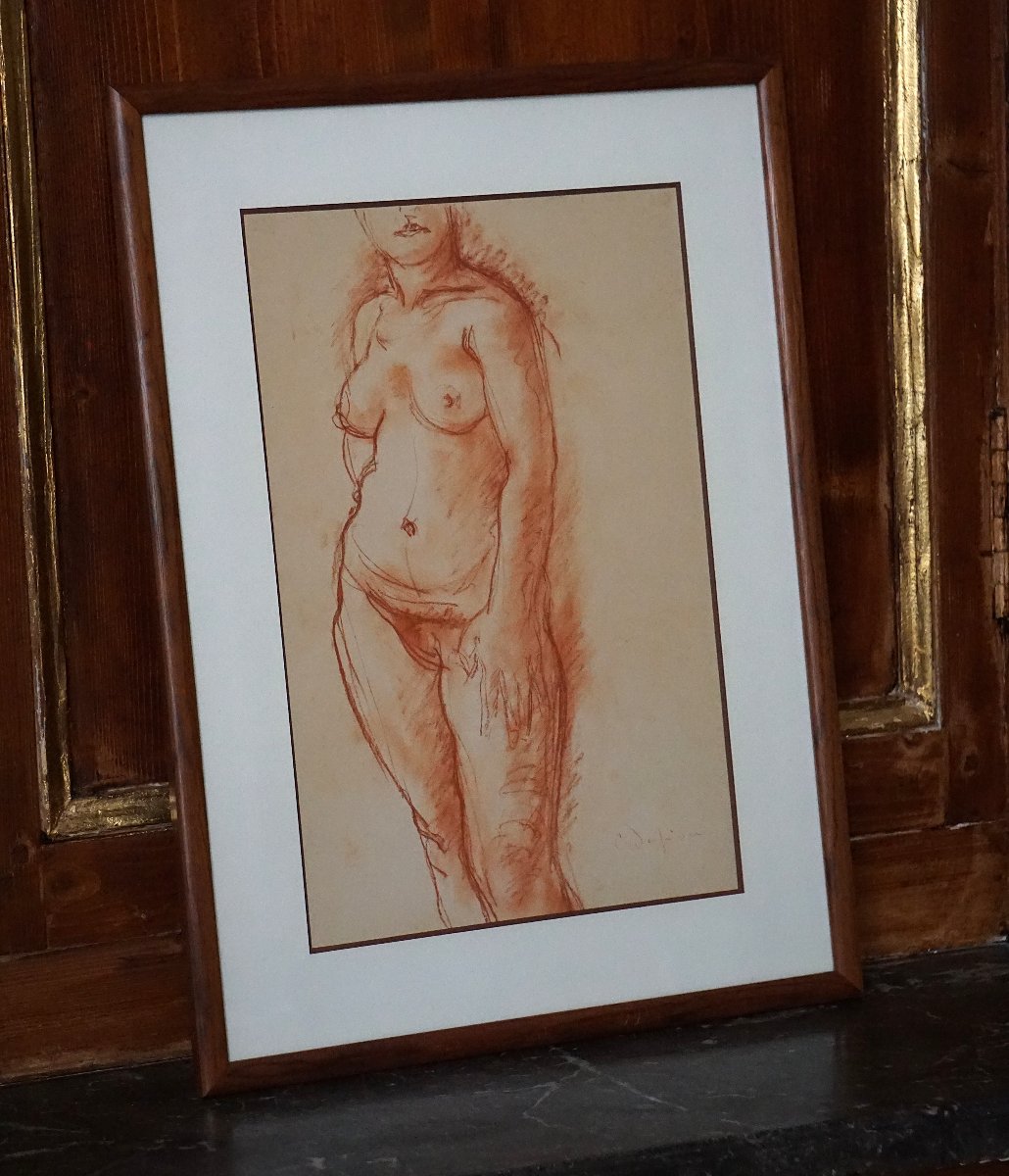


Charles Despiau (1874–1946) - Female Nude In Red Chalk
Artist: Charles Despiau (1874-1946)
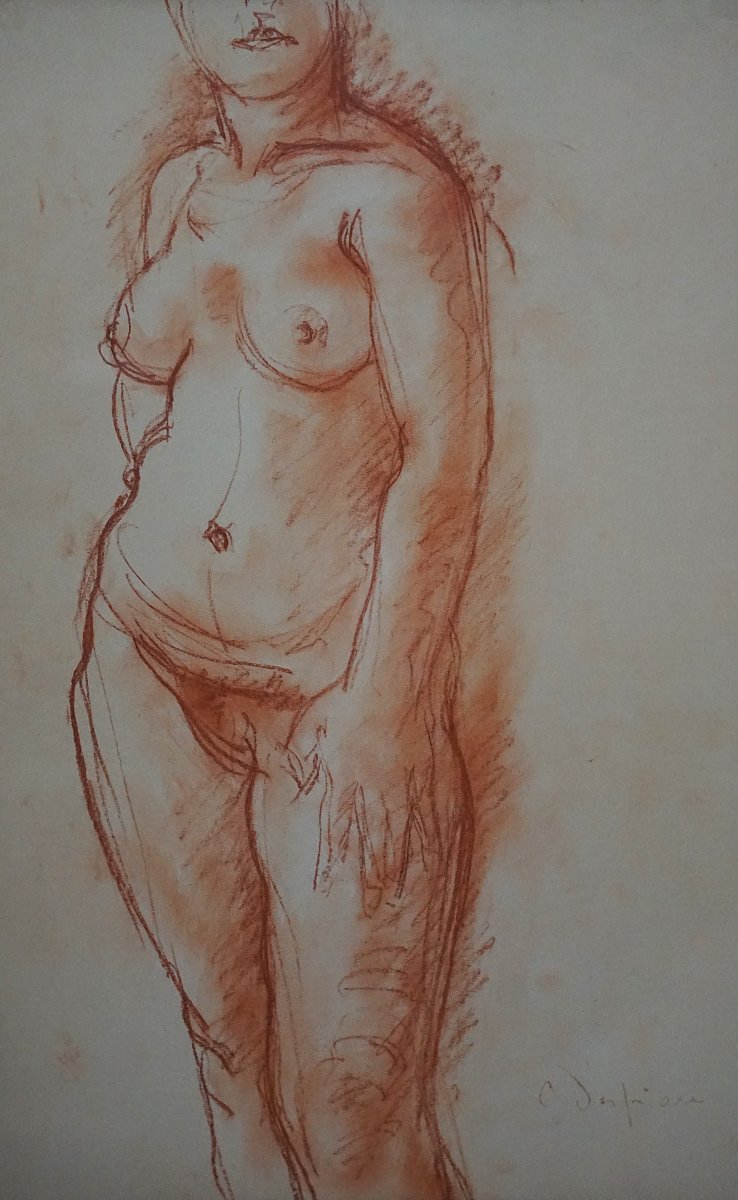
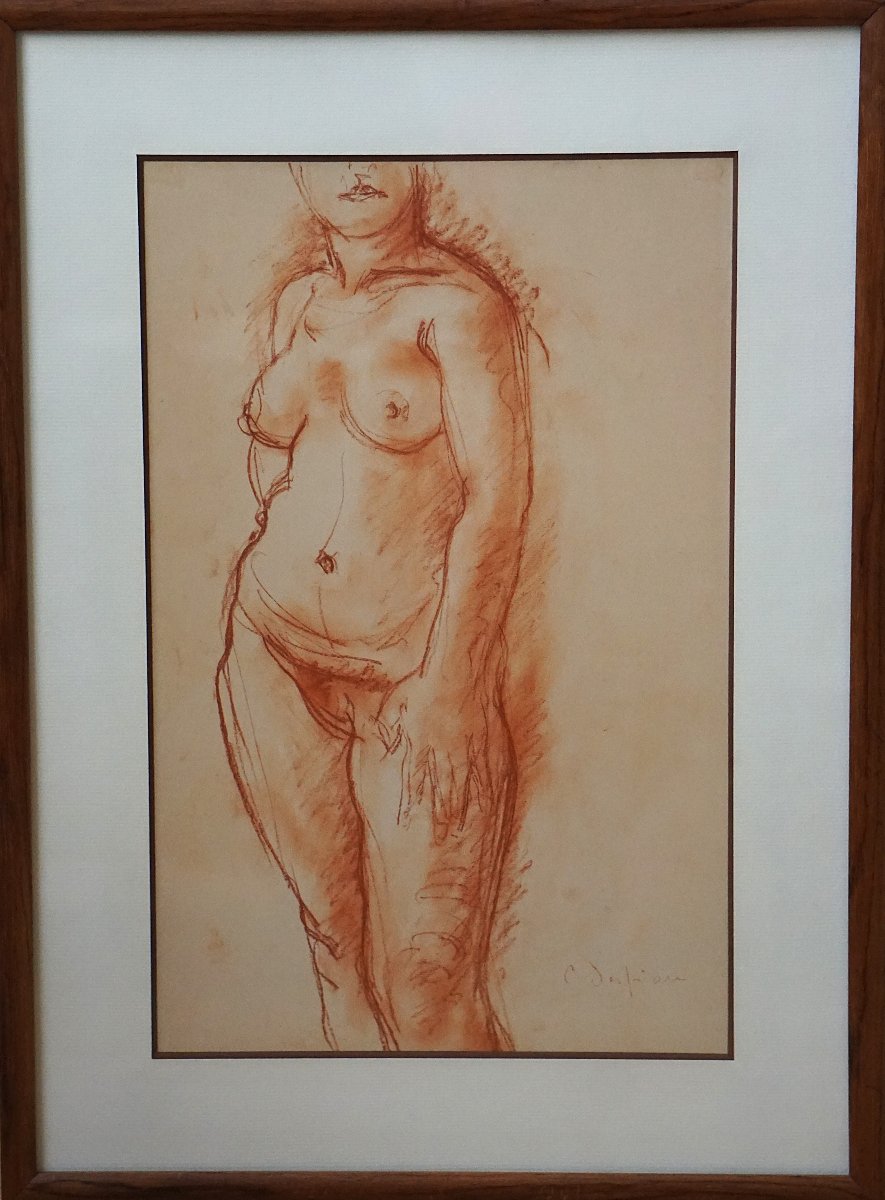
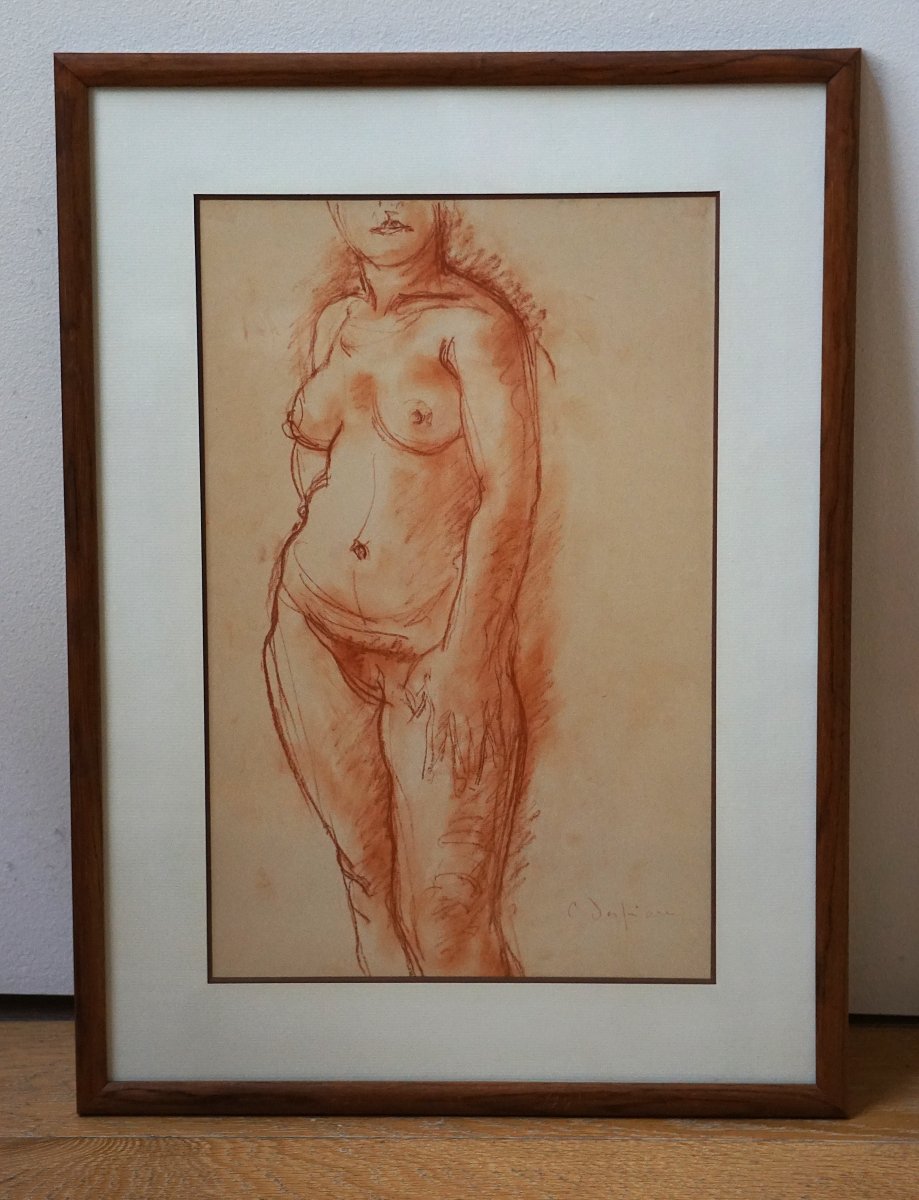
CHARLES DESPIAU (1874–1946) - Female Nude in Redchalk
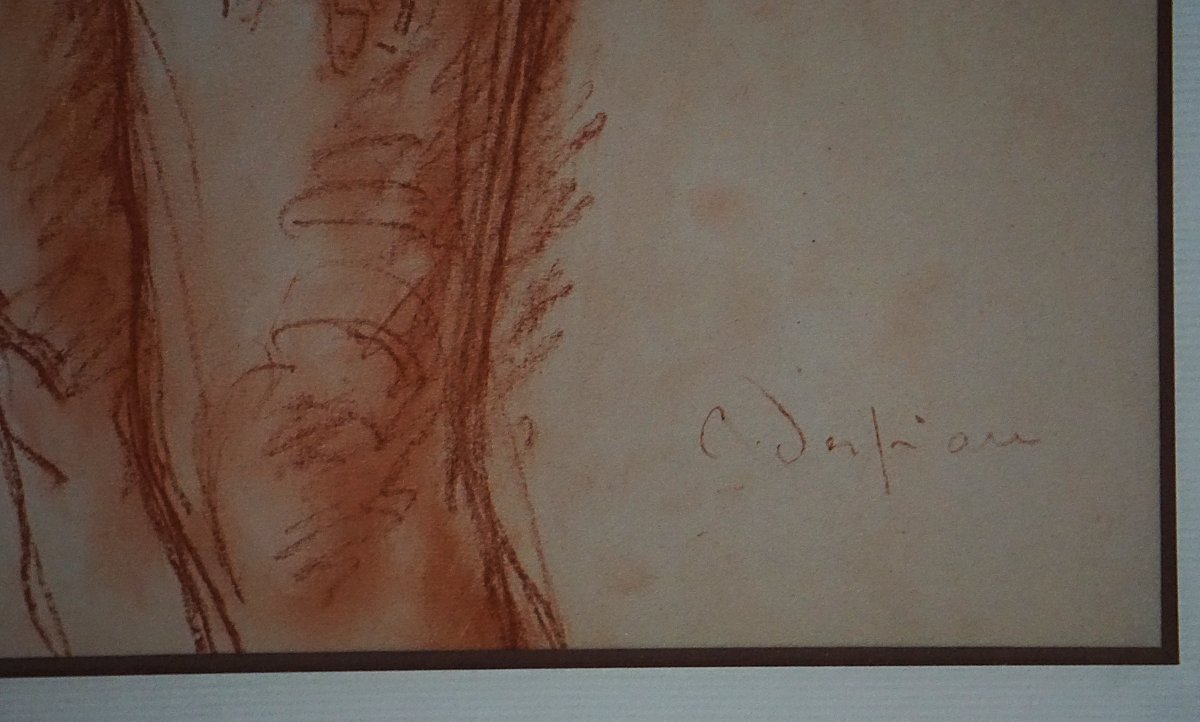
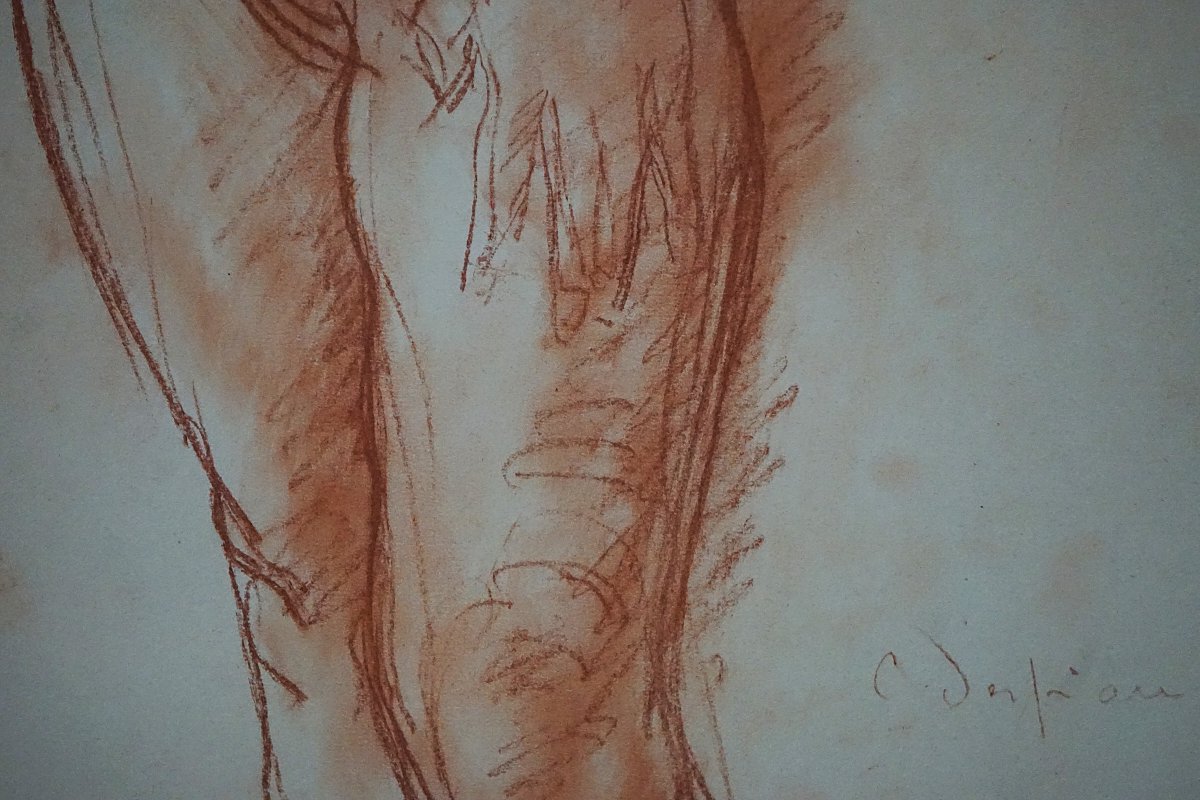
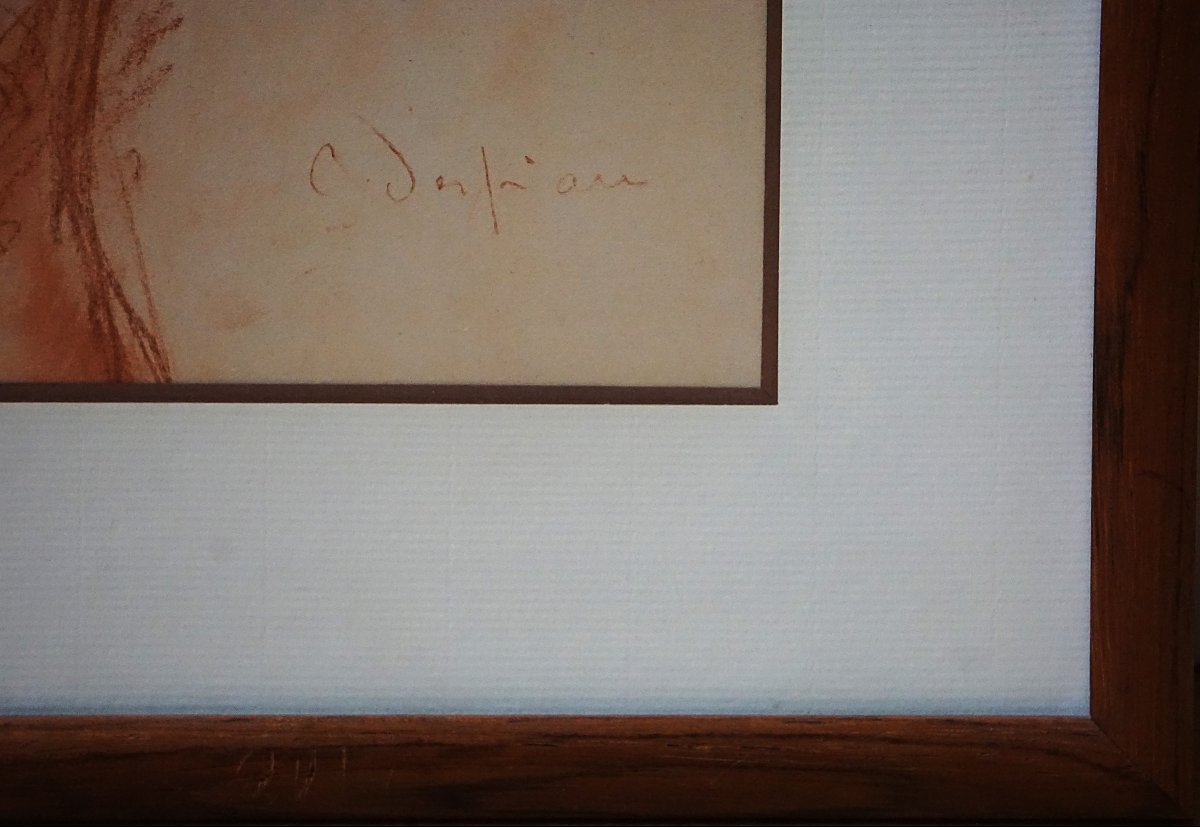
Redchalk on paper - Signed lower right “C Despiau”
viewed: 35.5 x 23 cm
with frame: 48 x 35.5 cm
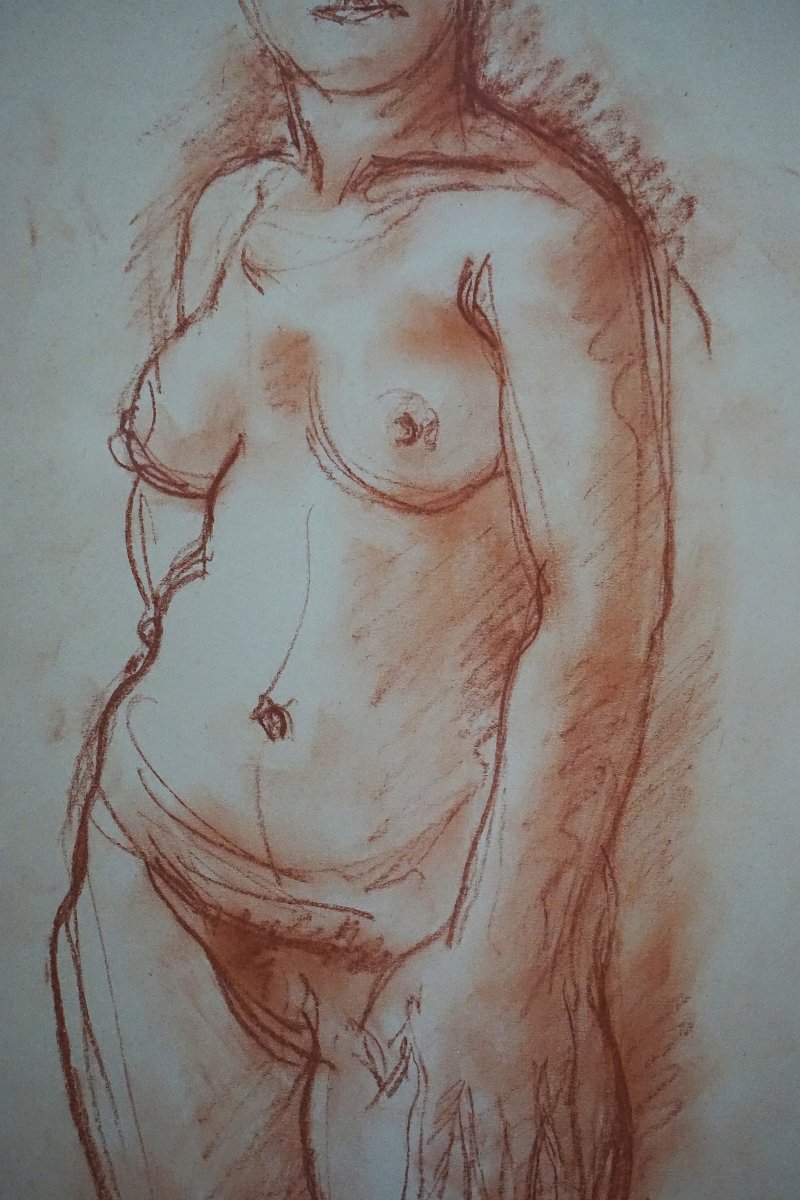
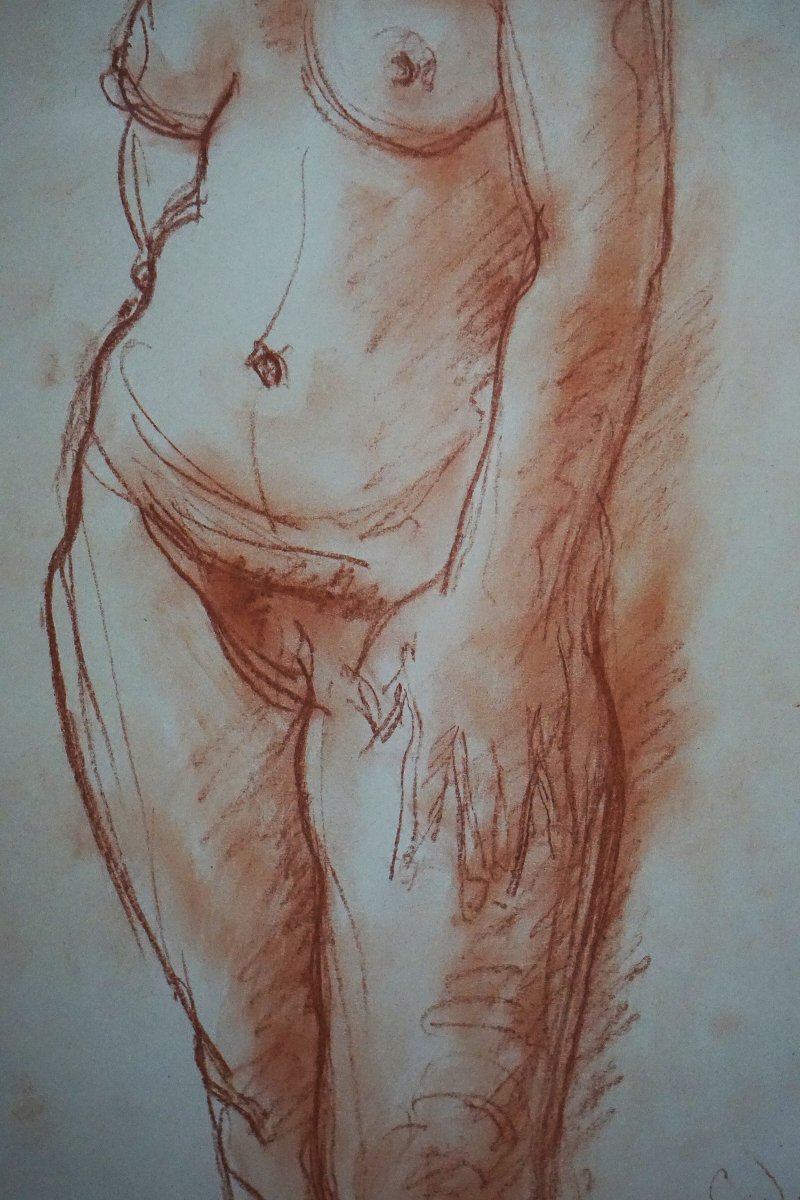
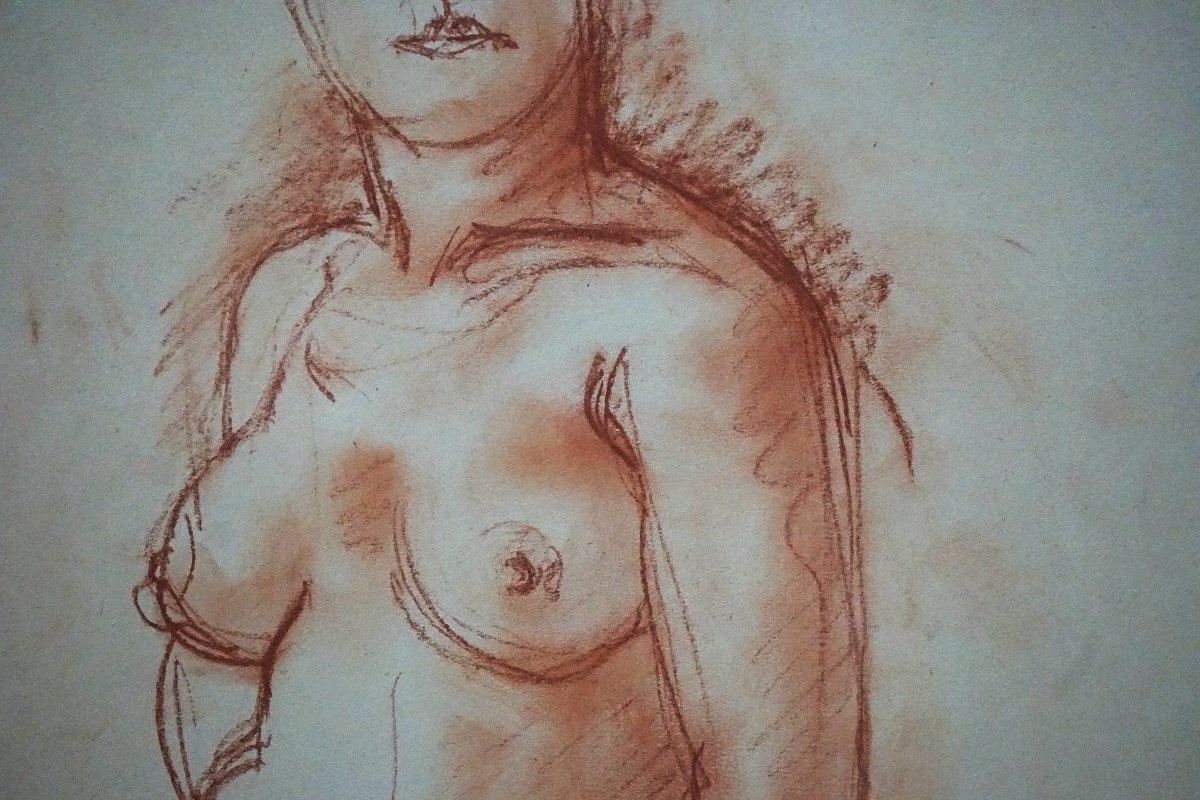
This is a very beautiful drawing by Charles Despiau. This is not a simple, off-the-cuff study, but rather a fully realized studio nude. One immediately senses the sculptor. The line is full, steady, and unhesitating.
He does not merely sketch an outline; he constructs a volume. He captures the body’s weight, the alignment of the hips, and the light on the flesh, with that mastery of red chalk unique to him. The wash is light, the hatching is energetic, and the whole piece exudes a genuine sensuality without ever resorting to the easy path. That is what makes all the difference.
The drawing is very well defined, complete from the face to the knee, with a rare sense of presence. Most of Despiau’s red chalk drawings that one comes across are partial sketches or rough drafts.
Charles Despiau (1874–1946) - The Modern Donatello Charles Alfred Marie Despiau, known as Charles Despiau, was born on November 4, 1874, in Mont-de-Marsan and died on October 28, 1946, in Paris. A French sculptor, he was regarded during his lifetime as a new Donatello and the equal of Aristide Maillol, one of the greatest sculptors of the interwar period. 1. Early Years in the Landes Region The son and grandson of master plasterers, he attended the Lycée Victor-Duruy in Mont-de-Marsan, where he was noticed by his art teacher, Louis Henri Ismaël Morin. Thanks to a scholarship from the Landes department, he moved to Paris in 1891. He enrolled at the École Nationale Supérieure des Arts Décoratifs under Hector Lemaire, then at the École des Beaux-Arts in the studio of sculptor Louis-Ernest Barrias, where he learned the direct carving technique. He made his debut at the Salon in 1898 and was admitted to the Société Nationale des Beaux-Arts in 1901, becoming a full member in 1904 with *Petite fille des Landes*. 2. Rodin’s Circle and Rodin’s Apprentices He joined the “Bande à Schnegg,” a group of sculptors who had all been apprentices to Auguste Rodin; Camille Claudel nicknamed them “Rodin’s Circle.” Among them were Bourdelle, Pompon, Wlérick, Drivier, and Halou... In 1907, after seeing his sculpture *Paulette*, Rodin asked him to work with him. His work as Rodin’s assistant continued until 1914, when he was called up for military service. He then abandoned the marble carving of *The Genius of Eternal Rest*, intended for the monument to Puvis de Chavannes. Upon his demobilization—Rodin having died in 1917—he refused to complete it without the master’s supervision. 3. The Great Portraitist Despiau turned to portraiture, the result of a very long creative process, noted for its sculptural power and psychological truth. His busts *Paulette* (1910, purchased by the government), *Cra-Cra* (1917), and *Portrait of Alice Derain* (1922) reflect this reaction against Rodin’s lyricism and official academicism. His war memorial in Mont-de-Marsan (1918–1922) is exemplary: two women—the elderly mother and the young widow with her baby—depicted without anecdotal movement or heavenly invocation. Restraint and dignity. A professor at the Académie de la Grande Chaumière and the Académie Scandinave, and a co-founder of the Salon des Tuileries in 1923, he achieved his first commercial successes as early as 1927. His major exhibition at the Brummer Gallery in New York in 1927 brought him fame and fortune and established him as a recognized sculptor in the United States. 4. The Ideal Nude: Assia and Apollo Beginning in 1932, his encounter with Assia Granatouroff—a professional model who posed for Soutine, Dora Maar, and Krull—allowed him to sublimate the female form. *Assia* (1937) became his modern Venus, with pure lines, ideal proportions, and stripped of any erotic suggestion. In 1937, he received a commission for a colossal 6-meter statue, *Apollo*, for the forecourt of the future Palais de Tokyo for the World’s Fair. He worked on it until the end of his life, never completing it. It was cast in bronze after his death. 5. Draftsman For Despiau, red chalk drawing—like the one on this sheet—was not a side project. It was his sculptor’s workshop. He sought balance, weight, and the supporting leg. That is why his red chalk drawings are so highly sought after: they are sculptures on paper. He died of pulmonary congestion on October 28, 1946, at 49 rue Brillat-Savarin in Paris, after having been blacklisted following the Liberation for his 1941 trip to Germany organized by Arno Breker. He is buried at the Centre Cemetery in Mont-de-Marsan. Today, the leading museum dedicated to his work is the Despiau-Wlérick Museum in Mont-de-Marsan, and his works can be found at the Musée d’Orsay, the Musée d’Art Moderne in Paris, in New York, and in Japan, where he remains highly admired.
Redchalk on paper - Signed lower right “C Despiau”
viewed: 35.5 x 23 cm
with frame: 48 x 35.5 cm
This is a very beautiful drawing by Charles Despiau. This is not a simple, off-the-cuff study, but rather a fully realized studio nude. One immediately senses the sculptor. The line is full, steady, and unhesitating.
He does not merely sketch an outline; he constructs a volume. He captures the body’s weight, the alignment of the hips, and the light on the flesh, with that mastery of red chalk unique to him. The wash is light, the hatching is energetic, and the whole piece exudes a genuine sensuality without ever resorting to the easy path. That is what makes all the difference.
The drawing is very well defined, complete from the face to the knee, with a rare sense of presence. Most of Despiau’s red chalk drawings that one comes across are partial sketches or rough drafts.
Charles Despiau (1874–1946) - The Modern Donatello Charles Alfred Marie Despiau, known as Charles Despiau, was born on November 4, 1874, in Mont-de-Marsan and died on October 28, 1946, in Paris. A French sculptor, he was regarded during his lifetime as a new Donatello and the equal of Aristide Maillol, one of the greatest sculptors of the interwar period. 1. Early Years in the Landes Region The son and grandson of master plasterers, he attended the Lycée Victor-Duruy in Mont-de-Marsan, where he was noticed by his art teacher, Louis Henri Ismaël Morin. Thanks to a scholarship from the Landes department, he moved to Paris in 1891. He enrolled at the École Nationale Supérieure des Arts Décoratifs under Hector Lemaire, then at the École des Beaux-Arts in the studio of sculptor Louis-Ernest Barrias, where he learned the direct carving technique. He made his debut at the Salon in 1898 and was admitted to the Société Nationale des Beaux-Arts in 1901, becoming a full member in 1904 with *Petite fille des Landes*. 2. Rodin’s Circle and Rodin’s Apprentices He joined the “Bande à Schnegg,” a group of sculptors who had all been apprentices to Auguste Rodin; Camille Claudel nicknamed them “Rodin’s Circle.” Among them were Bourdelle, Pompon, Wlérick, Drivier, and Halou... In 1907, after seeing his sculpture *Paulette*, Rodin asked him to work with him. His work as Rodin’s assistant continued until 1914, when he was called up for military service. He then abandoned the marble carving of *The Genius of Eternal Rest*, intended for the monument to Puvis de Chavannes. Upon his demobilization—Rodin having died in 1917—he refused to complete it without the master’s supervision. 3. The Great Portraitist Despiau turned to portraiture, the result of a very long creative process, noted for its sculptural power and psychological truth. His busts *Paulette* (1910, purchased by the government), *Cra-Cra* (1917), and *Portrait of Alice Derain* (1922) reflect this reaction against Rodin’s lyricism and official academicism. His war memorial in Mont-de-Marsan (1918–1922) is exemplary: two women—the elderly mother and the young widow with her baby—depicted without anecdotal movement or heavenly invocation. Restraint and dignity. A professor at the Académie de la Grande Chaumière and the Académie Scandinave, and a co-founder of the Salon des Tuileries in 1923, he achieved his first commercial successes as early as 1927. His major exhibition at the Brummer Gallery in New York in 1927 brought him fame and fortune and established him as a recognized sculptor in the United States. 4. The Ideal Nude: Assia and Apollo Beginning in 1932, his encounter with Assia Granatouroff—a professional model who posed for Soutine, Dora Maar, and Krull—allowed him to sublimate the female form. *Assia* (1937) became his modern Venus, with pure lines, ideal proportions, and stripped of any erotic suggestion. In 1937, he received a commission for a colossal 6-meter statue, *Apollo*, for the forecourt of the future Palais de Tokyo for the World’s Fair. He worked on it until the end of his life, never completing it. It was cast in bronze after his death. 5. Draftsman For Despiau, red chalk drawing—like the one on this sheet—was not a side project. It was his sculptor’s workshop. He sought balance, weight, and the supporting leg. That is why his red chalk drawings are so highly sought after: they are sculptures on paper. He died of pulmonary congestion on October 28, 1946, at 49 rue Brillat-Savarin in Paris, after having been blacklisted following the Liberation for his 1941 trip to Germany organized by Arno Breker. He is buried at the Centre Cemetery in Mont-de-Marsan. Today, the leading museum dedicated to his work is the Despiau-Wlérick Museum in Mont-de-Marsan, and his works can be found at the Musée d’Orsay, the Musée d’Art Moderne in Paris, in New York, and in Japan, where he remains highly admired.
1 250 €
Period: 20th century
Style: Other Style
Condition: Perfect condition
Material: Paper
Reference (ID): 1824706
Availability: In stock
Print