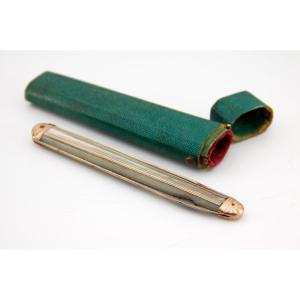


Double-bladed Folding Knife, Known As A “à La Berge” – Shagreen – Louis XV Period, 1756–1762
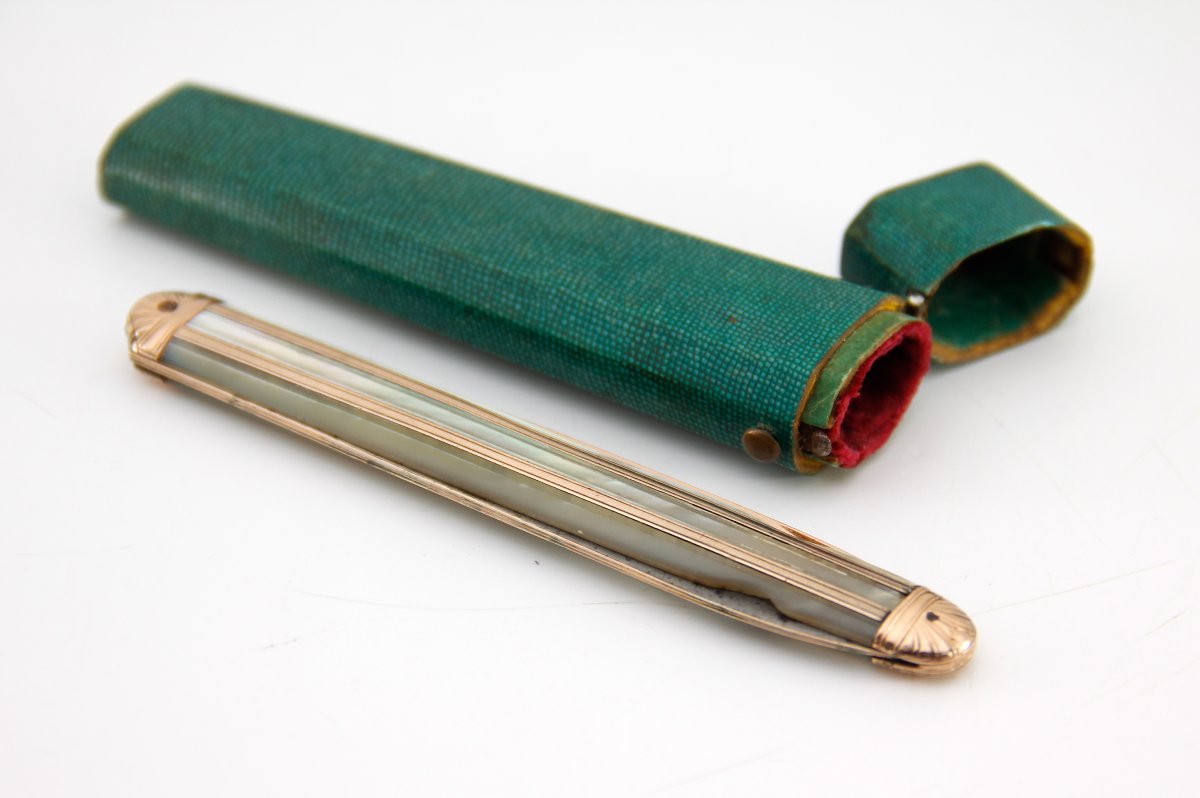
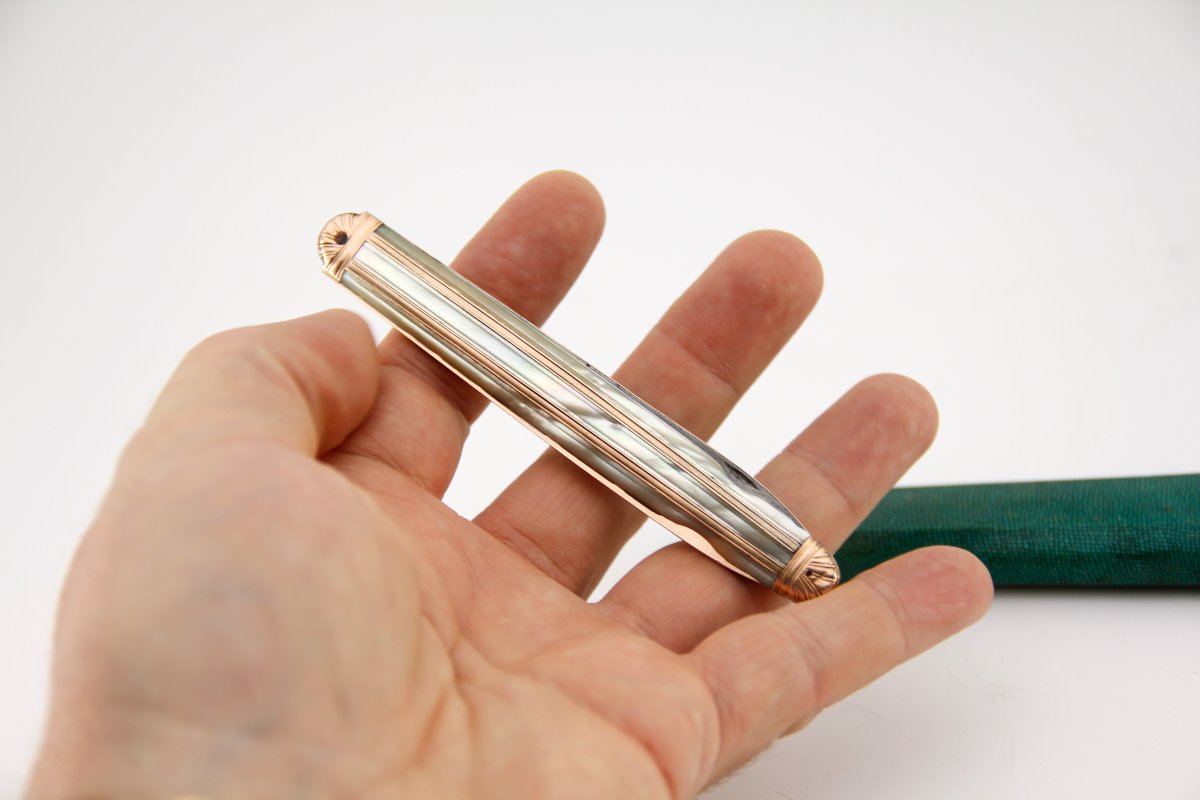
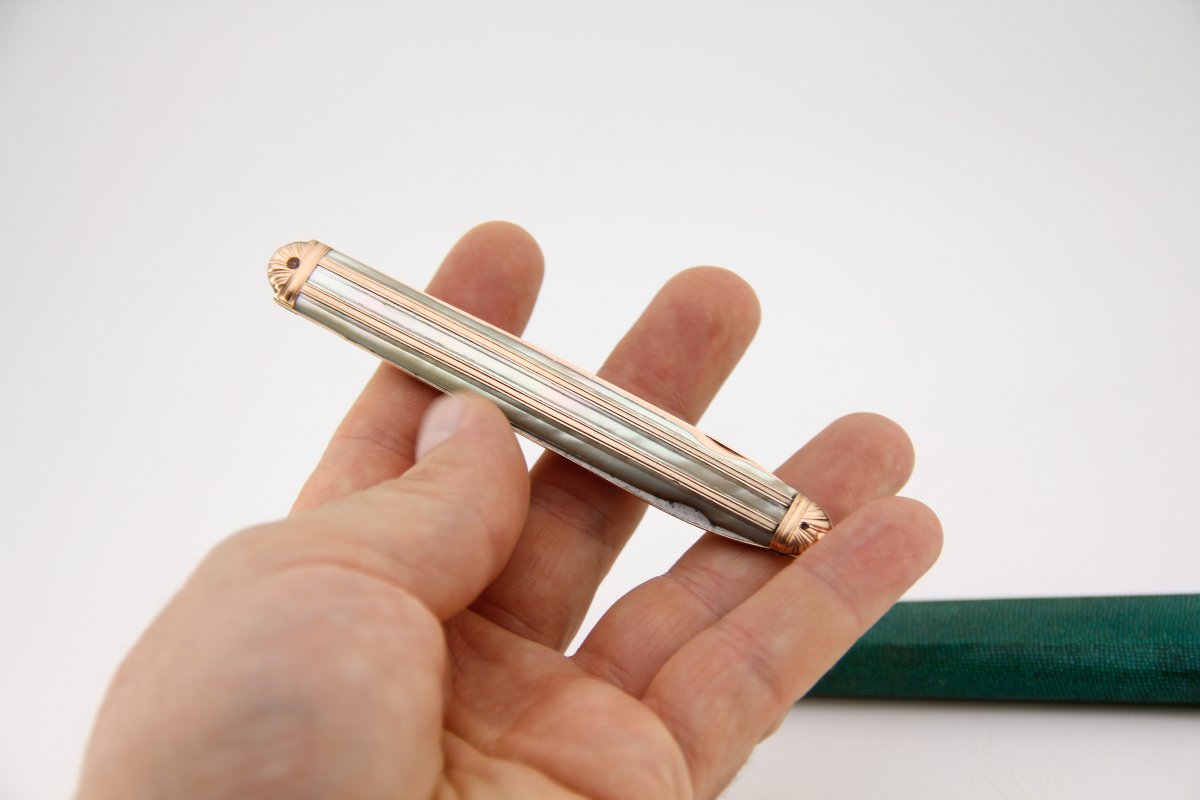
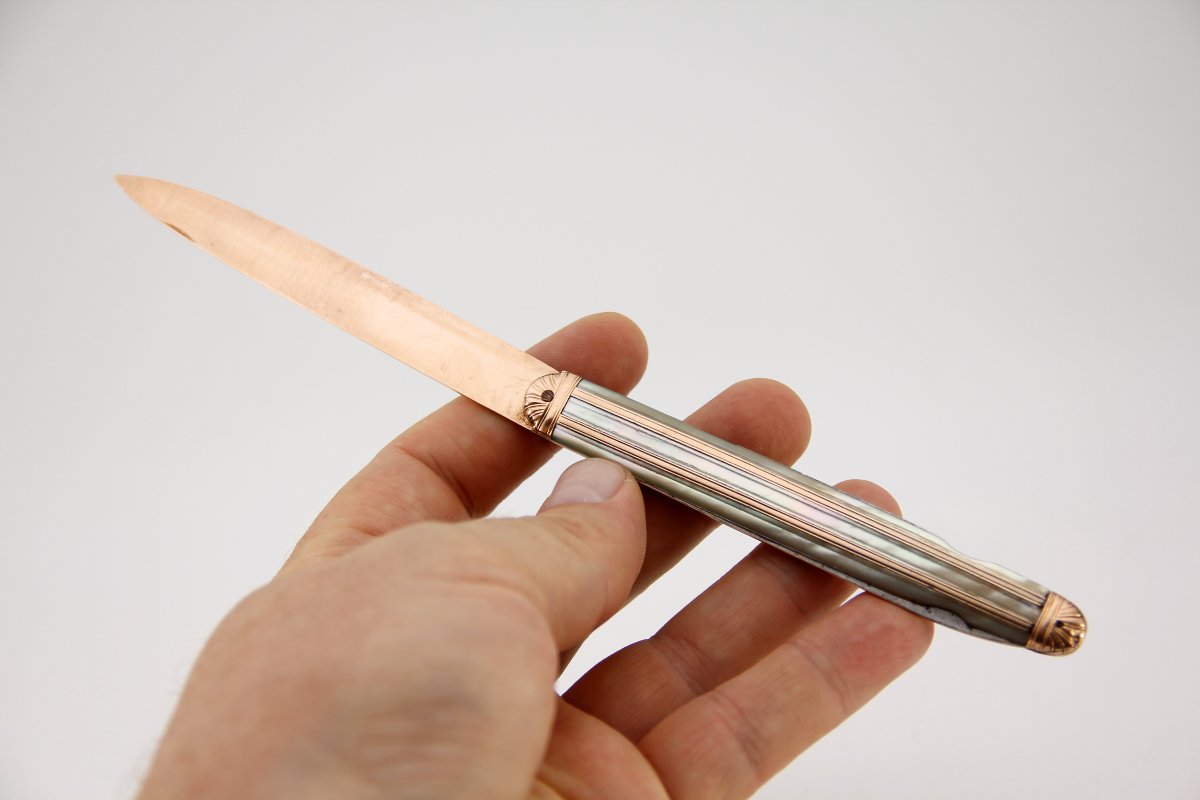
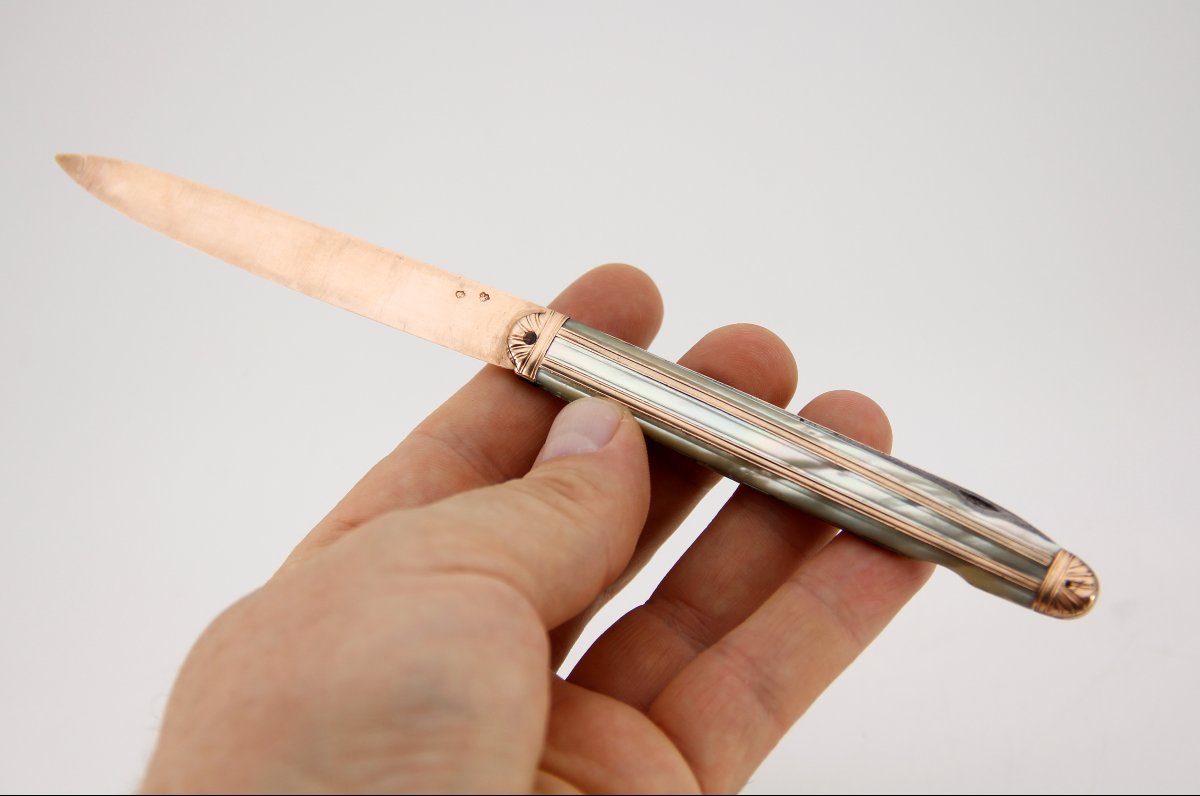
Double-bladed folding travel knife, known as "à la Berge"
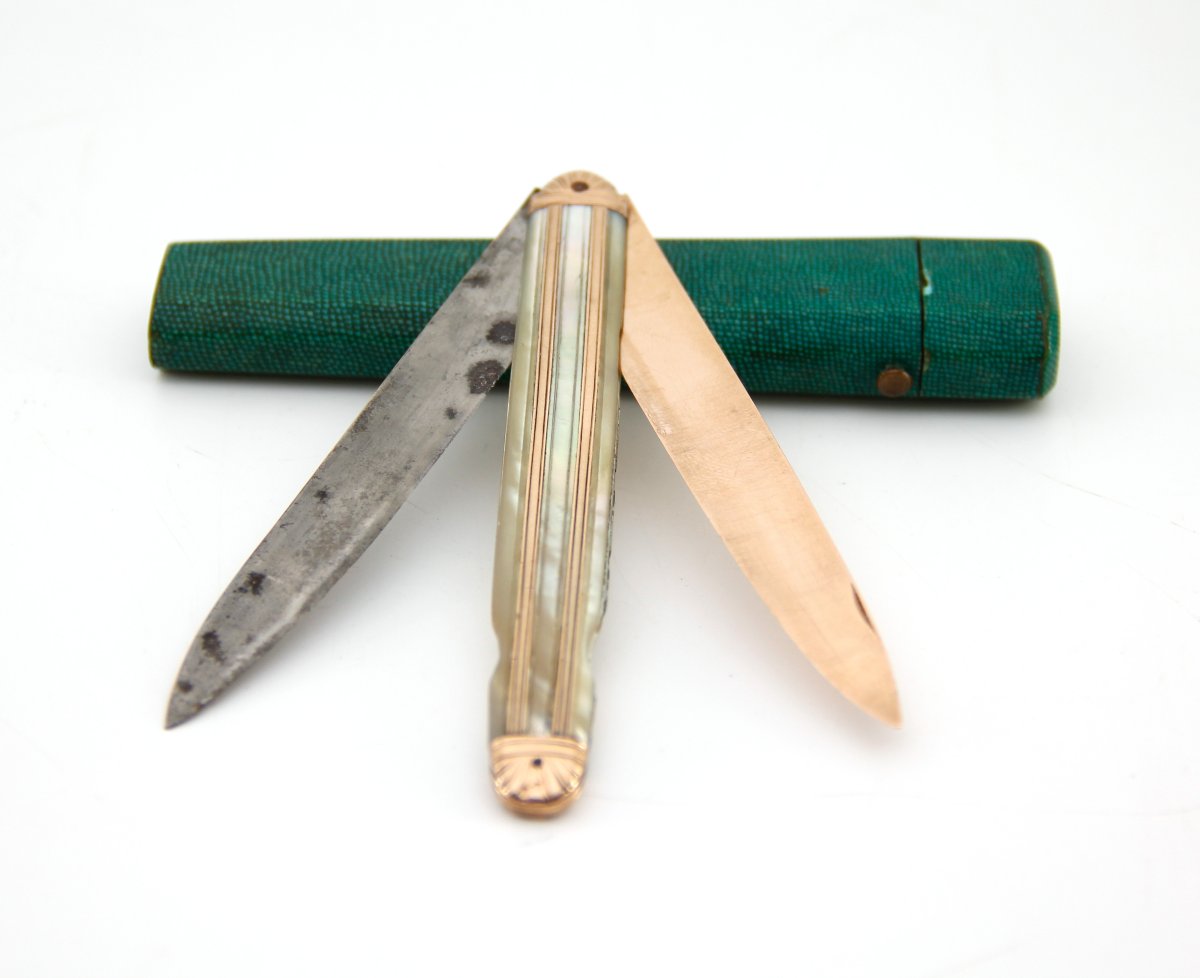
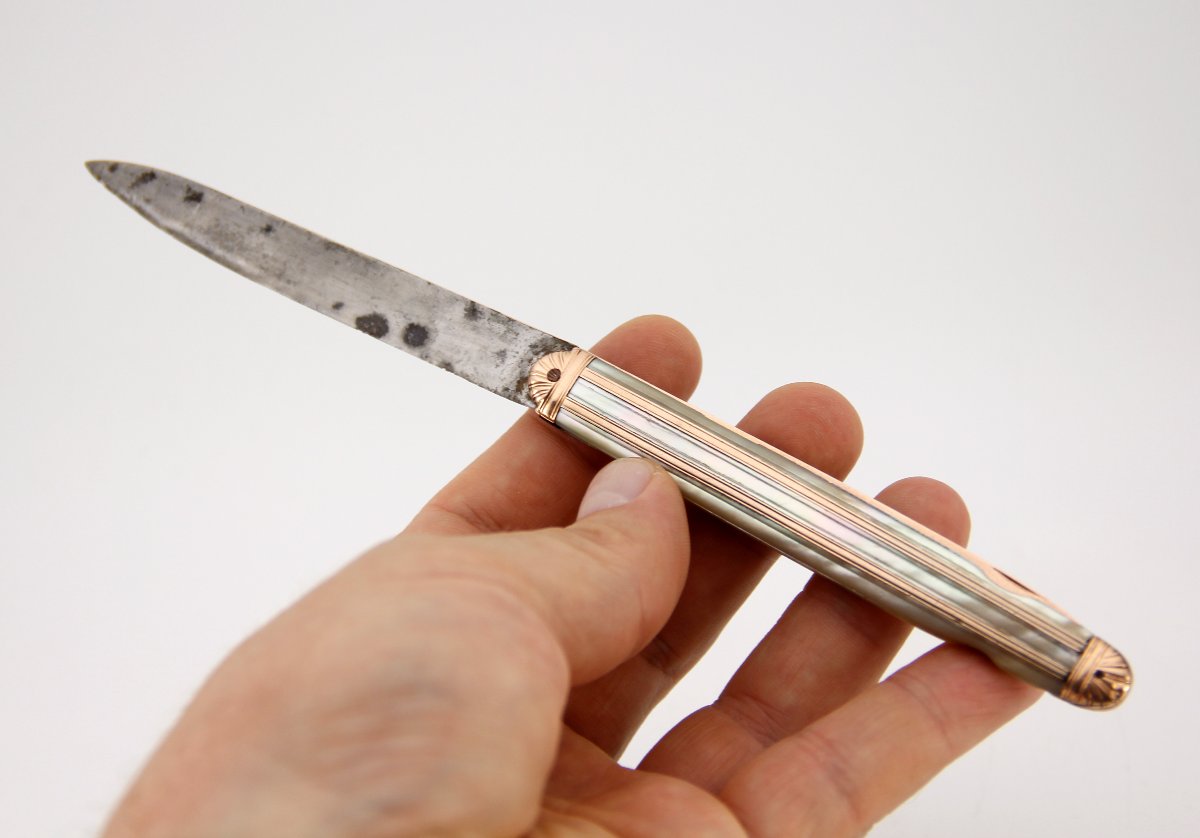
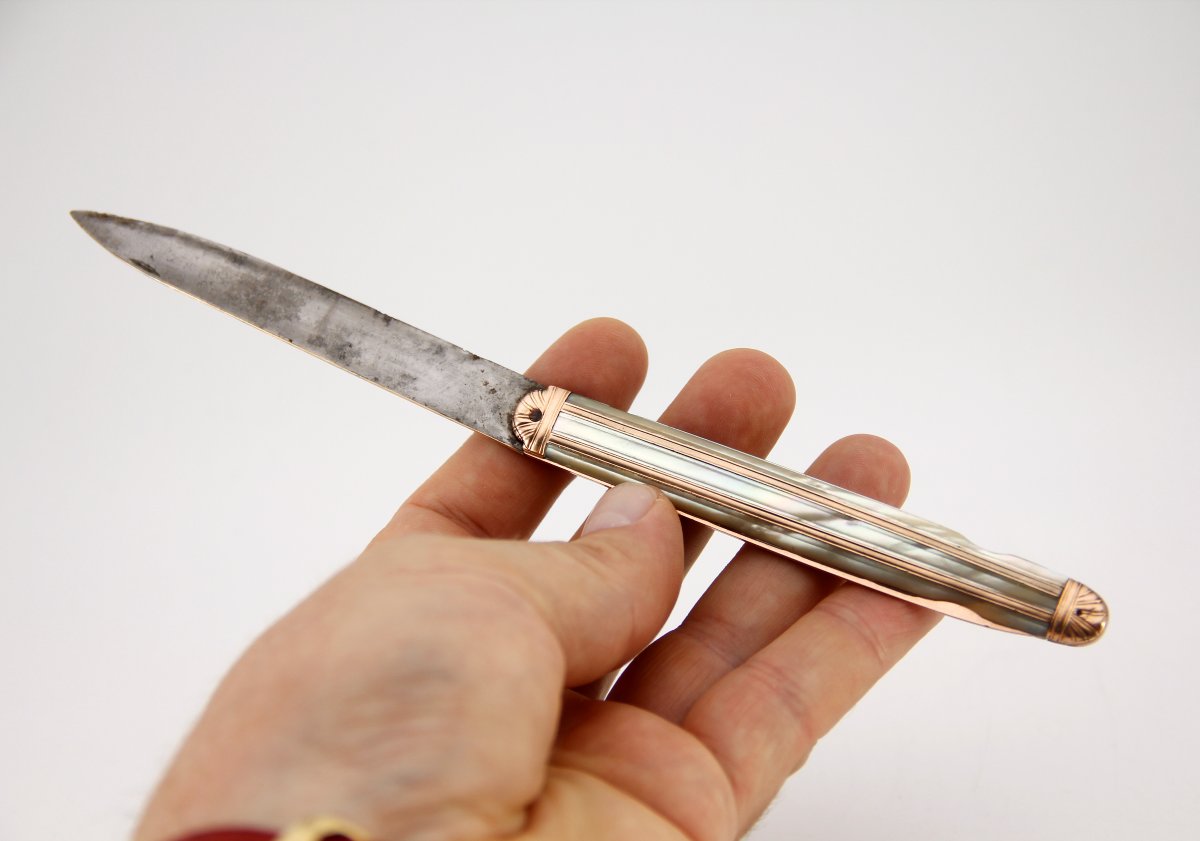
Mother-of-pearl set in gold; one blade in gold, the other in steel
Louis XV period
Between 1756 and 1762
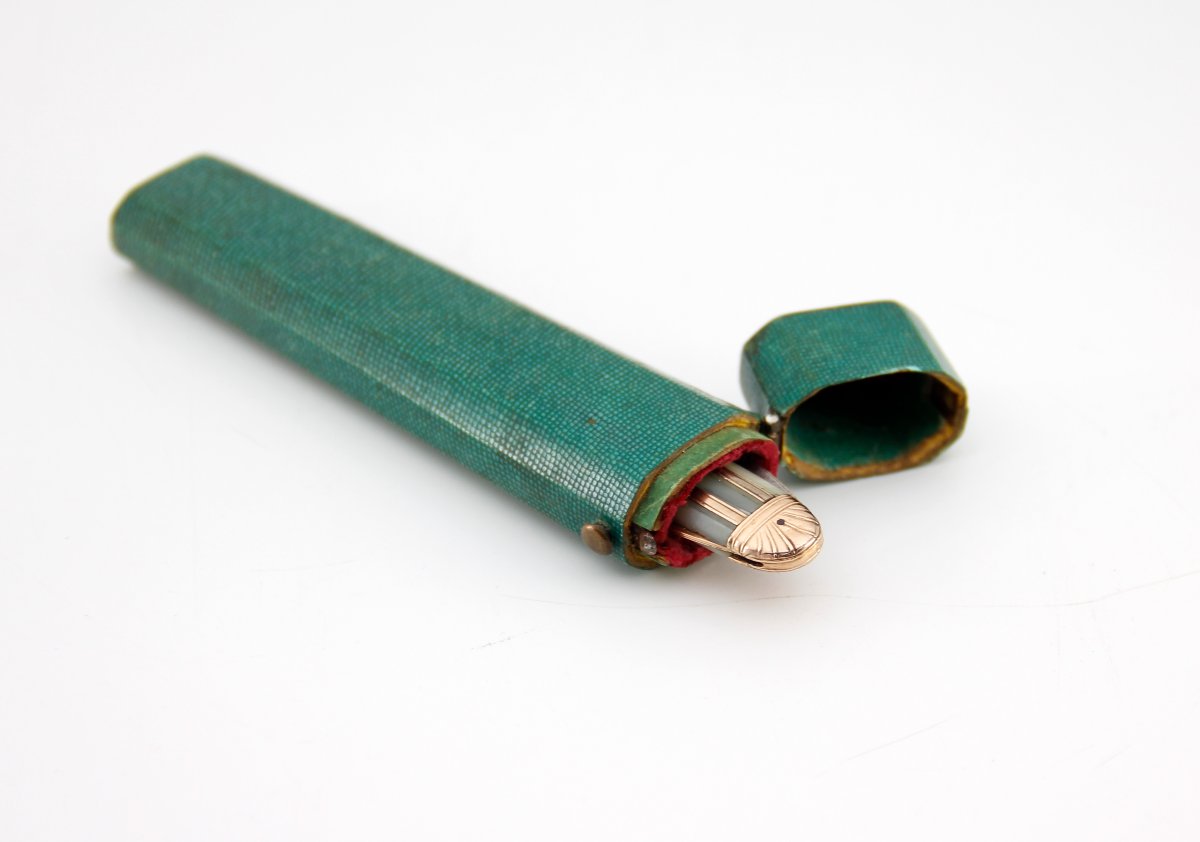
in its shagreen case
-----
10.5 cm [closed]
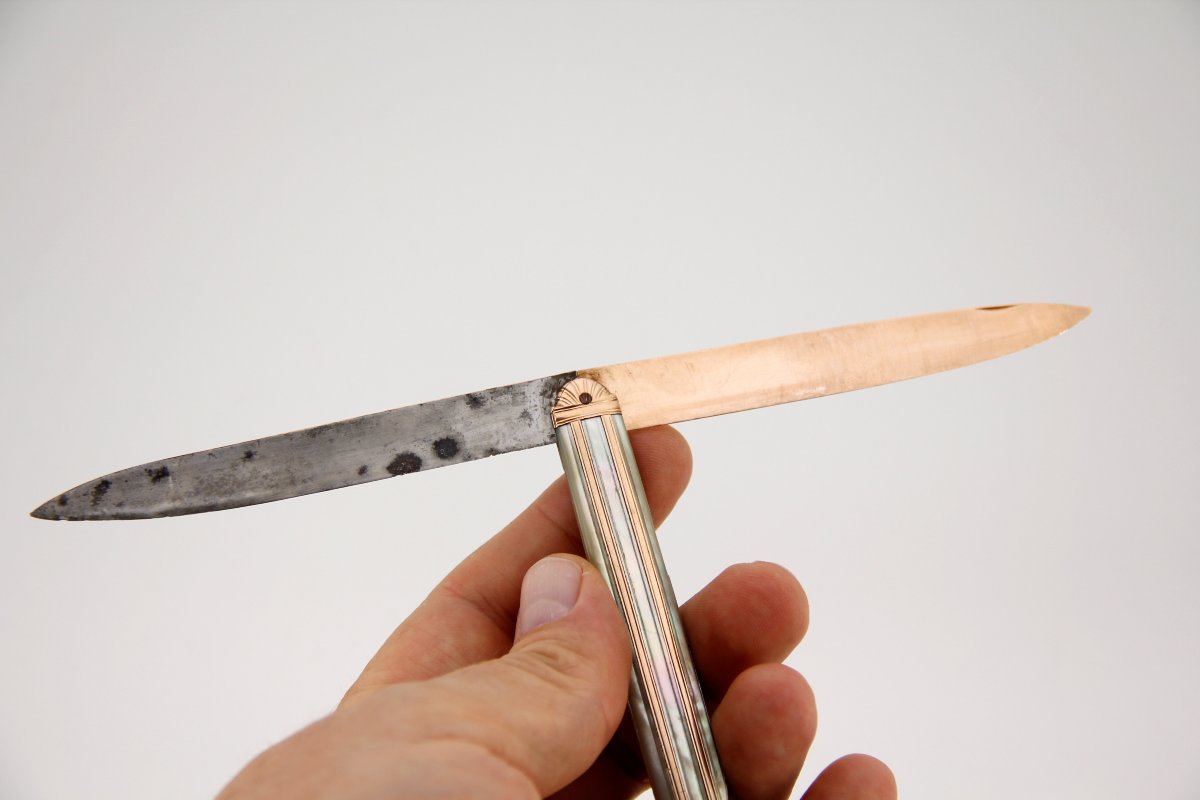
20 cm [open]
33 g
In perfect condition. Steel blade with traces of oxidation. Shagreen case also in very fine condition (hinge pin replaced)
-----
This double-bladed folding travel knife, known as the “à la Berge” after its inventor, features two independent blades that pivot on a single axis: one made of steel, for everyday use; the other made of gold, for fruit. Before the invention of stainless steel around 1815, gold or silver blades were indeed used for serving fruit, as the fruit’s acidity would quickly oxidize carbon steel.
The iridescent mother-of-pearl is of very fine quality.
The object is slender and delicate, with extremely meticulous finishes. The back of the steel blade has been gilded.
-----
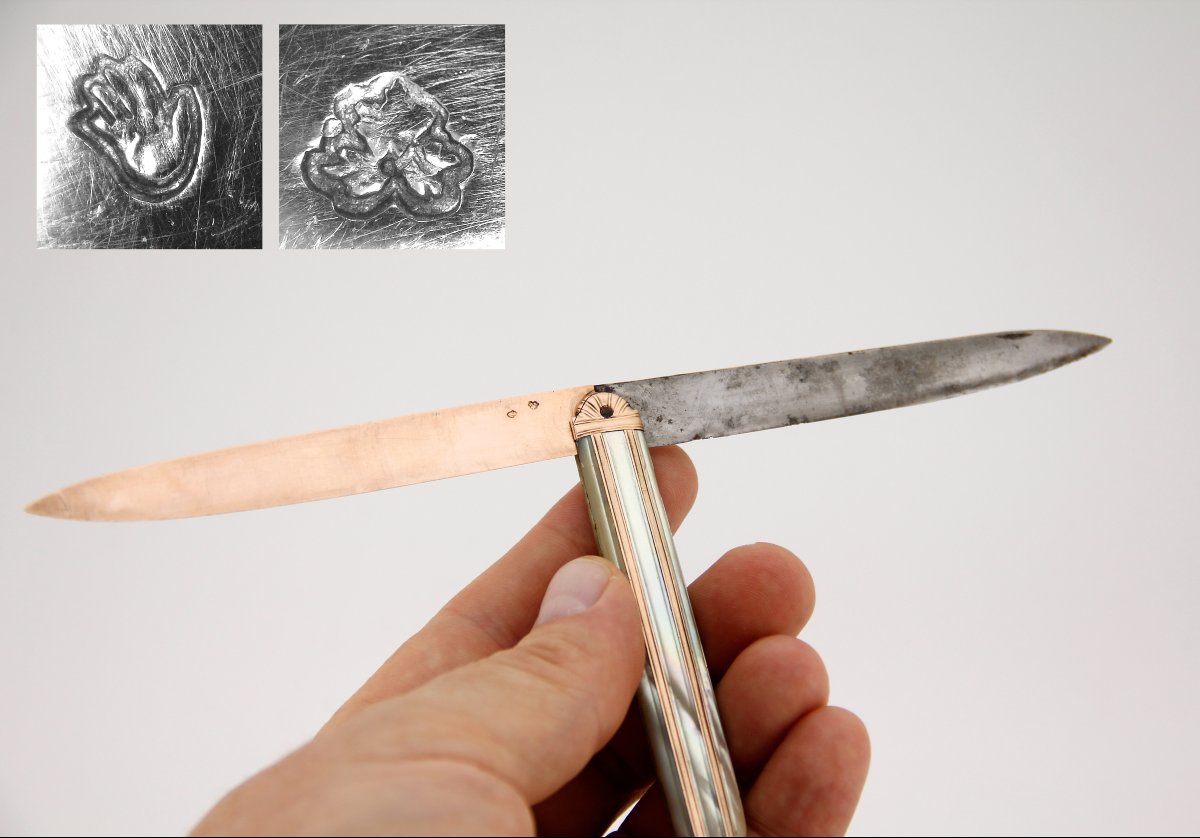
Hallmarks
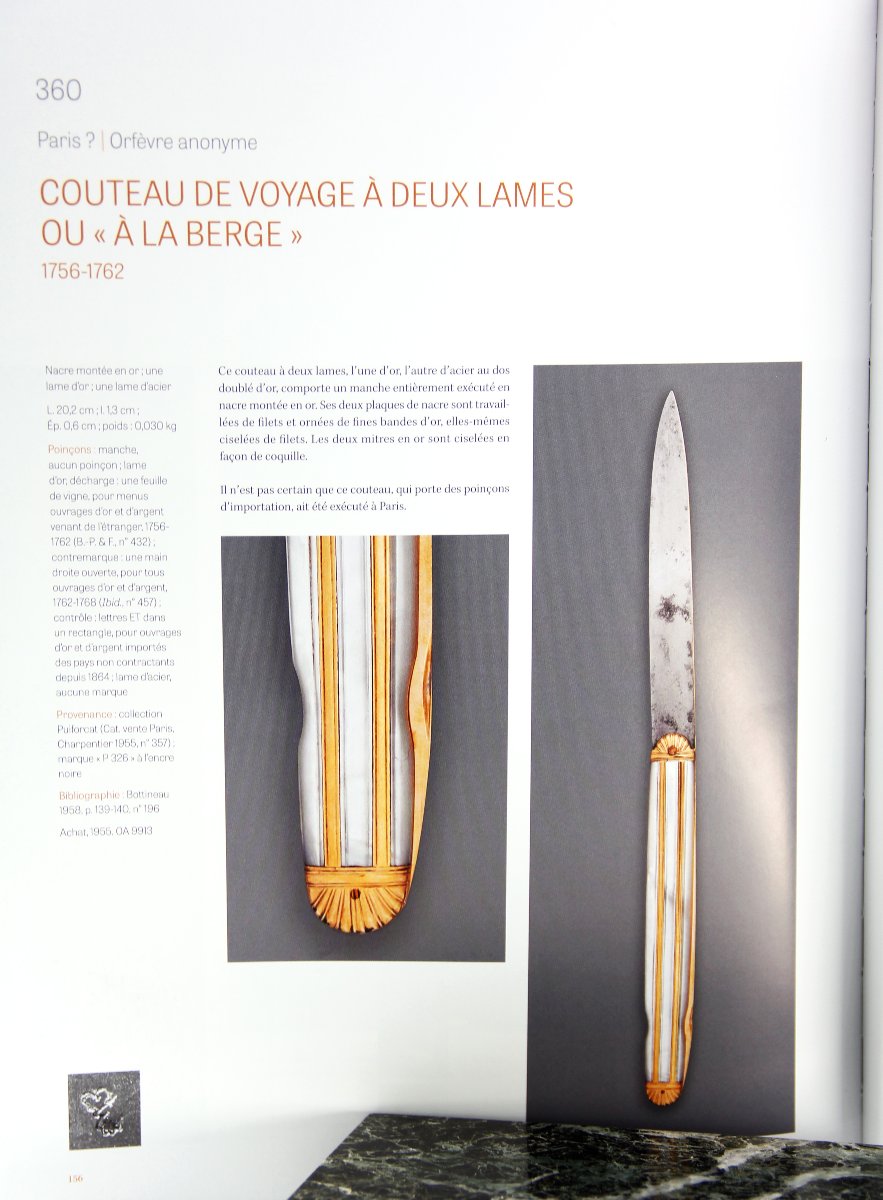
• A vine leaf: a relief hallmark for small gold and silver items imported from abroad (Paris, 1756–1762) [BP No. 432, not illustrated; Louvre III no. 327, p. 156]
• An open right hand: a countermark hallmark for all gold and silver items (Paris, 1762–1768) [BP no. 457]
-----
The Louvre holds a very similar knife in its collections (No. OA9913), bearing the same hallmarks and displaying the same attention to detail in its finish (the back of the blade is steel lined with gold). The catalog’s author suggests the possibility of foreign manufacture, given the import hallmark [Louvre III no. 327, p. 156, last photo].
The same hallmarks are found on a gold blade reused by Langlois on one of his dessert knives (1780–1781) [Louvre III no. 327, p. 120]
-----
References
BP: Michèle Bimbenet-Privat and Gabriel de Fontaines, Dating Parisian Silverwork under the Ancien Régime, Paris-Musées 1995
Louvre III: Michèle Bimbenet-Privat, Florian Doux, and Catherine Gougeon, Renaissance and Modern Silverwork, 16th, 17th, and 18th Centuries: The Louvre Museum Collection, Vol. 3, Faton, Paris 2022
Mother-of-pearl set in gold; one blade in gold, the other in steel
Louis XV period
Between 1756 and 1762
in its shagreen case
-----
10.5 cm [closed]
20 cm [open]
33 g
In perfect condition. Steel blade with traces of oxidation. Shagreen case also in very fine condition (hinge pin replaced)
-----
This double-bladed folding travel knife, known as the “à la Berge” after its inventor, features two independent blades that pivot on a single axis: one made of steel, for everyday use; the other made of gold, for fruit. Before the invention of stainless steel around 1815, gold or silver blades were indeed used for serving fruit, as the fruit’s acidity would quickly oxidize carbon steel.
The iridescent mother-of-pearl is of very fine quality.
The object is slender and delicate, with extremely meticulous finishes. The back of the steel blade has been gilded.
-----
Hallmarks
• A vine leaf: a relief hallmark for small gold and silver items imported from abroad (Paris, 1756–1762) [BP No. 432, not illustrated; Louvre III no. 327, p. 156]
• An open right hand: a countermark hallmark for all gold and silver items (Paris, 1762–1768) [BP no. 457]
-----
The Louvre holds a very similar knife in its collections (No. OA9913), bearing the same hallmarks and displaying the same attention to detail in its finish (the back of the blade is steel lined with gold). The catalog’s author suggests the possibility of foreign manufacture, given the import hallmark [Louvre III no. 327, p. 156, last photo].
The same hallmarks are found on a gold blade reused by Langlois on one of his dessert knives (1780–1781) [Louvre III no. 327, p. 120]
-----
References
BP: Michèle Bimbenet-Privat and Gabriel de Fontaines, Dating Parisian Silverwork under the Ancien Régime, Paris-Musées 1995
Louvre III: Michèle Bimbenet-Privat, Florian Doux, and Catherine Gougeon, Renaissance and Modern Silverwork, 16th, 17th, and 18th Centuries: The Louvre Museum Collection, Vol. 3, Faton, Paris 2022
2 780 €
Period: 18th century
Style: Louis 15th - Transition
Condition: Perfect condition
Material: Gold
Length: 20
Reference (ID): 1818663
Availability: In stock
Print