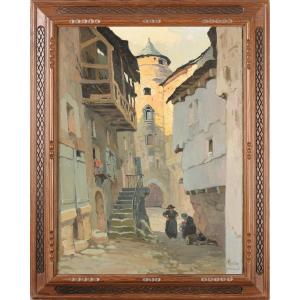


Paul Roblin (1883–1954) Saint-côme-d’olt, Aveyron, Espalion
Artist: Paul Roblin
Paul ROBLIN
(Paris 1883 – Paris 1954)
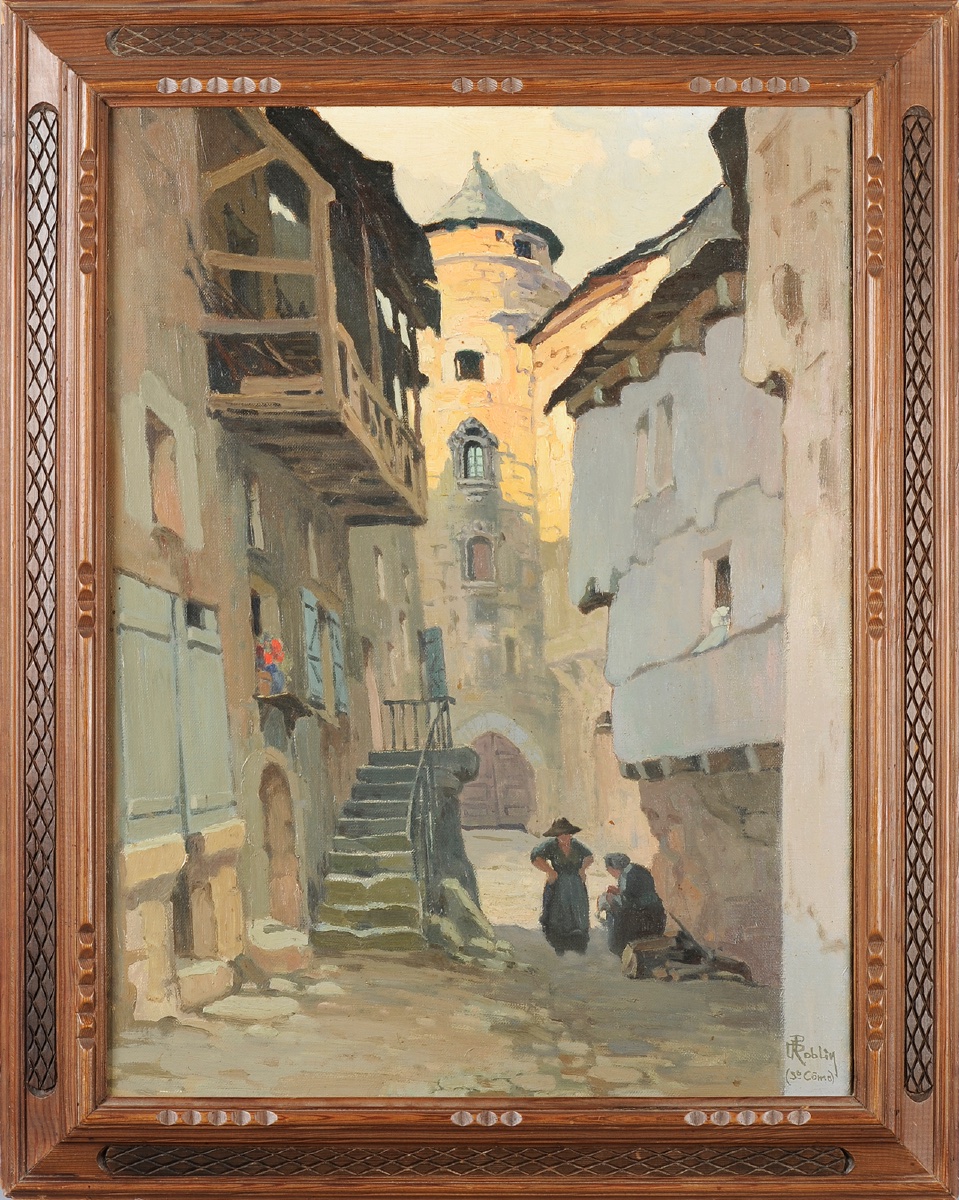
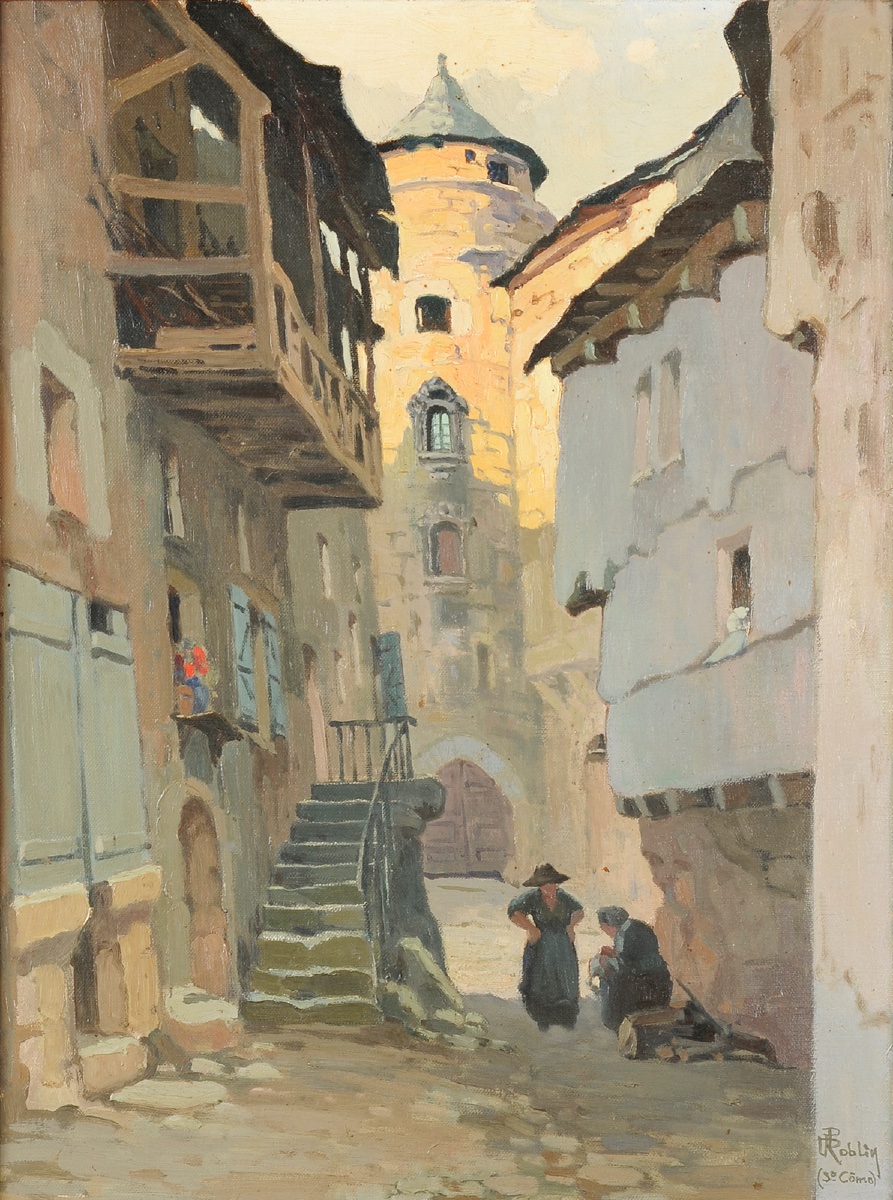
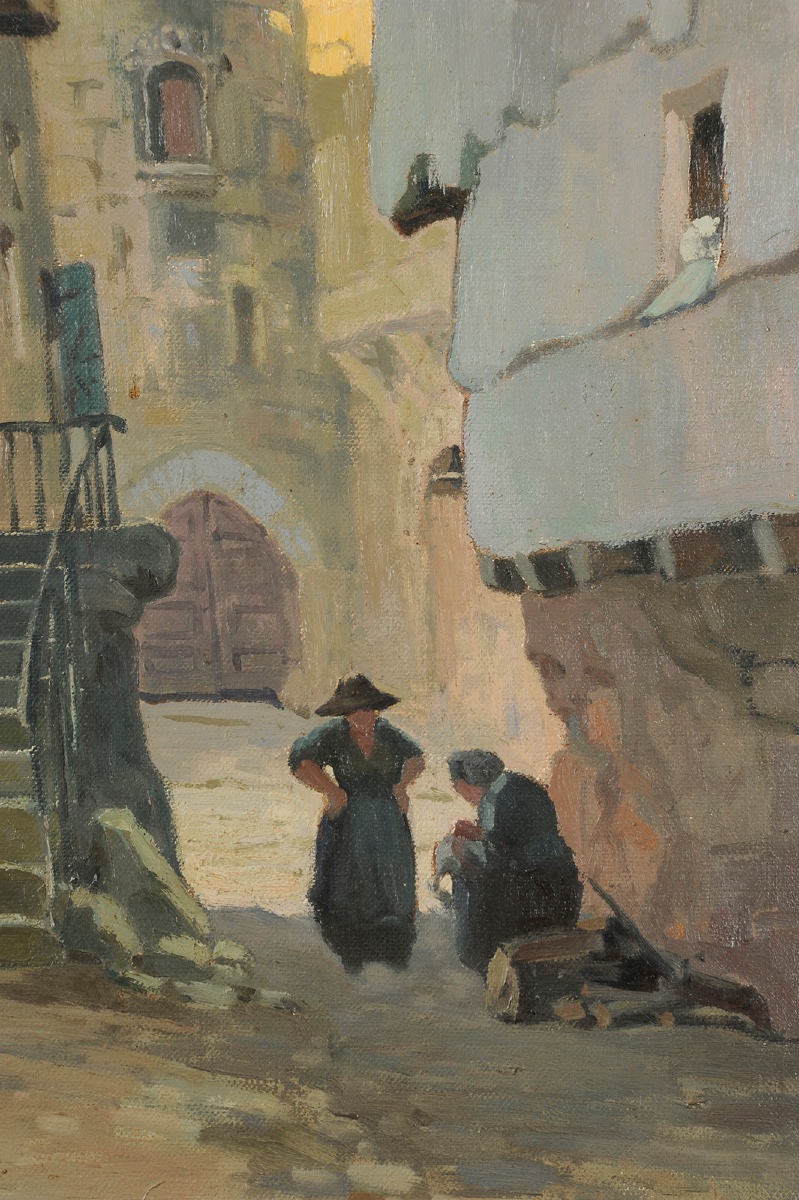
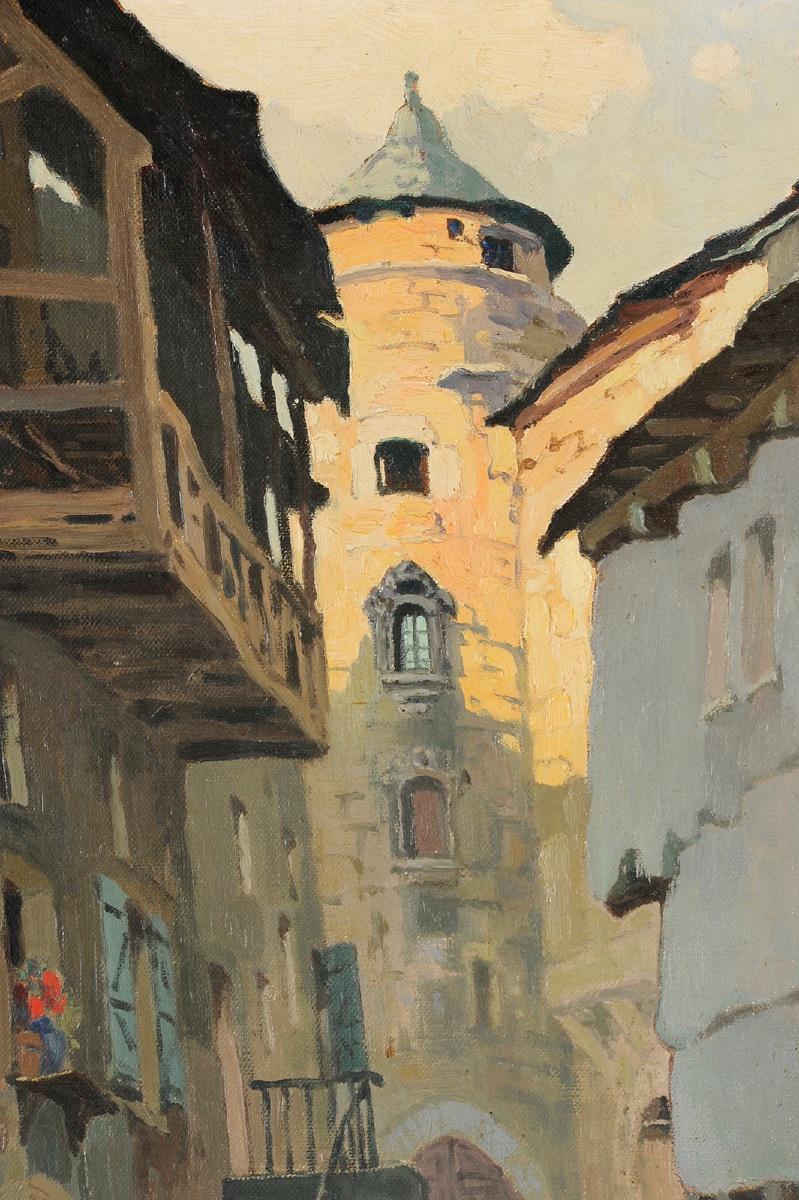
The Greffe Tower in Saint Côme d’Olt
Oil on canvas
H. 61 cm; W. 46 cm
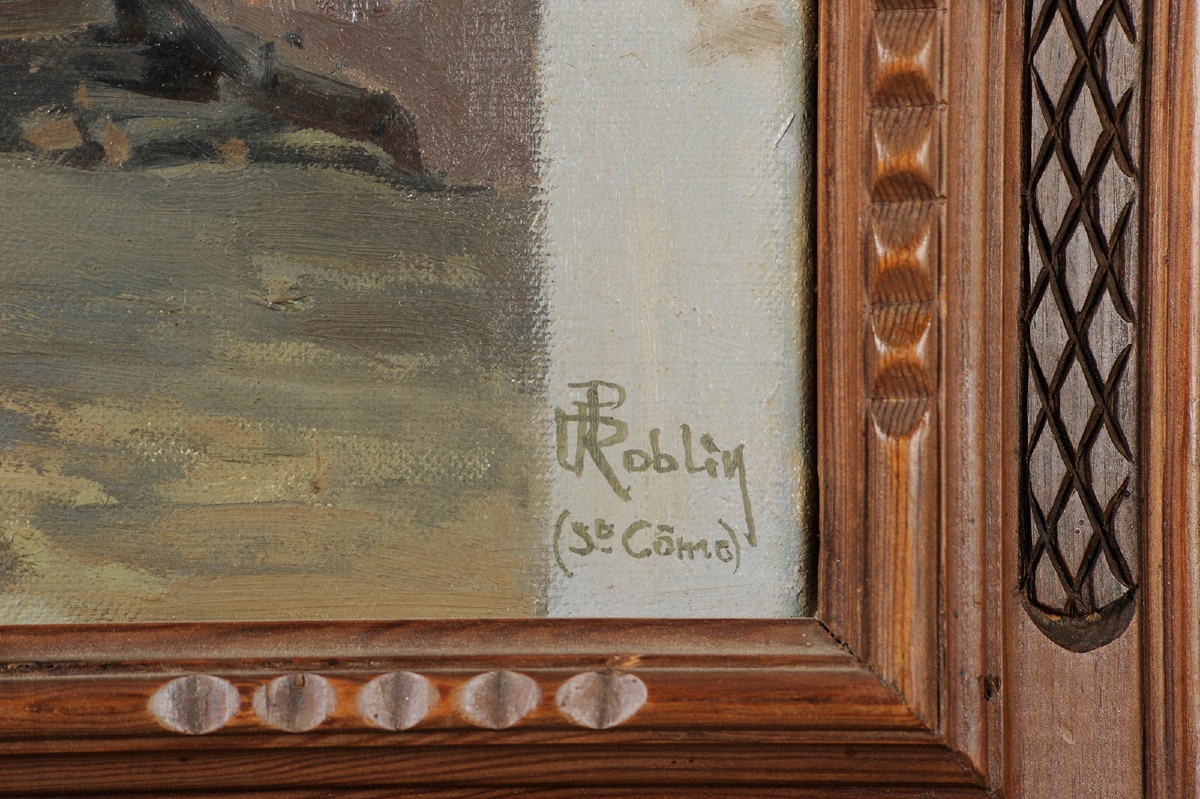
Signed lower right and dated
Born in Paris in 1883, Paul Roblin began his artistic career by taking classes with Germain Pilon, where he learned techniques related to industrial design. Following this training, he worked for the Daltrof factory near Saint-Quentin in the Aisne department, where he designed lace and embroidery patterns.
In 1907, Roblin married Lucie Vion, a young Parisian schoolteacher whose mother ran a small bookstore on Boulevard Saint-Michel. In 1910, their only son, Michel, was born; he would go on to pursue a career in literature. Despite being exempt from military service, he was drafted into the 282e Infantry Regiment during the early days of combat in 1914 and did not return to civilian life until 1919. During the war, the artist naturally remained active, producing numerous works from the rear or in the quiet of the trenches between battles. Many of his drawings were published in Le Monde Illustré and L’Illustration.
Shortly before the war, the couple had settled in Châtillon, where Lucie took a job as a schoolteacher until her retirement in 1937. It was therefore south of Paris that Paul Roblin returned from the world war at the age of thirty-six. At that time, the small town of Châtillon was teeming with artists, many of whom had met on the enemy lines. Roblin rubbed shoulders, in particular, with the Lachenals and the ceramicist Brozzetti, known as Louis Bros. He would design furniture and wrought-iron pieces for other artists, who would then bring them to life. A few woodcuts were produced based on the painter’s watercolors to illustrate a book by Paul Huisman titled “From Saint Severin to Saint Julian the Poor.”
In the 1920s, he founded a small stained-glass workshop with Ludovic Leblanc within the family home. Roblin painted on glass rather than creating traditional stained-glass windows, for reasons of speed and cost. These pieces were primarily intended for churches in northern France that had been damaged by war. This venture lasted only a very short time, as the creators were unable to find solutions to prevent the stained-glass pieces from breaking during transport…
Paul Roblin then devoted himself exclusively to painting, using various techniques (watercolors, gouaches, oil, charcoal, or mixed media), as well as various surfaces. The artist was active in the Paris area, creating landscapes of the region, but took advantage of vacations to explore many parts of France, such as the Dordogne during the 1930s.
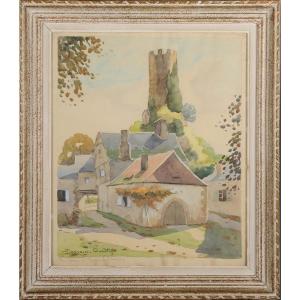
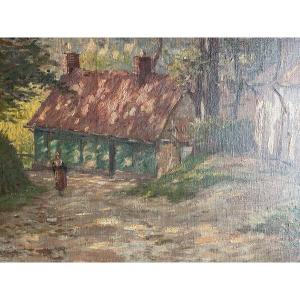
During his regular travels through the regions of France, Roblin would stop to create drawings and paintings as he wandered through sun-drenched villages. While passing through Aveyron, it was in Saint-Côme-d’Olt that his brushes captured this morning view of the sun peeking over the rooftops toward the Tour du Greffe. Beneath the overhanging eaves of the houses, two women chat in the middle of the alley leading from the church (located behind the painter). Before the Revolution, this building housed the local court of justice under the authority of the judge of the local barony.
(Paris 1883 – Paris 1954)
The Greffe Tower in Saint Côme d’Olt
Oil on canvas
H. 61 cm; W. 46 cm
Signed lower right and dated
Born in Paris in 1883, Paul Roblin began his artistic career by taking classes with Germain Pilon, where he learned techniques related to industrial design. Following this training, he worked for the Daltrof factory near Saint-Quentin in the Aisne department, where he designed lace and embroidery patterns.
In 1907, Roblin married Lucie Vion, a young Parisian schoolteacher whose mother ran a small bookstore on Boulevard Saint-Michel. In 1910, their only son, Michel, was born; he would go on to pursue a career in literature. Despite being exempt from military service, he was drafted into the 282e Infantry Regiment during the early days of combat in 1914 and did not return to civilian life until 1919. During the war, the artist naturally remained active, producing numerous works from the rear or in the quiet of the trenches between battles. Many of his drawings were published in Le Monde Illustré and L’Illustration.
Shortly before the war, the couple had settled in Châtillon, where Lucie took a job as a schoolteacher until her retirement in 1937. It was therefore south of Paris that Paul Roblin returned from the world war at the age of thirty-six. At that time, the small town of Châtillon was teeming with artists, many of whom had met on the enemy lines. Roblin rubbed shoulders, in particular, with the Lachenals and the ceramicist Brozzetti, known as Louis Bros. He would design furniture and wrought-iron pieces for other artists, who would then bring them to life. A few woodcuts were produced based on the painter’s watercolors to illustrate a book by Paul Huisman titled “From Saint Severin to Saint Julian the Poor.”
In the 1920s, he founded a small stained-glass workshop with Ludovic Leblanc within the family home. Roblin painted on glass rather than creating traditional stained-glass windows, for reasons of speed and cost. These pieces were primarily intended for churches in northern France that had been damaged by war. This venture lasted only a very short time, as the creators were unable to find solutions to prevent the stained-glass pieces from breaking during transport…
Paul Roblin then devoted himself exclusively to painting, using various techniques (watercolors, gouaches, oil, charcoal, or mixed media), as well as various surfaces. The artist was active in the Paris area, creating landscapes of the region, but took advantage of vacations to explore many parts of France, such as the Dordogne during the 1930s.
During his regular travels through the regions of France, Roblin would stop to create drawings and paintings as he wandered through sun-drenched villages. While passing through Aveyron, it was in Saint-Côme-d’Olt that his brushes captured this morning view of the sun peeking over the rooftops toward the Tour du Greffe. Beneath the overhanging eaves of the houses, two women chat in the middle of the alley leading from the church (located behind the painter). Before the Revolution, this building housed the local court of justice under the authority of the judge of the local barony.
520 €
Period: 20th century
Style: Modern Art
Condition: Perfect condition
Material: Oil painting
Length: 61 cm hors cadre
Width: 46 cm hors cadre
Reference (ID): 1818126
Availability: In stock
Print