


René Seyssaud (1867–1952) Landscape Of The Palous, On The Shores Of The Etang De Berre
Artist: René Seyssaud (1867-1952)
The Etang de Berre, one of the favorite subjects of the painter—born in Marseille but living in Saint Chamas, that charming village on the shores of the lagoon at the mouth of the Touloubre—is a subject that has so deeply inspired the artist.
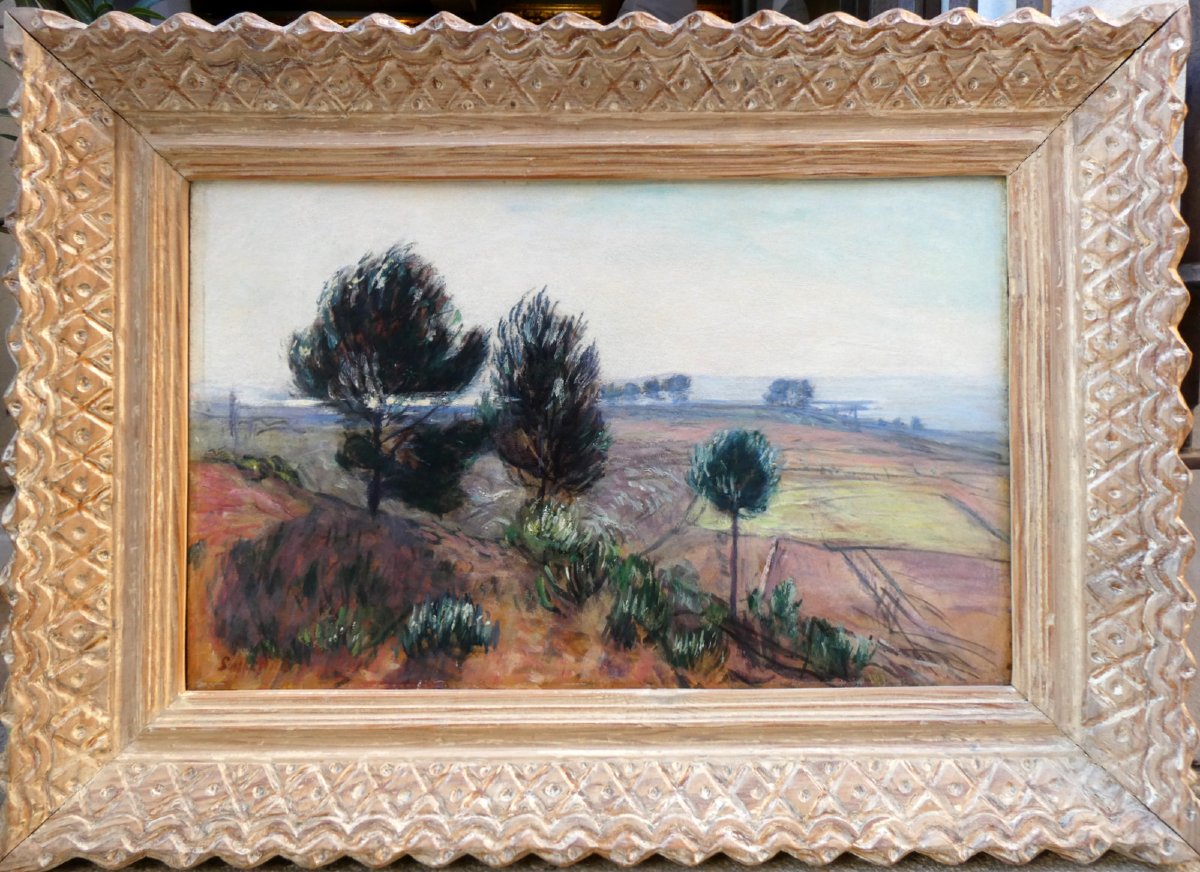
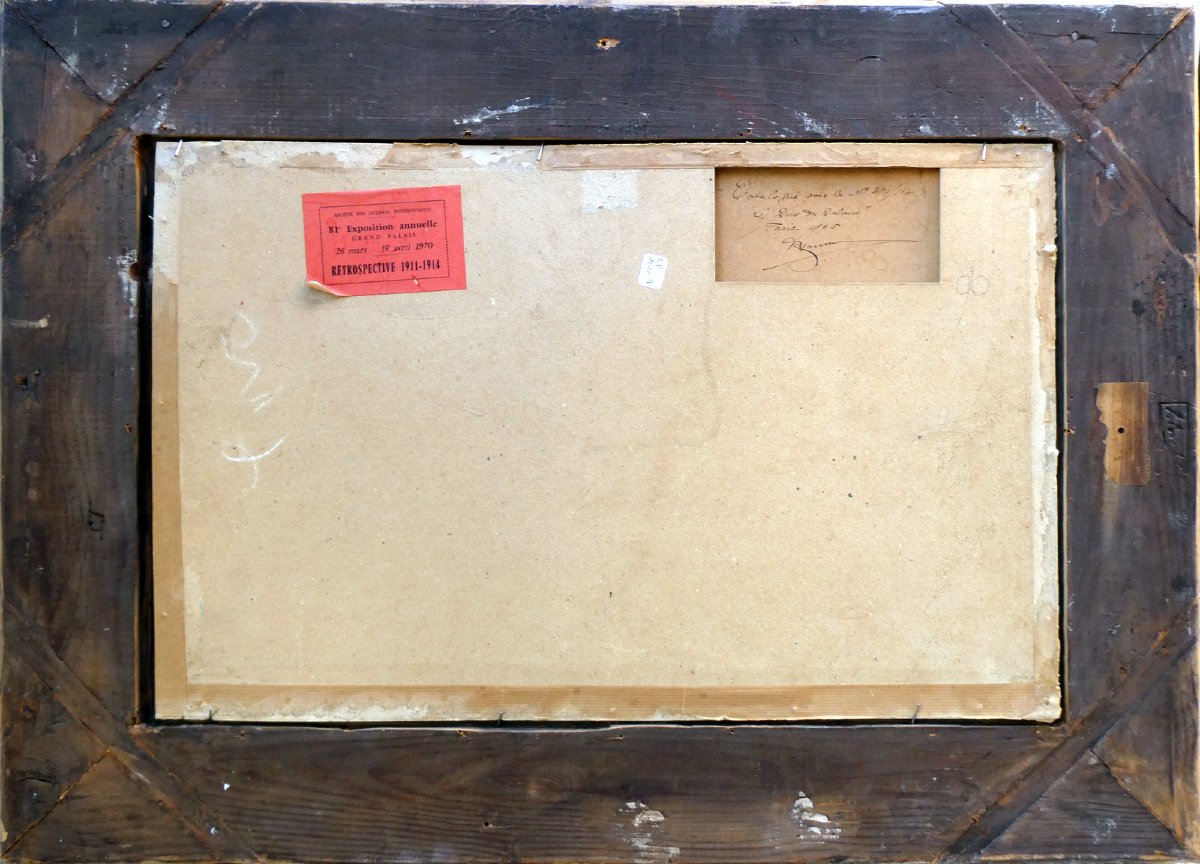
The work is painted in oil on cardboard and is presented in a beautiful carved frame from Bouche with a light patina, measuring 59 cm by 82 cm, the painting itself measures 38 cm by 61 cm.
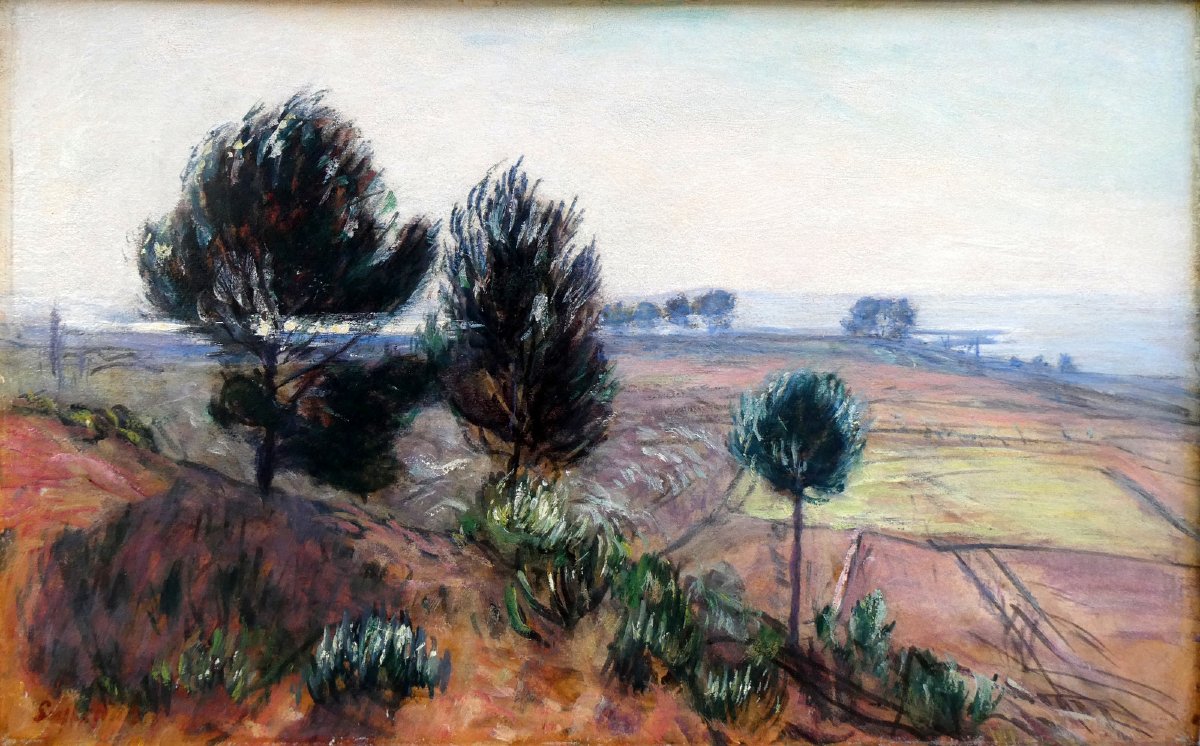
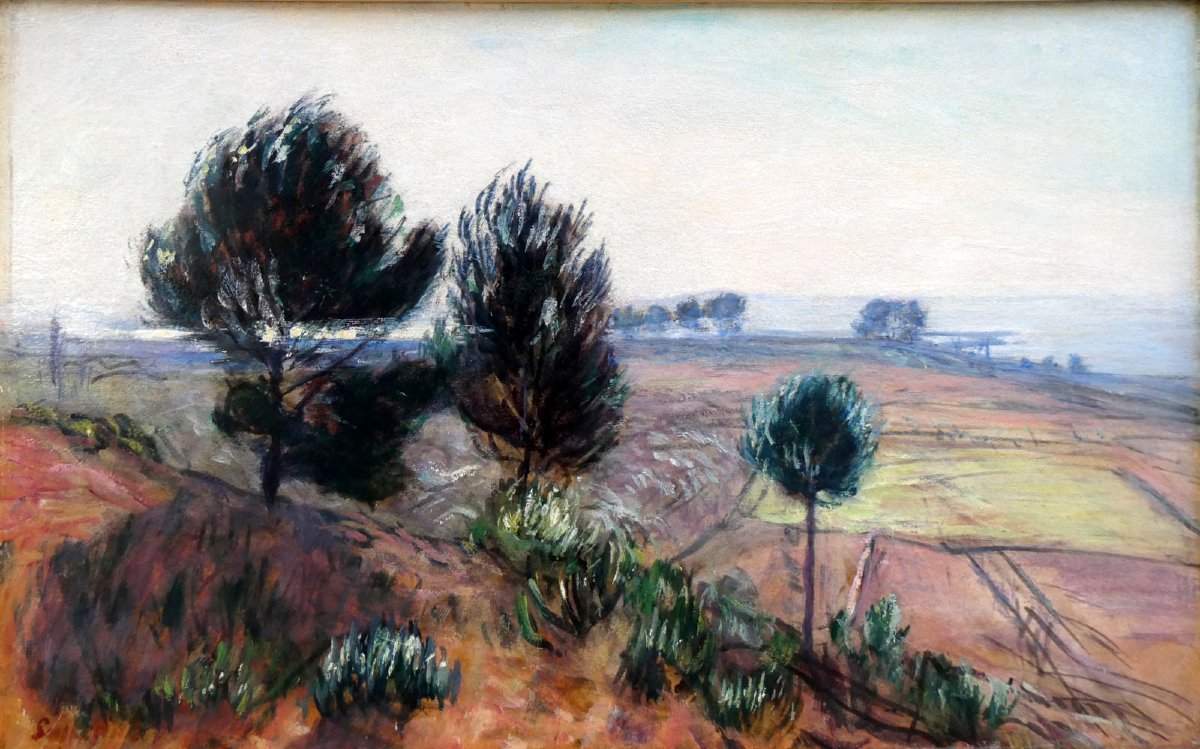
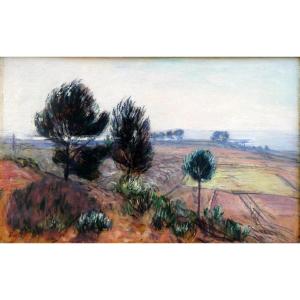
The motif of a solitary pine tree or a cluster of pines sculpted by the mistral, with a bird’s-eye view of the landscape along the lake’s shores, is one of the painter’s favorite motifs in his depictions of the colorful landscapes of the south of France.
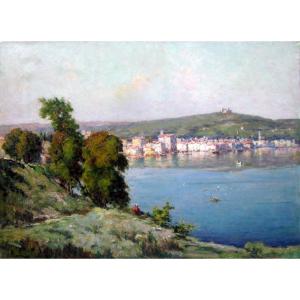
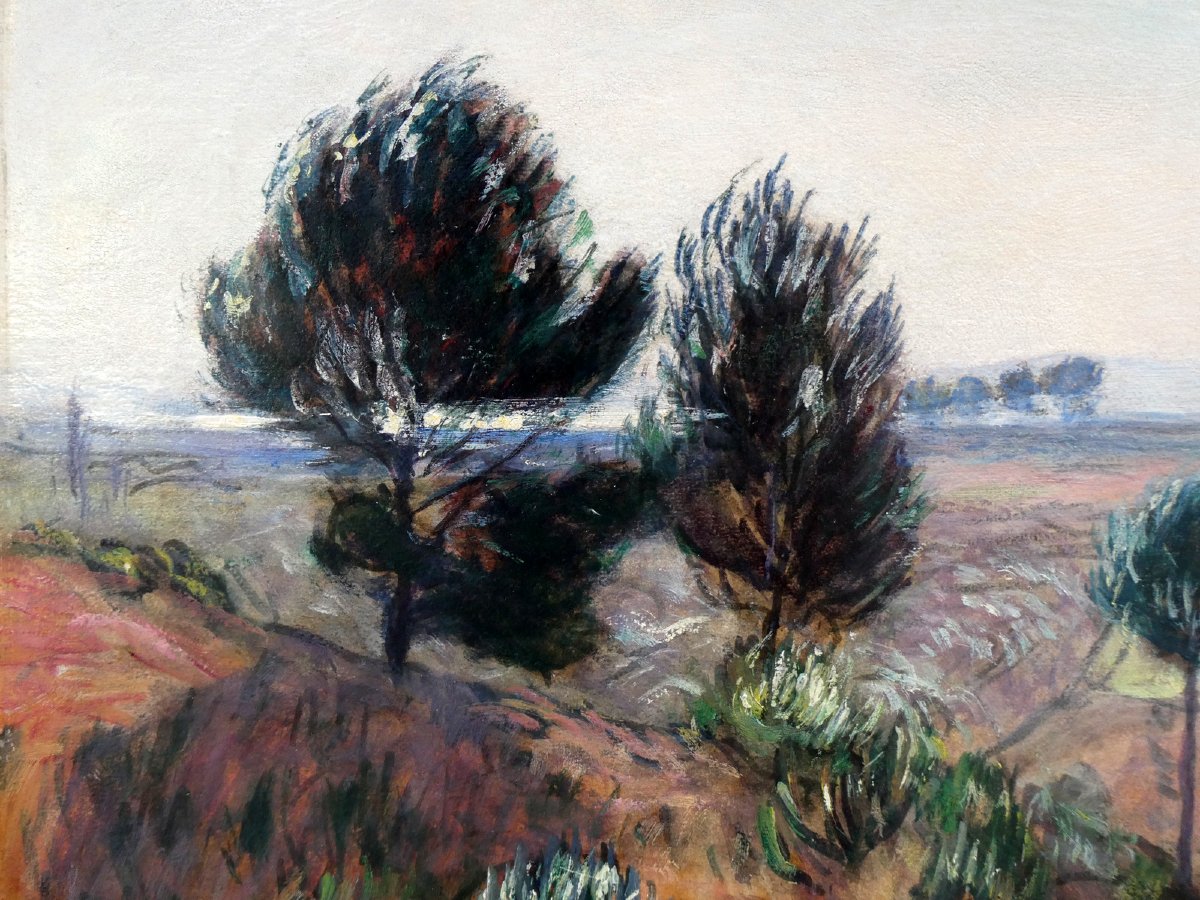
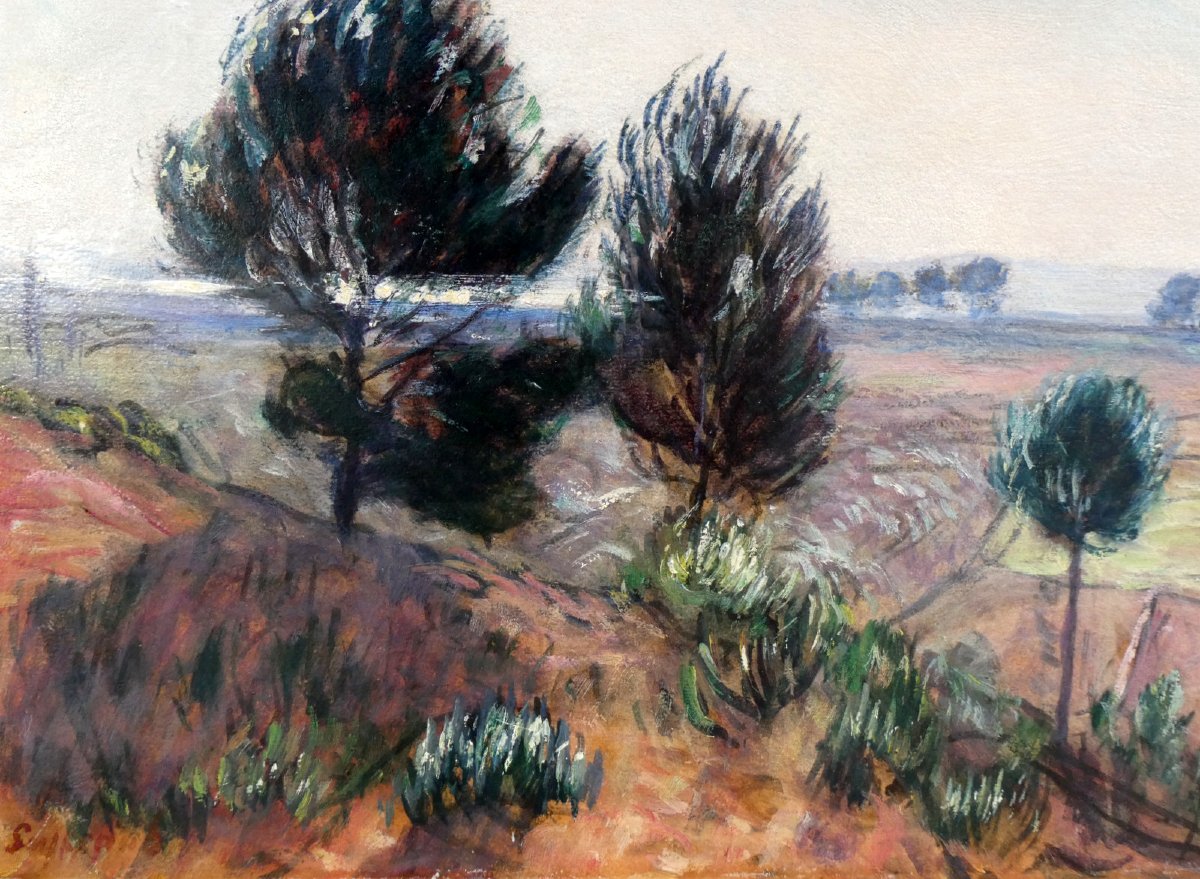
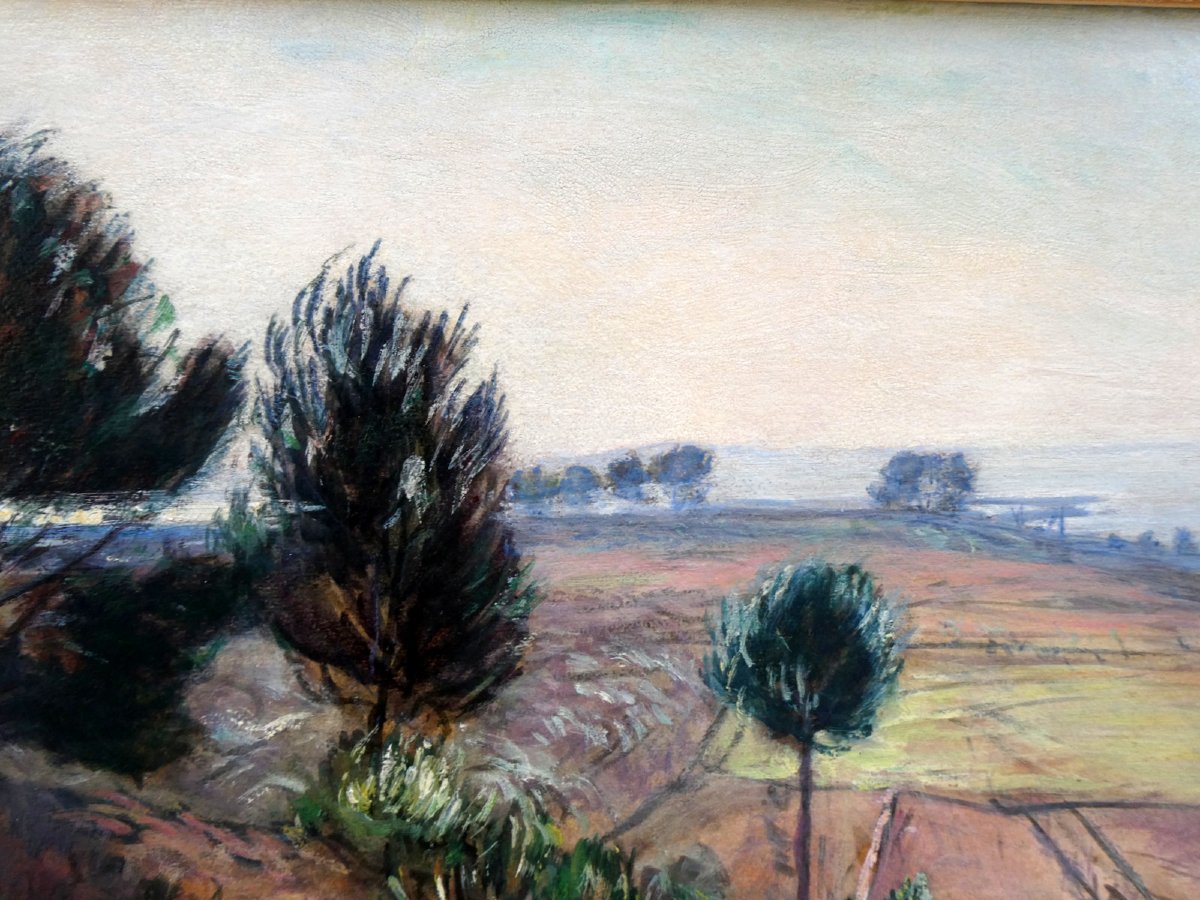
A curtain of trees in the foreground, three maritime pines battered by the mistral, provide vertical structure to an otherwise horizontal composition, with the sky occupying nearly half the canvas.
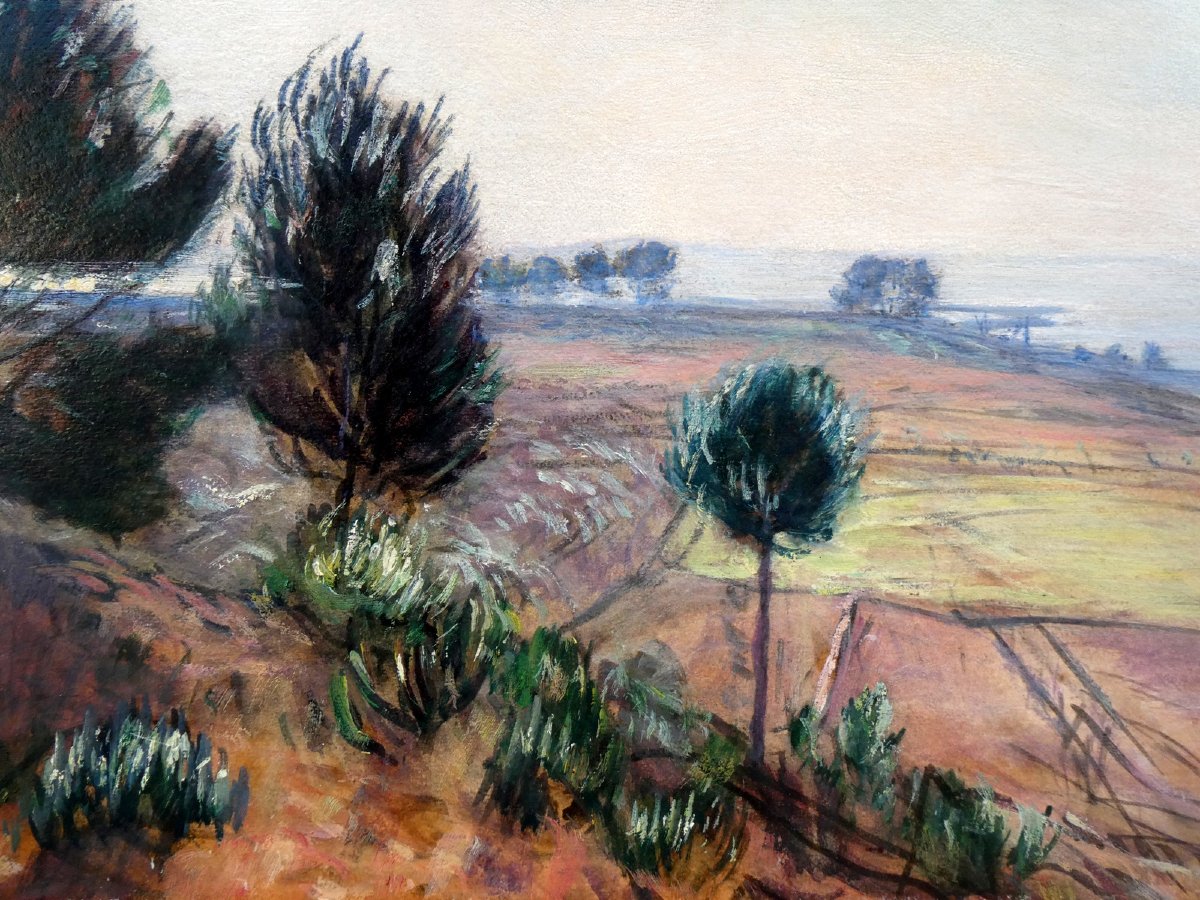
The viewer’s gaze is guided diagonally from the foreground toward cultivated fields on a farmland plain all the way to the bluish line of the lake on the horizon, rendered in a soft, almost Japanese-inspired style through its use of negative space in the pinkish-white sky, set against the densely packed foliage, with contrasts between the burnt ochres and pinks of the ground and the almost violent green-black of the pines, accented by flashes of white that stand out sharply against the foliage.
Described by critics as a maverick of Fauvism, this is evident here in the raw contrasts and striking juxtapositions of a brushstroke that is at times energetic, conveying the wind through the vegetation, while the sky remains surprisingly subdued, almost pearlescent.
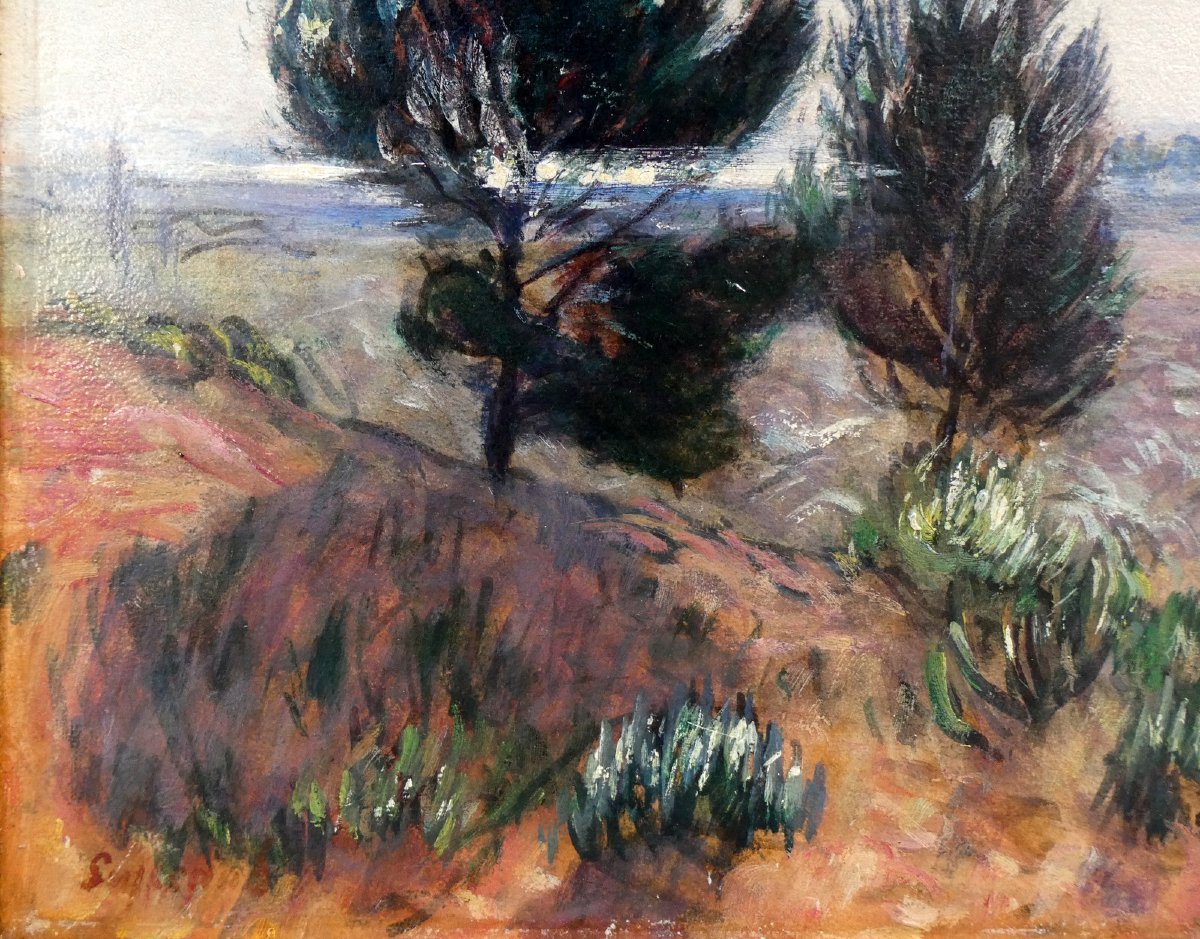
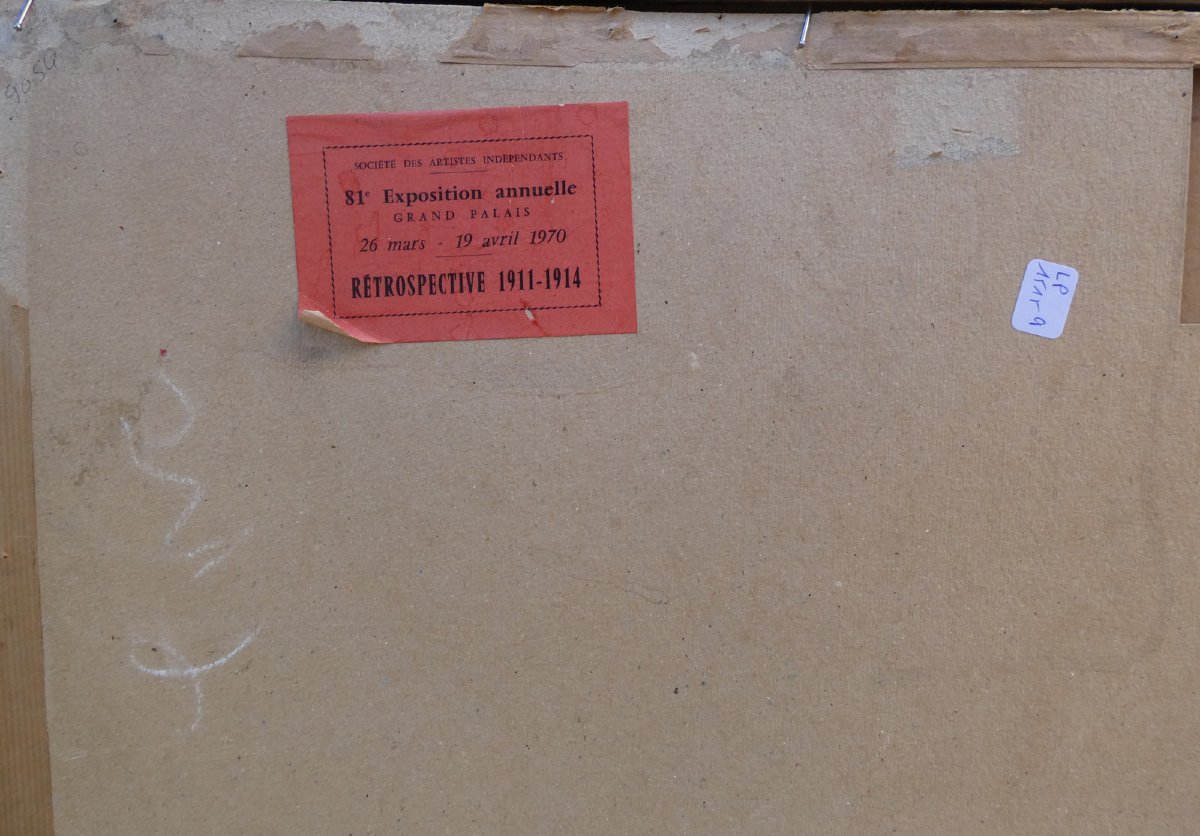
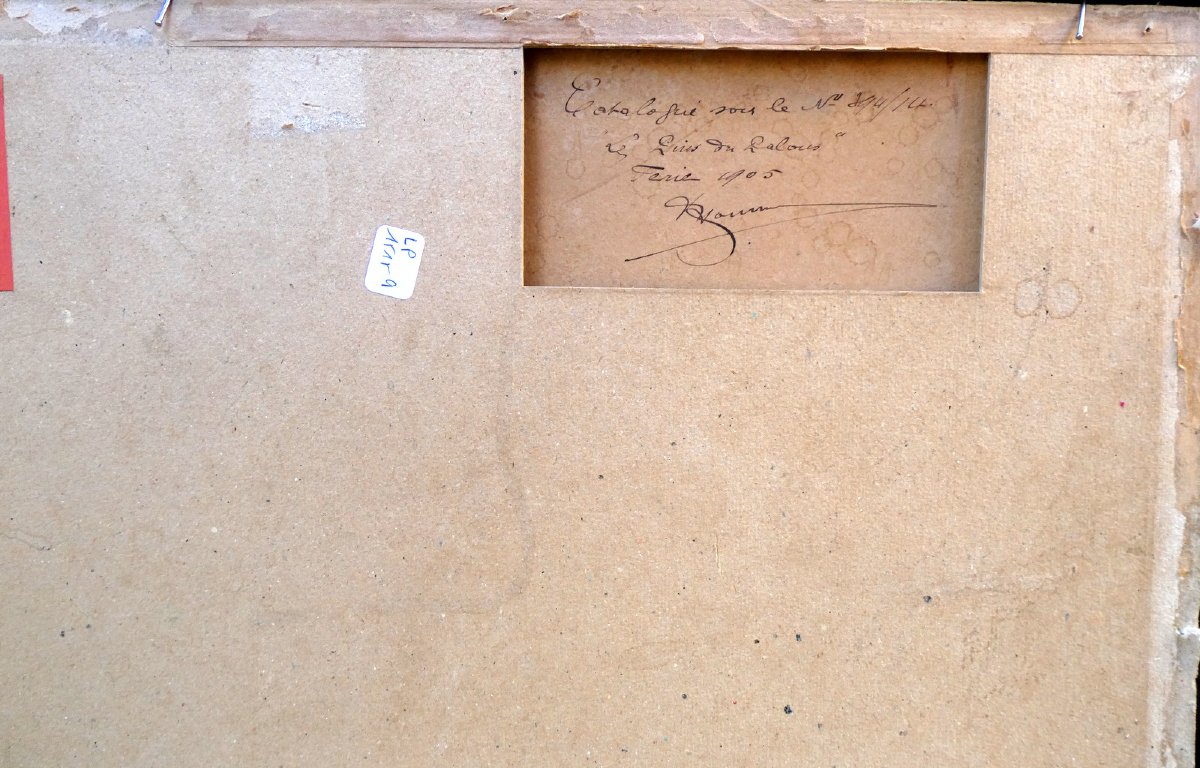
A work titled “Les Pins du Palous,” signed lower left and dated 1905 on the reverse by Honnorat, the painter’s friend and dealer.
At the height of his artistic maturity following his remarkable debut at his first major exhibition in 1892, also on the reverse is the red label from a 1911–1914 retrospective at the 81st annual Salon des Indépendants at the Grand Palais in 1970—a posthumous exhibition held eighteen years after the artist’s death.
A pioneer of Fauvism and a member of the Nouvelle École d’Avignon in 1892, Seyssaud submitted works to the Indépendants as well as to the Champs de Mars.
He exhibited at the Salon d’Automne from its inception, at the Parc de Bouteville in 1897, and in 1899 at Vollard’s gallery.
He achieved all the success he had hoped for.
Vollard offered Seyssaud a contract, but Seyssaud, out of loyalty to his friend and Marseille-based art dealer François Honnorat, declined.
In 1901, he began exhibiting annually at Bernheim Jeune.
Like Vollard, Bernheim Jeune offered to manage his interests.
Seyssaud again chose to reject this partnership, however lucrative it might have been.
After 1911, Seyssaud stopped exhibiting at Bernheim and chose instead to exhibit at Rosemberg (1914), Druet (1924), (1927), Printz (1929), Georges Petit (1930), Javal and Boudeaix (1933), and Printz (1933).
He exhibited in Marseille in 1905, 1907, 1920, 1921, 1922, 1928, 1947, 1949.
In Avignon, Aix-en-Provence, Tunis, etc...
In America in 1947.
Seyssaudparticipated in official exhibitions in Berlin (1903), Amsterdam (1912), Barcelona (1917, 1929), New York (1929), Wiesbaden (1921), Ghent (1922), Stockholm (1923), Geneva (1923, 1942), Turin (1951), the Colonial Exhibition in Marseille (1922), the Paris International Exhibition (1937), the of Marseille (1949), Menton Biennial (1951), Cantini Museum (1954), Zurich (1955), Galliera Museum (1956), Oxford, London, Edinburgh (1957), Aix-en-Provence, Festival (1957).
His works were acquired by the French government for the Luxembourg Museum (1903, 1904, 1921, 1927, 1929, 1930).
His works were alsoacquired by the museums of Marseille (1908, 1919), Lyon (1924), and Avignon (1920), the Bouches-du-Rhône Prefecture (1933), the City Hall of Saint-Chamas (1909), the National Museum of Modern Art (1957).
His works are on display at the Petit Palais, the Museum of Modern Art, the Léon Dierx Museum (Reunion Island), and in Moscow.
Also in Dijon, Nîmes, Aix-en-Provence, Arles, Grenoble, Montpellier, Albi, etc...
He has received various medals and awards.
Amongothers, the Gold Medal at the 1937 International Exposition in Paris,the Medal of the City of Marseille in 1947, and the Grand Prix of the French Provinces in 1951 at the Menton Biennale.
Seyssaud had been an Officer of the Legion of Honor since 1947.
Among the posthumous
retrospective exhibitions were those at the Calvet Museum (1953), the Cantini Museum (1954), the Salon d’Automne, Château d’Arbon in Switzerland (1955), and the Galliera Museum.
His paintings are included in the collections of Gustave Geffroy, Frantz Jourdain, Vollard, Georges Feydeau, Sacha Guitry, Armand Dayot, Lucien Poincaré, Maurice Sarraut, Albert Sarraut, Paulhan, Bernheim, Estaunié, Descaves, Morsolf, Fernand Bouisson, Drouant, André Marie, the Marquis de Biron, the Princess de la Tour d’Auvergne, de Wagram, etc.
The work is painted in oil on cardboard and is presented in a beautiful carved frame from Bouche with a light patina, measuring 59 cm by 82 cm, the painting itself measures 38 cm by 61 cm.
The motif of a solitary pine tree or a cluster of pines sculpted by the mistral, with a bird’s-eye view of the landscape along the lake’s shores, is one of the painter’s favorite motifs in his depictions of the colorful landscapes of the south of France.
A curtain of trees in the foreground, three maritime pines battered by the mistral, provide vertical structure to an otherwise horizontal composition, with the sky occupying nearly half the canvas.
The viewer’s gaze is guided diagonally from the foreground toward cultivated fields on a farmland plain all the way to the bluish line of the lake on the horizon, rendered in a soft, almost Japanese-inspired style through its use of negative space in the pinkish-white sky, set against the densely packed foliage, with contrasts between the burnt ochres and pinks of the ground and the almost violent green-black of the pines, accented by flashes of white that stand out sharply against the foliage.
Described by critics as a maverick of Fauvism, this is evident here in the raw contrasts and striking juxtapositions of a brushstroke that is at times energetic, conveying the wind through the vegetation, while the sky remains surprisingly subdued, almost pearlescent.
A work titled “Les Pins du Palous,” signed lower left and dated 1905 on the reverse by Honnorat, the painter’s friend and dealer.
At the height of his artistic maturity following his remarkable debut at his first major exhibition in 1892, also on the reverse is the red label from a 1911–1914 retrospective at the 81st annual Salon des Indépendants at the Grand Palais in 1970—a posthumous exhibition held eighteen years after the artist’s death.
A pioneer of Fauvism and a member of the Nouvelle École d’Avignon in 1892, Seyssaud submitted works to the Indépendants as well as to the Champs de Mars.
He exhibited at the Salon d’Automne from its inception, at the Parc de Bouteville in 1897, and in 1899 at Vollard’s gallery.
He achieved all the success he had hoped for.
Vollard offered Seyssaud a contract, but Seyssaud, out of loyalty to his friend and Marseille-based art dealer François Honnorat, declined.
In 1901, he began exhibiting annually at Bernheim Jeune.
Like Vollard, Bernheim Jeune offered to manage his interests.
Seyssaud again chose to reject this partnership, however lucrative it might have been.
After 1911, Seyssaud stopped exhibiting at Bernheim and chose instead to exhibit at Rosemberg (1914), Druet (1924), (1927), Printz (1929), Georges Petit (1930), Javal and Boudeaix (1933), and Printz (1933).
He exhibited in Marseille in 1905, 1907, 1920, 1921, 1922, 1928, 1947, 1949.
In Avignon, Aix-en-Provence, Tunis, etc...
In America in 1947.
Seyssaudparticipated in official exhibitions in Berlin (1903), Amsterdam (1912), Barcelona (1917, 1929), New York (1929), Wiesbaden (1921), Ghent (1922), Stockholm (1923), Geneva (1923, 1942), Turin (1951), the Colonial Exhibition in Marseille (1922), the Paris International Exhibition (1937), the of Marseille (1949), Menton Biennial (1951), Cantini Museum (1954), Zurich (1955), Galliera Museum (1956), Oxford, London, Edinburgh (1957), Aix-en-Provence, Festival (1957).
His works were acquired by the French government for the Luxembourg Museum (1903, 1904, 1921, 1927, 1929, 1930).
His works were alsoacquired by the museums of Marseille (1908, 1919), Lyon (1924), and Avignon (1920), the Bouches-du-Rhône Prefecture (1933), the City Hall of Saint-Chamas (1909), the National Museum of Modern Art (1957).
His works are on display at the Petit Palais, the Museum of Modern Art, the Léon Dierx Museum (Reunion Island), and in Moscow.
Also in Dijon, Nîmes, Aix-en-Provence, Arles, Grenoble, Montpellier, Albi, etc...
He has received various medals and awards.
Amongothers, the Gold Medal at the 1937 International Exposition in Paris,the Medal of the City of Marseille in 1947, and the Grand Prix of the French Provinces in 1951 at the Menton Biennale.
Seyssaud had been an Officer of the Legion of Honor since 1947.
Among the posthumous
retrospective exhibitions were those at the Calvet Museum (1953), the Cantini Museum (1954), the Salon d’Automne, Château d’Arbon in Switzerland (1955), and the Galliera Museum.
His paintings are included in the collections of Gustave Geffroy, Frantz Jourdain, Vollard, Georges Feydeau, Sacha Guitry, Armand Dayot, Lucien Poincaré, Maurice Sarraut, Albert Sarraut, Paulhan, Bernheim, Estaunié, Descaves, Morsolf, Fernand Bouisson, Drouant, André Marie, the Marquis de Biron, the Princess de la Tour d’Auvergne, de Wagram, etc.
4 500 €
Period: 20th century
Style: Other Style
Condition: Excellent condition
Material: Oil painting on cardboard
Length: 61 cm
Height: 38 cm
Reference (ID): 1818117
Availability: In stock
Print