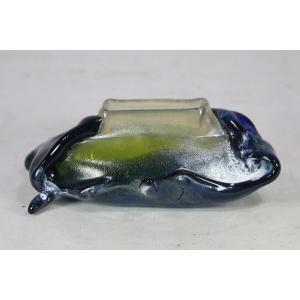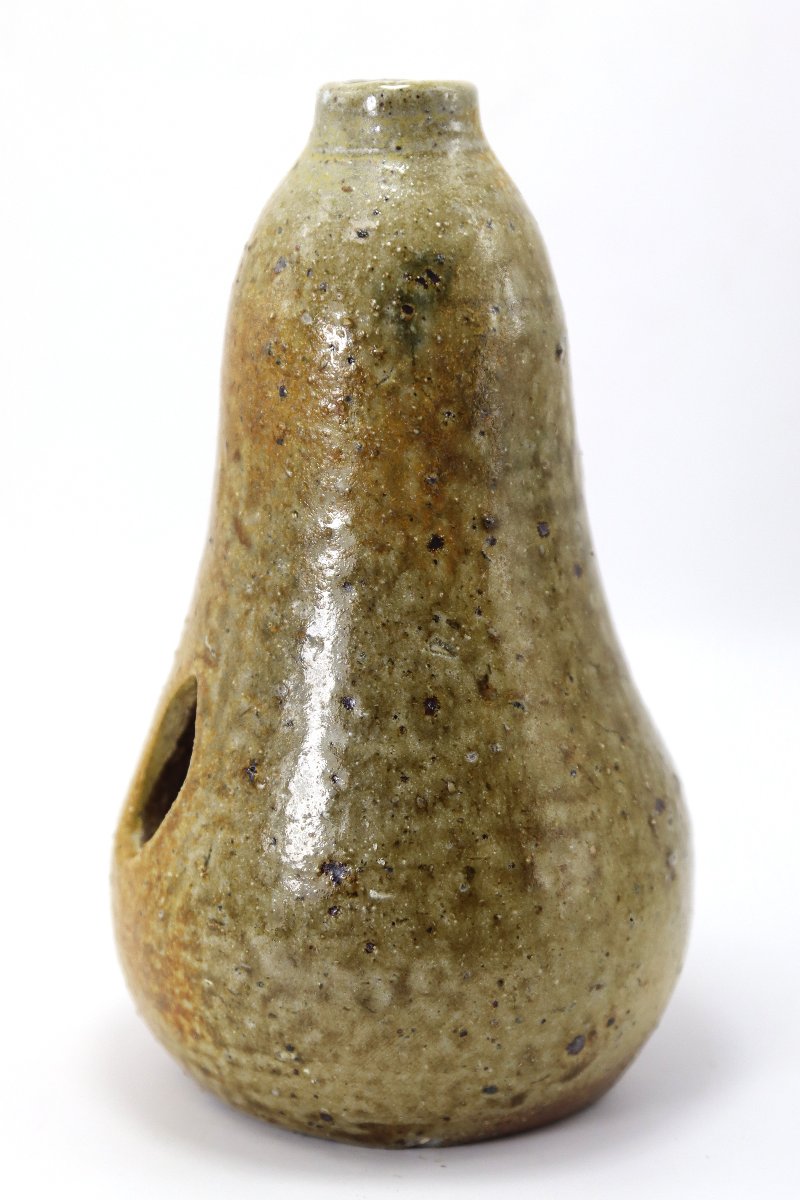
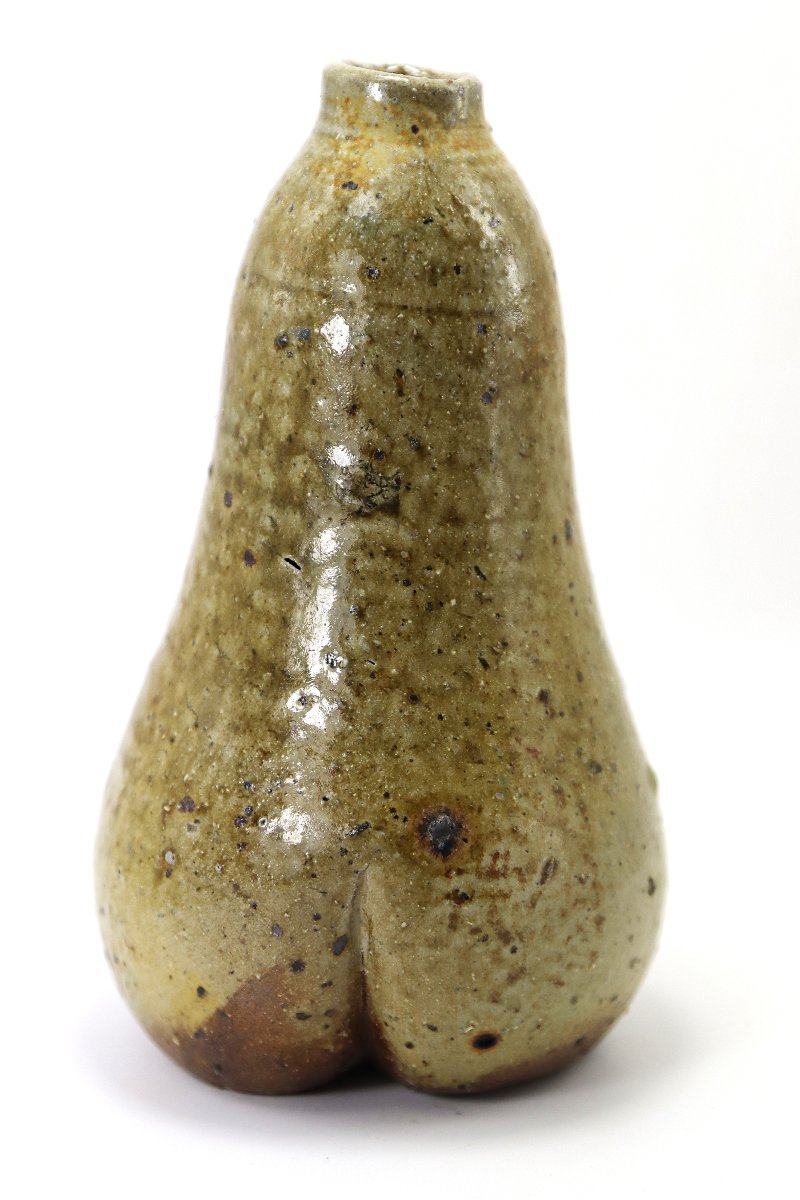

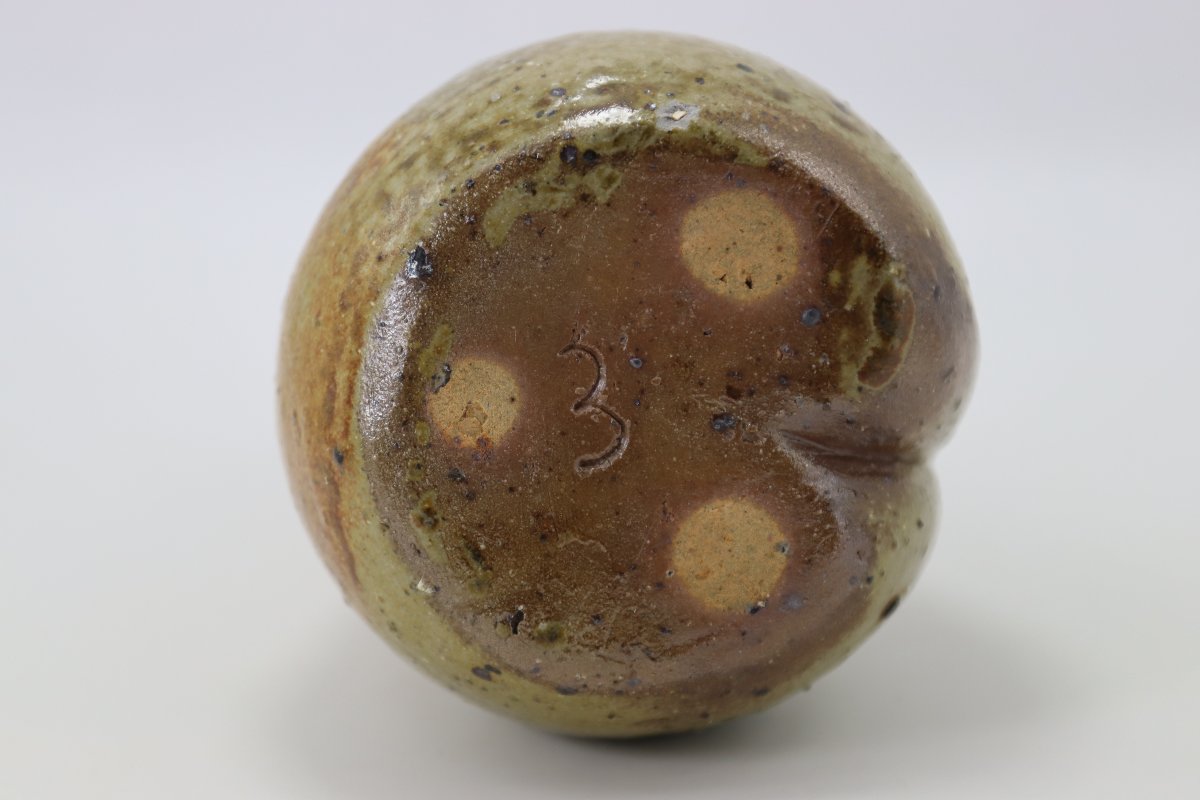
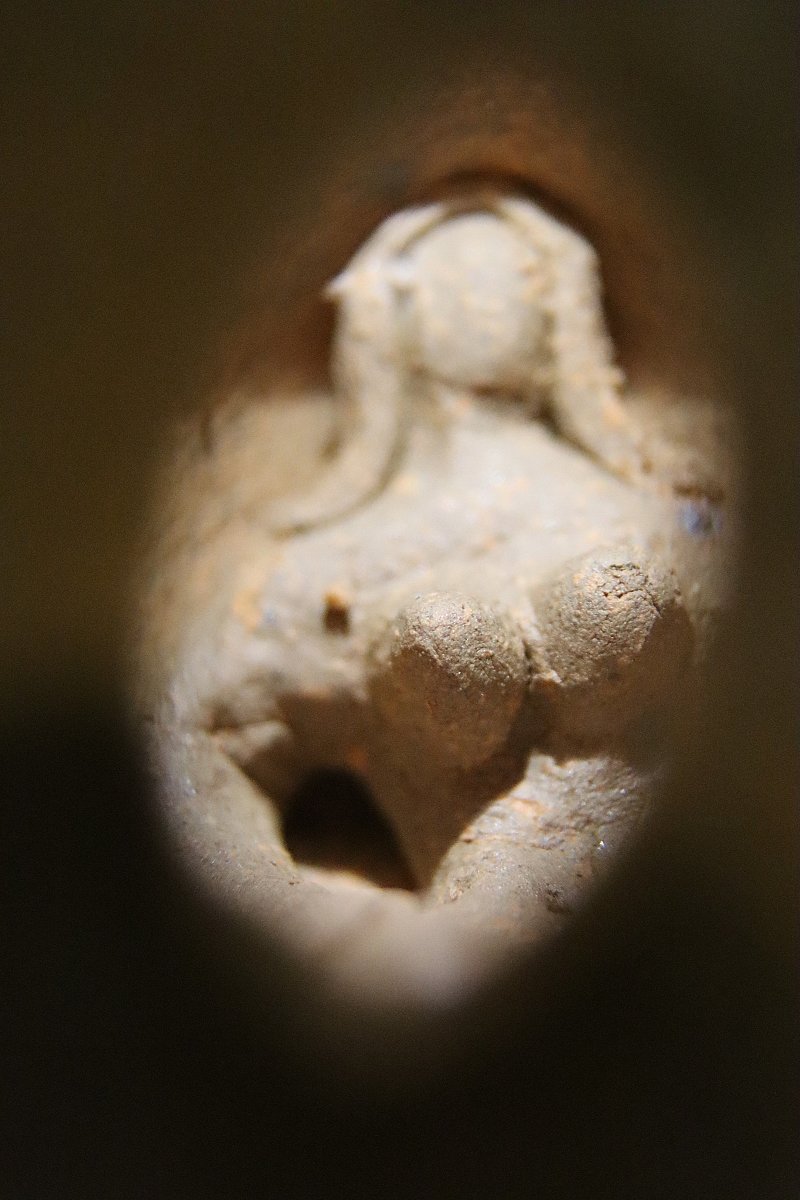
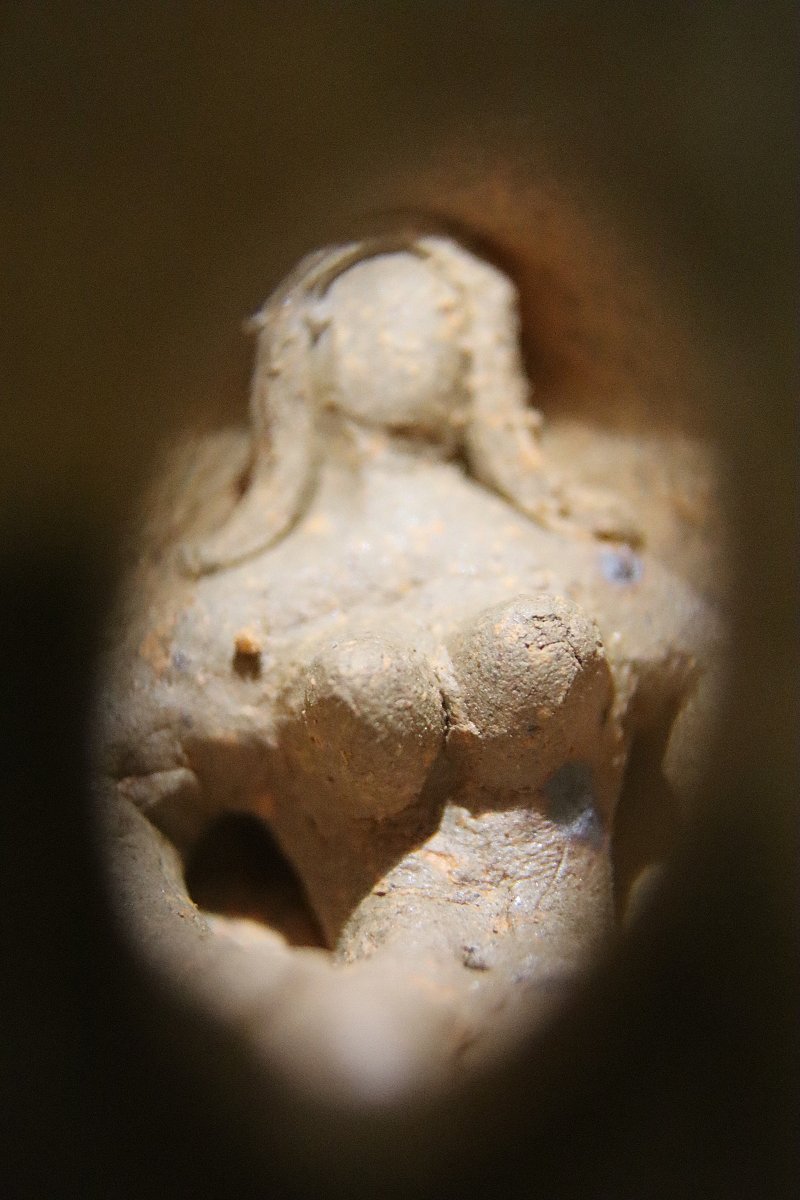
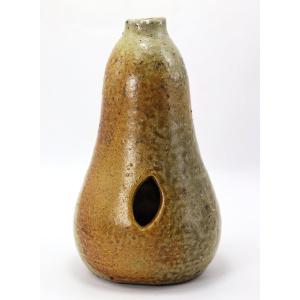


Armand Bedu (1891–1966), *la Borne*, Secret Sandstone: An Erotic Trompe-l'œil, 20th Century
20th century, from the studio collection of Armand Bedu.
Armand Bedu’s (1891–1967) studio, located in La Borne (in the commune of Henrichemont, Cher), was one of the last traditional studios still in operation in this village in 1950. He used the Talbot-Senée family’s horizontal kiln—known as the “grand four”—alongside Jean (1931–1994) and Henri Talbot (1908–1999). It was in Armand Bedu’s workshop that François Guillaume (1901–1969)—the leading figure in the revival of ceramics in La Borne—threw and fired the pieces he created between 1935 and 1940. The pottery was then delivered by horse-drawn cart to Bourges and sold in his shop. It was therefore only natural that François Guillaume sent the young sculptor Jean Lerat (1913–1992) to train with him in 1941. François Guillaume rented him a studio near Armand Bedu’s until 1945 and employed him. Jean Lerat was joined in 1943 by André Rozay, who had come to avoid compulsory labor service (STO), and by Jacqueline Bouvet, who would marry Jean Lerat in 1945. Naturally, this studio worked in close collaboration with Armand Bedu’s studio and those of former potters. Thus, André Rozay trained under Alphonse Talbot. In 1942, Georges Henri Rivière, director of the MNATP, also helped the ceramicist Paul Beyer (1873–1945), who had come from the Sèvres porcelain factory, to settle in La Borne. This marked the beginning of the ceramic revival in La Borne.
The Talbot-Senée family’s large kiln was listed in the supplementary inventory of Historic Monuments in 1996.
Period: 20th century
Style: Other Style
Condition: Perfect condition
Material: Sandstone
Height: 16
Reference (ID): 1818073
Availability: In stock