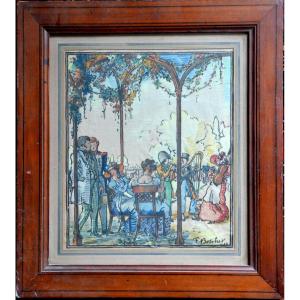


Edgar Scauflaire, “portrait Of A Woman, 1916”
Artist: Edgar Scauflaire (liège 1893 – Liège 1960)
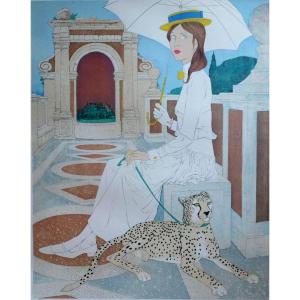
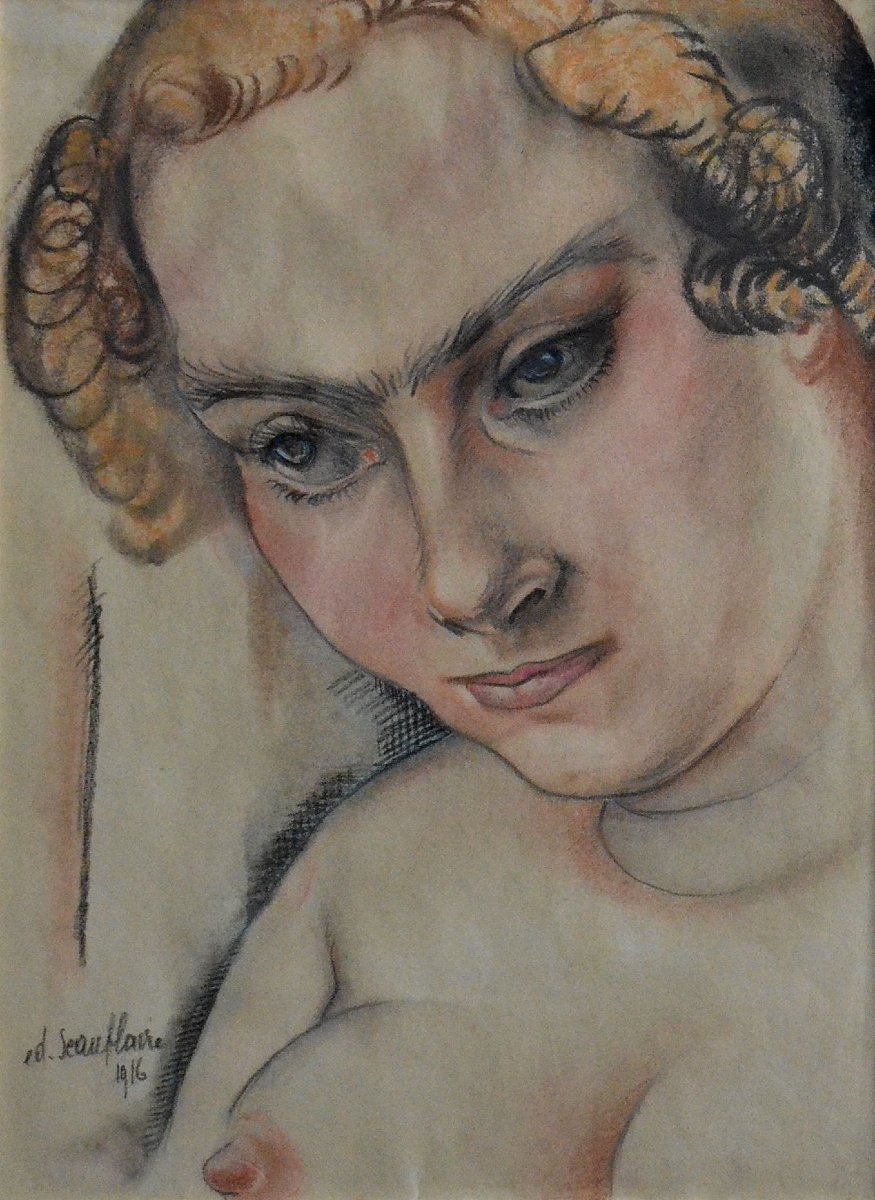
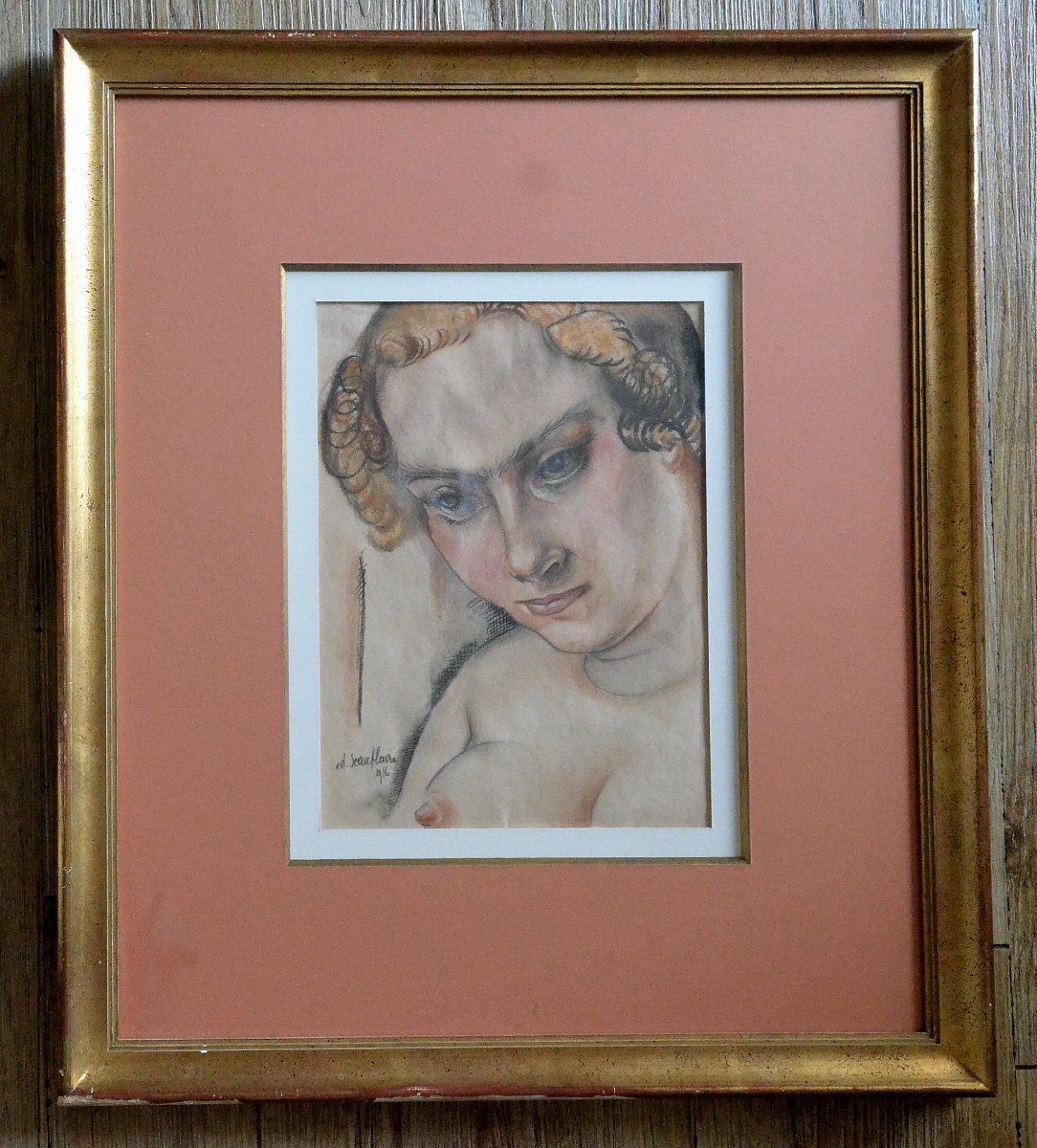
Edgar Scauflaire "Portrait of a Woman, 1916"
Edgar Scauflaire (Liège 1893 – Liège 1960)
Mixed media on paper.
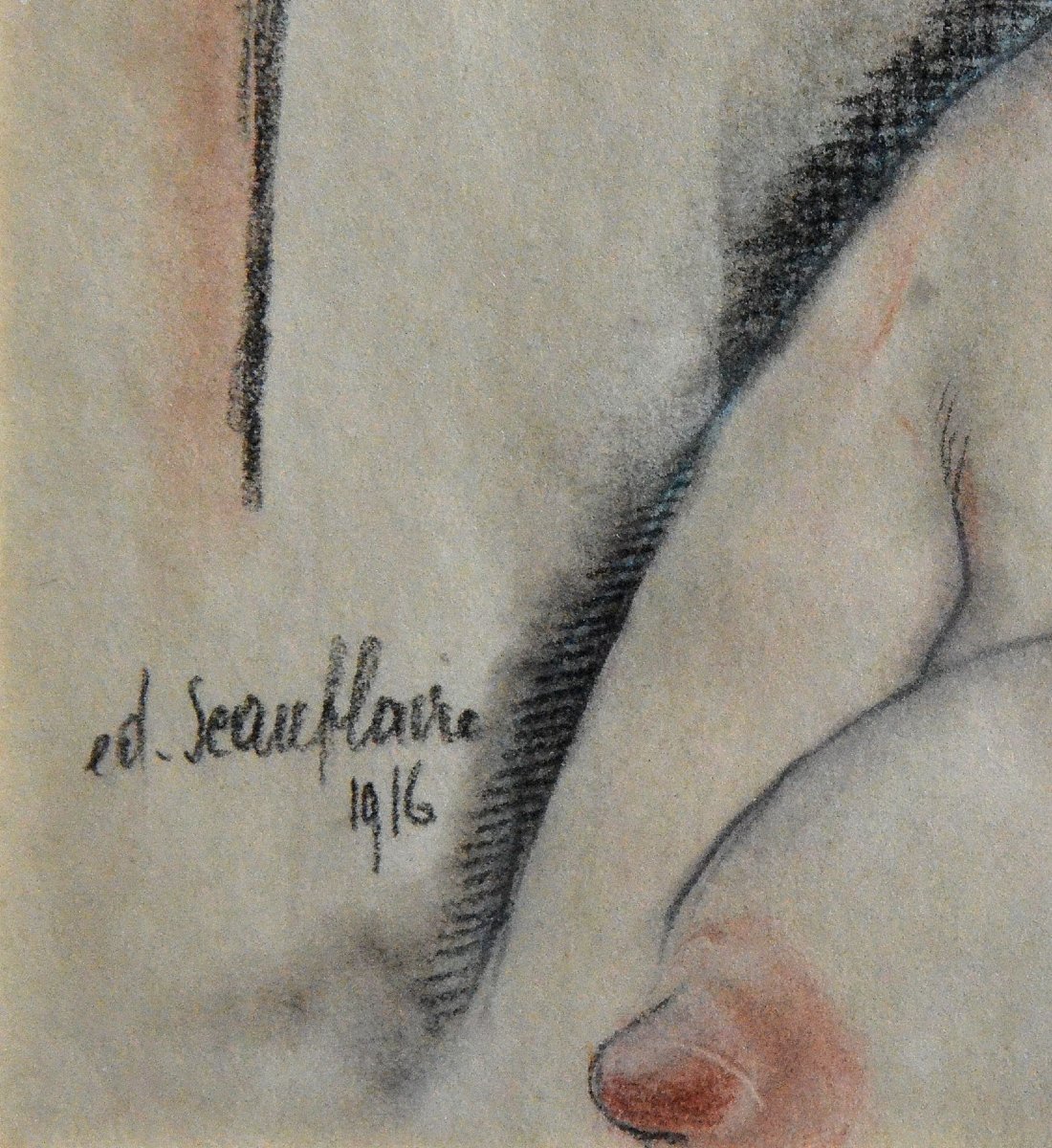
Signed lower left and dated 1916.
Dimensions including frame: 50 cm x 43 cm
Visible image dimensions: 25 cm x 18 cm
Perfect condition.
Shipping: secure packaging and delivery via insured Colissimo (registered mail); mainland France: €30 – Europe: €35.
Biography:
Edgar Scauflaire, a Belgian painter, graphic artist, and art critic, was born in Liège on March 9, 1893. He attended primary school at the École Saint-Paul and began his secondary education at the Collège Saint-Louis in Liège, though he did not complete it. From 1909 onwards, he began working to help support his parents, finding employment at Publicitas as a bill-poster. In 1915, he enrolled at the Academy of Fine Arts in Liège, where he studied under Auguste Donnay, Adrien de Witte, François Maréchal, Émile Berchmans, and Ludovic Bauès. Two years later, Scauflaire took part in a composition competition at the Academy. He created *Ali Baba and the Forty Thieves*, a work that revealed his burgeoning taste for the wondrous. In his early years—up until 1925—he focused primarily on drawing, combining graphite with pastel to create portraits and allegorical works characterized by simple lines and sophisticated, modern compositions. After completing his painting studies at the Academy, Scauflaire earned his living as a journalist and illustrator. Known as the "painter-poet," he achieved a successful synthesis of Cubism, Art Deco, and dreamlike Expressionism. Like the painters of the School of Paris, Scauflaire frequently depicted the female form. He also produced numerous portraits, scenes of everyday life, and still lifes.
In 1918, the artist joined the group *Les Hiboux* (The Owls) alongside Luc Lafnet, Auguste Mambour, and Jef Lambert; it was with them that he held his first exhibitions. Although the group was short-lived, Edgar Scauflaire adopted the name "Jean Hibou" as a pseudonym for the articles on art and fashion he wrote for the newspaper *La Meuse*. On August 28, 1920, he married the pianist Mariette Forgeur. They had two daughters, Lucie and Renée. From the mid-1920s onwards, he devoted himself increasingly to oil painting and easel painting, as well as to monumental murals created for specific commissions. He also produced large-scale paintings on glass, stained-glass windows, tapestry cartoons, and theater curtains. His first major exhibition took place at the Cercle des Beaux-Arts in Liège in 1923. He left the newspaper *La Meuse* in October and ended the year with a solo exhibition at the Galerie Dekenne in Brussels. From that point on, Edgar Scauflaire held numerous exhibitions in Belgium, Paris, and further afield, including the Venice Biennale, Galerie du Journal, Vierge Poupine (Brussels), Galerie Royale (Liège), the Belgian Quadrennial Salon, the Exhibition of Belgian Art at the Museum of Fine Arts in Algiers, Club 38, the Exhibition of Contemporary Belgian Art (Luxembourg), the New York International Exhibition, Contemporary Belgian Painting (Milan), Contemporary Belgian Art (São Paulo), the Salon des Tuileries (Paris), and others.
In 1930, the artist joined the staff of the newspaper *La Wallonie* as a writer. He presented two paintings—one of them on glass—at the inauguration of the Galerie Apollo. He left *La Wallonie* in 1937. Supported by patrons, he was henceforth able to make a living from his art. The following year, Scauflaire decorated the music room at the Lycée Léonie de Waha, creating his first monumental work on glass. He abandoned journalism for good.
In the early 1940s, Edgar Scauflaire founded *L’Atelier Libre* (The Free Studio), which he directed until 1943; the initiative aimed to shield artists from demands made by the occupying forces by engaging them in work commissioned by the city. In 1941, he was arrested alongside communists from Liège and subsequently imprisoned at the Citadel of Huy. Upon his release, he resumed his work and received a commission for a mural at the Bon Marché department store in Brussels. He went on to receive numerous commissions for monumental works intended for public spaces. In 1958, he participated in the Brussels World's Fair as both a jury member and an exhibitor. That same year, a major retrospective of his work was held at the Museum of Fine Arts in Liège. His work is admired for the refined simplicity of its compositions, its balance, and the harmonious subtlety of its color palette. Edgar Scauflaire is considered one of the finest representatives of modern painting in Wallonia. Edgar Scauflaire died of a heart attack on October 22, 1960, at the age of 67.
Bibliographic references: Piron, P., 2003. *Dictionnaire des artistes plasticiens de Belgique des XIXe et XXe siècle*. Ohain: Art in Belgium.
Edgar Scauflaire (Liège 1893 – Liège 1960)
Mixed media on paper.
Signed lower left and dated 1916.
Dimensions including frame: 50 cm x 43 cm
Visible image dimensions: 25 cm x 18 cm
Perfect condition.
Shipping: secure packaging and delivery via insured Colissimo (registered mail); mainland France: €30 – Europe: €35.
Biography:
Edgar Scauflaire, a Belgian painter, graphic artist, and art critic, was born in Liège on March 9, 1893. He attended primary school at the École Saint-Paul and began his secondary education at the Collège Saint-Louis in Liège, though he did not complete it. From 1909 onwards, he began working to help support his parents, finding employment at Publicitas as a bill-poster. In 1915, he enrolled at the Academy of Fine Arts in Liège, where he studied under Auguste Donnay, Adrien de Witte, François Maréchal, Émile Berchmans, and Ludovic Bauès. Two years later, Scauflaire took part in a composition competition at the Academy. He created *Ali Baba and the Forty Thieves*, a work that revealed his burgeoning taste for the wondrous. In his early years—up until 1925—he focused primarily on drawing, combining graphite with pastel to create portraits and allegorical works characterized by simple lines and sophisticated, modern compositions. After completing his painting studies at the Academy, Scauflaire earned his living as a journalist and illustrator. Known as the "painter-poet," he achieved a successful synthesis of Cubism, Art Deco, and dreamlike Expressionism. Like the painters of the School of Paris, Scauflaire frequently depicted the female form. He also produced numerous portraits, scenes of everyday life, and still lifes.
In 1918, the artist joined the group *Les Hiboux* (The Owls) alongside Luc Lafnet, Auguste Mambour, and Jef Lambert; it was with them that he held his first exhibitions. Although the group was short-lived, Edgar Scauflaire adopted the name "Jean Hibou" as a pseudonym for the articles on art and fashion he wrote for the newspaper *La Meuse*. On August 28, 1920, he married the pianist Mariette Forgeur. They had two daughters, Lucie and Renée. From the mid-1920s onwards, he devoted himself increasingly to oil painting and easel painting, as well as to monumental murals created for specific commissions. He also produced large-scale paintings on glass, stained-glass windows, tapestry cartoons, and theater curtains. His first major exhibition took place at the Cercle des Beaux-Arts in Liège in 1923. He left the newspaper *La Meuse* in October and ended the year with a solo exhibition at the Galerie Dekenne in Brussels. From that point on, Edgar Scauflaire held numerous exhibitions in Belgium, Paris, and further afield, including the Venice Biennale, Galerie du Journal, Vierge Poupine (Brussels), Galerie Royale (Liège), the Belgian Quadrennial Salon, the Exhibition of Belgian Art at the Museum of Fine Arts in Algiers, Club 38, the Exhibition of Contemporary Belgian Art (Luxembourg), the New York International Exhibition, Contemporary Belgian Painting (Milan), Contemporary Belgian Art (São Paulo), the Salon des Tuileries (Paris), and others.
In 1930, the artist joined the staff of the newspaper *La Wallonie* as a writer. He presented two paintings—one of them on glass—at the inauguration of the Galerie Apollo. He left *La Wallonie* in 1937. Supported by patrons, he was henceforth able to make a living from his art. The following year, Scauflaire decorated the music room at the Lycée Léonie de Waha, creating his first monumental work on glass. He abandoned journalism for good.
In the early 1940s, Edgar Scauflaire founded *L’Atelier Libre* (The Free Studio), which he directed until 1943; the initiative aimed to shield artists from demands made by the occupying forces by engaging them in work commissioned by the city. In 1941, he was arrested alongside communists from Liège and subsequently imprisoned at the Citadel of Huy. Upon his release, he resumed his work and received a commission for a mural at the Bon Marché department store in Brussels. He went on to receive numerous commissions for monumental works intended for public spaces. In 1958, he participated in the Brussels World's Fair as both a jury member and an exhibitor. That same year, a major retrospective of his work was held at the Museum of Fine Arts in Liège. His work is admired for the refined simplicity of its compositions, its balance, and the harmonious subtlety of its color palette. Edgar Scauflaire is considered one of the finest representatives of modern painting in Wallonia. Edgar Scauflaire died of a heart attack on October 22, 1960, at the age of 67.
Bibliographic references: Piron, P., 2003. *Dictionnaire des artistes plasticiens de Belgique des XIXe et XXe siècle*. Ohain: Art in Belgium.
650 €
Period: 20th century
Style: Modern Art
Condition: Perfect condition
Material: Paper
Width: 43 cm cadre compris
Height: 50 cm cadre compris
Reference (ID): 1817733
Availability: In stock
Print