


Pair Of Double-sided Handheld Screens Made Of Cardboard And Turned Wood; Empire And Restoration Periods, 19th Century
A pair of hand-held screens, a curiosity and lifestyle object from the Empire and Restoration periods, first half of the 19th century, formerly used to protect the face and complexion from the radiant heat of open fires, often given as gifts to guests attending an evening gathering, a party, or an event in 19th-century high society.
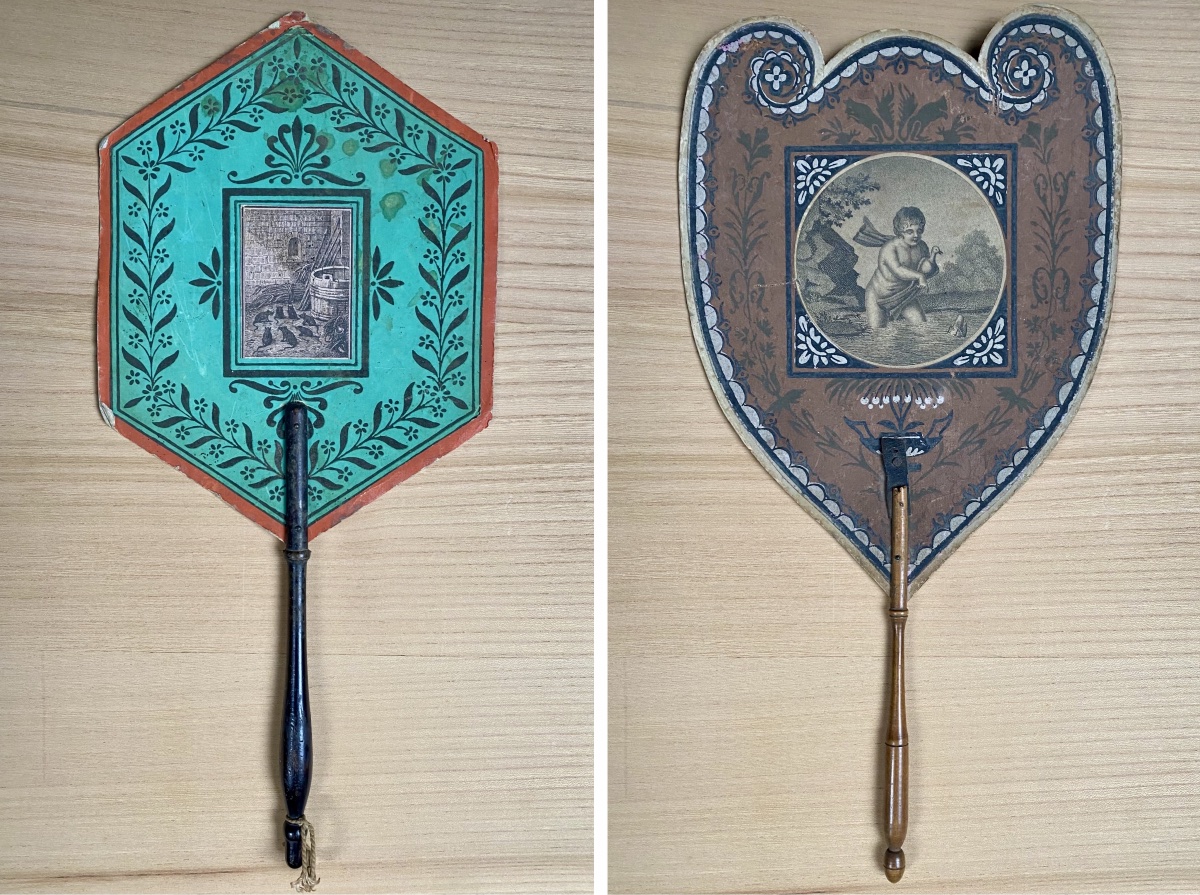
These two pieces share the rare distinction of being decorated and printed on both sides.
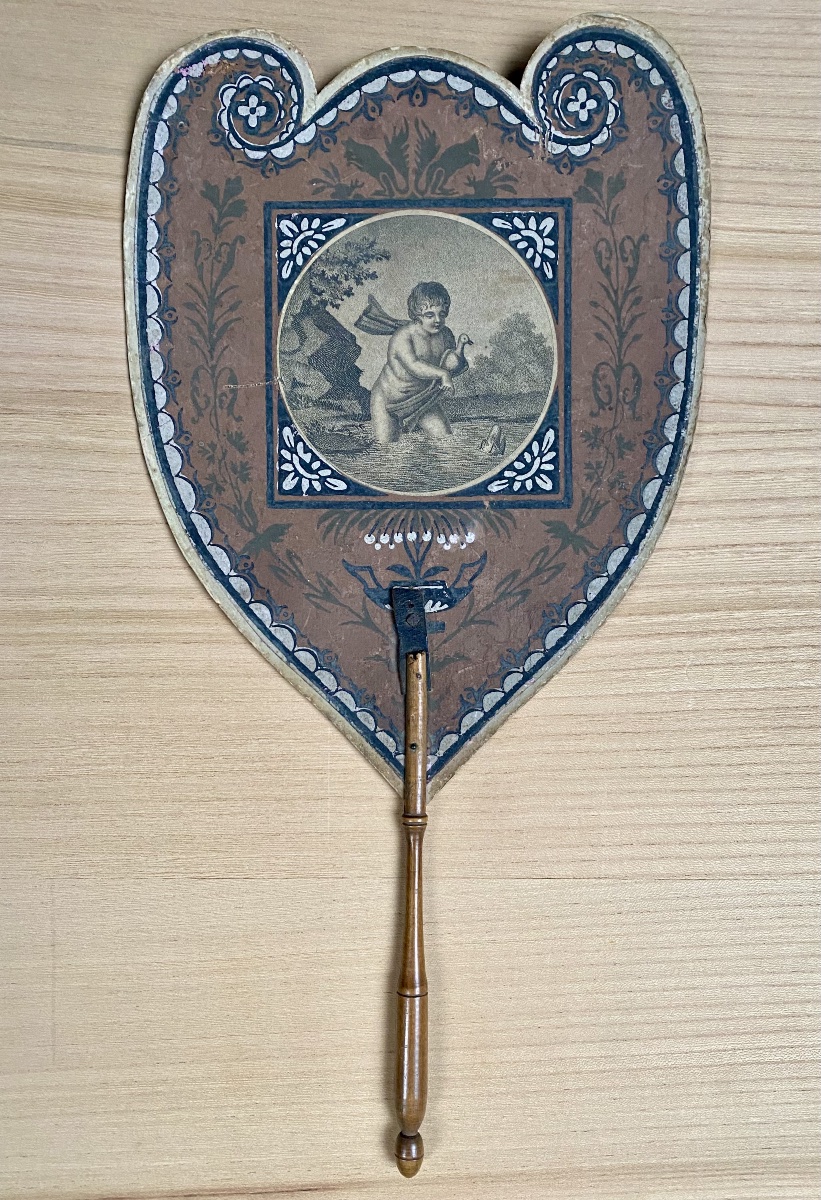
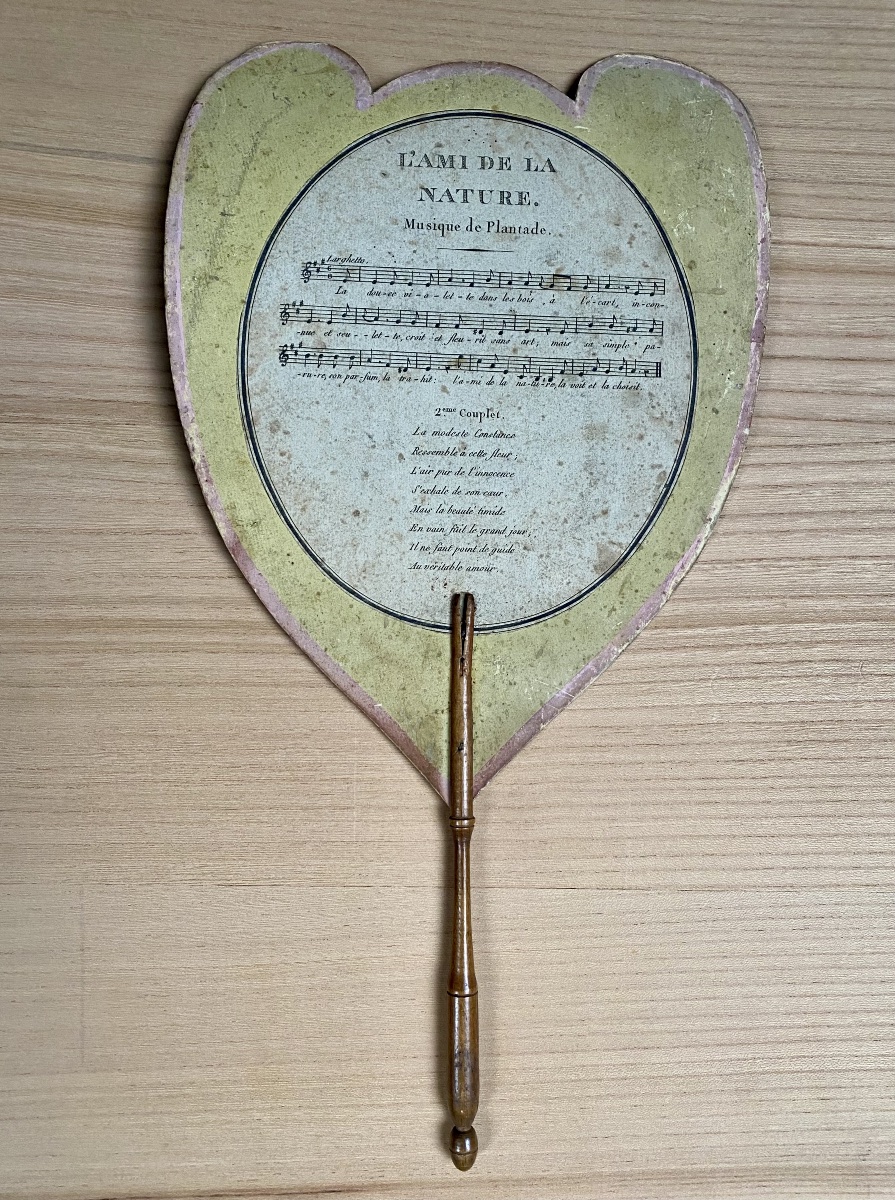
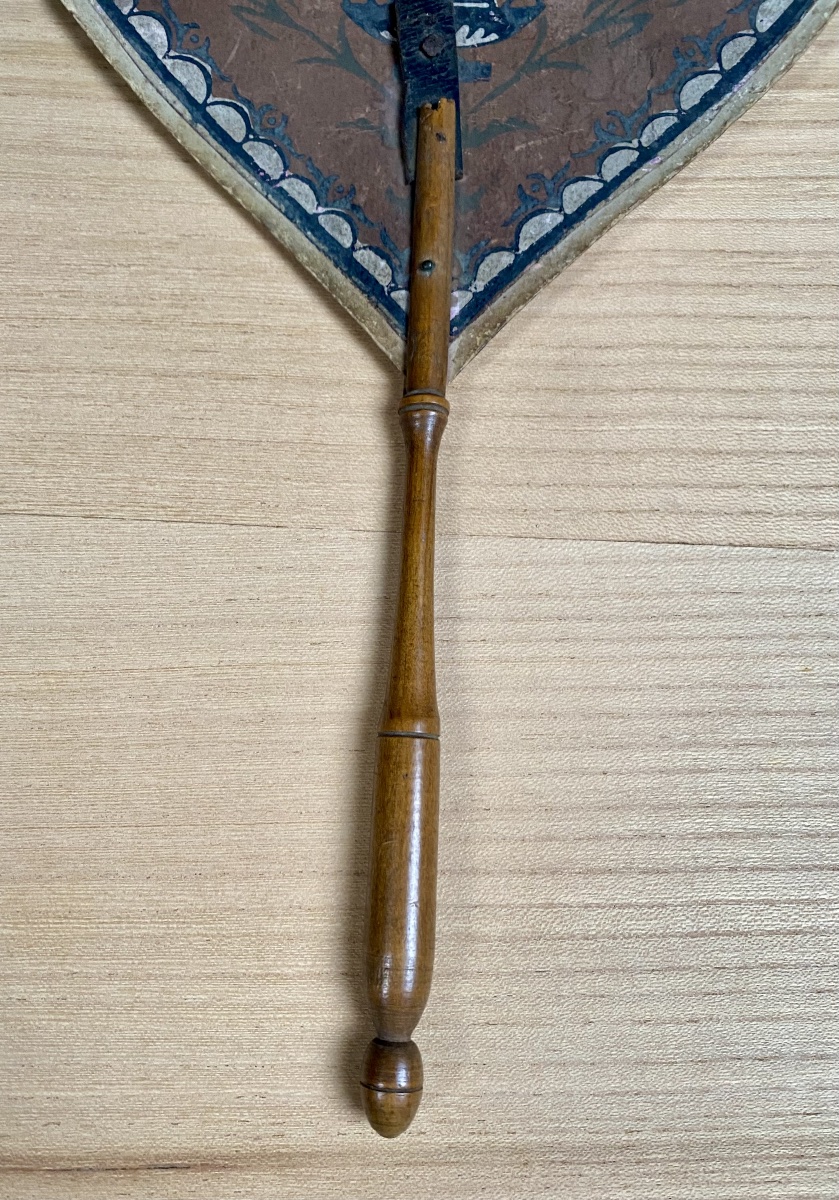
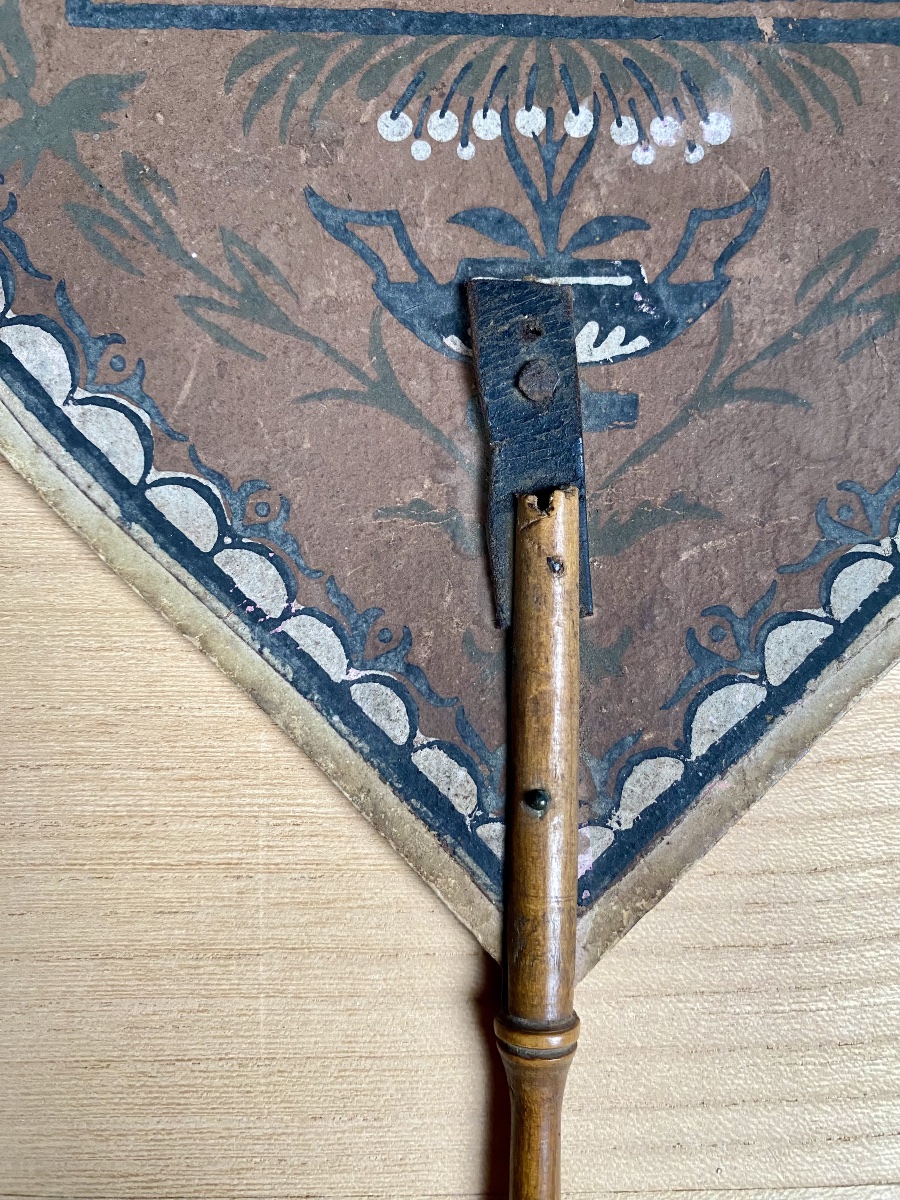
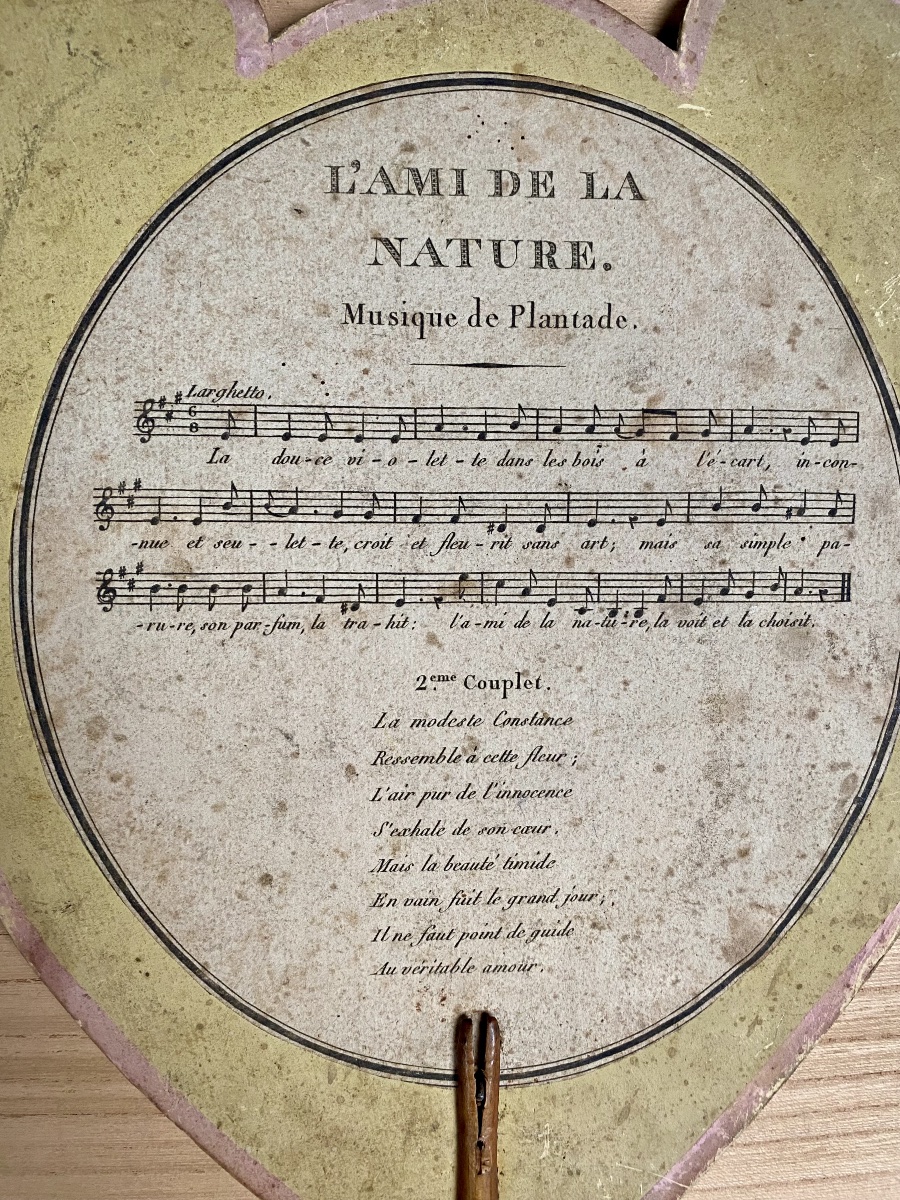
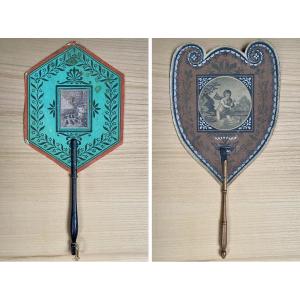
The first screen, with a trilobed shape, dates from the Empire period (circa 1800–1815). Its front side features a brown background adorned with foliage, palmette friezes, and a discreet bouquet of lily of the valley painted at the base, surrounding a circular stippled engraving depicting a putto at the water’s edge with a bird. Its reverse side, on a light background with a shaded border, reveals a printed musical score with its staff (Larghetto) and lyrics, titled “L’Ami de la Nature, Music by Plantade,” including the first verse beneath the notes and the complete text of the second verse (“La modeste Constance…”). The handle is made of turned natural wood.
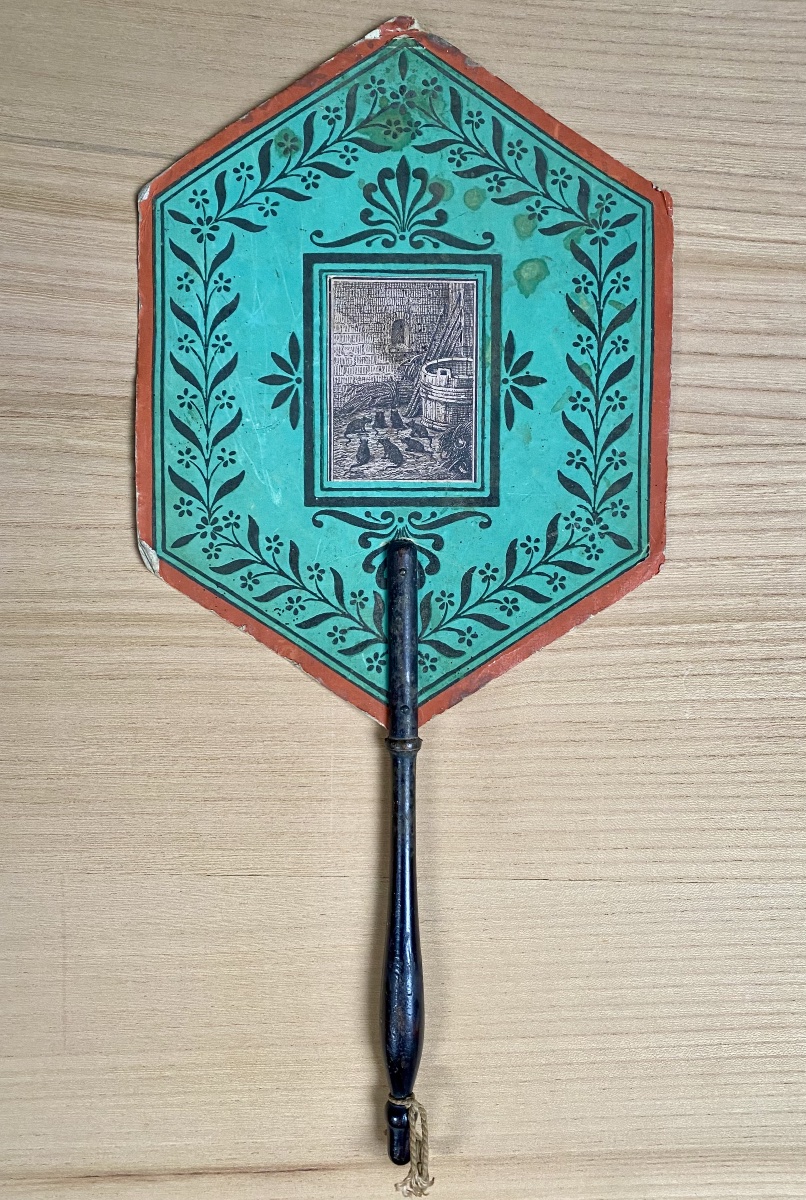
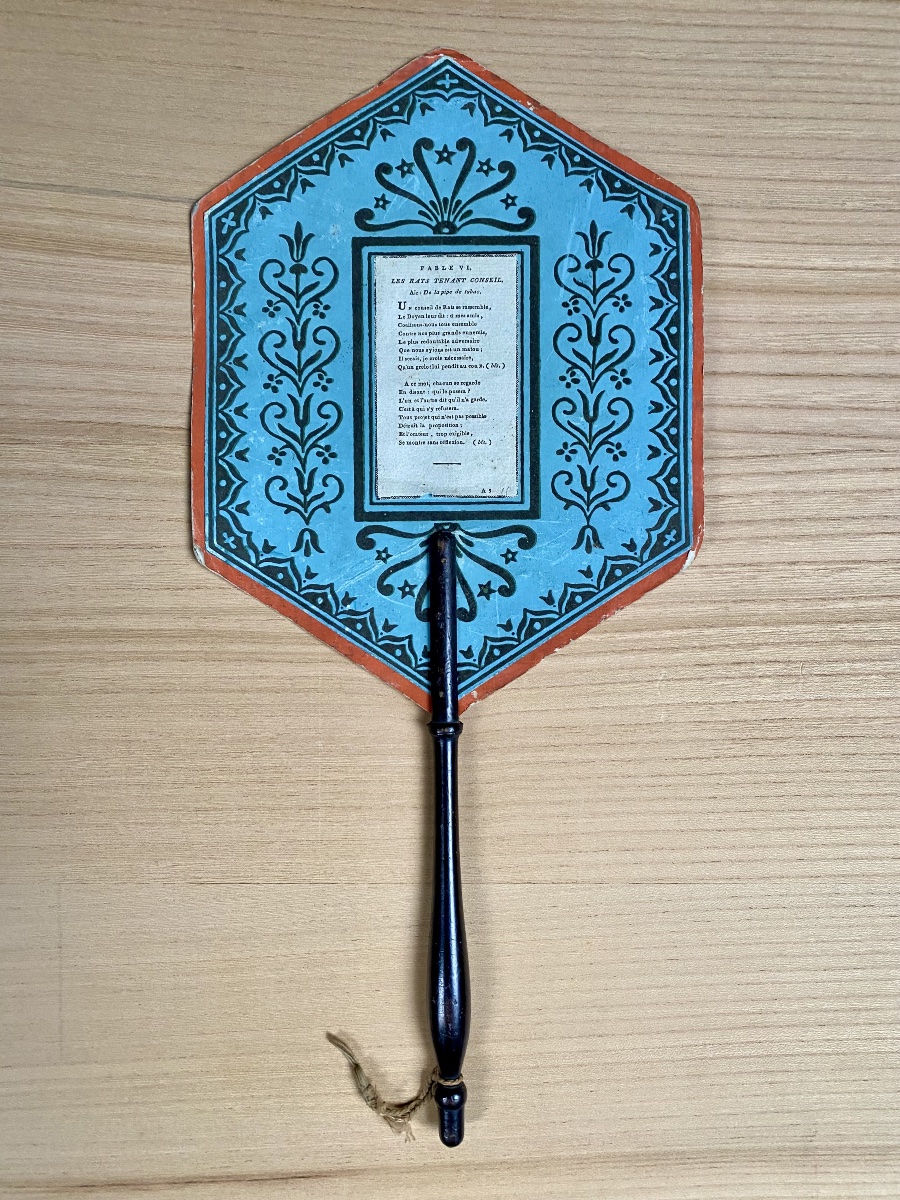
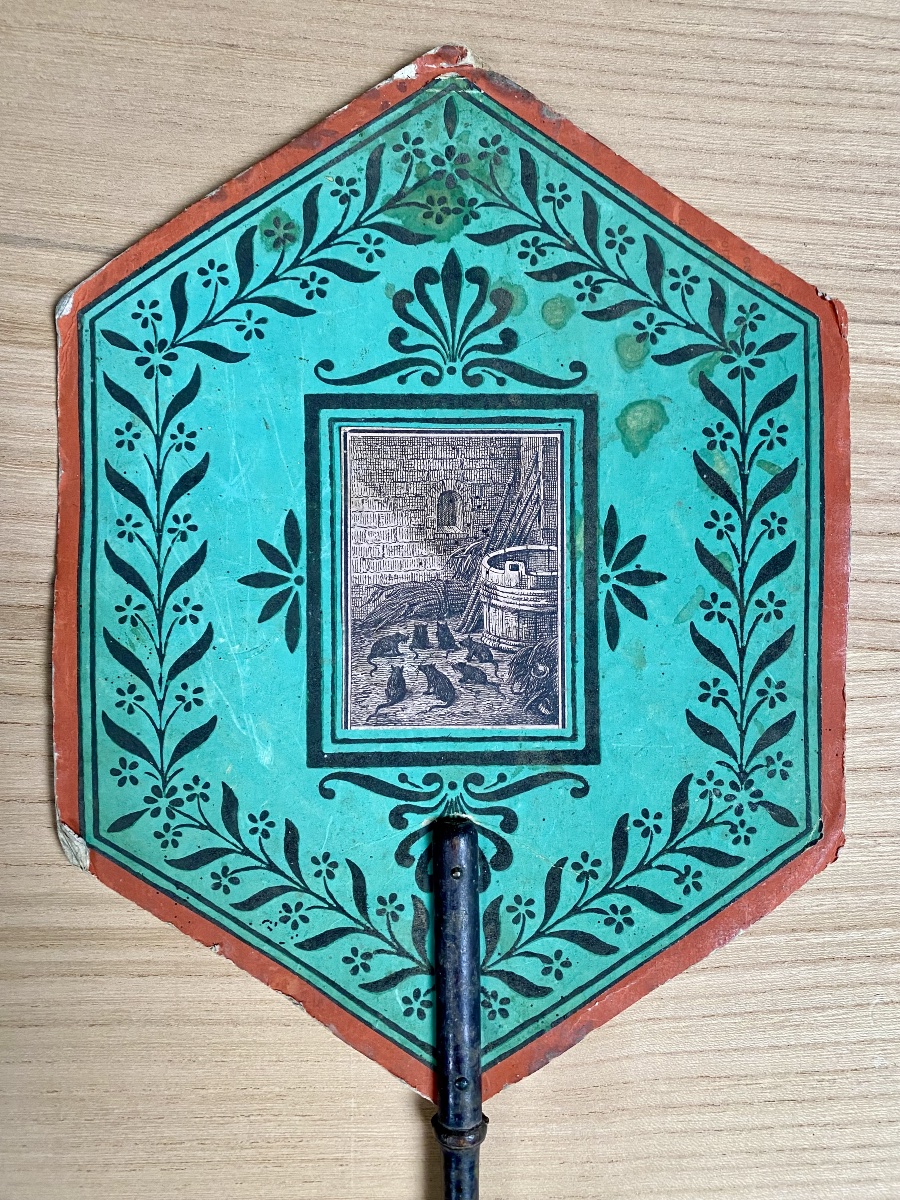
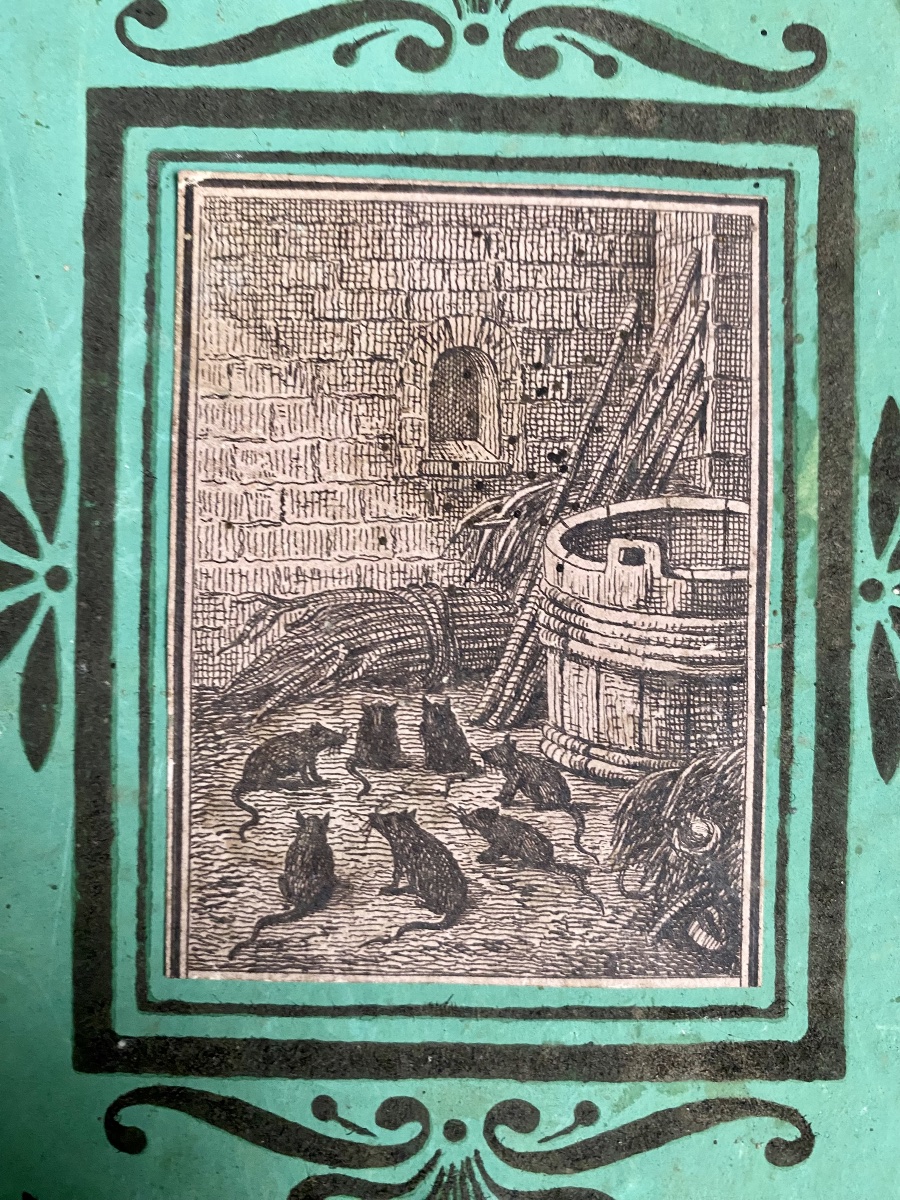
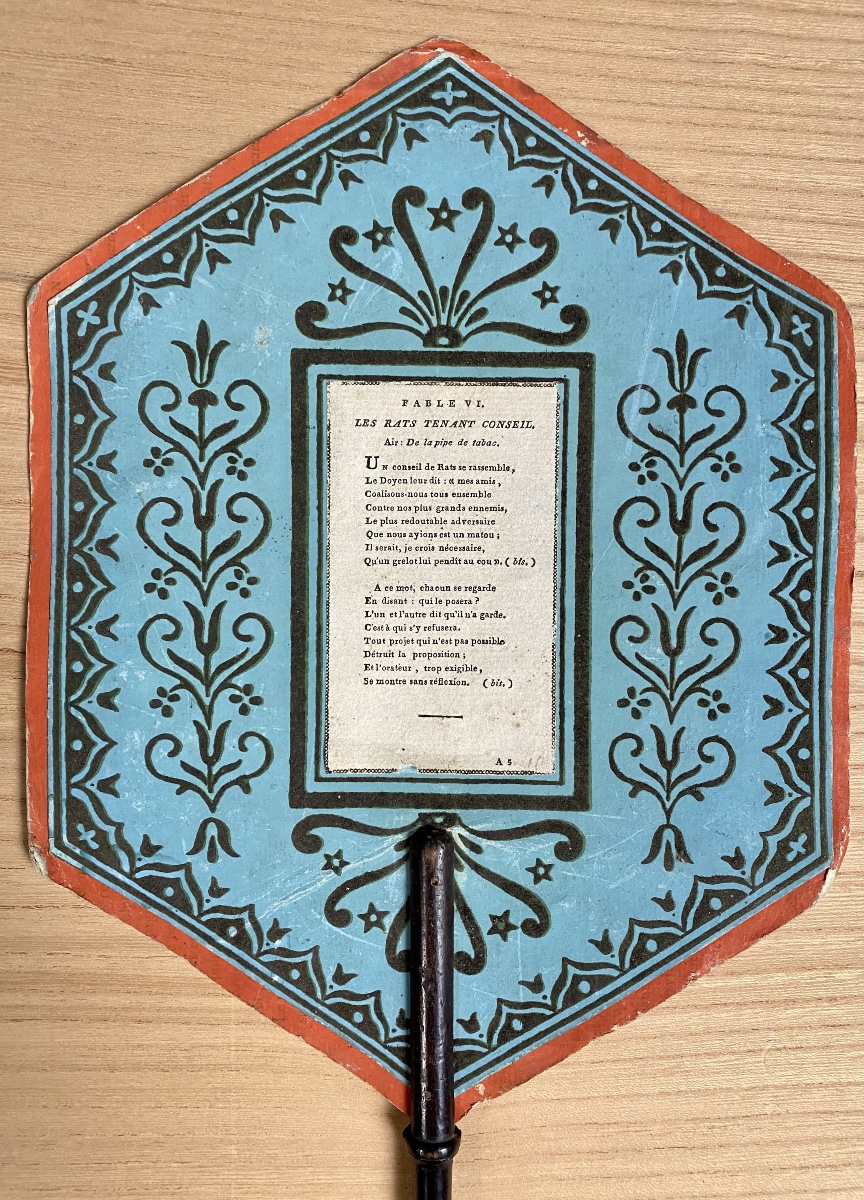
The second hexagonal screen dates from the Restoration period (circa 1815–1830). Its front features a turquoise-green background embellished with stylized palmettes and dark foliage, centered around an engraving of a genre scene depicting rats. Its reverse side, on an azure blue background with arabesque and cross motifs, displays the printed text of Jean de La Fontaine’s famous Fable VI: “The Rats in Council” (indicating the tune: “De la pipe de tabac”). The handle is made of turned and blackened wood.
Beyond their role as individual heat shields near the hearth to maintain a certain level of comfort and prevent the wax-based face makeup used by high society at the time from melting, these face screens, held at arm’s length, displayed their decorative side to the rest of the assembly, while the reverse side, facing the user’s eyes, served as a source of entertainment. The texts printed on the reverse—La Fontaine’s fables, charades and riddles, occasional poems, or fashionable musical romances such as the one by Charles-Henri Plantade presented here—served as collective entertainment and a way to initiate social interactions. Passed from hand to hand around the hearth, they invited guests to sing a little song, recite verses, or solve riddles, thus elegantly reflecting the art of living and the salon games of the aristocracy and the affluent bourgeoisie of the time.
These two charming and intriguing pieces are presented as found. They show normal signs of wear given their great age and the fragility of the materials: slight scuffs, discoloration, and wear on the outer edges of the cardboard, as well as minimal surface alterations on the painted backgrounds. The engravings, musical scores, and central fable texts remain perfectly clear and legible. The wooden handles are original, and the mountings show some play, a wear-induced crack, and an old leather reinforcement.
Dimensions:
Trilobed model (Empire):
Total height with handle: 39 cm x
Maximum width of the cardboard: 20.5 cm
Hexagonal model (Restoration):
Total height with handle: 40 cm
Maximum width of the cardboard: 19 cm
The listed price includes shipping to metropolitan France; prices for other destinations are available upon request.
Worldwide shipping—please ask for a quote
Period: 19th century
Style: Consulat, Empire
Condition: Condition of use
Material: Cardboard
Reference (ID): 1817411
Availability: In stock