
Daniel Panagopoulos, Known As Danil (1924–2008) In The Mirror
Artist: Daniel Panagopoulos Dit Danil (1924-2008
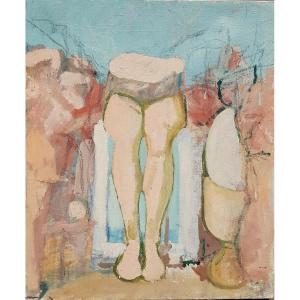
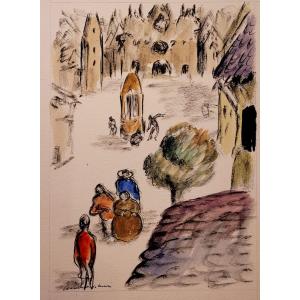
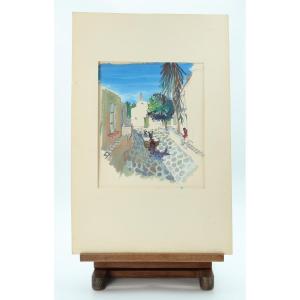
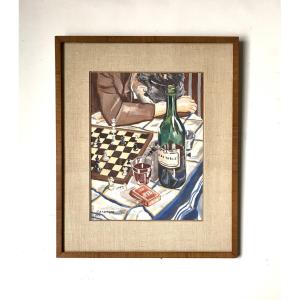
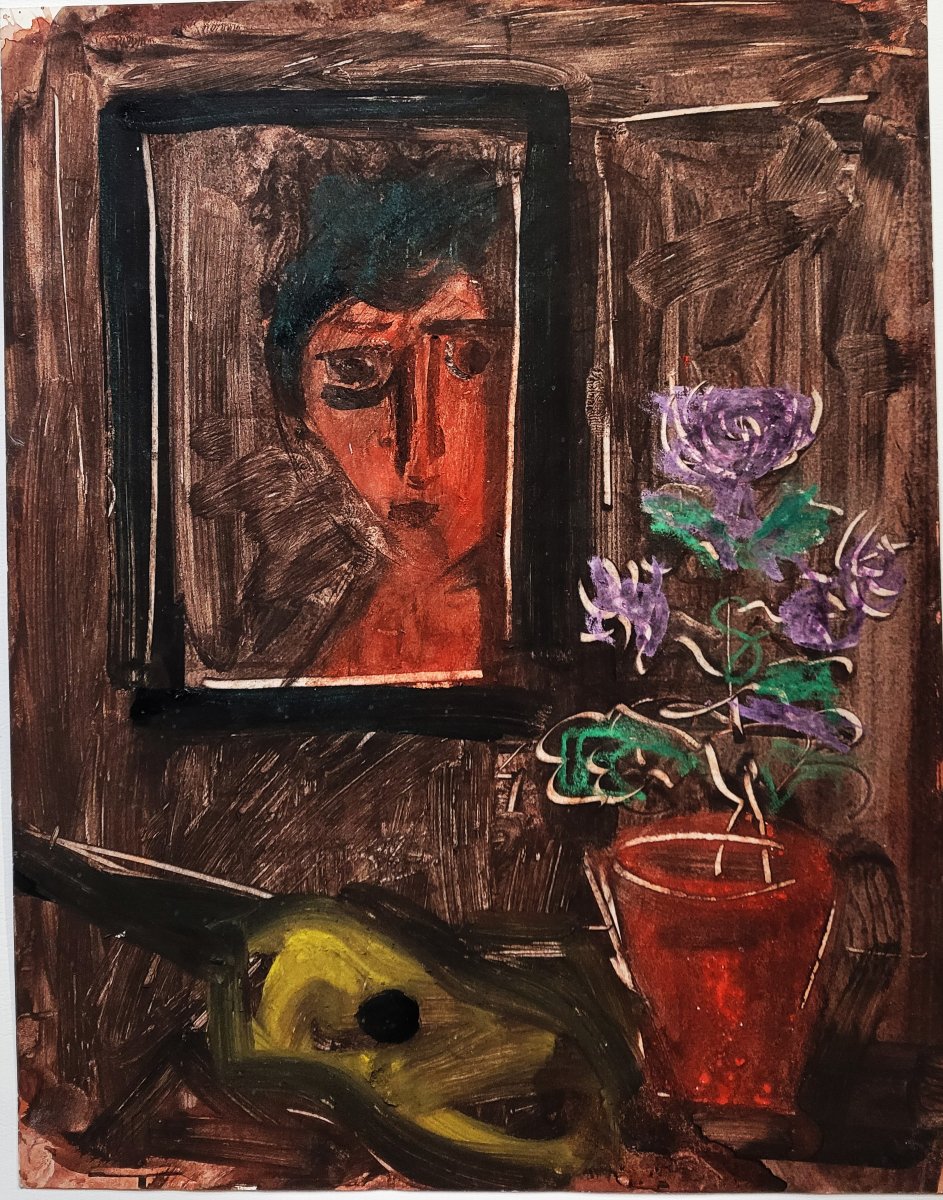
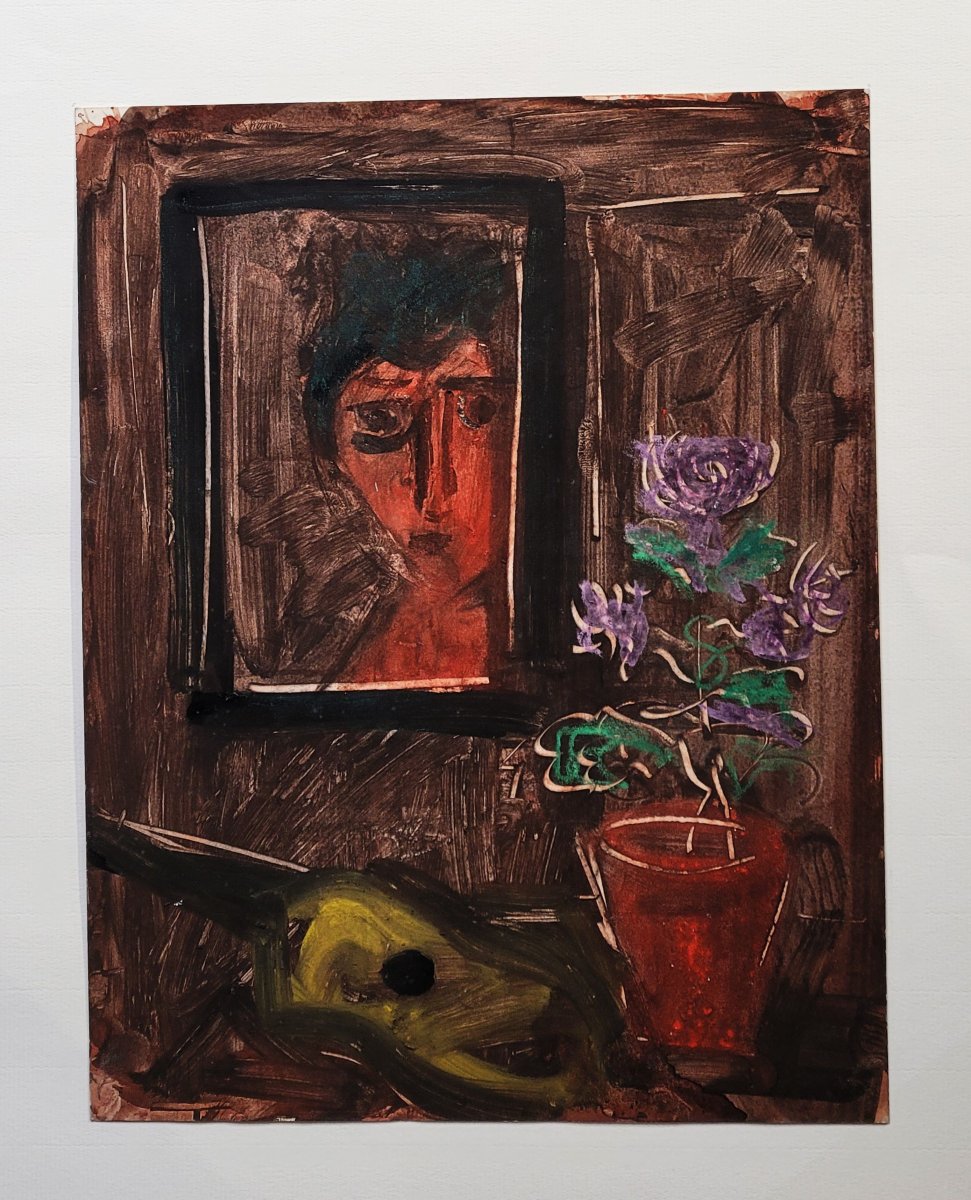
Daniel PANAGOPOULOS, known as DANIL (1924–2008) In the Mirror, 1955, gouache, 32 x 25 cm, dated 1955 in the lower left corner.
Provenance: Studio collection, Marseille Dard, May 10, 2022.
Danil Panagopoulos was born in 1924 in Pyrgos Ilias. He studied painting at the Athens School of Fine Arts under Konstantinos Parthenis (1944–1947), having abandoned his previous studies in medicine. In 1954, he traveled to Paris on a three-year scholarship, where he eventually settled permanently. At first, he was influenced by gestural abstract painting, but he soon moved away from conventional artistic media and joined the emerging avant-garde movements of the time.
During the 1960s, his art shifted to three dimensions, using packing cardboard as his primary material (Black Boxes). His explorations in this field were presented in his first solo exhibition in Paris (Galerie J, 1964). With similar works, he participated in the exhibition Three Proposals for a New Greek Sculpture (alongside Caniaris and Kessanlis), organized by Pierre Restany (as part of the parallel events of the 1964 Venice Biennale). The controversy sparked by this exhibition in Greece revealed the important role that the 1960s generation would play in the renewal and modernization of Greek art.
Then, after expressing a critical stance toward technology through his work *Electric Boxes* (with which he participated in the *Avant-garde Griechenland* exhibition in Germany in 1968), he returned to creating wall-mounted works. After 1972, his primary medium became jute—torn, colored, or weathered—as part of an exploration of the relationship between flat surfaces, space, and light. These works, which often reveal an affinity with the French Support-Surface art movement, also express the artist’s spiritual explorations and his reflections on art and society.
He has held numerous solo exhibitions (including several retrospectives), primarily in France and Greece. He has also participated in major group exhibitions and international art fairs in various countries.
He served as a member of the Salon des Comparaisons committee in Paris for decades.
He has published critical essays and three books: *Pratique et pensée de la peinture* (1973), *Chiaroscuro A* (1982), and *Selections from the Journal 1973–1985* (1987).
In 1998, the retrospective exhibition *Danil, 1950–1997* was held at the National Gallery of Athens.
He spent the last years of his life in seclusion in Pyrgos. He donated a large portion of his work to the National Gallery of Athens one year before his death (Pyrgos, 2008).
Provenance: Studio collection, Marseille Dard, May 10, 2022.
Danil Panagopoulos was born in 1924 in Pyrgos Ilias. He studied painting at the Athens School of Fine Arts under Konstantinos Parthenis (1944–1947), having abandoned his previous studies in medicine. In 1954, he traveled to Paris on a three-year scholarship, where he eventually settled permanently. At first, he was influenced by gestural abstract painting, but he soon moved away from conventional artistic media and joined the emerging avant-garde movements of the time.
During the 1960s, his art shifted to three dimensions, using packing cardboard as his primary material (Black Boxes). His explorations in this field were presented in his first solo exhibition in Paris (Galerie J, 1964). With similar works, he participated in the exhibition Three Proposals for a New Greek Sculpture (alongside Caniaris and Kessanlis), organized by Pierre Restany (as part of the parallel events of the 1964 Venice Biennale). The controversy sparked by this exhibition in Greece revealed the important role that the 1960s generation would play in the renewal and modernization of Greek art.
Then, after expressing a critical stance toward technology through his work *Electric Boxes* (with which he participated in the *Avant-garde Griechenland* exhibition in Germany in 1968), he returned to creating wall-mounted works. After 1972, his primary medium became jute—torn, colored, or weathered—as part of an exploration of the relationship between flat surfaces, space, and light. These works, which often reveal an affinity with the French Support-Surface art movement, also express the artist’s spiritual explorations and his reflections on art and society.
He has held numerous solo exhibitions (including several retrospectives), primarily in France and Greece. He has also participated in major group exhibitions and international art fairs in various countries.
He served as a member of the Salon des Comparaisons committee in Paris for decades.
He has published critical essays and three books: *Pratique et pensée de la peinture* (1973), *Chiaroscuro A* (1982), and *Selections from the Journal 1973–1985* (1987).
In 1998, the retrospective exhibition *Danil, 1950–1997* was held at the National Gallery of Athens.
He spent the last years of his life in seclusion in Pyrgos. He donated a large portion of his work to the National Gallery of Athens one year before his death (Pyrgos, 2008).
360 €
Period: 20th century
Style: Modern Art
Condition: Excellent condition
Material: Gouache
Width: 25
Height: 32
Reference (ID): 1817199
Availability: In stock
Print