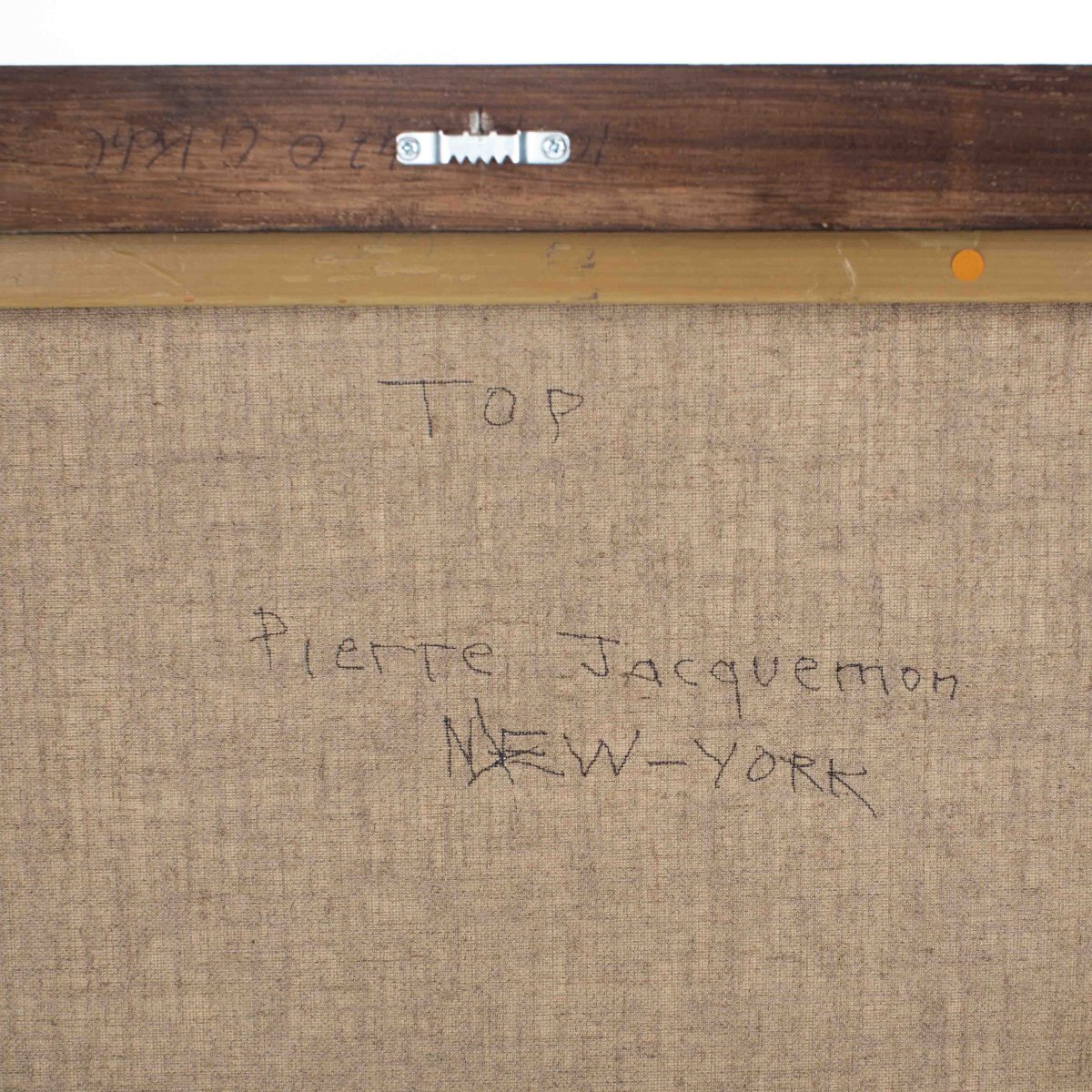


Lyrical Abstract Painting From The Mid-20th Century, By Pierre Jacquemon, New York, 1970s
Artist: Pierre Jacquemon
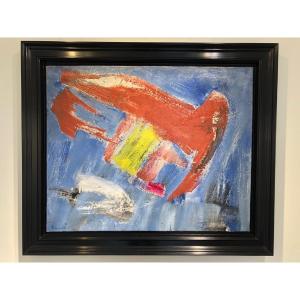
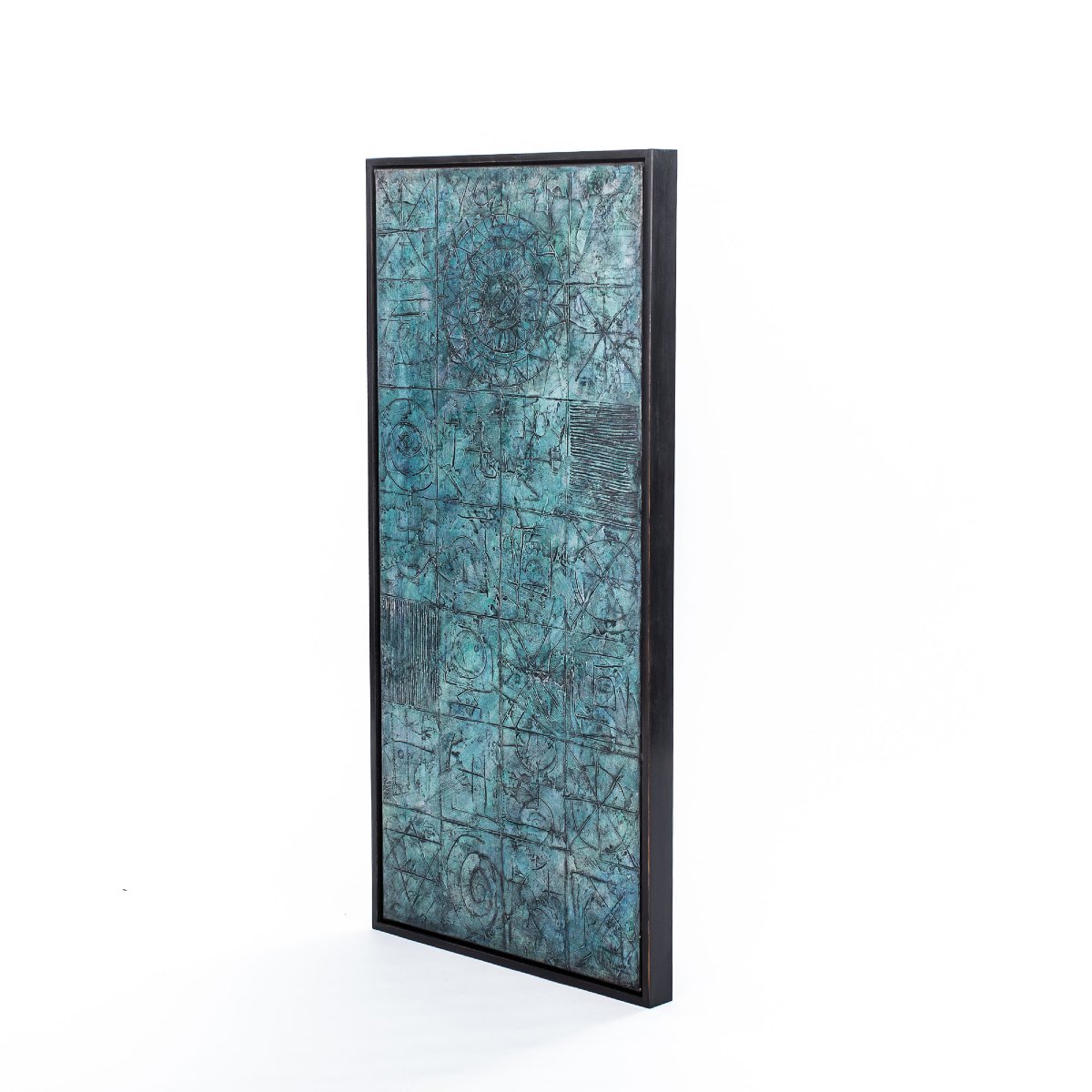
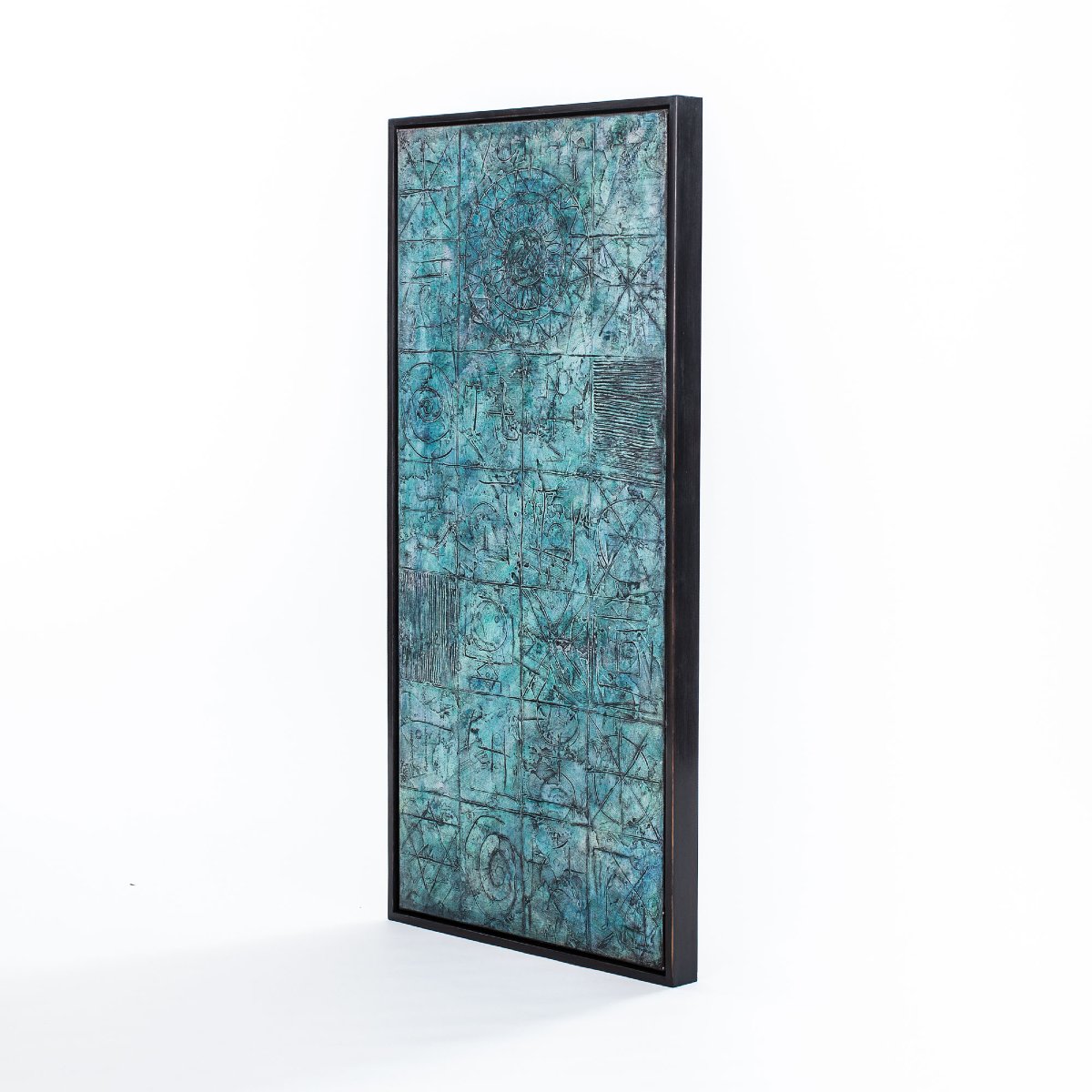
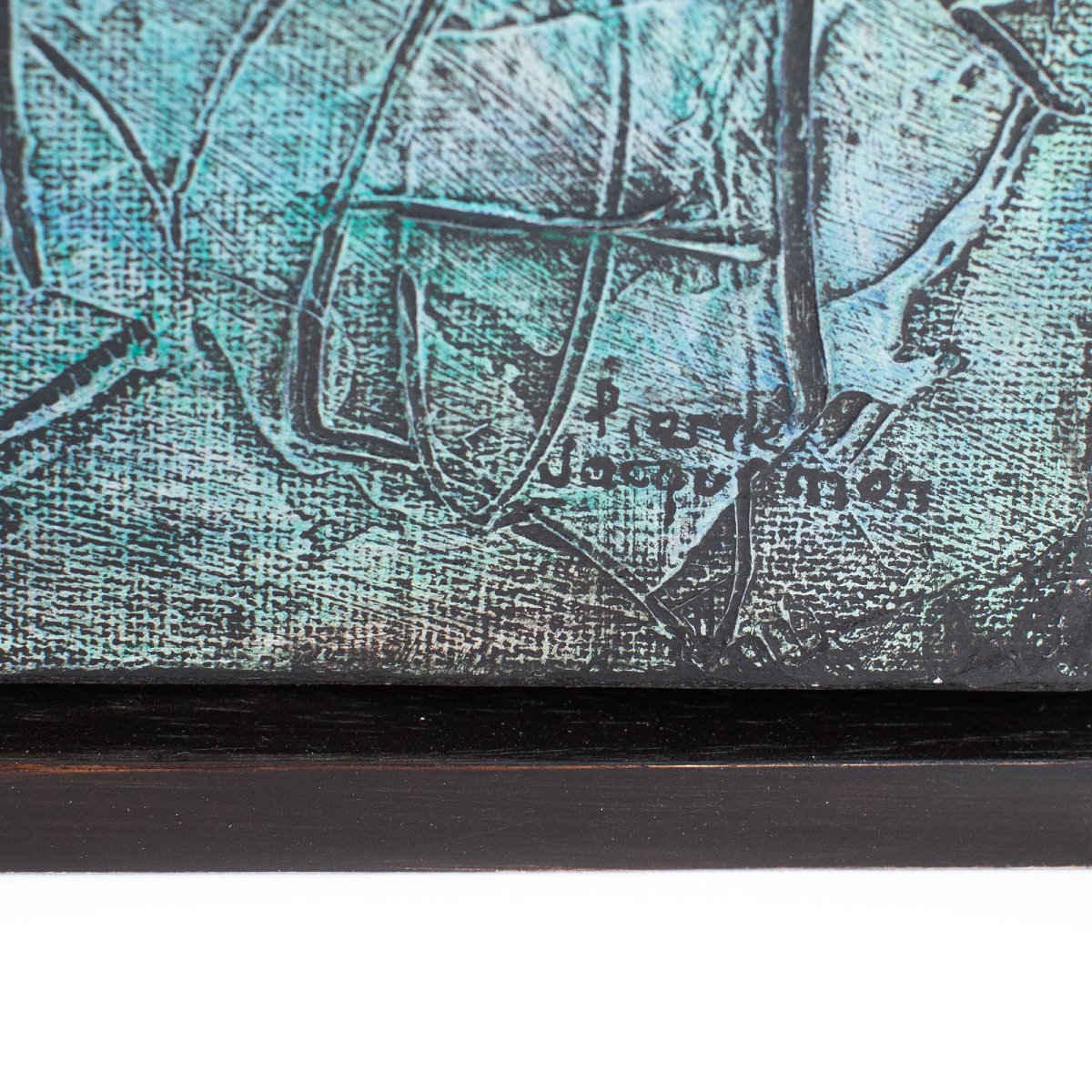
Lyrical abstract acrylic painting from the mid-20th century, by Pierre Jacquemon, New York, 1970s
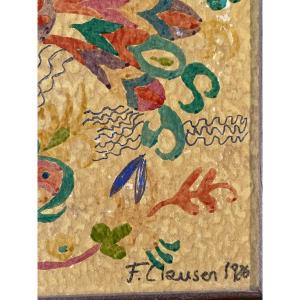
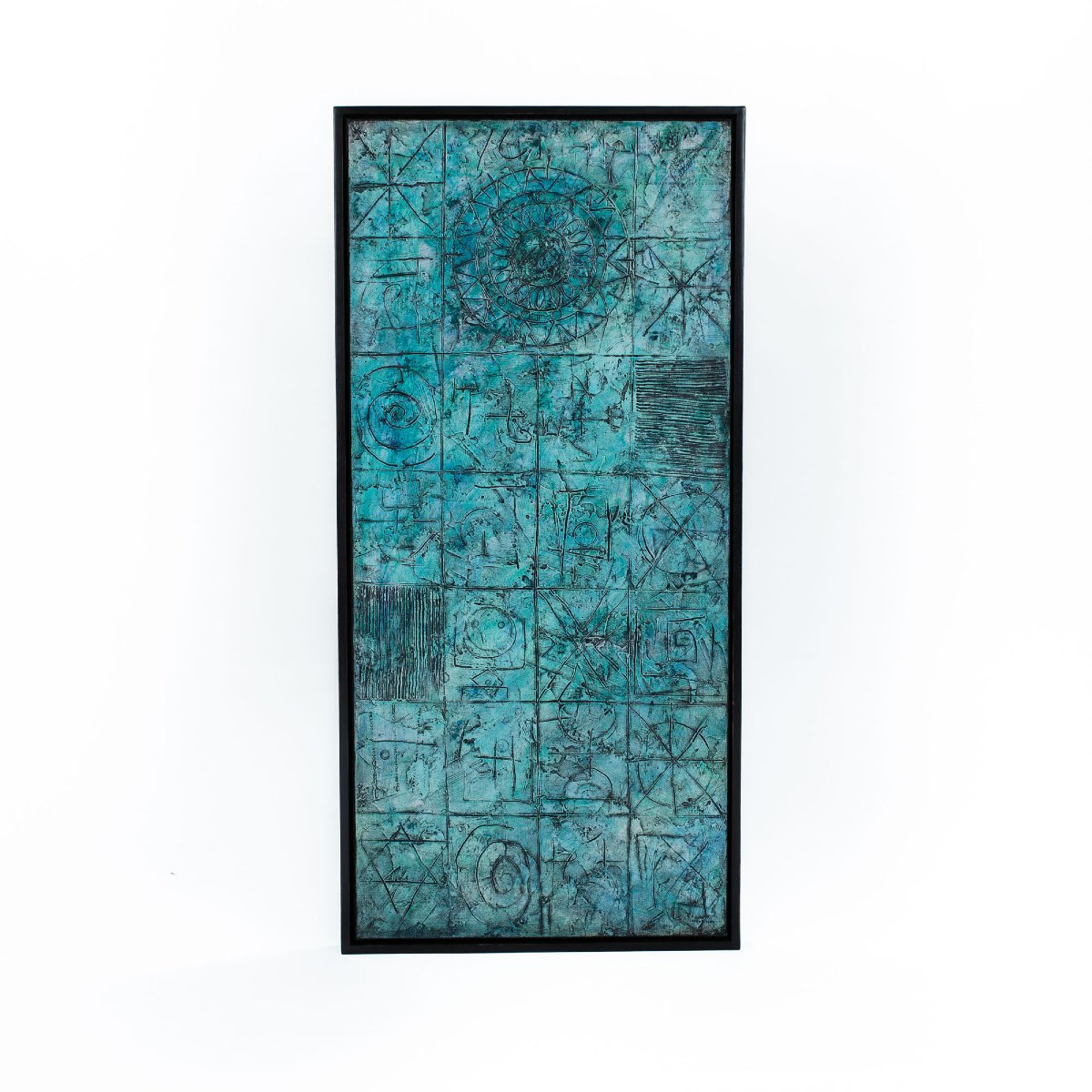
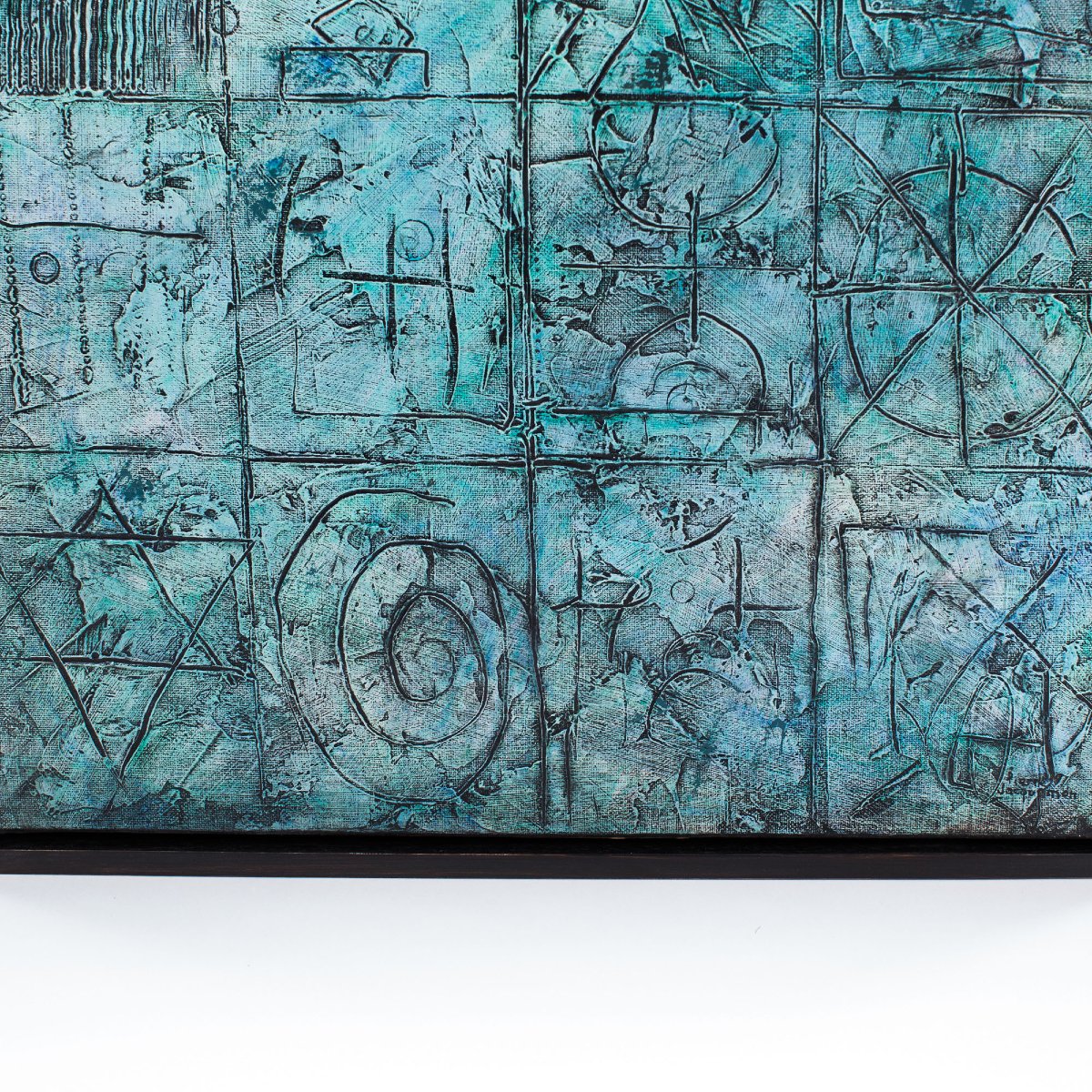
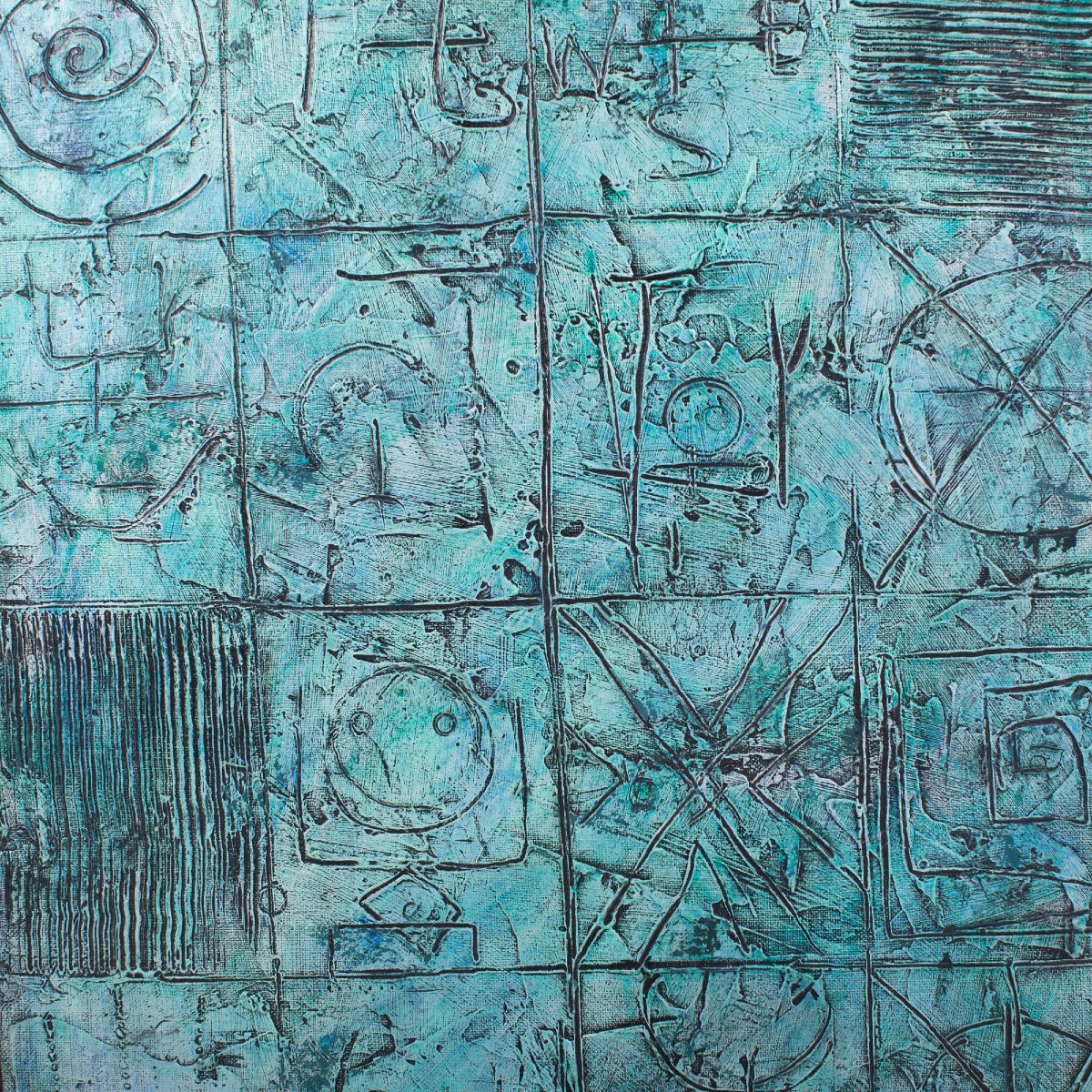
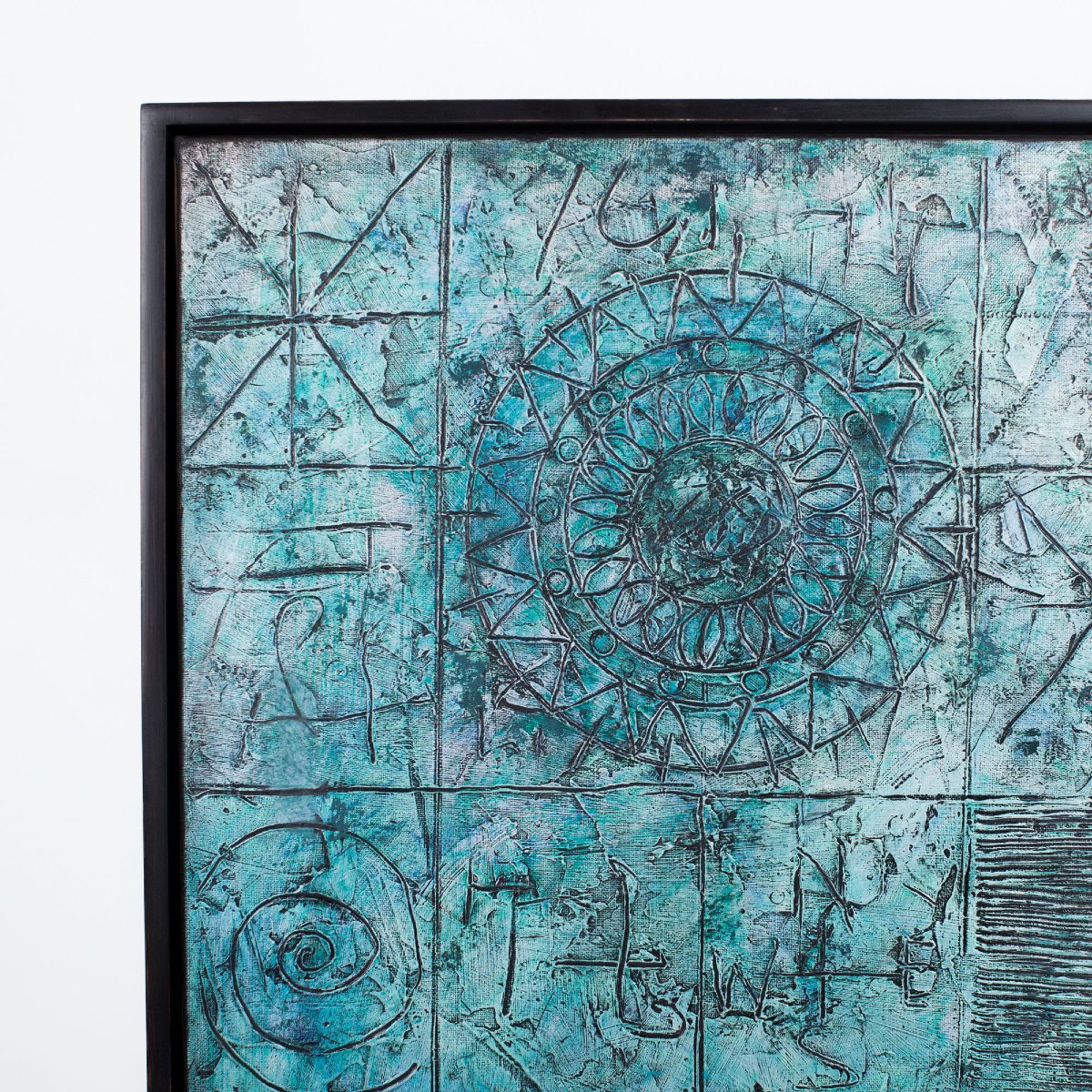
This fascinating abstract and lyrical work, which also evokes Art Brut, features sections with varied compositions, blending graphic and naïve figurative elements.
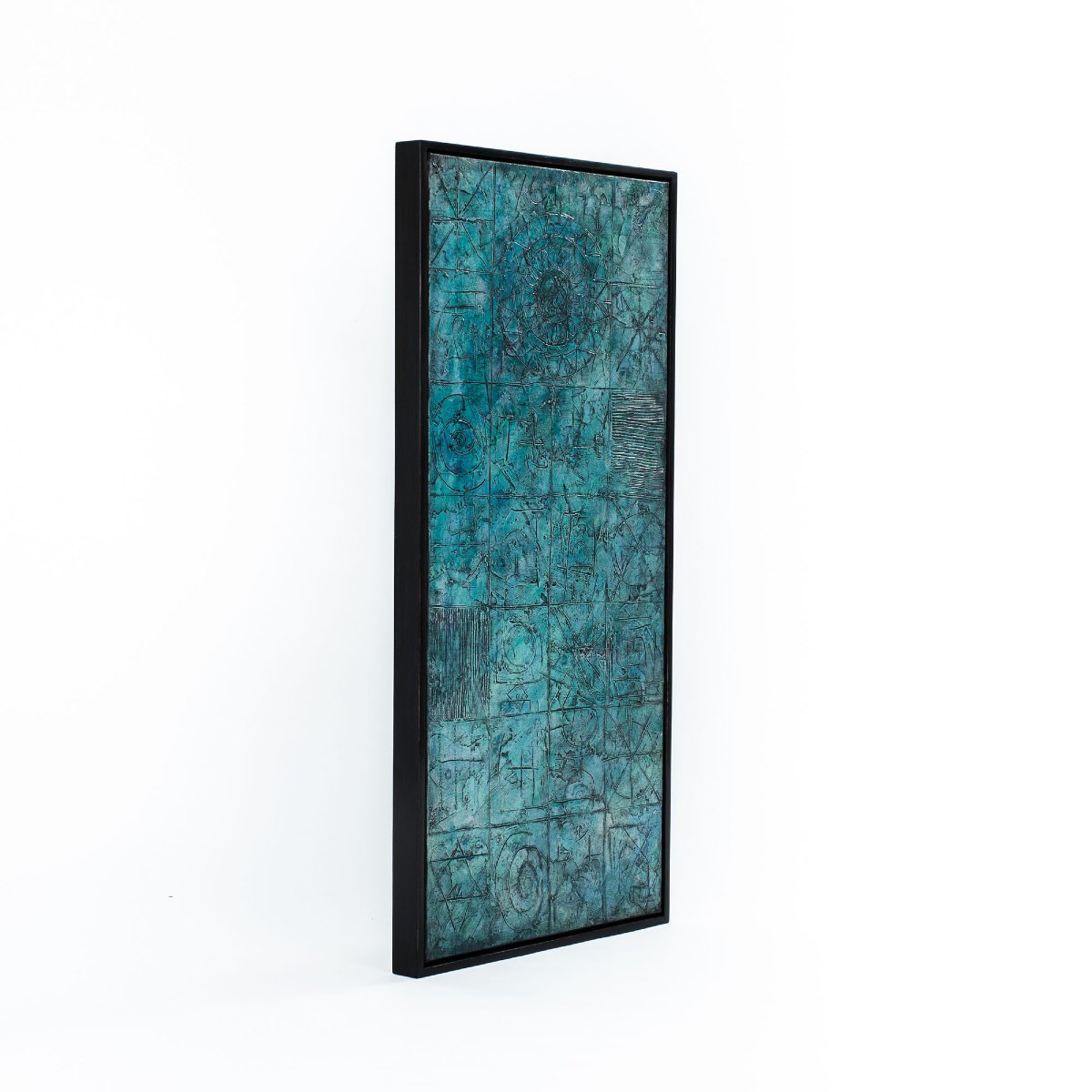
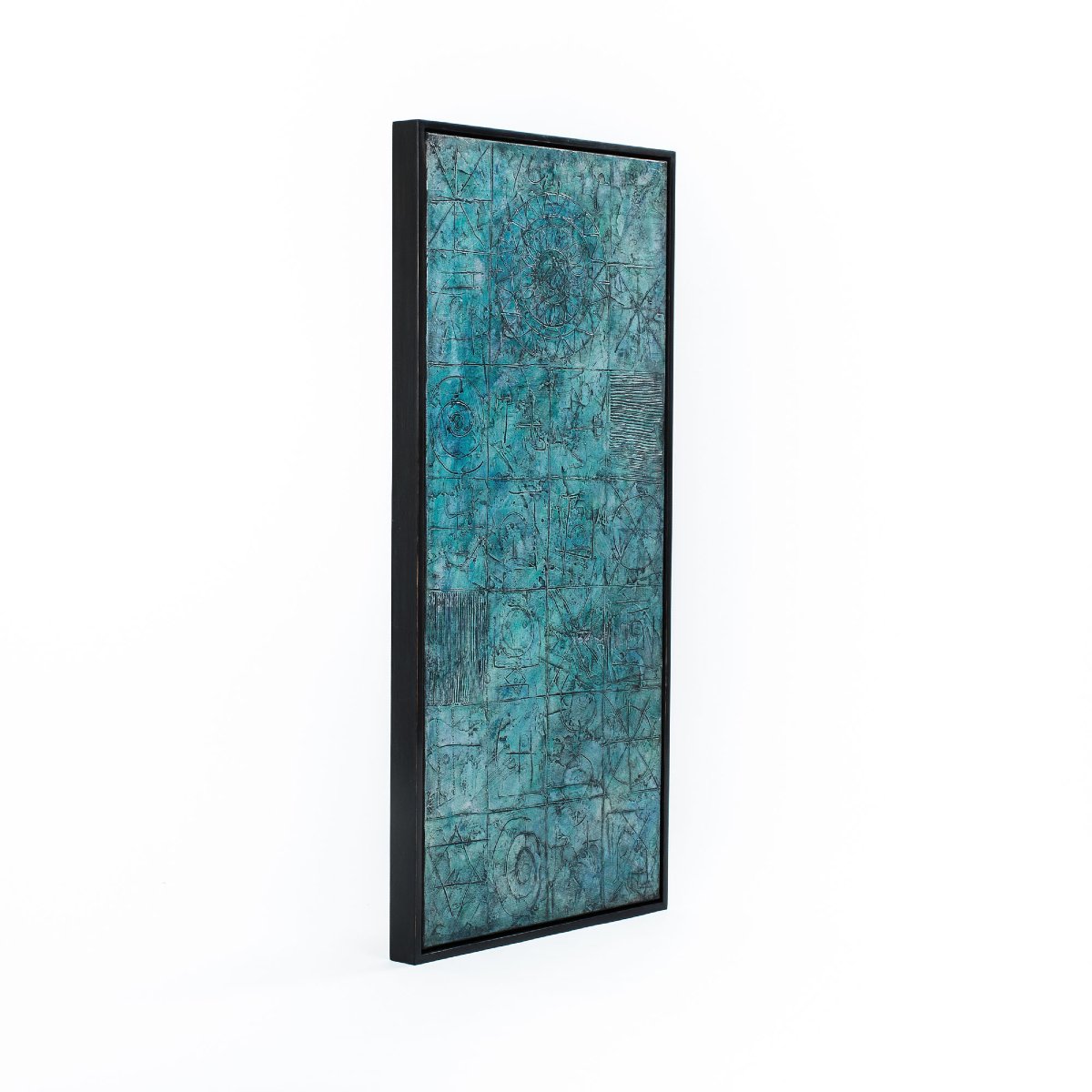
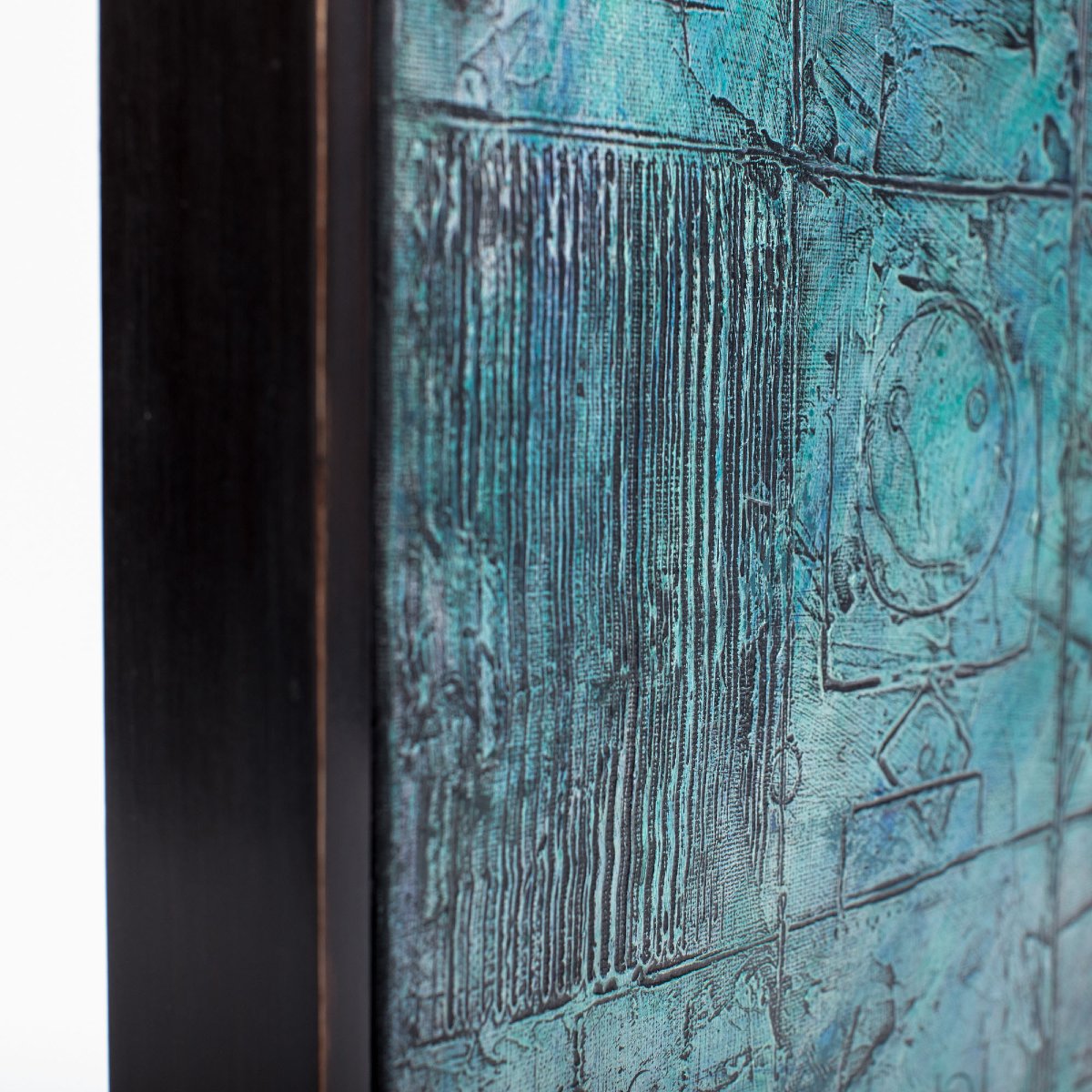
The slightly iridescent surface, with shades of turquoise, creates a strong sense of depth thanks to the vividness of the color and the reflections.
The particularly attractive format highlights the composition of the surface.
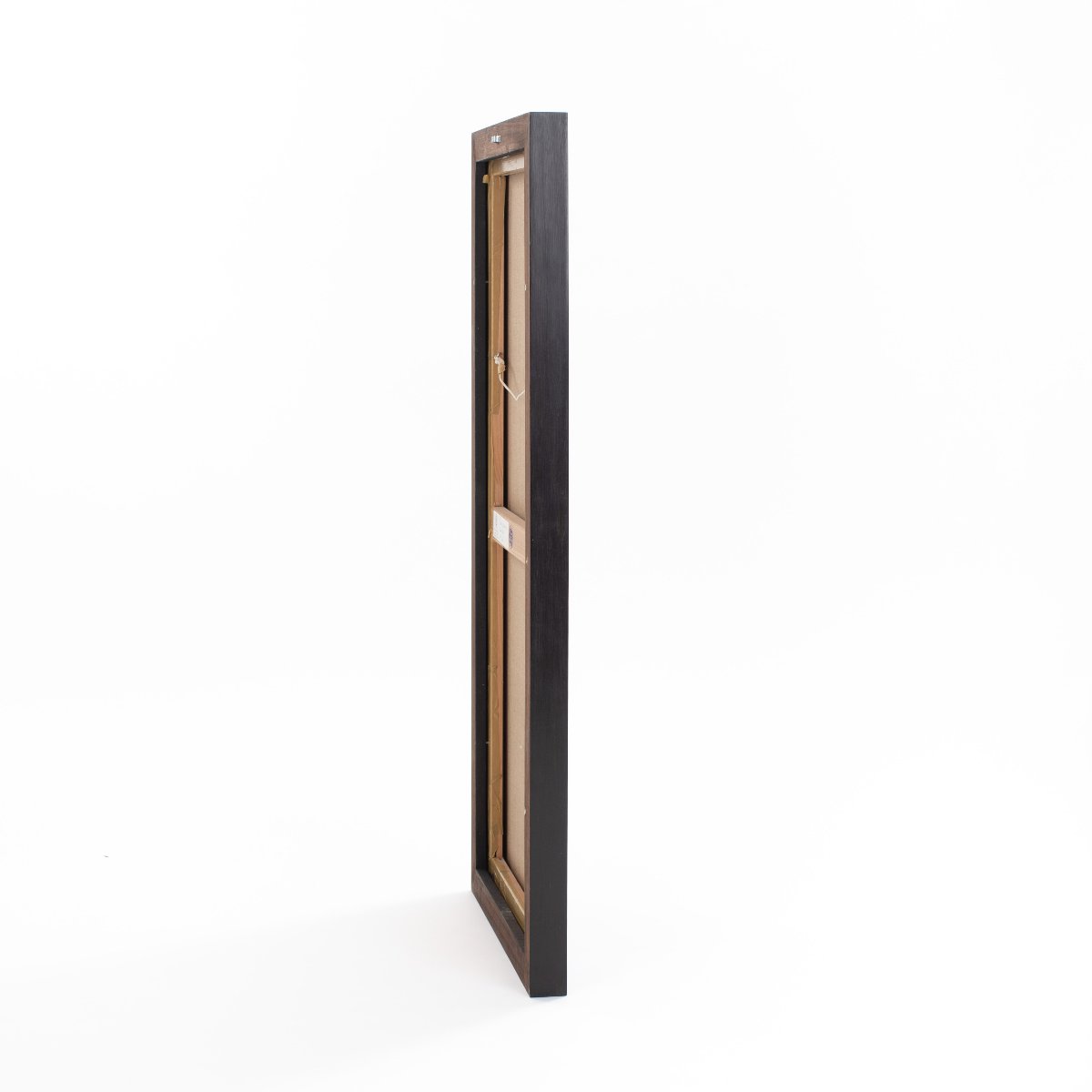
The work is framed in a new brown and black drop-leaf frame, handcrafted and hand-painted.
Pierre Jacquemon (1936–2001) was a Franco-American contemporary artist and a major figure of the École de Lyon in the 20th century.
Born in Lyon on August 6, 1936, Jacquemon began studying medicine at the age of 16. After contracting a severe form of polio, he remained disabled for the rest of his life. Despite this, he became one of Lyon’s most important artists and one of the few to have an international career.
A non-figurative painter since 1955, he participated in major exhibitions in France, such as “Antagonisms, Congress for the Freedom of Culture” at the Louvre Palace – Museum of Decorative Arts in Paris (1960). He lived in London (where he may have lived as a homeless person) from 1959 to 1961, then moved to New York in 1963.
In New York, he settled in Manhattan’s Lower East Side and held his first solo exhibition at the then-renowned Paul Bianchini Gallery in 1963.
He exhibited at other New York galleries throughout the 1960s and 1970s, notably at the Phoenix Gallery,
one of the galleries on 10th Street in Manhattan.
Pierre Jacquemon at the opening of an exhibition of his work.
His works are included in several public collections around the world, notably in the United States, the United Kingdom (according to the official database of British public collections), Japan, and France (including the Musée d’Art Moderne de la Ville de Paris and the Musée des Beaux-Arts de Lyon).
His works, which are predominantly abstract (though they often incorporate primitive symbols), exude a mysterious atmosphere: “Devoid of movement and defined form, Jacquemon’s paintings are essentially meditative.”
His work can be linked to the Lyrical Abstraction movement, but also to Art Brut. He has always followed a very personal, poetic, and humble path, certainly influenced by the Beat Generation and the atmosphere of the American New Age, as described by Irving Stettner in his book *Stroker*: “After all, it takes only a moment or two to look at a painting by Pierre Jacquemon: and yet, in a fraction of a second, or in the blink of an eye, we startle, we are mesmerized: immediately, we are plunged into a world of timeless space, able to witness the collision of planets, the glowing ball at the center of the Earth, the flaming tails of streaking comets, and the resplendent meteor showers.”
This fascinating abstract and lyrical work, which also evokes Art Brut, features sections with varied compositions, blending graphic and naïve figurative elements.
The slightly iridescent surface, with shades of turquoise, creates a strong sense of depth thanks to the vividness of the color and the reflections.
The particularly attractive format highlights the composition of the surface.
The work is framed in a new brown and black drop-leaf frame, handcrafted and hand-painted.
Pierre Jacquemon (1936–2001) was a Franco-American contemporary artist and a major figure of the École de Lyon in the 20th century.
Born in Lyon on August 6, 1936, Jacquemon began studying medicine at the age of 16. After contracting a severe form of polio, he remained disabled for the rest of his life. Despite this, he became one of Lyon’s most important artists and one of the few to have an international career.
A non-figurative painter since 1955, he participated in major exhibitions in France, such as “Antagonisms, Congress for the Freedom of Culture” at the Louvre Palace – Museum of Decorative Arts in Paris (1960). He lived in London (where he may have lived as a homeless person) from 1959 to 1961, then moved to New York in 1963.
In New York, he settled in Manhattan’s Lower East Side and held his first solo exhibition at the then-renowned Paul Bianchini Gallery in 1963.
He exhibited at other New York galleries throughout the 1960s and 1970s, notably at the Phoenix Gallery,
one of the galleries on 10th Street in Manhattan.
Pierre Jacquemon at the opening of an exhibition of his work.
His works are included in several public collections around the world, notably in the United States, the United Kingdom (according to the official database of British public collections), Japan, and France (including the Musée d’Art Moderne de la Ville de Paris and the Musée des Beaux-Arts de Lyon).
His works, which are predominantly abstract (though they often incorporate primitive symbols), exude a mysterious atmosphere: “Devoid of movement and defined form, Jacquemon’s paintings are essentially meditative.”
His work can be linked to the Lyrical Abstraction movement, but also to Art Brut. He has always followed a very personal, poetic, and humble path, certainly influenced by the Beat Generation and the atmosphere of the American New Age, as described by Irving Stettner in his book *Stroker*: “After all, it takes only a moment or two to look at a painting by Pierre Jacquemon: and yet, in a fraction of a second, or in the blink of an eye, we startle, we are mesmerized: immediately, we are plunged into a world of timeless space, able to witness the collision of planets, the glowing ball at the center of the Earth, the flaming tails of streaking comets, and the resplendent meteor showers.”
3 800 €
Period: 20th century
Style: Design 50's and 60's
Condition: Excellent condition
Material: Acrylic
Width: 50
Height: 103
Depth: 5
Reference (ID): 1816836
Availability: In stock
Print