THIS OBJECT WAS SOLD
Writing Set Called Yatate - Japan
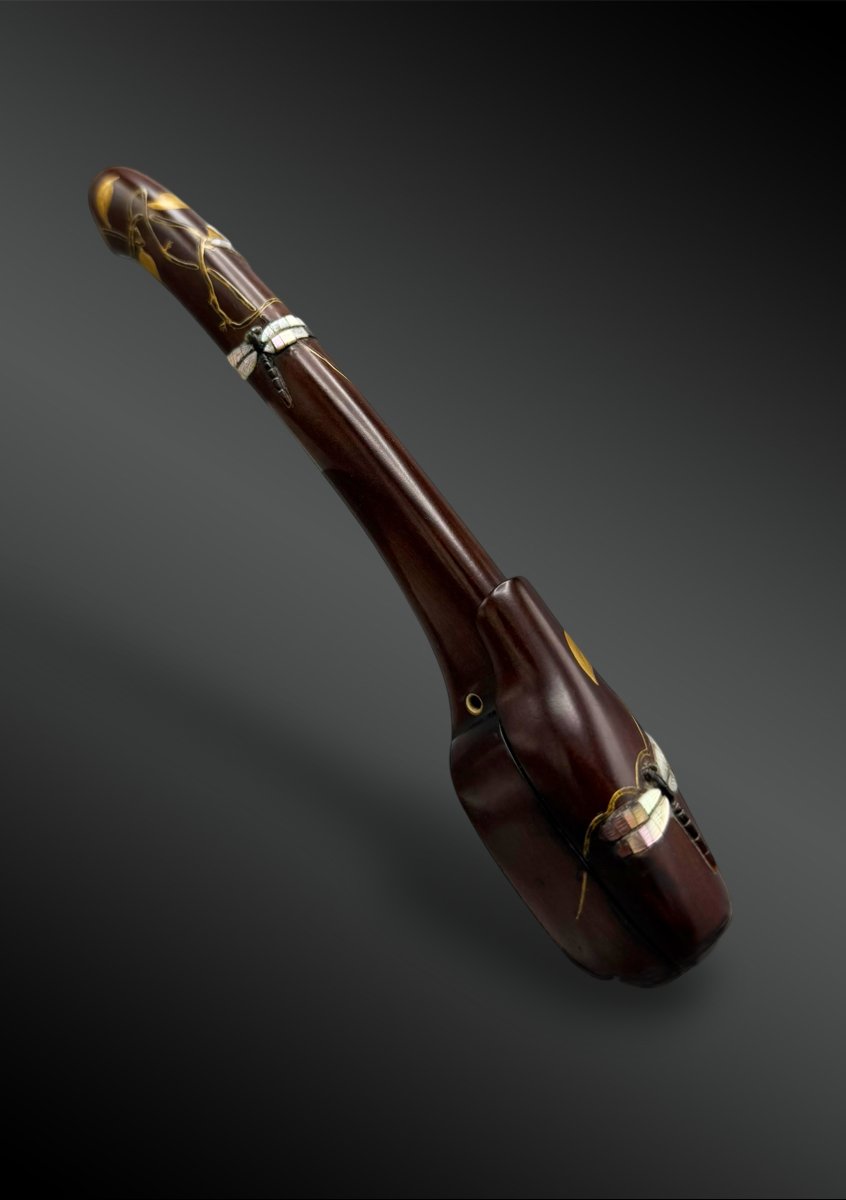
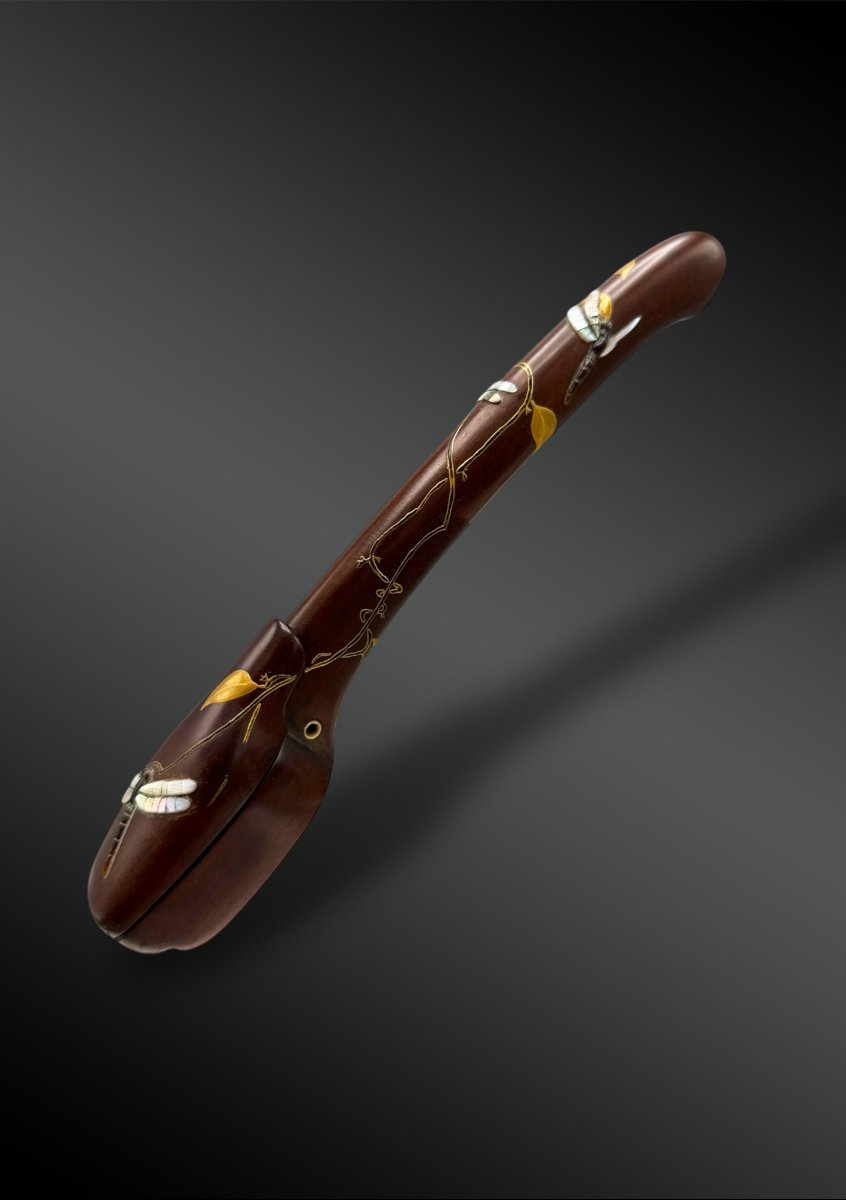
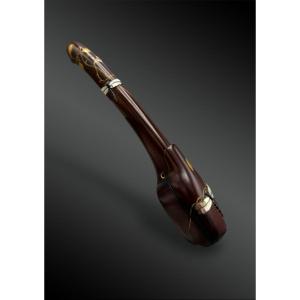


WRITING SET called Yatate
Japan
Wood and mother-of-pearl
Length: 19; H.: 3 cm
(small chip)
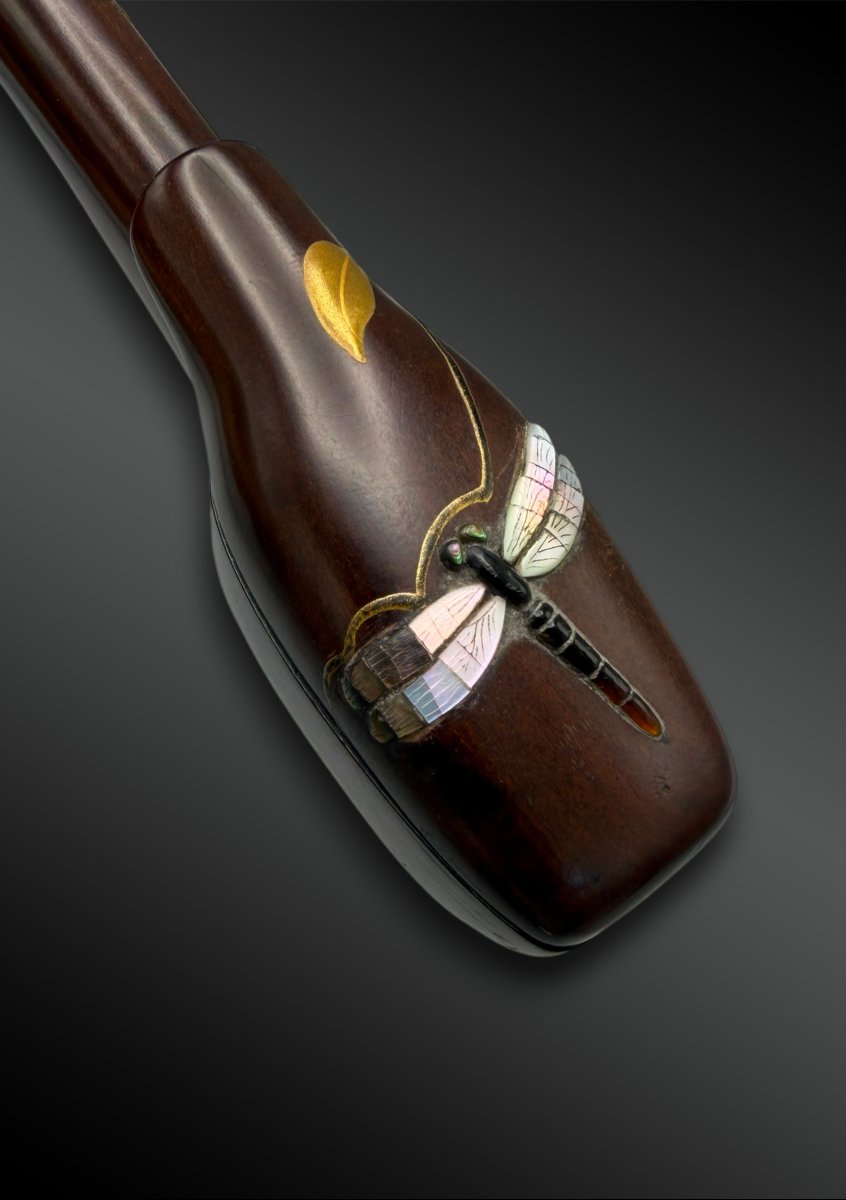
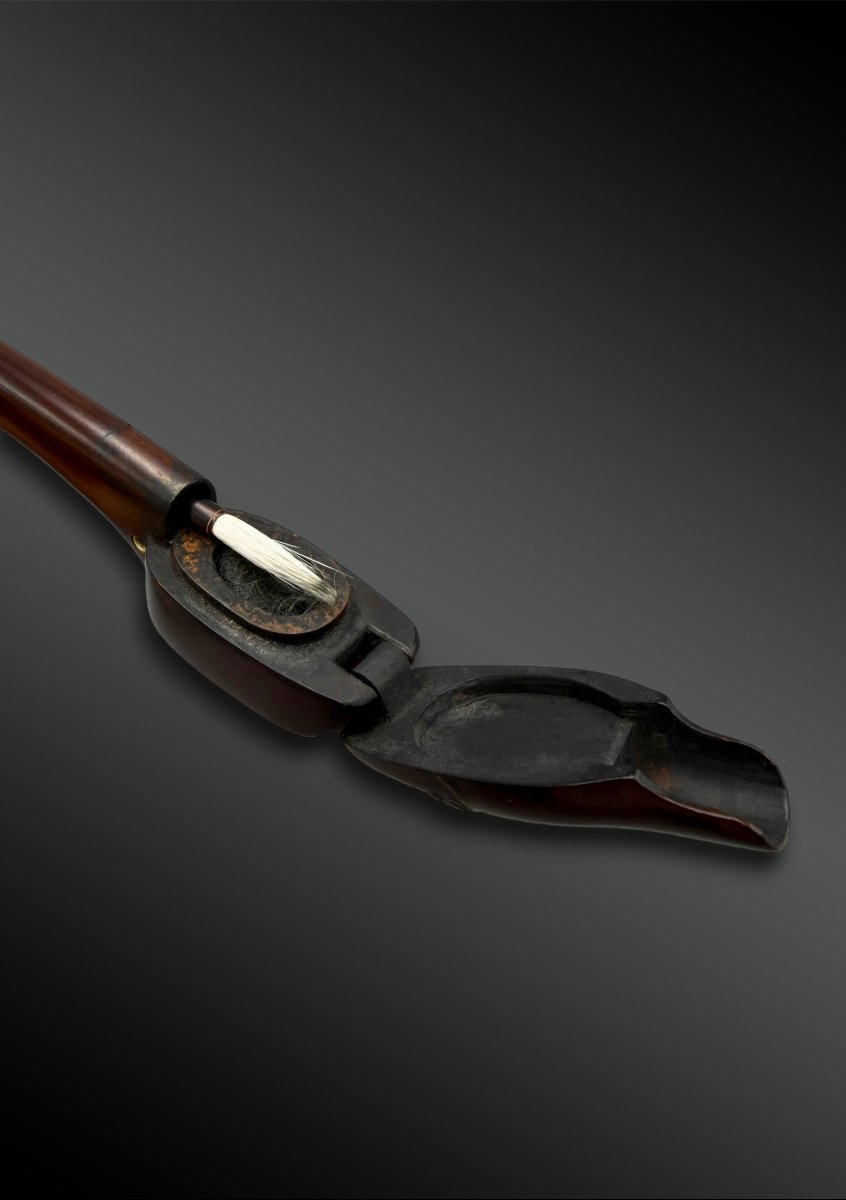
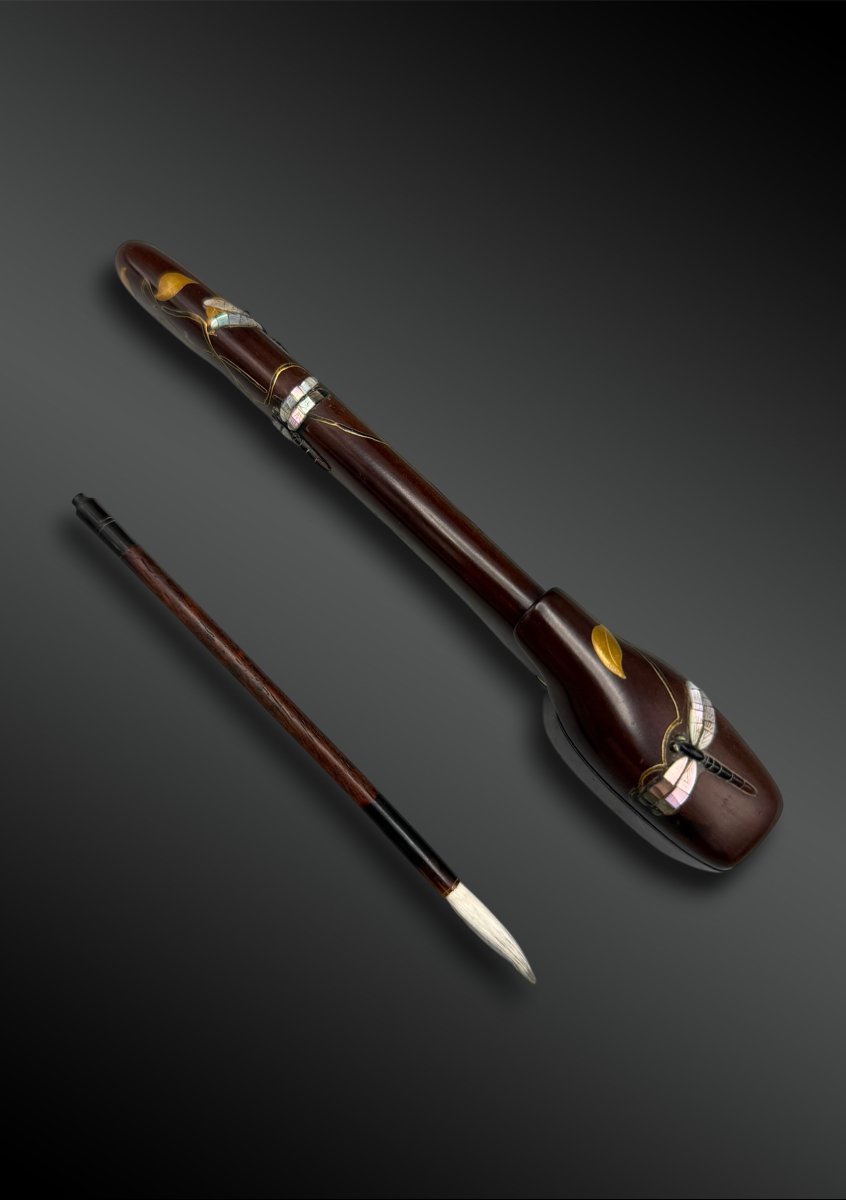
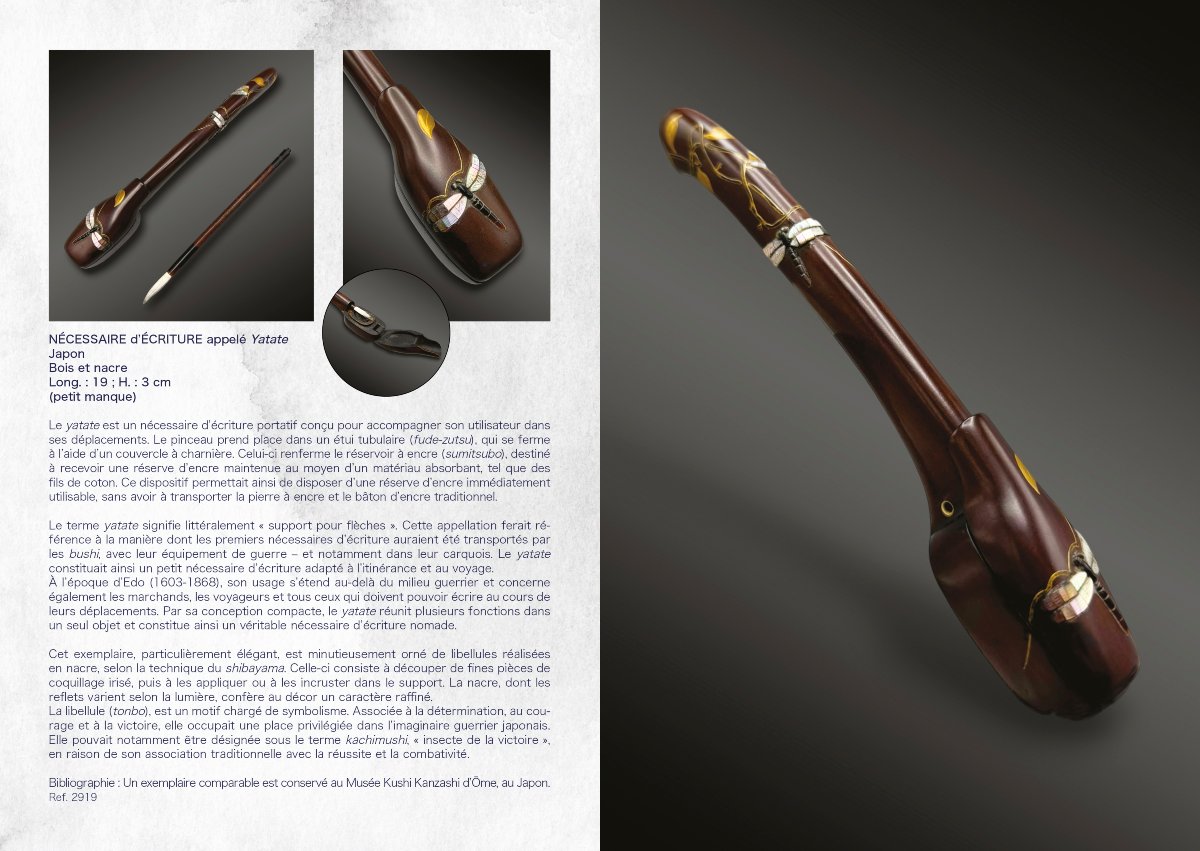
The yatate is a portable writing set designed to accompany its user on the go. The brush is housed in a tubular case (fude-zutsu), which closes with a hinged lid. The case contains the ink reservoir (sumitsubo), intended to hold a supply of ink held in place by an absorbent material, such as cotton threads. This design provided an immediately usable supply of ink without having to carry the traditional inkstone and inkstick.
The term “yatate” literally means “arrow holder.” This name is said to refer to the way in which the earliest writing kits were carried by the bushi along with their military equipment—particularly in their quivers. The yatate was thus a small writing kit suited for travel and life on the road.
During the Edo period (1603–1868), its use spread beyond military circles to include merchants, travelers, and anyone who needed to write while on the move. Thanks to its compact design, the yatate combines several functions into a single object, making it a true nomadic writing kit.
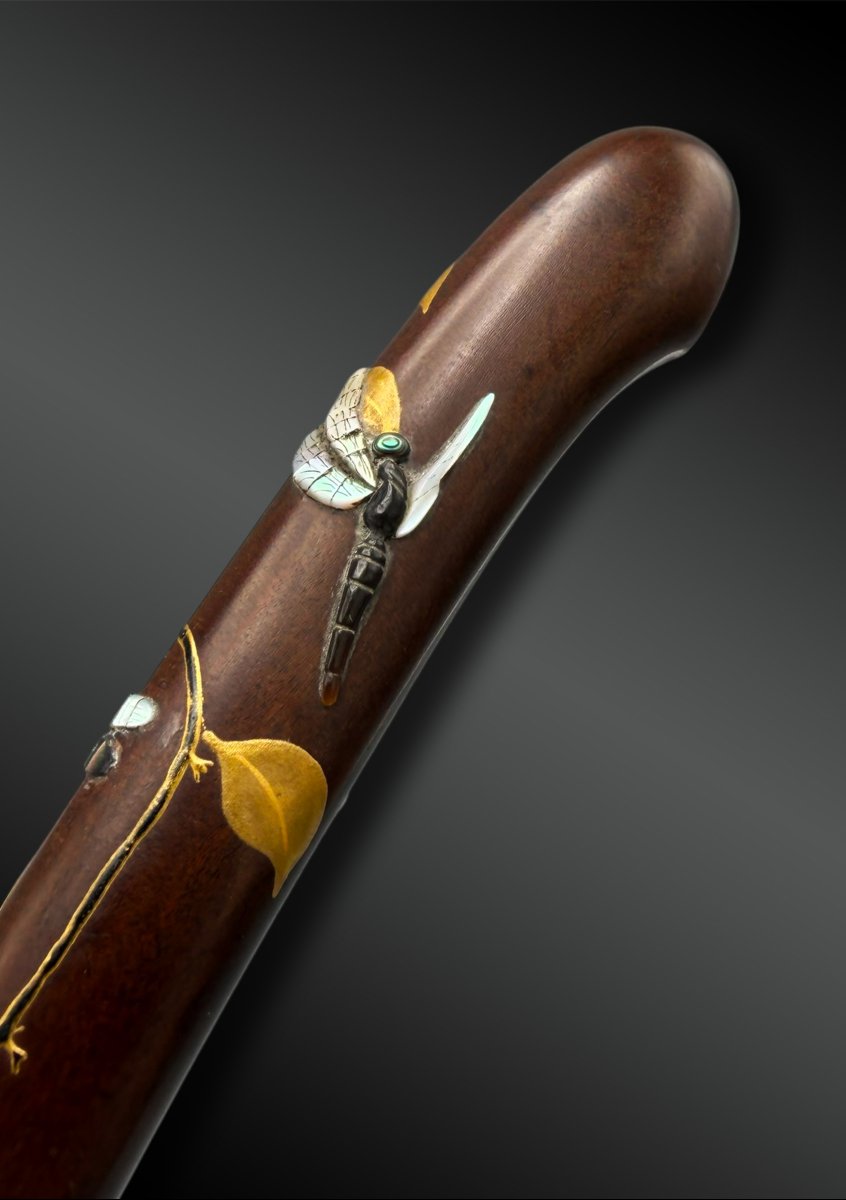
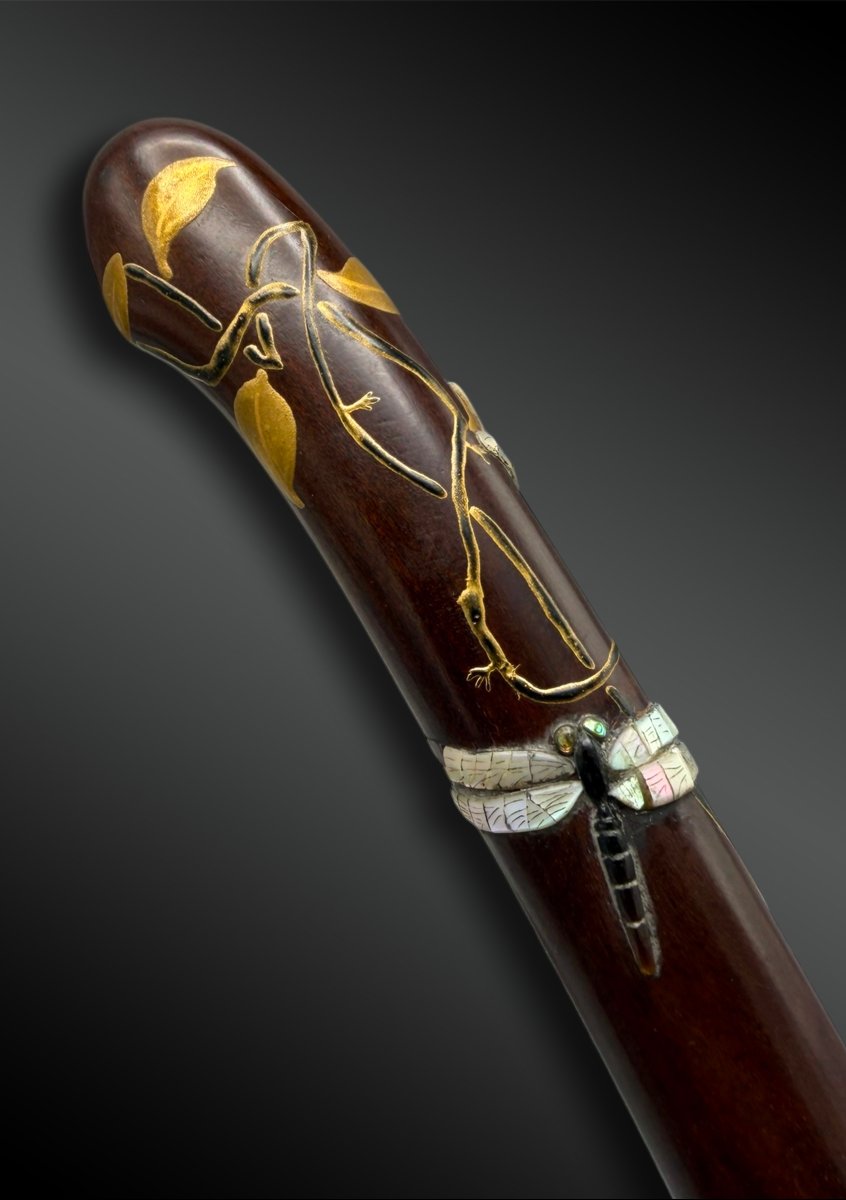
This particularly elegant example is meticulously adorned with dragonflies crafted from mother-of-pearl using the shibayama technique. This technique involves cutting thin pieces of iridescent shell and then applying or inlaying them into the base. Mother-of-pearl, whose shimmer varies with the light, lends the decoration a refined quality.
The dragonfly (tonbo) is a motif rich in symbolism. Associated with determination, courage, and victory, it held a special place in the Japanese warrior’s imagination. It was sometimes referred to as kachimushi, “insect of victory,” due to its traditional association with success and fighting spirit.
Bibliography: A comparable example is housed at the Kushi Kanzashi Museum in Ōme, Japan.
Ref. 2919
Text and photos © FCP CORIDON
Japan
Wood and mother-of-pearl
Length: 19; H.: 3 cm
(small chip)
The yatate is a portable writing set designed to accompany its user on the go. The brush is housed in a tubular case (fude-zutsu), which closes with a hinged lid. The case contains the ink reservoir (sumitsubo), intended to hold a supply of ink held in place by an absorbent material, such as cotton threads. This design provided an immediately usable supply of ink without having to carry the traditional inkstone and inkstick.
The term “yatate” literally means “arrow holder.” This name is said to refer to the way in which the earliest writing kits were carried by the bushi along with their military equipment—particularly in their quivers. The yatate was thus a small writing kit suited for travel and life on the road.
During the Edo period (1603–1868), its use spread beyond military circles to include merchants, travelers, and anyone who needed to write while on the move. Thanks to its compact design, the yatate combines several functions into a single object, making it a true nomadic writing kit.
This particularly elegant example is meticulously adorned with dragonflies crafted from mother-of-pearl using the shibayama technique. This technique involves cutting thin pieces of iridescent shell and then applying or inlaying them into the base. Mother-of-pearl, whose shimmer varies with the light, lends the decoration a refined quality.
The dragonfly (tonbo) is a motif rich in symbolism. Associated with determination, courage, and victory, it held a special place in the Japanese warrior’s imagination. It was sometimes referred to as kachimushi, “insect of victory,” due to its traditional association with success and fighting spirit.
Bibliography: A comparable example is housed at the Kushi Kanzashi Museum in Ōme, Japan.
Ref. 2919
Text and photos © FCP CORIDON
Explore similar pieces and discover your ideal find:
Inkwells, Desks Accessories