

China, 19th Century—polychrome Glazed Porcelain Ginger Jar Decorated With A Wedding Scene
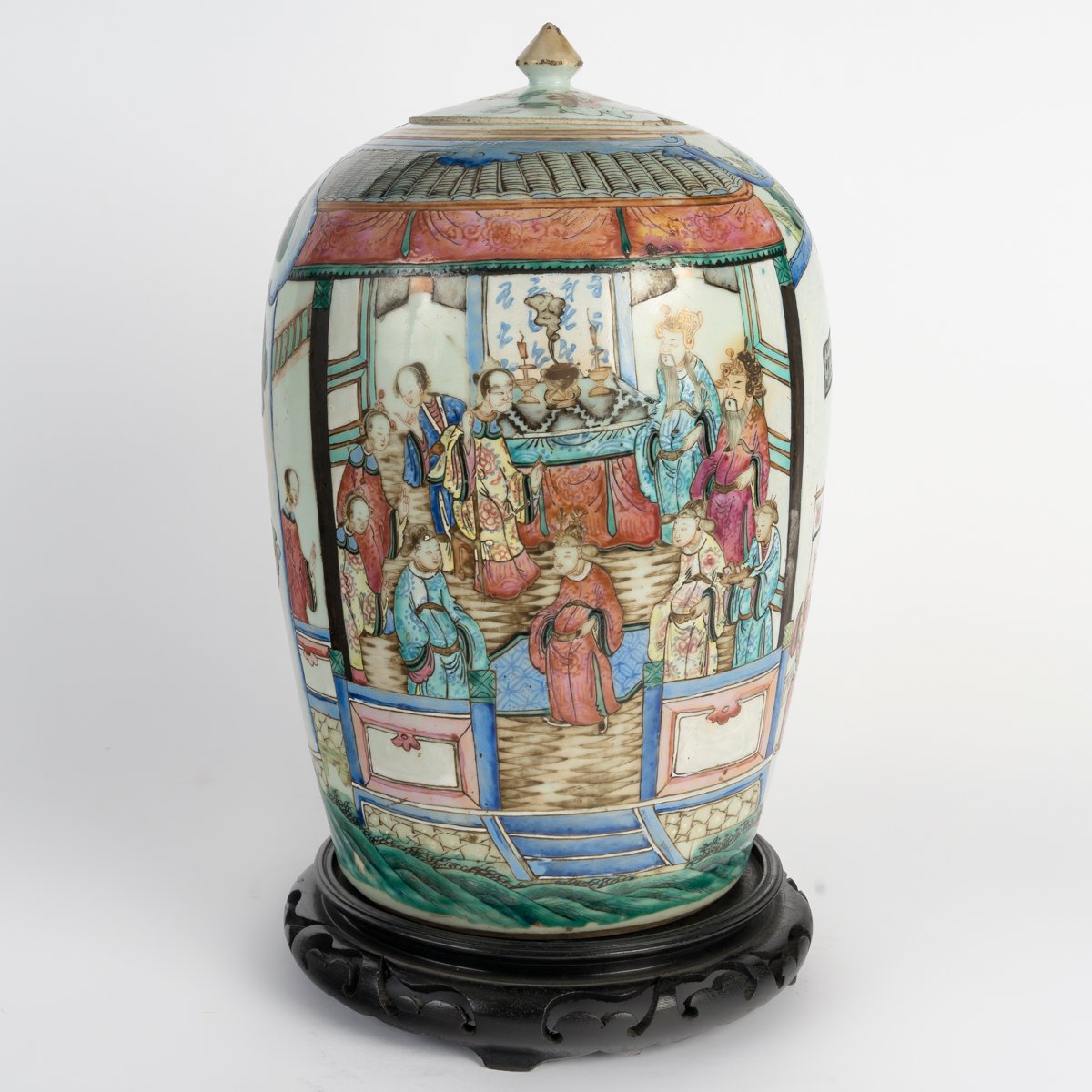
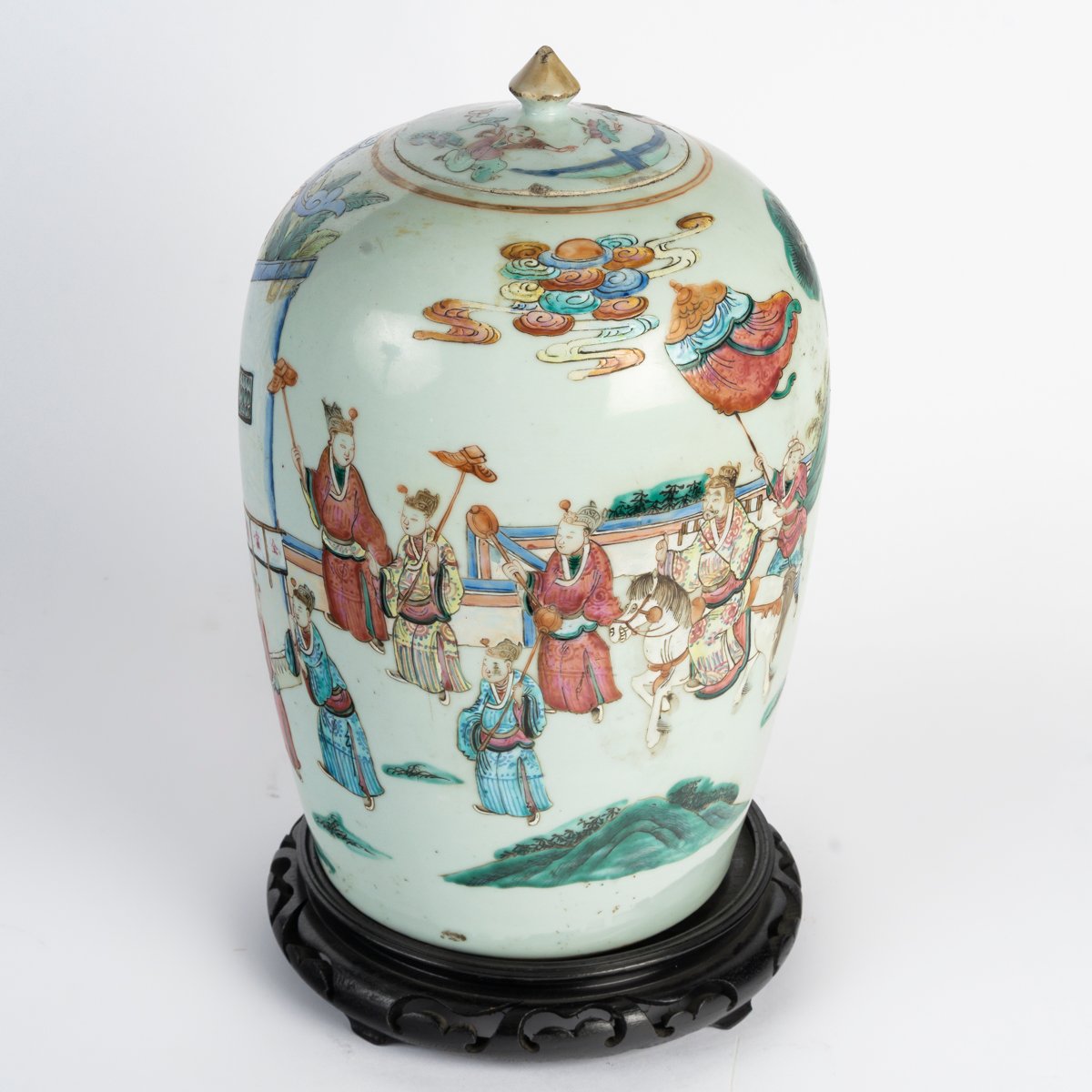
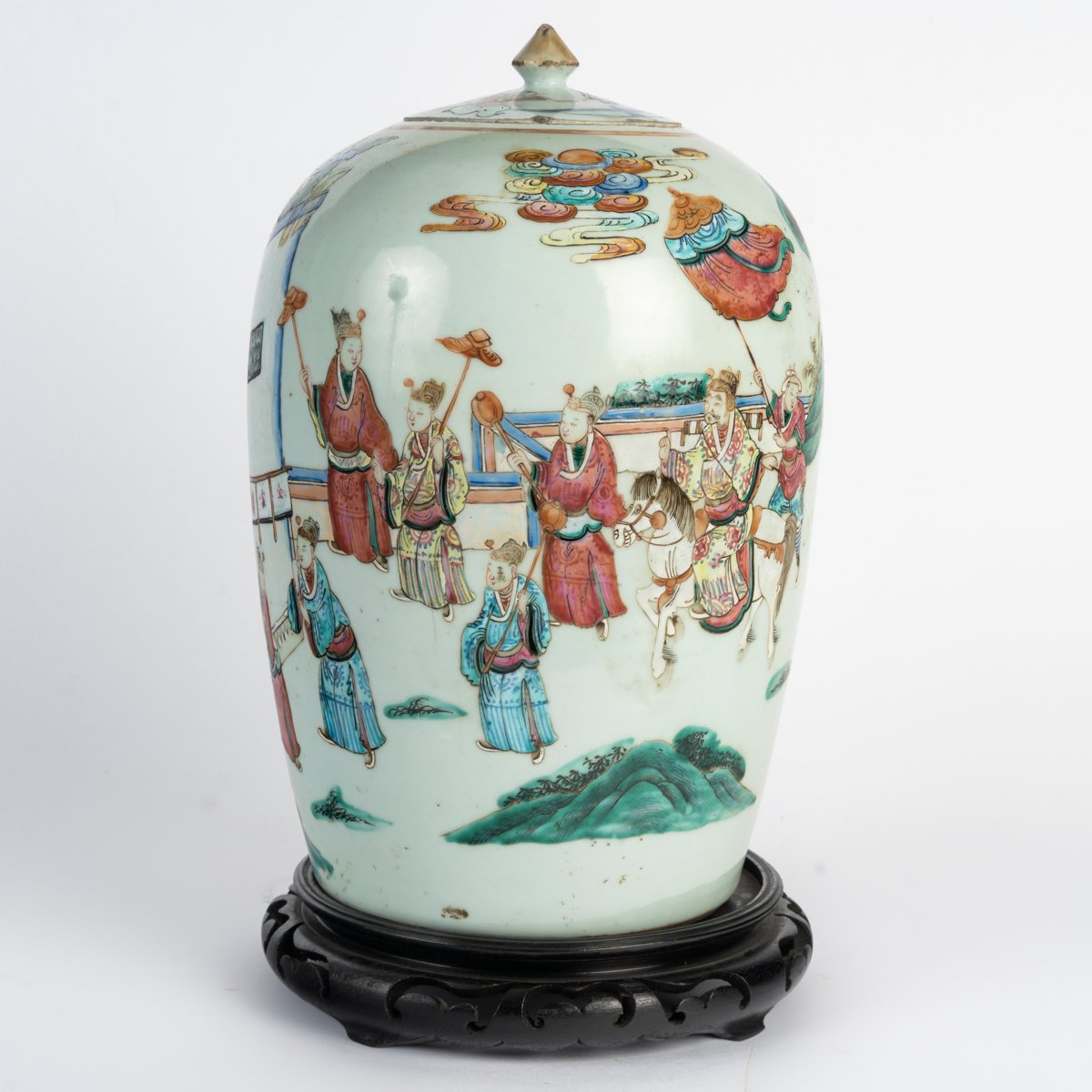
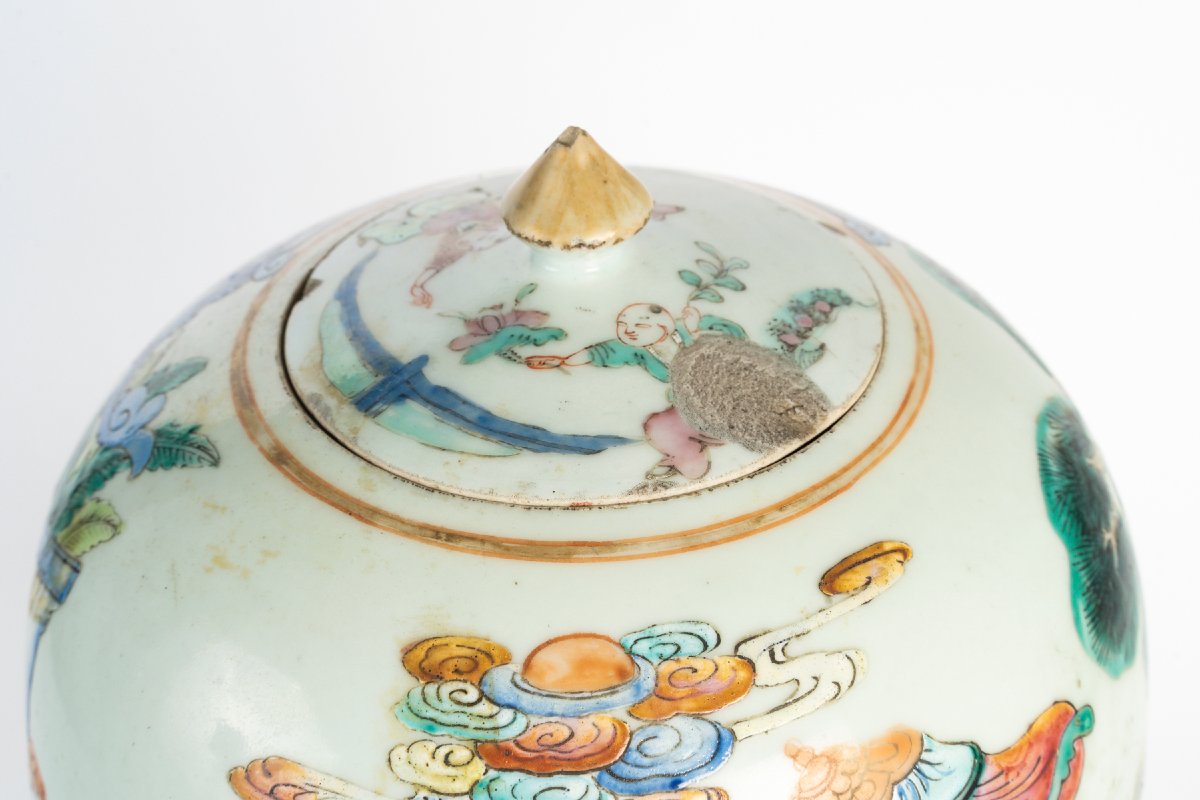
China, 19thcentury—Important lidded, egg-shaped ginger pot made ofpolychrome and gold enamel by the Famille Rose on a white background with an underglaze continuous decorative band depicting, within a frame featuring trees and architectural elements, a princely wedding ceremonyduring the Qing Dynasty (1645–1911).Its conical, flutedlid is adorned with playful child figures, each holding, with one hand,peach blossoms on stems.
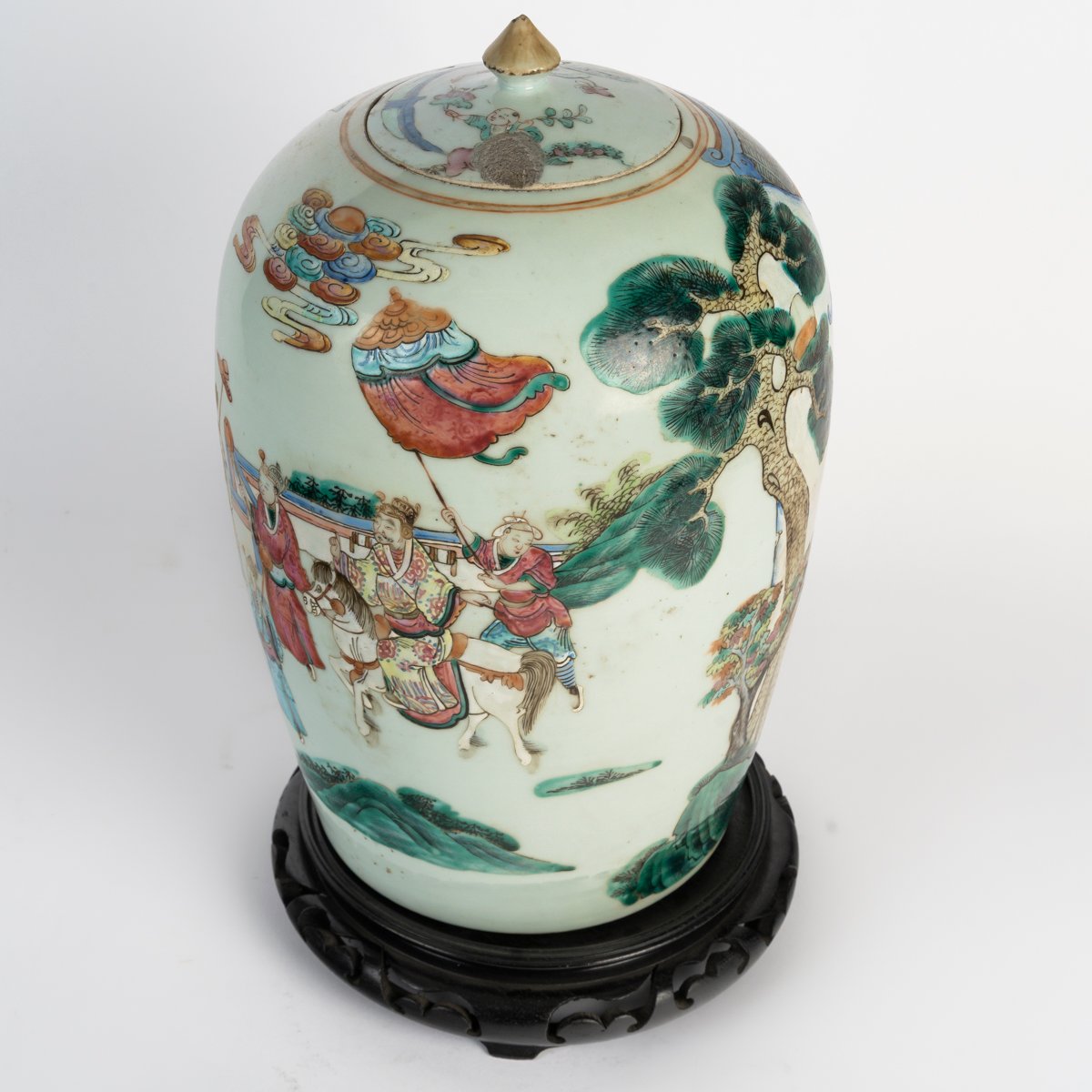
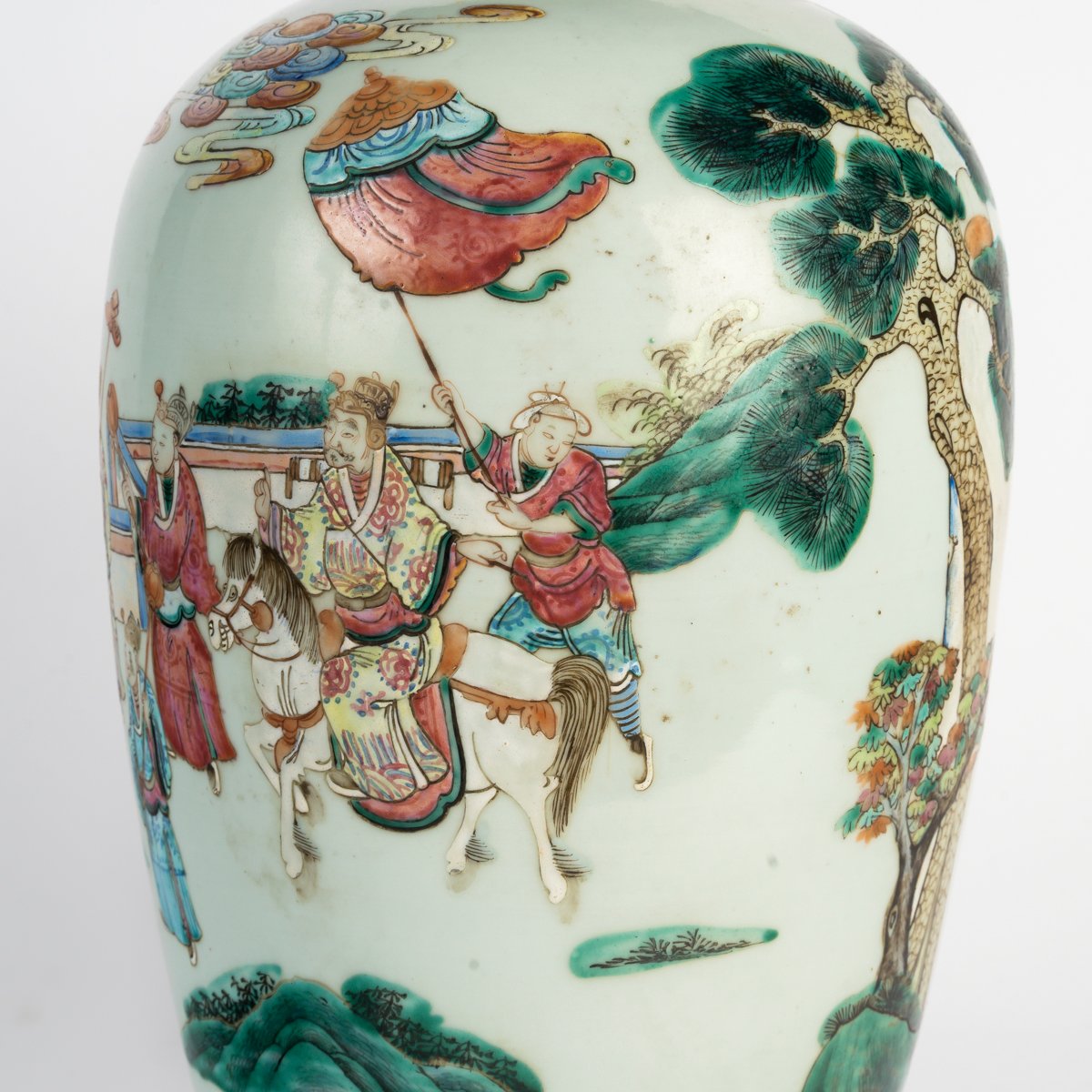
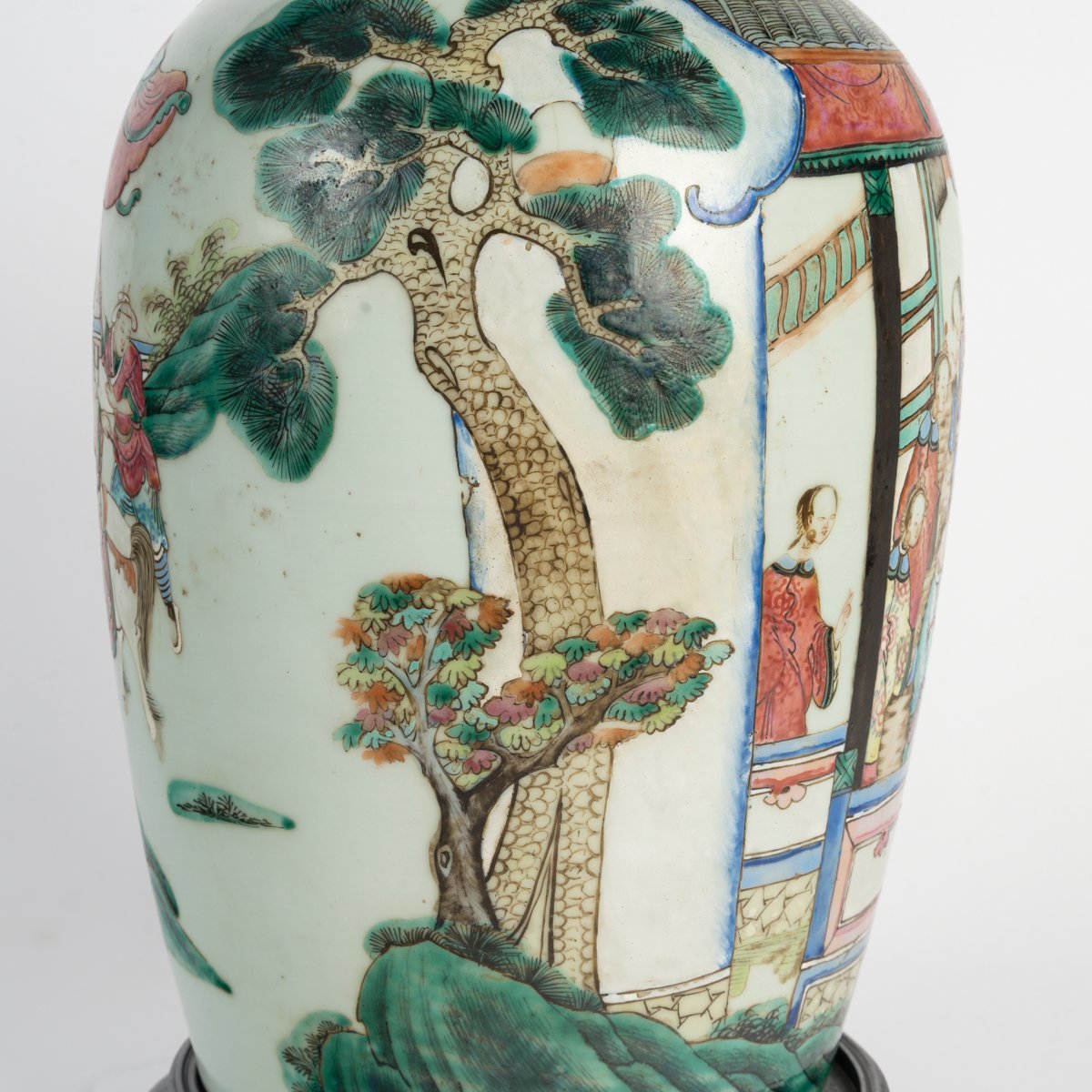
Presented on a circular,blackened wooden base, molded and carved with a delicate four-legged footring.SPICES AND CELEBRATIONS Beautifullyproportions, this charming ginger potmade of polychrome glazed porcelain accented with gold features, on its ovoid body outlinedunder a milky-white glaze, two delightful small scenes in apalette, favoring vivid colors (coral red, cobalt blue, emerald green) whose brillianceis harmoniously softened by delicate (pink, light yellow, azure blue, andturquoise) and warm (ochre browns) tones. Framed by centuries-old umbrella pines—a symbol oflongevity and wisdom—and ornamental shrubs (peach or plum? associatedwith marriage, nobility, and spring), punctuated by small, these set the stagewith verve and picturesque charm for the solemn preludes to a wedding ceremony asconceived in Imperial China during the Qing Dynasty.
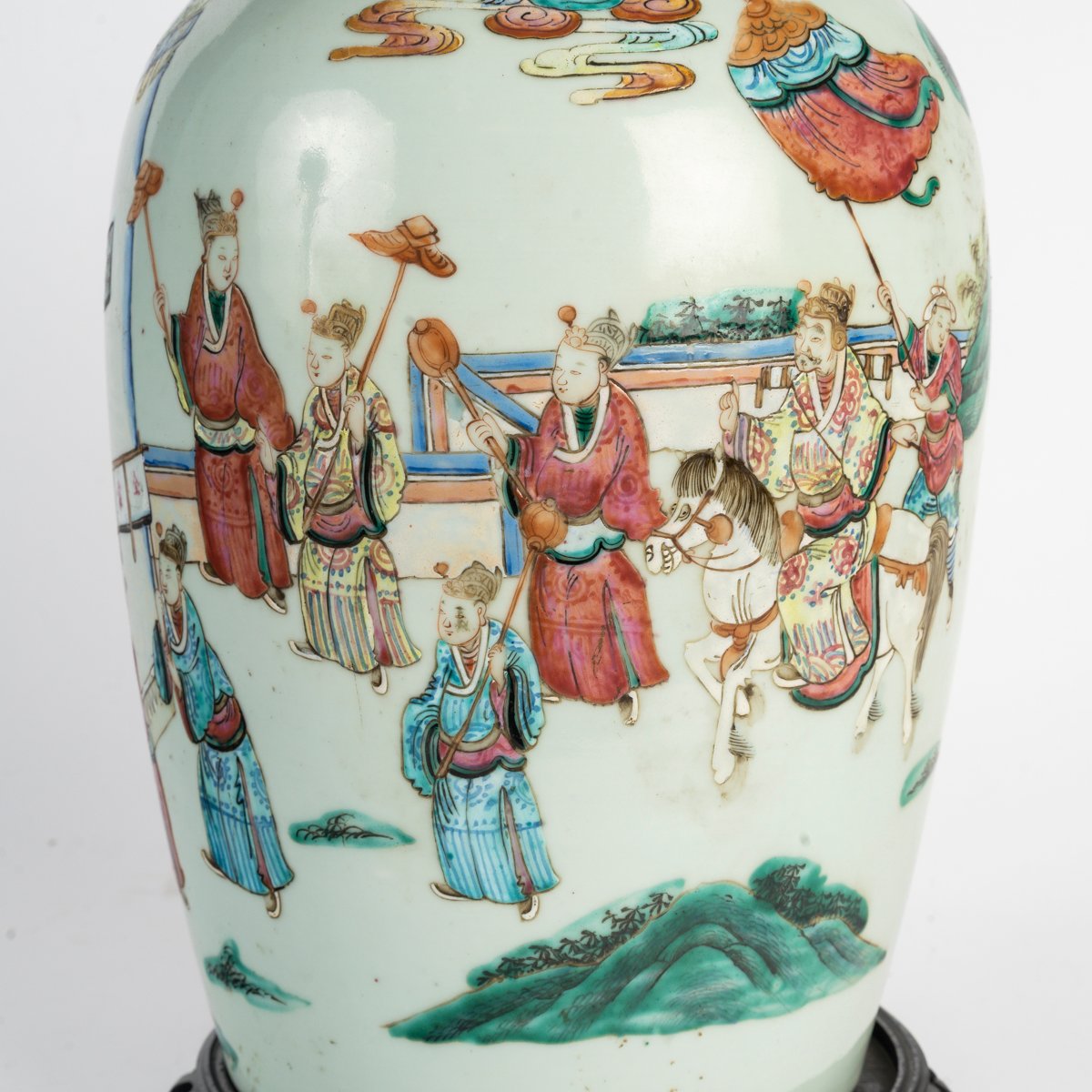
Bordered bylow walls evoking one of the platforms of a vastpalatial complex, the first scene depicts the splendor of the imperial procession.Preceded by a diligent Lady-in-Waiting, noblydressed female musicians—now holding long poles to which are attached,among other things, spheres with bells—advance, with the undisputed Master of theImperial City perched with dignity atop aproud, prancing parade steedrichly harnessed, adorned, and saddled, the undisputed Master of theImperial City.
Beside him stands, sovereign, his wife, holdinga large fan with a stylized lotus flower motif. Behind them, following with a light step, is a servantwaving a ceremonial parasol with silk ruffles.In thesecond scene, depicted within a pavilion set aside for religious services, the main protagonists are shown conversing as they respectfully awaitthe Emperor’s entrance or engaged in the final ceremonial preparationsof this joyous celebration
Near its threshold, standing face to face, arethe youthful and smiling betrothed princes, each surrounded by reverent favorites and obliging ladies-in-, and a zealous maid presenting delicate delicacies in a small dish; high dignitaries, scholars,and officiants are positioned before the altar.
On the altar,topped by a canopy and adorned with a rich, embroidered drape,stand candleholders and incense burners from which rise,swirls of incense, in front of a piece of fabric adorned with stylized Chinese characters,from the incense burners.Outlinedon its lid, frolicking merrily in an ornamental garden punctuateda pond, two mischievous childlike figuresholding peach blossoms(symbolizing spring, the season of weddings) on their stems adda delightful touch of whimsy, reinforcing the festive atmosphere inherentto the solemn ceremonies depictedin the small scenes of this porcelain piece.
It is worth noting that, in the culture of Ancient China, the Ginger Pot wasa highly prized wedding gift or was even presented to the Emperordue to the virtues of its precious contents.Anattractive color palette, a refined pictorial composition in harmony with itsform, and a judicious adaptation of its theme and motifs to theof this utilitarian object—which, over time, has become an essentialelement of interior design—characterize this Ginger Pot. With itsflattering presence, it will lend any furniture ensemble or spacean elegant and subtle touch of exoticism. .
Materials: Polychrome andgold-glazed porcelain on a white underglaze; blackened wood base.Dimensions: H.: 32 cm; - Total height with base: 36 cm.
China, 19th century
Good overall condition.
Note: a chip on the lid and some chipping onthe rim (see photos)
Presented on a circular,blackened wooden base, molded and carved with a delicate four-legged footring.SPICES AND CELEBRATIONS Beautifullyproportions, this charming ginger potmade of polychrome glazed porcelain accented with gold features, on its ovoid body outlinedunder a milky-white glaze, two delightful small scenes in apalette, favoring vivid colors (coral red, cobalt blue, emerald green) whose brillianceis harmoniously softened by delicate (pink, light yellow, azure blue, andturquoise) and warm (ochre browns) tones. Framed by centuries-old umbrella pines—a symbol oflongevity and wisdom—and ornamental shrubs (peach or plum? associatedwith marriage, nobility, and spring), punctuated by small, these set the stagewith verve and picturesque charm for the solemn preludes to a wedding ceremony asconceived in Imperial China during the Qing Dynasty.
Bordered bylow walls evoking one of the platforms of a vastpalatial complex, the first scene depicts the splendor of the imperial procession.Preceded by a diligent Lady-in-Waiting, noblydressed female musicians—now holding long poles to which are attached,among other things, spheres with bells—advance, with the undisputed Master of theImperial City perched with dignity atop aproud, prancing parade steedrichly harnessed, adorned, and saddled, the undisputed Master of theImperial City.
Beside him stands, sovereign, his wife, holdinga large fan with a stylized lotus flower motif. Behind them, following with a light step, is a servantwaving a ceremonial parasol with silk ruffles.In thesecond scene, depicted within a pavilion set aside for religious services, the main protagonists are shown conversing as they respectfully awaitthe Emperor’s entrance or engaged in the final ceremonial preparationsof this joyous celebration
Near its threshold, standing face to face, arethe youthful and smiling betrothed princes, each surrounded by reverent favorites and obliging ladies-in-, and a zealous maid presenting delicate delicacies in a small dish; high dignitaries, scholars,and officiants are positioned before the altar.
On the altar,topped by a canopy and adorned with a rich, embroidered drape,stand candleholders and incense burners from which rise,swirls of incense, in front of a piece of fabric adorned with stylized Chinese characters,from the incense burners.Outlinedon its lid, frolicking merrily in an ornamental garden punctuateda pond, two mischievous childlike figuresholding peach blossoms(symbolizing spring, the season of weddings) on their stems adda delightful touch of whimsy, reinforcing the festive atmosphere inherentto the solemn ceremonies depictedin the small scenes of this porcelain piece.
It is worth noting that, in the culture of Ancient China, the Ginger Pot wasa highly prized wedding gift or was even presented to the Emperordue to the virtues of its precious contents.Anattractive color palette, a refined pictorial composition in harmony with itsform, and a judicious adaptation of its theme and motifs to theof this utilitarian object—which, over time, has become an essentialelement of interior design—characterize this Ginger Pot. With itsflattering presence, it will lend any furniture ensemble or spacean elegant and subtle touch of exoticism. .
Materials: Polychrome andgold-glazed porcelain on a white underglaze; blackened wood base.Dimensions: H.: 32 cm; - Total height with base: 36 cm.
China, 19th century
Good overall condition.
Note: a chip on the lid and some chipping onthe rim (see photos)
950 €
Period: 19th century
Style: Asian art
Condition: Good condition
Material: Porcelain
Height: 36 cm (32 cm sans le socle)
Reference (ID): 1816402
Availability: In stock
Print