

Louis Peyré (1923–2012) Self-portrait With The Yellow Tape Measure
Artist: Louis Peyré
Louis PEYRÉ
(Campagnan 1923 – Sète 2012)
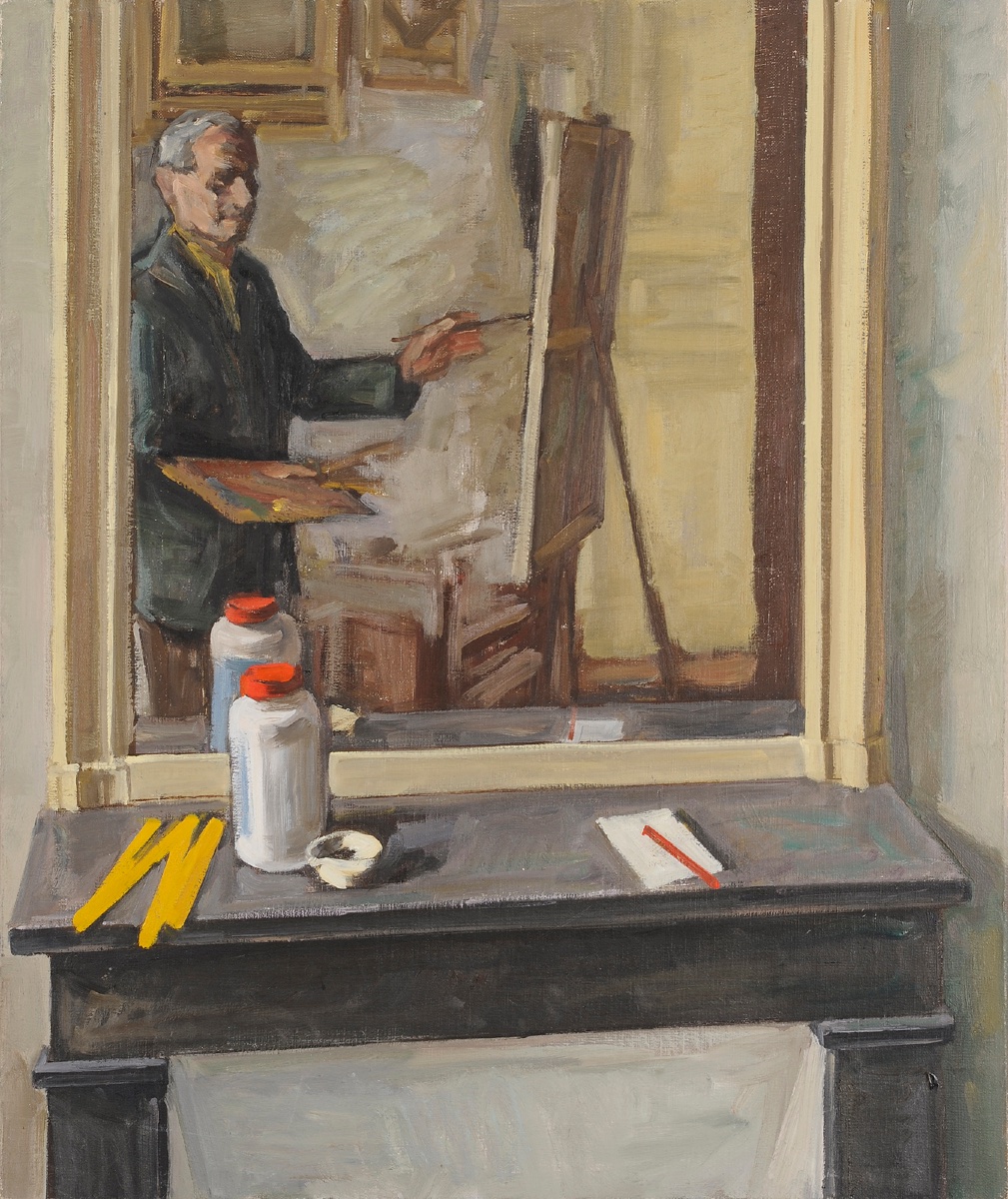
ASelf-Portrait with the Yellow Meter
Oil on canvas
H. 73 cm; W. 60 cm
Provenance: Artist’s studio
Louis Peyré was a figurative painter associated with the Nouvelle École de Paris movement of the 1950s. He received his artistic training from 1945 to 1947 at the Beaux-Arts in Montpellier. His teachers were the painters Camille Descossy, Georges Dezeuze, and Jean-Aristide Rudel. The painters who interested him at the time were: Pierre Tal-Coat, Maurice Estève, Albert Gleizes, André Blondel, and especially Francis Gruber.In Parisian museums, he discovered 17th-century Spanish and Dutch painting, as well as the works of Constable, Courbet, Cézanne, Bazille, and Bonnard. His technique became more refined, and he applied it to unconventional compositions. People, objects, and landscapes are not merely decorative. His art is intimate, measured, and stripped of aesthetic pretensions; yet it strikes at the very heart of the subject.
The scenes, imbued with sensitivity, are vivid, thanks to firm linework and a vigorous, very earthy brushstroke. The muted tones of the 1960s through the 1980s gradually give way to more vibrant and luminous hues. The ray of light that cuts through his paintings expands the space and reveals the essence of the subject.
He exhibited in numerous galleries in Paris and the south of France, as well as in Germany, and in 1970 he won a silver medal at the Salon des Artistes Français in Paris.
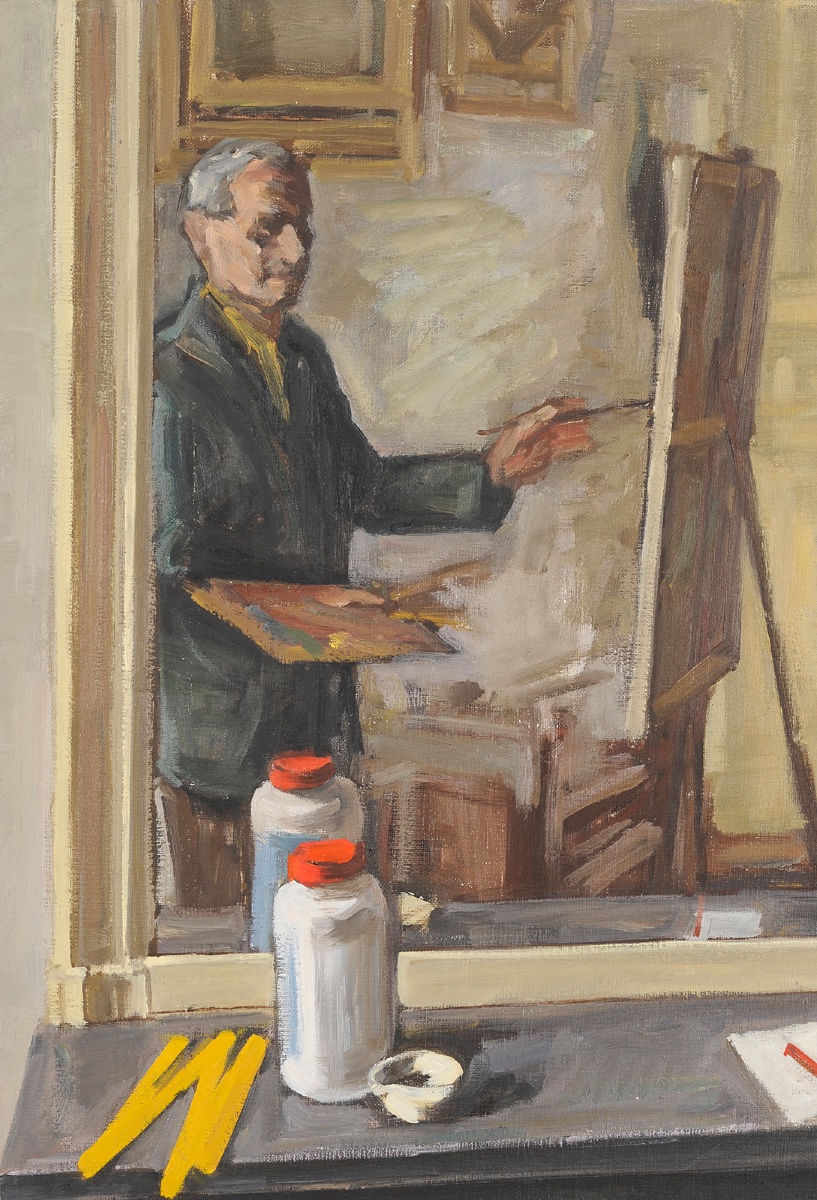
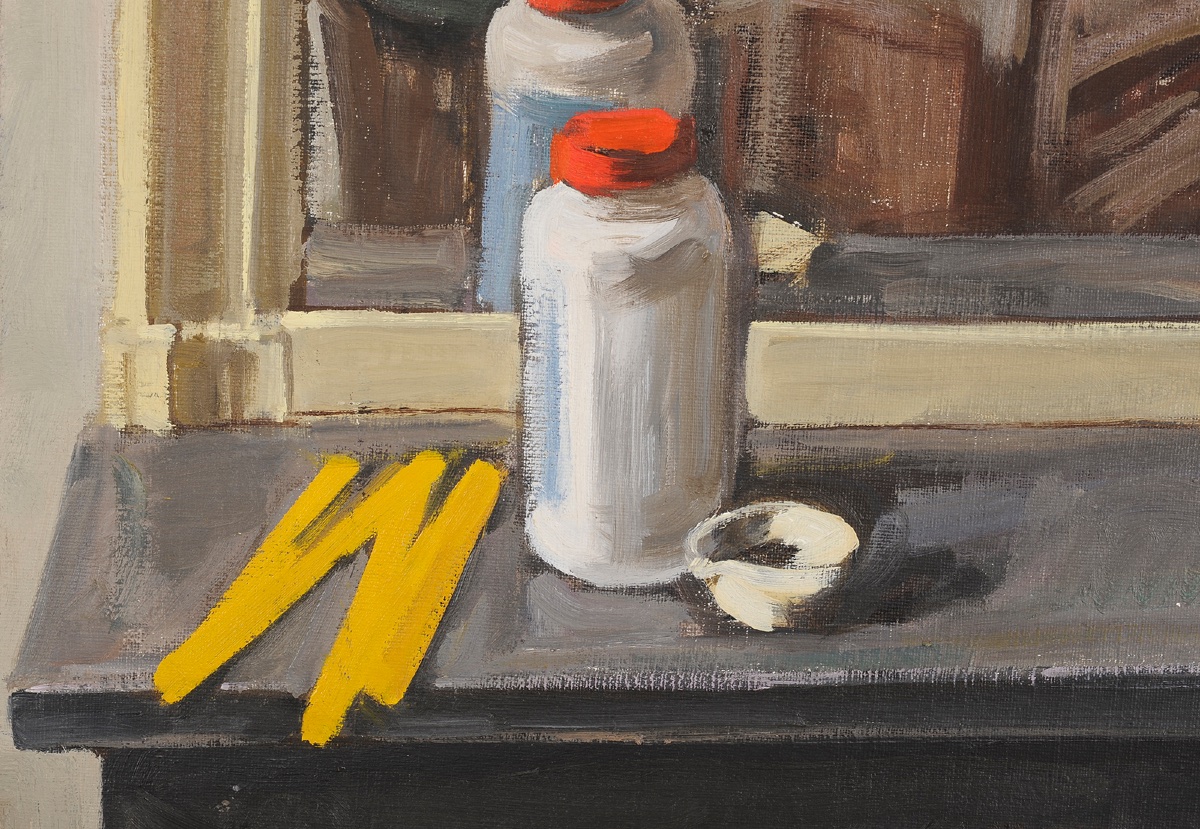
This work is atypical in its composition and the colored elements that block the field of vision. The yellow folding ruler illuminates the canvas, and the white jar with a red lid adds rhythm to the scene through its reflection in the mirror, thereby better revealing what the painter intended to express.
Framed in a black shadow box
(Campagnan 1923 – Sète 2012)
ASelf-Portrait with the Yellow Meter
Oil on canvas
H. 73 cm; W. 60 cm
Provenance: Artist’s studio
Louis Peyré was a figurative painter associated with the Nouvelle École de Paris movement of the 1950s. He received his artistic training from 1945 to 1947 at the Beaux-Arts in Montpellier. His teachers were the painters Camille Descossy, Georges Dezeuze, and Jean-Aristide Rudel. The painters who interested him at the time were: Pierre Tal-Coat, Maurice Estève, Albert Gleizes, André Blondel, and especially Francis Gruber.In Parisian museums, he discovered 17th-century Spanish and Dutch painting, as well as the works of Constable, Courbet, Cézanne, Bazille, and Bonnard. His technique became more refined, and he applied it to unconventional compositions. People, objects, and landscapes are not merely decorative. His art is intimate, measured, and stripped of aesthetic pretensions; yet it strikes at the very heart of the subject.
The scenes, imbued with sensitivity, are vivid, thanks to firm linework and a vigorous, very earthy brushstroke. The muted tones of the 1960s through the 1980s gradually give way to more vibrant and luminous hues. The ray of light that cuts through his paintings expands the space and reveals the essence of the subject.
He exhibited in numerous galleries in Paris and the south of France, as well as in Germany, and in 1970 he won a silver medal at the Salon des Artistes Français in Paris.
This work is atypical in its composition and the colored elements that block the field of vision. The yellow folding ruler illuminates the canvas, and the white jar with a red lid adds rhythm to the scene through its reflection in the mirror, thereby better revealing what the painter intended to express.
Framed in a black shadow box
680 €
Period: 20th century
Style: Modern Art
Condition: Perfect condition
Material: Oil painting
Length: 73 cm hors cadre
Width: 60 cm hors cadre
Reference (ID): 1813388
Availability: In stock
Print