

French Orientalist School: Eugène Fromentin, Algerian Oasis, 19th Century
Artist: Eugène Fromentin
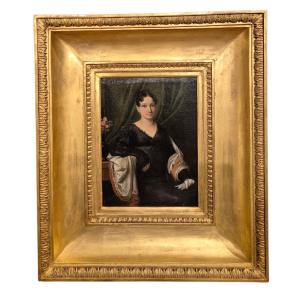
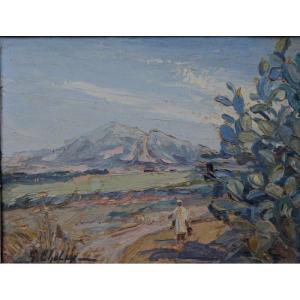
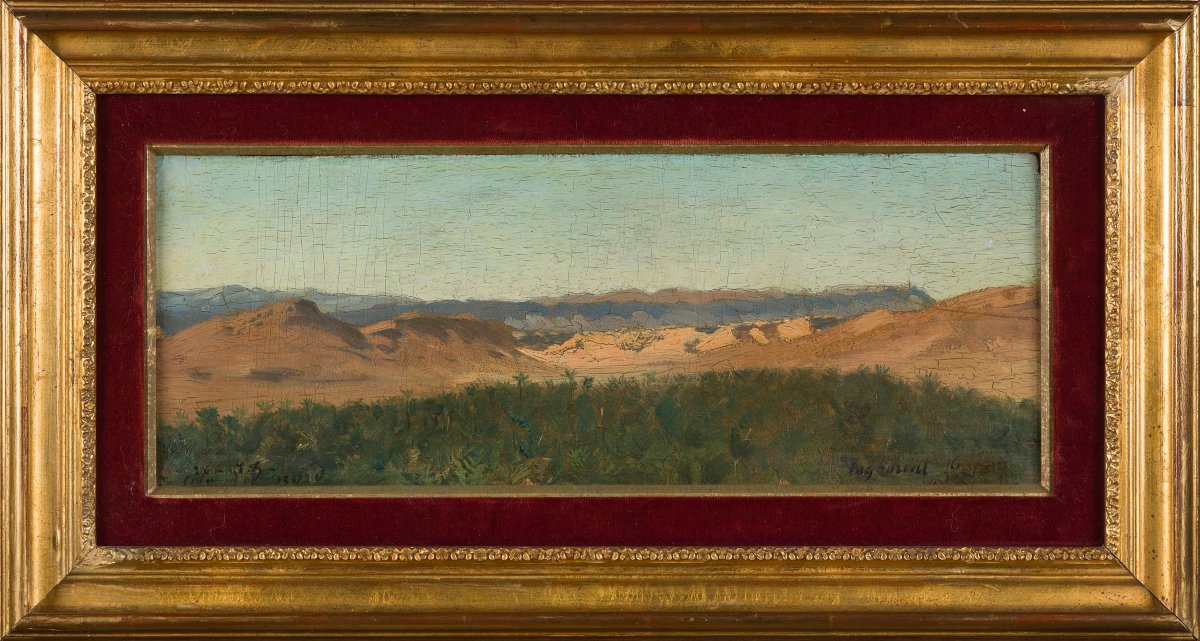
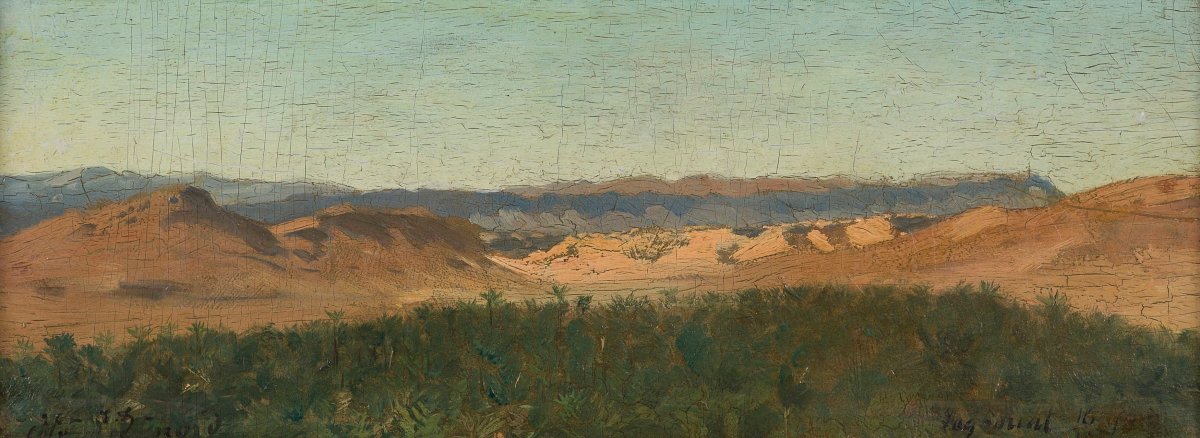
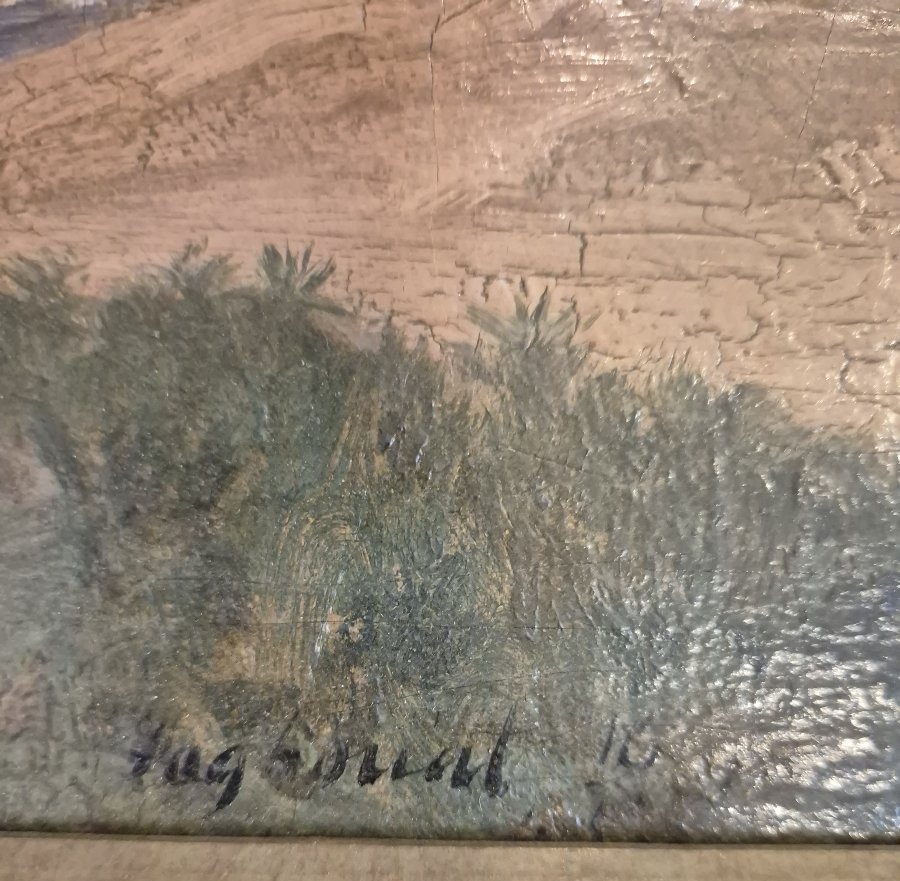
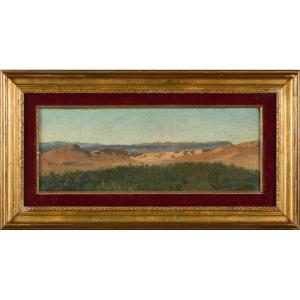
Eugène FROMENTIN (1861–1927). Oasis of Laghouat. Oil on canvas. Signed with initials in the lower left and lower right (date illegible).
Craquelure.
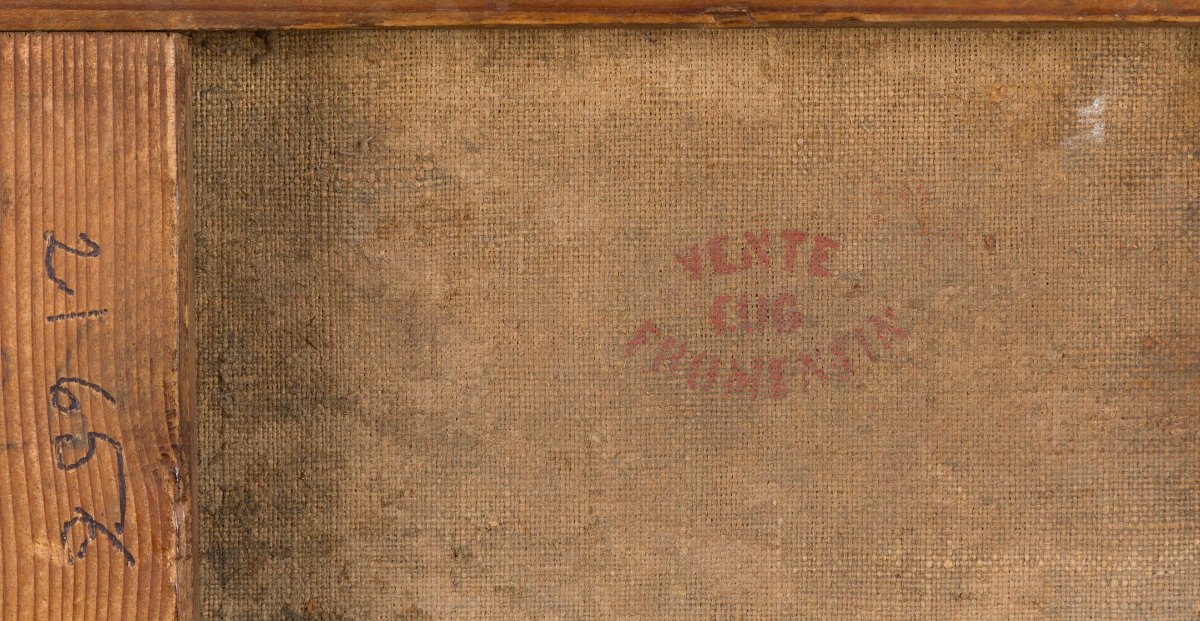
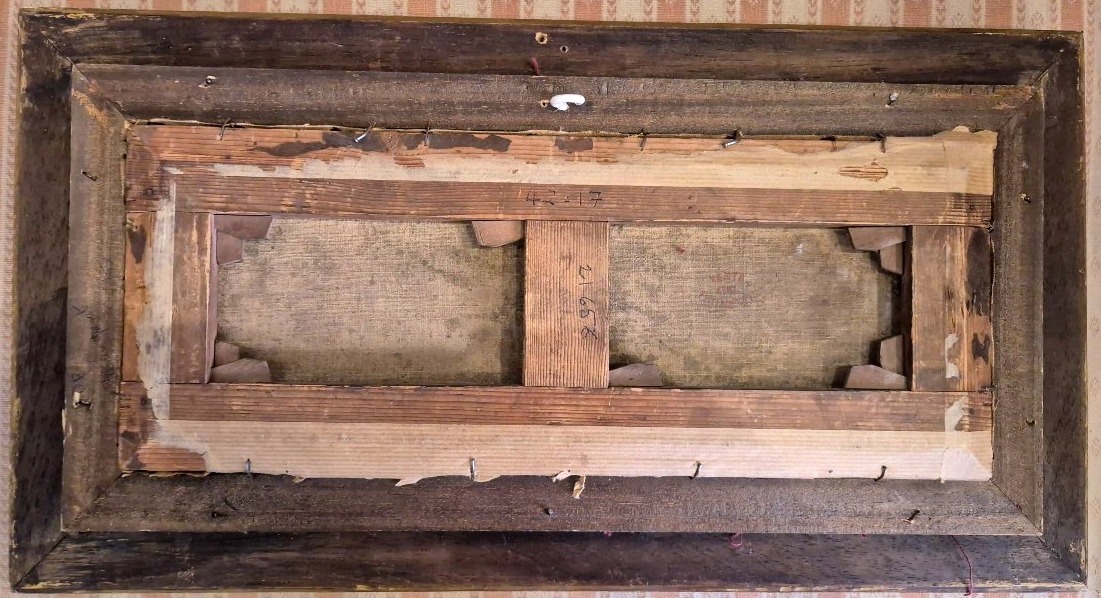
Auction mark “Eug. FROMENTIN” on the back of the canvas. Gilded wood and stucco later frame.
French Orientalist painter Eugene Fromentin was born in La Rochelle (1820). Eugene Fromentin came from a provincial bourgeois family of lawyers and judges and went to Paris in 1839.
There, he took a law degree while continuing to interest himself in literature, poetry, history, nature and art. Finding the law office unbearable, Fromentin decided to take up painting seriously. Although he was at first influenced by his master, the landscape painter Nicolas-Louis Cabat, the artists he most admired were Delacroix, Decamps and Marilhat. They aroused his interest in the Eastern world, particularly Marilhat’s showing at the 1844 Salon.
Fromentin made his first visit to Algeria in 1846, only a quick journey from Algiers to Blidah, with its jasmin, roses, olive trees and orange groves. Astonished to find that it was quite unlike the Orient depicted by his predecessors, he soon realised that he could paint Algeria in a way that had never been attempted before. He returned in September 1847 for eight months, this time going to Constantine and Biskra, on the edge of the Sahara. He paid a third visit in 1852 with his new wife, staying for nearly a year in Mustapha and Blidah, before journeying alone to the south, as far as Laghouat.
This last sojourn was to remain in his memory forever. He brought back a mass of painted and drawn studies, many of which were auctioned in his studio sale, from which our painting comes. He found that the intense light of the verdant and cloudy Sahel, and even that of the parched and severe Sahara, was not blinding but made everything seem grey. As for the shade, it was transparent, limpid and coloured, not obscure and black, as it was generally painted.
In 1856, his important discoveries, together with his illustrated travel notes, were published in book form under the title Un Été dans le Sahara, followed, two years later, by Une Année dans le Sahel. These, together with his romantic novel, Dominique, and a classical work of art criticism, Les Maitres d’autrefois, established his reputation as a literary man.
In 1869, he was the official guest at the opening of the Suez Canal, when he took the opportunity of discussing with Narcisse Berchöre the difficulty of rendering the beautiful scene, such as the setting sun on the pyramids. This Egyptian journey resulted in some of his best, although comparatively little-known pictures.
Although always dissatisfied with his work, Fromentin enjoyed great popularity with both American and French collectors. Such was the demand for his paintings that he often painted replicas ; his most famous picture, The Falcon Hunt (1873 Salon, Musée du Louvre, Paris) was, for instance, repeated in crayon, watercolour and oils. Although he never had a teaching atelier, he gave advice and encouragement to young artists, including Fernand Cormon, Henri Gervex, Ferdinand Humbert and Léon Lhermitte. Other painters, Adolf Schreyer, Georges Washington, Victor Huguet and, later, Henri Rousseau were to continue his tradition of equine groups in wide open spaces.
Craquelure.
Auction mark “Eug. FROMENTIN” on the back of the canvas. Gilded wood and stucco later frame.
French Orientalist painter Eugene Fromentin was born in La Rochelle (1820). Eugene Fromentin came from a provincial bourgeois family of lawyers and judges and went to Paris in 1839.
There, he took a law degree while continuing to interest himself in literature, poetry, history, nature and art. Finding the law office unbearable, Fromentin decided to take up painting seriously. Although he was at first influenced by his master, the landscape painter Nicolas-Louis Cabat, the artists he most admired were Delacroix, Decamps and Marilhat. They aroused his interest in the Eastern world, particularly Marilhat’s showing at the 1844 Salon.
Fromentin made his first visit to Algeria in 1846, only a quick journey from Algiers to Blidah, with its jasmin, roses, olive trees and orange groves. Astonished to find that it was quite unlike the Orient depicted by his predecessors, he soon realised that he could paint Algeria in a way that had never been attempted before. He returned in September 1847 for eight months, this time going to Constantine and Biskra, on the edge of the Sahara. He paid a third visit in 1852 with his new wife, staying for nearly a year in Mustapha and Blidah, before journeying alone to the south, as far as Laghouat.
This last sojourn was to remain in his memory forever. He brought back a mass of painted and drawn studies, many of which were auctioned in his studio sale, from which our painting comes. He found that the intense light of the verdant and cloudy Sahel, and even that of the parched and severe Sahara, was not blinding but made everything seem grey. As for the shade, it was transparent, limpid and coloured, not obscure and black, as it was generally painted.
In 1856, his important discoveries, together with his illustrated travel notes, were published in book form under the title Un Été dans le Sahara, followed, two years later, by Une Année dans le Sahel. These, together with his romantic novel, Dominique, and a classical work of art criticism, Les Maitres d’autrefois, established his reputation as a literary man.
In 1869, he was the official guest at the opening of the Suez Canal, when he took the opportunity of discussing with Narcisse Berchöre the difficulty of rendering the beautiful scene, such as the setting sun on the pyramids. This Egyptian journey resulted in some of his best, although comparatively little-known pictures.
Although always dissatisfied with his work, Fromentin enjoyed great popularity with both American and French collectors. Such was the demand for his paintings that he often painted replicas ; his most famous picture, The Falcon Hunt (1873 Salon, Musée du Louvre, Paris) was, for instance, repeated in crayon, watercolour and oils. Although he never had a teaching atelier, he gave advice and encouragement to young artists, including Fernand Cormon, Henri Gervex, Ferdinand Humbert and Léon Lhermitte. Other painters, Adolf Schreyer, Georges Washington, Victor Huguet and, later, Henri Rousseau were to continue his tradition of equine groups in wide open spaces.
2 150 €
Period: 19th century
Style: Orientalism
Condition: Condition of use
Material: Oil painting
Length: cm 41
Height: cm 16
Reference (ID): 1812412
Availability: In stock
Print