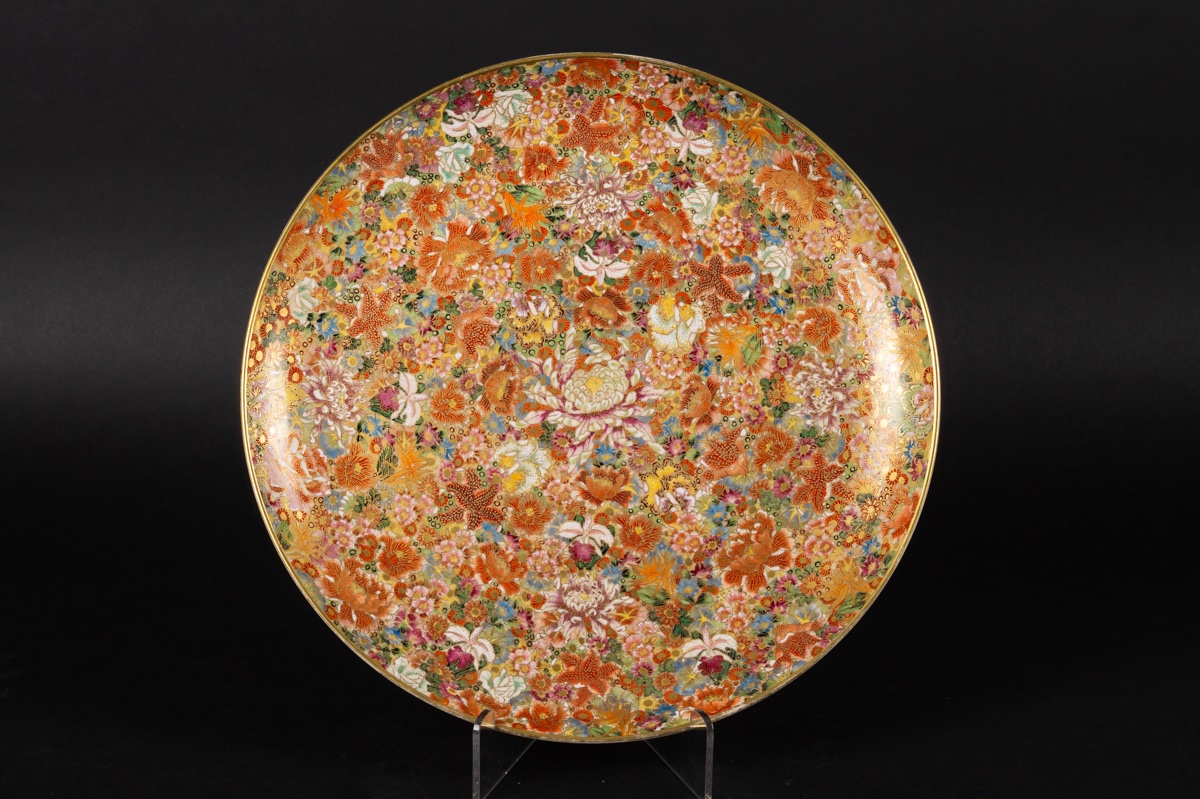
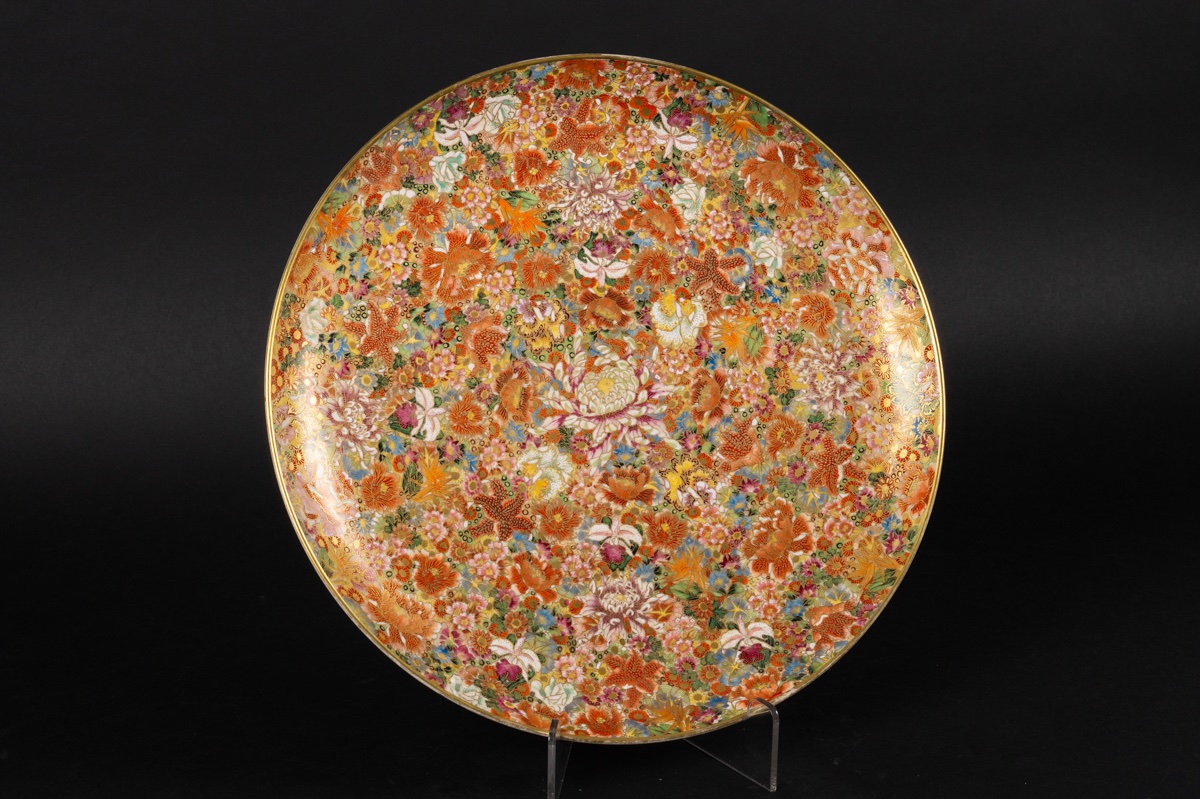
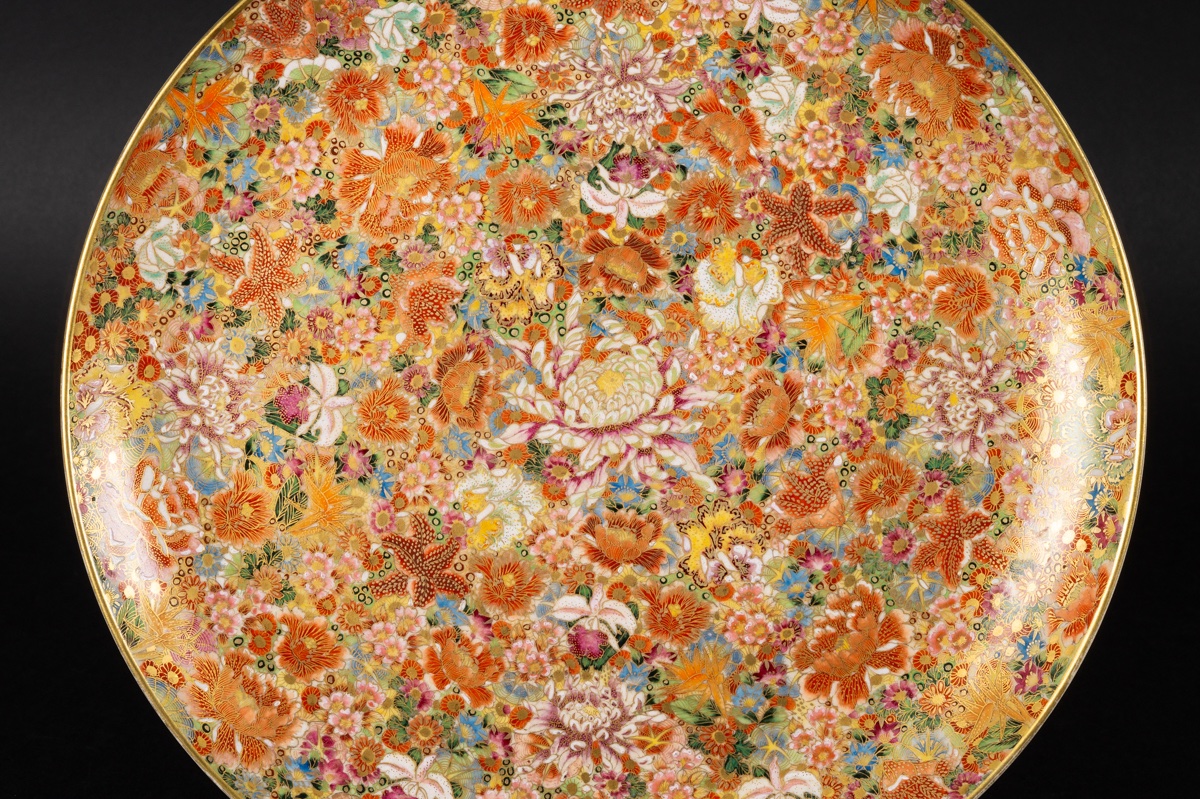
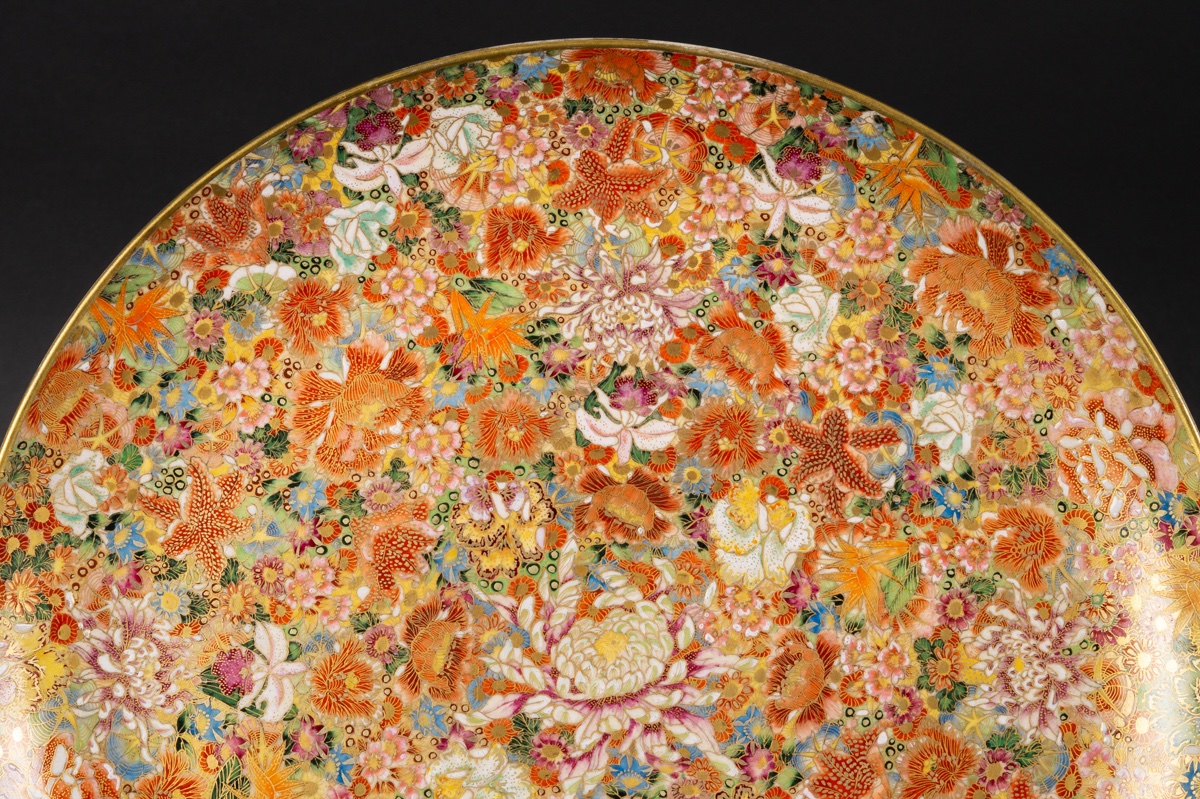
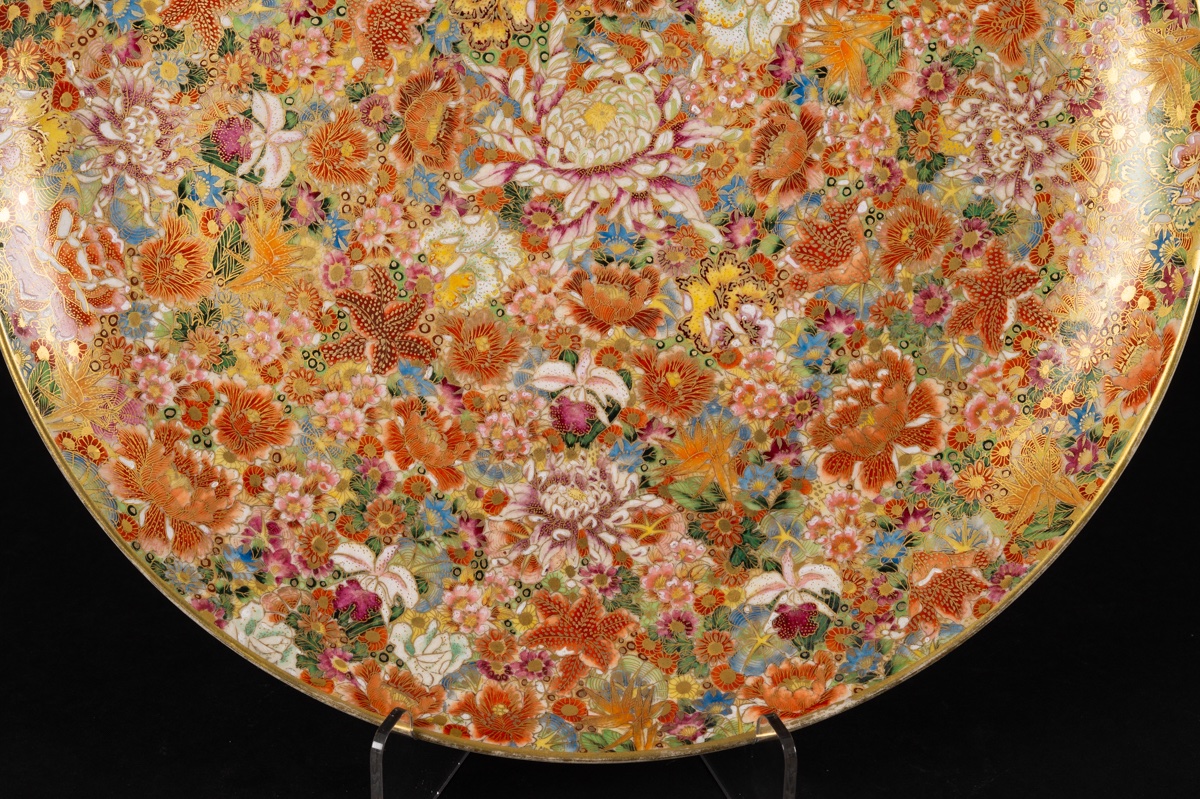
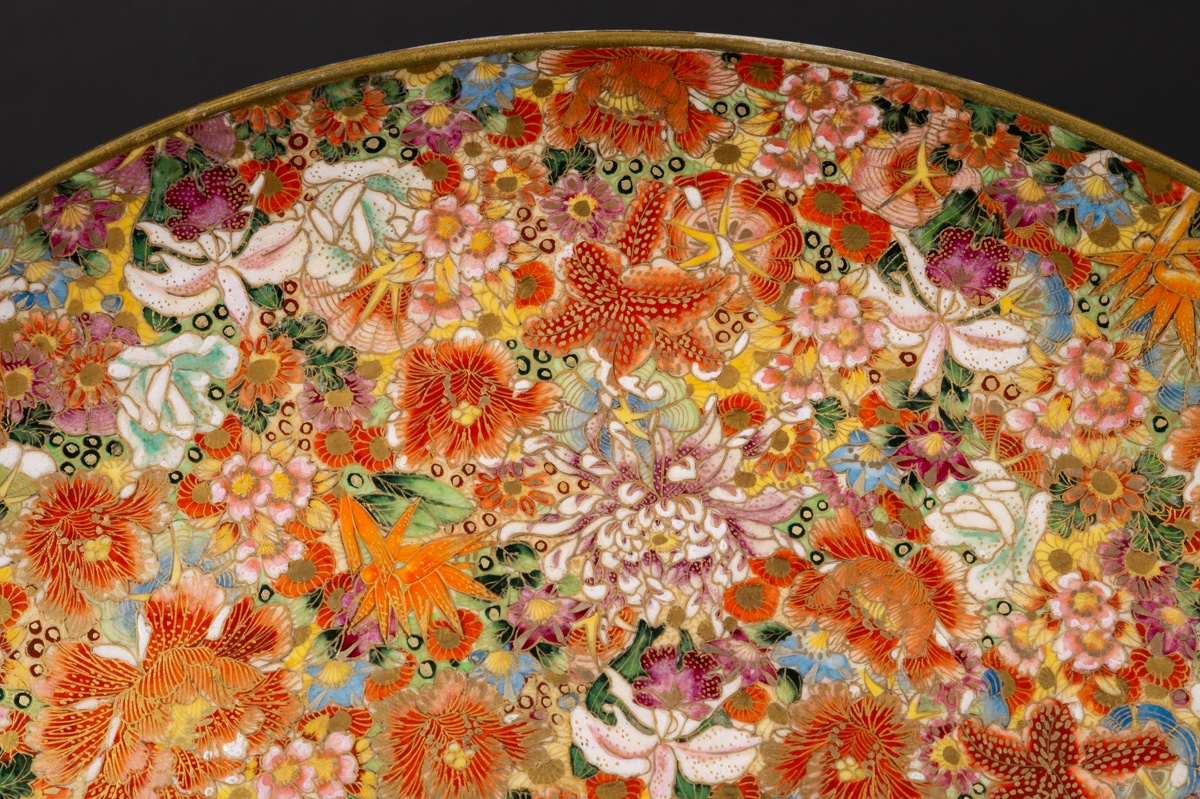
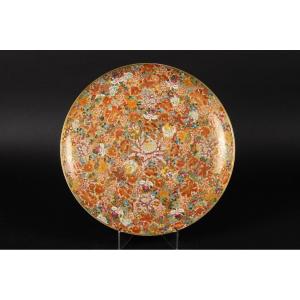


Plate Decorated With One Hundred Flowers, Gyokuzan, Satsuma, Japan, Meiji Era, Late 19th Century.
Artist: Gyokuzan
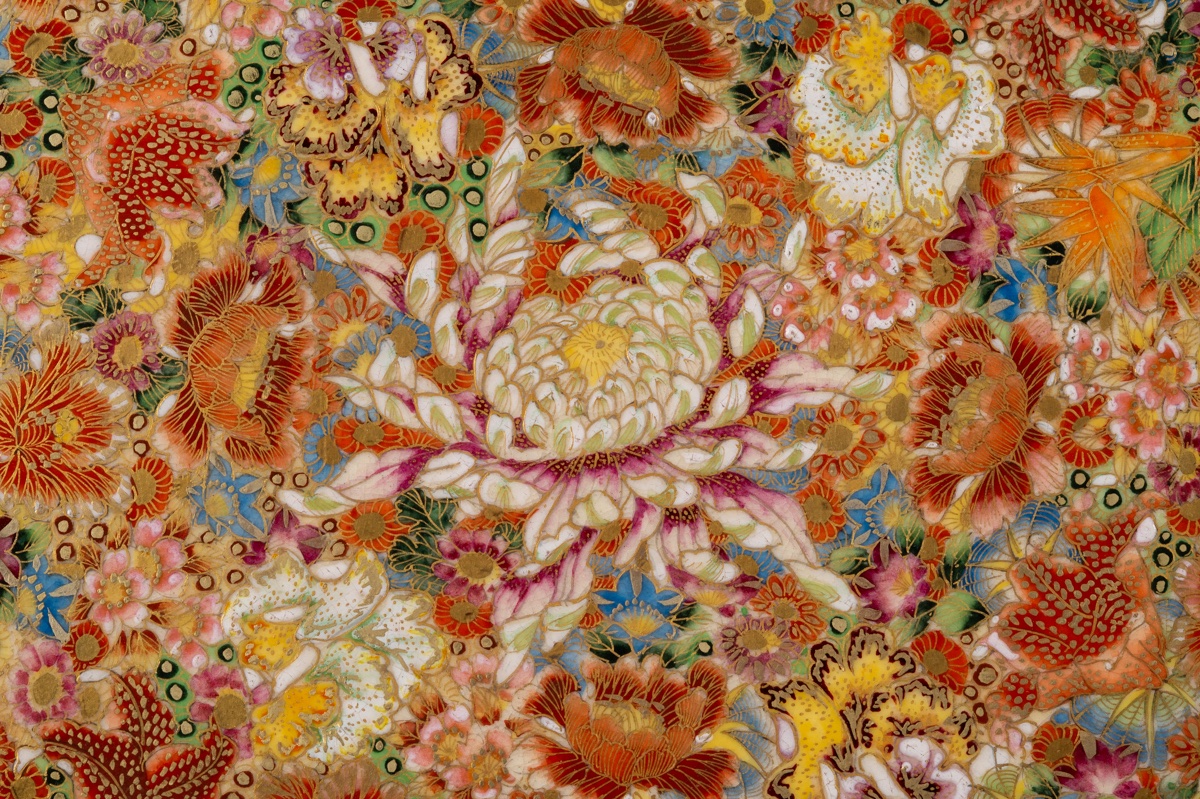
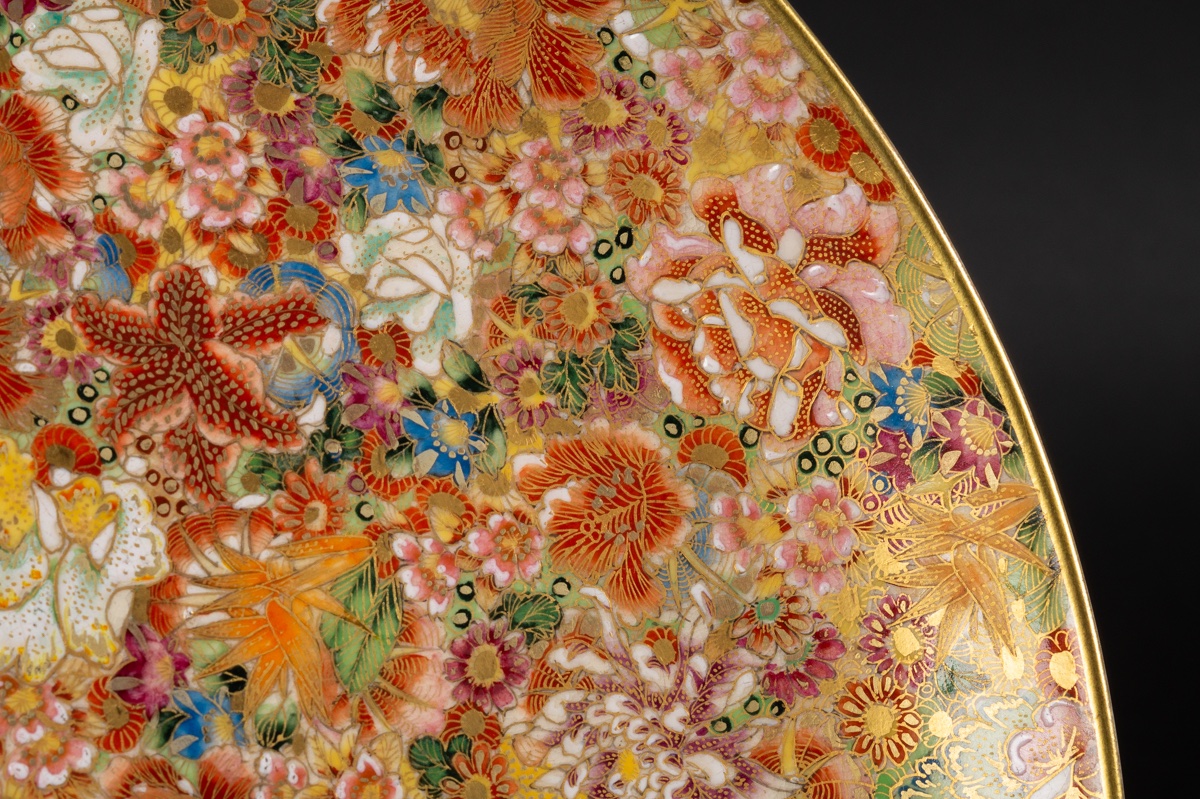
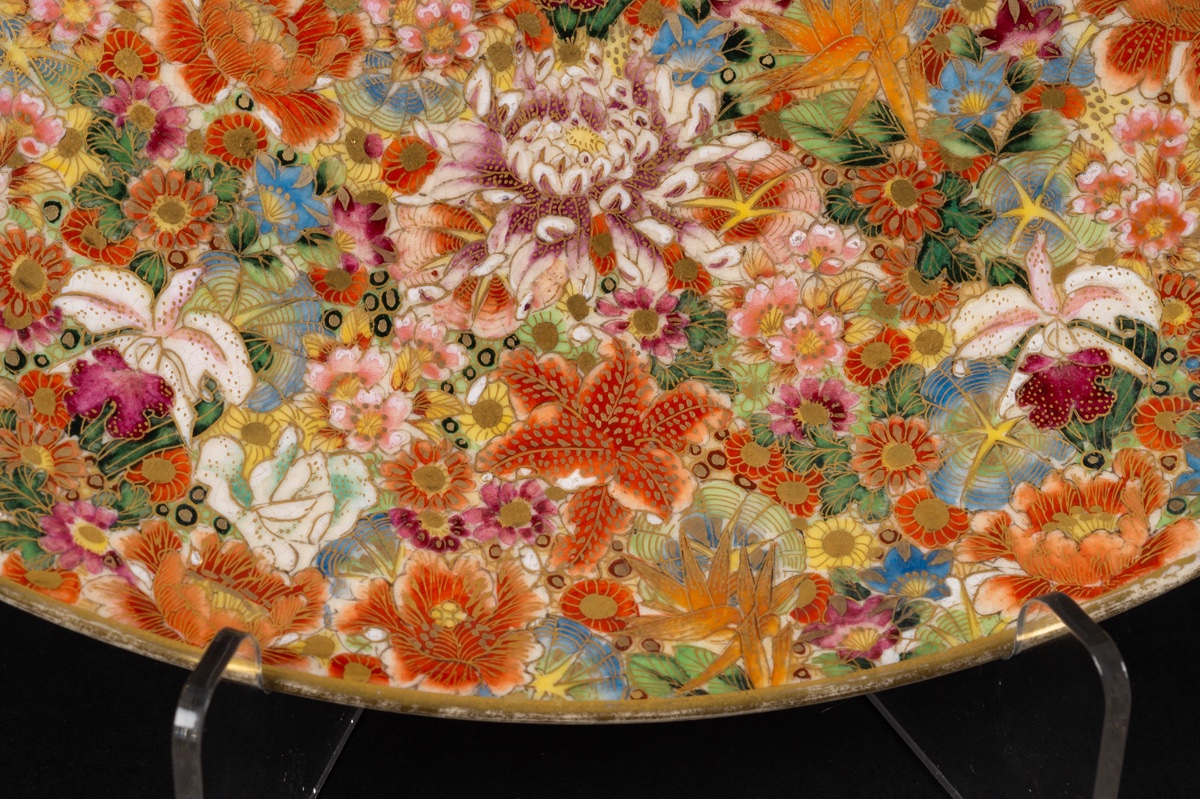
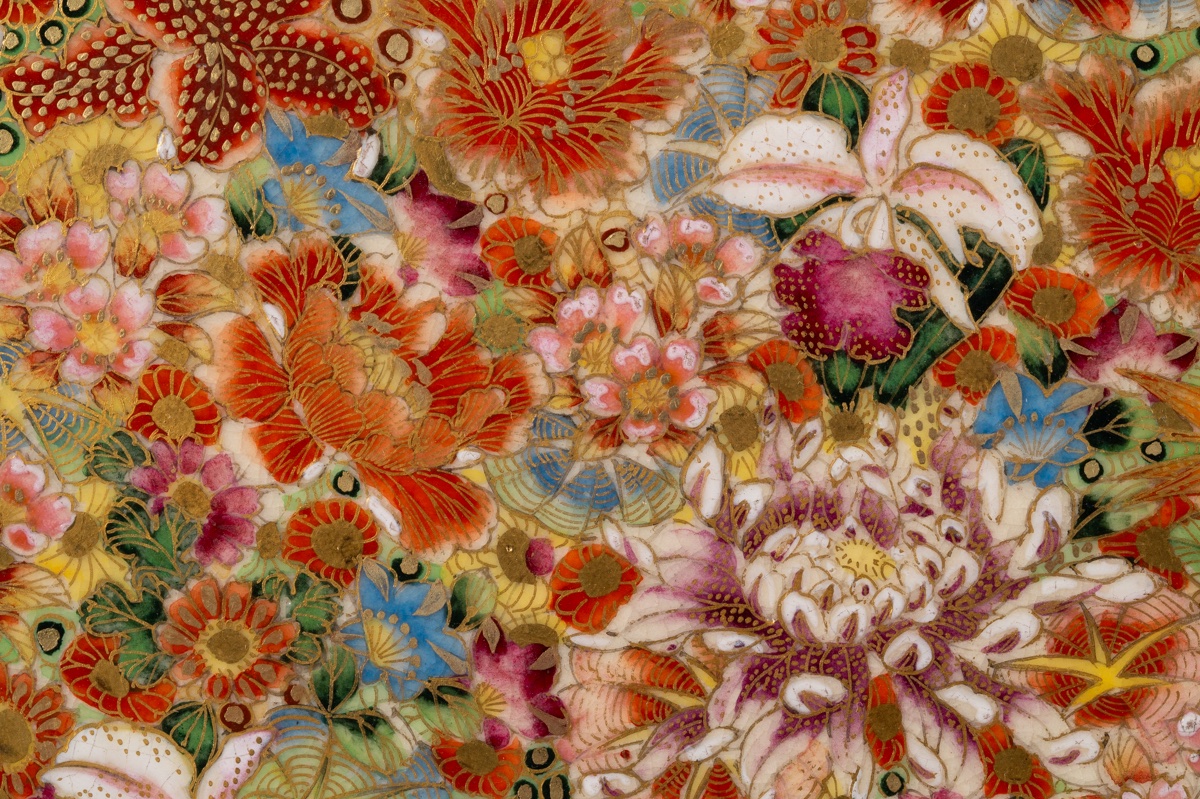
Satsuma ceramic plate, decorated with hand-painted and gilded designs. Hyakuba/hyakuka-style composition (known as “hundred flowers” or “floral abundance”). The surface of the plate is densely covered with a composition depicting various flowers—including chrysanthemums, peonies, orchids, and cherry blossoms—with a striking chrysanthemum at the center that dominates the design. This plate is distinguished by the remarkable precision of the miniature brushstrokes, the outlines traced in gold paint, and the richness of the colors (hazelnut red, green, blue, yellow, and gold).
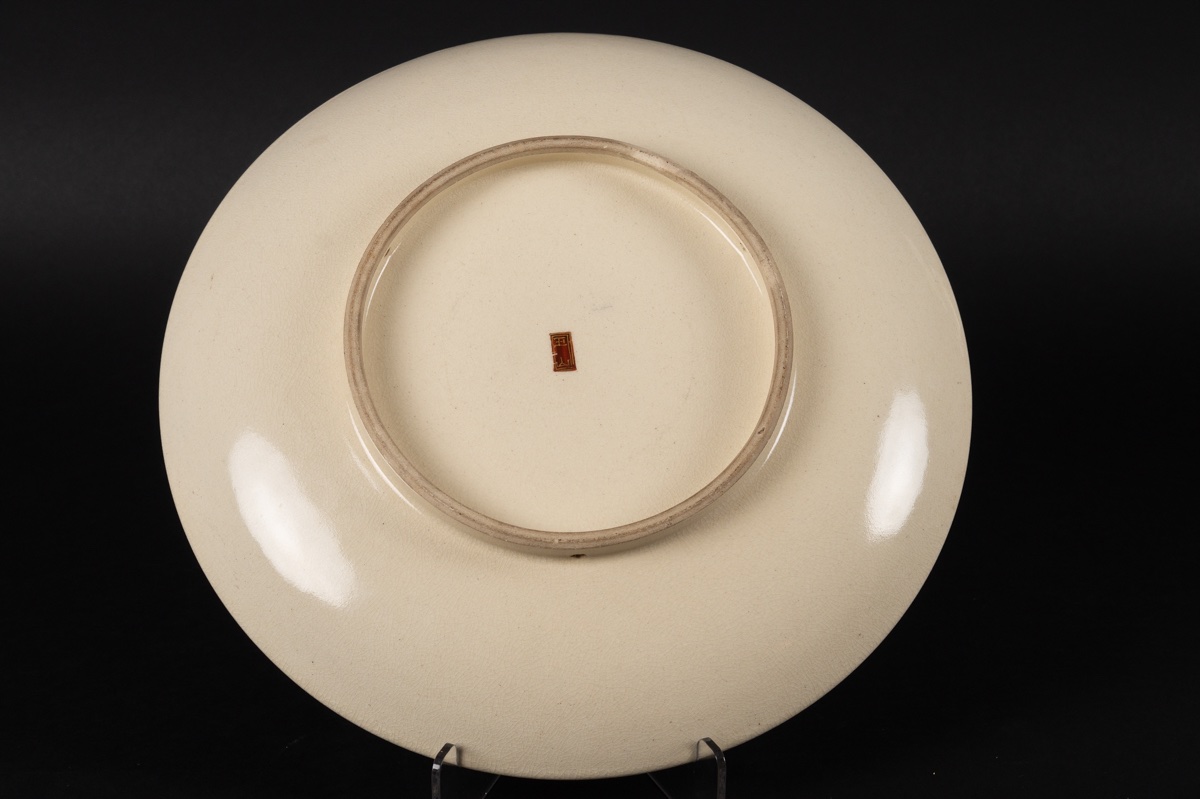
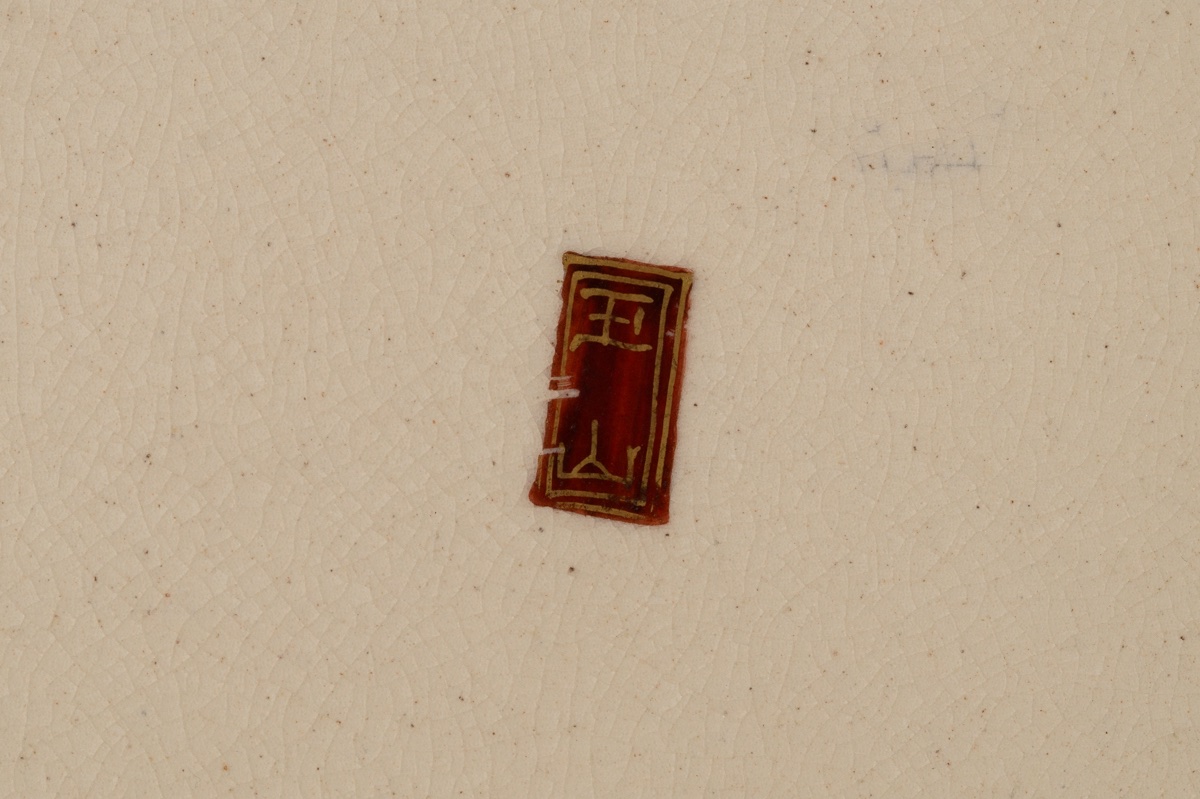
Satsuma, Japan, Meiji era, late 19th century, signed: Gyokuzan (玉山).
Gyokuzan (玉山) is the artistic pseudonym used by Chin Jukan XII (十二代目沈壽官, 1835–1906)—one of the greatest masters of Japanese Satsuma ceramics in history. Chin Jukan XII founded his own workshop at the foot of Mount Gyokō in 1875. Between 1874 and 1897, he signed his works with the pseudonym Gyokuzan. His creations amazed the entire world at the 1873 Vienna World’s Fair. He laid the foundation for a dynasty of ceramists that continues to this day: his workshop in Miyama has operated continuously, and the current master bears the title Chin Jukan XV.
Diameter: 31 cm, height: 5 cm.
In very good condition.
Free shipping within the European Union! I ship packages via insured mail (DPD or DHL). All items are packed very carefully. Payment by international bank transfer. I will issue a certificate of authenticity upon request.
Satsuma, Japan, Meiji era, late 19th century, signed: Gyokuzan (玉山).
Gyokuzan (玉山) is the artistic pseudonym used by Chin Jukan XII (十二代目沈壽官, 1835–1906)—one of the greatest masters of Japanese Satsuma ceramics in history. Chin Jukan XII founded his own workshop at the foot of Mount Gyokō in 1875. Between 1874 and 1897, he signed his works with the pseudonym Gyokuzan. His creations amazed the entire world at the 1873 Vienna World’s Fair. He laid the foundation for a dynasty of ceramists that continues to this day: his workshop in Miyama has operated continuously, and the current master bears the title Chin Jukan XV.
Diameter: 31 cm, height: 5 cm.
In very good condition.
Free shipping within the European Union! I ship packages via insured mail (DPD or DHL). All items are packed very carefully. Payment by international bank transfer. I will issue a certificate of authenticity upon request.
750 €
Period: 19th century
Style: Asian art
Condition: Excellent condition
Material: Sandstone
Diameter: 31
Height: 5
Reference (ID): 1812092
Availability: In stock
Print