

Wrought-iron Wayside Cross – Gévaudan / Haute-loire, Early 19th Century
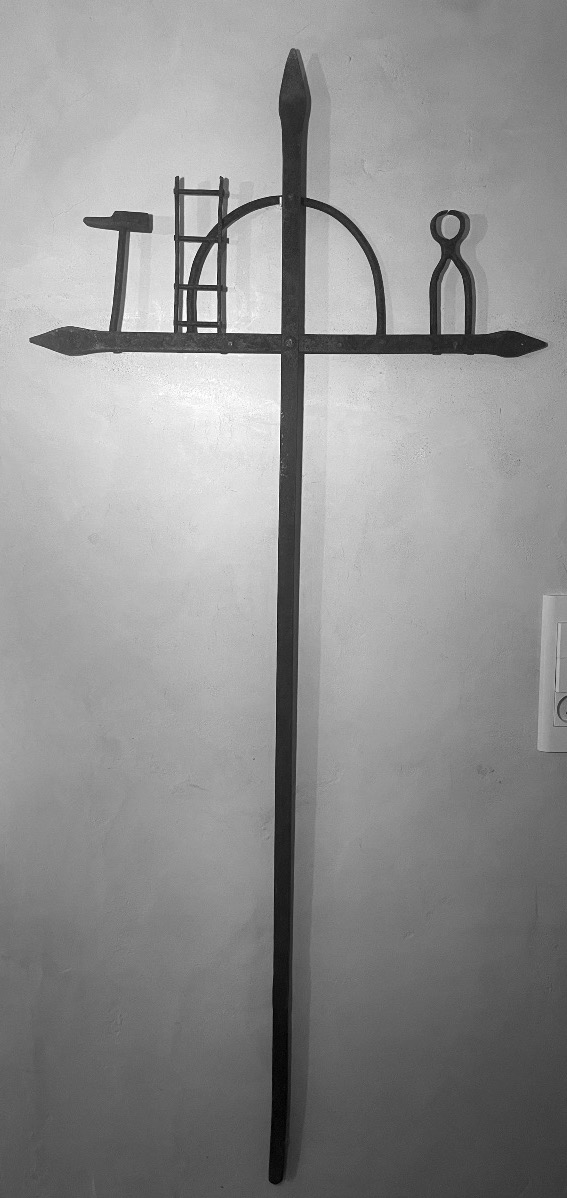
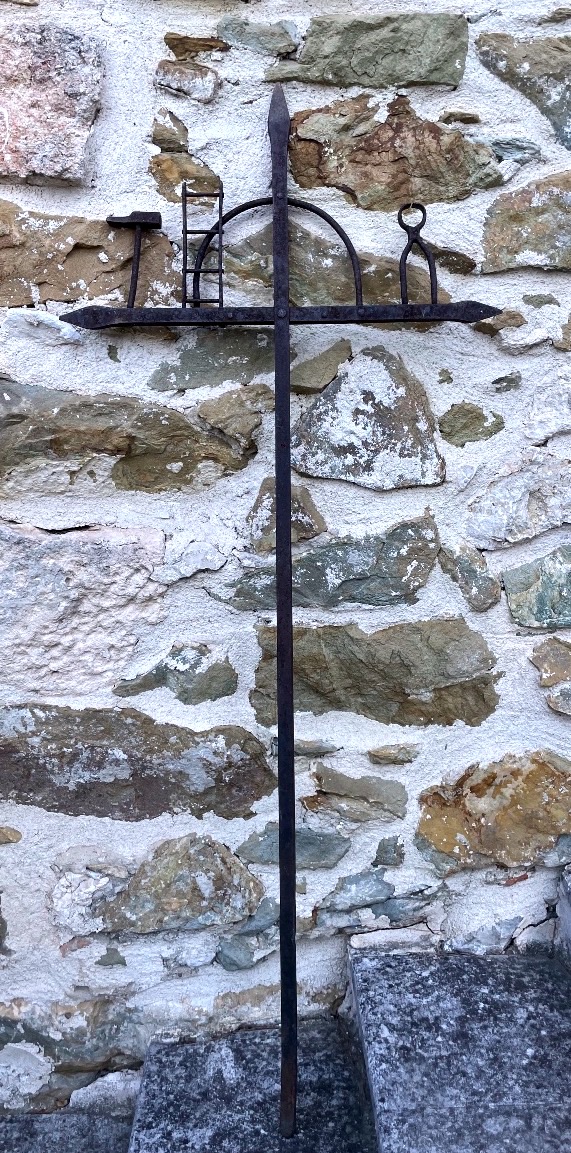
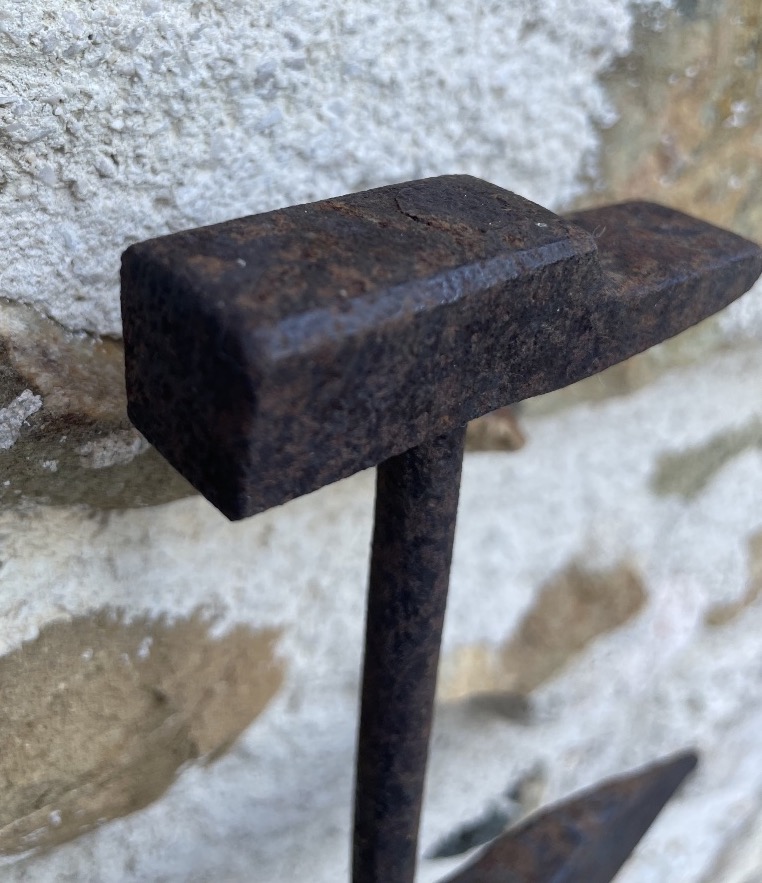
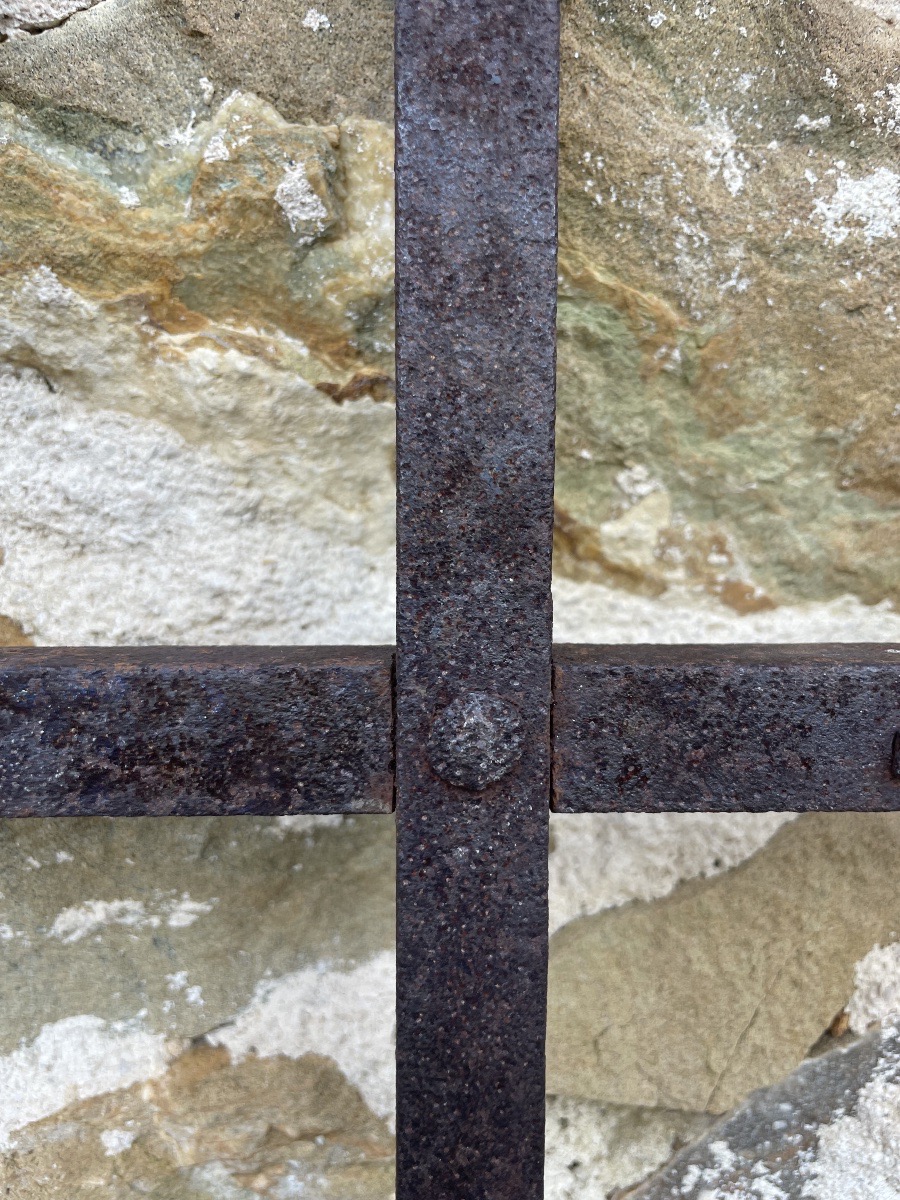
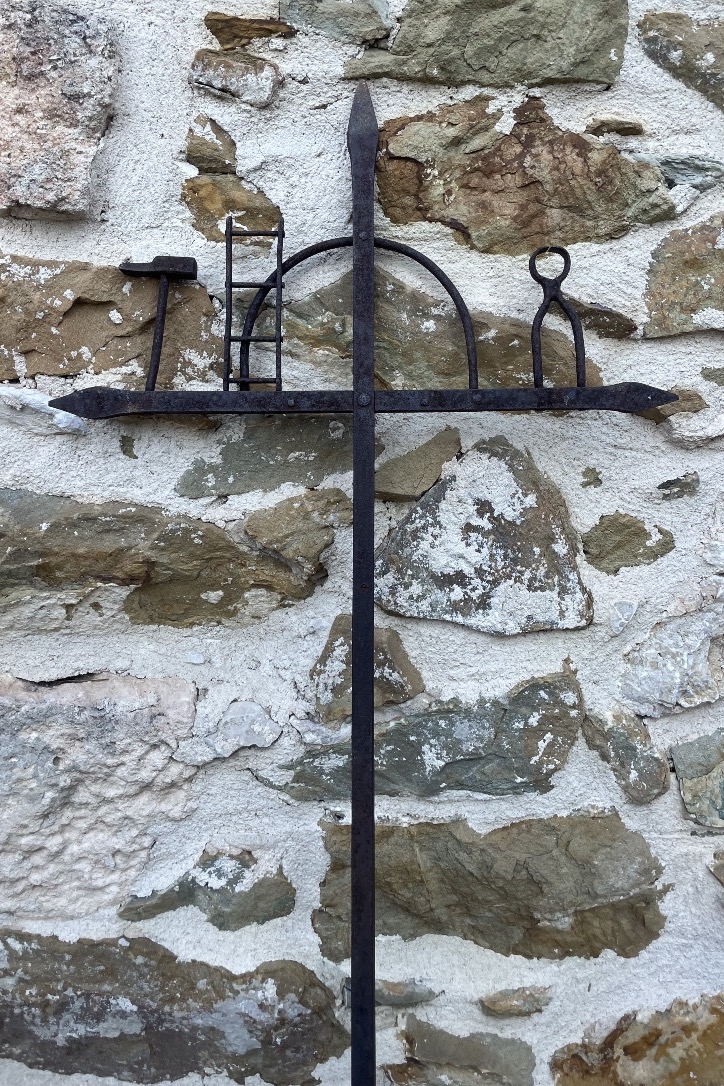
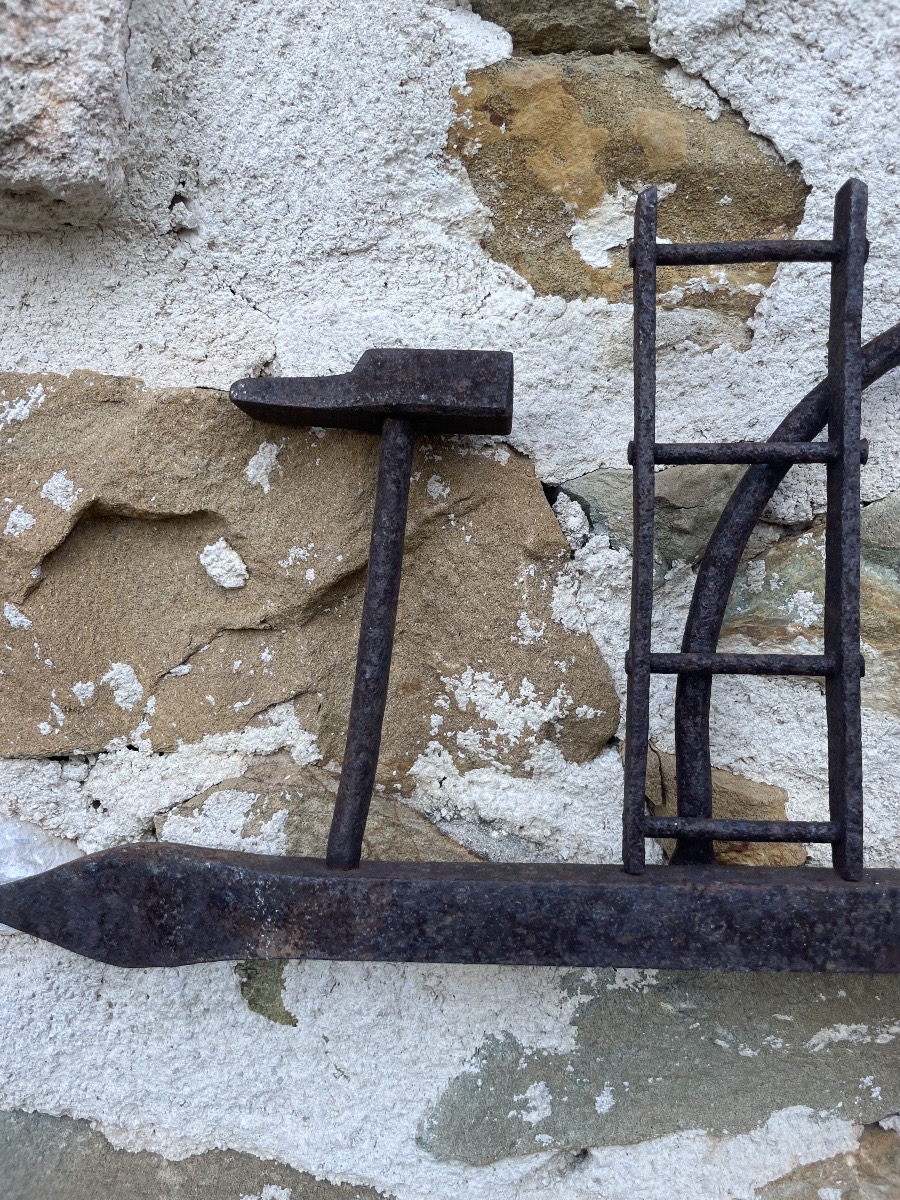
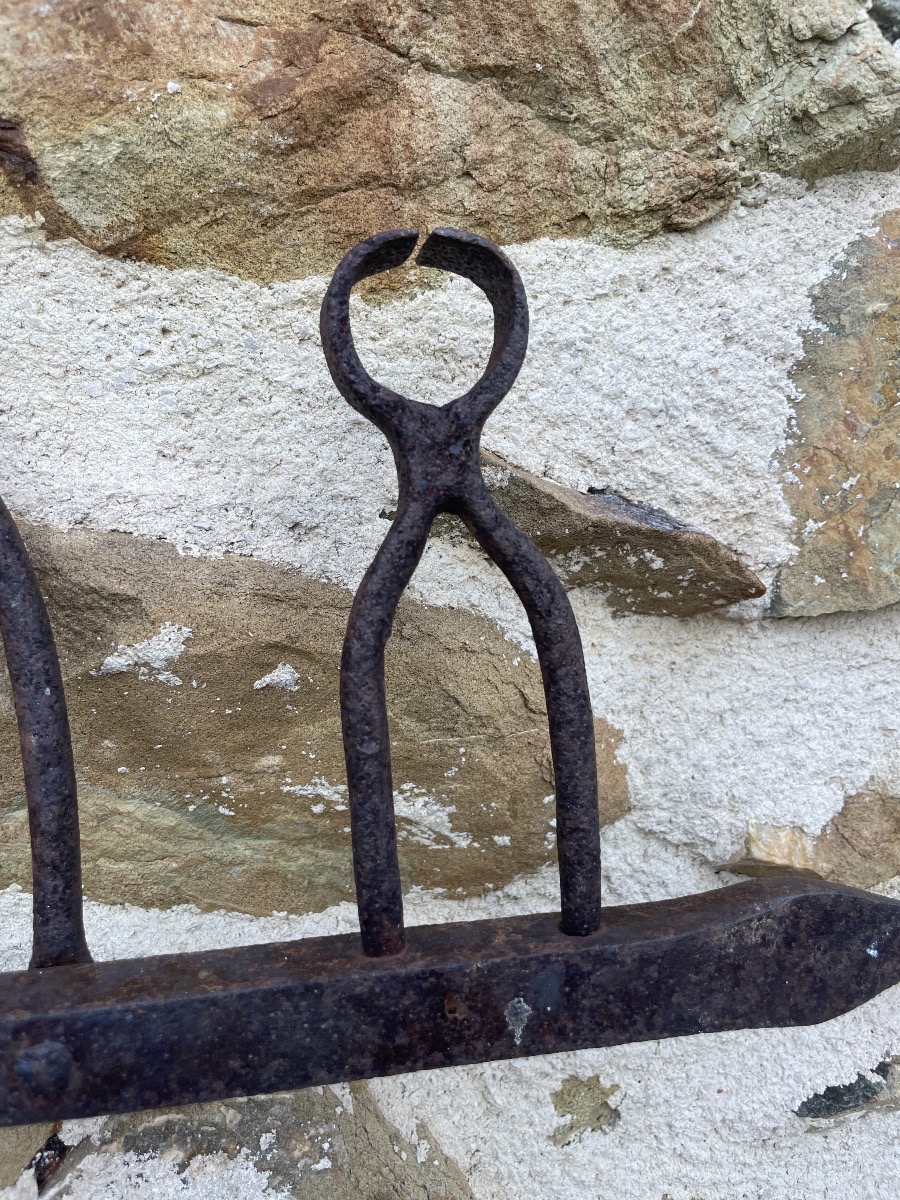
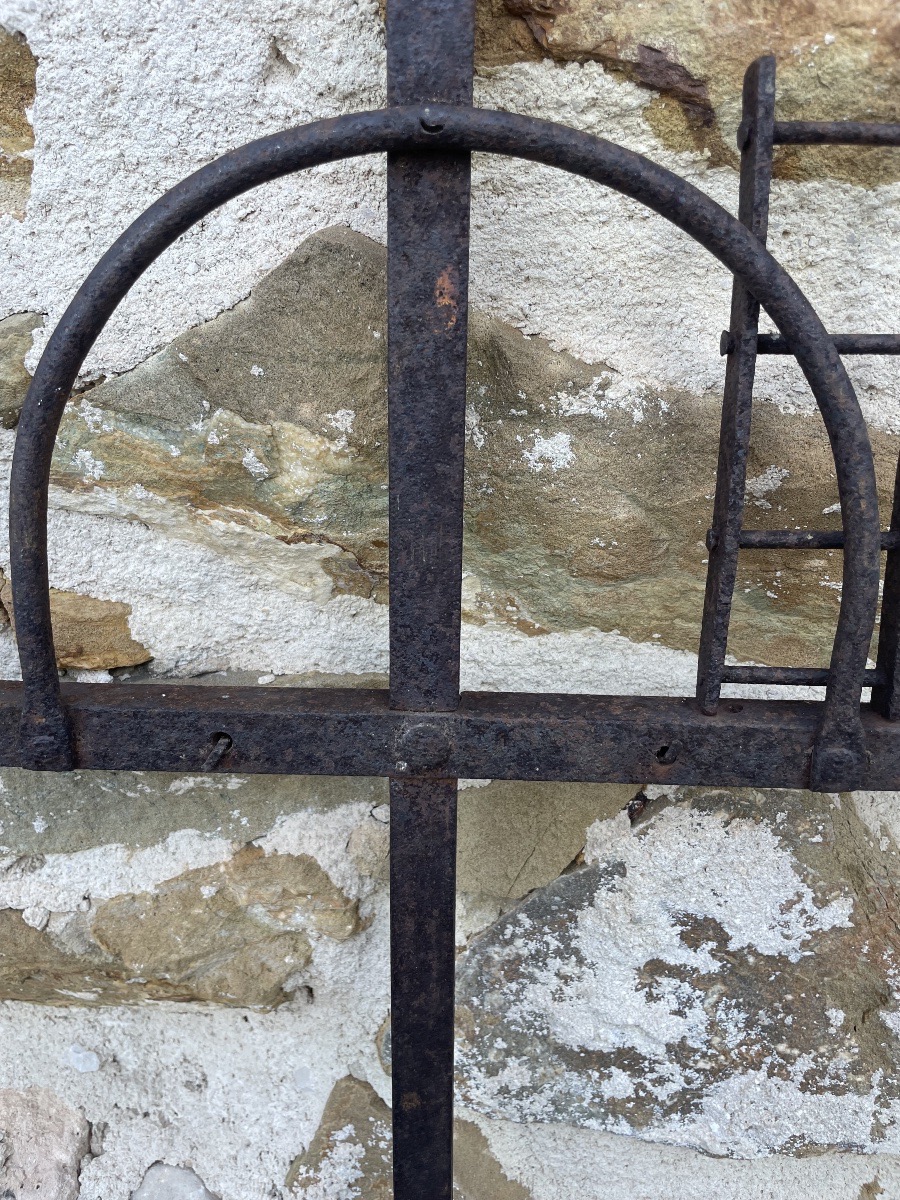
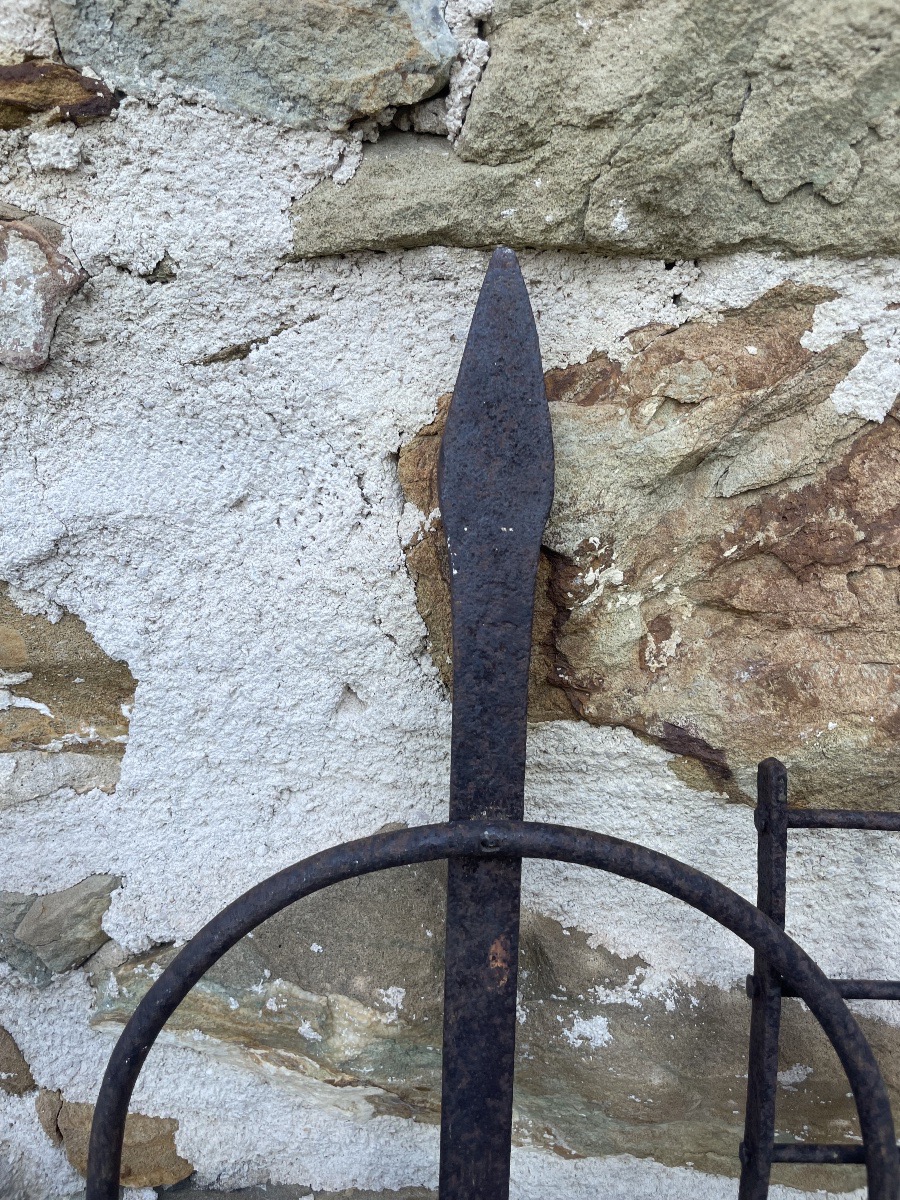
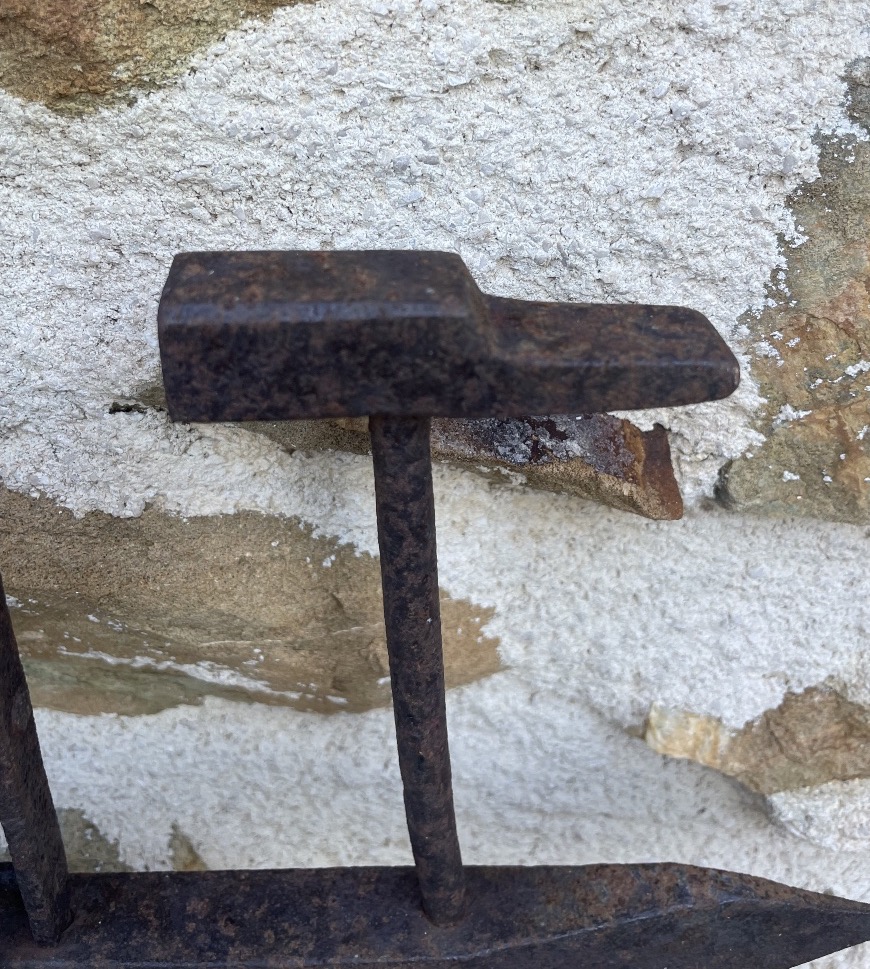
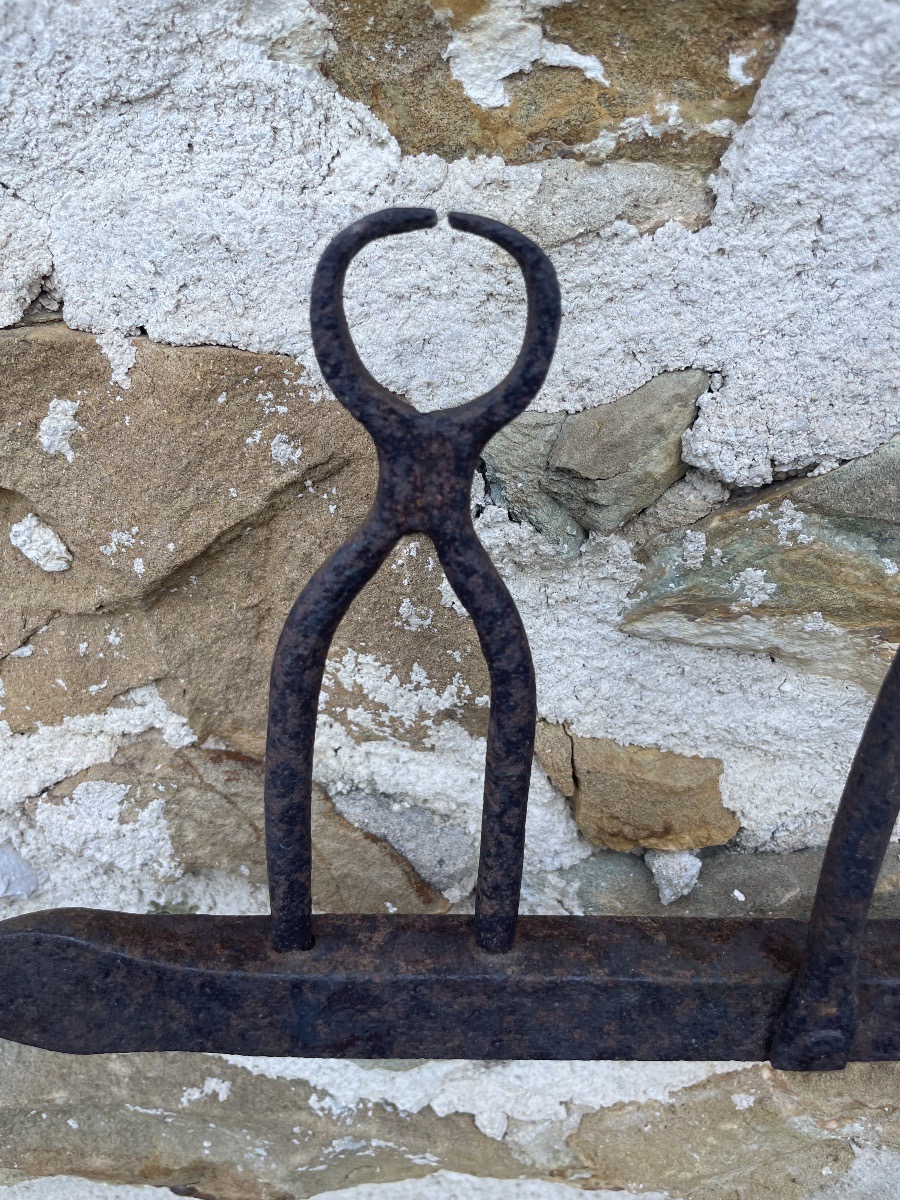
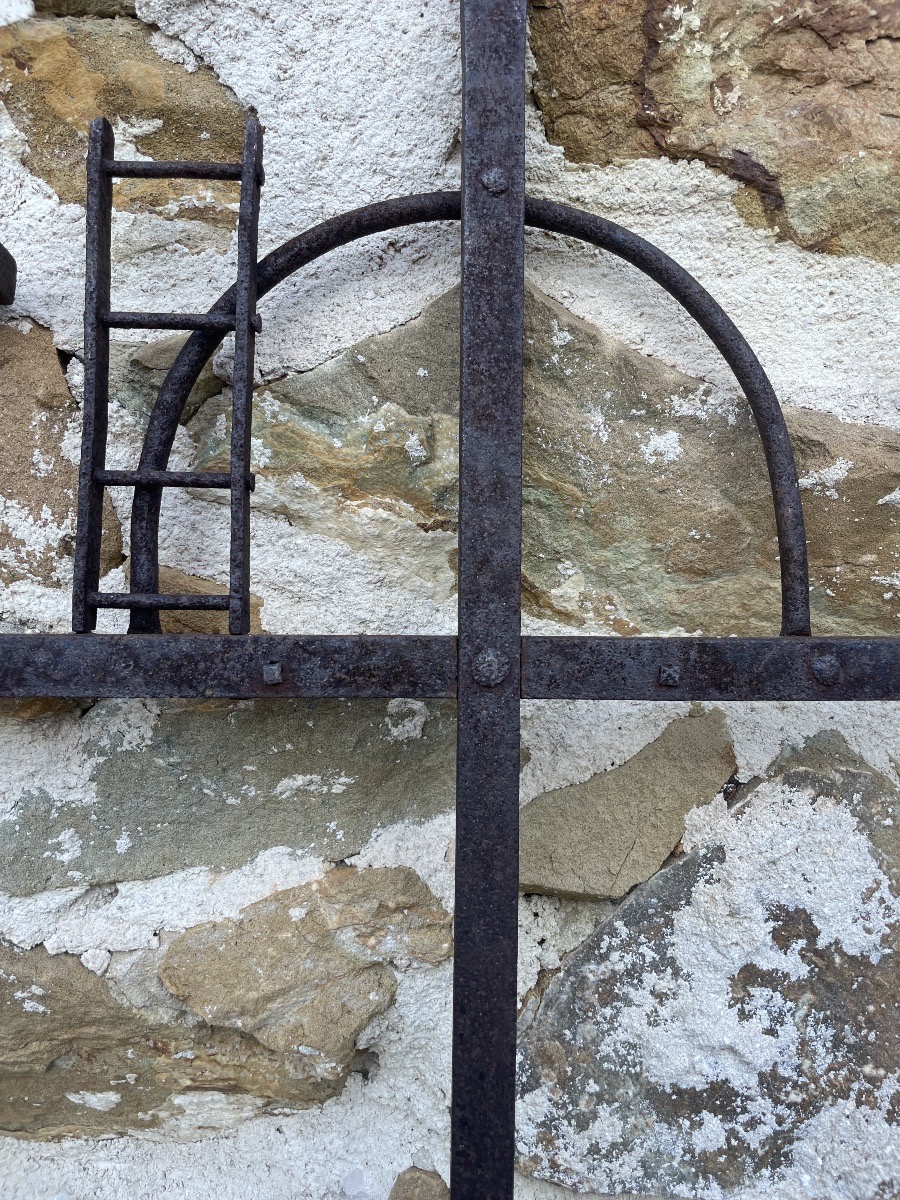
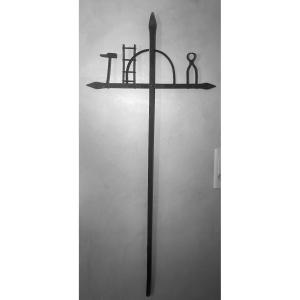
An important wrought-iron wayside cross, likely made in the first half of the 19th century, around 1800–1830, from the former Gévaudan/Haute-Loire region. This remarkable cross attests to the craftsmanship of rural blacksmiths in the Massif Central and to the popular religious heritage of the countryside. It is constructed of flat, forged iron bars joined together, with spear-pointed ends, a long vertical shaft, and a horizontal crossbar of particularly well-balanced proportions. The decoration features several instruments of the Passion: a hammer, a ladder, and an element shaped like tongs or pliers, complemented by a large wrought-iron archway encircling the crossbar. These elements are characteristic of wayside crosses intended to commemorate the Passion of Christ and to mark a place of passage, prayer, or devotion.A Crucifix That Is Now Missing The most interesting feature of this cross is the presence of three old mounting points that are clearly visible on the central upright. Their arrangement appears to correspond to the former installation of an attached figure of Christ, which is now missing: one at the top, one at the crossbar, and one at the bottom. It is therefore highly likely that a figure of Christ was once attached to this cross. The original figure of Christ could have been made of cast iron, wrought iron, or possibly carved wood; cast-iron Christ figures were particularly common on wayside crosses from the 18th and 19th centuries. The presence of the Instruments of the Passion and these attachment points strongly supports the interpretation of this piece as a genuine wayside cross bearing a figure of Christ, rather than a mere decorative cross.
The original figure of Christ could have been made of cast iron, wrought iron, or possibly carved wood; cast-iron crucifixes were particularly common on wayside crosses from the 18th and 19th centuries. The presence of the instruments of the Passion and these fastenings strongly supports the interpretation of this piece as a genuine wayside cross bearing Christ, rather than a mere decorative cross. Characteristics Period: early 19th century, circa 1800–1830Region: Gévaudan / Haute-Loire, Massif CentralMaterial: wrought ironHeight: approximately 142 cmWidth: approximately 62 cmDecoration: instruments of the Passion, ladder, hammer, arcadesThree old mounting points, likely intended for the figure of ChristBeautiful antique patina and natural oxidationGood structural condition considering its age and outdoor useOriginal figure of Christ missingA particularly interesting piece for enthusiasts of religious folk art, antique ironwork, and the rural heritage of the Massif Central. For any questions: +33778337598
The original figure of Christ could have been made of cast iron, wrought iron, or possibly carved wood; cast-iron crucifixes were particularly common on wayside crosses from the 18th and 19th centuries. The presence of the instruments of the Passion and these fastenings strongly supports the interpretation of this piece as a genuine wayside cross bearing Christ, rather than a mere decorative cross. Characteristics Period: early 19th century, circa 1800–1830Region: Gévaudan / Haute-Loire, Massif CentralMaterial: wrought ironHeight: approximately 142 cmWidth: approximately 62 cmDecoration: instruments of the Passion, ladder, hammer, arcadesThree old mounting points, likely intended for the figure of ChristBeautiful antique patina and natural oxidationGood structural condition considering its age and outdoor useOriginal figure of Christ missingA particularly interesting piece for enthusiasts of religious folk art, antique ironwork, and the rural heritage of the Massif Central. For any questions: +33778337598
950 €
Period: 19th century
Style: Other Style
Condition: Good condition
Material: Wrought iron
Width: 62 cm
Height: 142 cm
Reference (ID): 1811393
Availability: In stock
Print