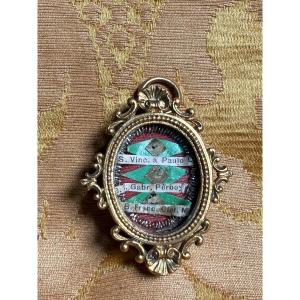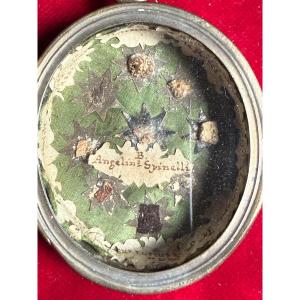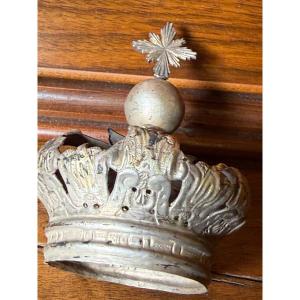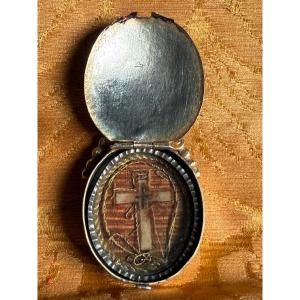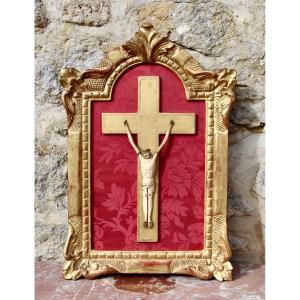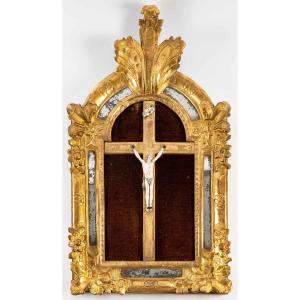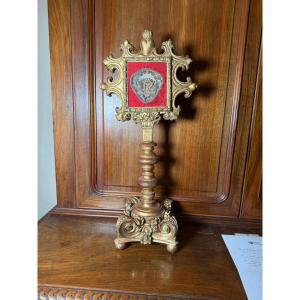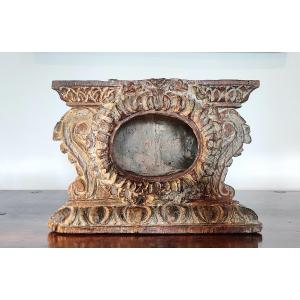


A Carved And Fine-gold-gilded Frame From The Late 17th To Early 18th Century Containing A Paste Of Saints
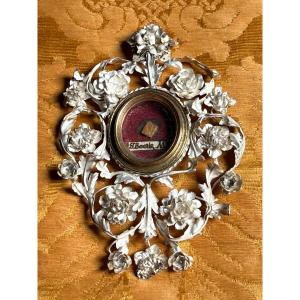
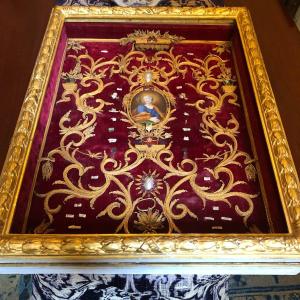
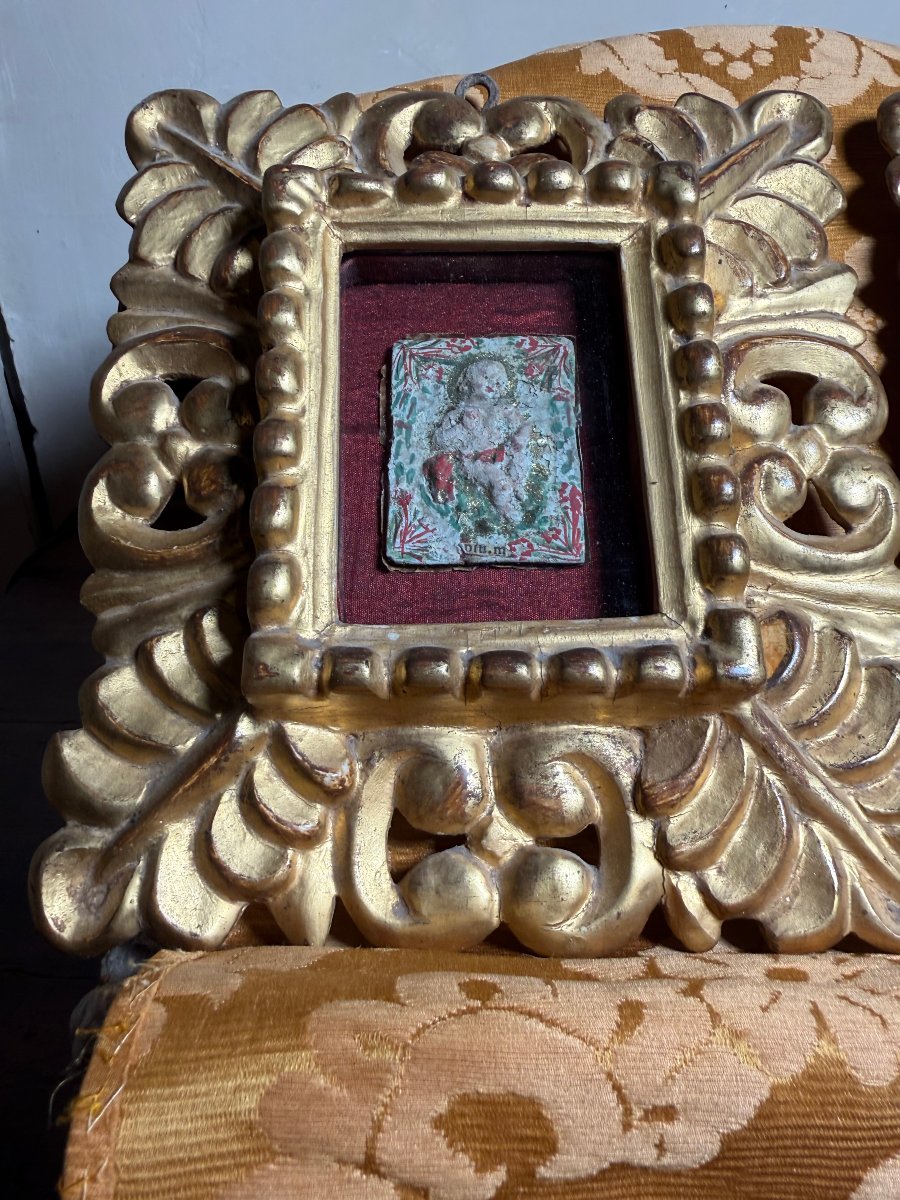
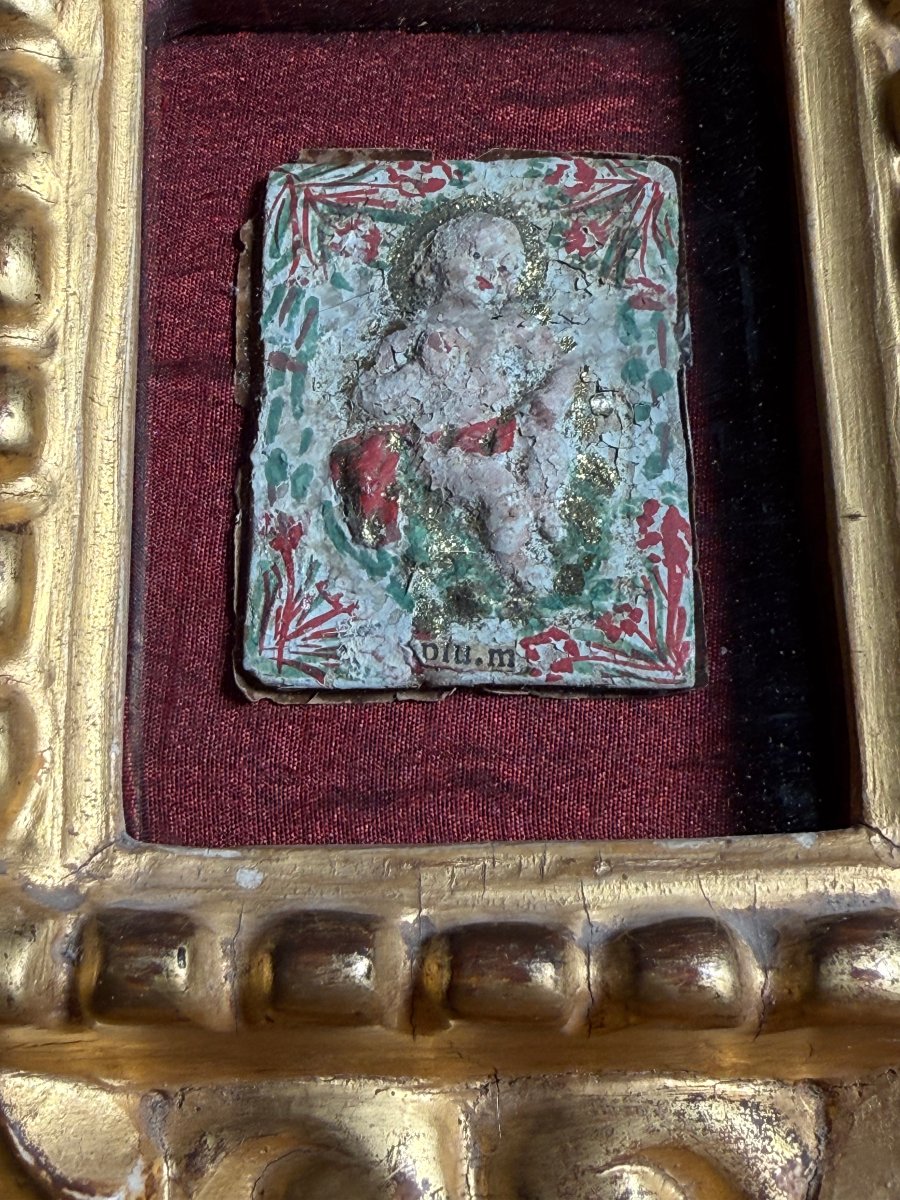
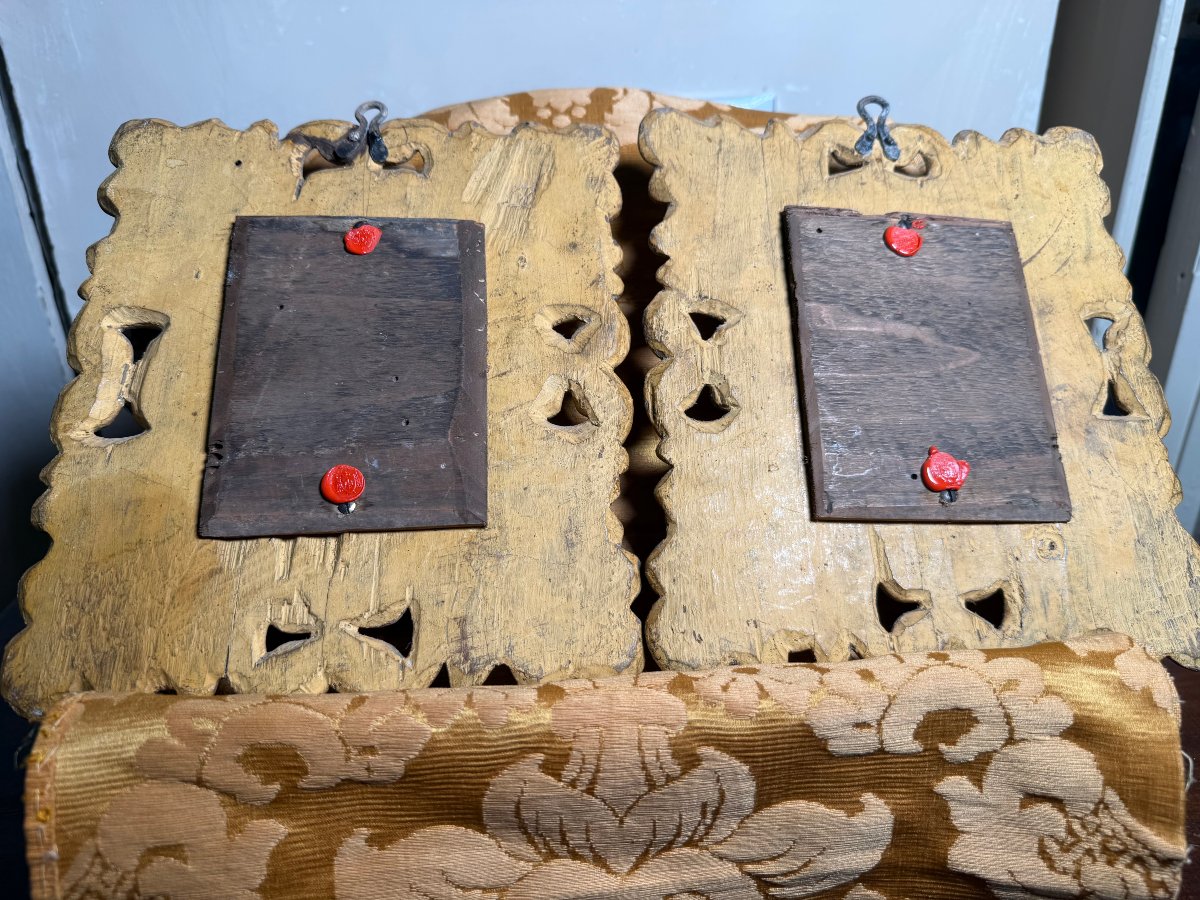
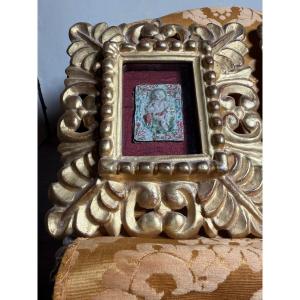
A carved and gilded frame from the late 17th to early 18th century, containing a paste sculpture of the Holy Martyrs
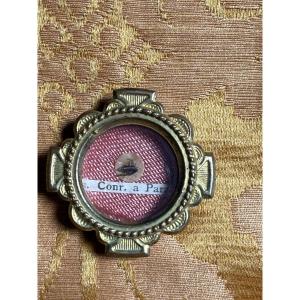
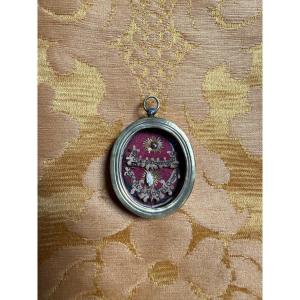
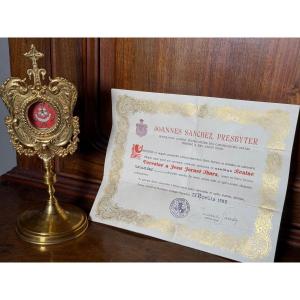
The expression describes the so-called "relic paste" or "bone flour," a historical paste actually produced between the 17th and 19th centuries (especially in Rome) for devotional and clerical purposes.
Origin and Production
The Process: It consisted of collecting minute bone fragments from the Roman catacombs, grinding them, and reducing them to a very fine powder.
The Mixture: This bone powder was mixed with an organic binder or a special glue/flour to form a malleable compound.
Use of Molds: The mixture was poured or pressed into molds (matrices) to create small devotional objects, medals, tablets, or simulacra of martyred saints' relics for distribution to the faithful.
In this case, the simulacrum represents Saint John the Baptist.
. Dimensions: 22.5 x 20 cm
The expression describes the so-called "relic paste" or "bone flour," a historical paste actually produced between the 17th and 19th centuries (especially in Rome) for devotional and clerical purposes.
Origin and Production
The Process: It consisted of collecting minute bone fragments from the Roman catacombs, grinding them, and reducing them to a very fine powder.
The Mixture: This bone powder was mixed with an organic binder or a special glue/flour to form a malleable compound.
Use of Molds: The mixture was poured or pressed into molds (matrices) to create small devotional objects, medals, tablets, or simulacra of martyred saints' relics for distribution to the faithful.
In this case, the simulacrum represents Saint John the Baptist.
. Dimensions: 22.5 x 20 cm
600 €
Period: 18th century
Style: Louis 14th, Regency
Condition: Perfect condition
Material: Gilted wood
Width: cm 20
Height: cm 22,5
Reference (ID): 1811201
Availability: In stock
Print