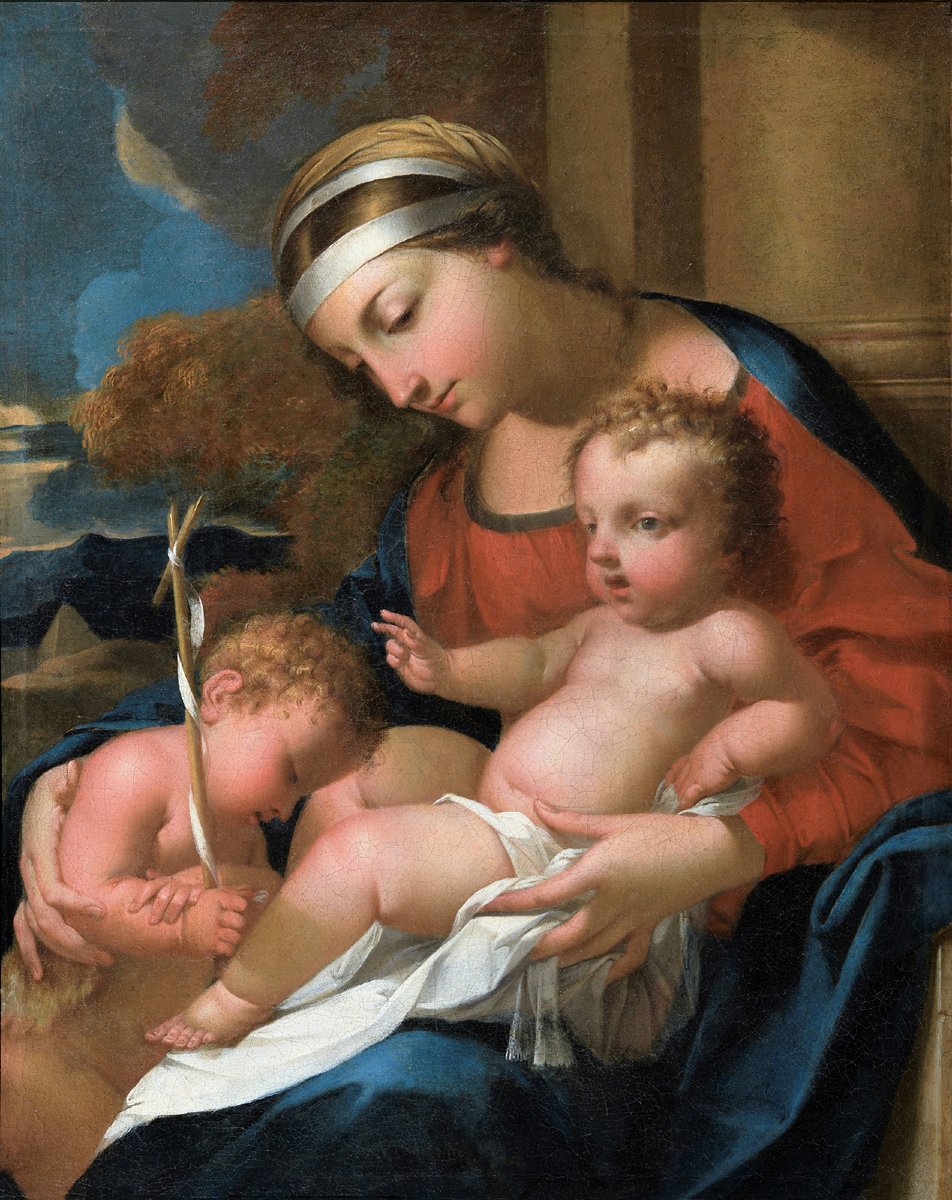


René Dudot (c. 1650) *the Virgin And Child With Saint John The Baptist*, Rouen
Artist: René Dudot
René DUDOT
(active in Rouen and Paris between 1640 and 1659)
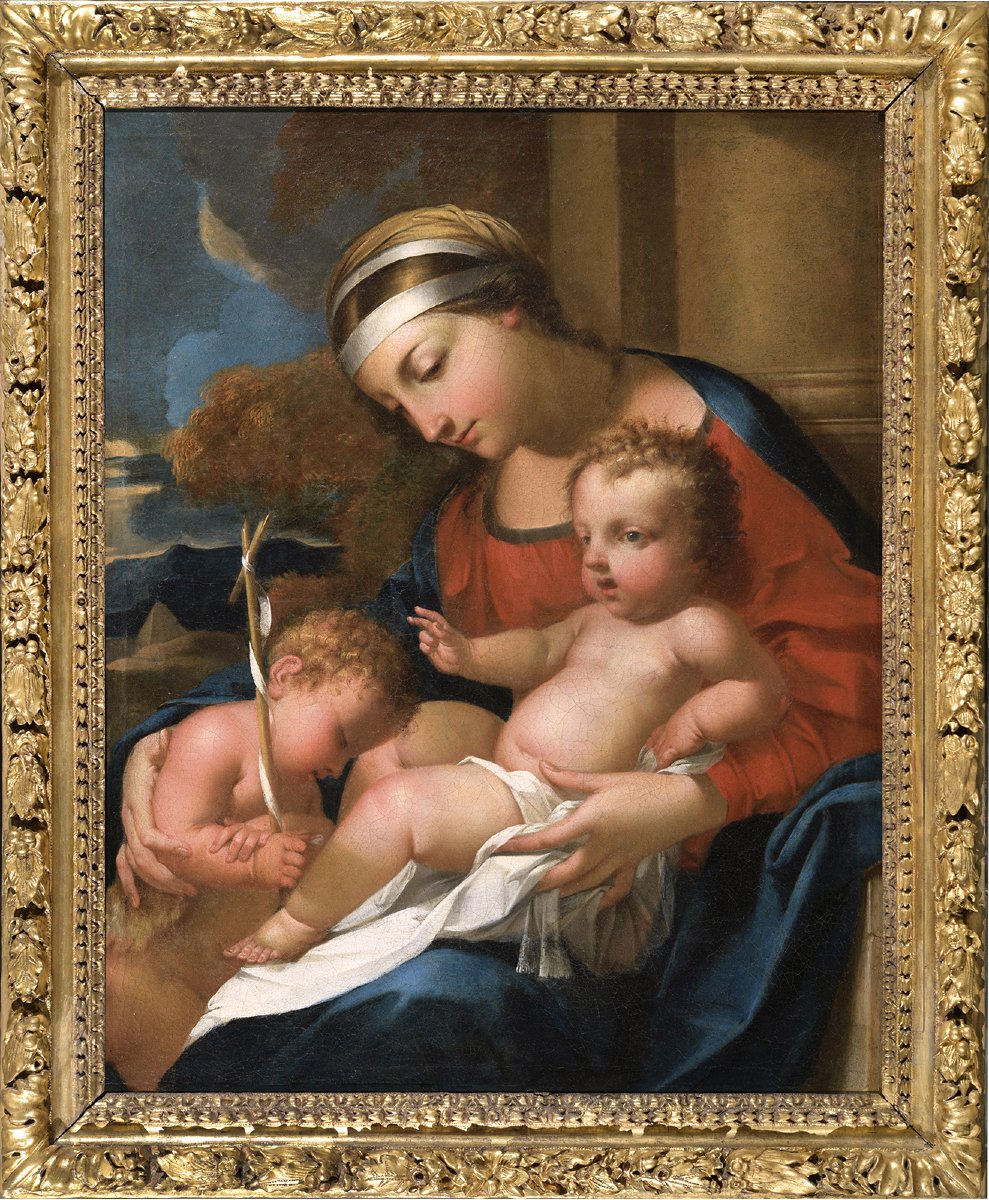
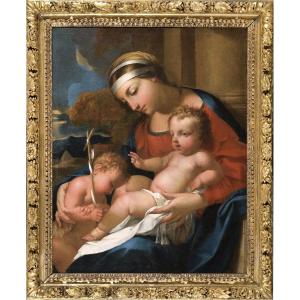
The Virginand Child with the Young Saint John the Baptist
H. 73 cm; W. 57.5 cm
It was in Rouen that René Dudot was most active in the mid-17th century. Only twenty years of his life can be traced through baptismal and marriage records. He first appeared in 1640 in Paris for the baptism of his daughter Anne, and other children were baptized in various Parisian churches until 1649. In 1646, he served as a witness at the wedding of a certain Nicolas Boutin, the son of a master carpenter from Vernon in the Eure department. Does this detail reveal his Norman origins, which he may have left behind to work in Paris? His name is consistently followed by the titles “painter” and then “master painter.”
In 1651, René Dudot appears for the first time in the known archives of Rouen, where he was admitted on December 22 to the city’s Guild of Painters. The very next year, he illustrated the frontispiece of a local edition of a “Life of Saint Romain”, and in 1653 he created nineteen vignettes for “The Imitation of the Life of Jesus.” Two years later, the Rouen Cathedral Board of Works recorded in its accounts a payment of sixty livres for an altarpiece dedicated to the new altar in the sacristy.
The latest date that appears today is 1659, when René Dudot returned to Paris and painted a Death of the Virgin, which is none other than a May de Notre Dame.
The painter thus seems to have divided his time between Paris and Rouen, a city in Normandy believed to be his hometown, where he brought a breath of artistic innovation through his connections in Paris. It is worth noting that since his children were born during the 1640s, he himself must have been born around 1610–1620, just like Charles Le Brun and Sébastien Bourdon. These artists certainly knew one another, as they worked on similar subjects during the same period, but a stylistic examination of the works by Bourdon and Dudot reveals a certain kinship between them. It should be noted that René Dudot’s little-known painting has often been attributed to Sébastien Bourdon—most recently at the Fogg Art Museum in Cambridge and in works sold by the Wildenstein Gallery.
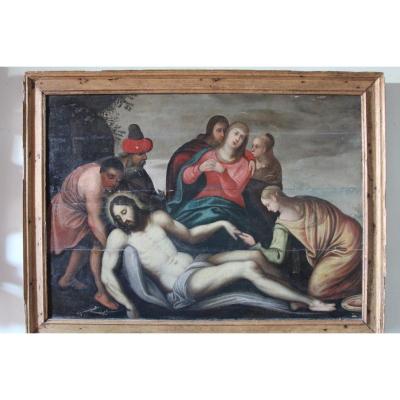
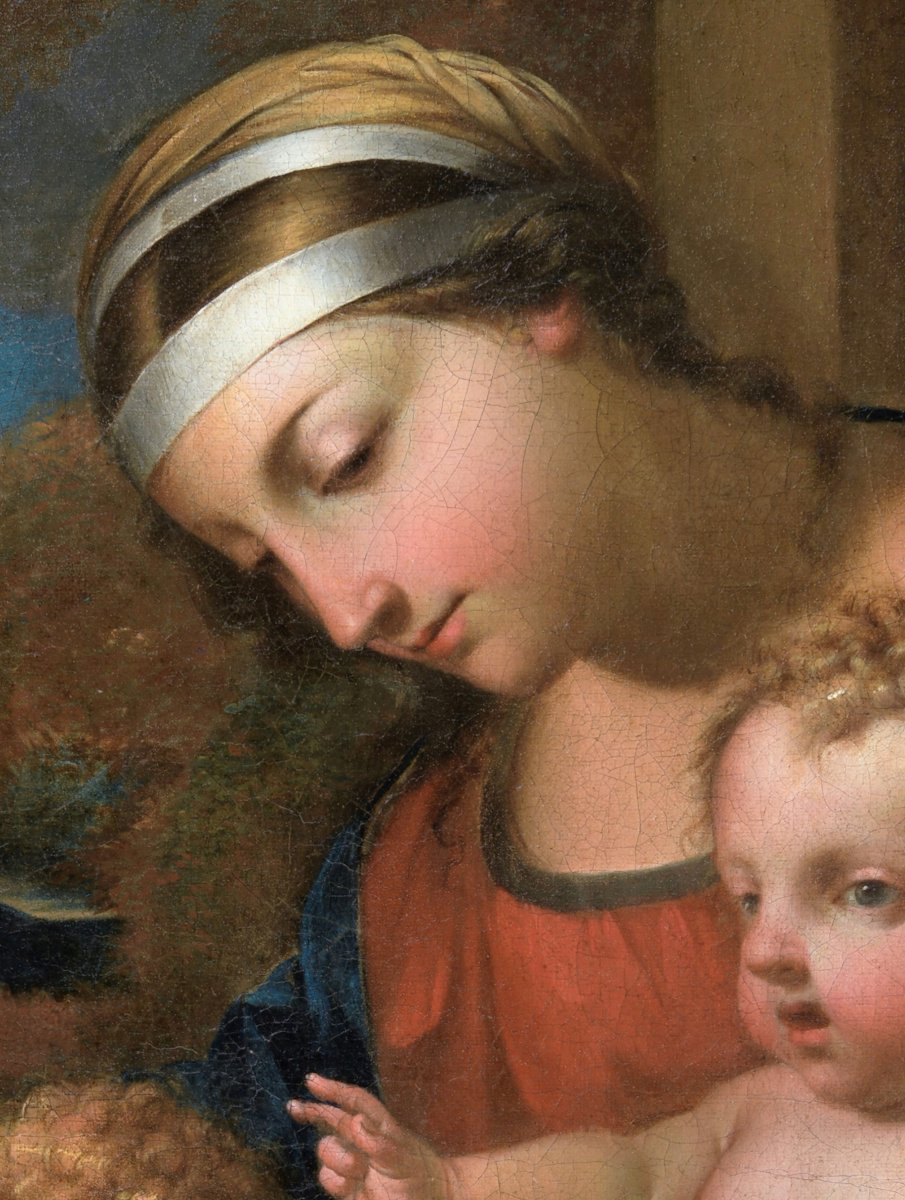
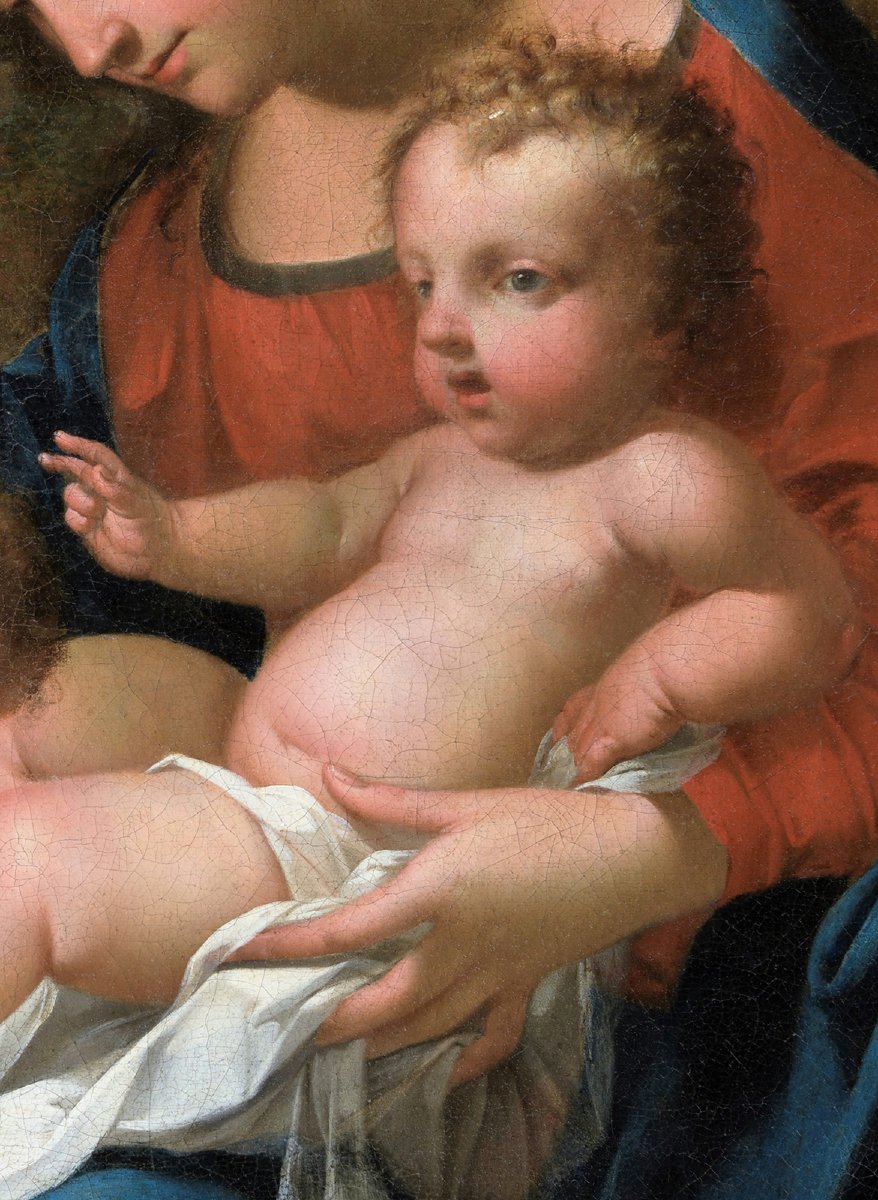
It was only thanks to a signed painting held at the Musée des Beaux-Arts in Rouen (fig. 1) and a few very rare engravings that the painter’s work was rescued from obscurity during the 19th century. Since then, the artist’s characteristic facial features have made it possible to reattribute several paintings, the majority of which are held in private collections. Small, pointed noses; gentle faces with delicate features; and fair complexions accented by flushed areas—these are the characteristics Dudot imbues his figures with.
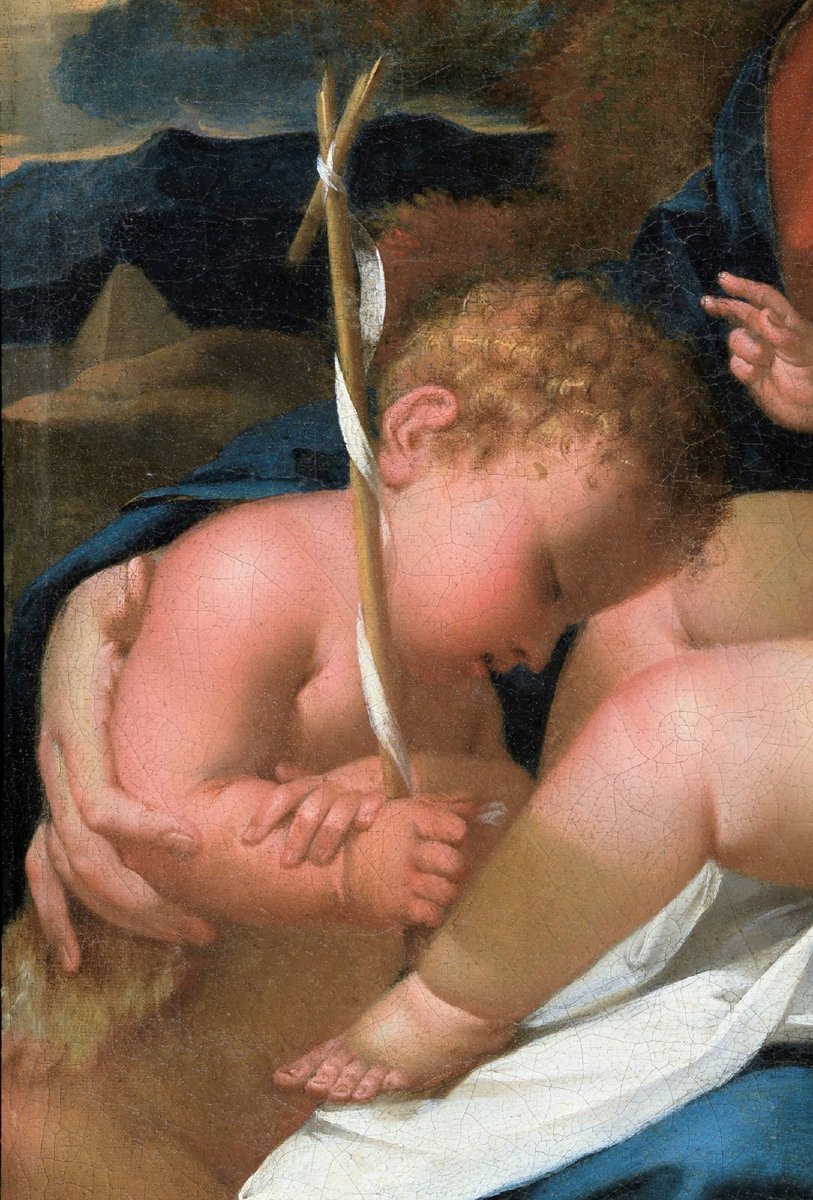
While our composition is highly classical in the context of art history, the manner in which the painter presents it is one of great gentleness and tenderness. The fairly vivid colors he uses are clearly reminiscent of the Italian compositions of the previous century, which served as a source of inspiration for all of France in the 17th century. The background landscape, featuring a pyramid, inevitably brings to mind the Holy Family’s flight into Egypt and the works of Nicolas Mignard.
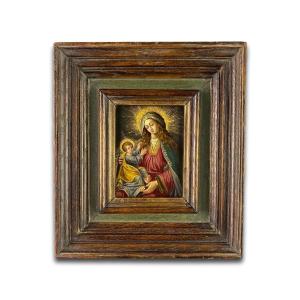
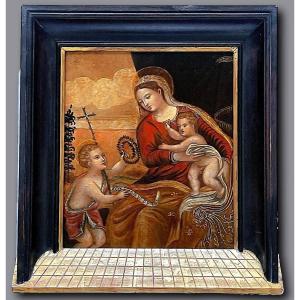
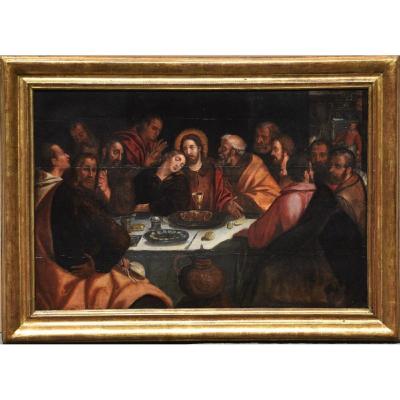
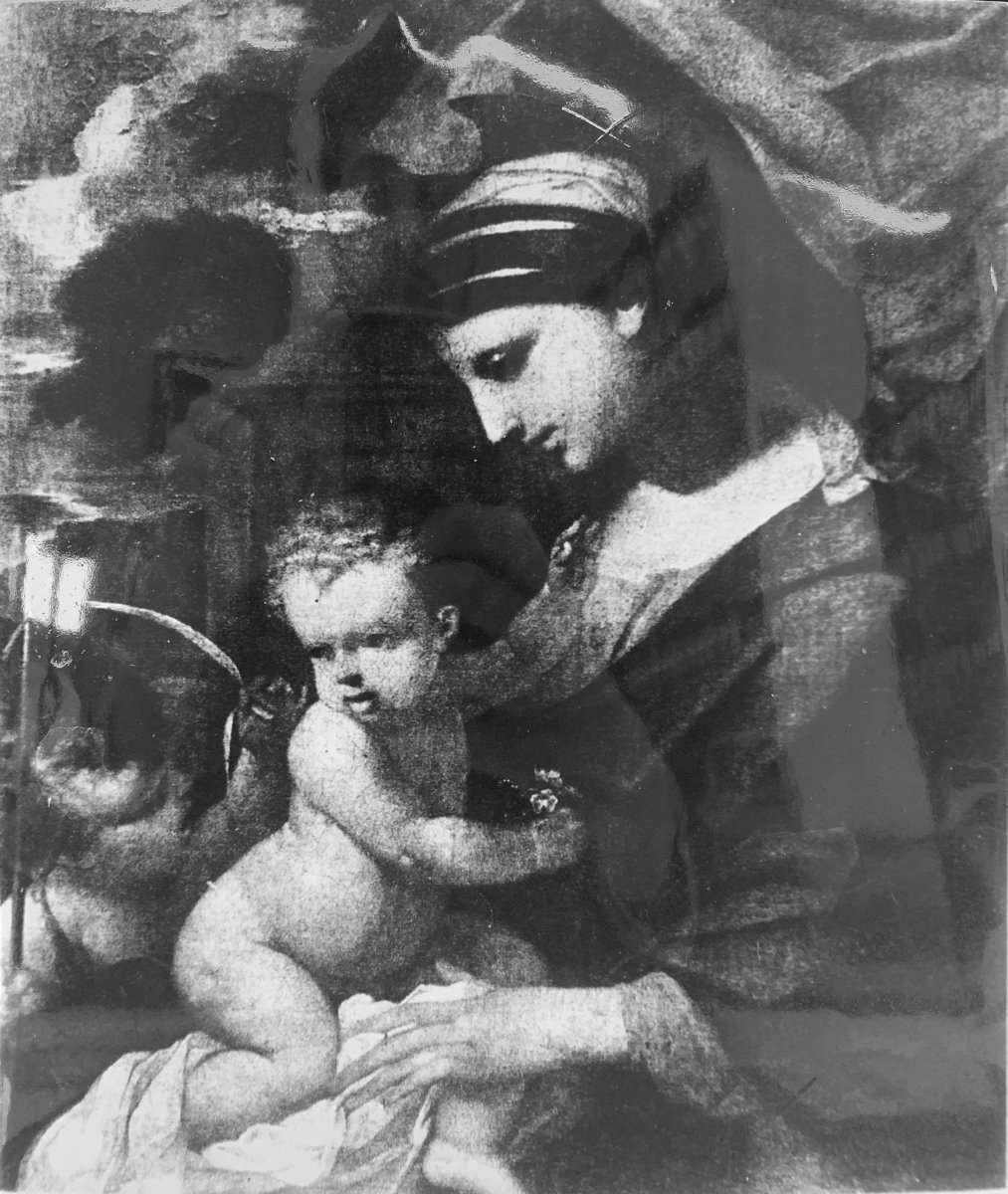
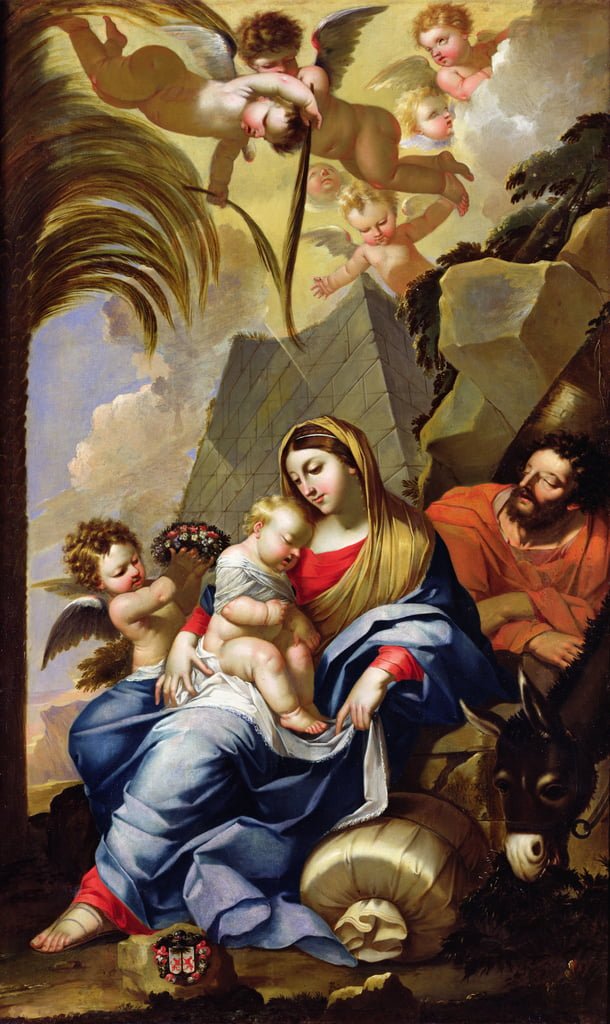
Other compositions on the same subject are known, in which the figures’ poses vary (figs. 2 and 3).
On view in Paris
(active in Rouen and Paris between 1640 and 1659)
The Virginand Child with the Young Saint John the Baptist
H. 73 cm; W. 57.5 cm
It was in Rouen that René Dudot was most active in the mid-17th century. Only twenty years of his life can be traced through baptismal and marriage records. He first appeared in 1640 in Paris for the baptism of his daughter Anne, and other children were baptized in various Parisian churches until 1649. In 1646, he served as a witness at the wedding of a certain Nicolas Boutin, the son of a master carpenter from Vernon in the Eure department. Does this detail reveal his Norman origins, which he may have left behind to work in Paris? His name is consistently followed by the titles “painter” and then “master painter.”
In 1651, René Dudot appears for the first time in the known archives of Rouen, where he was admitted on December 22 to the city’s Guild of Painters. The very next year, he illustrated the frontispiece of a local edition of a “Life of Saint Romain”, and in 1653 he created nineteen vignettes for “The Imitation of the Life of Jesus.” Two years later, the Rouen Cathedral Board of Works recorded in its accounts a payment of sixty livres for an altarpiece dedicated to the new altar in the sacristy.
The latest date that appears today is 1659, when René Dudot returned to Paris and painted a Death of the Virgin, which is none other than a May de Notre Dame.
The painter thus seems to have divided his time between Paris and Rouen, a city in Normandy believed to be his hometown, where he brought a breath of artistic innovation through his connections in Paris. It is worth noting that since his children were born during the 1640s, he himself must have been born around 1610–1620, just like Charles Le Brun and Sébastien Bourdon. These artists certainly knew one another, as they worked on similar subjects during the same period, but a stylistic examination of the works by Bourdon and Dudot reveals a certain kinship between them. It should be noted that René Dudot’s little-known painting has often been attributed to Sébastien Bourdon—most recently at the Fogg Art Museum in Cambridge and in works sold by the Wildenstein Gallery.
It was only thanks to a signed painting held at the Musée des Beaux-Arts in Rouen (fig. 1) and a few very rare engravings that the painter’s work was rescued from obscurity during the 19th century. Since then, the artist’s characteristic facial features have made it possible to reattribute several paintings, the majority of which are held in private collections. Small, pointed noses; gentle faces with delicate features; and fair complexions accented by flushed areas—these are the characteristics Dudot imbues his figures with.
While our composition is highly classical in the context of art history, the manner in which the painter presents it is one of great gentleness and tenderness. The fairly vivid colors he uses are clearly reminiscent of the Italian compositions of the previous century, which served as a source of inspiration for all of France in the 17th century. The background landscape, featuring a pyramid, inevitably brings to mind the Holy Family’s flight into Egypt and the works of Nicolas Mignard.
Other compositions on the same subject are known, in which the figures’ poses vary (figs. 2 and 3).
On view in Paris
32 000 €
Period: 17th century
Style: Renaissance, Louis 13th
Condition: Perfect condition
Material: Oil painting
Length: 73 cm hors cadre
Width: 57,5 cm hors cadre
Reference (ID): 1810239
Availability: In stock
Print