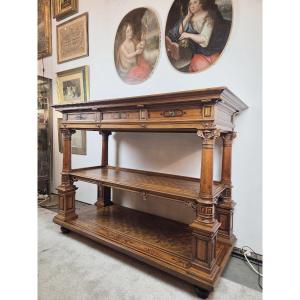


Monumental Three-tiered Sideboard In The Neo-renaissance Style, Made Of Inlaid Mahogany, Late 19th Century
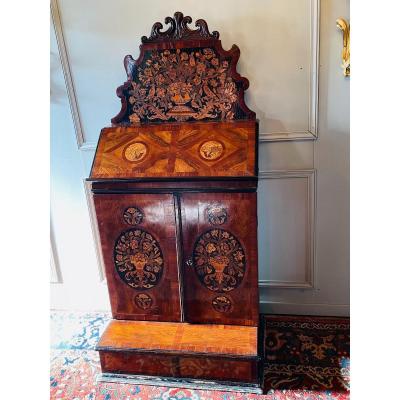
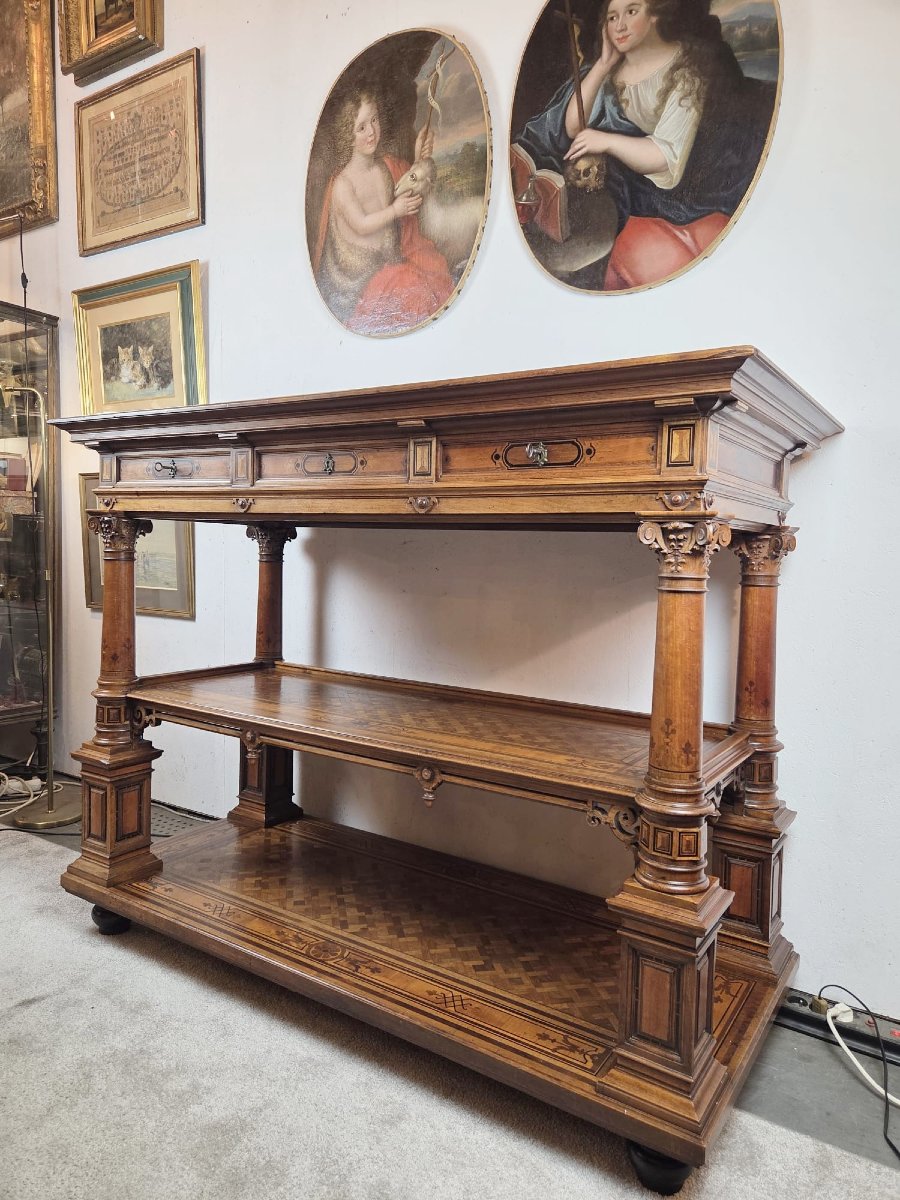
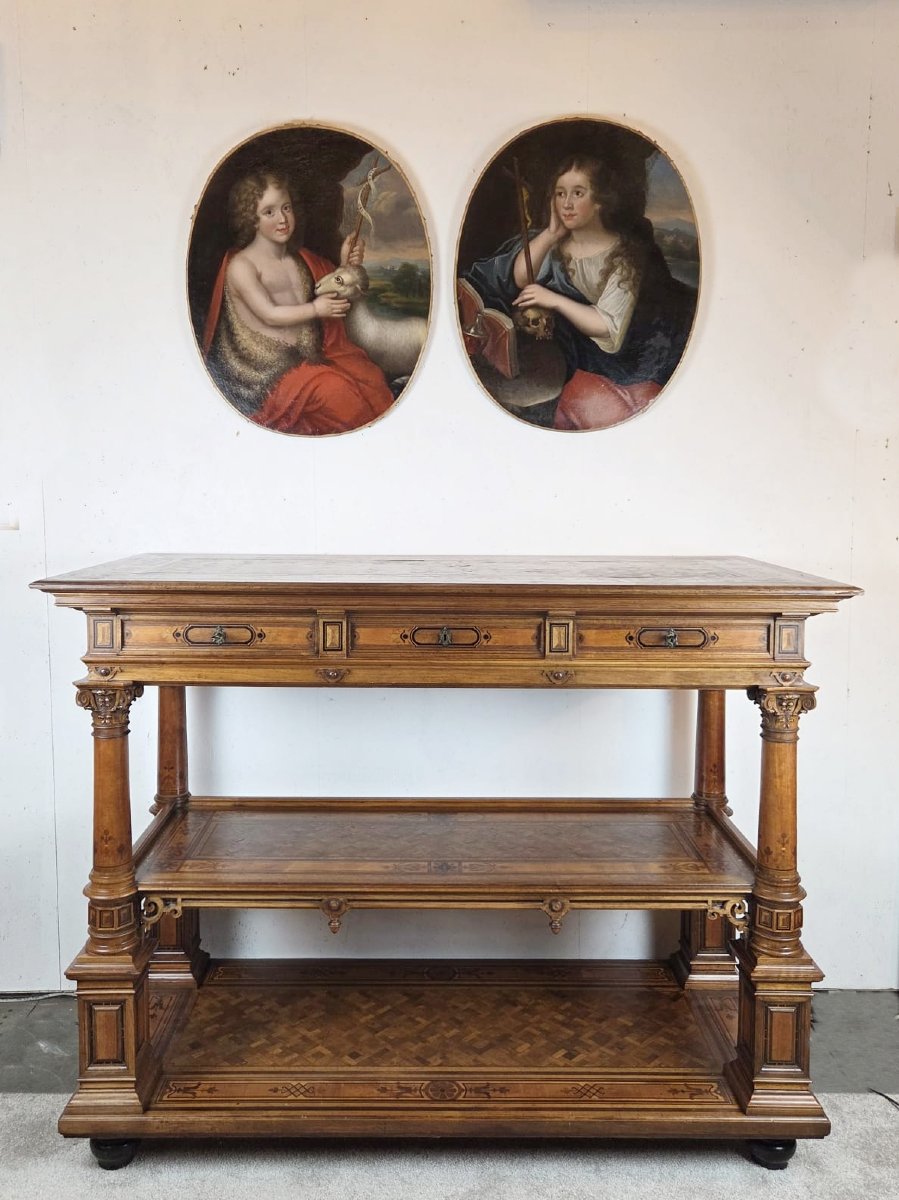
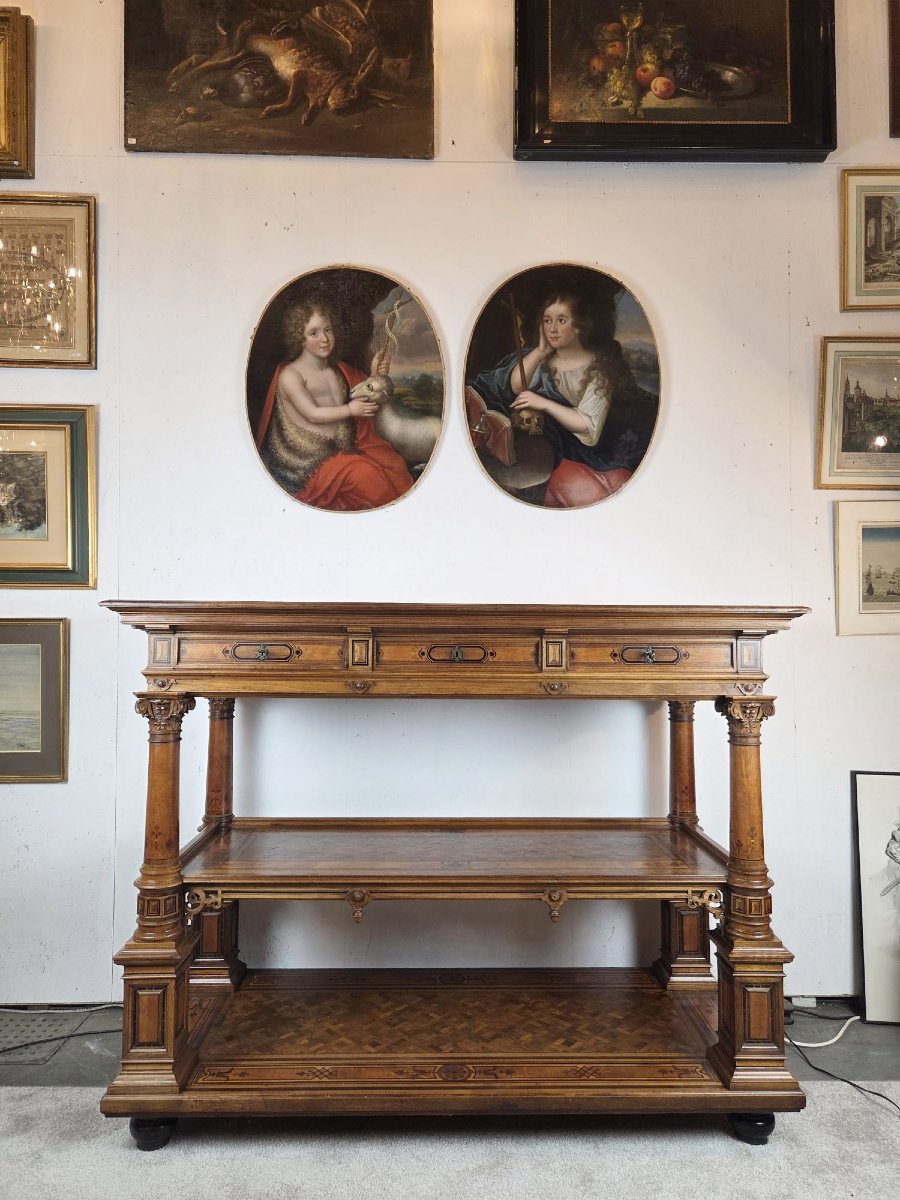
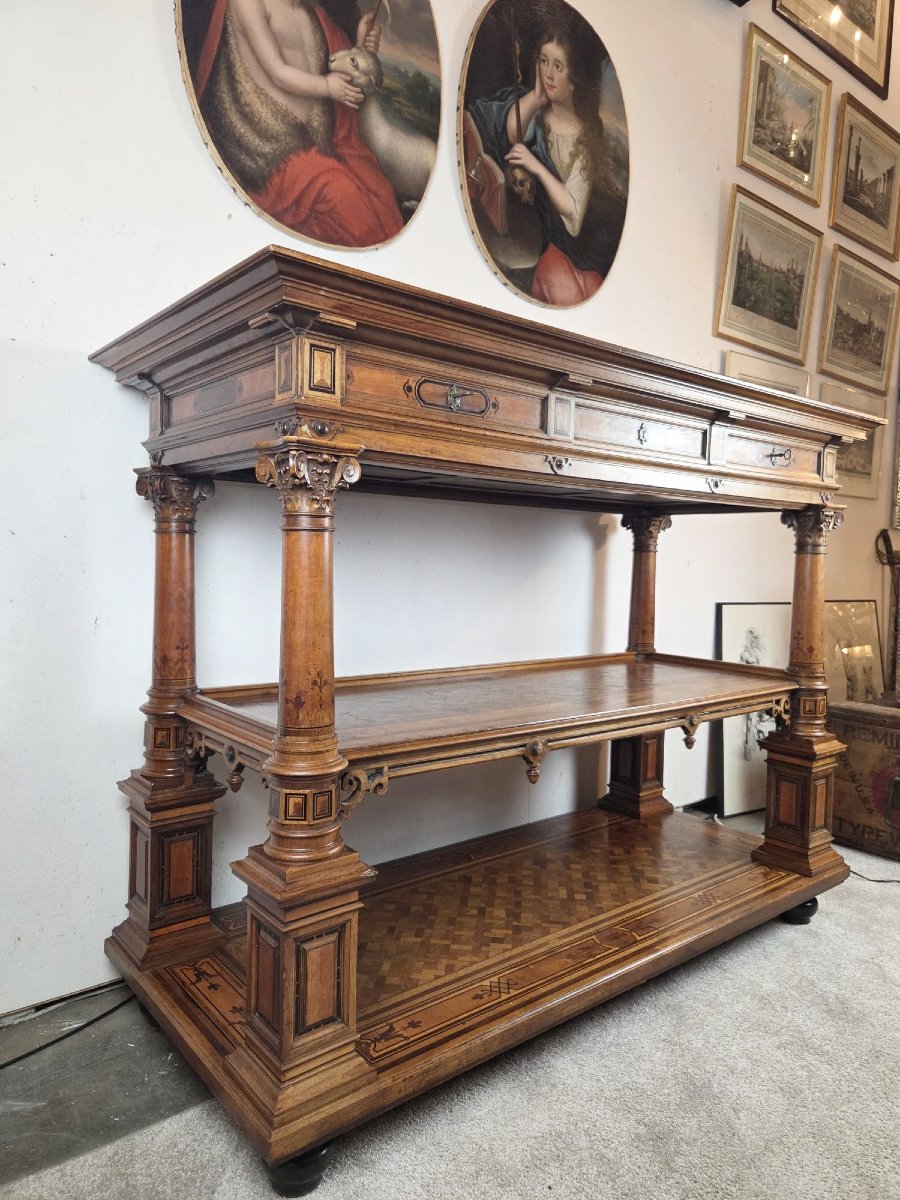
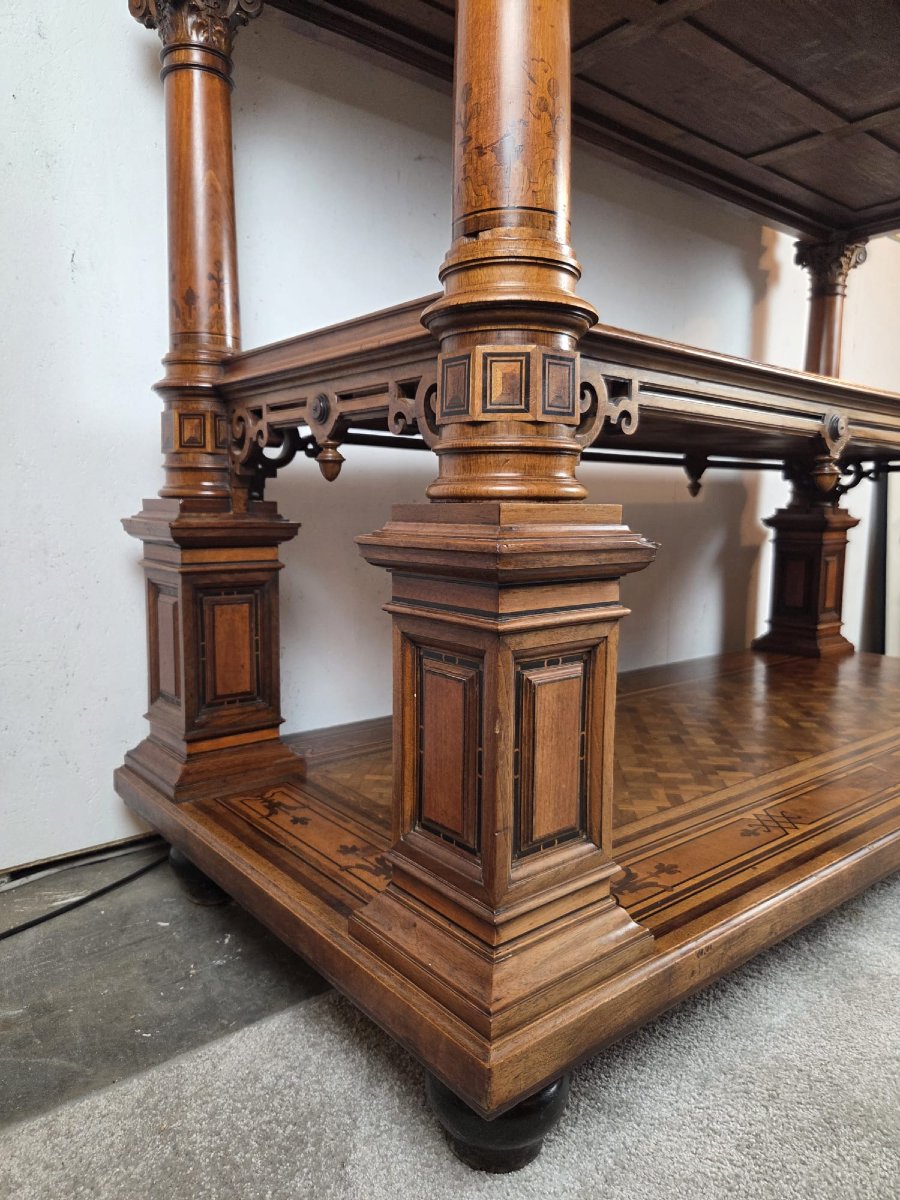
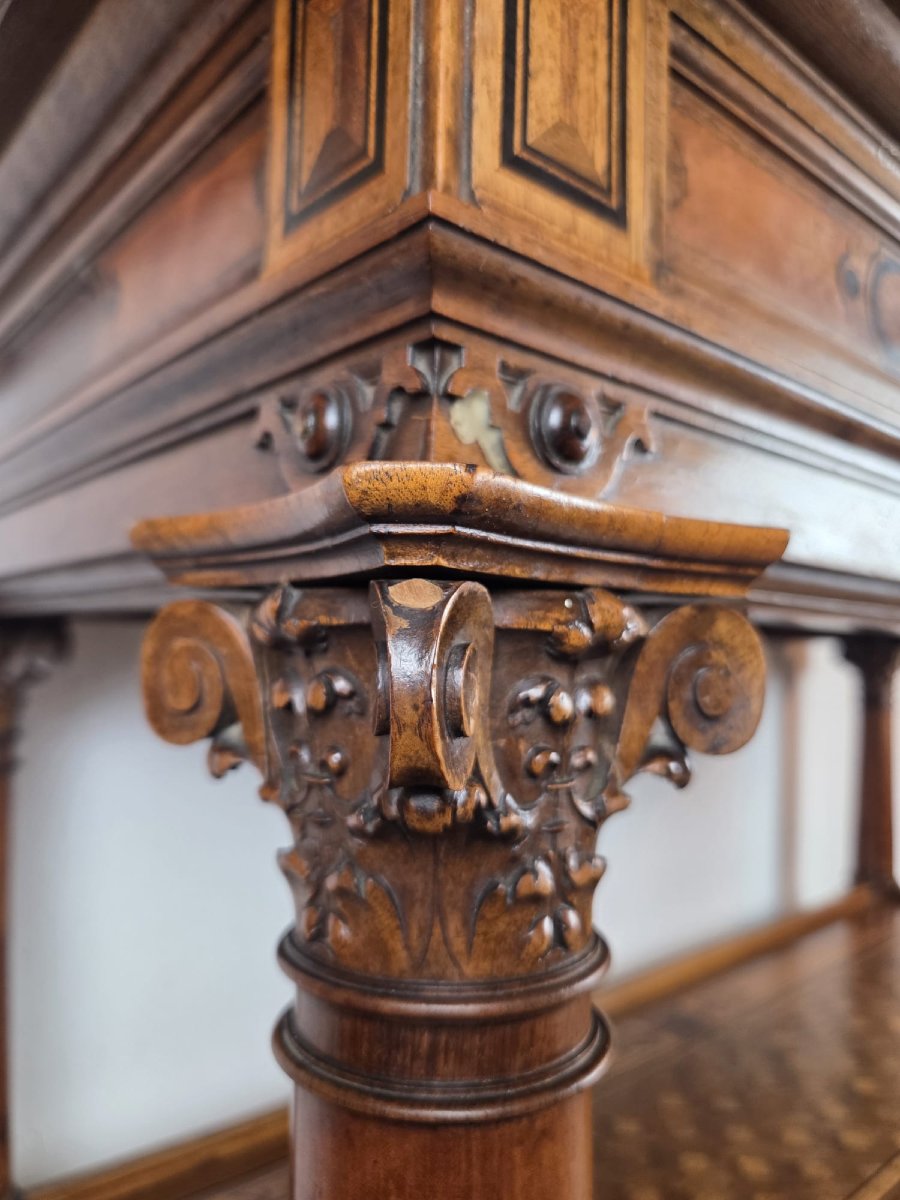
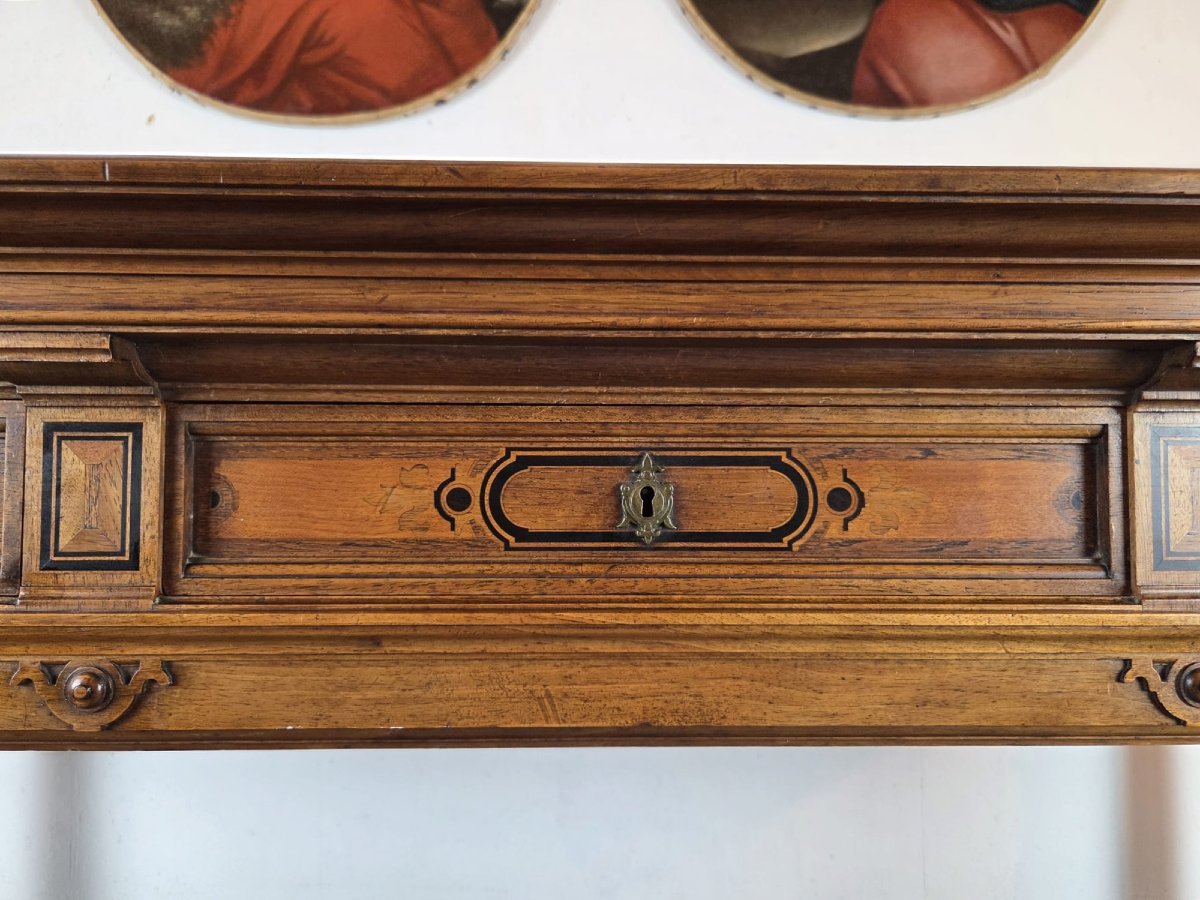
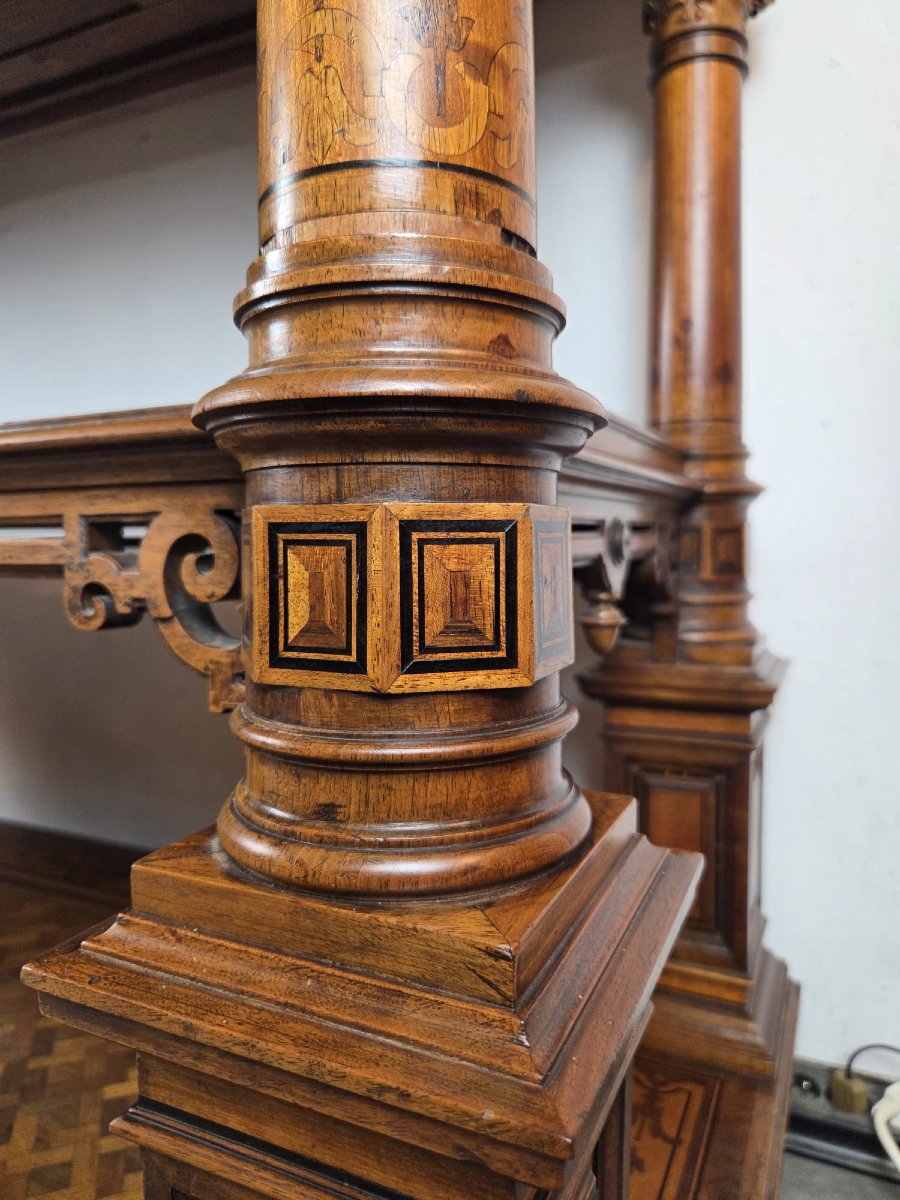
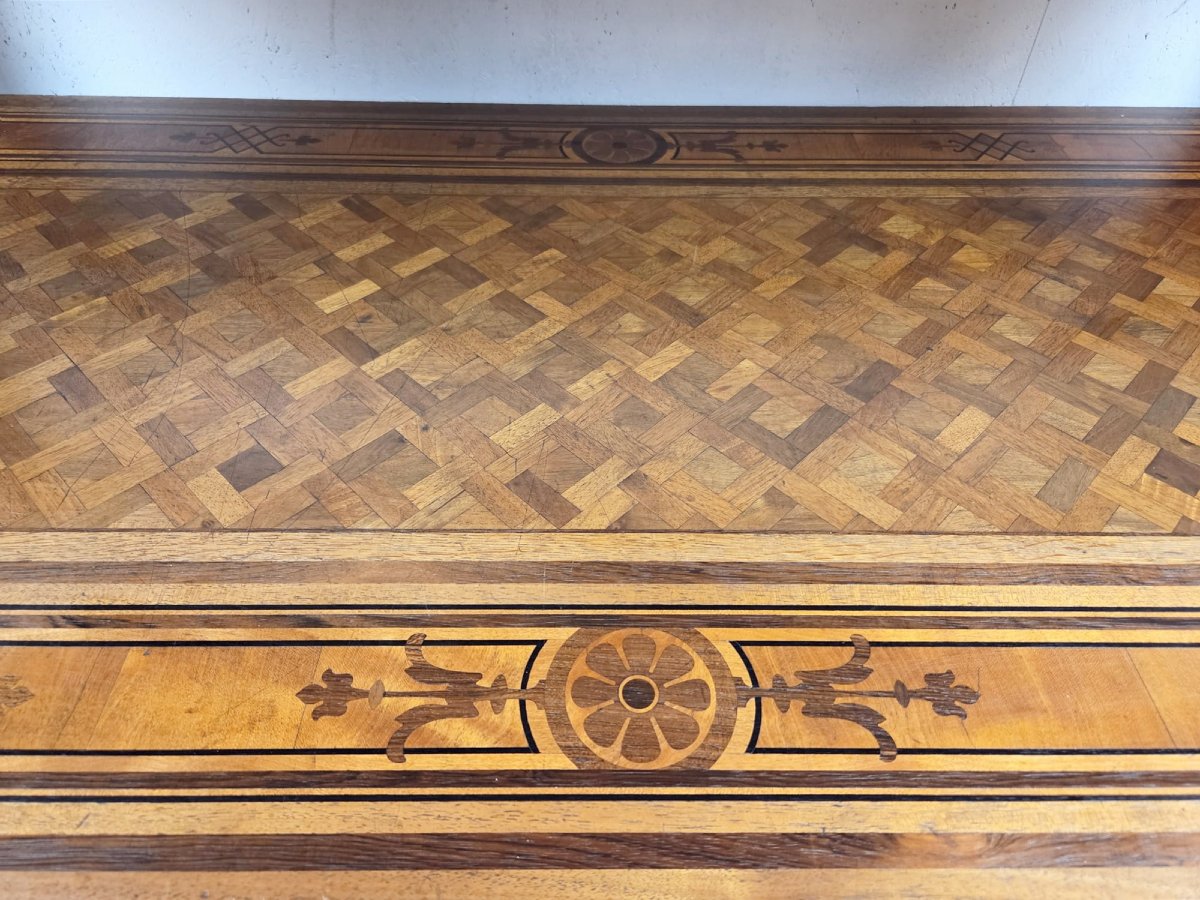
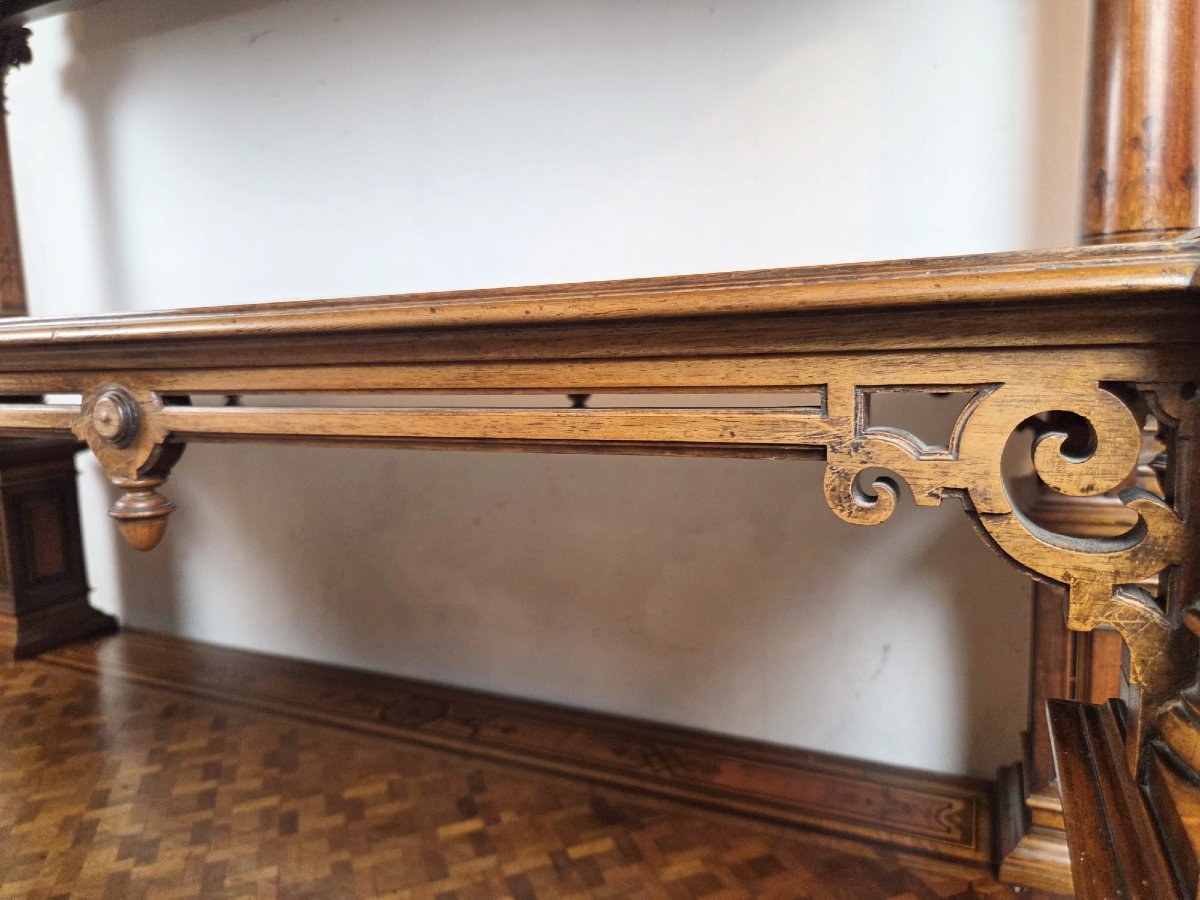
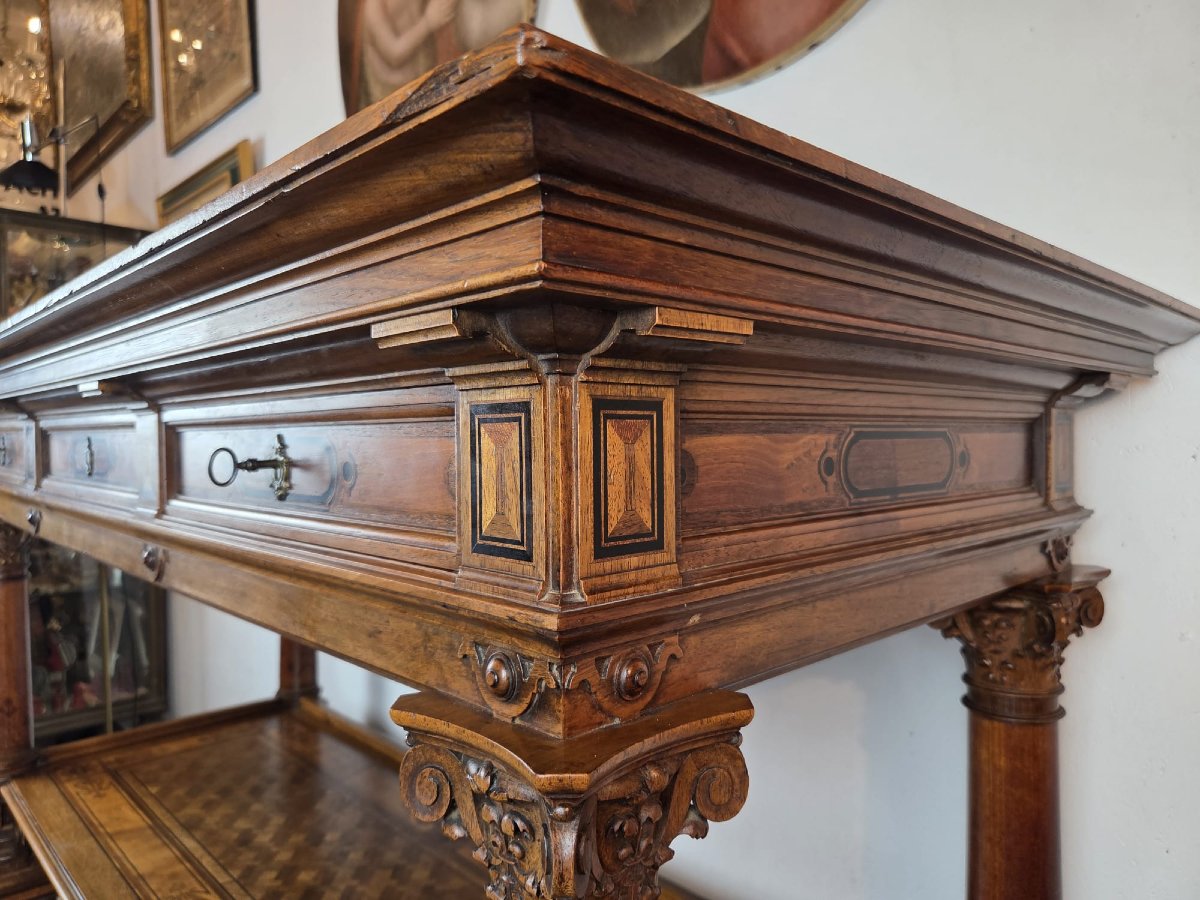
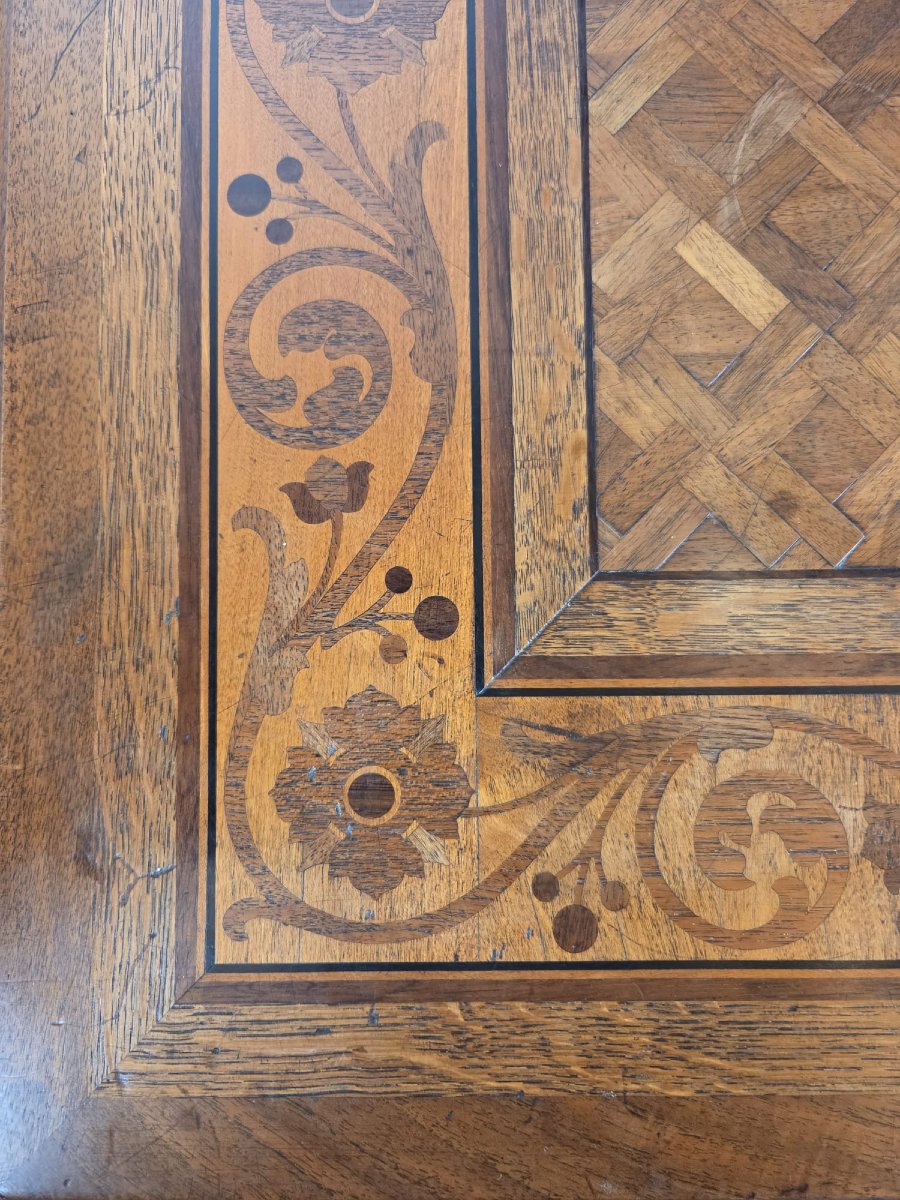
A monumental three-tiered sideboard in the Neo-Renaissance style, crafted in the second half of the 19th century, around 1870–1885.It is distinguished by particularly meticulous cabinetmaking and rich marquetry of precious and exotic woods, combining geometric, floral, and botanical motifs. The top and bottom shelves feature remarkable decorative compositions, while the middle shelf is also richly adorned. The piece incorporates an elegant parquet pattern made of small wooden pieces arranged in a checkerboard and interlaced design.The front features three drawers, each decorated with a geometric panel framed by dark fillets and patinated metal keyholes. Their traditional construction is of high quality, featuring dovetail joints. The frames are made of solid wood, with an interior of solid mahogany.The four turned columns, richly carved, are topped with capitals featuring Renaissance-inspired floral motifs. The back of the piece is also carved, albeit in a more understated manner, confirming a design intended to be viewed from multiple angles.A remarkable detail lies in the care taken with the hidden parts: certain areas, particularly the underside, are themselves decorated with a checkerboard pattern of small, individually assembled wooden elements, attesting to a high standard of craftsmanship.The piece as a whole features a beautiful, warm patina and a strong decorative presence.StyleNeo-Renaissance / historicist, in the tradition of French luxury cabinetmaking from the second half of the 19th century.Materials and TechniquesPrecious and exotic woods, solid mahogany (inside the drawers), marquetry, small-piece parquetwork, dovetail joints, carved elements, and patinated metal for the lock plates.
PeriodCirca 1870–1885Observations and AttributionNo stamps or signatures were found despite examination.A stylistic comparison with Parisian works of the period can be considered, particularly those by Charles Hunsinger and his circle, although an attribution cannot be confirmed at this time.
PeriodCirca 1870–1885Observations and AttributionNo stamps or signatures were found despite examination.A stylistic comparison with Parisian works of the period can be considered, particularly those by Charles Hunsinger and his circle, although an attribution cannot be confirmed at this time.
3 200 €
Period: 19th century
Style: Renaissance, Louis 13th
Condition: En l'etat
Material: Mahogany
Width: 177
Height: 119
Depth: 70
Reference (ID): 1809691
Availability: In stock
Print