

A Pair Of Rakuchū Rakugai-zu Folding Screens Depicting Views Of Kyoto
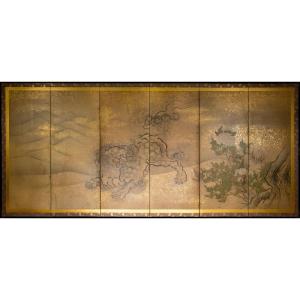
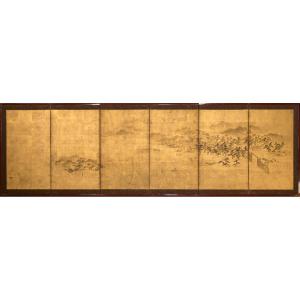
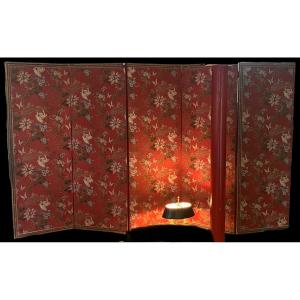
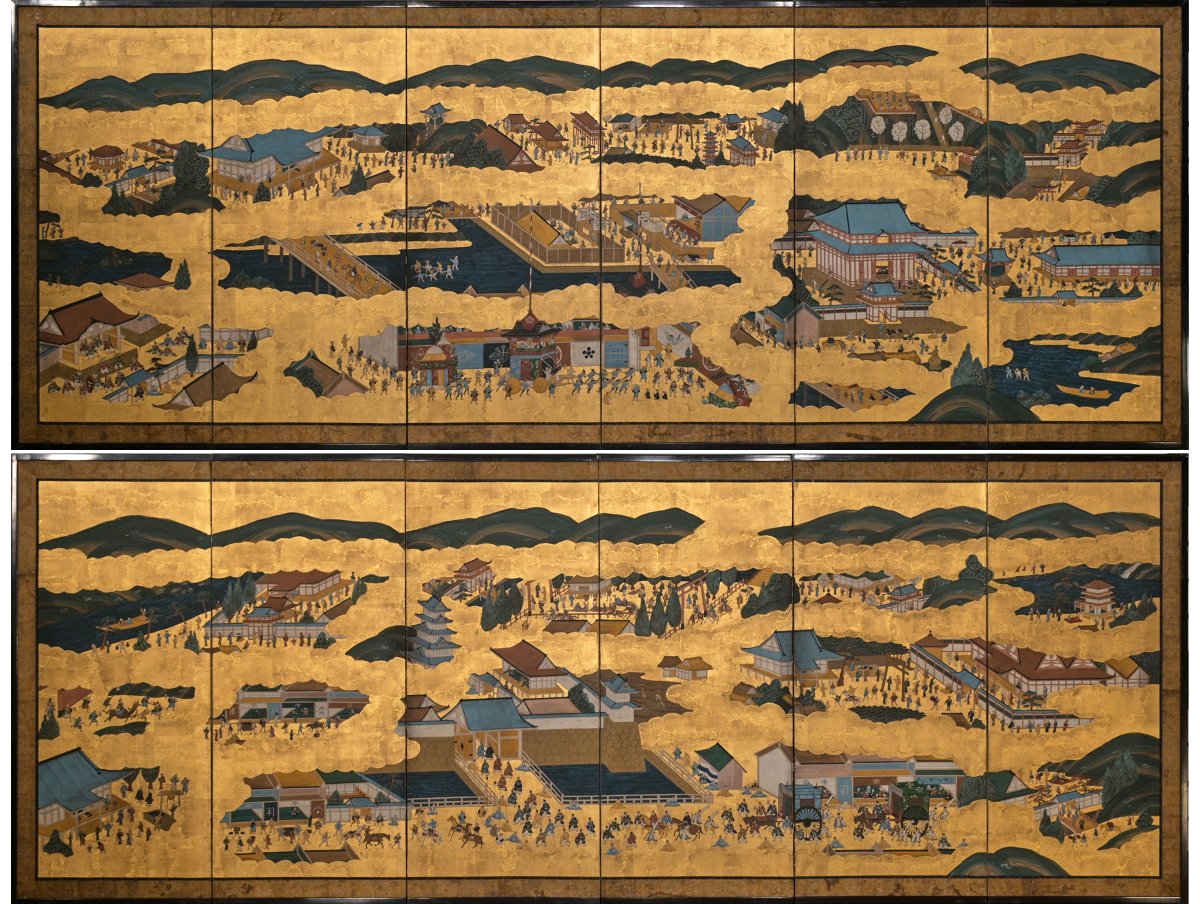
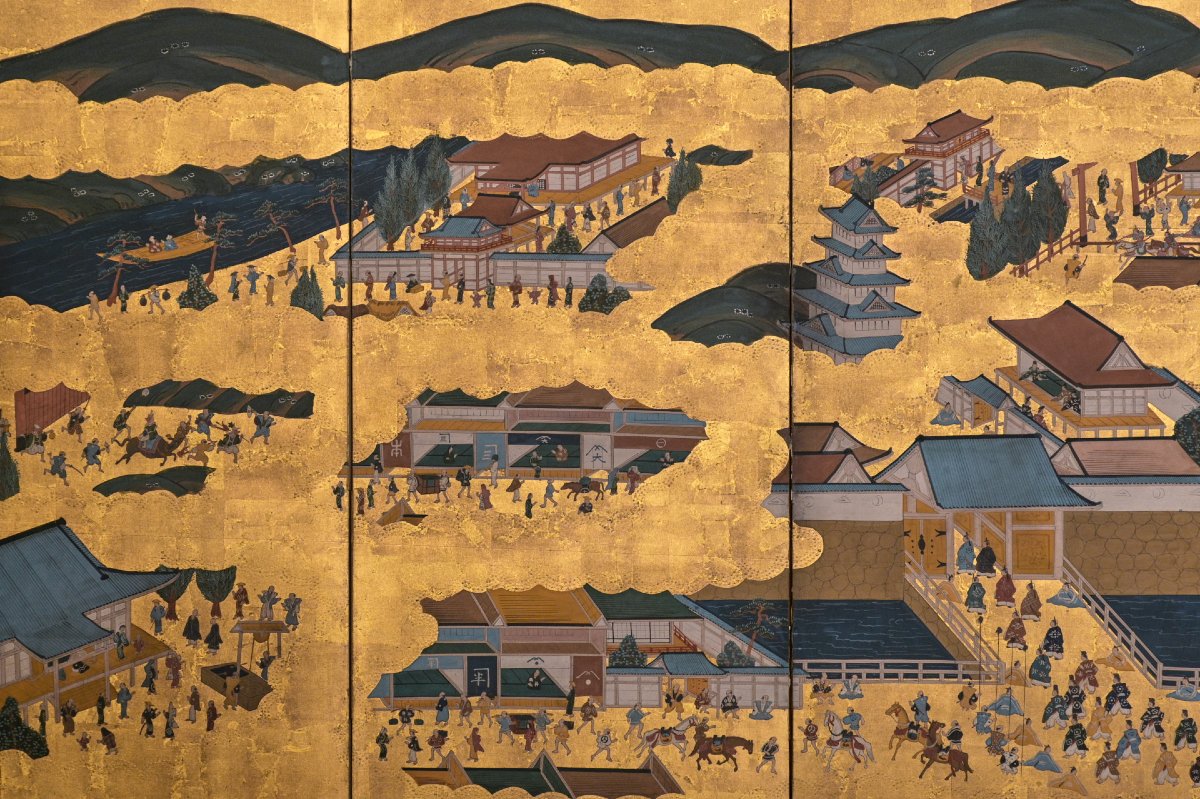
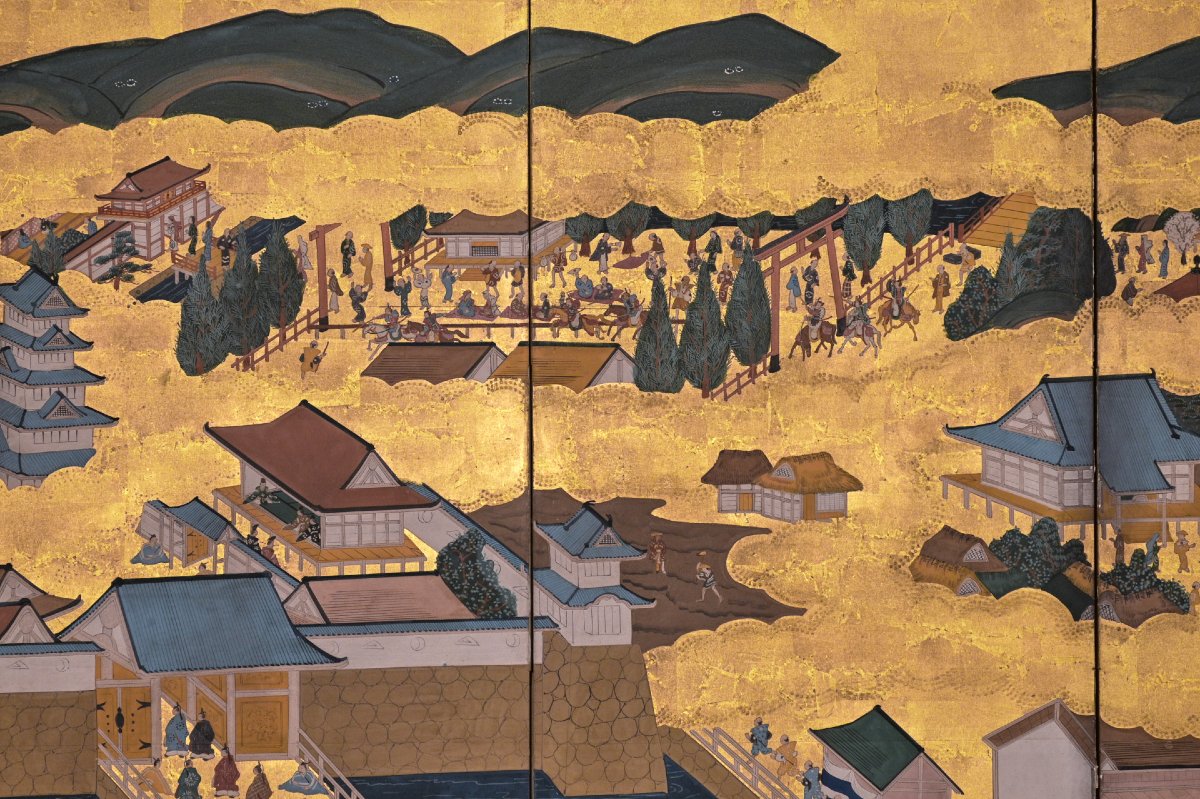
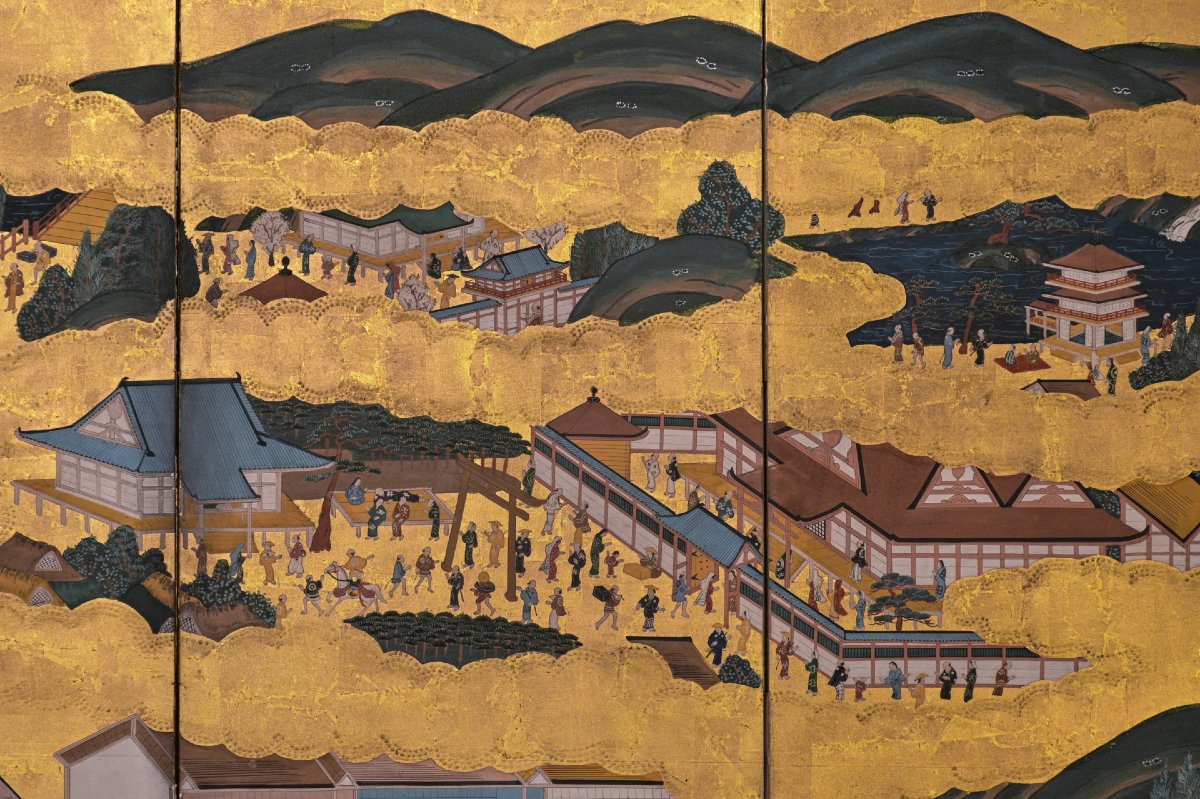
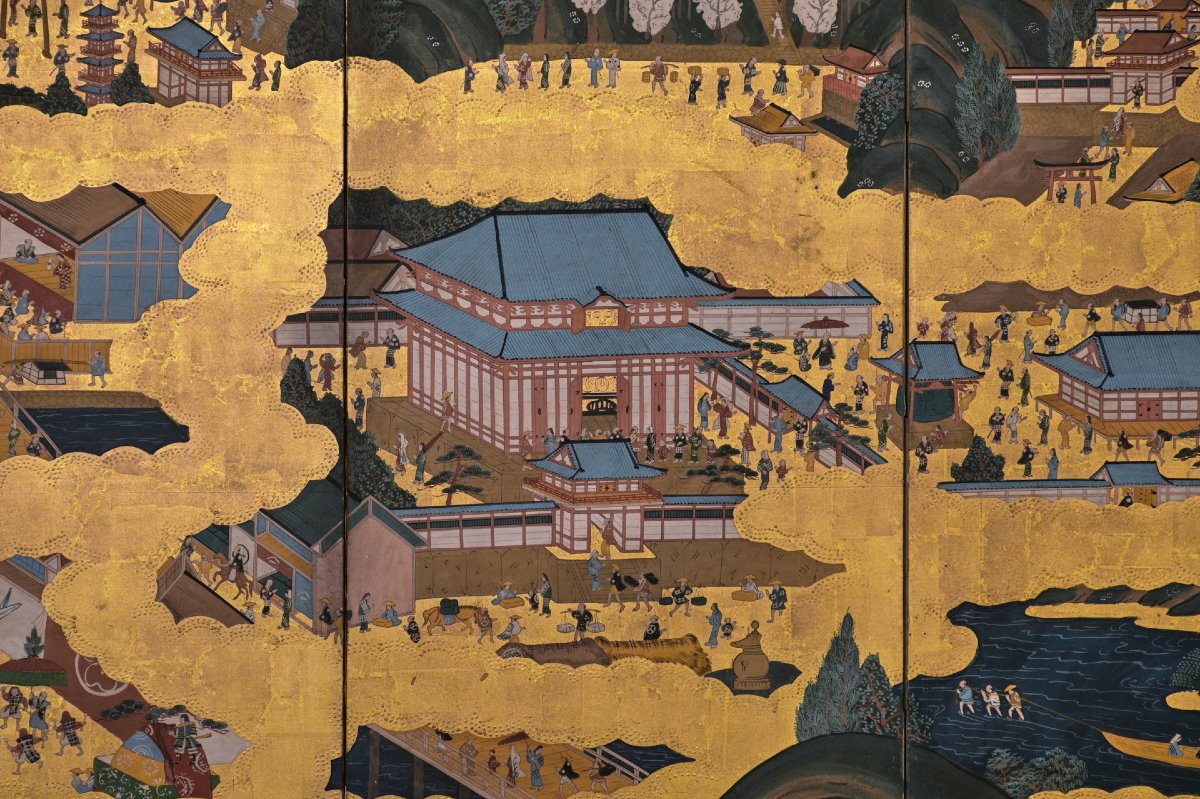
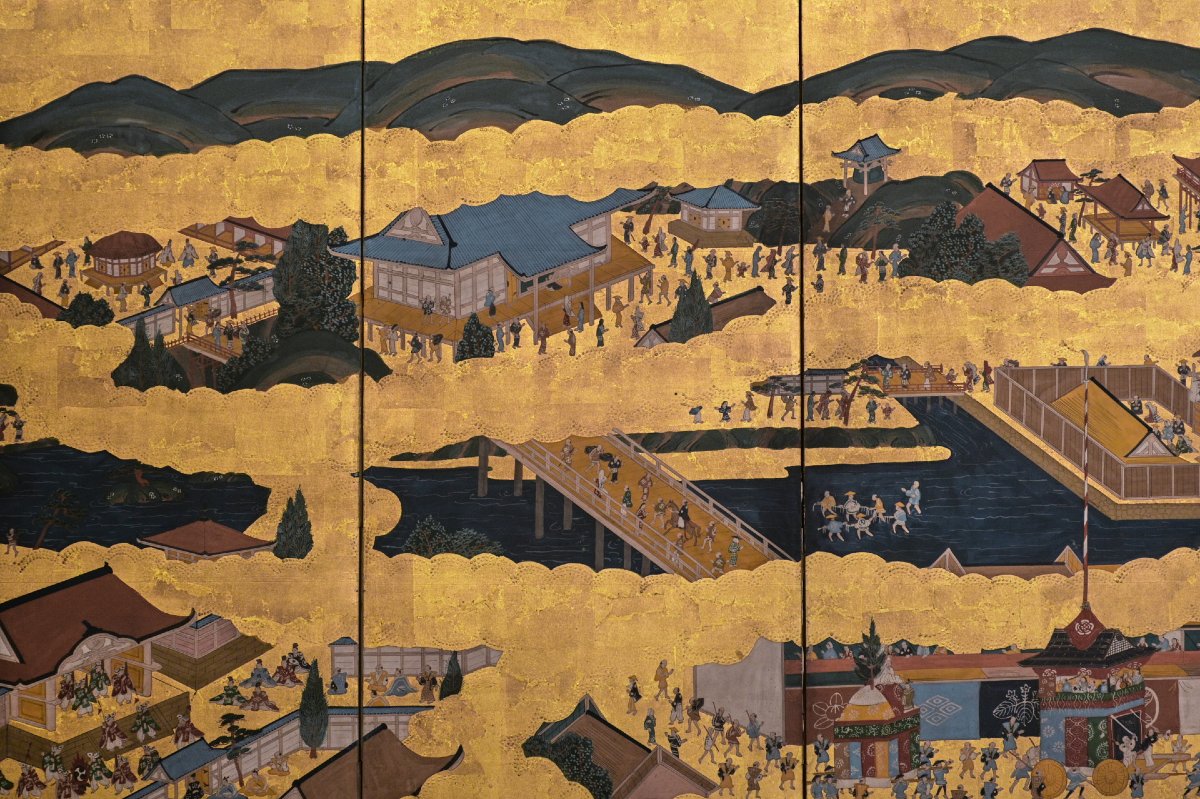
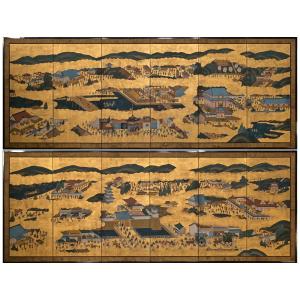
An important pair of six-panel folding screens painted on a gold-leaf ground, depicting views of Kyoto and its surroundings (Rakuchū Rakugai-zu), one of the most celebrated and representative subjects in Japanese painting.
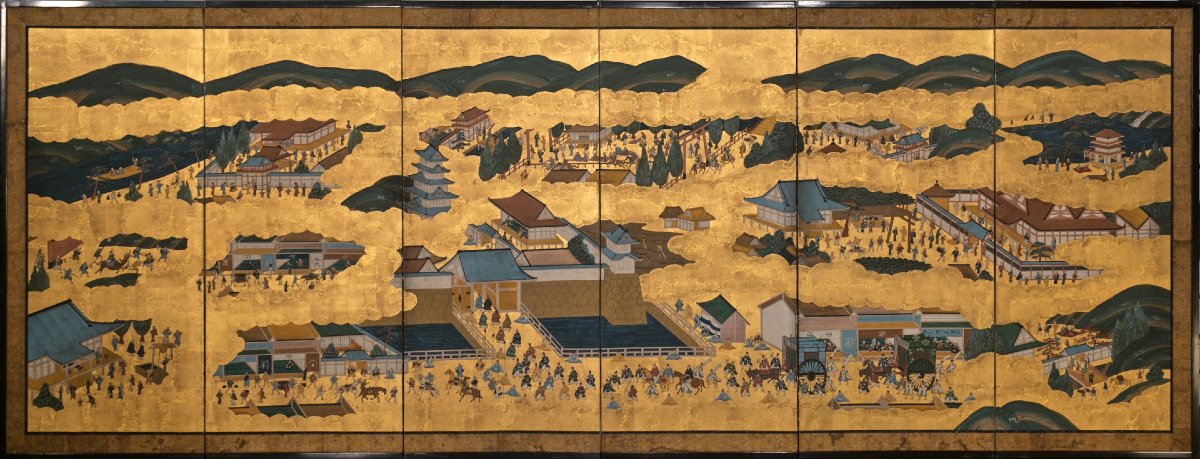
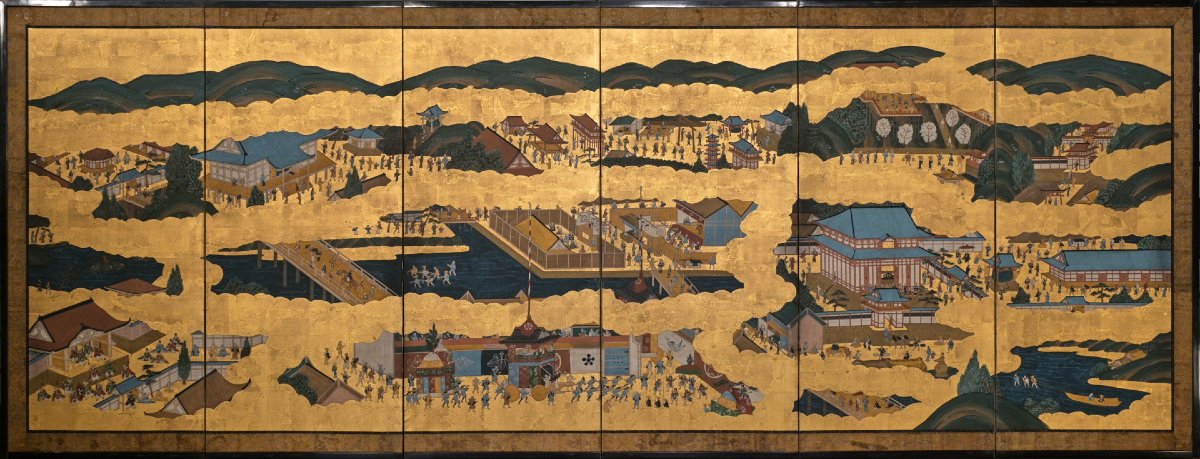
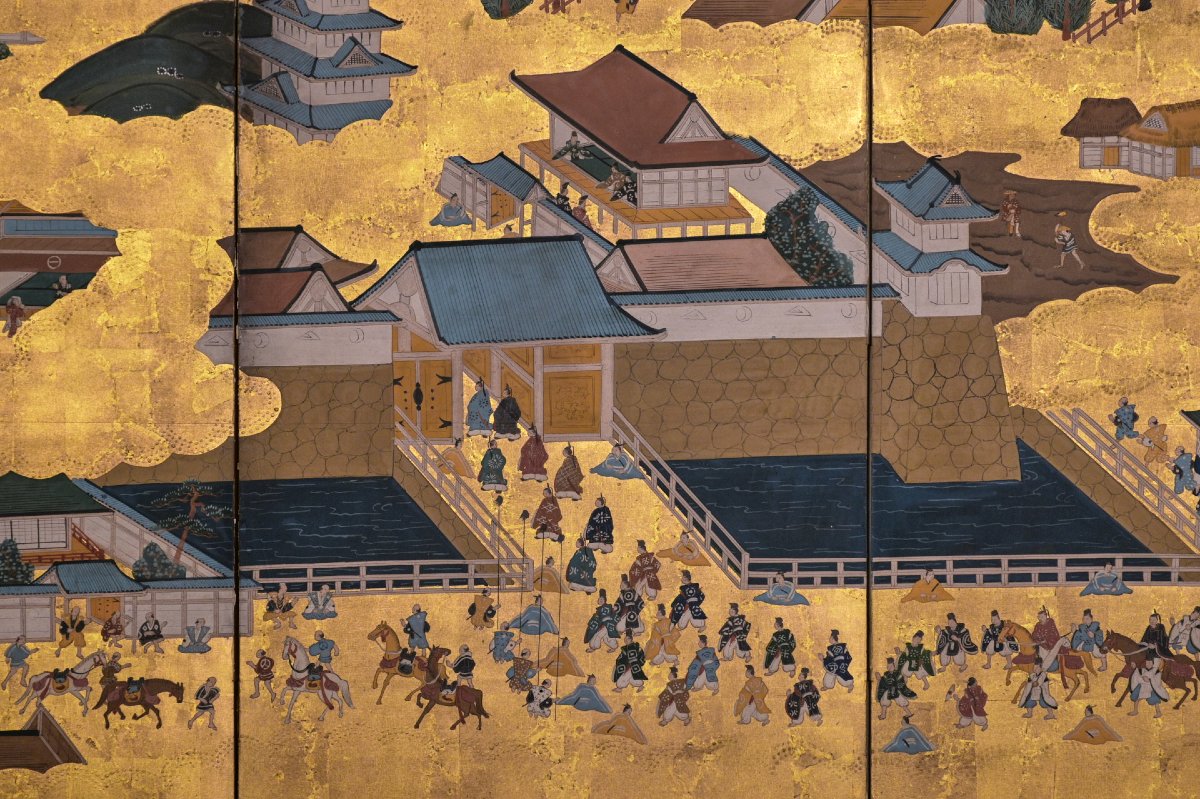
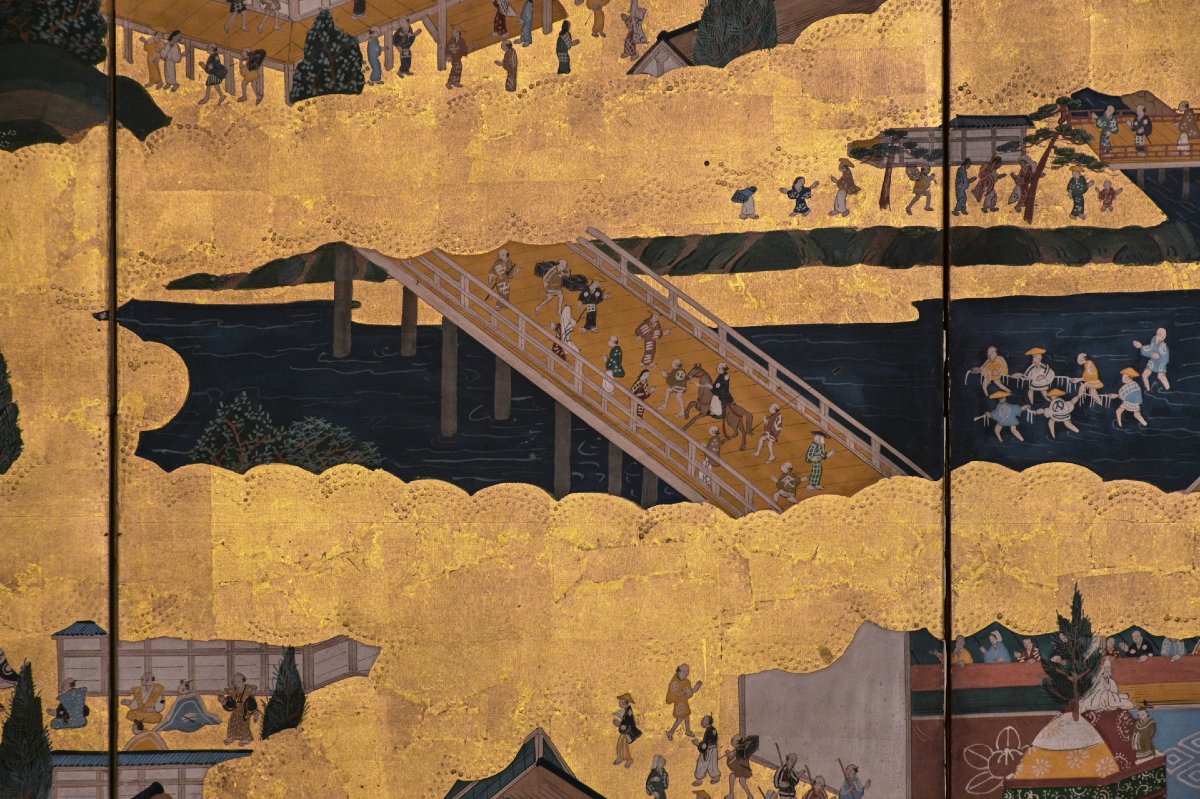
The composition offers an extensive view of the imperial capital, combining monumental architecture, bridges, waterways, and lively districts populated by numerous figures engaged in everyday activities, processions, and public celebrations. The characteristic golden clouds structure the narrative, separating the different urban scenes while maintaining visual continuity and guiding the viewer’s eye through the city.
In the lower section of the upper screen, a lively procession unfolds around a large yamaboko, the monumental ceremonial float associated with the Gion Matsuri, Kyoto’s most important festival. Musicians, bearers, merchants, pilgrims, and numerous spectators gather around it, conveying the festive atmosphere that animated the streets of the capital.
In the lower screen, Nijō Castle, important religious complexes, and numerous temples and shrines can be recognized. The main streets are crossed by a long procession of dignitaries, horsemen, palanquins, and ceremonial carriages, associated with the celebrated visit of Emperor Go-Mizunoo to Nijō Castle in 1626, one of the most solemn events of the early Edo period.
Period: Edo, mid-18th century.
Dimensions: 107 x 278 cm each.
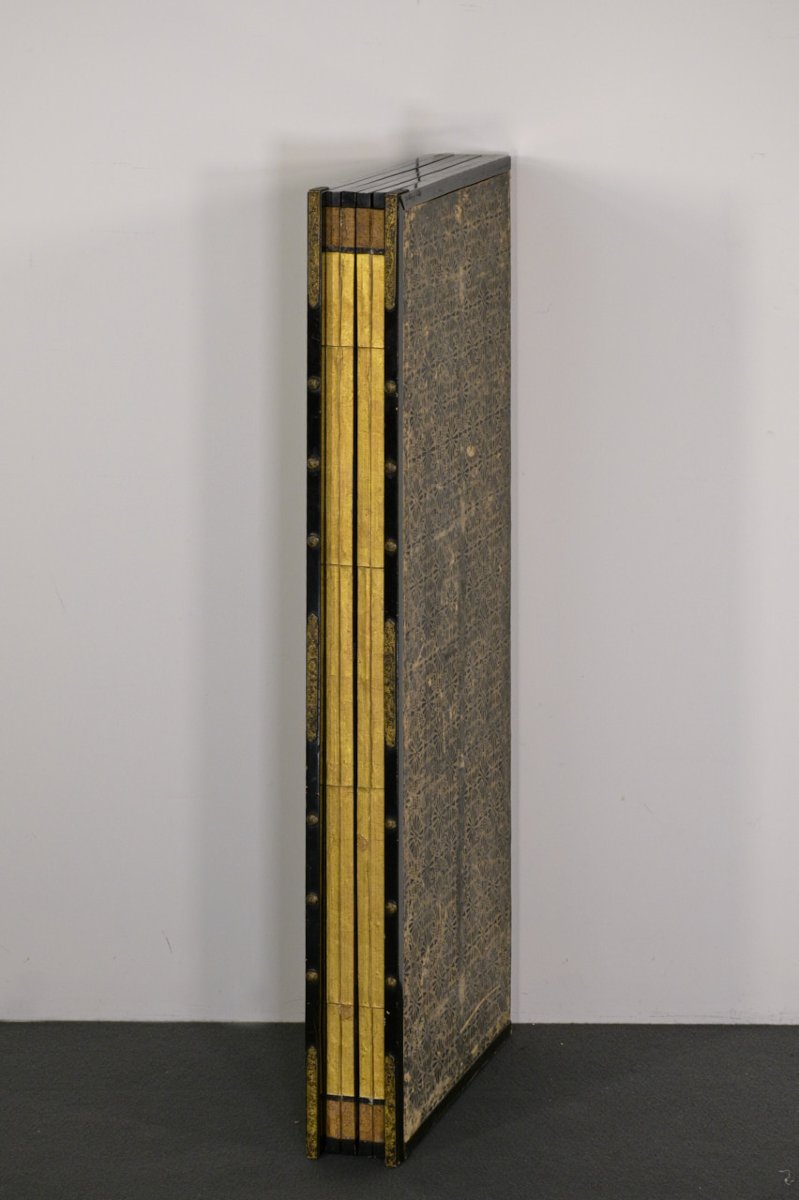
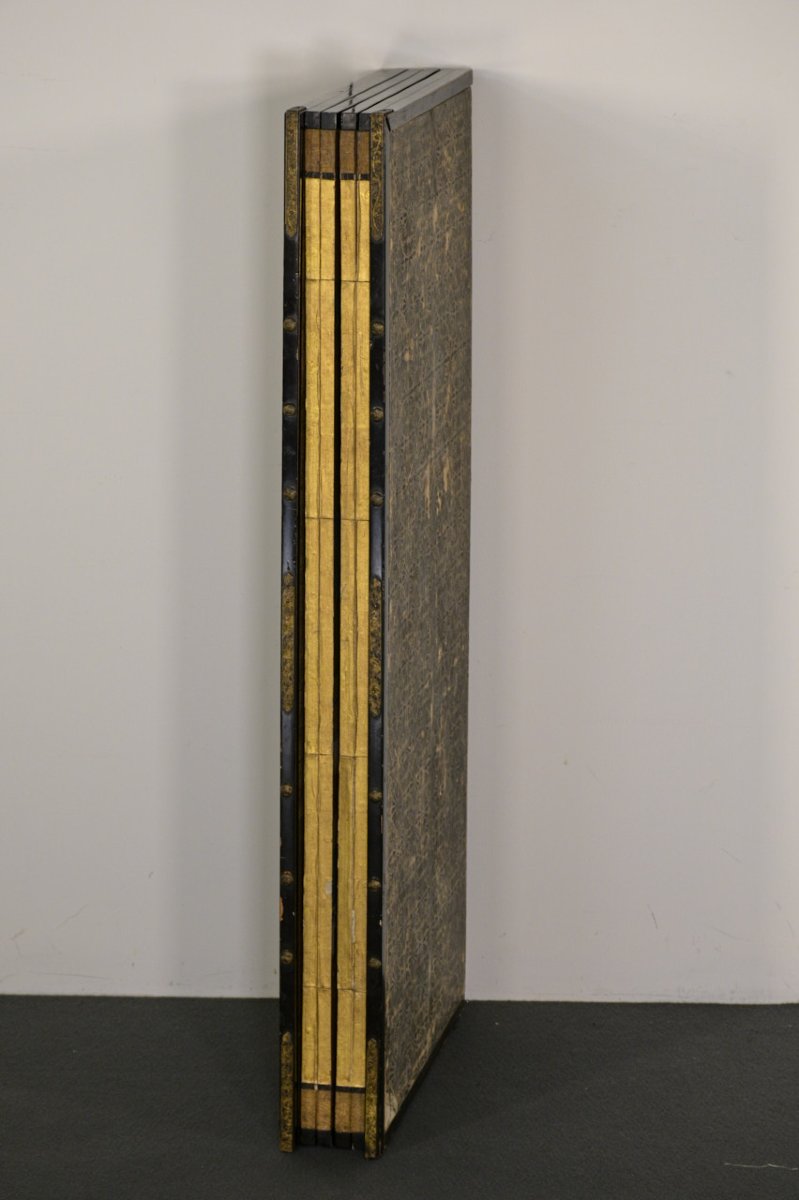
Condition: The folding screens are in good condition. Minor wear to the silk and lacquer frames.
Period: 18th century
Style: Asian art
Condition: Good condition
Material: Paper
Width: 278 cm
Height: 107 cm
Reference (ID): 1809325
Availability: In stock