THIS OBJECT WAS SOLD
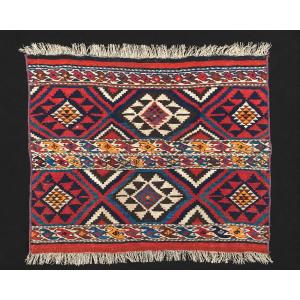
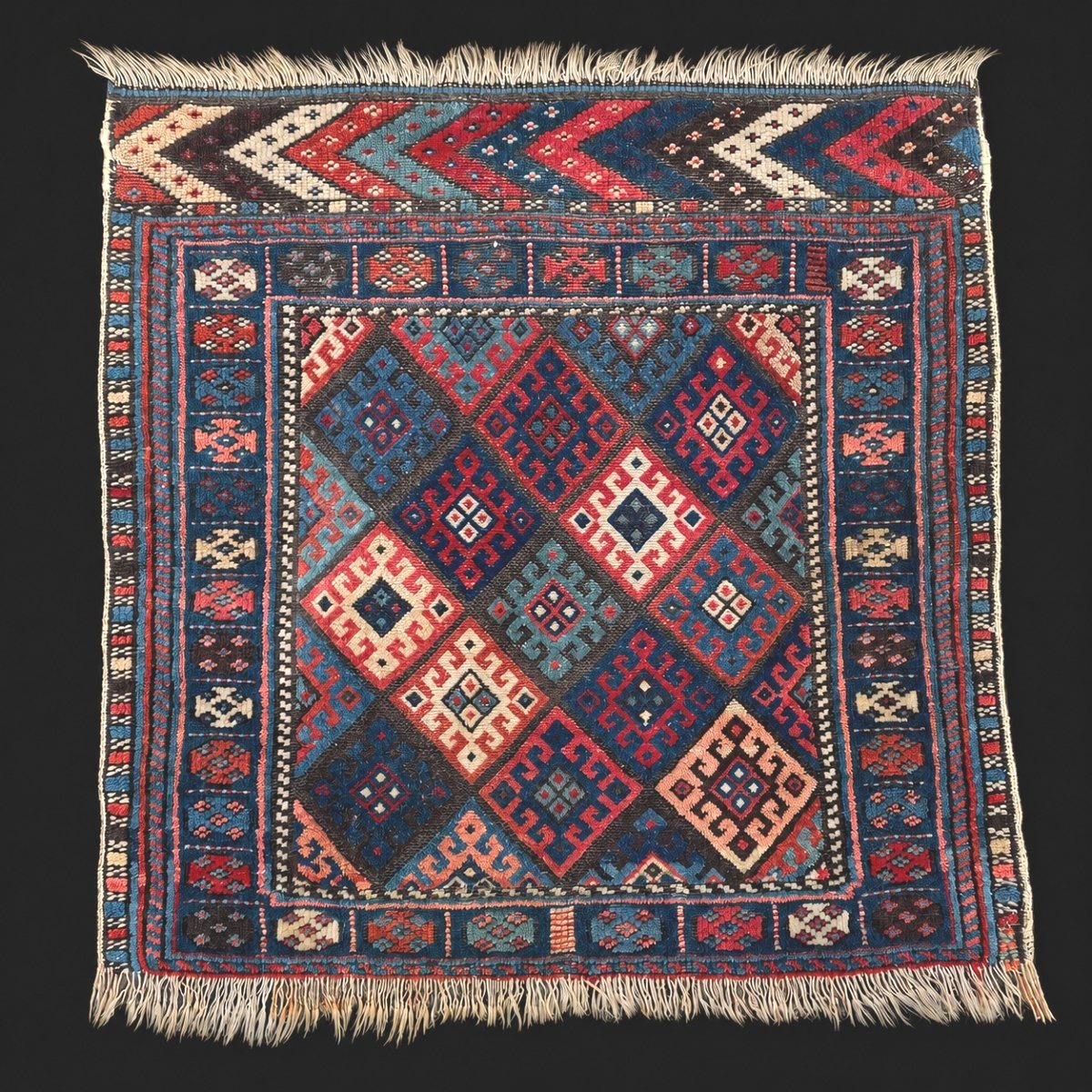
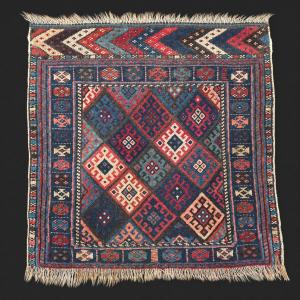
Khorjin / Bag Front. Qashqai. Persia. Circa 1900. 62 X 62 Cm


Small in size, but certainly not in presence.
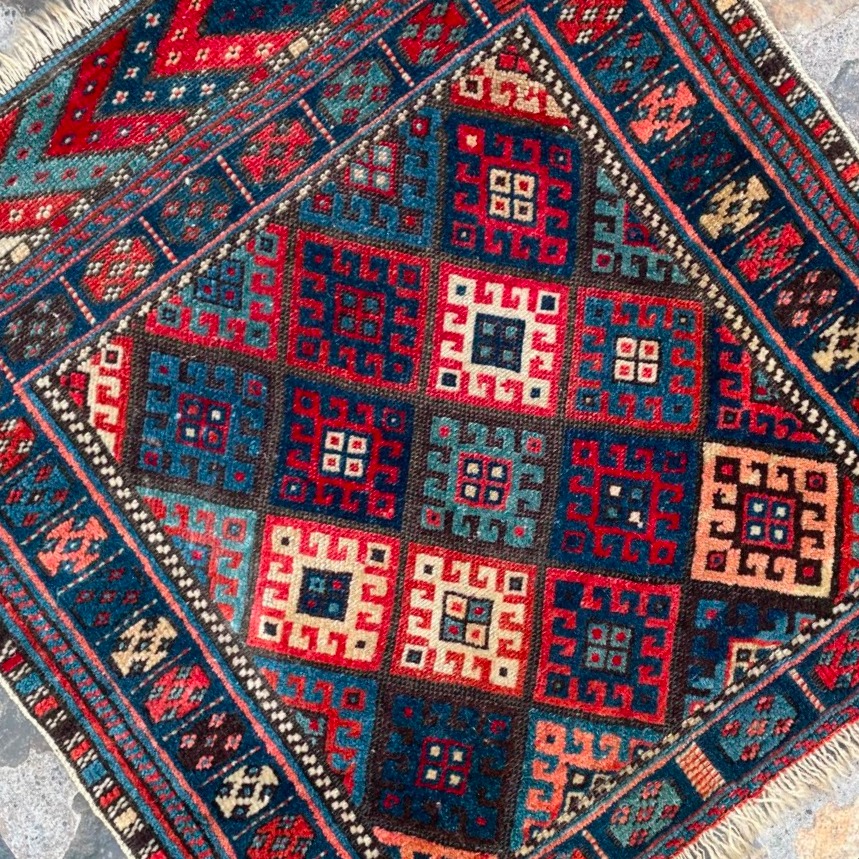
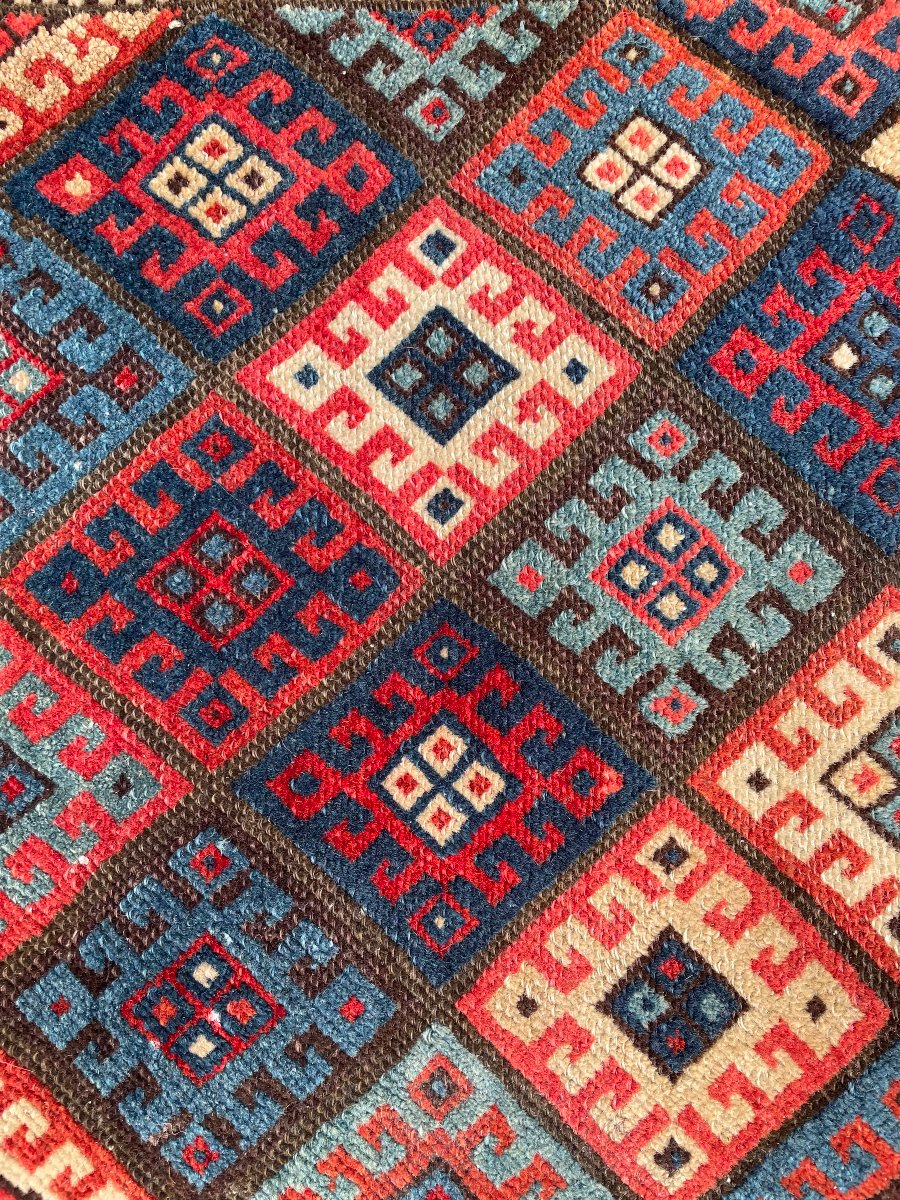
This Qashqai khorjin panel possesses the remarkable quality found in the finest nomadic weavings: it packs a profusion of colors, patterns, and details into a small space without ever losing its balance.
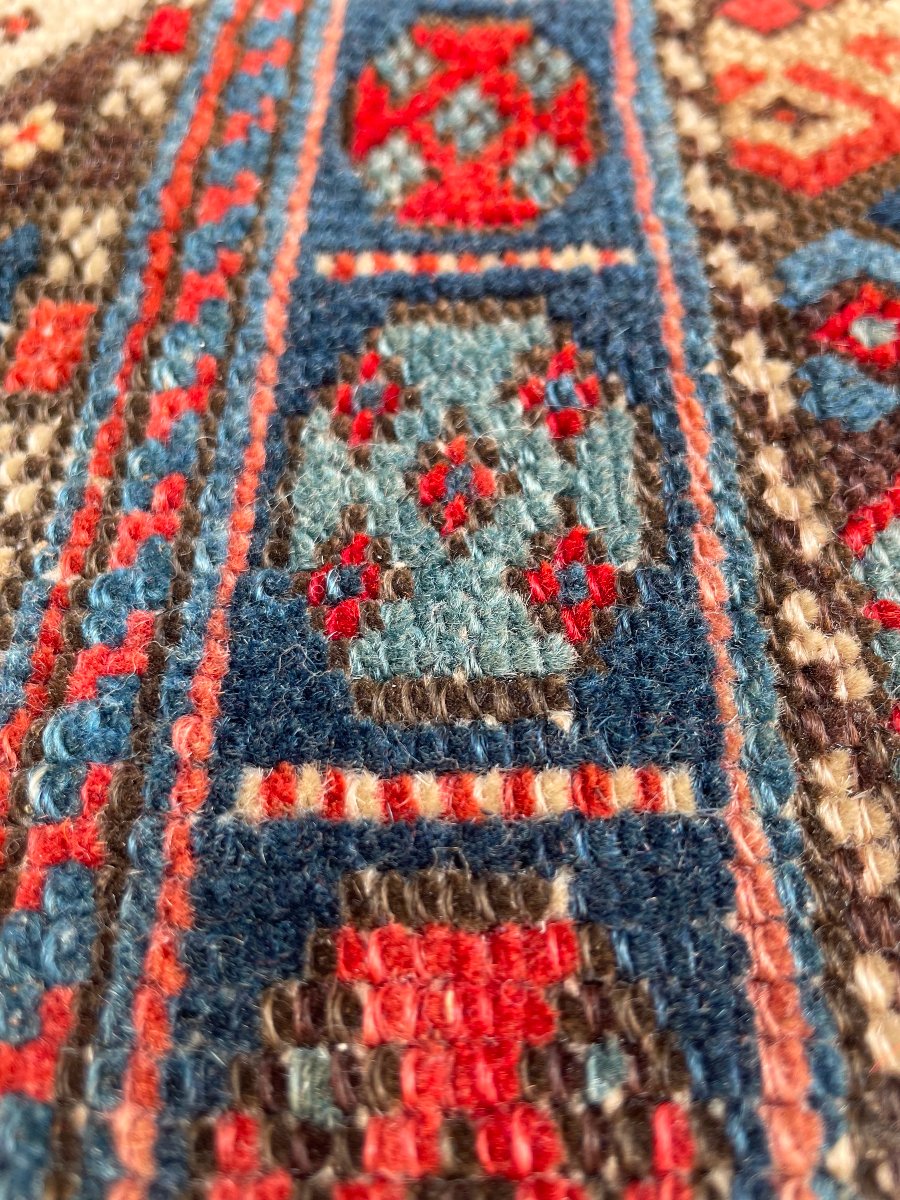
Originally from Persia, woven and then knotted wool-on-wool, this piece once formed the front panel of a khorjin, a double-sided bag used by nomadic peoples to carry their belongings.
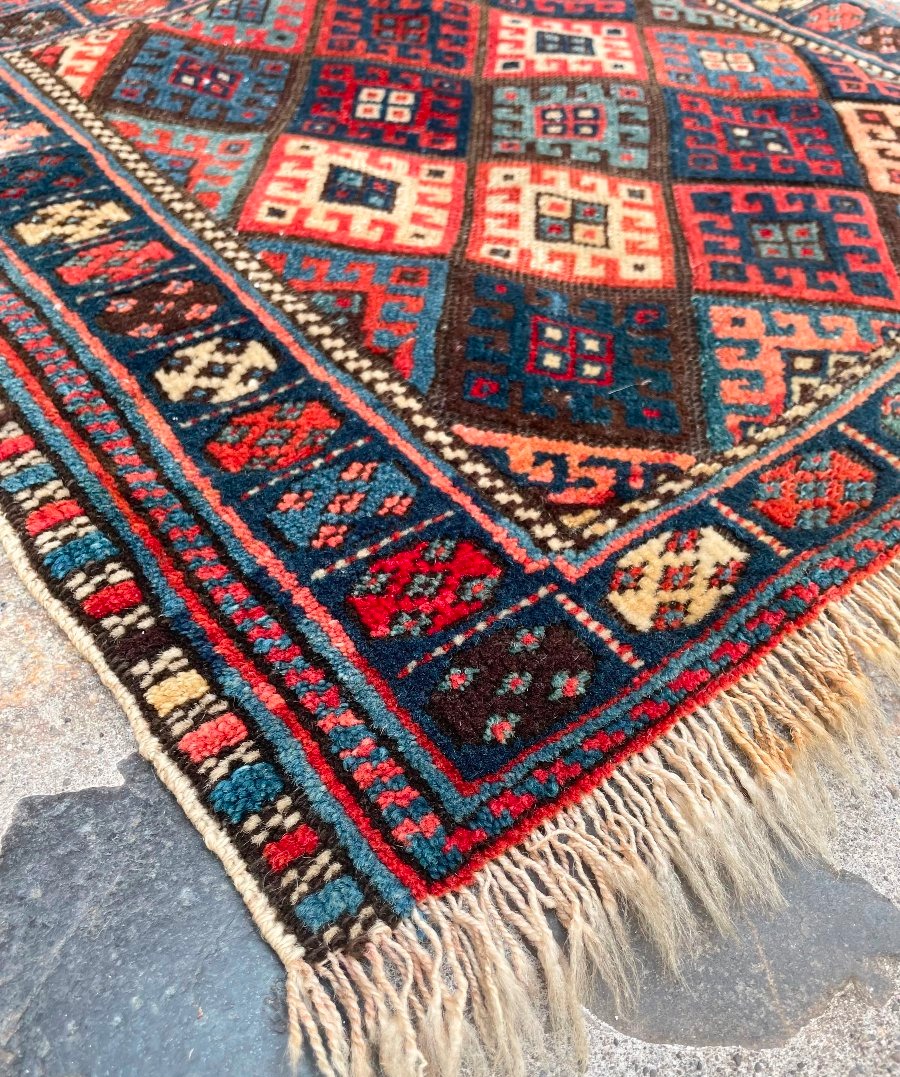
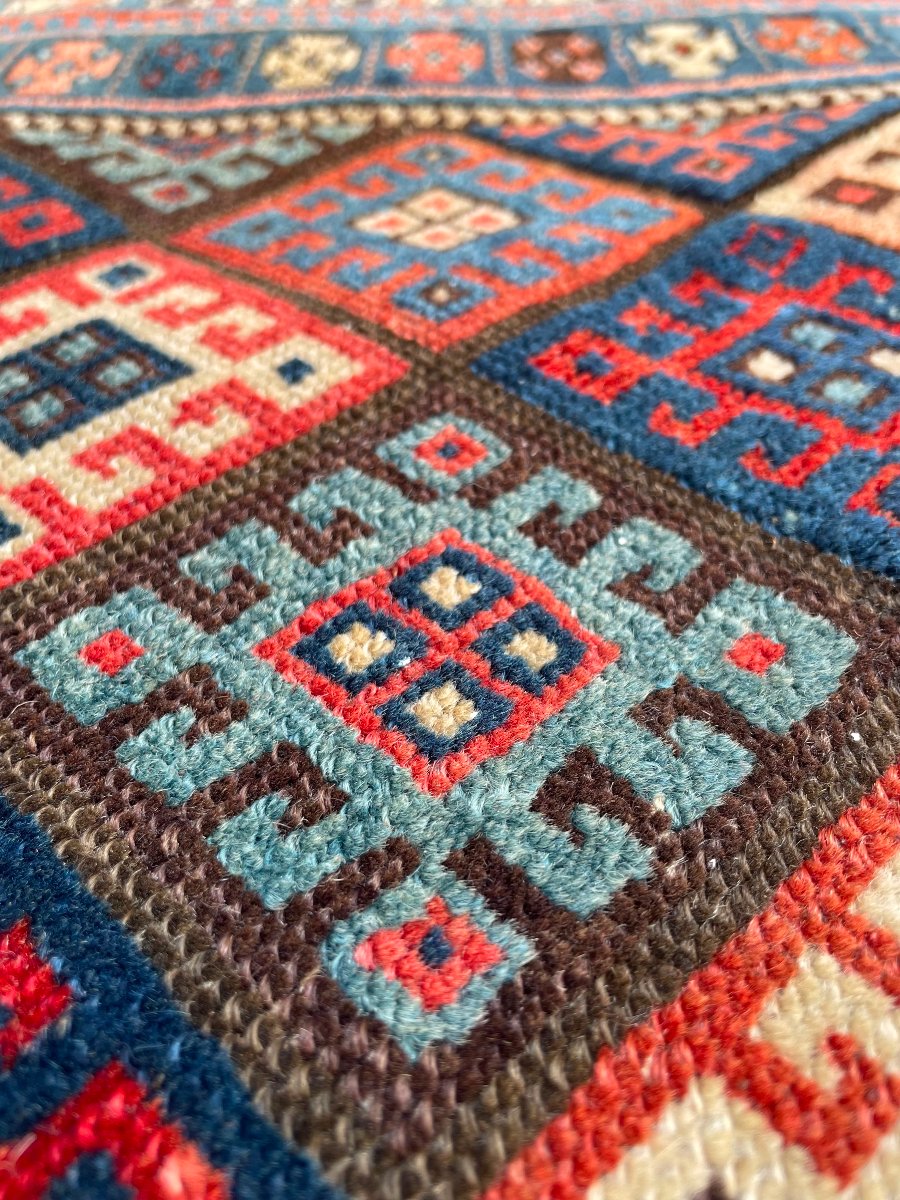
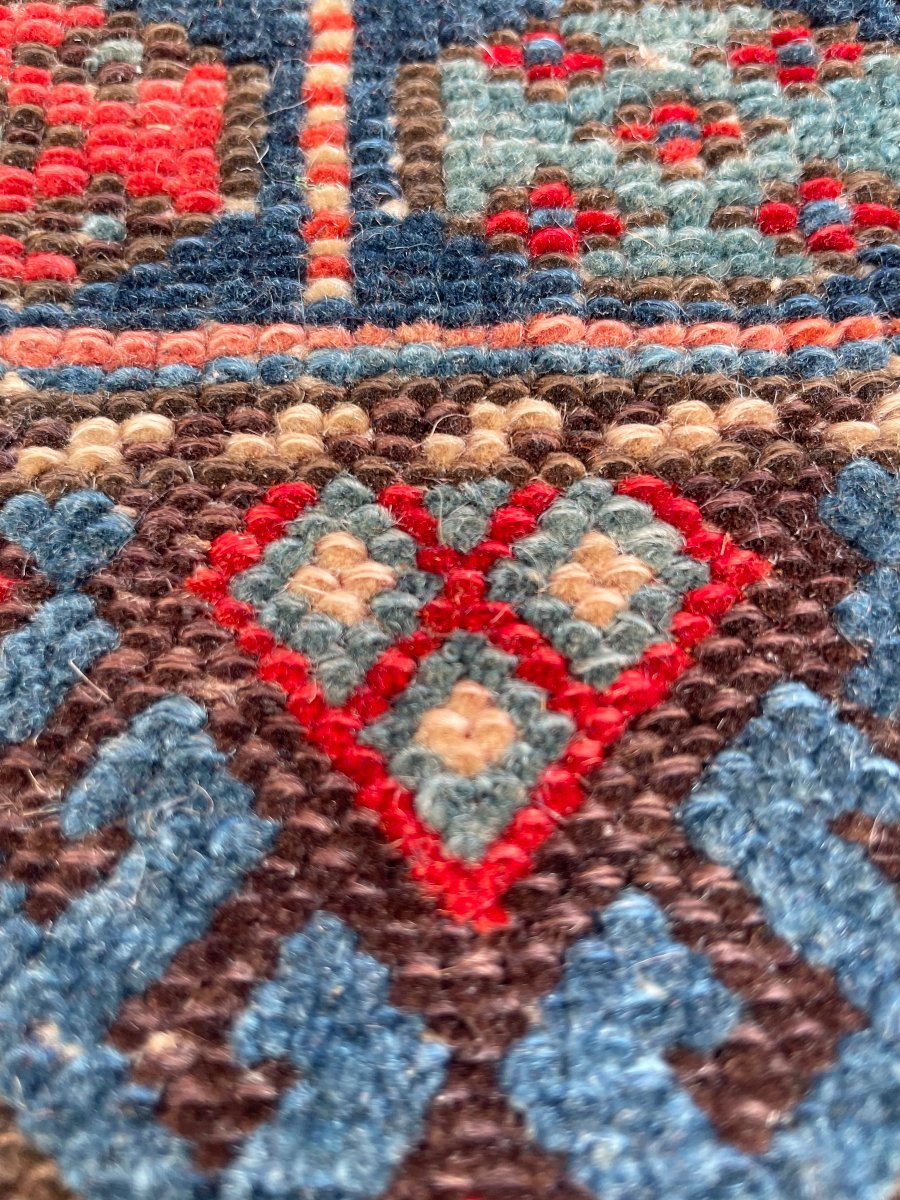
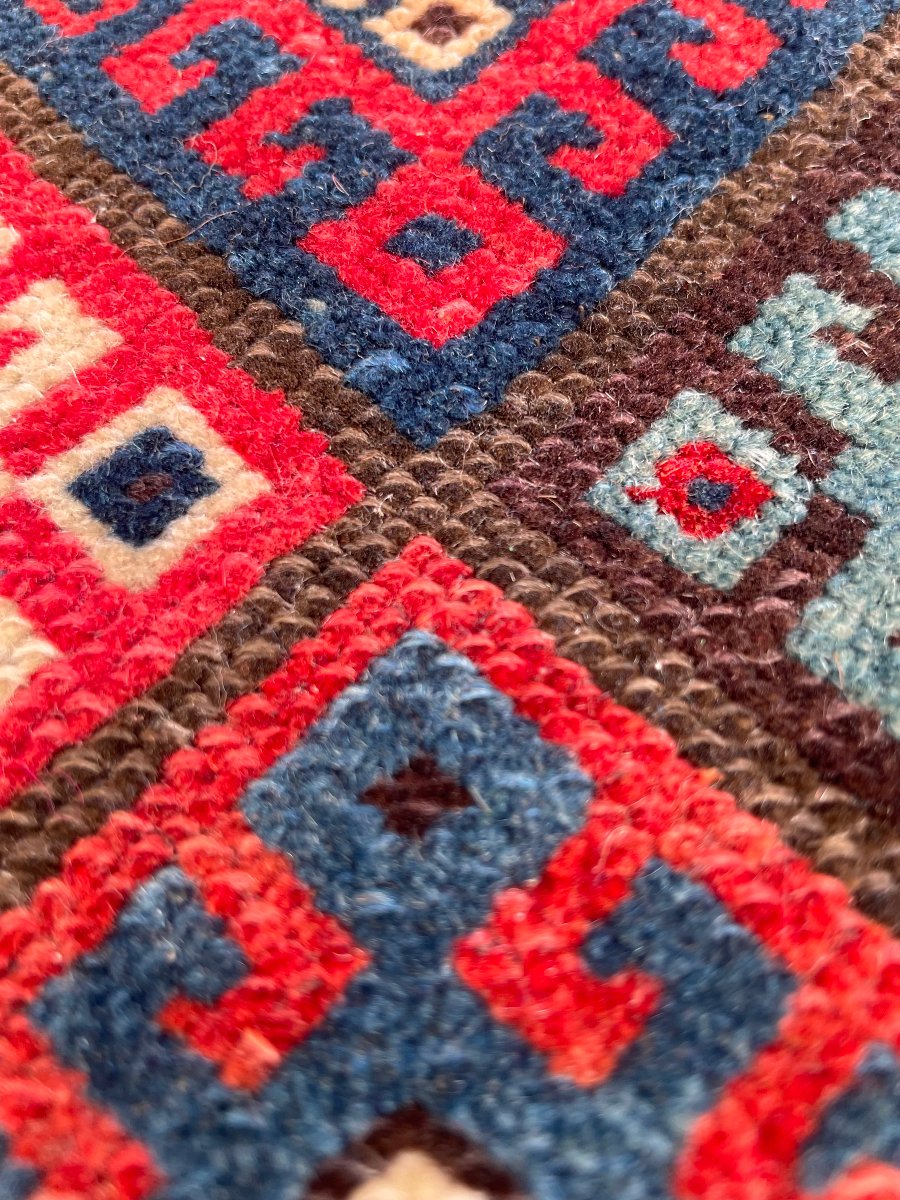
The dense, high-quality wool has a short pile that lends the design remarkable precision.
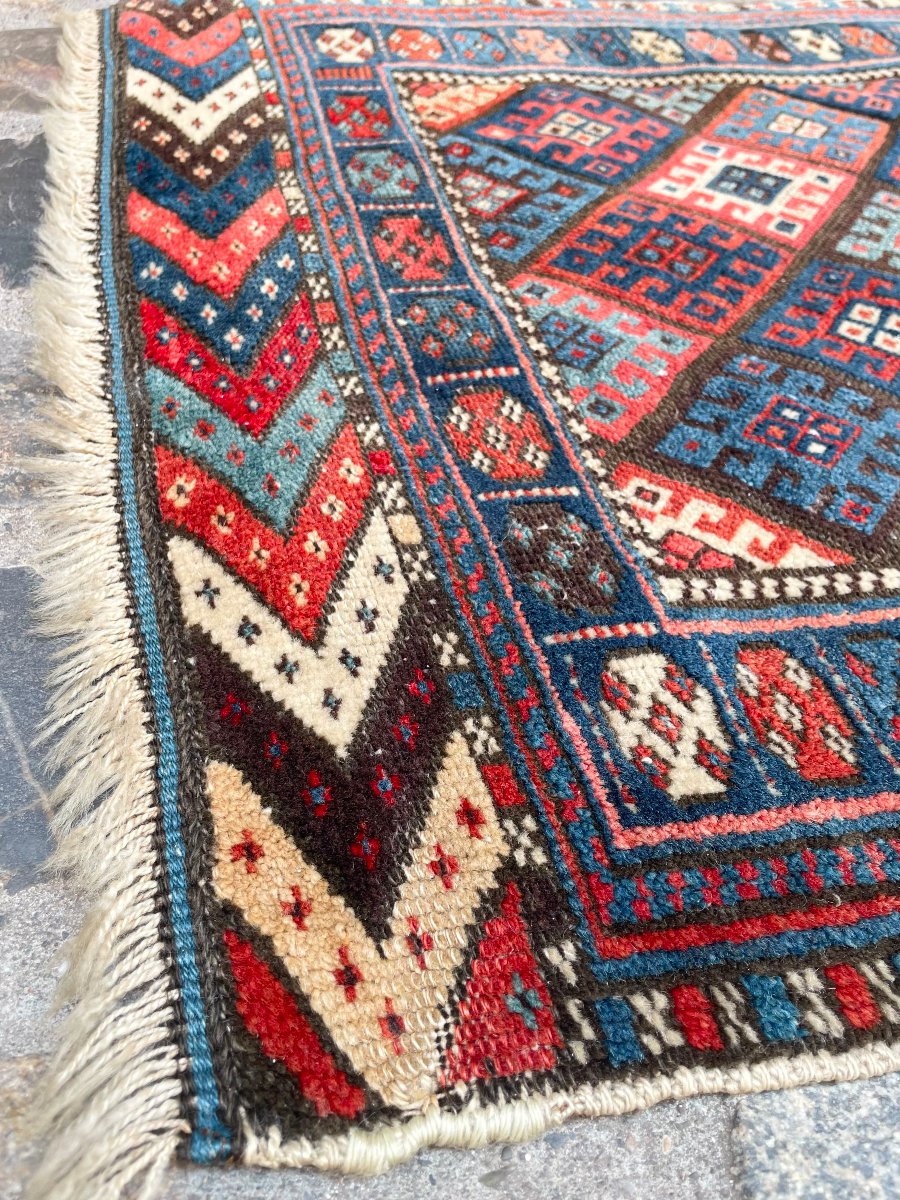
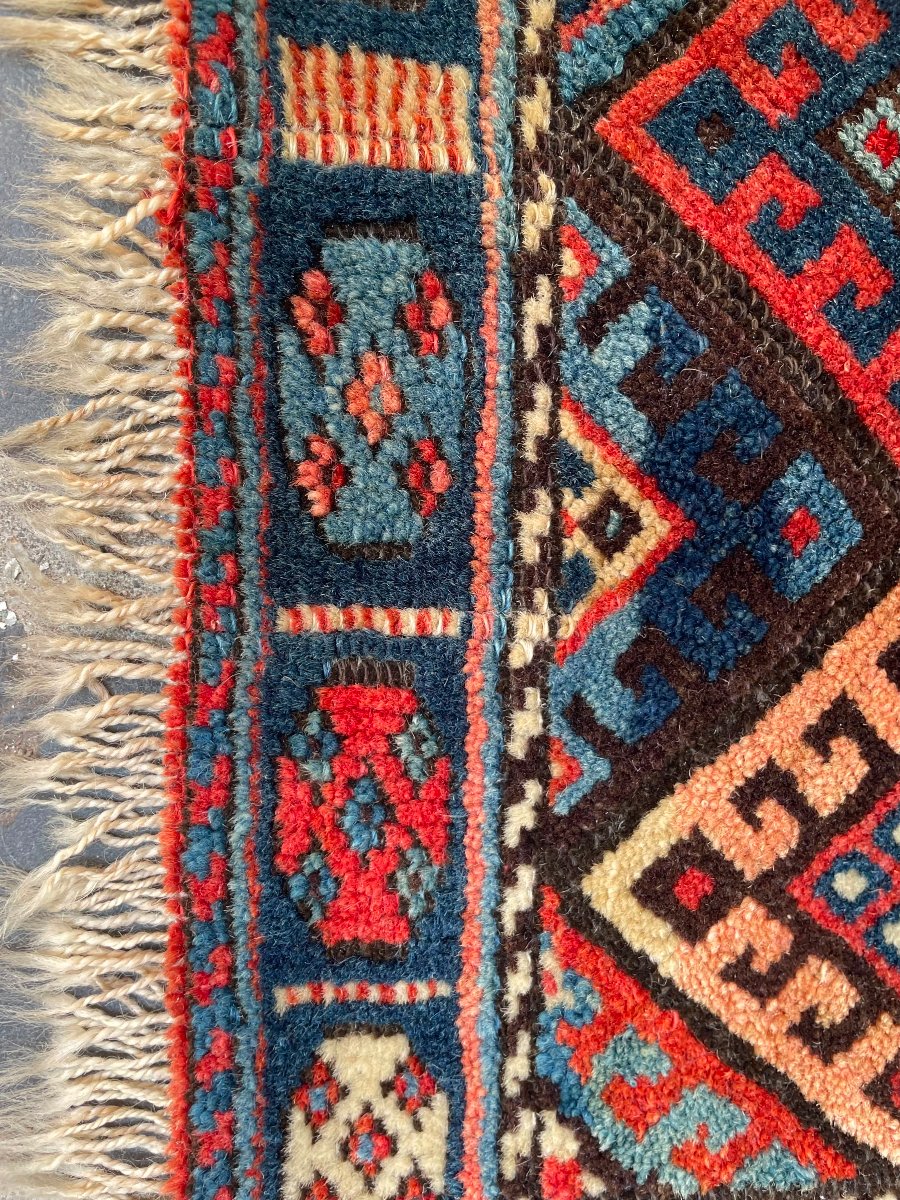
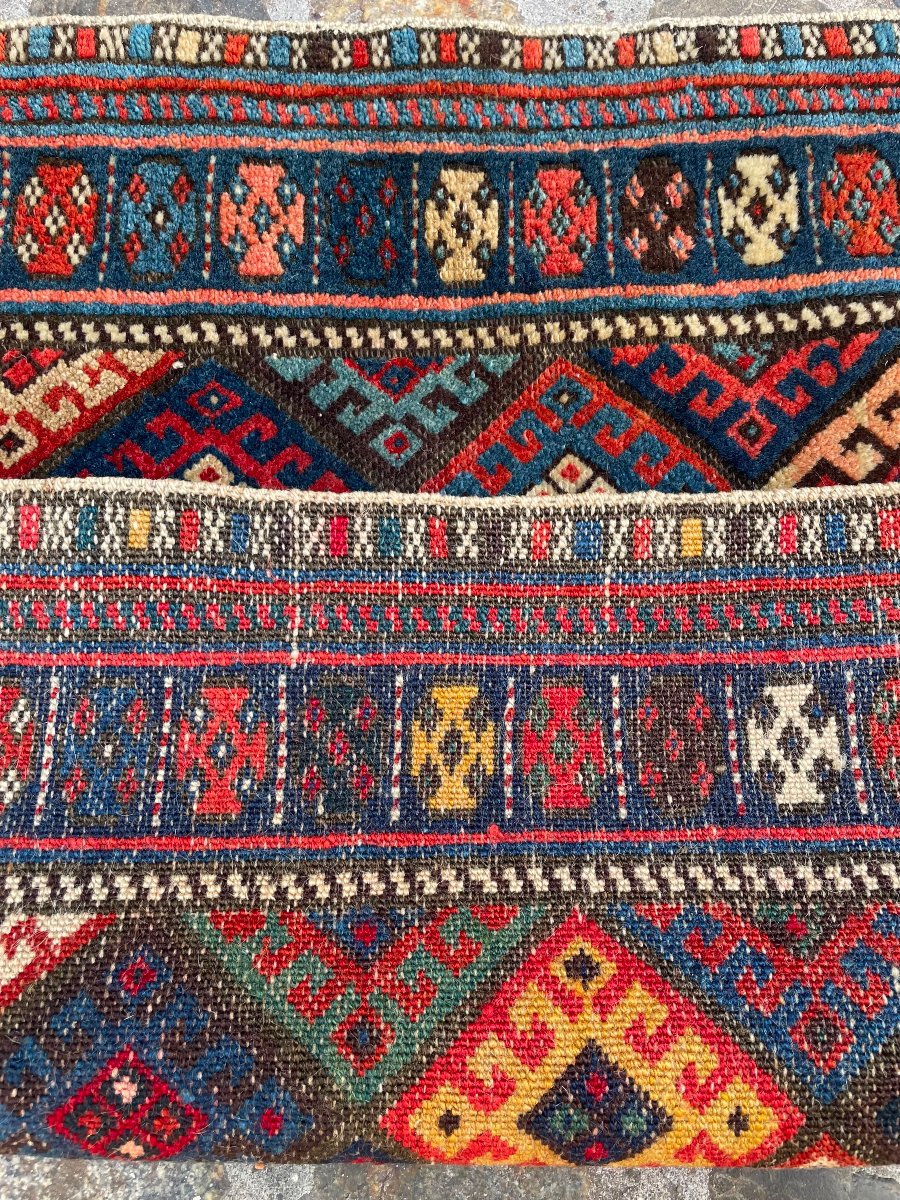
The composition is built around a network of interlocking hooked diamond shapes. Each has its own combination of patterns and colors, like so many small geometric paintings. Around the central field, several successive borders structure and frame this profusion.
But look especially at the upper section. A spectacular succession of large, directional chevrons—resembling arrows—creates a striking graphic contrast. This design vocabulary appears on other ancient Qashqai weavings, particularly in the borders and panels associated with the closure systems of saddlebags. More than just ornamentation, it is part of a tribal geometric language passed down from generation to generation by the weavers.
And then there are the colors. Indigo blue, midnight blue, slightly grayish turquoise blue, madder red, garnet red, coral, dusty rose, chocolate brown, nearly black brown, and natural ivory. Some are deep, others surprisingly luminous. Warm and cool tones alternate continuously, while ivory occasionally adds a touch of light. This diversity could have created confusion; instead, it produces exactly the opposite: a remarkable chromatic balance—vibrant, powerful, and perfectly harmonious.
A small piece of astonishing decorative richness, representative of the freedom of design and color that defines the charm of antique Qashqai nomadic weavings.
Origin: Qashqai – Persia
Technique: woven and knotted wool-on-wool
Plant-based dyes
Very early 20th century
Dimensions: 62 x 62 cm
Laurent
Beauty of Kilims
Explore similar pieces and discover your ideal find:
Rugs, Carpets