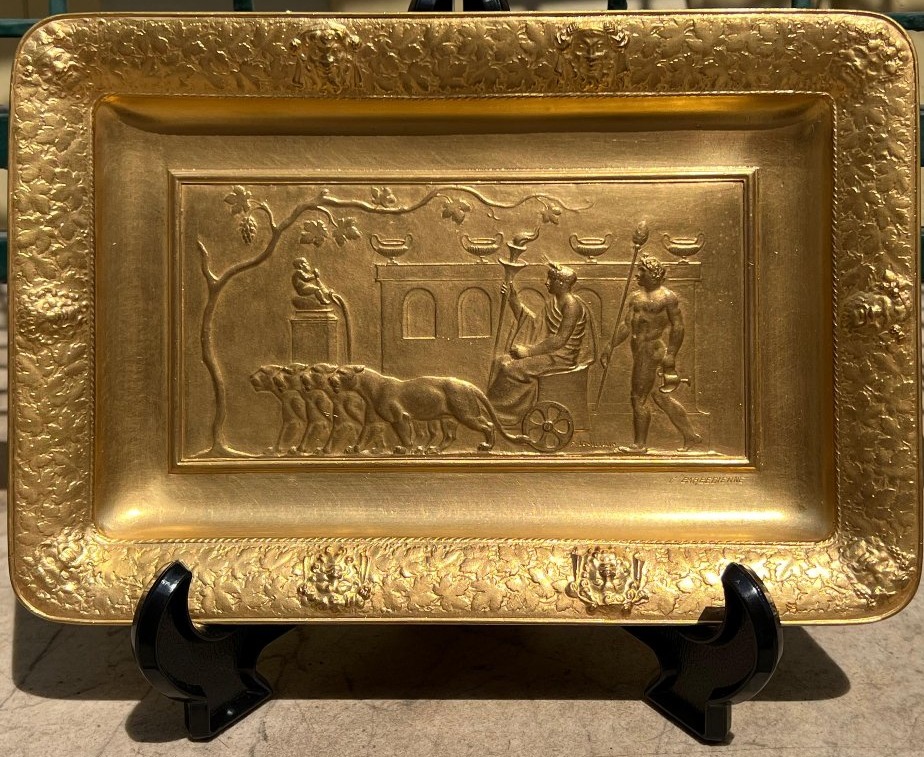


Ferdinand Levillain (1837–1905) Barbedienne Tray With Storage Compartments.
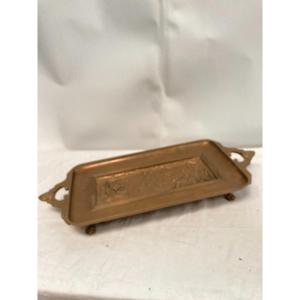
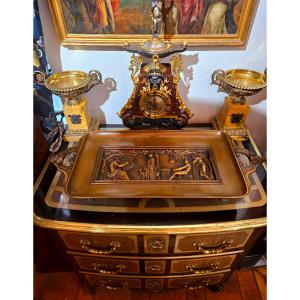
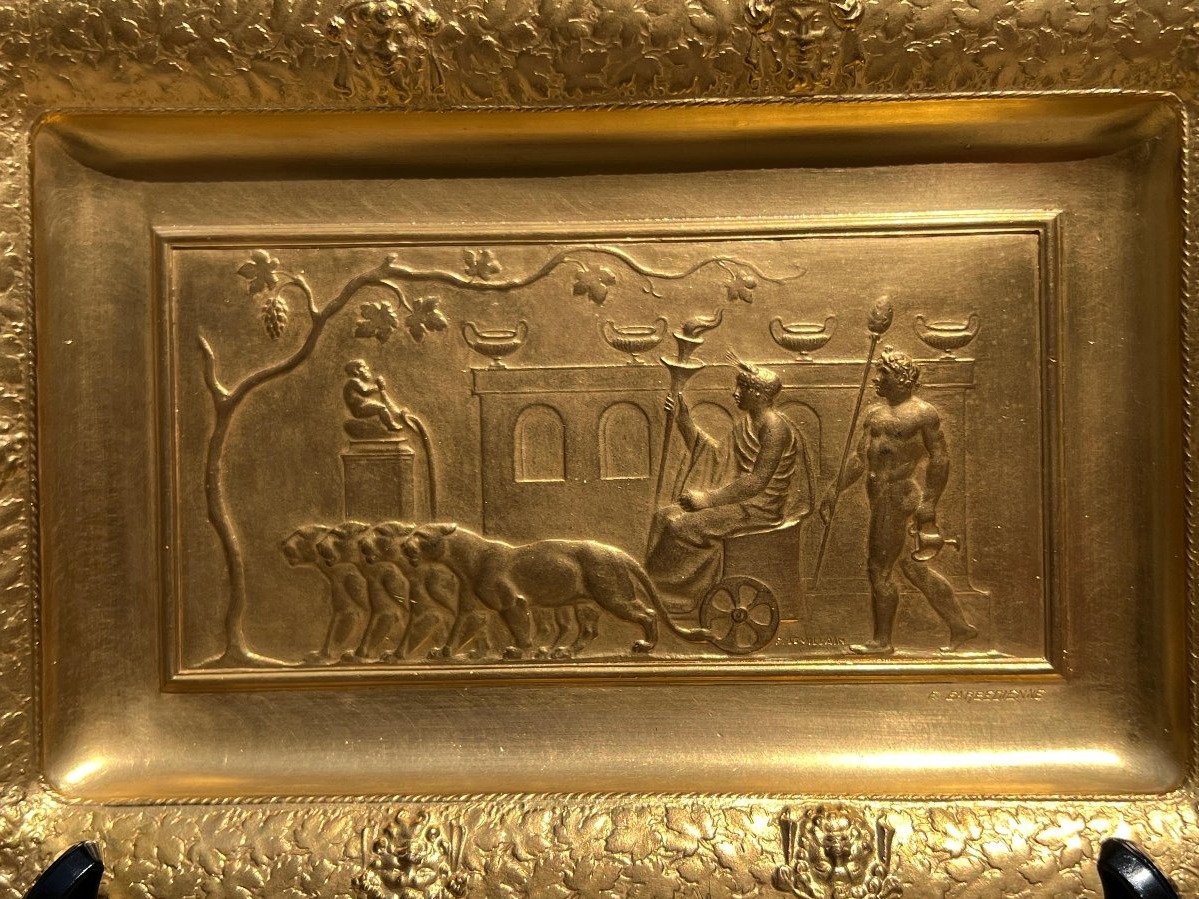
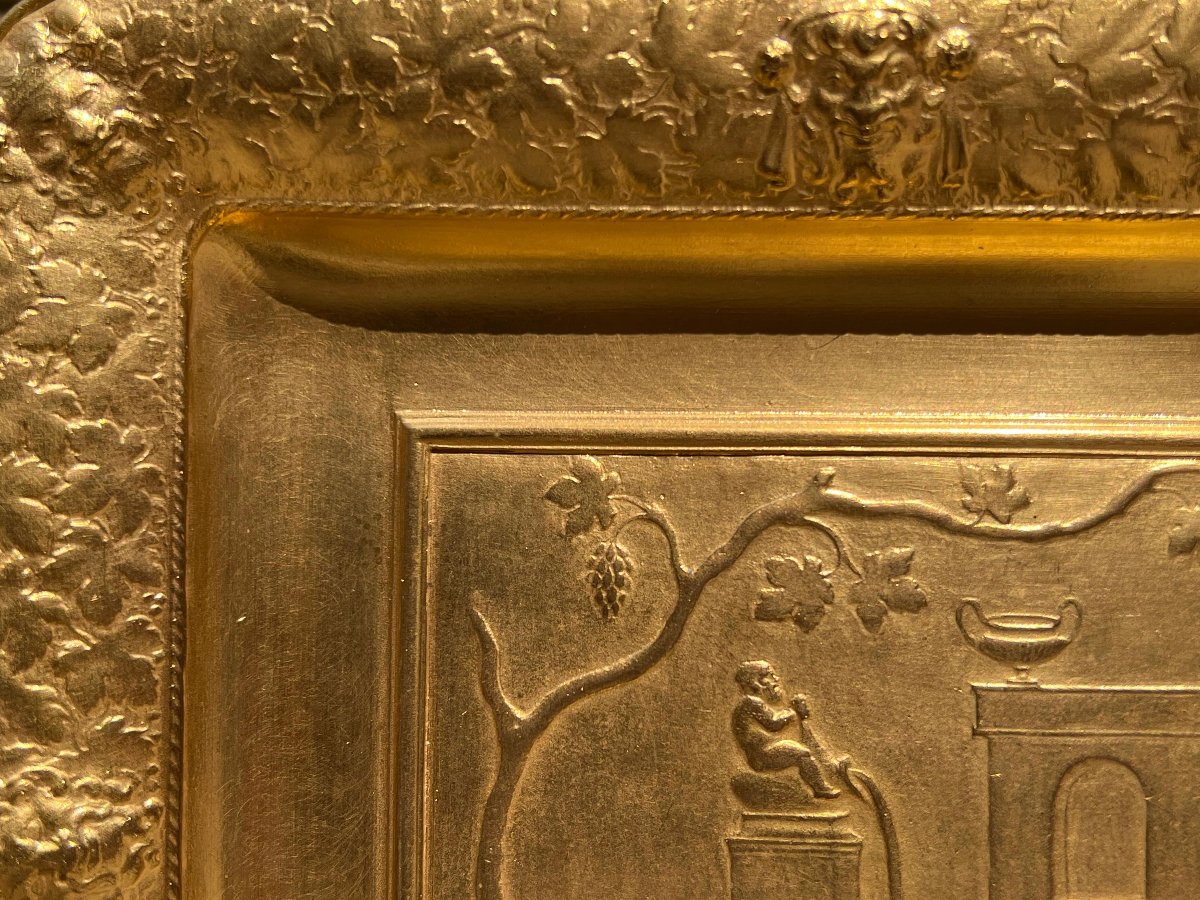
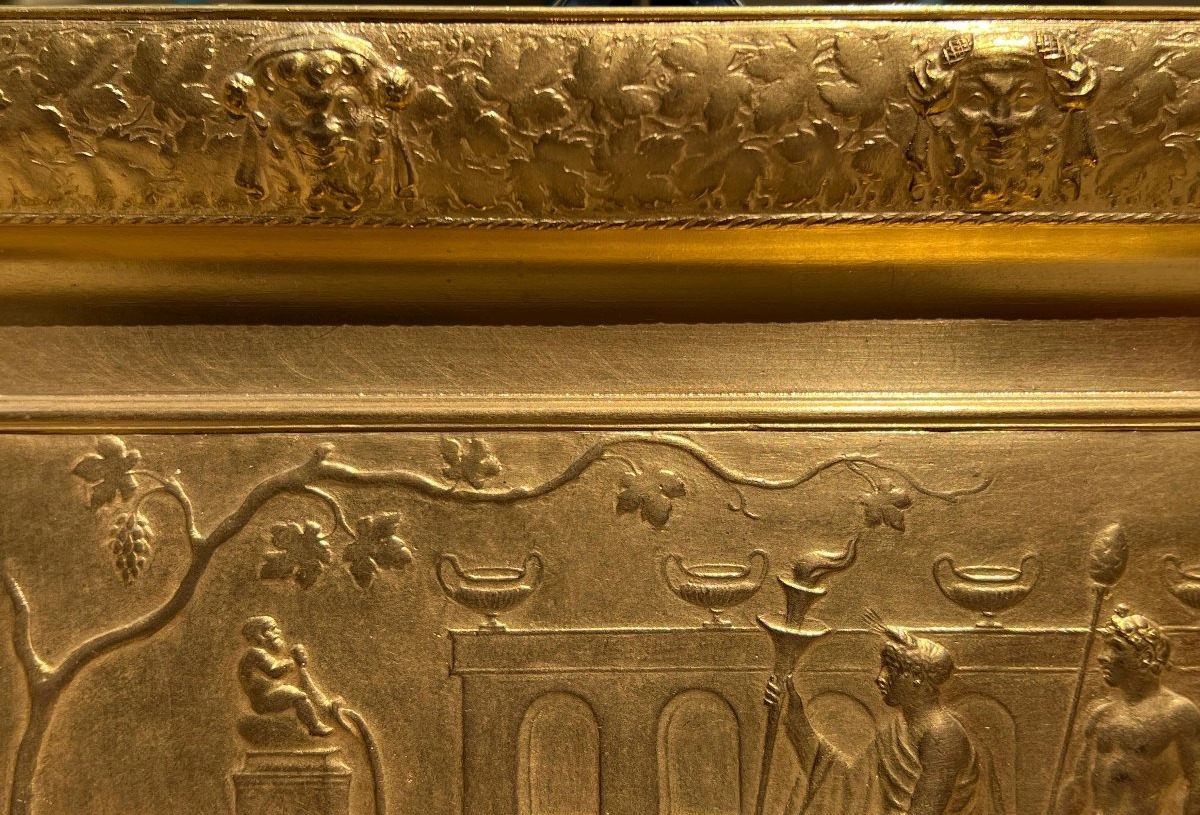
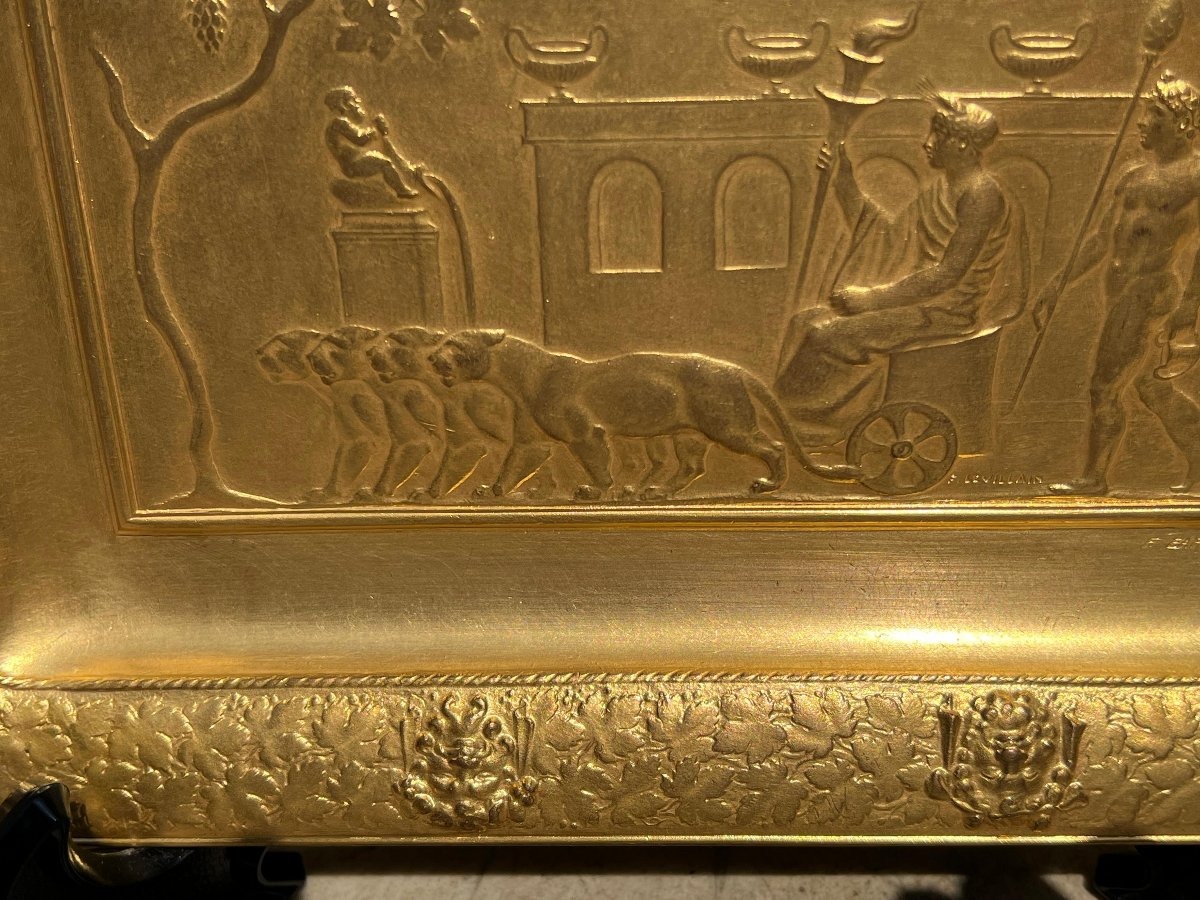
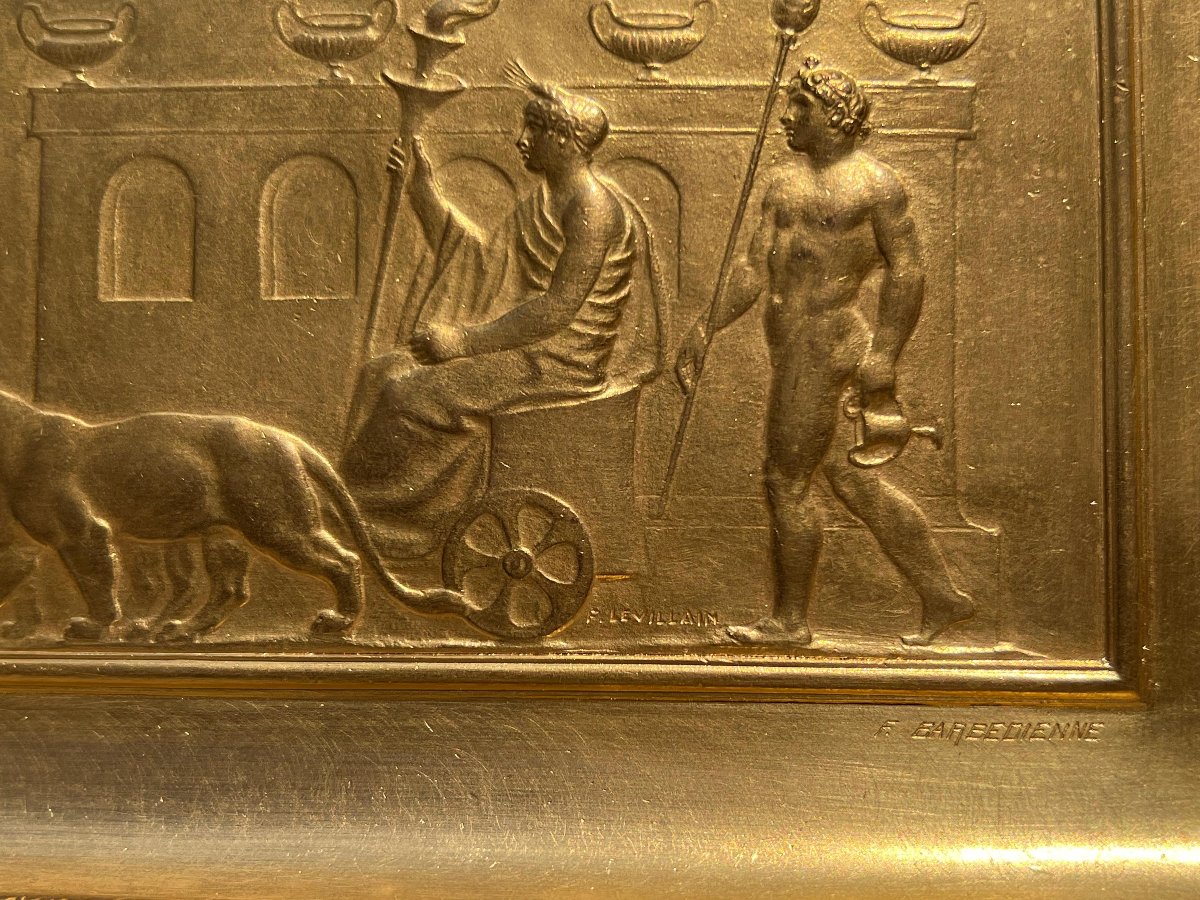
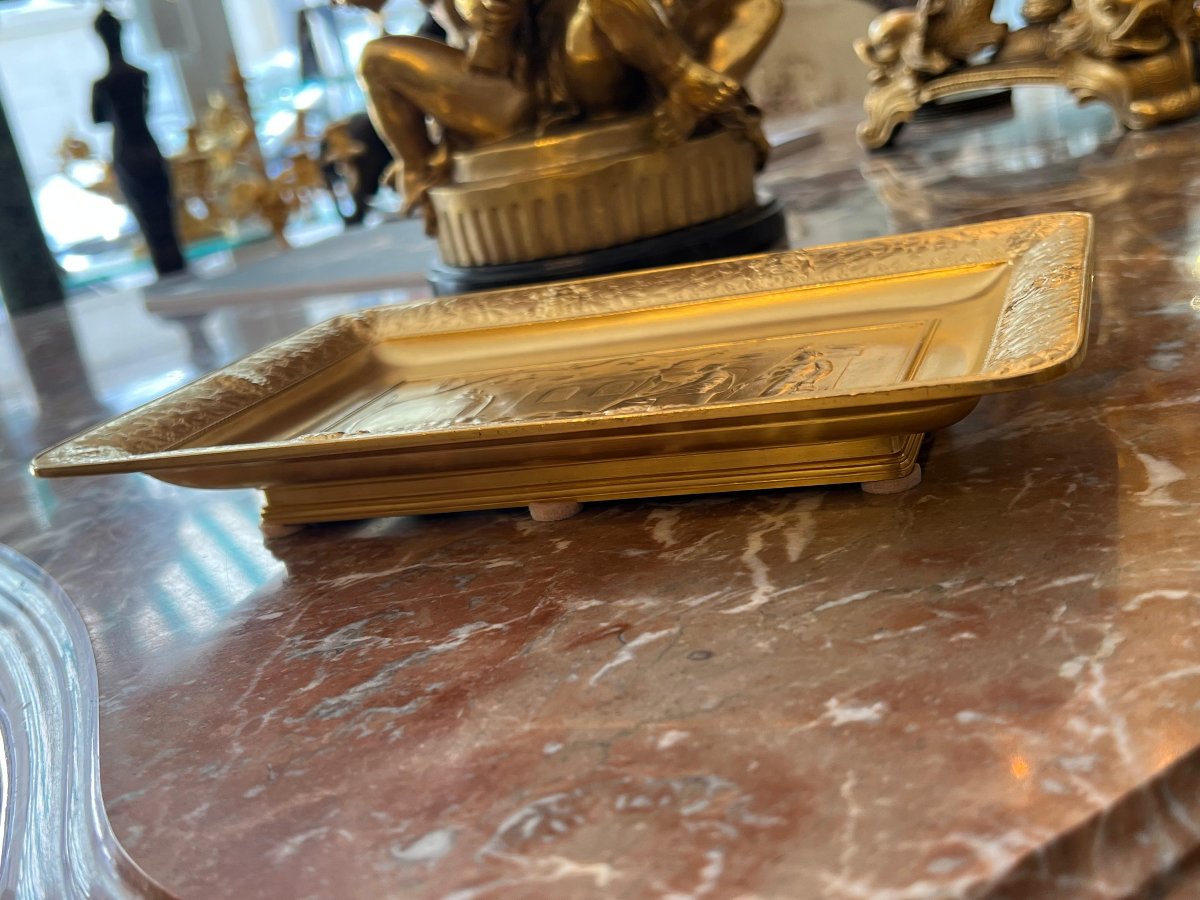
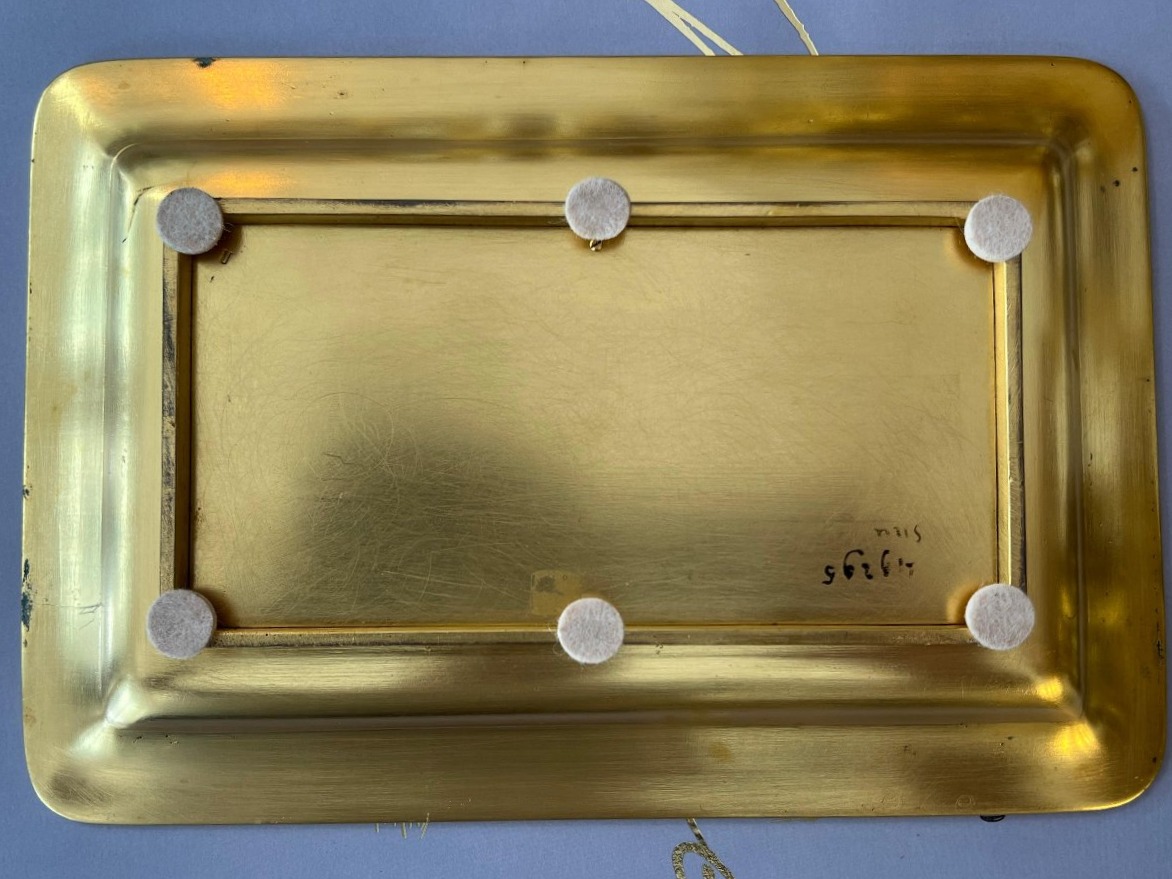
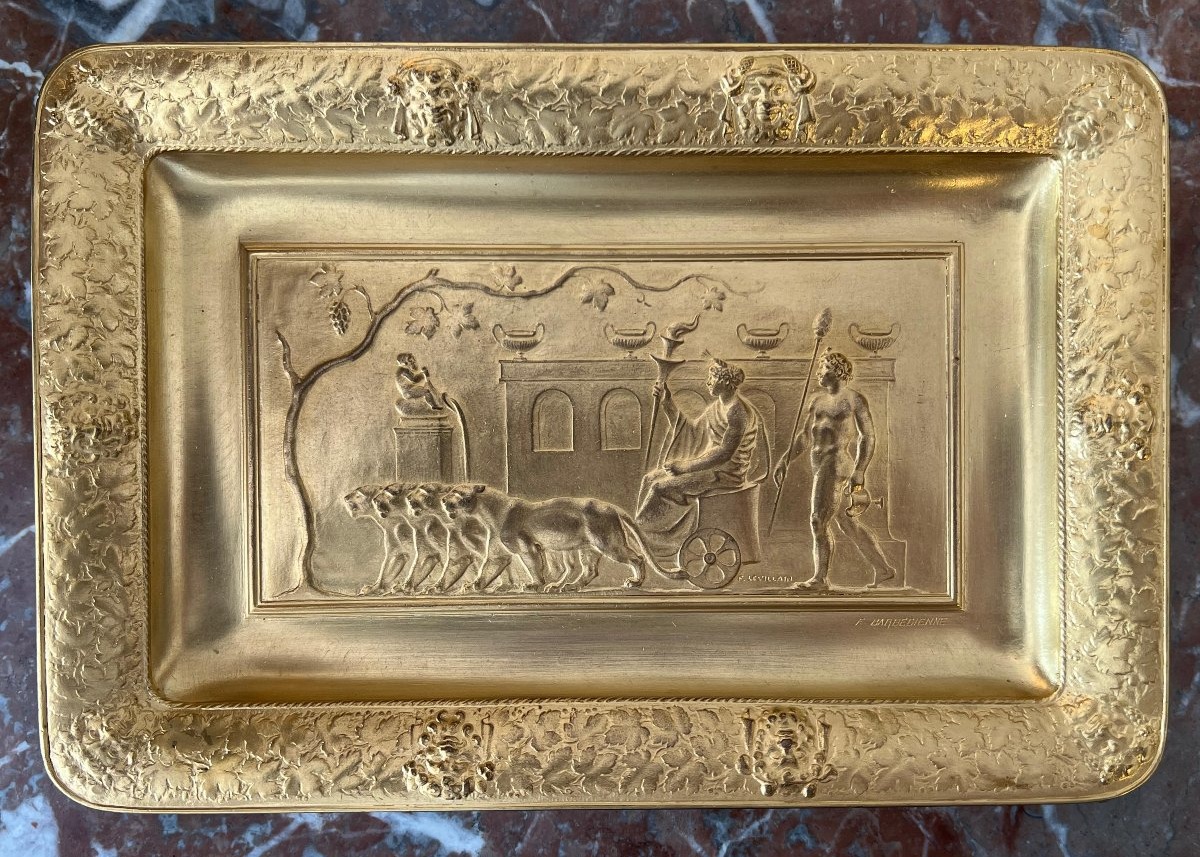
A gilded bronze tray in the Neoclassical style, featuring a bas-relief decoration depicting a scene inspired by Roman antiquity.
The tray is surrounded by a wide, richly chased and gilded border, adorned with foliage, scrolls, mascarons, and decorative motifs in relief. The composition is framed by elegant molding that highlights the central panel.
This piece is of exceptional quality.
Ferdinand Levillain (1837–1905) studied under the sculptor Jouffroy (1806–1882), before making his debut in 1861 at the Salon des Artistes Français, where he exhibited until 1903. It was at the 1867 World’s Fair in Paris that he first gained attention for creating a Neo-Greek bronze cup for the firm Blot et Drouard.
However, it was beginning in 1871 that Levillain achieved fame, thanks to his partnership with the renowned bronze artist Ferdinand Barbedienne, who from then on displayed lamps, bowls, amphorae, and other candelabra created in the Greek style at his booths.
Levillain ultimately achieved great success at the 1878 Paris World’s Fair, unanimously winning a gold medal for his works in the antique style, among which was this Neo-Greek vase. The famous bronze artist Servant (1828–c. 1890), stated in the jury’s report on artistic bronzes that his works—“chiseled like the finest jewelry” and “with forms so varied and so pure (…), are brought to the highest degree of perfection.” After receiving a First-Class Medal at the 1884 Salon for a cup titled “The Elements, the Months, and the Seasons,”
Ferdinand Levillain won a Silver Medal at the 1889 World’s Fair.
Dimensions: 25.5 x 17 cm.
The tray is surrounded by a wide, richly chased and gilded border, adorned with foliage, scrolls, mascarons, and decorative motifs in relief. The composition is framed by elegant molding that highlights the central panel.
This piece is of exceptional quality.
Ferdinand Levillain (1837–1905) studied under the sculptor Jouffroy (1806–1882), before making his debut in 1861 at the Salon des Artistes Français, where he exhibited until 1903. It was at the 1867 World’s Fair in Paris that he first gained attention for creating a Neo-Greek bronze cup for the firm Blot et Drouard.
However, it was beginning in 1871 that Levillain achieved fame, thanks to his partnership with the renowned bronze artist Ferdinand Barbedienne, who from then on displayed lamps, bowls, amphorae, and other candelabra created in the Greek style at his booths.
Levillain ultimately achieved great success at the 1878 Paris World’s Fair, unanimously winning a gold medal for his works in the antique style, among which was this Neo-Greek vase. The famous bronze artist Servant (1828–c. 1890), stated in the jury’s report on artistic bronzes that his works—“chiseled like the finest jewelry” and “with forms so varied and so pure (…), are brought to the highest degree of perfection.” After receiving a First-Class Medal at the 1884 Salon for a cup titled “The Elements, the Months, and the Seasons,”
Ferdinand Levillain won a Silver Medal at the 1889 World’s Fair.
Dimensions: 25.5 x 17 cm.
650 €
Period: 19th century
Style: Rome and Antic Greece
Condition: Perfect condition
Material: Bronze
Length: 25,5
Width: 17
Reference (ID): 1808275
Availability: In stock
Print