


Important Directoire-period Clock—cleopatra’s Final Decision—paris, Circa 1795–1799
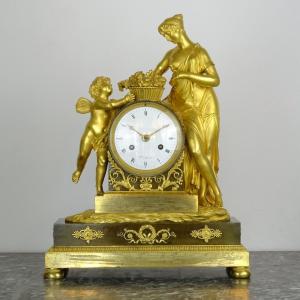
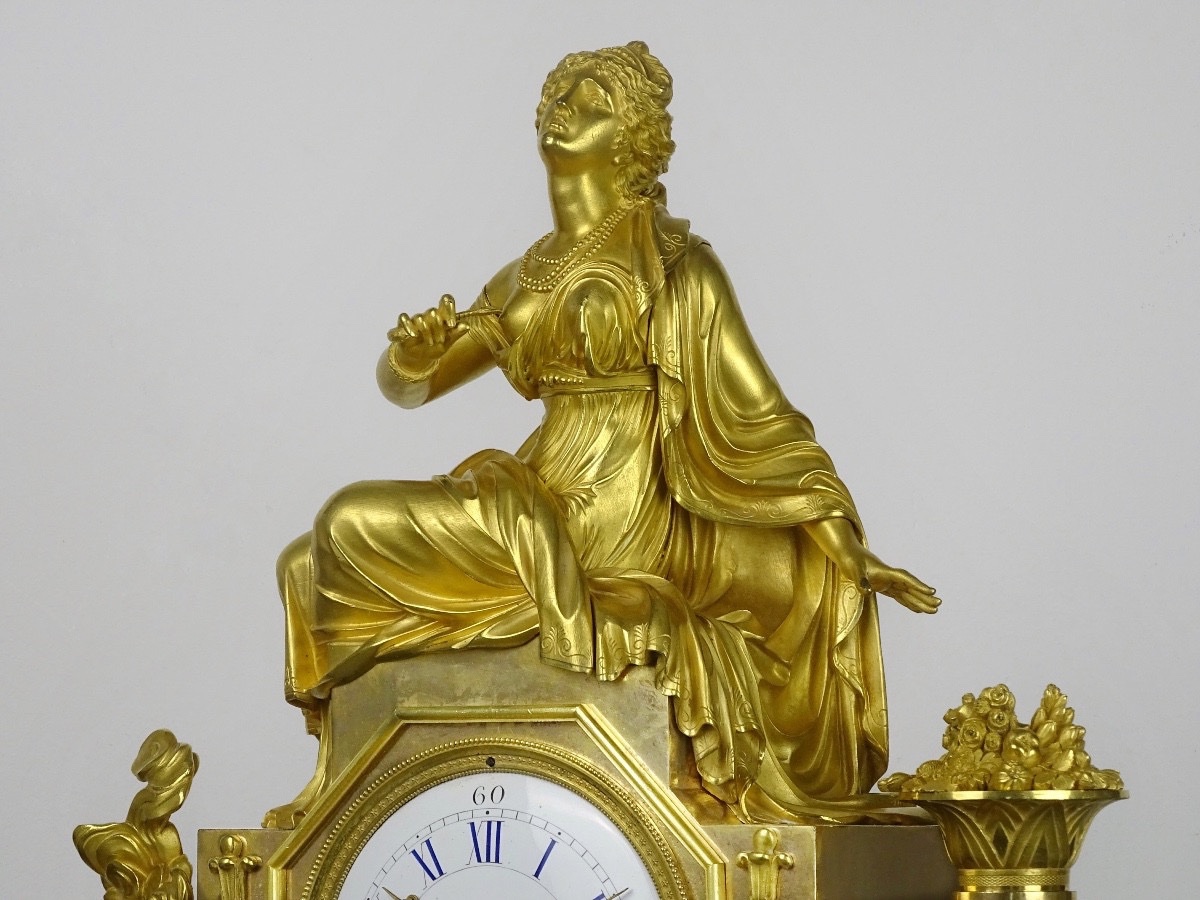
This remarkable clock, crafted from finely chiseled bronze and gilded with mercury, was made in Paris during the refined years of the Directoire (1795–1799) and depicts with rare intensity the final chapter in the life of Cleopatra, the last queen of Egypt. With its noble composition, the singularly meticulous quality of its chasing, and the serene harmony of its forms, it ranks among the finest neoclassical creations of the late 18th century. Its artistic value is confirmed by the existence of an identical model preserved at the Staatliche Kunstsammlungen in Dresden, attesting to the truly museum-quality nature of this clock.
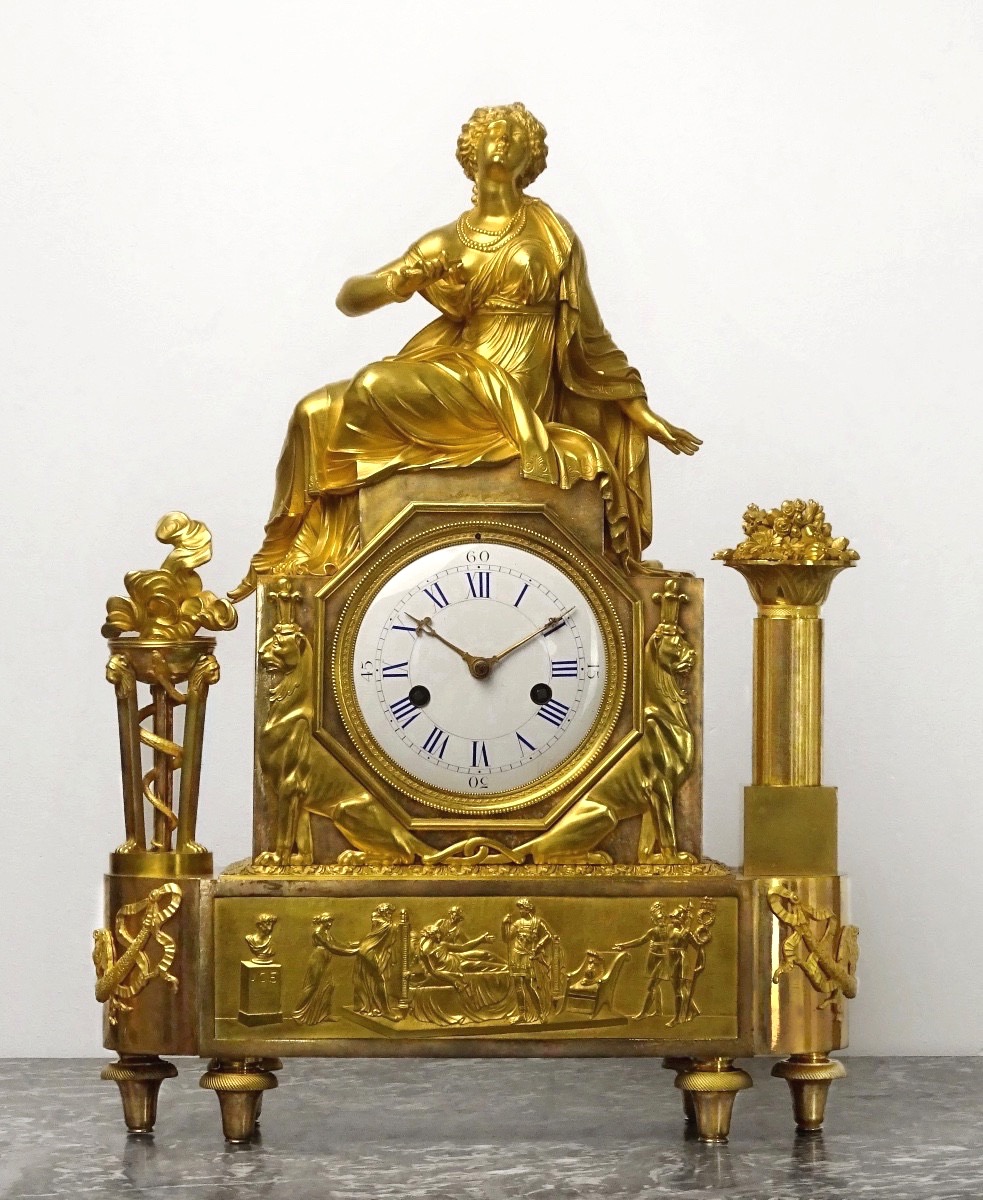
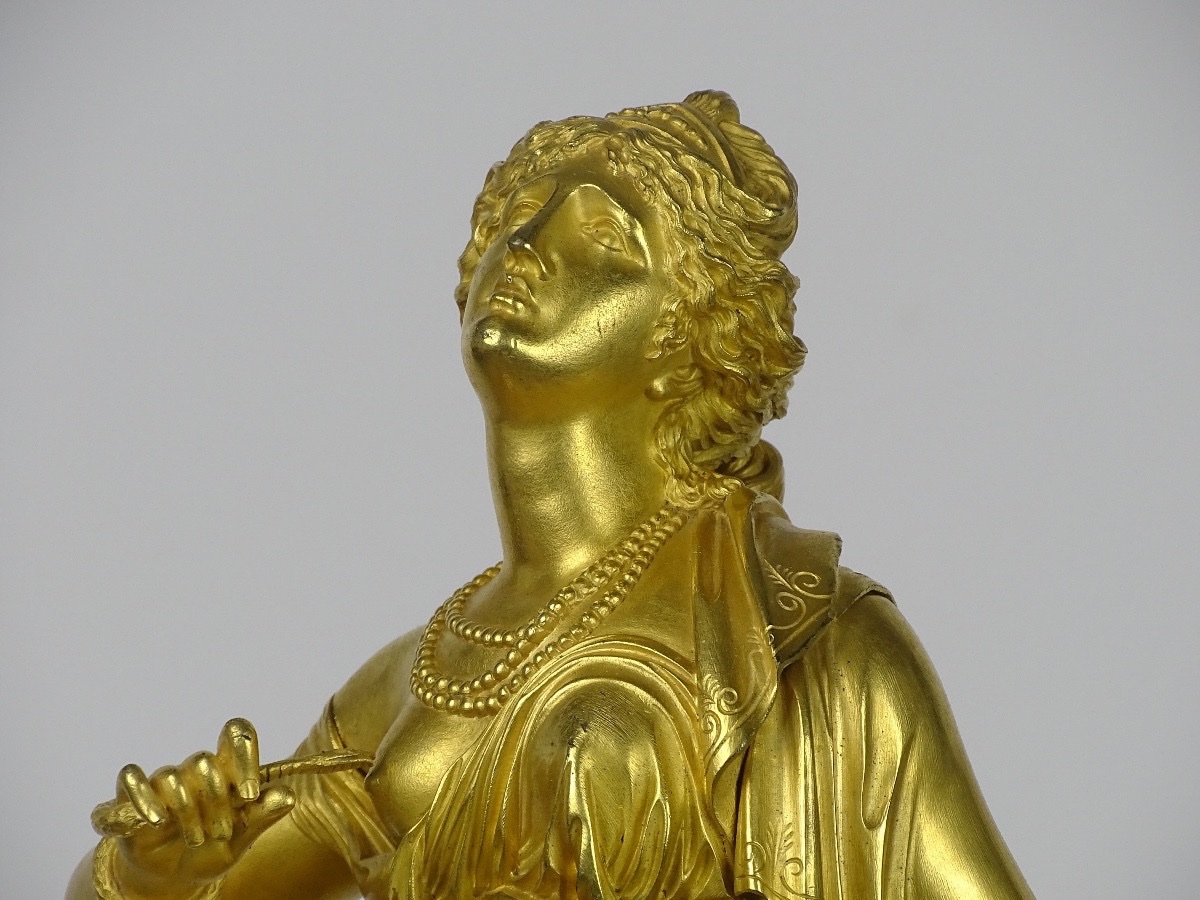
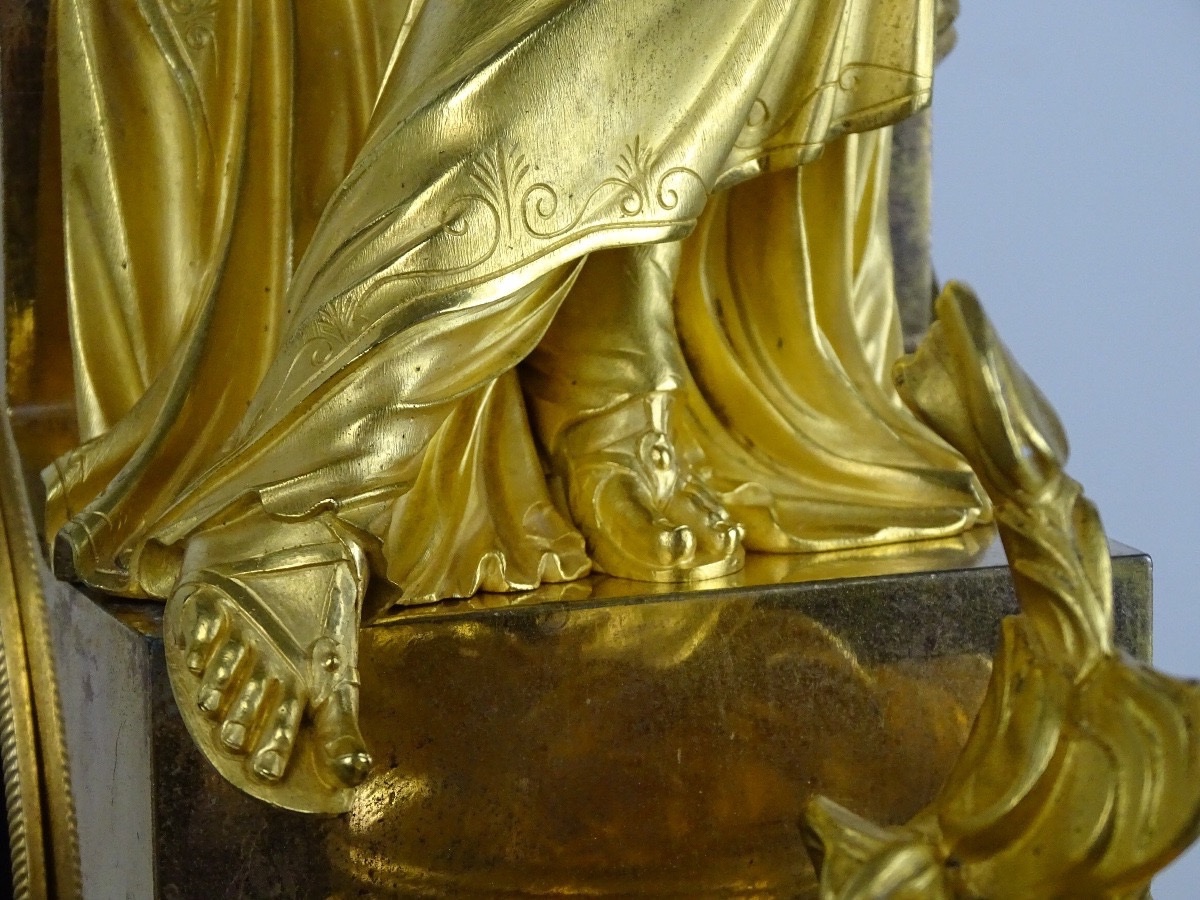
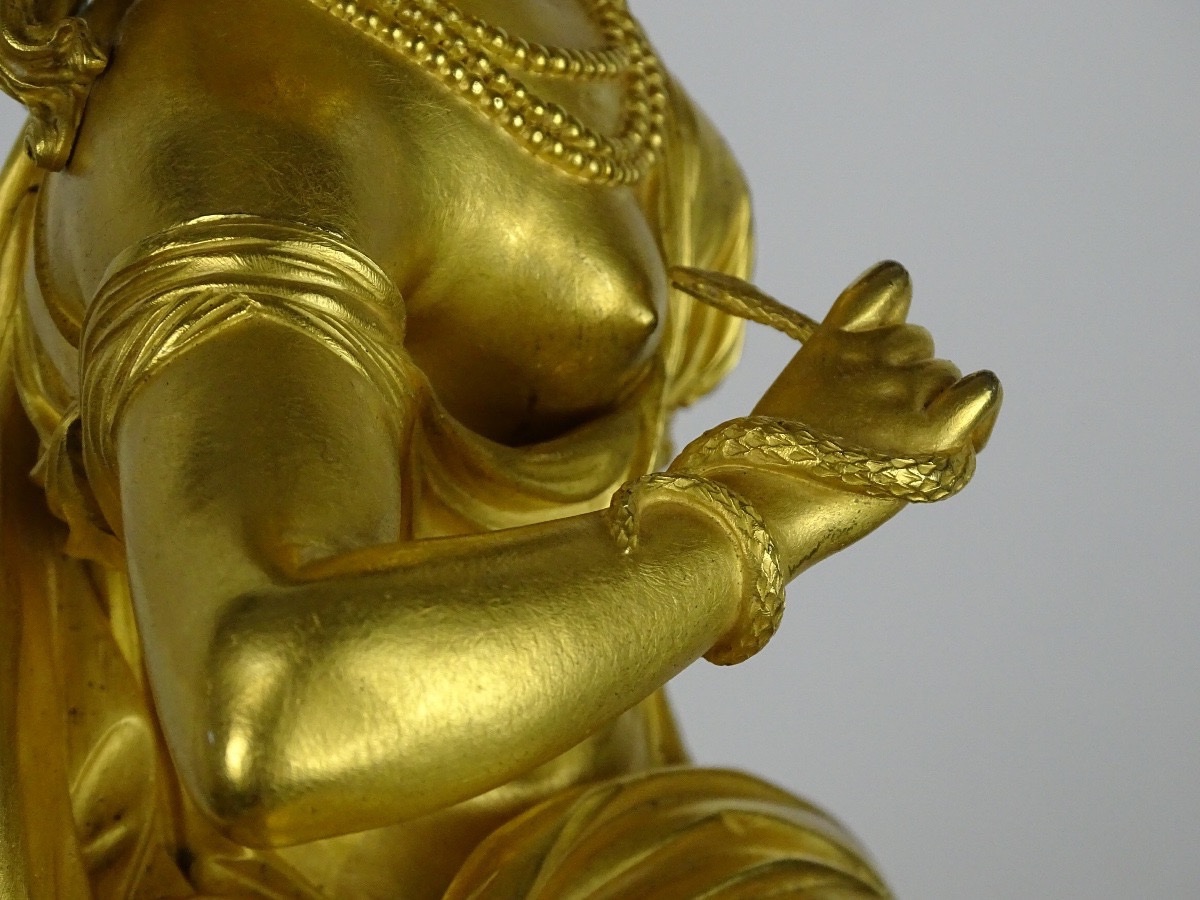
The queen is depicted seated on an ancient milestone, in the solemnity of a suspended gesture. Her dignified features stand out gently as she reaches out her hand toward a basket of fruit placed to her left—to the viewer, to the right of the dial. This basket is not merely a decorative accessory: according to the tradition recounted by Pliny and Plutarch, it was into a similar vessel, concealed beneath figs and other fruits, that the viper was placed, allowing Cleopatra to choose a sovereign death rather than the humiliation of a Roman triumph. Here, the bronze artist captures the fleeting moment when decision becomes destiny.
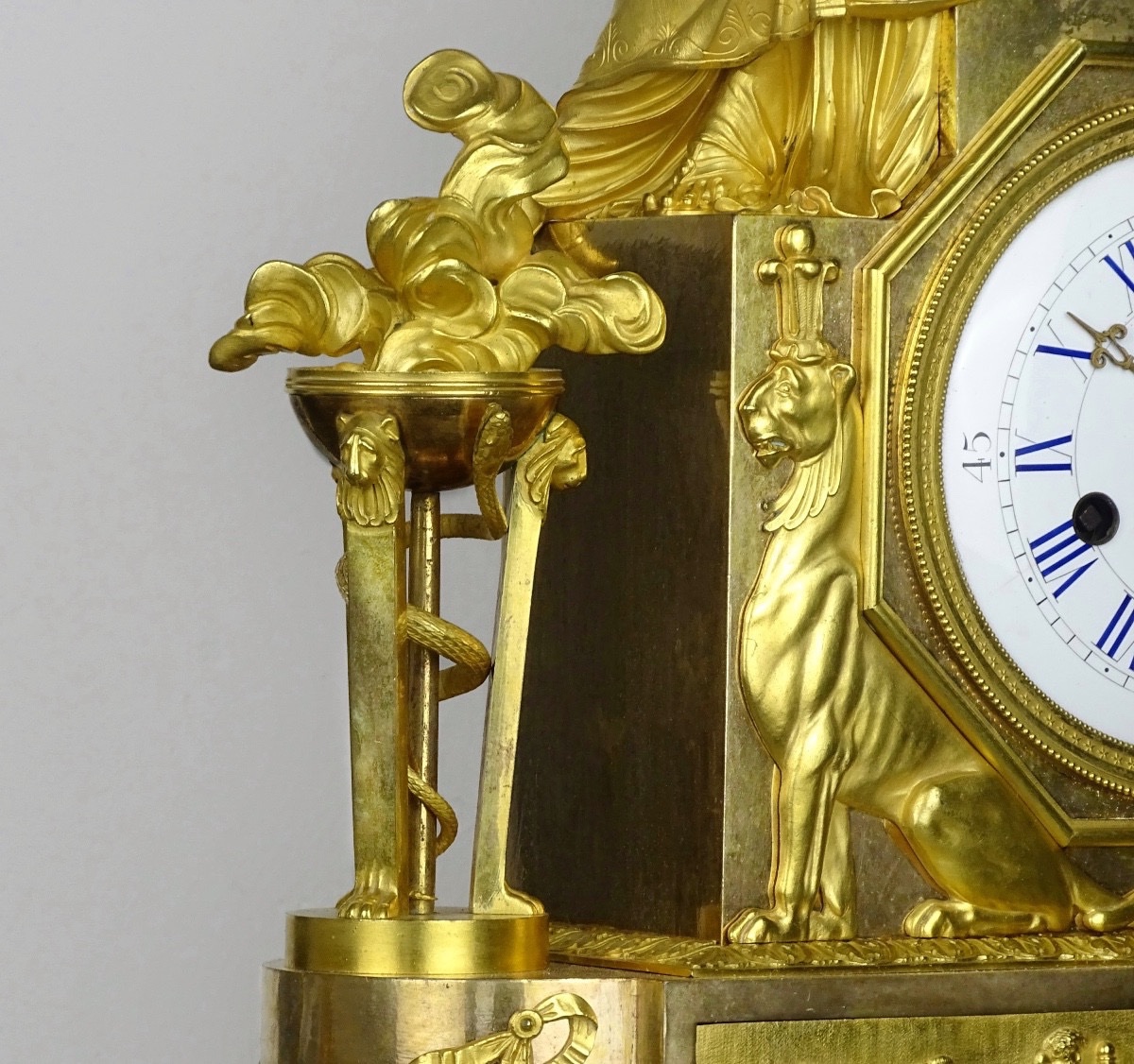
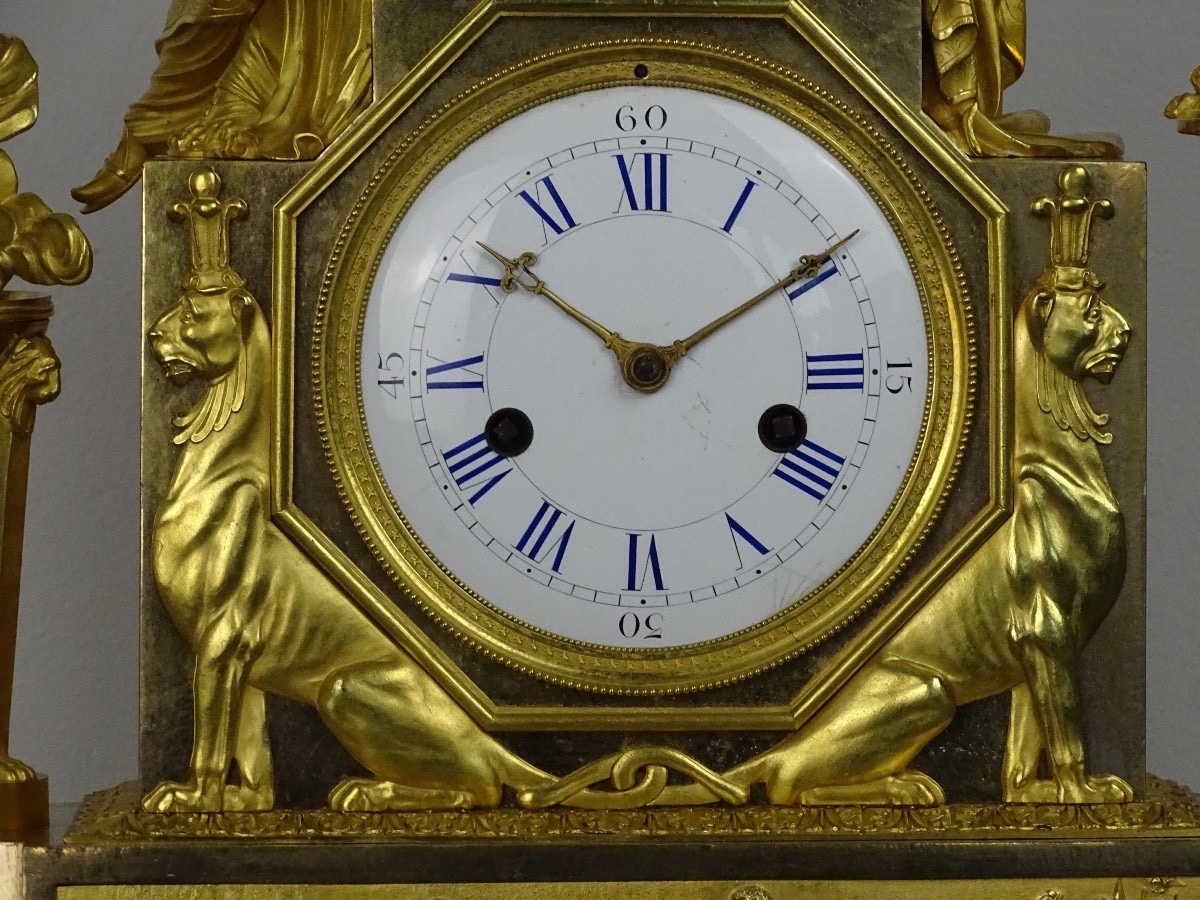
Framing the white-enameled dial, with its clean, classical lines, are two compositions that echo one another. On the left, an Athenian woman holds an incense burner from which a lively flame rises, entwined by a serpent—a symbol of transition, ritual, and fate. On the right, a column topped with a basket of flowers evokes the wealth and splendor of a reign whose radiance extends even into death. The balance between these two motifs reflects the measured and erudite aesthetic characteristic of the Directoire period.
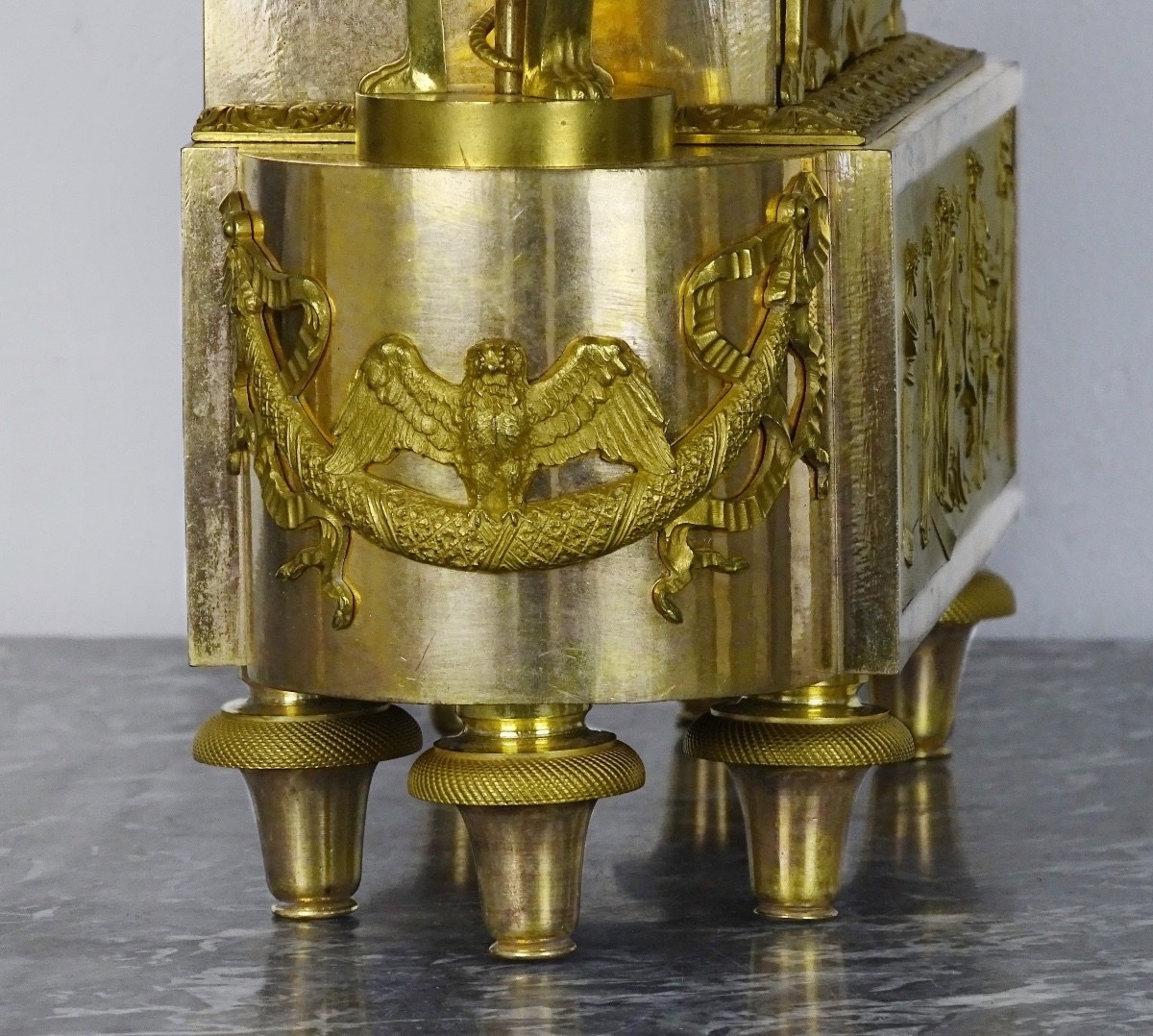
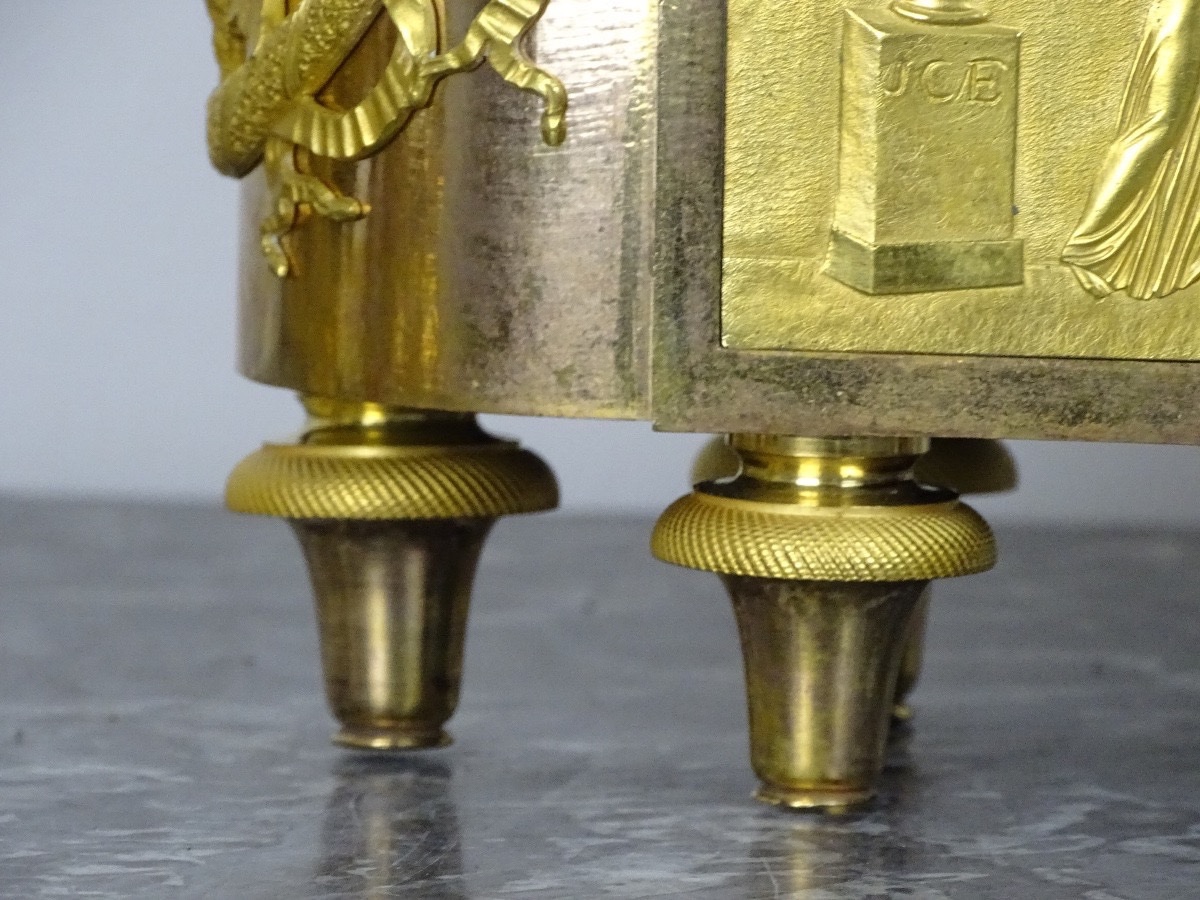
The base, resting on six spindle-shaped feet, features in its center a large cartouche adorned with a bas-relief of great delicacy: Cleopatra is depicted lying down, already on the verge of death, surrounded by figures who have come to witness her final breath, while Octavian stands near the bed, bearing witness to the tragic grandeur of his adversary. In the background, a bust of Julius Caesar evokes the alliances, ambitions, and passions that shaped the queen’s destiny. The finesse of the drapery, the softness of the modeling, and the narrative precision of this frieze reveal a bronze artist at the height of his art.
The rounded sides of the base—a rare and valuable feature among Directoire clocks—are each adorned with an owl with outstretched wings, perched on a garland. As an attribute of Athena, the owl embodies wisdom, foresight, and protection; here, it watches over the scene as a discreet tribute to the last sovereign of Ptolemaic Egypt. In ancient mythology, it also accompanies the soul on its journey, a symbol perfectly suited to this funereal and heroic theme.
The vigor of the engraving, the richness of the gilding, the balance of the proportions, and the iconographic coherence of the whole place this clock among the major works of its era. Due to its rarity—particularly because of its decorated sides—its subject matter treated with masterful elegance, and its exact parallel to a specimen held in a major European museum, it is an exceptional work of art, intended for discerning collectors and lovers of the great narratives of Antiquity.
Period: 18th century
Style: Louis 16th, Directory
Condition: Excellent condition
Material: Bronze
Width: 37,5 cm
Height: 50 cm
Reference (ID): 1807900
Availability: In stock