THIS OBJECT WAS SOLD
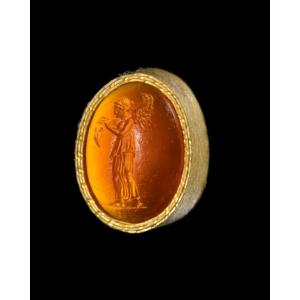
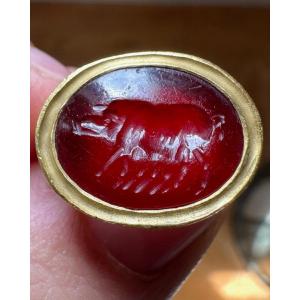
Ring With A Renaissance-era Or Earlier Intaglio On Heliotrope Jasper. Satyr And Goat.
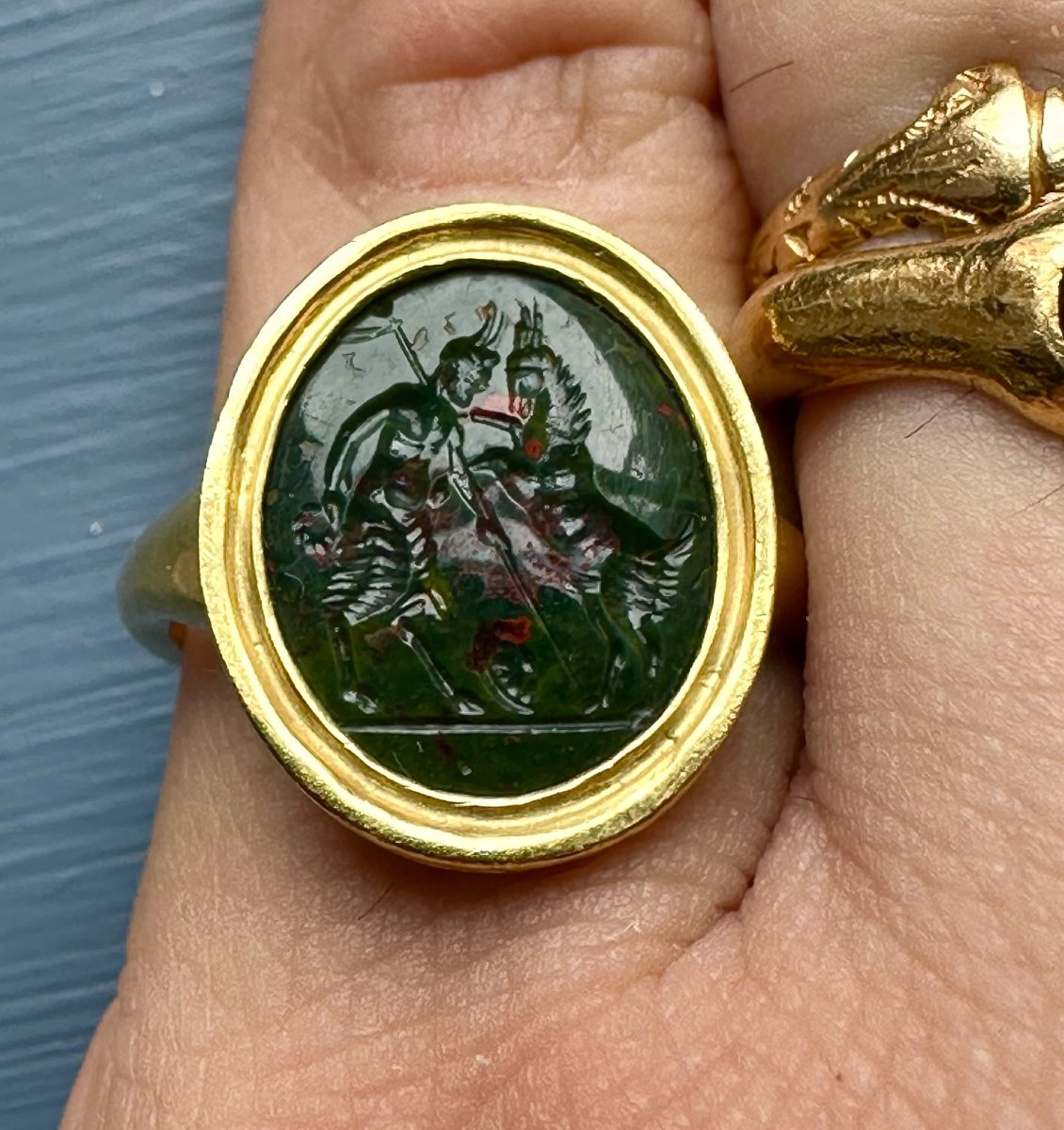
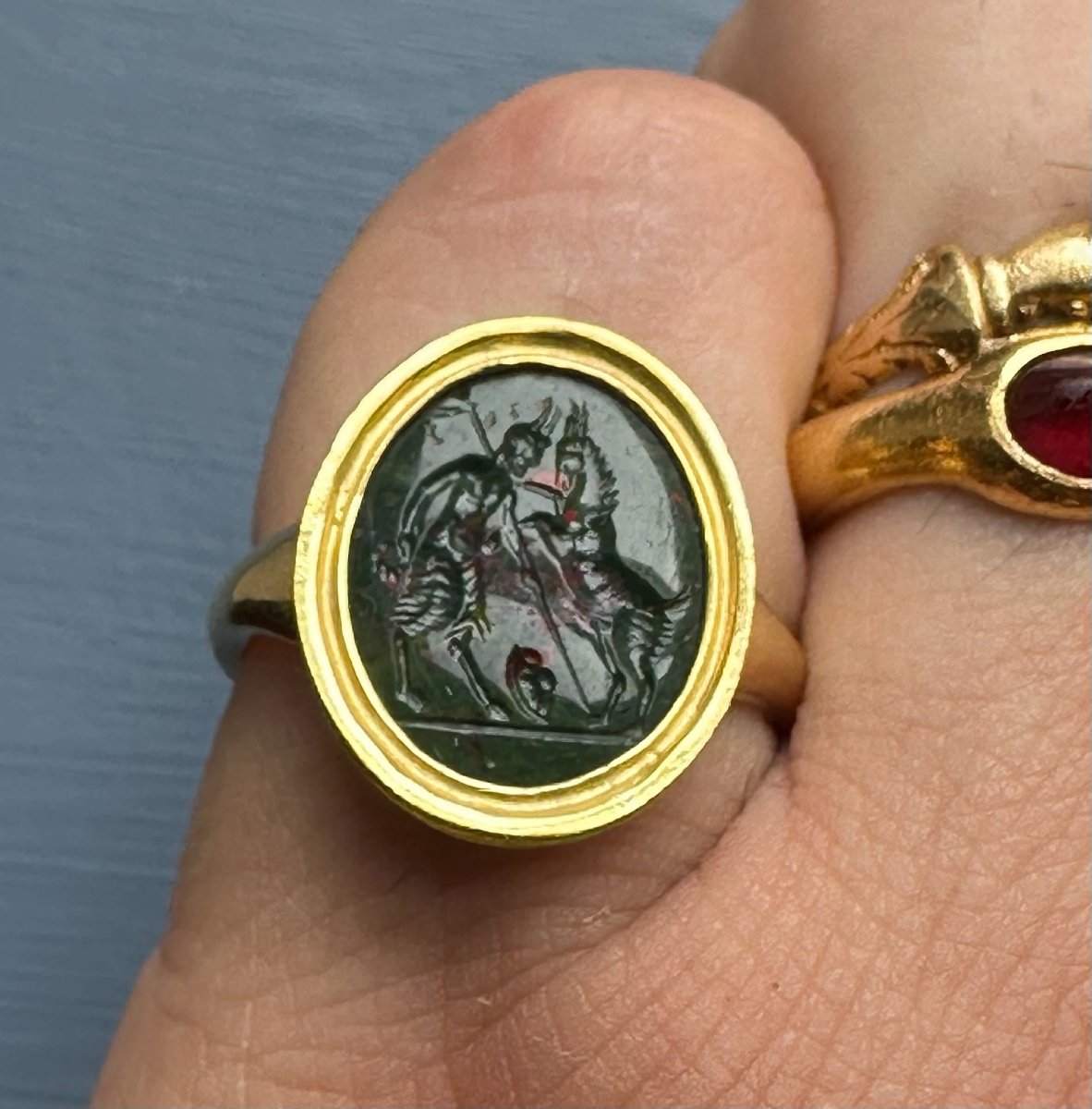
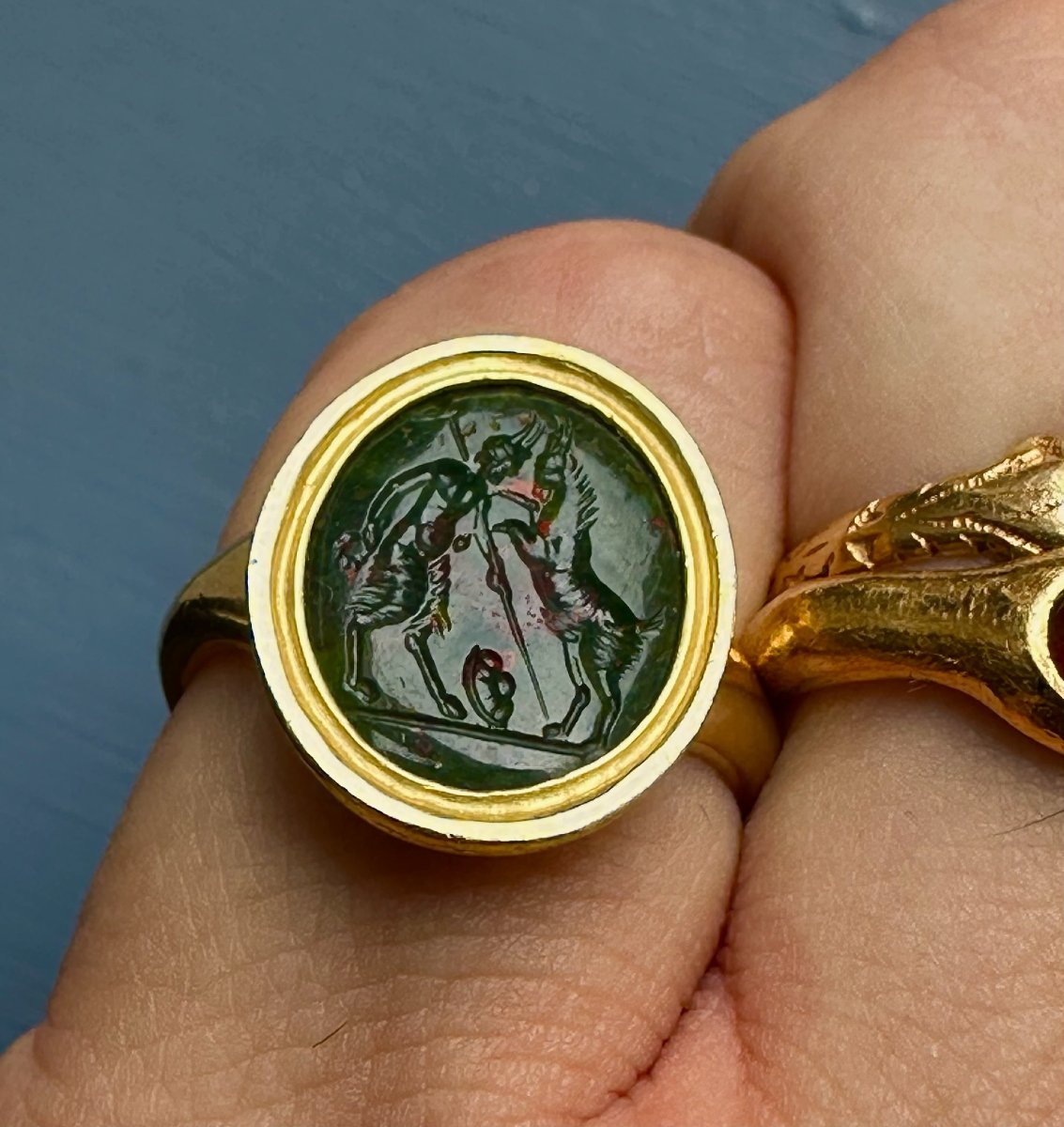
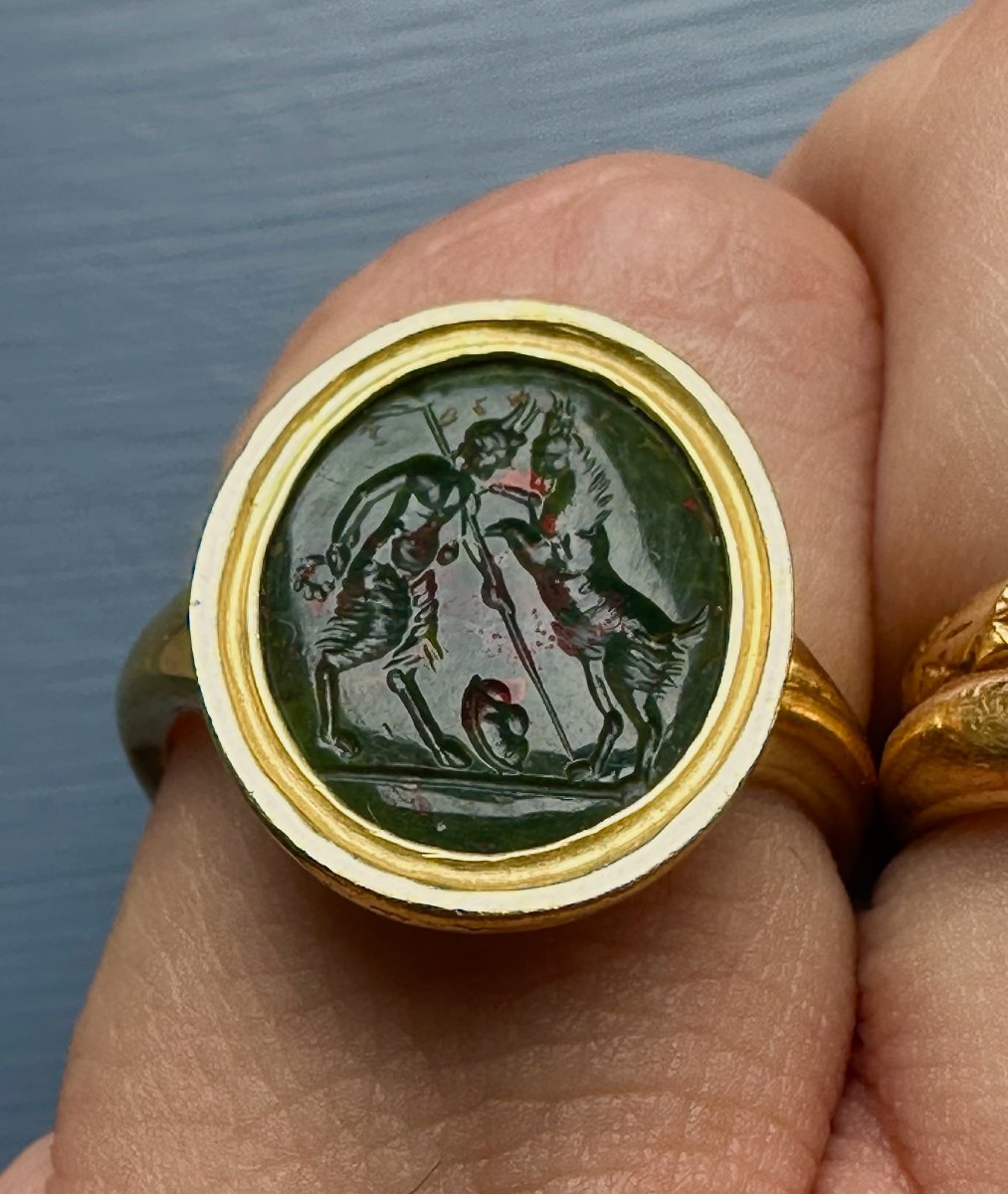
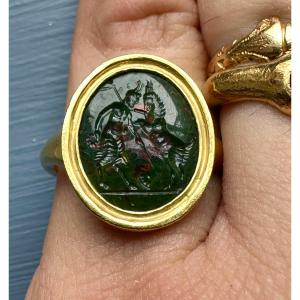


Heliotrope jasper — deep green chalcedony with characteristic red iron oxide inclusions
Intaglio 12 x 14 mm - Gold (18k-750)
TDD 55-56 (adjustable); Weight 6.40 g.
THE SATYR AND THE GOAT — A DIONYSIAN UNION
Half-man, half-beast, the satyr haunts the wild fringes of Greek mythology. Endowed with a human torso and the legs, ears, and tail of a goat, he embodies everything civilization seeks to tame: fertility, sensuality, music, wine, and joyful abandon.
Satyrs are the eternal companions of Dionysus—or Bacchus among the Romans—the god of wine, ecstasy, and ritual madness. Together, they roam forests and mountains, dancing, playing music, and celebrating the primal and instinctive side of existence.
The goat, their constant companion, is no coincidence. A sacred animal of Dionysus, it symbolizes fertility, virility, and untamed nature. It is also the animal of Pan, the half-man, half-goat god of the wilderness—and, remarkably, it gives us the very word “tragedy,” from the Greek tragōidia: the “song of the goat” from the ancient Dionysian festivals.
When the satyr and the goat appear together, they form a powerful emblem of the Bacchic thiasos—the ecstatic procession of the god’s followers. This union evokes the harmony between man and animal, the eternal cycles of nature, and the freedom found in rejecting the constraints of society.
In ancient glyptic art, this subject served as a talisman of good fortune, fertility, and divine protection—carrying the blessings of Dionysus wherever he traveled.
Intaglio 12 x 14 mm - Gold (18k-750)
TDD 55-56 (adjustable); Weight 6.40 g.
THE SATYR AND THE GOAT — A DIONYSIAN UNION
Half-man, half-beast, the satyr haunts the wild fringes of Greek mythology. Endowed with a human torso and the legs, ears, and tail of a goat, he embodies everything civilization seeks to tame: fertility, sensuality, music, wine, and joyful abandon.
Satyrs are the eternal companions of Dionysus—or Bacchus among the Romans—the god of wine, ecstasy, and ritual madness. Together, they roam forests and mountains, dancing, playing music, and celebrating the primal and instinctive side of existence.
The goat, their constant companion, is no coincidence. A sacred animal of Dionysus, it symbolizes fertility, virility, and untamed nature. It is also the animal of Pan, the half-man, half-goat god of the wilderness—and, remarkably, it gives us the very word “tragedy,” from the Greek tragōidia: the “song of the goat” from the ancient Dionysian festivals.
When the satyr and the goat appear together, they form a powerful emblem of the Bacchic thiasos—the ecstatic procession of the god’s followers. This union evokes the harmony between man and animal, the eternal cycles of nature, and the freedom found in rejecting the constraints of society.
In ancient glyptic art, this subject served as a talisman of good fortune, fertility, and divine protection—carrying the blessings of Dionysus wherever he traveled.
Explore similar pieces and discover your ideal find:
rings