

Tibetan Tankha
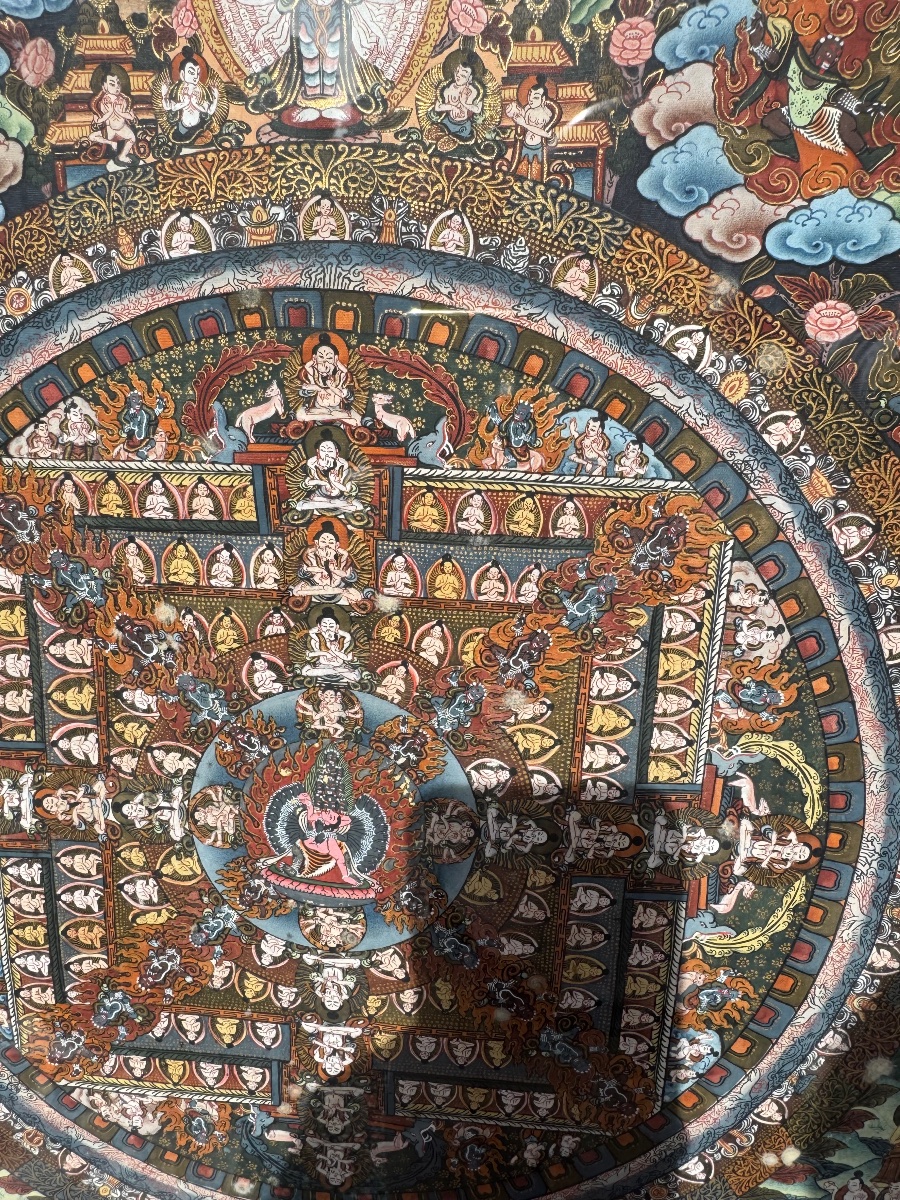
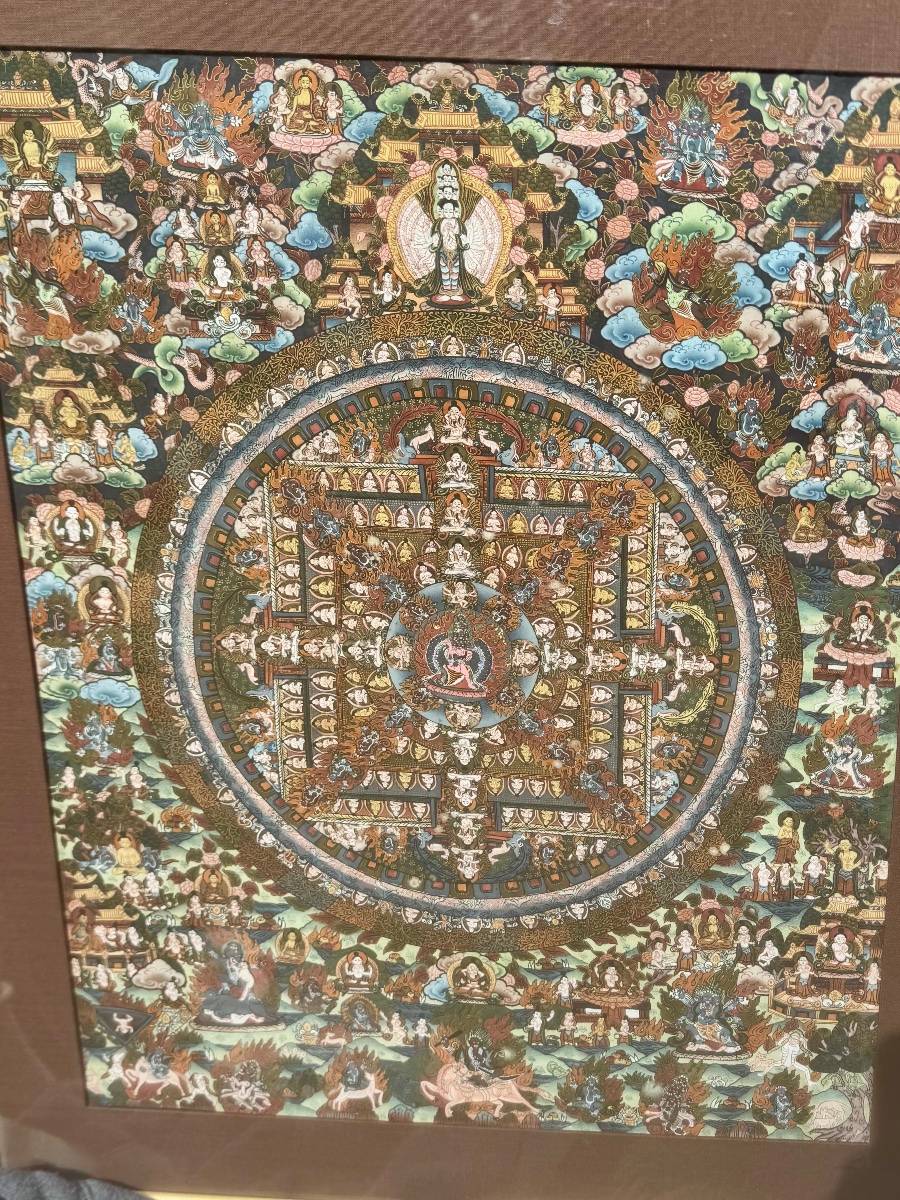
This thangka is organized according to a very precise cosmic hieroglyphic system specific to Tibetan Buddhism (Vajrayana).
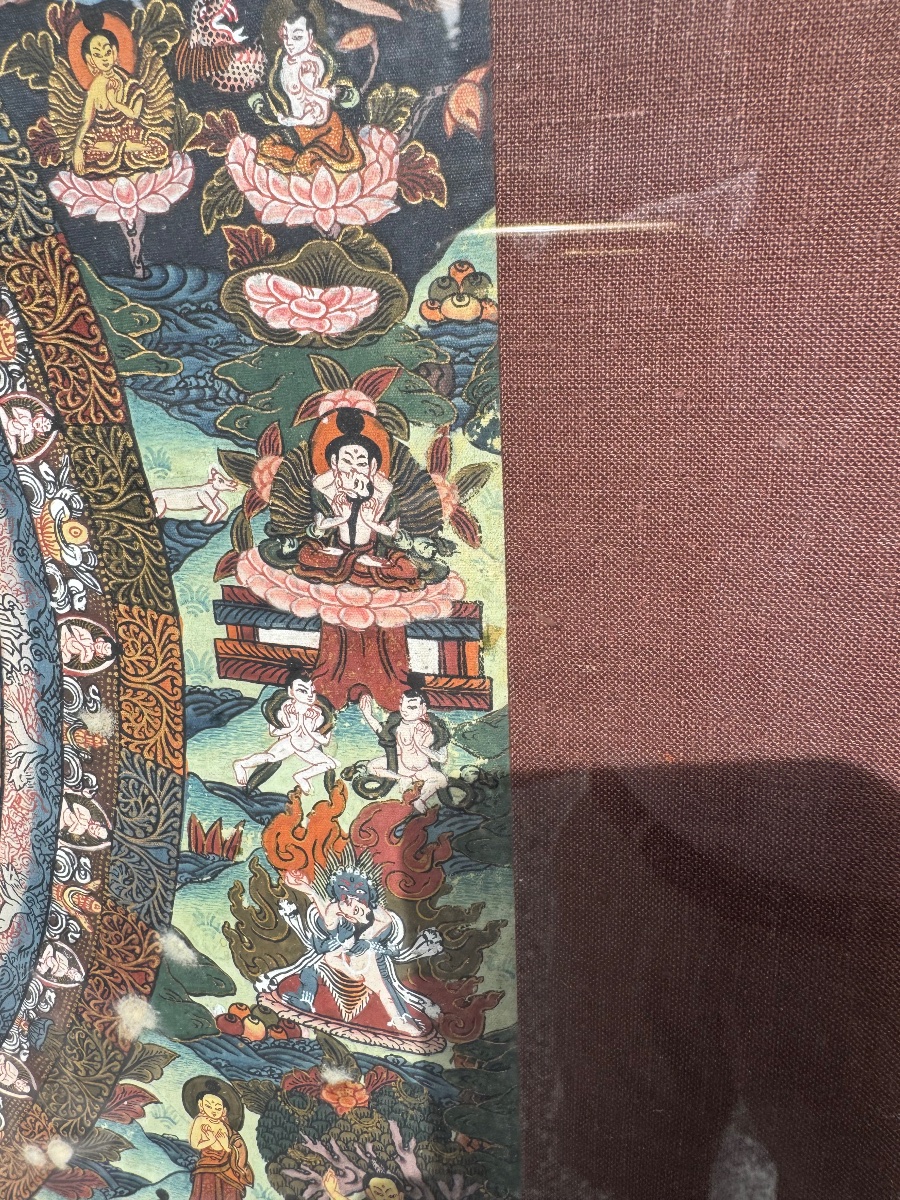
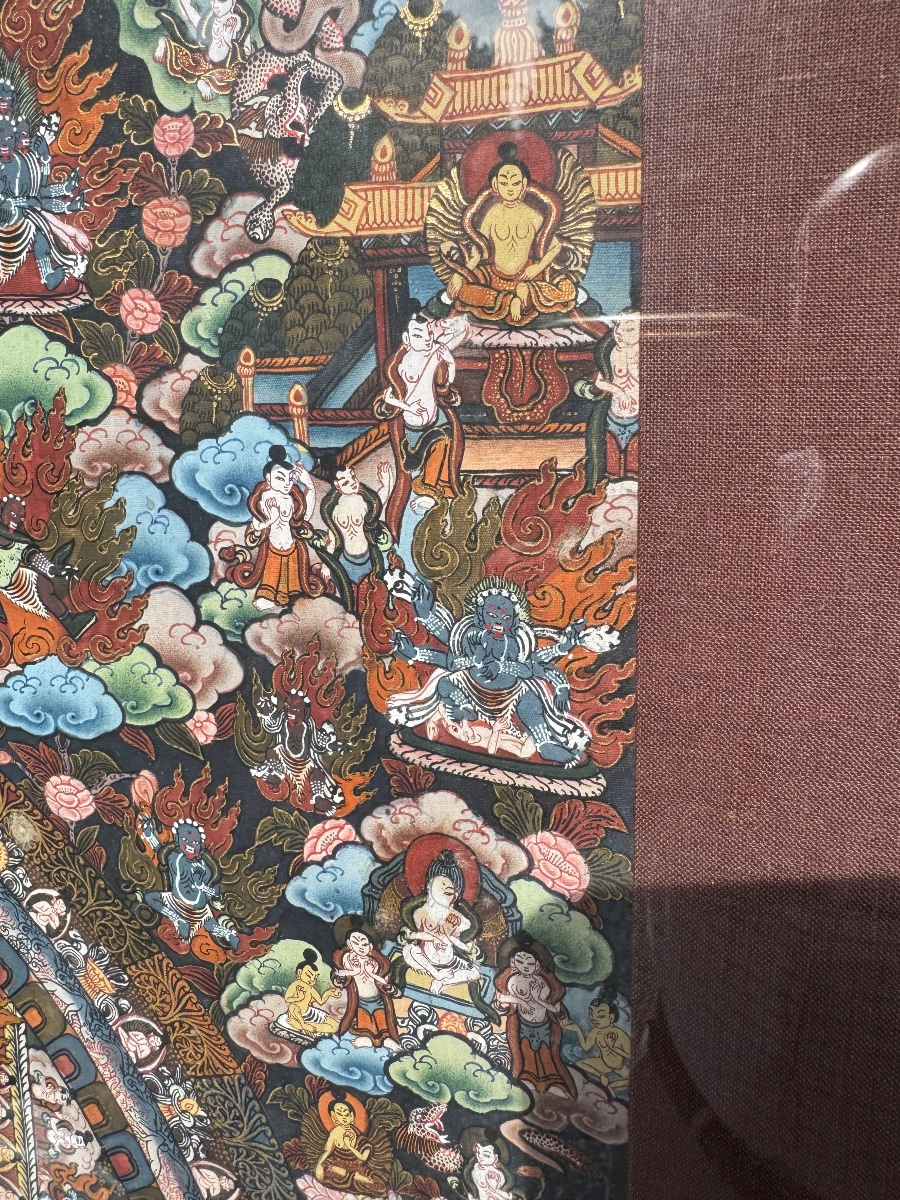
The figures depicted on the canvas are not mere decorations, but deities, spiritual masters, and protectors who guide the meditator.
Here is the arrangement and meaning of these figures across the canvas:
1. The deity at the top (The celestial plane)
The figures depicted on the canvas are not mere decorations, but deities, spiritual masters, and protectors who guide the meditator.
Here is the arrangement and meaning of these figures across the canvas:
1. The deity at the top (The celestial plane)
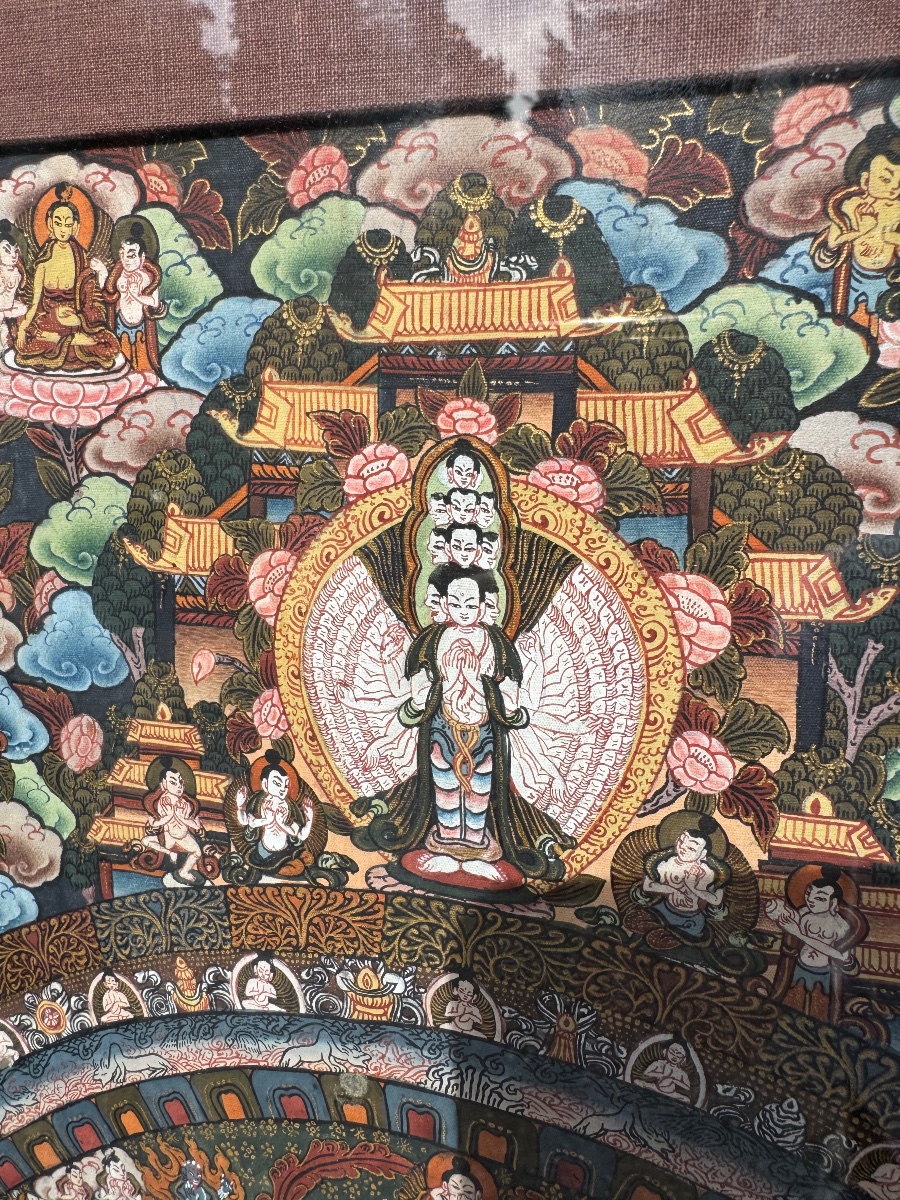
- At the very top center, surrounded by a luminous aura, stands a white figure with multiple arms. This is Avalokiteshvara (known as Chenrezig in Tibetan), in his cosmic form with 10 heads and 1,000 arms.
- He is the bodhisattva of universal and infinite compassion. His thousand arms extend in the shape of a halo to simultaneously rescue all beings suffering throughout the universe.
- The figures surrounding him, seated on clouds or lotus flowers in this upper zone, represent other great Buddhas (such as Amitabha) or lineages of accomplished spiritual masters (the Lamas).
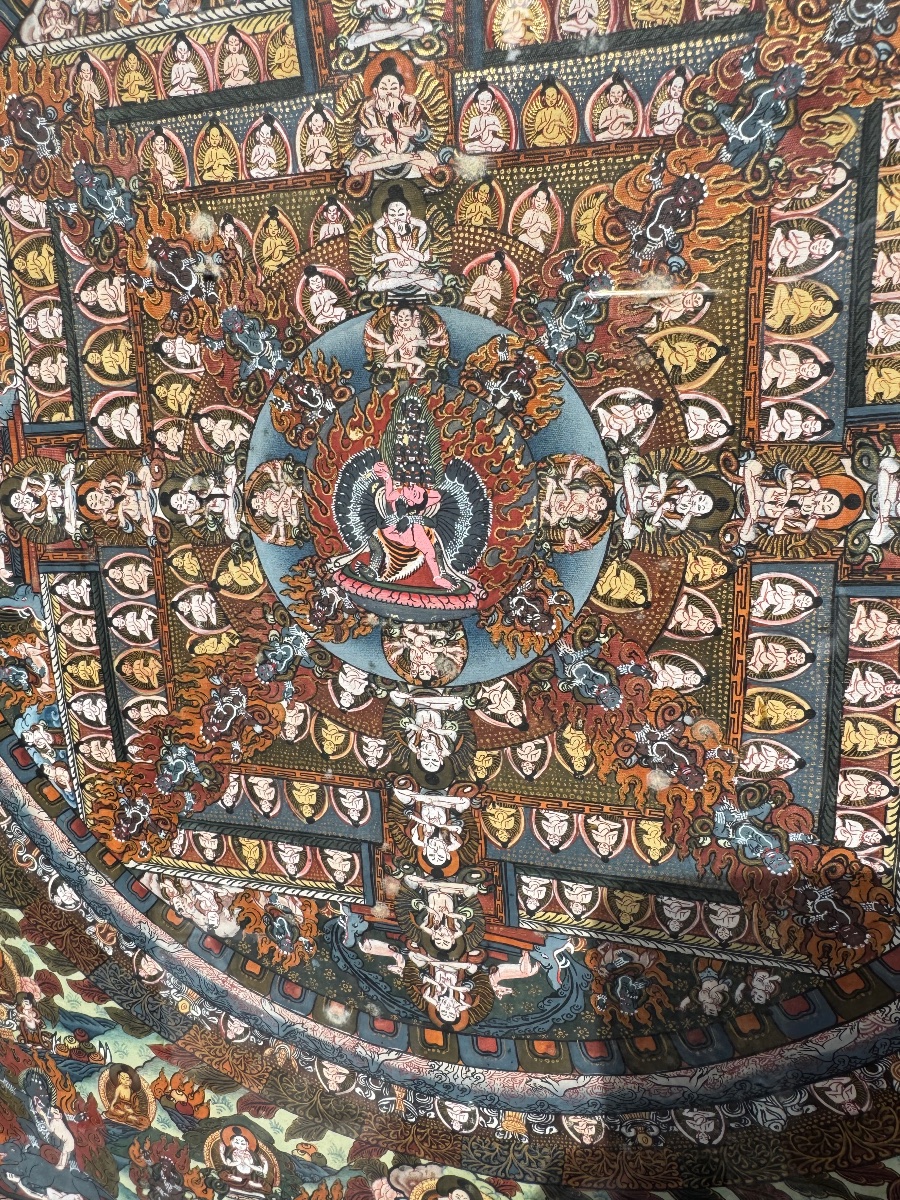
- The large central circle represents a celestial palace as seen from above. At the exact center, as well as distributed geometrically along the concentric circles and the four cardinal axes, are meditative Buddhas and tantric deities.
- They symbolize the various facets of the awakened mind (wisdom, patience, generosity, etc.).
- In Buddhist practice, the meditator mentally travels from the outside of the circle toward the center to identify with these deities and purify their own mind.
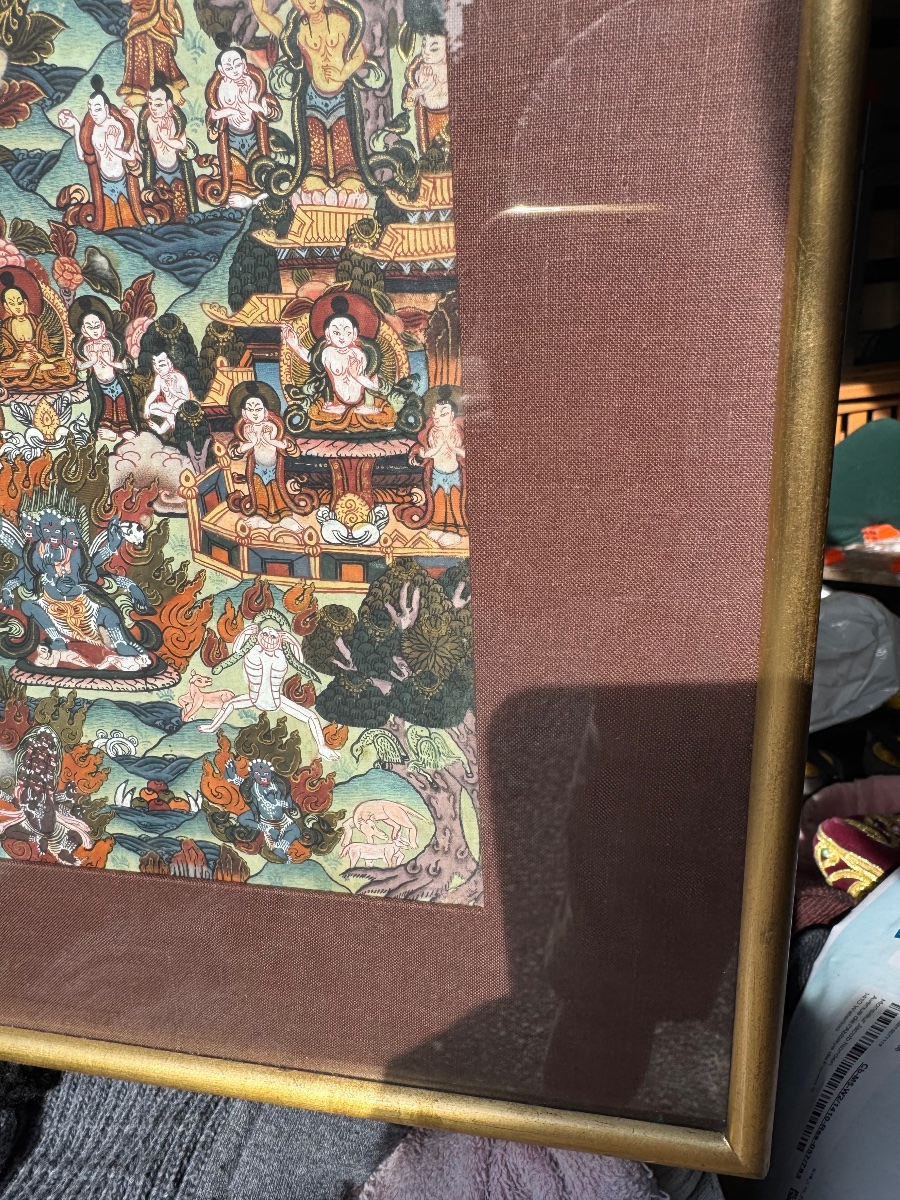
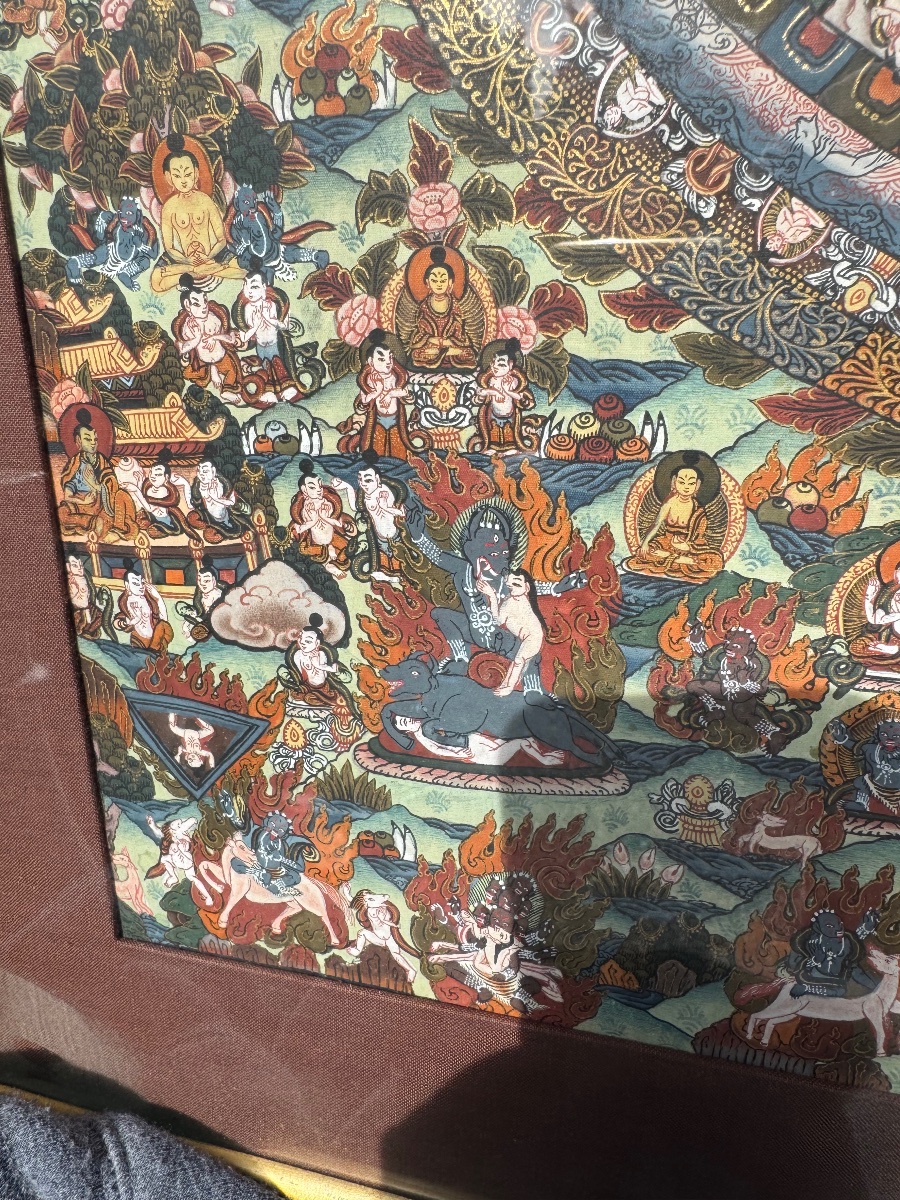
- At the bottom of the painting, the figures often adopt more dynamic postures, sometimes fierce or mounted on animals (such as white horses or mythological creatures).
- These are the Dharmapalas (guardian deities and protectors of the Dharma) and deities of wealth such as Vaishravana or Jambhala. Although they may appear frightening, they play a benevolent role. They destroy the illusions of the ego, dispel negative energies, and protect the practitioner from spiritual obstacles. The paintings also feature yogis and disciples in prayer within caves or natural landscapes.
450 €
Period: 20th century
Style: Other Style
Condition: Excellent condition
Material: Linen
Width: 43cm
Height: 54,5cm
Reference (ID): 1806312
Availability: In stock
Print